

14 Days
Moderate
Starting the Manaslu Circuit Trek happens before you see the glacier-covered mountains. Your journey begins with a morning jeep ride from Kathmandu. Then, enjoy a lovely walk up to Chisapani Village.
This first overnight stop sets the mood for the trip. You will see dramatic river gorges and experience a living Buddhist-Hindu culture. The altitude is just right to prepare your lungs for bigger climbs.
Whether you know about Manaslu trekking or are still deciding which Himalayan route is best for you, this guide will help. It will take you through the landscapes, people, and details of Day One in simple language. Grab a tea, settle in, and map out what makes Chisapani an ideal springboard for the following days.
Your journey begins with a pre-dawn departure from Kathmandu’s Thamel district. The first two hours follow the well-paved Prithvi Highway past Trishuli River cliffs and terraced hills of mustard and rice.
After Dhading Besi, the asphalt fades, dust swirls, and the vehicle grinds into low gear. Expect occasional halts for landslide clearance or to let colourfully painted local buses squeeze by.
Though bumpy, the scenery keeps spirits high: waterfalls ribbon the gorge walls, and roadside tea stalls serve sweet china to break up the ride.
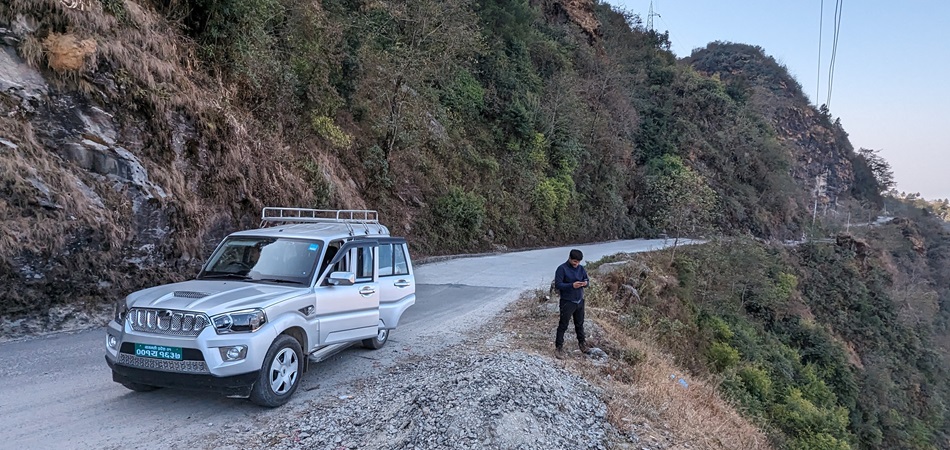
Use this long drive to drink water, eat light snacks, and put on sunscreen, even inside the jeep. The Nepali mountain sun can surprise newcomers.
At Arughat market town, guides often pause to register trekking permits and top up supplies. The path follows the Budhi Gandaki River. It goes by Soti Khola and Machha Khola. Finally, it arrives at the dusty stop in Bangsing.
Stepping off the jeep, you immediately sense cooler air and the thunder of the Budhi Gandaki below. A metal suspension bridge swings gently as you cross to the river’s left bank.
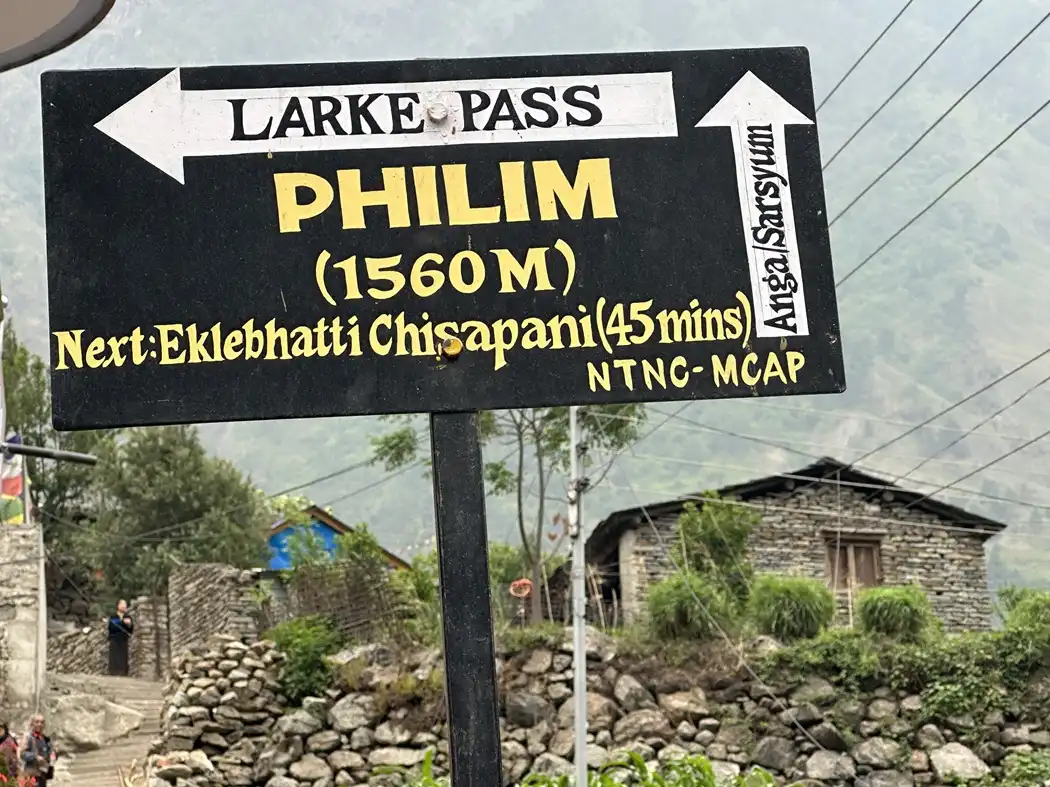
The wide stone path goes up for half an hour to Philim. This Gurung village has a checkpoint, a school, and small shops. The shops sell bottled water, tea, and simple dal bhat lunches.
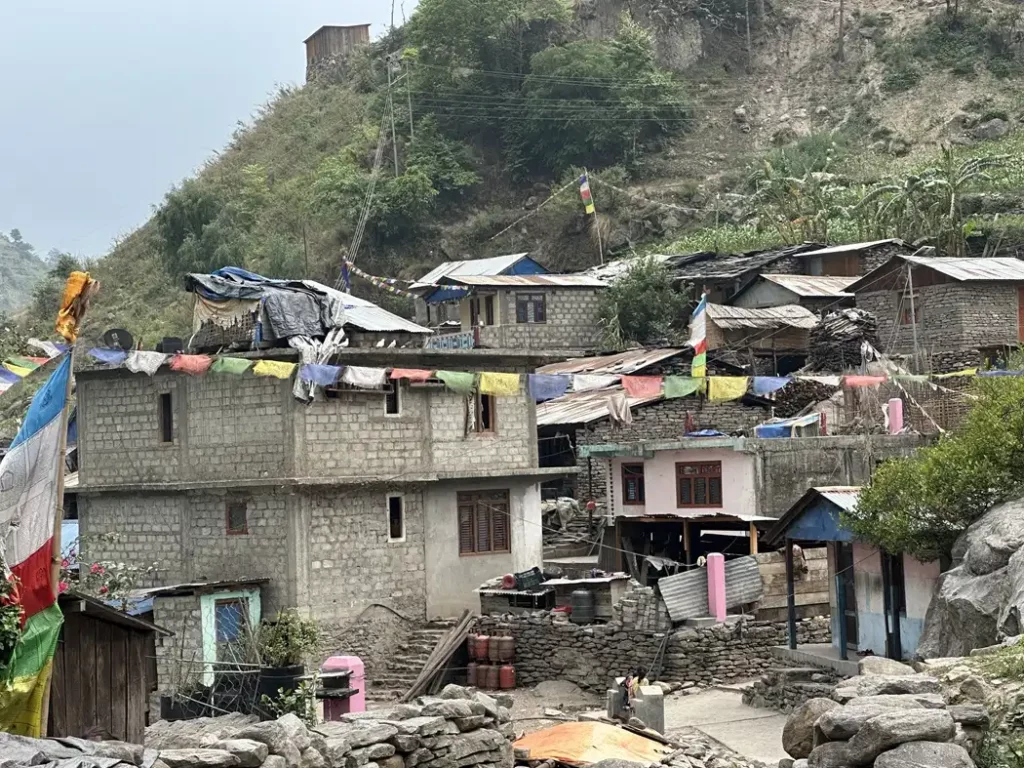
Here, Buddhism gains visibility: prayer flags flutter from tin-roofed homes, and mani walls (stone slabs etched with mantras) edge the lane. Don’t race through—lunching in Philim helps your body adjust and supports the local economy.
Many hikers compare the villages on the Manaslu circuit to the busy Annapurna route. They are often surprised by Philim’s mix of services and genuine charm.
Refuelled, you trek northwest on a gently undulating path through bamboo thickets and pine-scented woodland. The river narrows into a canyon, its roar echoing up the cliffs.
Watch for grey langur monkeys leaping between branches, and listen for the flute-like call of the Himalayan bulbul. After roughly two hours, a trail forks east toward Tsum Valley—stay left for the Manaslu Circuit Trek proper.

The final stretch meanders past pocket terraces of millet and maize. Villagers greet you with “Namaste,” children practice English hellos, and mule caravans jingle by carrying rice sacks upriver.
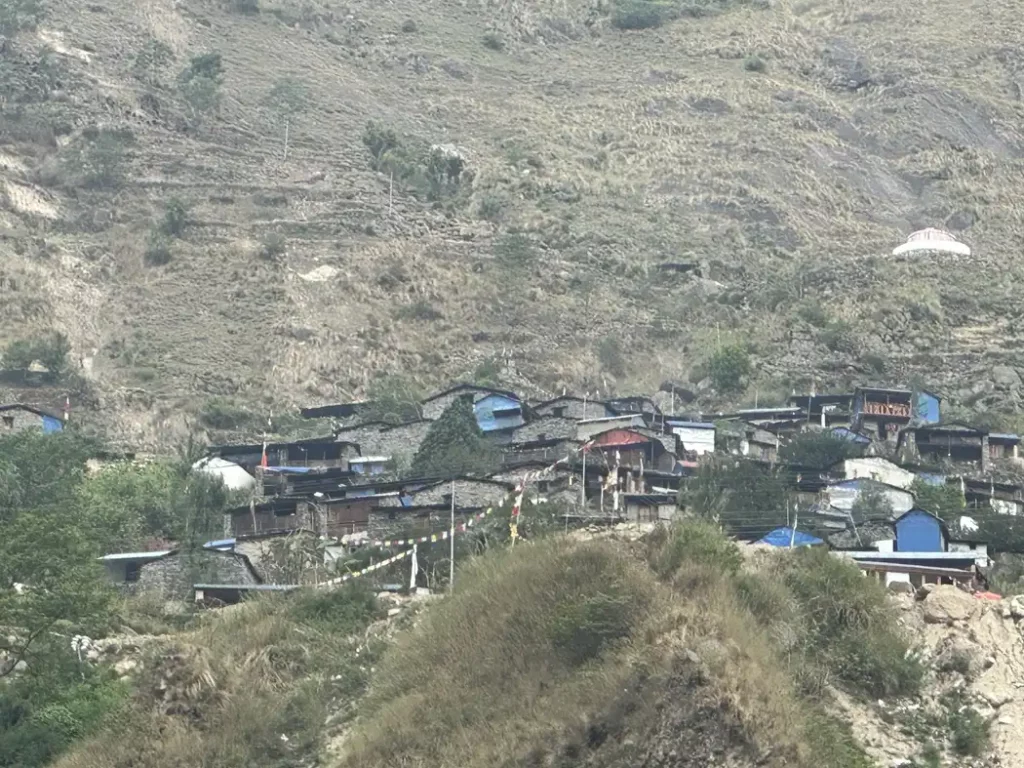
A final stone stairway leads to a ridge. Here, you see a few slate-roof tea houses. Welcome to Chisapani, which means “cold water.” It is named for a clear spring that still feeds the communal taps.
Chisapani is small—just a handful of family-run lodges—but its setting feels expansive. To the north, the 7,239-meter Siringi Himal glows pink at sunset. To the south, the Budhi Gandaki cleaves a deep gorge you traversed earlier.
Villagers, mostly Gurung, tend potato plots and keep goats beneath their stilted homes. Buddhism and Hinduism overlap here: a whitewashed chorten guards the path’s entrance, yet brass bells ring at a Shiva shrine. This cultural mosaic rewards curiosity; a polite “Tashi Delek” earns smiles as readily as a Nepali “Namaste.”
The Gurung people were once Himalayan traders and, more recently, celebrated Gurkha soldiers. Hospitality remains central: guests receive hot butter tea or raksi (local millet spirit) depending on the time of day.
In a typical kitchen, you might see woven baskets of corn hanging over a wood stove. You may also find handcrafted wool blankets. A khukuri (curved knife) is often hung above the doorway for good luck. If you are invited, always accept tea with both hands. Compliment the brew. Conversations connect cultures faster than Wi-Fi.
While the Manaslu Circuit Trek’s higher monasteries lie days ahead, your introduction starts here. Look for tiny gompas perched above Philim, prayer wheels lining stone walls, and new white stupas funded partly by trekking fees.
Spinning a wheel clockwise while reciting “Om Mani Padme Hum” is welcomed, though refrain from photographing monks without permission.
Day One shows a variety of plants. You will see subtropical sal trees near Bangsing. There are bamboo groves that shade the lower gorge. As you go higher, you will find fragrant rhododendron patches.

The Budhi Gandaki’s grey-green torrent remains your compass, slicing granite walls scarred by waterfalls. Listen for the river at night; its steady rhythm is nature’s lullaby.
Birds: red-billed blue magpie, scarlet minivet, Himalayan kingfisher
Mammals: grey langur troops, mountain goats, the occasional jackal call after dusk
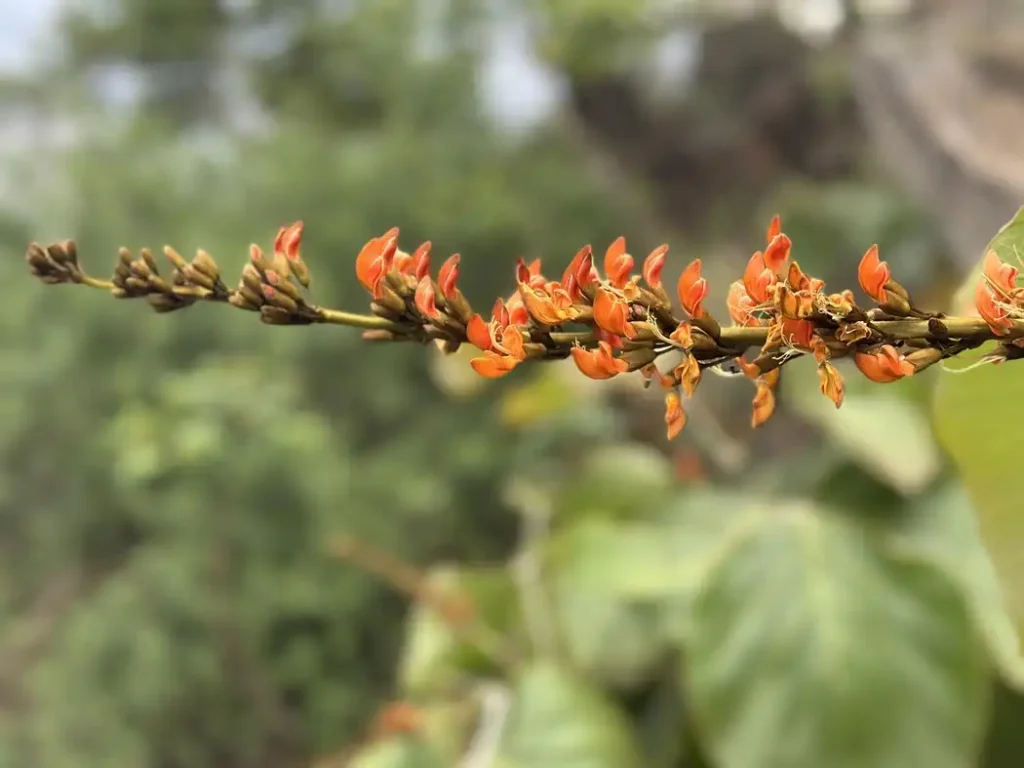
Flora: wild banana stands, citrus trees below 1,800 m, then pine, chestnut, and blooming hibiscus vines closer to Chisapani
Eco-note: You have entered the Manaslu Conservation Area, which opened to overseas trekkers only in 1991. Porters and guides often collect litter en route—consider pocketing snack wrappers until the next lodge bin.
Chisapani has many gorges and forests. However, a ten-minute walk above the village shows clear views of the Siringi Himal. This peak is a sentinel in the Ganesh range.
Clear afternoons sometimes frame distant Ganesh Himal summits farther east. These teaser vistas prime trekkers for the amphitheatre of Manaslu and Ngadi Chuli, which are awaiting up-valley.
Altitude Though 2,215 m is modest, hydrate and rest early to prep for higher camps.
Footwear: Low-cut trail shoes suffice today; ankle boots have become handy beyond Deng.
Permits Your Manaslu Conservation Area Permit (MCAP) and Restricted Area Permit are checked at Jagat and Philim—carry originals.
Cash No ATMs; stock Nepali rupees in Kathmandu for snacks, Wi-Fi, and charging fees.
Connectivity Local SIM service fades after Philim. Some lodges sell satellite Wi-Fi vouchers.
Seasonal Notes: Oct–Nov and Mar–Apr offer stable skies; Jul–Sep can see landslides along the drive.
Rooms are simple pine-wood cubicles with thin mattresses, shared bathrooms, and thick blankets. Solar showers often yield lukewarm water; the spring’s cold flow suits hardy trekkers. Typical dinner menus list dal bhat, veg noodle soup, and Tibetan bread with honey.
Power is solar or micro-hydro; charge devices early in the evening before lights dim. Lodge owners appreciate orders placed all at once—kitchens rely on wood stoves, so group dishes streamline firewood use.
How difficult is the walk from Bangsing to Chisapani?
The path gains roughly 600 m over 5 km—moderate for anyone with basic fitness. The length of the jeep ride is often more tiring than the trek itself.
Can I stop earlier than Chisapani if I’m jet-lagged?
Philim has several lodges at 1,600 m. Staying there means a longer push the following day, but it is acceptable if you need extra rest.
Is a guide mandatory?
Yes. Independent permits have been restricted. Licensed guides ensure safety and smooth checkpoint processing.
Will I see Manaslu itself today?
Not yet. Dense valley walls block the central massif. Your first clear sight of Manaslu appears near Lho two days ahead.
Are there charging points in Chisapani?
Most lodges provide communal multi-plugs in dining rooms for a small fee (≈ NPR 200 per device).
Completing the first stage of the Manaslu Circuit Trek at Chisapani Village offers more than just distance. It surrounds you with a rich mix of history, nature, and faith that few outsiders saw until recent years.
Tomorrow, the trail goes deeper into the Budhi Gandaki gorge. Each bend shows new wonders: cantilever bridges, turquoise streams, and, finally, the tall ice dome of Manaslu. For now, sip ginger tea beneath flickering prayer flags and savour the cool night air that gave Chisapani its name.
Alpine Luxury Treks arranges fully guided Manaslu trek itineraries, dependable jeeps, and knowledgeable local staff. Email [email protected] to secure your permits and join our next departure—places fill quickly each autumn and spring.
Book your Manaslu Circuit trek with confidence. Our expert team takes care of the logistics. This way, you can enjoy the stunning beauty of Nepal’s best-kept circuit.
Reach out today and let Alpine Luxury Treks craft your unforgettable Himalayan story.
See you on the trail—Chisapani is just the beginning!
