Bhutan Buddhist Pilgrimage Tour
Our trips are rated 5 out of 5 in more than 950 traveler reviews.
Trip overview
Our Bhutan Buddhist Pilgrimage Tour is built for travellers who come to Bhutan to practise, not only to look: seven days visiting the country’s most sacred monasteries and temples in Thimphu, Punakha and Paro, with time at each to sit, make offerings and receive blessings. It includes the visa, Sustainable Development Fee, hotels, a guide experienced with pilgrims, a private car and all meals.
It suits Buddhist practitioners of any tradition, and anyone drawn to Bhutan’s living Vajrayana culture. Bhutan is the only country where this form of Buddhism is the state religion, and its monasteries are working places of study and practice.
The pace is unhurried. Rather than ticking off sites, we spend longer at fewer places: the meditation centres of Tango and Cheri above Thimphu, Punakha Dzong and its nunneries, the ancient temple of Kyichu and the cave at Tiger’s Nest.
The honest part is access. Most temples welcome visitors, but some shrine rooms open only at certain hours, and monks’ schedules come first. We plan around them and ask, through our guide, for blessings and lamp offerings where they are possible.
The reward is time in sacred places: walking kora at dawn with local pilgrims, lighting butter lamps at Kyichu Lhakhang, and sitting in the cave where Guru Rinpoche meditated above the Paro valley.
Prices start at US$ 1,485 per person in a group of six or more and US$ 1,780 each for two. For the central temples of Bumthang, see our Bumthang Tour, and for a general first visit, our 6-Day Bhutan Tour.
Highlights
- Tango and Cheri monasteries, meditation centres above the Thimphu valley
- Kyichu Lhakhang, a 7th-century temple, with a butter lamp offering
- Tiger’s Nest, with time to sit in the meditation cave
- Punakha Dzong, winter seat of the central monk body
- Sangchhen Dorji Lhuendrup nunnery above the Punakha valley
- Changangkha Lhakhang, where Thimphu families bring newborns for blessings
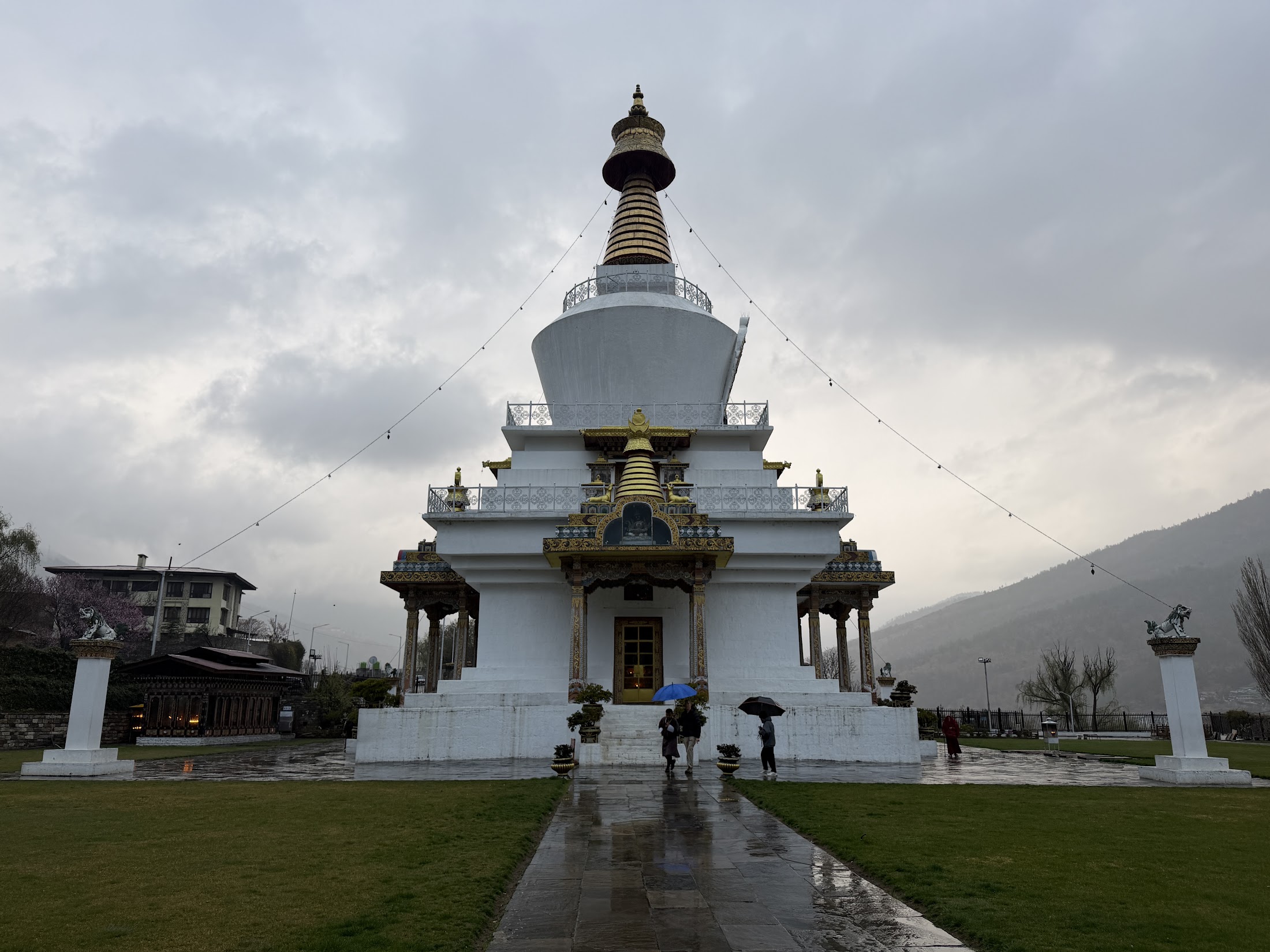
- Dawn kora at the Memorial Chorten with local pilgrims
- A guide experienced with pilgrim groups who explains the practice, not only the history
Itinerary
Altitude profile
On footBy road
The altitude listed for each day, from 1,250 m to 3,120 m. Select a point to read that day.
The highest point on the route is 3,120 m.
- Nights
- 6 nights in 3-star hotels
- Meals in the price
- 6 breakfasts, 6 lunches, 6 dinners
- On the move
- 2 days on foot, 4 days by road
Day 1Paro to Thimphu2,320 m
The Bhutan Buddhist Pilgrimage Tour begins with the landing at Paro, in a valley that holds some of the oldest temples in the Himalaya. Your guide meets you with a white khadar scarf, the traditional offering of welcome and good intention.
We drive about 1.5 hours to Thimphu. On the way we stop at Tamchog Lhakhang, built by the 15th-century saint and bridge-builder Thangtong Gyalpo, and cross his iron chain bridge if it is open. The guide explains his role in Himalayan Buddhism.
After lunch we visit Changangkha Lhakhang, a 12th-century temple on a ridge above the city, dedicated to Avalokiteshvara, the bodhisattva of compassion. Thimphu families bring newborns here to receive their names, and the guide can ask a monk for a blessing.
In the late afternoon we visit Tashichho Dzong, summer seat of the central monk body led by the Je Khenpo. Dinner is at the hotel, and the guide explains the plan for the days ahead, including the dawn kora tomorrow. Tonight is in a 3-star hotel in Thimphu.
- TravelCar, 1-3 hours
- Stay3-Star Hotel
- MealsLunch, Dinner
Day 2Cheri and Tango Monasteries2,600 m
The day starts before breakfast on the Bhutan Buddhist Pilgrimage Tour. We walk to the Memorial Chorten at dawn and join Thimphu’s elders in their kora, circling the white stupa, spinning prayer wheels and reciting mantras.
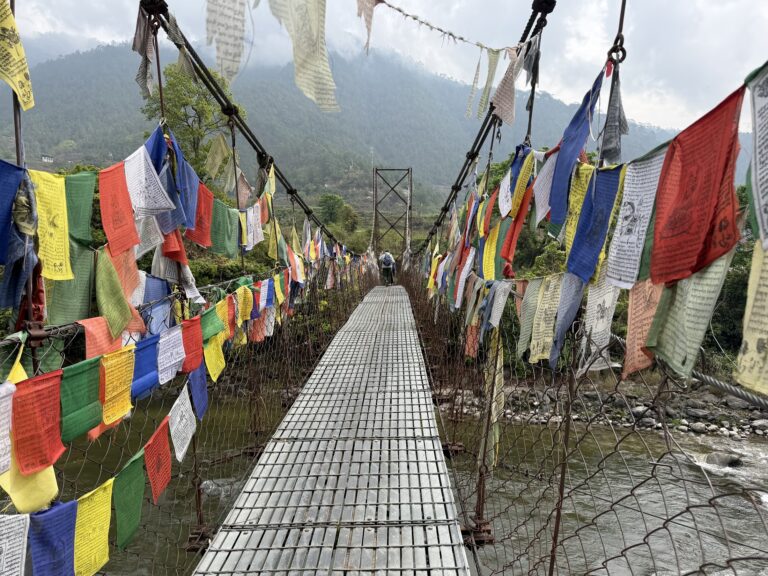
After breakfast we drive about 30 minutes north to Dodina and cross a covered bridge to begin the walk to Cheri Monastery, founded in 1620 by Zhabdrung Ngawang Namgyal, who unified Bhutan. The climb takes about an hour through forest, and goral are often seen on the cliffs.
Cheri holds the silver chorten containing the ashes of the Zhabdrung’s father, and a small community of monks lives here in retreat. Time is set aside to sit quietly in the shrine before walking back down.
In the afternoon we visit Tango Monastery on the facing hill, a centre of Buddhist study associated with the reincarnation of the Desi Tenzin Rabgye. Its curved main building is unusual in Bhutan. We return to Thimphu for dinner and the second night in the same hotel.
- TravelHiking, 4-6 hours
- Stay3-Star Hotel
- MealsBreakfast, Lunch, Dinner
Day 3Thimphu to Punakha1,250 m
Today the Bhutan Buddhist Pilgrimage Tour crosses the Dochula Pass at about 3,100 m. At the top stand 108 small chortens, built to honour the fourth king, and Druk Wangyal Lhakhang, whose murals show modern Bhutanese history in a traditional style.
On clear mornings from October to February, the snow peaks of the northern border fill the skyline. Many pilgrims hang prayer flags here; the guide can help you choose the colours and hang them in the right way.
We descend to Punakha, about 3 hours from Thimphu in all, and visit Punakha Dzong at the meeting of the Pho Chhu and Mo Chhu rivers. It holds the sacred Rangjung Kharsapani, a self-arisen image of Avalokiteshvara, and the embalmed body of the Zhabdrung in a sealed chamber.
The dzong is the winter seat of the central monk body, and in the cold months you may hear the monks’ chanting in the assembly hall. Tonight is in a 3-star hotel in the Punakha valley.
- TravelCar, 1-3 hours
- Stay3-Star Hotel
- MealsBreakfast, Lunch, Dinner
Day 4Punakha Nunnery and Chimi Lhakhang2,250 m
This morning the Bhutan Buddhist Pilgrimage Tour visits Sangchhen Dorji Lhuendrup Nunnery, on a ridge above the Punakha valley. Built by the Queen Mother, it houses a large statue of Avalokiteshvara and a community of nuns who study meditation, ritual and life skills.
The nuns are often at prayer in the morning, and visitors may sit quietly at the back of the hall. The terrace looks over the Punakha valley and the river winding towards Wangdue.
Before leaving the valley, we walk about 20 minutes through rice fields to Chimi Lhakhang, the 15th-century temple of Drukpa Kunley, the Divine Madman. His teachings used humour and provocation to cut through attachment, and couples come here from across the region to pray for children.
After lunch we drive about 4 hours back over the Dochula to Paro. Tonight is the first of three nights in a 3-star hotel in the Paro valley. The guide explains the lamp offering planned for tomorrow at Kyichu.
- TravelCar, 4-6 hours
- Stay3-Star Hotel
- MealsBreakfast, Lunch, Dinner
Day 5Paro Temples2,250 m
The Paro day of the Bhutan Buddhist Pilgrimage Tour begins at Kyichu Lhakhang, one of the two oldest temples in Bhutan, said to have been built in the 7th century by the Tibetan king Songtsen Gampo to pin down a demoness lying across the Himalaya.
Here we offer butter lamps in the lamp house, a practice of making light as an offering for wisdom and the benefit of all beings. The guide explains the prayers, and there is time to sit in the inner temple, which holds an image of the young Buddha Shakyamuni.
Next we visit Dungtse Lhakhang, a three-storey temple built by Thangtong Gyalpo in the shape of a chorten, with some of the finest paintings in Bhutan. Access to the upper floors may need permission, which the guide requests in advance.
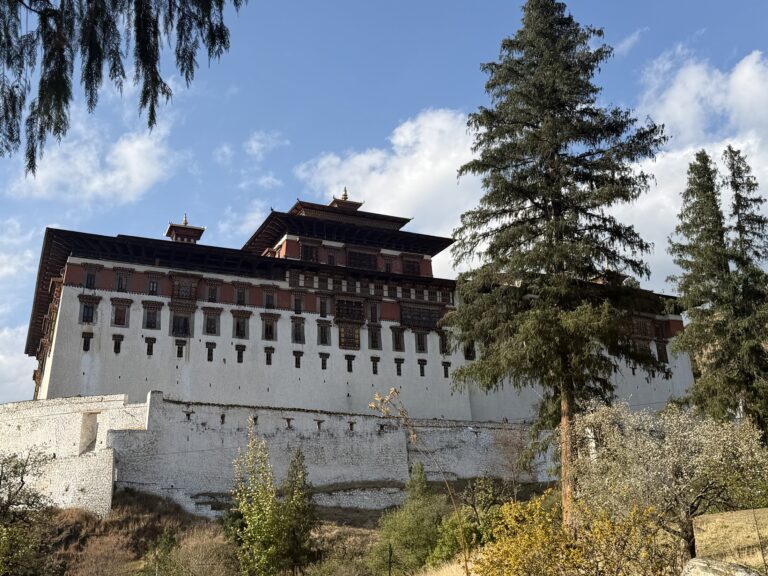
In the afternoon we visit Rinpung Dzong, home of the Paro monk body, and the National Museum, whose thangkas and ritual objects help explain what you have seen. The evening is free for reflection. Tonight is in the same Paro hotel.
- TravelSightseeing, 1-3 hours
- Stay3-Star Hotel
- MealsBreakfast, Lunch, Dinner
Day 6Tiger's Nest Pilgrimage3,120 m
The final pilgrimage of the Bhutan Buddhist Pilgrimage Tour is to Taktsang, the Tiger’s Nest, one of the most sacred sites of the Himalaya. We start early, about 7.30 am, so you reach the monastery before the busiest hours.
The trail climbs about 900 m through blue pine to roughly 3,120 m, which takes 2 to 3 hours. Prayer flags and water-driven prayer wheels line the path, and many local pilgrims walk it as an act of devotion.
Taktsang is built around the cave where Guru Rinpoche is said to have meditated for three years, three months, three weeks and three days in the 8th century, after arriving on a flying tigress. We allow time to sit in the shrines and, where possible, in the cave chapel itself.
After the descent, about 1.5 hours, the afternoon is free. A hot stone bath at a farmhouse can be booked at extra cost. Tonight is a farewell dinner, and the guide is glad to talk about practice and texts if you wish.
- TravelHiking, 4-6 hours
- Stay3-Star Hotel
- MealsBreakfast, Lunch, Dinner
Day 7Depart from Paro2,250 m
The Bhutan Buddhist Pilgrimage Tour ends with a short drive to Paro airport. Most flights leave in the morning, and the guide confirms your pickup time the evening before.
If time allows, we stop at a roadside chorten for a last kora, or visit Paro’s small shops for prayer flags, incense and malas to take home. The guide can advise on authentic items.
Your guide helps with check-in and says goodbye at the terminal door. Keep your visa letter with your passport for the exit check.
Many pilgrims continue to Nepal, where we are based, to visit Boudhanath, Swayambhunath and the birthplace of the Buddha at Lumbini. We can arrange that journey on the same booking.
If you prefer a quiet day before a long-haul flight, ask us to add a night in Paro or Kathmandu. May the merit of your journey benefit all beings, and may we welcome you back to Bhutan.
- TravelCar, 30-60 minutes
- MealsBreakfast
What's included
Included in the price
- Bhutan visa: the visa application and US$ 40 fee
- Sustainable Development Fee: US$ 100 per person for each of the 6 nights
- Airport transfers: pickup and drop at Paro airport
- Hotels: 3-star rooms, twin share, in Thimphu, Punakha and Paro
- All meals: from lunch on arrival to breakfast on departure, vegetarian on request
- Guide: a licensed English-speaking guide experienced with pilgrim groups
- Vehicle: a private car or van with driver throughout
- Butter lamp offering: one lamp offering at Kyichu Lhakhang
- Route permits: permits for Punakha
- Entrance fees: every site on the itinerary, including Tiger’s Nest
- Drinking water: bottled water in the vehicle
- Welcome scarf: a khadar greeting at the airport
- Taxes: all government taxes and service charges
- Support: 24-hour contact with our team during the tour
- Flexible schedule: visits timed around temple hours and monks’ schedules
Not included
- Flights to and from Paro on Drukair or Bhutan Airlines
- International airfare to your connecting city
- Travel insurance with medical cover
- Single supplement for your own room
- Personal offerings and donations to monasteries
- Private pujas or ceremonies beyond the included lamp offering
- Drinks other than water, tea and coffee
- Extra nights caused by flight delays
- Tips for the guide and driver
- Personal costs such as prayer flags, malas and souvenirs
Dates and price
These are our fixed group dates. Prices change with the season, so each date shows its own price. Please book at least 30 days ahead, so we have time to arrange your Bhutan visa.
US$ 1,780per person
| Starts | Ends | Status | Price | Book |
|---|---|---|---|---|
| Departs: Fixed group dates. Book your date | ||||
Trip information
Price by Group Size
| Group size | Price per person |
|---|---|
| 1 traveller (private) | US$ 2,230 |
| 2 travellers | US$ 1,780 |
| 3 to 5 travellers | US$ 1,605 |
| 6 to 12 travellers | US$ 1,485 |
To book: pick a departure below and pay a 20% deposit. The balance is due before we lodge your Bhutan visa, about 30 days before you fly.
Joining alone: solo pilgrims can join any date and pay the rate for the group that travels; once six or more are booked, we refund the difference.
Private pilgrimage: the Bhutan Buddhist Pilgrimage Tour runs privately on any date, and private groups can add a teacher’s blessing, a puja or extra days at Tiger’s Nest or in Bumthang.
Not in the price: Paro flights, insurance, personal offerings, drinks and tips. Six nights of Bhutan’s SDF, US$ 600 per person, are already included.
Best Time to Visit
The Bhutan Buddhist Pilgrimage Tour runs all year, with group departures on the 1st, 11th and 21st of each month. Temples are open in every season, but certain dates carry special meaning.
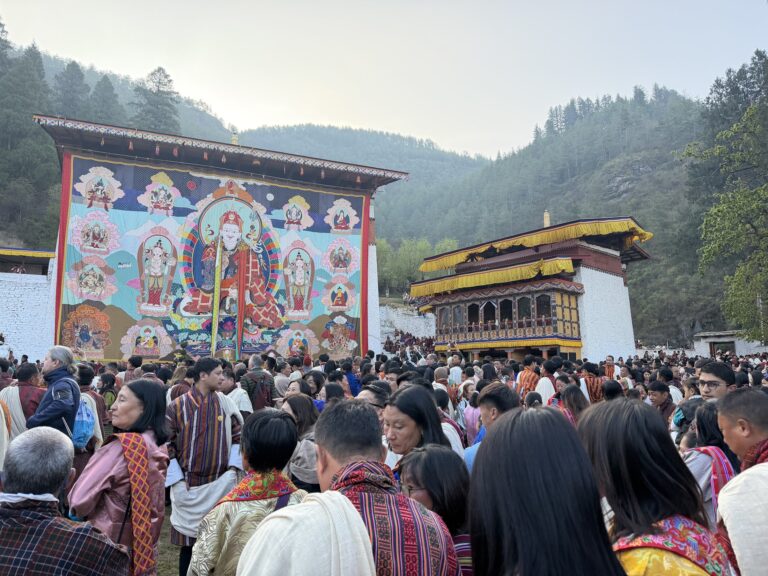
Festival months bring the monasteries to life. The Punakha Drubchen and Tshechu usually fall in February or March, the Paro Tshechu in March or April, and the Thimphu Tshechu in September or October, all following the lunar calendar.
Auspicious days in the Buddhist calendar, such as the anniversary of the Buddha’s enlightenment, draw large numbers of local pilgrims to the temples. We can align a private trip with these dates if you tell us your wishes when booking.
Weather is best from March to May and September to December. The June to August monsoon brings rain but quieter temples, which some pilgrims prefer.
Difficulty and Fitness
The Bhutan Buddhist Pilgrimage Tour is easy, with two moderate walks. The hike to Cheri Monastery climbs about 300 m in about an hour, and Tango Monastery is a similar climb on a separate path; we usually visit one on foot and reach the other by road and short walk.
The Tiger’s Nest hike climbs about 900 m to roughly 3,120 m, about 5 hours there and back with time to sit inside. Horses can carry you up the first half at extra cost.
Drives are moderate: about 1.5 hours from Paro to Thimphu, about 3 hours to Punakha and about 4 hours from Punakha to Paro.
Sitting for meditation on temple floors can be hard on knees and backs. Bring a small cushion if you use one, and tell us about any mobility needs so we can plan accordingly.
Food, Water and Dietary Needs
All meals are included on the Bhutan Buddhist Pilgrimage Tour, at hotels and local restaurants. Many pilgrims prefer vegetarian food, which is easy to arrange throughout Bhutan.
Bhutanese vegetarian dishes include ema datshi, chillies in cheese, kewa datshi, potatoes in cheese, and red rice with seasonal vegetables. Vegan and gluten-free meals can be arranged with notice.
On auspicious days, some local people avoid meat entirely, and many restaurants follow suit. If you keep particular fasting or eating practices, let us know and we will plan meals around them.
Tap water is not safe to drink. Bottled water is kept in the vehicle, and many hotels have filtered water for refills.
Butter tea and suja are offered at some monasteries; it is polite to accept a little, even if you only sip it. Tell us about allergies at booking so the guide can brief each kitchen.
Altitude, Health and Safety
The Bhutan Buddhist Pilgrimage Tour stays at moderate heights, from about 1,250 m in Punakha to about 2,320 m in Thimphu, with day visits to Cheri and Tango at about 2,600 m and Tiger’s Nest at about 3,120 m.
Altitude illness is rare at these heights. Walk slowly on the first day, drink plenty of water and rest if you feel breathless on temple stairs.
Bhutan is very safe, and your guide is with you at every site. Thimphu has the national referral hospital, and Punakha and Paro have district hospitals.
Your insurance should include medical cover. If you have heart or lung conditions, ask your doctor about the Tiger’s Nest and Cheri walks before you travel.
Carry any regular medicines with you.
Local Etiquette
On the Bhutan Buddhist Pilgrimage Tour you visit active monasteries, so respectful conduct matters more than ever. Wear long sleeves and long trousers or skirts, remove hats and shoes before shrine rooms, and keep voices low.
Walk clockwise around temples, chortens and prayer wheels. Prostrations and offerings are welcome; the guide can show local customs, such as offering a white scarf or a small note on the altar.
Photography is not allowed inside shrine rooms, and some monasteries restrict it in courtyards too. Do not touch statues, texts or ritual objects, and never point your feet towards an altar or a lama.
Monks and nuns are often happy to talk, but they have schedules of study and prayer. Ask through the guide before approaching, and offer donations into the box rather than directly by hand unless invited.
Visa, Permits and Documents
Everyone except Indian, Bangladeshi and Maldivian nationals needs a Bhutan visa, arranged by a licensed operator. We apply for your visa for the Bhutan Buddhist Pilgrimage Tour once the balance is paid.
We need a passport scan, valid six months beyond arrival, and a passport photo. The visa costs US$ 40 and the SDF is US$ 100 per person per night until 31 December 2029; both are included.
Travel to Punakha needs a route permit, which we arrange. Some inner shrines need special permission, which the guide requests where possible; we cannot guarantee access to every room.
Print the visa clearance letter for check-in and arrival. Indian nationals need a permit instead and pay a lower SDF, and many Indian pilgrims travel with us on this route. Official rules are on bhutan.travel.
Transport, Money and Connectivity
You fly in and out of Paro on Drukair or Bhutan Airlines, from Kathmandu, Delhi, Kolkata, Bagdogra, Bangkok or Singapore. Many pilgrims combine Bhutan with Buddhist sites in Nepal, such as Lumbini and Boudhanath.
Your private car and driver cover every transfer, so you can stop at roadside chortens and prayer wheels whenever you wish.
The ngultrum is Bhutan’s currency, tied to the Indian rupee. Bring small notes for offerings and donations, as temples have donation boxes but no change. Cards work in larger hotels and shops only.
A B-Mobile or TashiCell SIM works in all three valleys. Hotels have Wi-Fi, and many pilgrims choose to keep phones away during temple visits.
Your driver waits at each temple, so there is never a rush to leave a place of practice before you are ready.
Questions about this trip
What does the Bhutan Buddhist Pilgrimage Tour include?
The Bhutan Buddhist Pilgrimage Tour visits Changangkha, Cheri and Tango in Thimphu, Punakha Dzong and the Sangchhen Dorji Lhuendrup nunnery, Chimi Lhakhang, Kyichu and Dungtse in Paro, and Tiger’s Nest. The price covers the visa, SDF, hotels, meals, guide, car, fees and a butter lamp offering.
How much does the Bhutan Buddhist Pilgrimage Tour cost?
The Bhutan Buddhist Pilgrimage Tour costs from US$ 1,485 per person in a group of six or more, US$ 1,605 for three to five, US$ 1,780 each for two and US$ 2,230 for one. Prices include the visa, six nights of SDF, hotels, all meals, guide and car.
Do I need to be Buddhist to join the Bhutan Buddhist Pilgrimage Tour?
No. The Bhutan Buddhist Pilgrimage Tour welcomes anyone with a sincere interest in Buddhism. Practitioners of any tradition will find time to practise, and others learn about Vajrayana Buddhism from a guide experienced with pilgrim groups. Curiosity and respect are enough.
Can I meditate at the monasteries?
Yes, where it is allowed. The Bhutan Buddhist Pilgrimage Tour sets aside time to sit quietly at Cheri, Kyichu Lhakhang, the Punakha nunnery and Tiger’s Nest. Some shrines have set hours or restrictions, and the guide asks permission on your behalf.
Can we arrange a blessing or puja?
Yes. Our guide can request blessings from monks at several temples on the Bhutan Buddhist Pilgrimage Tour, and a butter lamp offering at Kyichu Lhakhang is included. Private pujas or ceremonies can be arranged at extra cost, subject to the monastery’s schedule.
What is the best time for the Bhutan Buddhist Pilgrimage Tour?
The Bhutan Buddhist Pilgrimage Tour runs all year. Festival months, such as February to April and September to October, bring sacred dances to the dzongs, and auspicious days in the Buddhist calendar draw local pilgrims. We can time a private trip to suit.
How hard is the Bhutan Buddhist Pilgrimage Tour?
The Bhutan Buddhist Pilgrimage Tour is easy, with two moderate walks: about an hour up to Cheri Monastery, and the Tiger’s Nest hike of about 5 hours there and back. Horses can carry you partway up to Tiger’s Nest. Most people manage both walks.
Is vegetarian food available on the Bhutan Buddhist Pilgrimage Tour?
Yes. Vegetarian food is easy throughout Bhutan, and many pilgrims choose it on the Bhutan Buddhist Pilgrimage Tour. Vegan and gluten-free meals can be arranged with notice, and we can plan around fasting days or other practices if you tell us.
Can Indian pilgrims join this tour?
Yes. Indian nationals travel to Bhutan with a permit rather than a visa and pay a lower SDF. Many Indian pilgrims join the Bhutan Buddhist Pilgrimage Tour, and we can quote the Indian rate and arrange entry by air or by road through Phuentsholing.
Do I need a visa for the Bhutan Buddhist Pilgrimage Tour?
Yes, unless you are Indian, Bangladeshi or Maldivian. We arrange the Bhutan visa for the Bhutan Buddhist Pilgrimage Tour once your balance is paid. The US$ 40 visa fee, the nightly SDF and route permits are included in our price.
How much is the SDF on the Bhutan Buddhist Pilgrimage Tour?
The SDF on the Bhutan Buddhist Pilgrimage Tour is US$ 600 per person, since Bhutan charges US$ 100 per person for each of the six nights. The rate is confirmed until 31 December 2029 and is already included in every price shown.
What should I wear to the monasteries?
On the Bhutan Buddhist Pilgrimage Tour, wear long sleeves and long trousers or skirts, with no caps, shorts or flip-flops in temples. A shawl or scarf is useful. You remove shoes and hats in shrine rooms, so slip-on shoes save time.
Can I photograph inside the temples?
No. Photography is not allowed inside shrine rooms in Bhutan, and some monasteries restrict it in courtyards too. On the Bhutan Buddhist Pilgrimage Tour, the guide tells you where cameras are allowed, and phones stay in lockers at Tiger’s Nest.
What is the significance of Tiger's Nest?
Taktsang, the Tiger’s Nest, is built around a cave where Guru Rinpoche is said to have meditated in the 8th century after arriving on a flying tigress. It is one of the holiest sites of Himalayan Buddhism, and the Bhutan Buddhist Pilgrimage Tour allows time to sit there.
Can I combine the Bhutan Buddhist Pilgrimage Tour with Nepal?
Yes. Many pilgrims add Boudhanath, Swayambhunath and Lumbini, the birthplace of the Buddha, in Nepal. We are based in Kathmandu and can arrange both countries, the flights and every transfer as one booking with our own team. Lumbini is a short flight from Kathmandu.
Is the Bhutan Buddhist Pilgrimage Tour private or a group?
The Bhutan Buddhist Pilgrimage Tour runs as a small group of up to 12 on fixed dates every ten days, or privately on any date. Private groups, including dharma centres and sanghas, can add teachings, pujas or extra days. Solo travellers can join group dates.
Can a dharma centre book this as a group retreat?
Yes. Dharma centres and sanghas often book the Bhutan Buddhist Pilgrimage Tour as a private group. We can adjust the pace, add practice time, arrange meetings with monks where possible and quote a group rate for larger numbers. Ask us for a quote.
Where do we stay on the Bhutan Buddhist Pilgrimage Tour?
On the Bhutan Buddhist Pilgrimage Tour you stay in 3-star hotels on a twin-share basis: two nights in Thimphu, one in Punakha and three in Paro, all with private bathrooms. Quieter rooms can be requested for meditation. Upgrades are possible.
Should I bring offerings?
You may wish to bring small offerings, such as white scarves, incense or small notes, which are common in Bhutan. On the Bhutan Buddhist Pilgrimage Tour, the guide can buy scarves and lamps locally and show you how and where to offer them.
Is Bhutan safe for pilgrims?
Yes. Bhutan is one of the safest countries in Asia, and on the Bhutan Buddhist Pilgrimage Tour your guide is with you at every site. Thimphu has the national referral hospital, and Punakha and Paro have district hospitals. Crime against visitors is very rare.
Do I need travel insurance for the Bhutan Buddhist Pilgrimage Tour?
Yes. Insurance for the Bhutan Buddhist Pilgrimage Tour should include medical cover, evacuation and cancellation. Bhutan expects visitors to hold health cover during their stay, so send us your policy details and carry a copy with your visa letter. The guide keeps a copy.
What makes your Bhutan Buddhist Pilgrimage Tour different?
Our Bhutan Buddhist Pilgrimage Tour gives time to practise, not just visit: a dawn kora, time to sit at Cheri, the nunnery and Tiger’s Nest, and a butter lamp offering at Kyichu. Our guide is experienced with pilgrim groups and arranges blessings where possible.
Ask us about the Bhutan Buddhist Pilgrimage Tour
We reply from Kathmandu within 24 hours with available dates, your exact price and answers to your questions.
- 16 years guiding in the Himalaya
- Registered in Nepal, Reg. 187391
- Group departures of 12 travelers at most
- Private dates on any day
Call, WhatsApp or Viber
Bhutan Buddhist Pilgrimage Tour, from US$ 1,485 per person. Dates and booking at treknepalhimalayas.com/trip/bhutan-buddhist-pilgrimage-tour/
Trek Nepal Himalayas Pvt Ltd, Reg. 187391. Bhagawatisthan, Thamel, Kathmandu, Nepal. Call or WhatsApp +977 98510 13196. [email protected]