Bumdra Trek
Our trips are rated 5 out of 5 in more than 950 traveler reviews.
Trip overview
The Bumdra Trek is Bhutan’s shortest camping trek: a climb from the Paro valley to a high meadow camp at about 3,800 m beside Bumdra Monastery, then a descent the next day past the cliffs of Tiger’s Nest. Our 6-day Bumdra Trek wraps those two walking days with a Chele La hike, a day in Thimphu and hotel nights in Paro.
It suits travellers who want one night under the Himalayan sky without committing to a week in tents. Families with older children, first-time trekkers and anyone short on time do well on it.
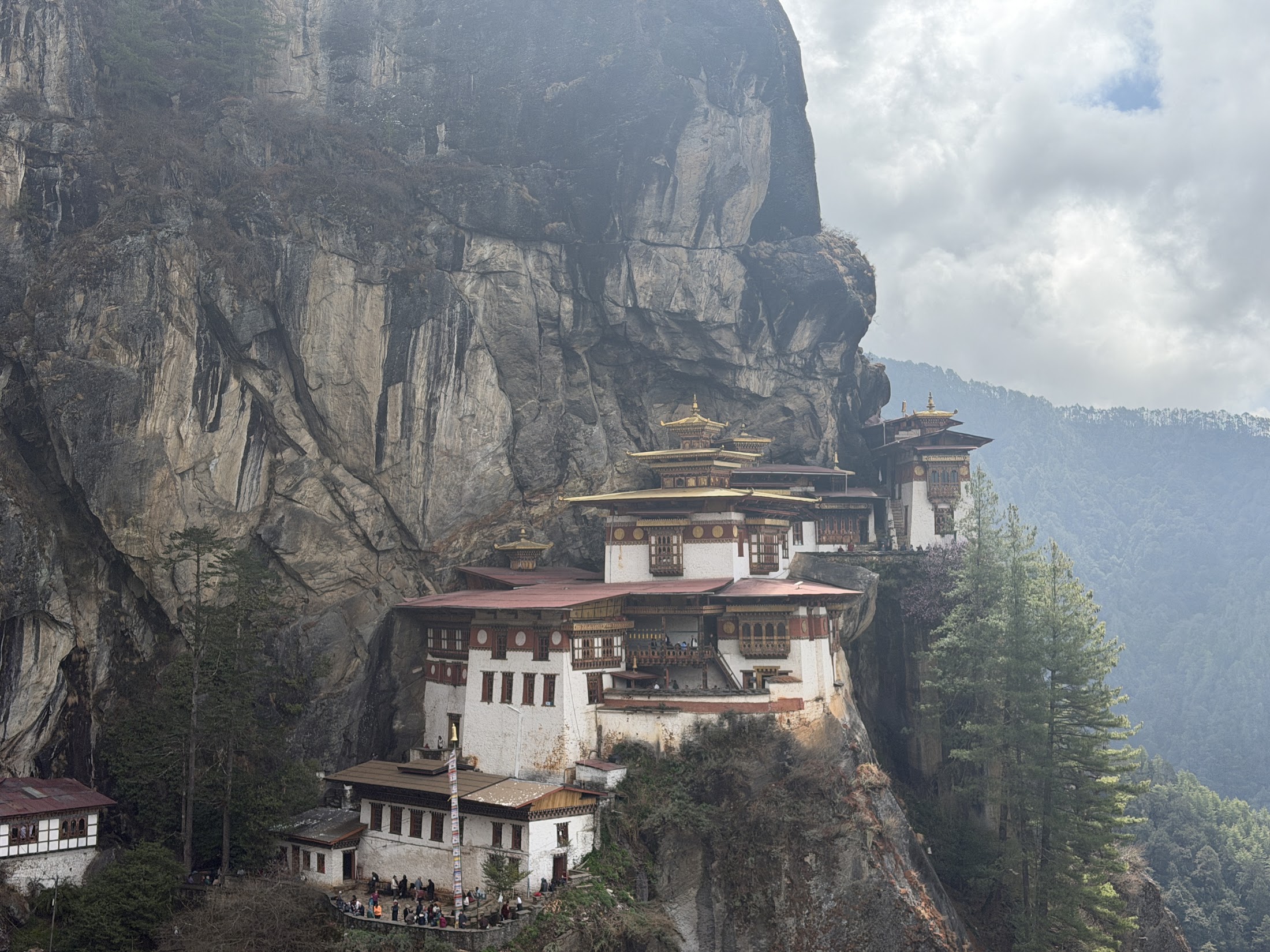
The route has a neat shape. You go up by one ridge and come down by another, finishing at Tiger’s Nest from above, so you visit the monastery on the way down rather than climbing to it from the car park like most visitors.
The hard part is the first afternoon. The climb from Sangchen Choekor to the camp gains about 1,000 m in 4 to 5 hours, and the descent past Tiger’s Nest the next day drops about 1,500 m, which is hard on knees.
The reward is the camp itself: a meadow on a ridge with prayer flags, the small Bumdra temple built around a cave, and on clear evenings a view of Jomolhari and the peaks along the Tibetan border.
Prices start at US$ 1,295 per person in a group of six or more and US$ 1,555 each for two. Want more time on the trail? Try the Druk Path Trek, or see our 7-day Bhutan tour for a version with no camping at all.
Highlights
- A night at Bumdra, a ridge-top meadow camp at about 3,800 m
- Bumdra Monastery, a small temple built around a meditation cave
- Tiger’s Nest from above, visited on the way down the next morning
- Views of Jomolhari and the northern peaks on clear evenings
- Sangchen Choekor, a Buddhist college at the trailhead above Paro
- Chele La, Bhutan’s highest road pass, for a warm-up hike
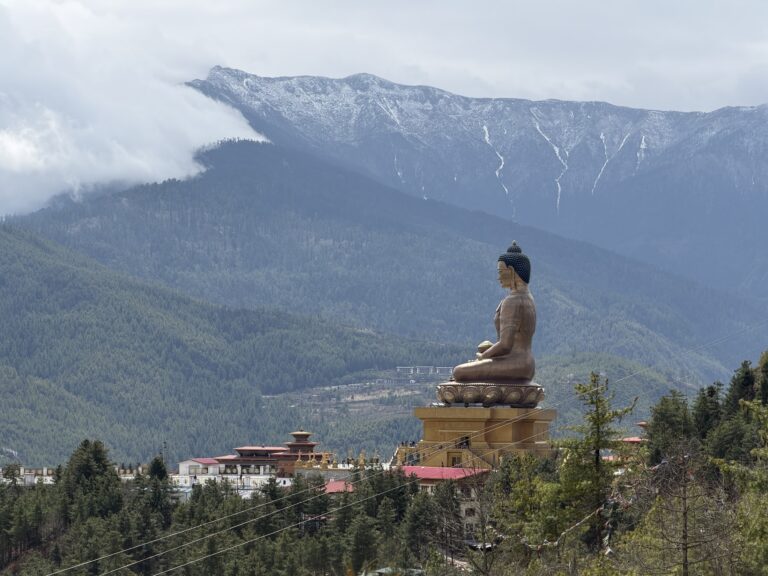
- A day in Thimphu with the dzong, the Buddha Dordenma and the Memorial Chorten
- Departures every ten days from spring through December
Itinerary
Altitude profile
On footBy road
The altitude listed for each day, from 2,250 m to 3,800 m. Select a point to read that day.
The highest point on the route is 3,900 m.How we handle altitude
- Nights
- 4 nights in 3-star hotels, 1 night in a tent
- Meals in the price
- 5 breakfasts, 5 lunches, 5 dinners
- On the move
- 3 days on foot, 2 days by road, 1 day with a flight
Day 1Arrive in Paro2,250 m
Your Bumdra Trek begins as the plane drops between the hills into the Paro valley at about 2,250 m. On a clear flight from Kathmandu, the left-hand windows show the high Himalaya, including Everest, before the descent.
Your guide meets you at arrivals with a white scarf and drives you a few minutes to the hotel. After lunch, the afternoon is easy, giving you time to adjust to the height.
Later we visit Rinpung Dzong, reached by a covered wooden bridge, and walk through its courtyards if they are open. From the dzong you can look up at the ridge you will climb in two days.
At dinner the guide explains the trek and checks your shoes, layers and day pack. We provide the sleeping bag for the camp night, so you only need warm clothes and a headtorch. Tonight is in a 3-star hotel in Paro.
Lunch and dinner are included today, and Paro’s main street of painted shops is a short walk from the hotel.
- TravelFlight, 1-3 hours
- Stay3-Star Hotel
- MealsLunch, Dinner
Day 2Chele La Hike3,500 m
Today’s warm-up for the Bumdra Trek takes us to the Chele La, at about 3,988 m the highest road pass in Bhutan. The drive from Paro takes about 1.5 hours through blue pine and rhododendron forest.
From near the pass we walk along a ridge and down to Kila Goenpa, a nunnery built into the cliffs at about 3,500 m. The walk takes 3 to 4 hours, mostly downhill, with the Haa and Paro valleys spread out on either side.
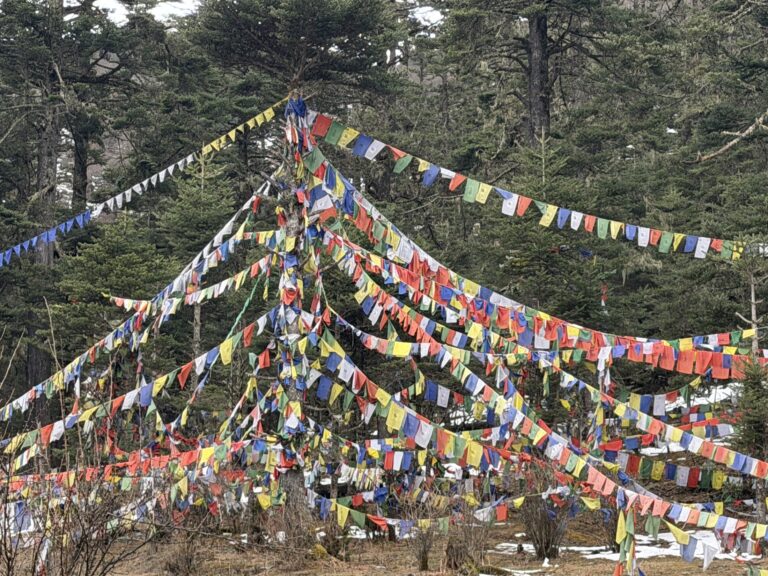
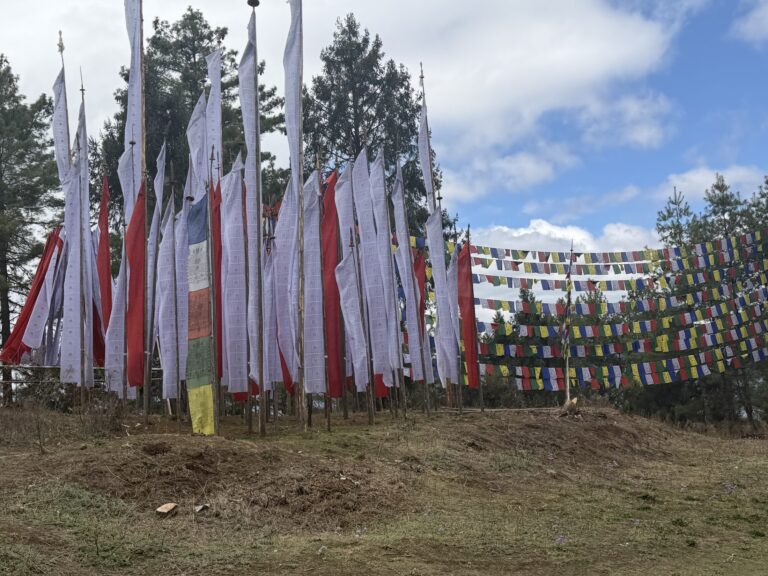
On clear mornings the Chele La shows Jomolhari and Jichu Drake to the north. Prayer flags cover the pass, and the guide explains why families hang them for luck, health and the memory of loved ones.
After the hike, our vehicle picks you up below the nunnery and drives back to Paro. Spending the day above 3,500 m and sleeping low helps the body prepare for tomorrow’s camp. Tonight is in the same Paro hotel.
- TravelHiking, 4-6 hours
- Stay3-Star Hotel
- MealsBreakfast, Lunch, Dinner
Day 3Trek to Bumdra3,800 m
The trek starts at Sangchen Choekor, a Buddhist college about 30 minutes above Paro town at around 2,800 m. From here we climb about 1,000 m over about 5 km to the Bumdra camp, which takes 4 to 5 hours.
The trail rises through blue pine and then rhododendron, with prayer flags strung across the steeper sections. There are clearings with views over the Paro valley, the airport runway and the town far below.
Lunch is a hot picnic on the way. The horses take a separate path with the tents and arrive before you, so camp is ready when you reach the meadow.
Bumdra sits on a grassy ridge beside a small temple built around a cave. Its name is linked to a legend of a hundred thousand dakinis visiting the site.
If the evening is clear, Jomolhari glows at sunset, and the stars are bright once darkness falls. Dinner is served in the dining tent.
- TravelTrekking, 4-6 hours
- StayTented Camp
- MealsBreakfast, Lunch, Dinner
Day 4Bumdra to Tiger's Nest and Paro2,250 m
Wake early for sunrise from the ridge, then take breakfast before setting off. Today’s walk of about 7 km descends roughly 1,500 m to the valley, with a long stop at Tiger’s Nest, 5 to 6 hours in all.
First we climb briefly to a ridge at about 3,900 m with prayer flags and the best view of the day. Then the trail drops through forest to the temples above Tiger’s Nest, including Ugyen Tsemo, perched on the hill over the main monastery.
At Taktsang, the guide leads you through the chapels and tells the story of Guru Rinpoche and the tigress. You arrive from above, which few visitors do, and the crowds are often lighter in the late morning.
From the monastery we follow the main path down to the car park, about 1.5 hours, and drive back to Paro. Tonight is in a Paro hotel. A hot stone bath at a farmhouse is a good way to rest your legs; ask the guide to book it, at extra cost.
- TravelTrekking, 4-6 hours
- Stay3-Star Hotel
- MealsBreakfast, Lunch, Dinner
Day 5Paro to Thimphu2,320 m
After the trek we spend a day in Thimphu, about 1.5 hours by road from Paro. The road follows the river through the gorge and past Chhuzom, where the Paro and Thimphu rivers meet.
We start at the Buddha Dordenma, a 51 m bronze and gold statue on a hill above the city. Then we visit the Memorial Chorten, where local people walk circuits and spin prayer wheels from early morning.
After lunch you can choose the Folk Heritage Museum, the National Institute for Zorig Chusum or the Takin Preserve. Each gives a different window on Bhutanese life, and the guide adjusts the plan to your interests.
In the late afternoon we visit Tashichho Dzong, the seat of government, after its offices close. Dinner is in town, and tonight is in a 3-star hotel in Thimphu.
While in Thimphu, look for the policeman directing traffic at the main junction: the capital famously has no traffic lights.
- TravelCar, 1-3 hours
- Stay3-Star Hotel
- MealsBreakfast, Lunch, Dinner
Day 6Depart from Paro2,250 m
The Bumdra Trek ends with the drive from Thimphu back to Paro airport, about 1.5 hours. Paro flights usually leave in the morning, and the guide will confirm your pickup time the evening before.
On the way we pass Tamchog Lhakhang with its iron chain bridge, and the three chortens at Chhuzom. If there is time, we stop for a few photos and a last cup of butter tea by the river.
The guide helps with check-in and says goodbye at the terminal. Keep your visa letter with your passport for the exit check.
If you are travelling on to Nepal, we can book your Kathmandu hotel, transfers and any sightseeing or trek there as part of the same trip. For a long-haul flight, adding a buffer night in Paro or Kathmandu is easy; just ask when you book.
Thank you for trekking with us in Bhutan; we hope Bumdra’s sunset stays with you.
- TravelCar, 1-3 hours
- MealsBreakfast
What's included
Included in the price
- Bhutan visa: the visa application and US$ 40 fee
- Sustainable Development Fee: US$ 100 per person for each of the 5 nights
- Airport transfers: pickup and drop at Paro airport
- Hotels: 3-star rooms, twin share, in Paro and Thimphu
- Camping: two-person tents, mats, a dining tent and a toilet tent at Bumdra
- All meals: from lunch on arrival to breakfast on departure
- Drinking water: boiled and filtered at camp, bottled on the road
- Guide: a licensed English-speaking Bhutanese guide
- Camp crew: a cook and assistant for the night at Bumdra
- Pack horses: horses and a horseman to carry the camp to Bumdra
- Vehicle: private transport with a driver throughout
- Trek permit: the Bumdra route permit
- Entrance fees: Tiger’s Nest and the sights in Paro and Thimphu
- Sleeping bag: a warm sleeping bag for the camp night
- Safety kit: first-aid kit and pulse oximeter carried by the guide
Not included
- Paro flights on Drukair or Bhutan Airlines, which we can book at cost
- International airfare to your connecting city
- Travel insurance with medical cover and helicopter evacuation
- Single supplement for your own room or tent
- Drinks other than water, tea and coffee
- Down jacket, which can be rented in Paro
- Extra nights from flight changes
- Laundry, phone and internet
- Tips for the guide, driver, cook and horseman
- Personal costs such as souvenirs and hot stone baths
Dates and price
These are our fixed group dates. Prices change with the season, so each date shows its own price. Please book at least 30 days ahead, so we have time to arrange your Bhutan visa.
US$ 1,555per person
| Starts | Ends | Status | Price | Book |
|---|---|---|---|---|
| Departs: Fixed group dates. Book your date | ||||
Trip information
Price by Group Size
| Group size | Price per person |
|---|---|
| 1 traveller (private) | US$ 1,940 |
| 2 travellers | US$ 1,555 |
| 3 to 5 travellers | US$ 1,400 |
| 6 to 12 travellers | US$ 1,295 |
To book: choose a date below and pay a 20% deposit to secure it. The balance is due before we lodge your Bhutan visa, about 30 days before you fly.
Joining alone: solo travellers can join any departure and pay the rate for the group size that travels; when six or more are booked, we refund the difference.
Private trip: the Bumdra Trek can run privately on almost any date outside the monsoon, at the one or two traveller rate.
Not in the price: flights to Paro, insurance, drinks and tips. Five nights of Bhutan’s SDF, US$ 500 per person, are already included.
Best Time to Visit
The Bumdra Trek has a longer season than Bhutan’s high treks, because the camp is below 4,000 m. We run group dates from March to May and from September to December, leaving on the 1st, 11th and 21st.
October to December is the clearest time. The view of Jomolhari from the camp is most reliable then, and the dry air makes for sharp stars at night, though the camp is frosty by December.
Spring is mild and green, with rhododendrons flowering on the ridge in April. Haze is more likely in the afternoons, so the best views come at sunset and early the next morning.
We avoid June to August, when monsoon cloud sits on the ridge and the trail is muddy. January and February can bring snow to the camp; a private trek is sometimes possible in a dry spell.
Difficulty and Fitness
We grade the Bumdra Trek as moderate. It is short, but both days involve big height changes: about 1,000 m up on the first day and about 1,500 m down on the second.
The climb from Sangchen Choekor to camp covers about 5 km in 4 to 5 hours through forest and open ridge. The descent goes over the ridge to Tiger’s Nest and on to the valley, about 7 km in 5 to 6 hours with the monastery visit.
No previous trekking experience is needed. If you can climb steadily for three hours with breaks, you can do it, and older children who walk regularly usually enjoy it.
Before you go, take a few long walks with hills and stairs. Poles are a big help on the descent, and good shoes with grip matter, because the trail below Tiger’s Nest is dusty and loose.
Food, Water and Dietary Needs
All meals are included on the Bumdra Trek. In Paro and Thimphu we eat at hotels and local restaurants, and at Bumdra our cook prepares a hot dinner and breakfast at camp.
A typical camp dinner is soup, red rice, dal, vegetables, ema datshi on the side and a meat or paneer dish. Breakfast is porridge, eggs and toast, with tea and coffee.
Vegetarian, vegan and gluten-free meals are easy to arrange with notice. Bhutanese cooking uses a lot of chilli, but the cook keeps it separate so each person can choose the heat.
At camp, water is boiled and filtered by the crew. On the road and in town, bottled water is in the vehicle. Bring one or two refillable bottles to cut plastic waste.
Altitude, Health and Safety
The Bumdra Trek camps at about 3,800 m and reaches about 3,900 m on the ridge above, so some people feel mild altitude effects, such as a light headache or broken sleep. Serious problems are rare at this height for a single night.
We prepare with the Chele La hike on the second day, which goes to about 3,500 m and back to Paro to sleep. That one day makes the climb to camp feel easier.
The guide carries a first-aid kit and pulse oximeter, and checks readings at camp. If anyone feels unwell, the way down to Paro is only a few hours. Read our altitude sickness guide before you travel.
Your insurance should include medical cover and evacuation. The steep descent is the main physical risk, so take it slowly and let the guide set the pace.
Local Etiquette
Bumdra Monastery is a working temple looked after by a small group of monks and a caretaker. On the Bumdra Trek we visit quietly, remove hats and shoes before entering, and do not photograph inside the shrine.
At Tiger’s Nest the same rules apply, and bags and cameras stay in lockers at the entrance. Shoulders and knees must be covered in all temples and dzongs.
Walk clockwise around chortens and prayer walls, and turn prayer wheels clockwise as you pass. Ask before photographing monks or local people on the trail.
Please do not leave anything at the camp or on the ridge, and keep soap away from the small spring near the temple, which is the caretakers’ water source. Our crew carries all rubbish back down to Paro.
Visa, Permits and Documents
Everyone except Indian, Bangladeshi and Maldivian nationals needs a Bhutan visa, arranged through a licensed operator before travel. We apply for your Bumdra Trek visa once the balance is paid.
We need a passport scan, valid six months beyond arrival, and a passport photo. The visa costs US$ 40, and the SDF is US$ 100 per person per night until 31 December 2029; both are included.
The trek needs a route permit, which we arrange with the visa. The guide carries all paperwork during the trek and shows it at any forest or police checkpoint if asked.
Print the visa clearance letter for check-in on your Paro flight and for arrival. Indian nationals need a permit instead and pay a lower SDF. Official details are on bhutan.travel.
Transport, Money and Connectivity
You fly in and out of Paro on Drukair or Bhutan Airlines, with flights from Kathmandu, Delhi, Kolkata, Bagdogra, Bangkok and Singapore. The trailhead at Sangchen Choekor is about 30 minutes by road from Paro town.
Horses carry the tents and food to Bumdra by a separate route. You need only a day pack and an overnight bag, which the horses also carry, so pack light.
The ngultrum is Bhutan’s currency, tied to the Indian rupee. Change clean US dollar notes in Paro, and carry some cash for tips and small purchases.
Mobile signal reaches much of the ridge because it overlooks the Paro valley, so you may be able to send a message from camp. Hotels in Paro and Thimphu have Wi-Fi.
Questions about this trip
How long is the Bumdra Trek?
The Bumdra Trek is two walking days with one night camping, about 12 km in total. Our full trip is 6 days, adding arrival, a Chele La warm-up hike, a day in Thimphu and departure. You climb about 1,000 m to camp and descend about 1,500 m past Tiger’s Nest.
How much does the Bumdra Trek cost?
Our Bumdra Trek costs from US$ 1,295 per person in a group of six or more, US$ 1,400 for three to five, US$ 1,555 each for two and US$ 1,940 for one. Prices include the visa, five nights of SDF, hotels, the camp night, all meals, guide and horses.
Is the Bumdra Trek hard?
The Bumdra Trek is moderate. It is short, but the first day climbs about 1,000 m and the second descends about 1,500 m. No trekking experience is needed, and fit beginners and older children manage it well with poles and good shoes.
How high is the Bumdra camp?
The Bumdra camp sits at about 3,800 m on a meadow beside Bumdra Monastery. On the second morning of the Bumdra Trek we climb to a ridge at about 3,900 m, the highest point, before descending to Tiger’s Nest. Both are well below the camps of the longer Bhutan treks.
Does the Bumdra Trek include Tiger's Nest?
Yes. The Bumdra Trek descends to Tiger’s Nest from above on the second day, so you visit the monastery on the way down. Few visitors arrive this way, and you avoid the climb from the car park that most people make.
When is the best time for the Bumdra Trek?
The best months for the Bumdra Trek are March to May and September to December. October to December gives the clearest views of Jomolhari from camp, while spring brings rhododendron flowers. We avoid the June to August monsoon, and January and February can bring snow.
Is the Bumdra Trek good for families?
Yes, the Bumdra Trek is one of the best treks in Bhutan for families with older children who walk regularly. It is only one night in a tent, the camp is below 4,000 m, and the road is never far away. We suggest a minimum age of about 10.
Where do we sleep on the Bumdra Trek?
On the Bumdra Trek you spend one night in a two-person tent at the Bumdra camp and four nights in 3-star hotels in Paro and Thimphu. The camp has a dining tent and a toilet tent, and we provide sleeping bags.
Will I get altitude sickness on the Bumdra Trek?
Serious altitude sickness is unlikely on the Bumdra Trek, as the camp is at about 3,800 m and you sleep there only one night. Some people feel a mild headache. The Chele La hike the day before helps you adjust, and the guide checks oxygen levels at camp.
What food is served on the Bumdra Trek?
On the Bumdra Trek, our cook prepares a hot dinner and breakfast at camp: soup, rice, dal, vegetables and a curry, then porridge, eggs and toast in the morning. In Paro and Thimphu we eat at hotels and restaurants. Vegetarian and other diets are catered for.
Do I need a sleeping bag for the Bumdra Trek?
No. We supply a warm sleeping bag for the camp night on the Bumdra Trek, along with tents and mats. Bring a down or warm synthetic jacket, a warm hat and gloves for the evening, as the camp can drop below freezing in late autumn.
Do I need a visa for the Bumdra Trek?
Yes. Everyone except Indian, Bangladeshi and Maldivian nationals needs a Bhutan visa for the Bumdra Trek, applied for by a licensed operator. We apply once your balance is paid. The US$ 40 fee, the nightly SDF and the route permit are included.
How much is the SDF on the Bumdra Trek?
The SDF on our 6-day Bumdra Trek is US$ 500 per person, because Bhutan charges US$ 100 per person for each of the five nights. The rate is confirmed until 31 December 2029 and is already included in every price shown.
Who carries the gear on the Bumdra Trek?
Pack horses carry the tents, food and your overnight bag to the Bumdra camp by a separate trail. You walk with a day pack holding water, a jacket, snacks and a camera. Your main luggage stays at the hotel in Paro.
What is Bumdra Monastery?
Bumdra Monastery is a small temple on the ridge above Tiger’s Nest, built around a meditation cave. Its name means a hundred thousand footprints, linked to a legend of dakinis visiting the site. On the Bumdra Trek we visit it at camp if the caretaker is there.
Is there phone signal at the Bumdra camp?
Often yes. The Bumdra camp overlooks the Paro valley, so mobile signal reaches parts of the ridge. A B-Mobile or TashiCell SIM bought at Paro airport gives the best chance of sending a message from camp on the Bumdra Trek.
Can the Bumdra Trek be private?
Yes. The Bumdra Trek can run as a private trip on almost any date outside the monsoon, at the one and two traveller prices. Private trips have their own guide, cook and horses, and can add extra days in Paro, Haa or Punakha.
How fit do I need to be for the Bumdra Trek?
For the Bumdra Trek you should be able to climb steadily for three to four hours with breaks, and walk downhill for several hours. A few weeks of hill walks or stair climbing before the trip is enough preparation for most people.
What should I pack for the Bumdra Trek?
For the Bumdra Trek bring walking shoes with grip, a warm jacket, fleece, rain shell, warm hat, gloves, sun hat, sunglasses, sunscreen, a headtorch, a water bottle, poles if you use them and modest clothes covering shoulders and knees for temples.
Do I need insurance for the Bumdra Trek?
Yes. Insurance for the Bumdra Trek should cover medical treatment, trekking to 4,000 m and helicopter evacuation, as well as cancellation. Send us the policy details before you travel so the guide has them during the trek. Bhutan also expects visitors to have health cover for their stay.
How do I reach the start of the Bumdra Trek?
Fly into Paro on Drukair or Bhutan Airlines. The Bumdra Trek starts at Sangchen Choekor, a Buddhist college about 30 minutes by road above Paro town. Our vehicle drives you there and meets you at the Tiger’s Nest car park at the end.
What makes your Bumdra Trek different?
Our Bumdra Trek adds a Chele La hike to about 3,500 m before the camp night, so the climb to Bumdra feels easier. We also include a full day in Thimphu, keep groups to 12, and supply sleeping bags so you do not need to bring one.
Can I combine the Bumdra Trek with Nepal?
Yes. We are based in Kathmandu, about an hour’s flight from Paro. We can arrange Nepal sightseeing or a trek, the flights and the Bumdra Trek together, with our team meeting you at each airport. Most travellers spend two to four days in Kathmandu.
Ask us about the Bumdra Trek
We reply from Kathmandu within 24 hours with available dates, your exact price and answers to your questions.
- 16 years guiding in the Himalaya
- Registered in Nepal, Reg. 187391
- Group departures of 12 travelers at most
- Private dates on any day
Call, WhatsApp or Viber
Bumdra Trek, from US$ 1,295 per person. Dates and booking at treknepalhimalayas.com/trip/bumdra-trek/
Trek Nepal Himalayas Pvt Ltd, Reg. 187391. Bhagawatisthan, Thamel, Kathmandu, Nepal. Call or WhatsApp +977 98510 13196. [email protected]