Everest Elite Luxury Heli Trek
Based on 2100 reviews
Trip Overview
The Everest Elite Luxury Heli Trek offers a rare way to see the Himalayas: high adventure paired with refined comfort. Over ten days, you’ll experience the Everest region in a way few travelers ever do.
Every detail is arranged from when you arrive in Kathmandu — private transfers, stays in elegant heritage hotels, and attentive service throughout. Instead of long days on the trail, you’ll step aboard a private helicopter, flying deep into the Khumbu Valley.
The flight lands at Everest Base Camp (5,364 m), giving you a close view of the world’s highest peak and glaciers. From there, the journey continues past snow-covered summits before you land at a select high-altitude retreat designed for comfort in the mountains.
This program is offered only in May, when the skies are clear, the temperatures are pleasant, and the Everest climbing season brings a special energy to the region. It’s a time when conditions align for both beauty and safety.
The Everest Elite Luxury Heli Trek is not simply a tour — it is a way to see Everest with ease, style, and depth, while enjoying the best of Himalayan hospitality.
Trip Highlights
- Private Helicopter Access – Fly by chartered helicopter from Kathmandu into the Khumbu, with aerial views over Everest Base Camp, Kala Patthar, and the turquoise Gokyo Lakes. Land at Base Camp for photos before continuing to an exclusive mountain lodge.
- Luxury Lodges & Heritage Hotels – Stay at Dwarika’s Hotel in Kathmandu and the finest high-altitude lodges, including Hotel Everest View and Yeti Mountain Home, with heated rooms, hot showers, Wi-Fi, and gourmet meals.
- VIP Service Throughout – Benefit from concierge care, private guides, dedicated porters, and fast-track airport services. Trek schedules are fully customized for comfort, with medical support always available.
- Unmatched Himalayan Views – Witness sunrise panoramas of Everest, Lhotse, Ama Dablam, Nuptse, and Makalu. Enjoy breakfast with Everest at the world’s highest hotel and a spectacular helicopter landing at the Gokyo Lakes (4,700 m).
- Cultural & Exclusive Touches – Visit Sherpa villages and Khumjung’s Hillary School, receive a private blessing at Tengboche Monastery, and finish with spa treatments and a fine Nepali fusion dinner at Dwarika’s.
Short Itinerary
Kathmandu
Helicopter to Phakding
Monjo
Namche Bazaar
Everest View Hotel
Tengboche
Dingboche
Khongde
Kathmandu
Departure
Full Itinerary
On arrival at Tribhuvan International Airport, you are met at the gate by a private concierge who fast-tracks you through immigration and customs. Outside, your chauffeur awaits with a luxury vehicle for the short drive into the city.
Accommodation is at Dwarika’s Hotel, a heritage retreat where traditional Newari woodwork and temple-style courtyards create a sense of timeless Nepal. A glass of sparkling wine and fresh fruit in your suite welcome you.
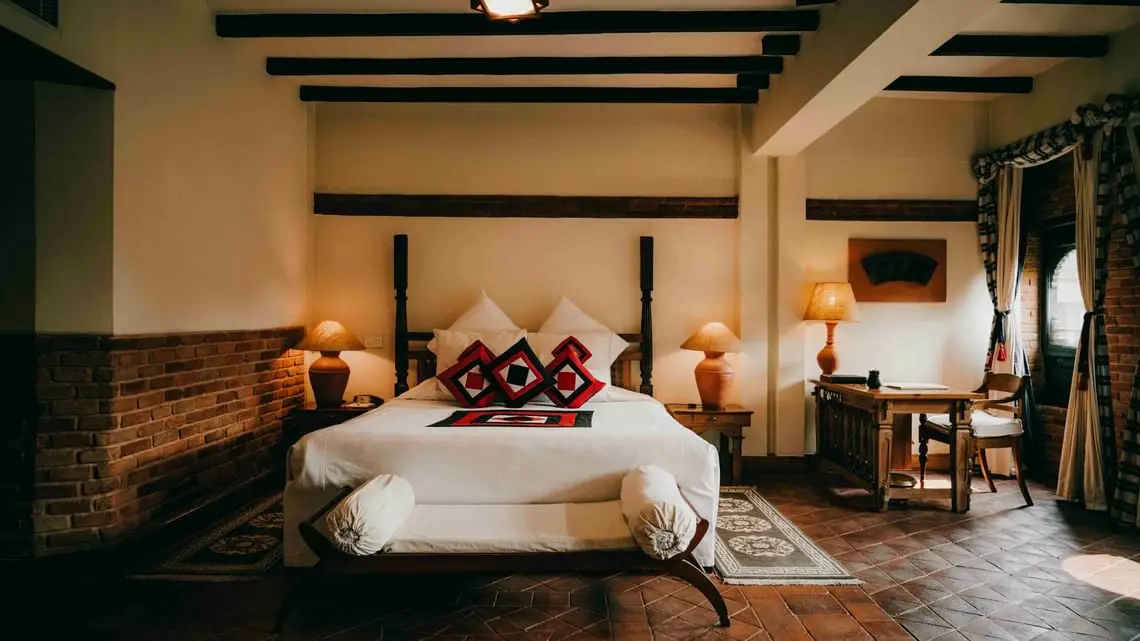
The afternoon is yours to unwind — take a swim, enjoy a spa ritual, or walk the quiet courtyards lined with oil lamps and carved stone.
As evening falls, dine at Krishnarpan Restaurant, where a multi-course menu presents Nepali flavors with fine presentation. Over dinner, your private guide offers a discreet briefing for the days ahead.
After breakfast, a chauffeur-driven car escorts you to the heli-terminal where your private helicopter is prepared.
The flight east offers an ever-changing panorama: the green hills of the Kathmandu Valley give way to terraced slopes and deep river valleys, then the high Himalayan wall rises ahead.
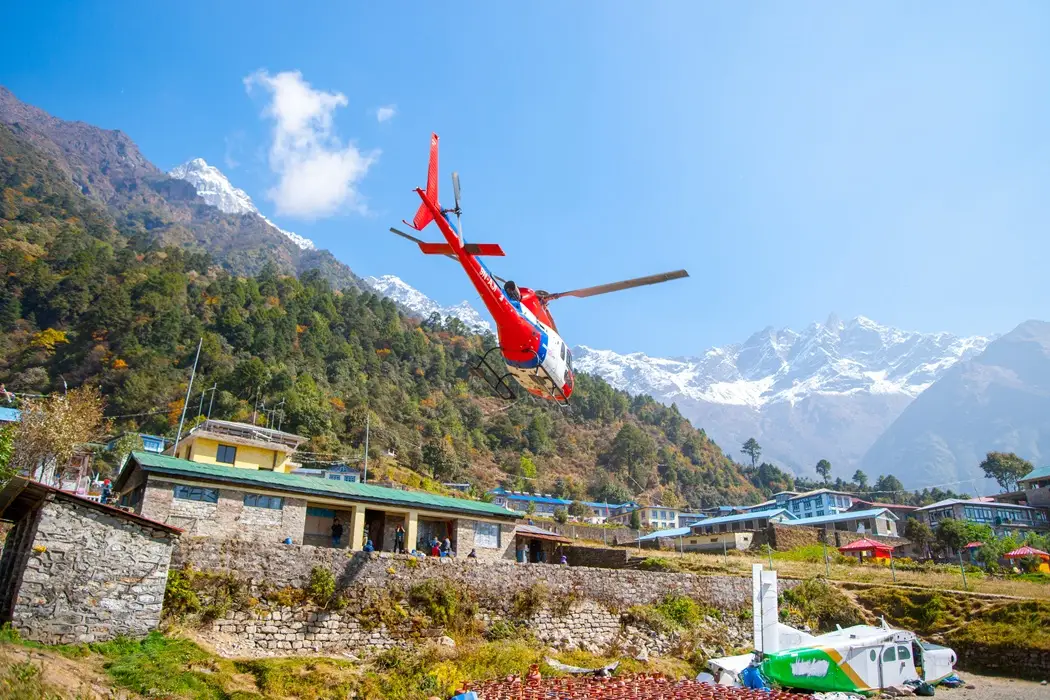
The great peaks appear sequentially from your window — Langtang, Gauri Shankar, Cho Oyu, and finally Everest, gleaming on the horizon.
The helicopter follows the Dudh Koshi gorge and descends to land at Phakding (2,610 m), a Sherpa village beside a glacial river where prayer flags span wooden bridges.
Porters transfer your baggage to the Yeti Mountain Home, one of the finest lodges in the Khumbu.
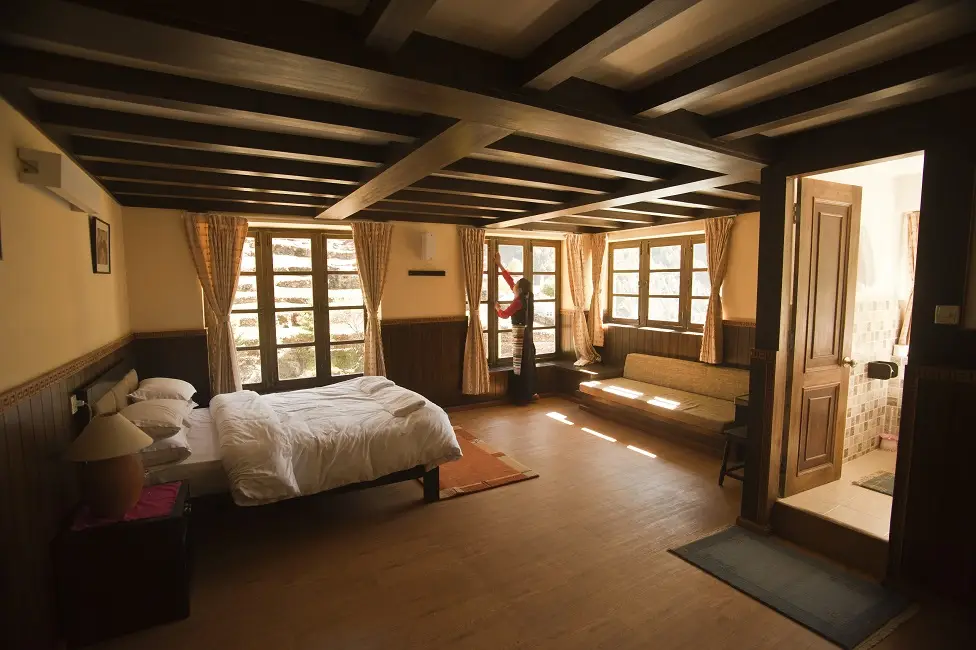
A welcome tea is served before you settle into your heated room with en-suite facilities and soft bedding — comforts rarely found at this altitude.
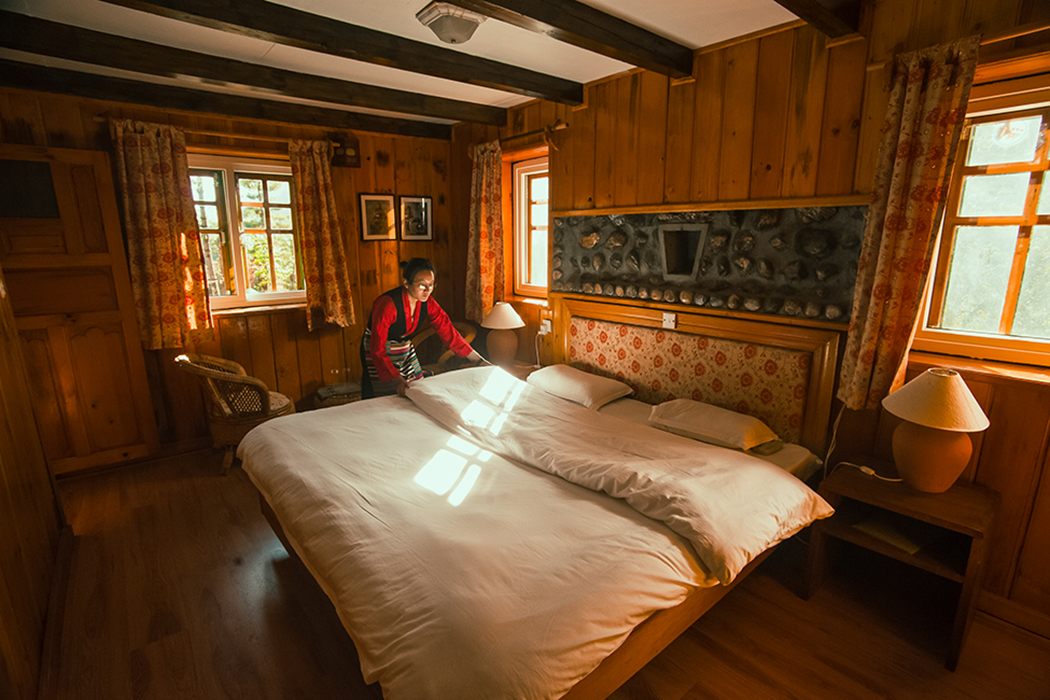
The rest of the day is at leisure for light acclimatization. You may stroll through the village lanes, visit the small monastery, or sit on the lodge’s terrace, watching the river flow beneath forested hills.
Wake to the sound of the Dudh Koshi River outside your window and enjoy a freshly prepared breakfast at the lodge.
Today’s walk is designed for gradual acclimatization — a leisurely pace through forested trails and Sherpa hamlets.
The path winds through pine and rhododendron groves, crossing suspension bridges decorated with prayer flags.
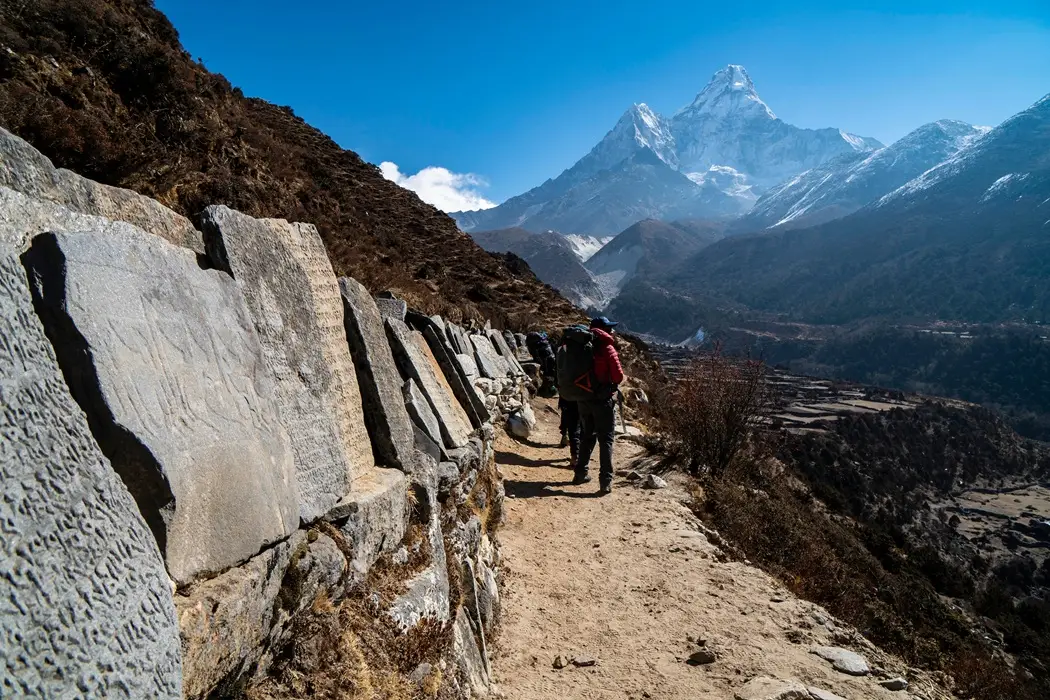
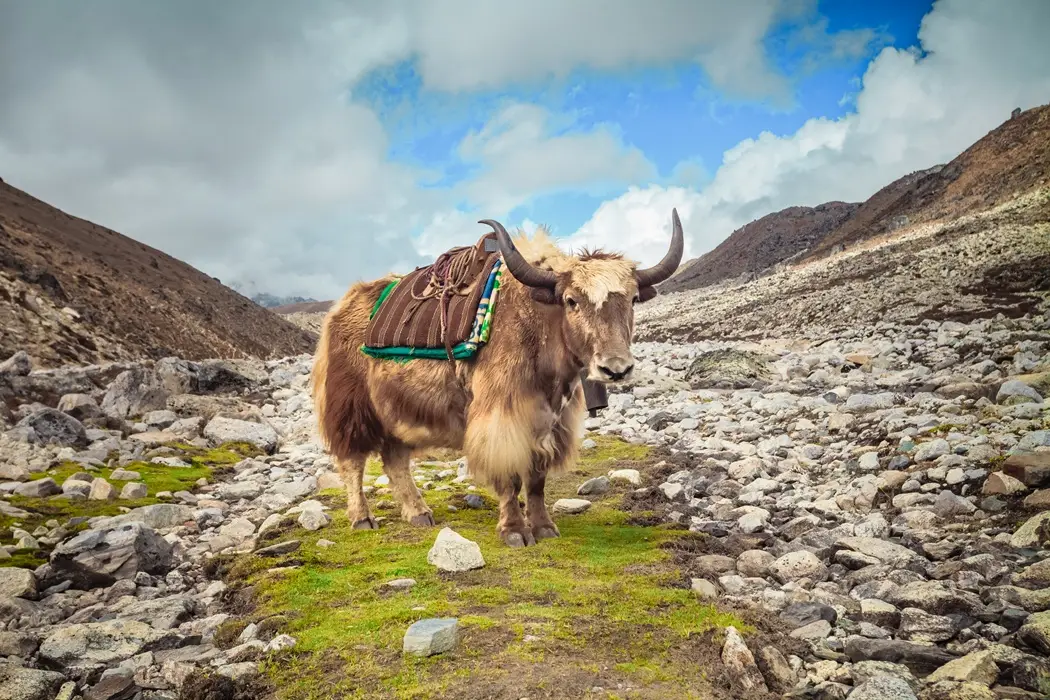
Along the way, you pass Toktok and Benkar, where mani walls carved with Buddhist prayers line the trail and caravans of dzopkos carry loads between villages.
The rhythm is unhurried, allowing time to absorb the valley’s quiet beauty. By midday, you arrive in Monjo (2,835 m), a picturesque village at the entrance to Sagarmatha National Park.
Your guide handles the permit formalities at the checkpoint while you continue to the Yeti Mountain Home Monjo, the most refined lodge in the area.
A hot towel and welcome drink are offered on arrival, followed by lunch in the dining room.
The afternoon is free to explore — stroll among the stone houses and terraced farms, or walk down to the river where a waterfall cascades into a clear pool.
After breakfast, one of the most memorable walks of the Khumbu begins. The trail follows the Dudh Koshi River, its waters milky-blue as they tumble through pine forest.
Several suspension bridges span the gorge, the most striking being the Hillary Bridge, draped with prayer flags and swinging high above the confluence of the Bhote Koshi and Dudh Koshi.
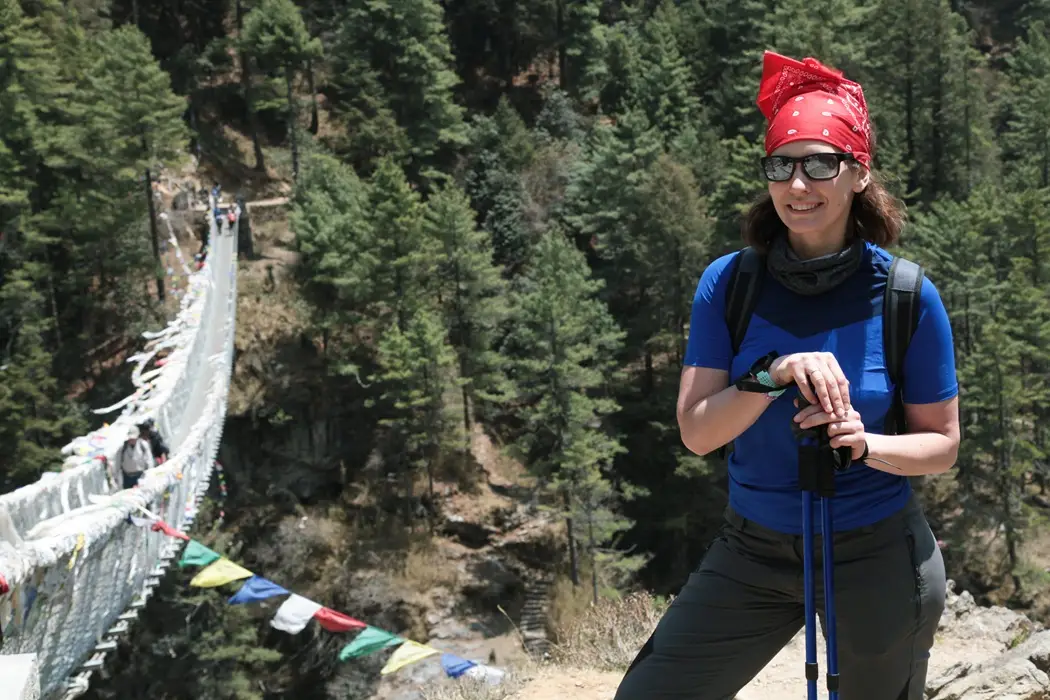
Beyond the bridge, the path rises steadily. This is a sustained ascent of nearly 600 meters, but the pace is measured, with rest stops along the way.
If the skies are clear, the first glimpse of Everest appears above the ridgeline — a thrilling reward for the climb.
By early afternoon, you crest the slope and arrive in Namche Bazaar (3,440 m), the lively heart of the Sherpa world.
Built into a natural amphitheater, Namche combines stone houses, narrow lanes, and bustling markets where trekkers, locals, and traders converge.
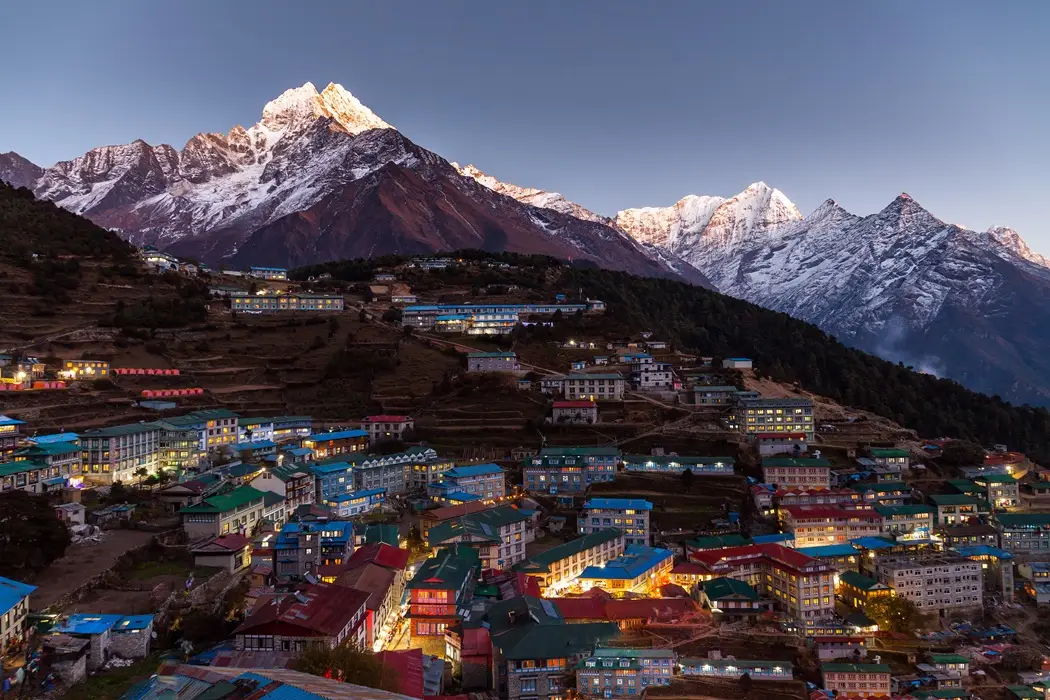
Your stay is at the Yeti Mountain Home Namche, the most refined lodge in town. Each room includes an en-suite bath, heating, and thoughtful details designed for comfort at altitude.
The remainder of the day is yours to explore. Visit the Sherpa Culture Museum and the Everest Photo Gallery, shop for Tibetan crafts, or enjoy an espresso and pastry in one of the town’s cafés while watching daily life unfold in the bazaar.
This day is devoted to acclimatization but filled with cultural discovery and remarkable views.
After breakfast, take a gentle climb from Namche toward Syangboche Ridge, passing the small airstrip that serves as one of the highest landing strips in the world.
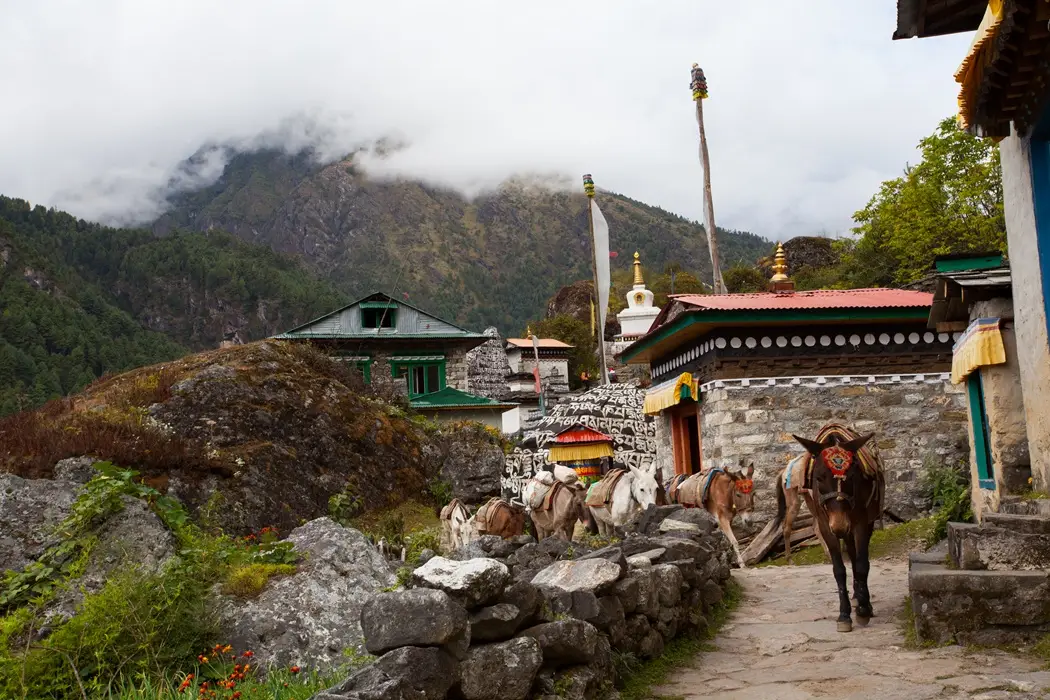
Your trail continues to Khumjung, a traditional Sherpa settlement framed by Ama Dablam. Here you visit the Hillary School, founded by Sir Edmund Hillary, where children still study in classrooms overlooking Himalayan peaks.
At the village monastery, monks display a relic called a Yeti scalp — a curiosity that has intrigued travelers for decades.
In nearby Khunde, stop at the Hillary Hospital, an enduring gift from the same Himalayan Trust.
These visits offer a rare perspective on Sherpa life and the pioneering legacy of the Everest expeditions.
By late morning, return to Hotel Everest View (3,880 m), listed by Guinness World Records as the world’s highest luxury hotel.
Lunch is served on its panoramic terrace, where the horizon is filled with Everest, Lhotse, Nuptse, and Ama Dablam in astonishing clarity.
The menu reflects international influences and Japanese touches, a tribute to the hotel’s founders. Many guests choose the signature hot chocolate while lingering over the view.
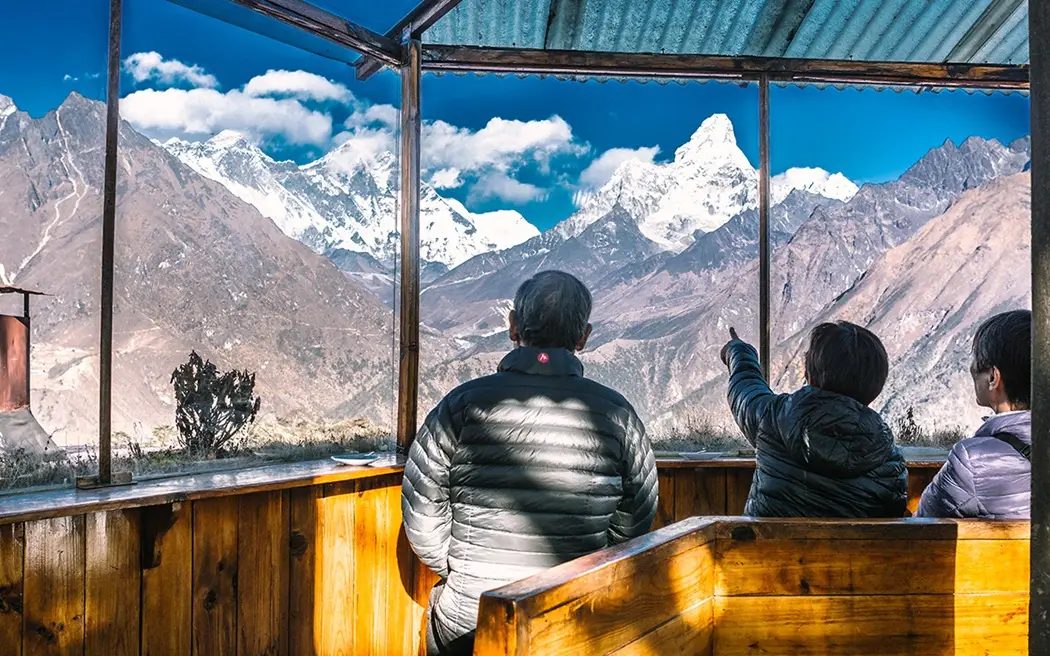
The afternoon is yours to enjoy at leisure. You might sit on the terrace with binoculars to watch the changing light on Everest, or take a short acclimatization stroll around Syangboche.
Sunset here is a spectacle of golden light sweeping across the summits.
Wake to sunrise over Everest and Ama Dablam, a view that never loses its magic. After breakfast at Hotel Everest View, the trail descends through juniper and rhododendron forest before rejoining the main route.
You drop down to the Dudh Koshi River at Phungi Thenga (3,250 m), crossing a suspension bridge where the river’s roar echoes through the gorge.
From here, the path climbs steadily through fir and rhododendron woods until you reach Tengboche (3,867 m) around midday.
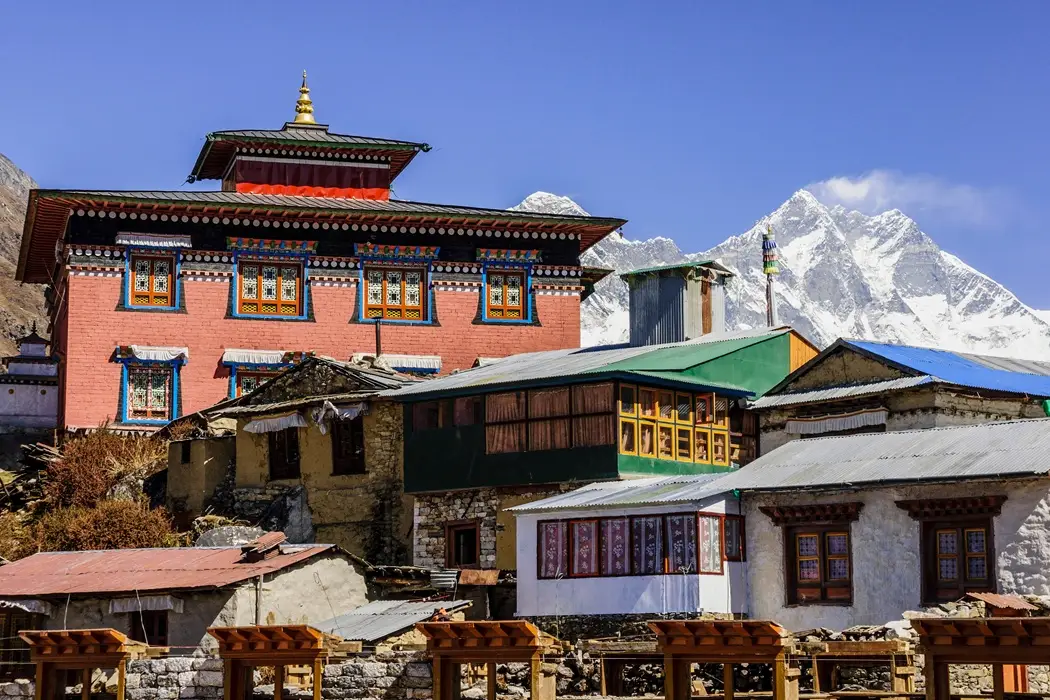
Tengboche is the spiritual center of the Khumbu — a ridge-top village dominated by the region’s largest Tibetan Buddhist monastery, framed by an extraordinary backdrop of Everest, Lhotse, and Ama Dablam.
Your guide will lead you into Tengboche Monastery, its prayer hall filled with butter lamps and ancient murals.
If timing aligns, you may witness the monks chanting their afternoon prayers, a deeply atmospheric moment as low chants reverberate through the hall.
Outside, one of the classic Himalayan photo spots is the monastery with Ama Dablam rising gracefully behind.
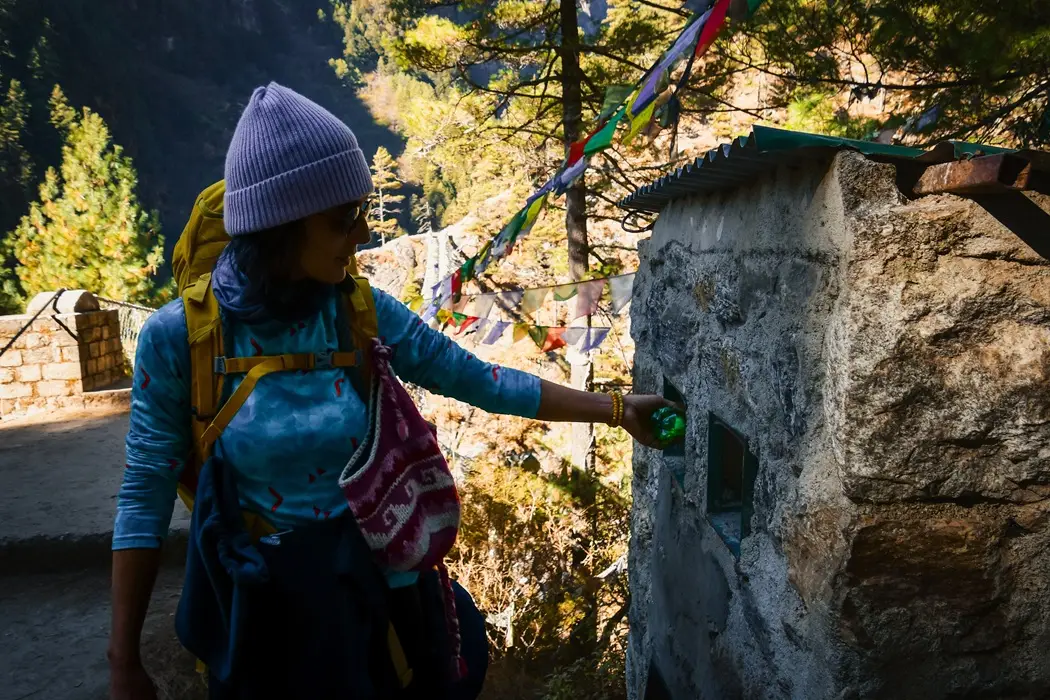
Your overnight stay is at The Himalayan Lodge Tengboche, the most comfortable property in this settlement.
It offers en-suite rooms, heated bedding, and warm Sherpa hospitality despite the remote setting.
After a welcome tea and hot lunch, the afternoon is yours to relax or take a short walk along the ridge to absorb the views.
After breakfast in Tengboche, the trail leads through a stretch of rhododendron and juniper forest, where in spring the blossoms add a burst of color to the valley.
Soon you cross a suspension bridge over the Imja Khola, then climb steadily toward Pangboche (3,900 m), the highest permanent Sherpa settlement.
Above the village sits its ancient monastery, the oldest in the Khumbu, long regarded as a place of blessings for expeditions heading higher.
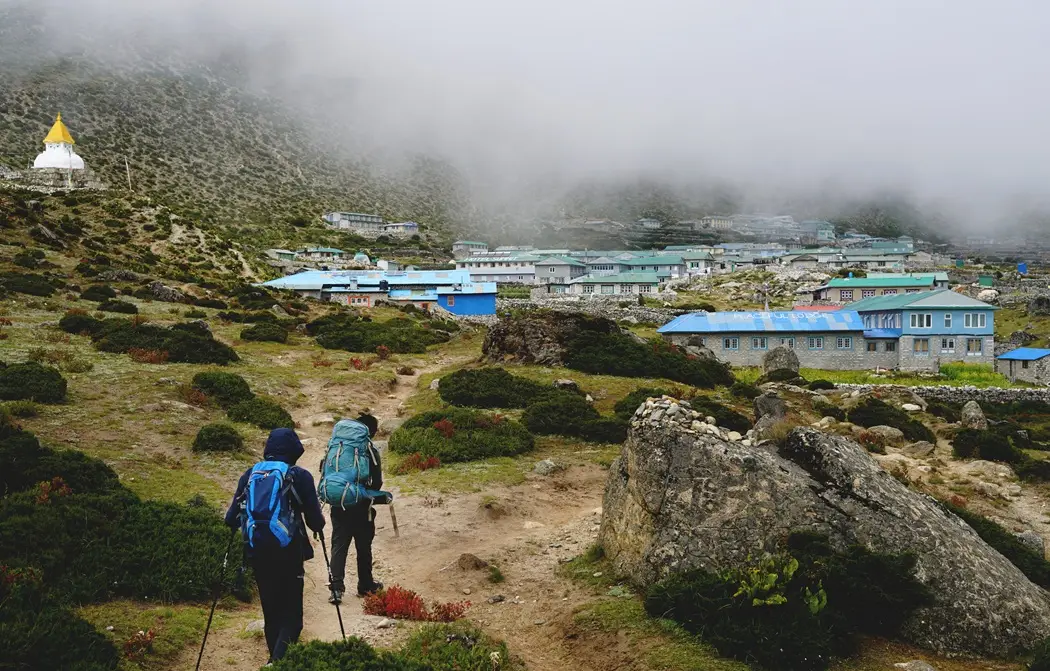
From here, the landscape changes. The trees fade, replaced by alpine scrub and open slopes, while Ama Dablam (6,812 m) rises dramatically on your right.
The trail continues past the yak-herding outposts of Shomare and Orsho, gaining height steadily but at a comfortable pace.
By early afternoon, you arrive in Dingboche (4,410 m), a broad valley encircled by stone walls and overlooked by the immense south face of Lhotse.
Your stay is at the Dingboche Resort, which is considered the most refined lodge at this altitude.
Here, rooms are simple yet comfortable, with electric blankets on the beds, attached bathrooms, and hearty meals — true luxuries in this remote location.
After lunch, the afternoon is free to rest and acclimatize. You might wander through the village, where bakeries and small shops cater even at this height, or relax at the lodge while taking in views of Island Peak and the Imja Valley.
This morning marks the pinnacle of your Himalayan journey. After an early breakfast in Dingboche, board your private helicopter and lift into the high Khumbu, tracing in minutes what trekkers spend days to reach.
Below you, the passes and hamlets of Thukla, Lobuche, and Gorak Shep glide past as the helicopter climbs toward Everest.
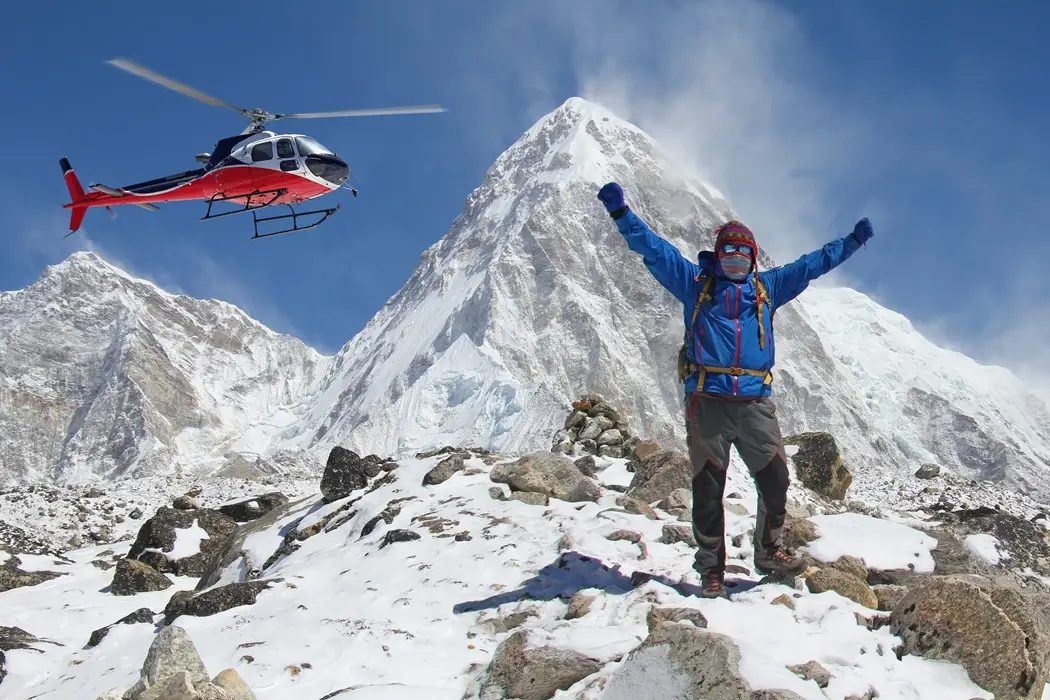
Your pilot first circles above Kala Patthar (5,545 m), the legendary viewpoint, where the complete summit pyramid of Everest rises level with your window.
From this vantage, Everest, Lhotse, and Nuptse appear impossibly close — a panorama few ever witness from the air.
The helicopter then descends to Everest Base Camp (5,364 m), landing on the Khumbu Glacier’s moraine (weather and ice conditions permitting).
Step onto this iconic ground where climbing expeditions prepare each spring. During April and May, colorful tents scatter the ice, set against the towering Khumbu Icefall.
Spend 10–15 minutes on site to take photographs with the Base Camp marker and soak in the atmosphere before reboarding.
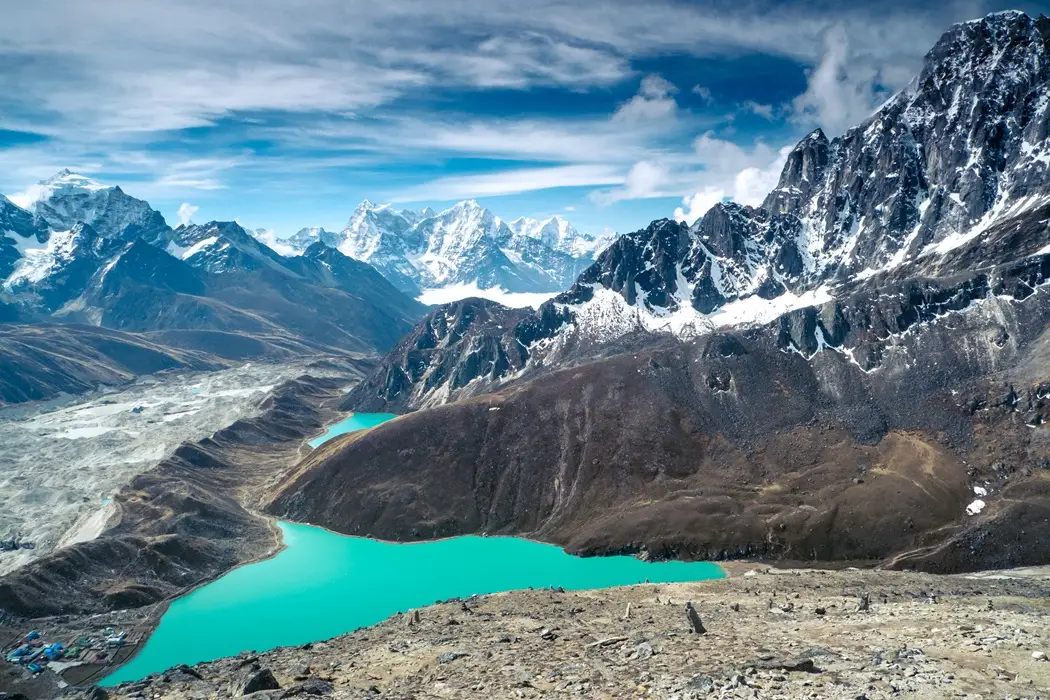
From Base Camp, the flight sweeps west across the range toward the turquoise waters of the Gokyo Lakes (4,700 m).
Here, the pilot lands beside the shimmering glacial lakes, giving you time to step out, walk along the shore, and capture the surreal contrast of deep blue water surrounded by snow peaks and the vast Ngozumpa Glacier — the longest in Nepal.
Continuing, the helicopter descends to the ridge-top settlement of Kongde (4,250 m).
Landing beside Yeti Mountain Home Kongde, you are welcomed with ginger tea or a glass of champagne to toast your morning achievement.
The setting here is incomparable: from Kongde, you face an uninterrupted sweep of the Everest range — Everest, Lhotse, Makalu, and Cho Oyu, four of the six highest peaks on earth, all visible from a single viewpoint.
Namche Bazaar lies far below, like a tiny amphitheater carved into the hillside.
Check into your lodge room, styled with Sherpa craftsmanship and equipped with electric blankets, thick duvets, and en-suite facilities.
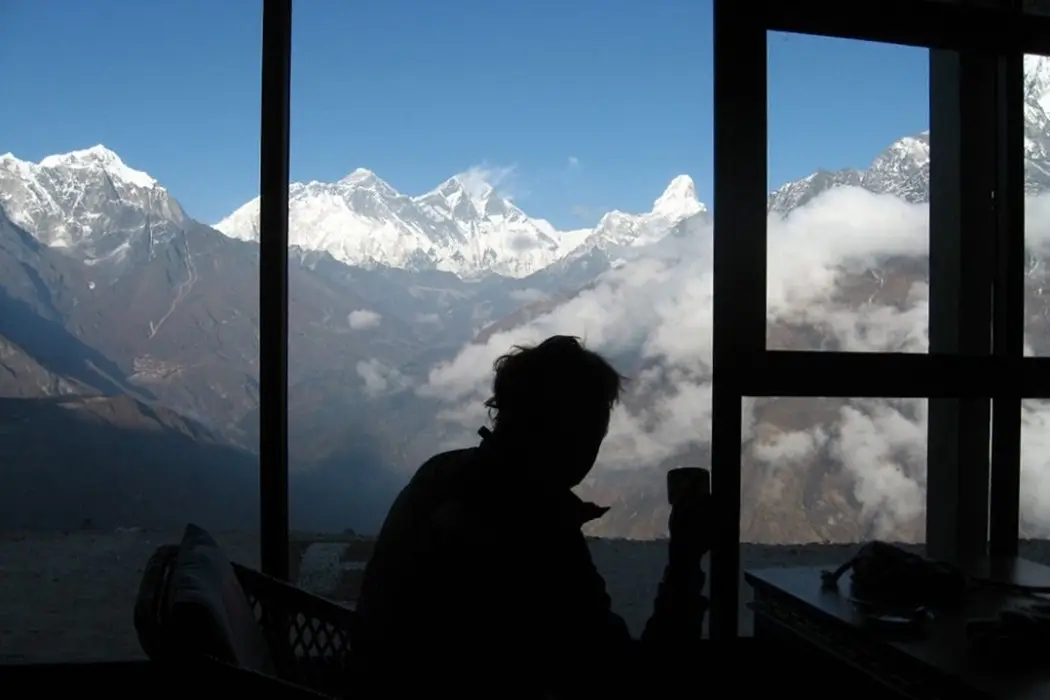
Lunch is served in the glass-walled dining room, featuring fresh produce from the lodge’s greenhouse.
The afternoon is for pure indulgence: take a short stroll to nearby Farak Ri for another angle on Everest and the Ngozumpa Glacier, or sit on the terrace watching the light shift across the mountains.
The range glows with golden light at sunset, giving way to a sky with stars.
At sunrise, the mountains glow in soft hues of pink and gold, with Everest and Ama Dablam shining against the morning sky.
After breakfast, board your private helicopter for the final flight out of the Khumbu.
From the ridge at Kongde, you lift above the valleys and glaciers, taking in one last sweeping view of the world’s highest peaks.
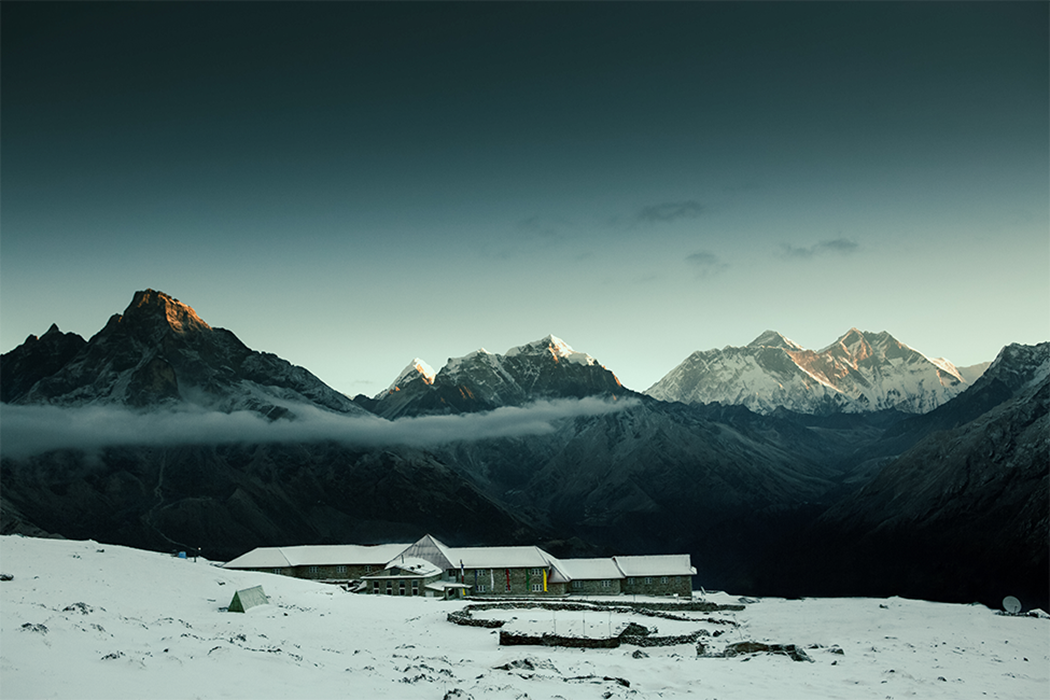
In just under an hour, the helicopter descends into the Kathmandu Valley. On arrival, a private transfer takes you back to Dwarika’s Hotel, where your suite and the comforts of the city await.
The afternoon is yours to rest — unwind by the pool, book a treatment at the Pancha Kosha Spa, or relax in the hotel’s courtyards surrounded by timeless Newari artistry.
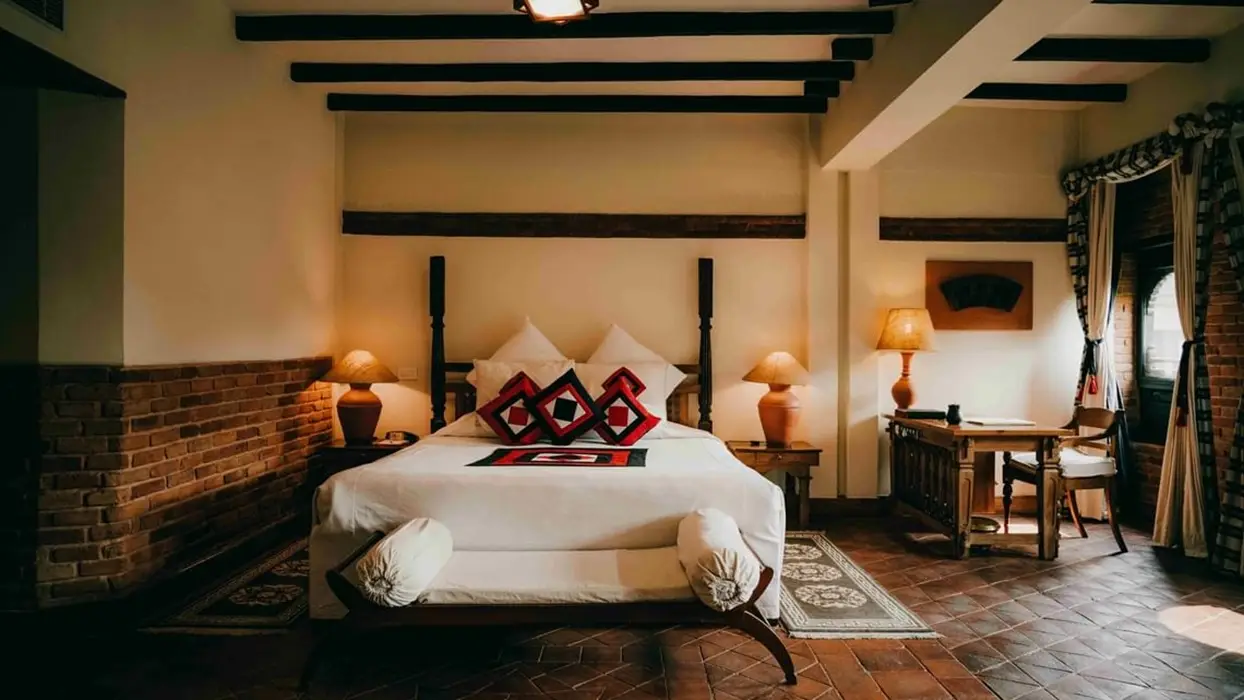
In the evening, a farewell dinner is arranged. You may dine at Dwarika’s celebrated courtyard restaurant or in another fine venue in the city. Over dinner, raise a glass to the journey and the memories created in the Himalayas.
Enjoy a final breakfast at Dwarika’s Hotel, surrounded by the artistry of Newari courtyards. A private transfer takes you to Tribhuvan International Airport at your scheduled time.
Though your journey concludes here, the memories remain: mornings in the shadow of Everest, quiet moments in Sherpa villages, and the warmth of hospitality in the high Himalayas.
Price Includes
Private Helicopter Transfers
- Kathmandu → Phakding
- Dingboche → Everest Base Camp → Gokyo Lakes → Kongde
- Kongde → Kathmandu
Luxury Stays (9 Nights)
- Kathmandu (2 Nights): Dwarika’s Hotel (5★ heritage)
- Everest Region (7 Nights): Yeti Mountain Home lodges (Phakding, Monjo, Namche, Kongde), Hotel Everest View, The Himalayan Lodge (Tengboche), Dingboche Resort
- All rooms: en-suite bathrooms, hot showers, premium bedding, electric blankets/heaters
Dining
- Full-board meals during trek (Day 2–9)
- Fresh, hygienic, and multi-course menus with tea/coffee/water
- In Kathmandu: daily breakfast + welcome & farewell dinners
Personalized Service
- Private English-speaking guide + Sherpa assistant
- Porter team (15 kg per guest; duffel provided)
- Airport concierge (meet & assist, baggage, fast-track check-in)
- Luxury vehicle transfers in Kathmandu
Permits & Fees
- Sagarmatha National Park entry
- Pasang Lhamu Municipality Entrance Fee
- All helicopter landing fees
Safety & Equipment
- Medical kit, oxygen, satellite communication
- Guides trained in altitude protocols
- Complimentary use of down jacket & sleeping bag (on request)
- Duffel bag (yours to keep)
Experiences
- Monastery visits (Tengboche, Khumjung) and village walks
- All entry fees and monastery donations covered
- Cultural touches such as private blessings (subject to timing)
All Taxes & Gratuities
- All government taxes and lodge service charges
- Tips for porters and lodge staff included (guide & pilot discretionary)
Exclusive Extras
- Welcome fruit basket & wine/champagne on arrival
- One spa massage at Dwarika’s Hotel
- Champagne or cake celebration at Kongde
- Personalized keepsake: trek certificate.
Price Excludes
- International Flights – Travel to/from Kathmandu.
- Nepal Visa – Payable on arrival (USD 30 for 15 days / USD 50 for 30 days for most nationalities).
- Travel Insurance – Required. Must cover trekking up to 5,500 m, medical care, and helicopter evacuation.
- Personal Expenses – Alcoholic drinks, soft drinks, snacks, souvenirs, laundry, phone, internet, or other personal services.
- Gratuities – Tips for the main guide, driver, and helicopter pilot (at your discretion).
- Weather/Delays – Extra nights, rerouting, or rescue costs caused by weather or unforeseen events.
- Personal Gear – Clothing, boots, and trekking equipment (except complimentary duffel bag, sleeping bag, and down jacket on request).
- Meals in Kathmandu – Lunches and dinners not listed; extra spa treatments or beverages beyond those included.
Trip Information
Difficulty & Acclimatization
This journey is graded moderate to challenging. Days on the trail usually involve four to six hours of walking across varied mountain terrain. The helicopter covers the toughest sections, but you will still trek at altitude.
The highest point reached is Everest Base Camp at 5,364 meters, visited by helicopter, while the highest overnight stay is at Kongde, 4,250 meters.
The itinerary is designed to let the body adjust gradually. Two nights are spent in Namche Bazaar, and one full acclimatization day is included before flying higher. Walking stages are shorter than standard treks, and the pace is steady with time to rest.
Your guide monitors your health daily, using simple oxygen and pulse checks. Oxygen and a complete medical kit are always carried; helicopter evacuation is immediately available.
There is no technical climbing — this is a trekking and sightseeing journey, supported by helicopters for the highest parts. With measured pacing and firm support, guests adapt well and enjoy the experience comfortably.
Training & Preparation
You don’t need to be a seasoned trekker to join this journey, but you should be reasonably active and comfortable walking for several hours. A basic fitness level is enough, and the extra comfort built into this itinerary makes it more accessible than standard treks.
Simple preparation in the months before the trip will make a big difference. Regular exercise, such as walking, hiking, cycling, or light jogging, helps build stamina. Adding a few leg-strength exercises or climbing stairs can prepare you for the uphill and downhill sections.
If you can, take a few practice walks of three to four hours while carrying a small pack — it’s the best way to break in your boots and get used to the feel of steady walking.
Altitude is as much about mindset as fitness. The key is to walk easily, rest when needed, and stay hydrated. Our guides set the rhythm and closely monitor your well-being, so you are never rushed.
We have welcomed guests from their teens to their seventies on similar programs. With some preparation and the support of our team, most people find the trek both comfortable and rewarding.
Group Size
This trek is usually a private journey, built around your group — two people, a family, or close friends. Traveling privately means the schedule is flexible and the service focuses entirely on you.
Groups are kept deliberately small, generally between two and six participants. This ensures quiet trailside days, easier logistics, and personal contact with your guide and Sherpa team. Larger private groups can be arranged on request, though the smaller format best suits the character of this trip.
For those who enjoy company, there are occasionally set departures with other guests, though these are limited because the program is designed primarily as a bespoke experience.
Private departures also allow for further tailoring: adding an extra acclimatization day, arranging a cultural ceremony, or adjusting menus to your dietary preferences.
Weather & Best Time to Go
The Everest Elite Luxury Heli Trek is available only from 20 April to 10 May. This narrow window is set because the temporary helipad at Everest Base Camp is built and operational only during the spring climbing season. Outside of this period, helicopter landings at Base Camp are not permitted.
The late April to early May timeframe is also one of the most rewarding times to travel in the Khumbu. Days at lower elevations are generally mild, averaging 10–15°C (50–60°F), with cooler nights around 0–5°C (32–41°F).
At higher stops such as Dingboche or Kongde, daytime temperatures hover around 5°C (40°F) and can fall to –5°C (23°F) or below at night. By May, mornings warm slightly, though afternoon clouds are common. The season brings clear skies for morning flights, longer daylight hours, and stable weather conditions before the onset of the monsoon.
Spring also transforms the landscape: rhododendron forests between Namche and Tengboche bloom, and Everest Base Camp is alive with climbing expeditions preparing for their summit attempts. This combination of stable weather, natural beauty, and the rare chance to land at Base Camp makes this short window ideal for this luxury heli-trek.
Altitude & Health Considerations
This trek is built with altitude in mind, but thinner air always feels different to different people. Above 3,000 meters, it’s not unusual to notice a slight headache, a poor night’s sleep, or a slight breathlessness.
That’s normal. To keep things safe, the route allows two nights in Namche before heading higher, and includes the classic “climb high, sleep low” walk to Khumjung.
Health is checked daily with simple tools, and oxygen is carried if needed. Since helicopters are part of this trek, there’s also a reliable backup: if someone has serious difficulty, they can descend quickly or return straight to Kathmandu.
We recommend seeing a doctor before travel, especially if you have a history of heart, lung, or blood pressure conditions. If any details are shared in advance, let us prepare better. Vaccinations should be current as well.
At altitude, the sun is intense. Good sunglasses, sunscreen, and lip balm are essentials. Food and lodges are kept to high hygiene standards, but carrying hand sanitizer and using it regularly is still one of the easiest ways to stay on the trail.
Transportation
All internal transportation is fully arranged and included. In Kathmandu, private luxury transfers are provided for airport pick-ups, drop-offs, and city movements, ensuring comfort and efficiency.
Helicopter flights are operated by certified aviation partners using aircraft designed for high-altitude performance. Flights are chartered exclusively for your party, avoiding the uncertainty of shared services and allowing maximum flexibility. Each helicopter typically carries four to five travelers plus the pilot.
Within the Everest region, most travel is on foot at a carefully managed pace. If you prefer not to walk at any stage, alternative arrangements such as a horse or an additional helicopter lift can be made where feasible, though this is rarely needed.
We work with our aviation partners to secure the earliest safe flight window or explore alternate options in weather-related delays, particularly on mountain sectors.
Sustainability
A luxury trek should also be a responsible one. Helicopters are used only where they add value — saving time and avoiding overuse of areas with limited facilities.
The lodges we select operate with sustainability in mind. Many rely on solar energy, some manage their own wastewater systems, and Kongde even grows fresh vegetables on site to cut down on food transport.
Plastic bottles are avoided. Instead, boiled or filtered water is provided to refill reusable bottles daily. Any waste from the trek is collected and carried out for proper disposal.
Local employment is at the heart of this journey. Staff are paid fairly, provided with good gear and insurance, and every booking supports families in the Khumbu — from lodge teams and porters to farmers and aviation crews.
By joining, you contribute directly to the economy of the Everest region while experiencing it in comfort.
Emergency Protocols
Safety is central to this trek, and plans are in place for more than altitude issues alone. Each expedition leader directly contacts our Kathmandu office and the helicopter company.
If a medical emergency or accident occurs, helicopter evacuation can usually be arranged within 30 minutes to a few hours, depending on weather and daylight.
Medical support is available in Khumbu. Khunde has a small hospital, and Pheriche has a clinic frequently used by trekkers and climbers. For any serious concern, evacuation is made directly to Kathmandu. We work with CIWEC Clinic and Norvic International Hospital, which meet international standards.
Travel insurance must cover high-altitude trekking, medical expenses, and helicopter evacuation. Proof of coverage is required before the trek begins.
A local phone is used within the group, allowing communication when mobile networks are available.
Most villages along the route now have at least partial coverage. The itinerary also has some built-in buffer: time in Kathmandu before your international departure allows flexibility if short delays occur. Even so, we advise travelers to keep an additional day at the end of the trip as a safety margin.
Food
Dining is part of the experience on this trek. You’ll eat well at every stop, with hearty, varied, and carefully prepared meals.
On the trail, three meals a day are provided. Menus at the lodges are wider than most people expect: pasta, soups, grilled meats, and local staples like dal bhat — rice, lentils, and vegetable curries.
Thanks to supply lines and lodge kitchens, fresh bread, apple pie, and even pizza appear. Some lodges grow their own produce; Namche has a greenhouse, and Kongde cultivates vegetables on-site. It means you can sit down to a fresh salad at 4,000 meters — a small but welcome luxury.
Hydration is just as important. Boiled or filtered water is always available for refills, avoiding plastic bottles. Tea and coffee are served with meals, and hot drinks are offered on arrival at the lodge.
A mug of ginger tea by the fire or hot chocolate at altitude becomes part of the daily rhythm. Bars and espresso machines are also available to order a cappuccino or wine.
Special diets can be managed with advance notice. Vegetarian and vegan dishes are easily arranged, and gluten-free or dairy-free options can be provided. Meat is sourced from trusted suppliers, though many travelers choose vegetarian meals at higher elevations for freshness and easier digestion.
In Kathmandu, the dining is as refined as the trekking is adventurous. Dwarika’s breakfast buffet is often considered one of Asia’s best, with Western and Nepali options.
Welcome and farewell dinners showcase Nepali cuisine or international fine dining, depending on the evening. On your free night, we recommend restaurants ranging from traditional thali houses to Japanese or European kitchens.
Snacks are also provided. Energy bars, dried fruit, and chocolate are carried for breaks along the trail, while fruit and light desserts appear at meals. The cooks can produce a cake at altitude for a birthday or special occasion.
Accommodation
Every Everest Elite Luxury Heli Trek stop has been chosen for comfort, character, and service. These are the best available properties in each location, giving you a warm bed, private bathroom, and attentive care even in the high Himalayas.
Kathmandu – Dwarika’s Hotel
Your trek begins and ends at Dwarika’s, a heritage hotel often described as a living museum. Courtyards and carved woodwork set the scene, while rooms combine antiques with modern touches such as marble bathrooms, Wi-Fi, and air conditioning. Facilities include a spa, pool, boutique shops, and celebrated restaurants.
Phakding – Yeti Mountain Home
The first night in the Khumbu is spent at YMH Phakding. Rooms come with thick duvets, heated bed pads, and attached bathrooms with hot showers. The stone-and-timber design reflects Sherpa tradition, while the terrace and dining hall provide space to relax by the river.
Monjo – Yeti Mountain Home
YMH Monjo sits in a quiet village below the park gate. It has only a few rooms, giving it a private feel. Expect ensuite bathrooms, electric blankets, and wholesome meals. There are views of Thamserku from the property, and Wi-Fi is available via satellite.
Namche Bazaar – Yeti Mountain Home
The Namche lodge is the chain’s flagship, set above the bustle of town with sweeping views of Kongde Ri. Wood-paneled rooms have ensuite bathrooms and reliable hot showers. Facilities include a bar and lounge with a fireplace, a small spa, and a bright dining hall supplied by a greenhouse on site.
Syangboche – Hotel Everest View
At 3,880 meters, every room here faces Mount Everest. Each has a balcony, private bathroom, and electric heating. The dining room and terrace are famous for their panoramic views. A bar with wines and whiskies adds to the experience. Most trekkers only visit briefly; staying overnight allows time to absorb the setting entirely.
Tengboche – The Himalayan Lodge
This lodge offers the best comfort in the area close to the monastery. Rooms are wood-lined, with ensuite bathrooms and hot showers. Views stretch to Ama Dablam and Everest, and the setting combines mountain scenery with the spiritual atmosphere of Tengboche.
Dingboche – Dingboche Resort
At 4,410 meters, Dingboche Resort is the highest lodge of the trek. Rooms are insulated and equipped with electric blankets. Hot showers are available, and a chimney stove warms the shared lounge. Meals are varied, from Nepali dishes to pizza or yak steak. Windows open onto views of Ama Dablam and Lhotse.
Kongde – Yeti Mountain Home
At 4,250 meters on a ridge above Namche, Kongde Lodge is among the most exclusive in Nepal. With just a dozen rooms, it offers privacy and extraordinary views of four of the world’s highest peaks.
The dining room faces Everest directly, and fresh vegetables are grown on site. Evenings here often include wine at sunset and clear night skies filled with stars.
Rooming
Accommodation is based on double or twin rooms, with single occupancy available on request (except at Hotel Everest View, which has limited capacity). Bedding and towels are supplied; sleeping bags are not required. Daily housekeeping is provided, though it may be simpler in higher villages.
Equipment List
Clothing
- 2–3 moisture-wicking base layer tops (long/short sleeve)
- 1–2 warm mid-layers (fleece or lightweight down)
- 1 insulated down jacket (heavy parka provided on request)
- 2 pairs of trekking pants (one lighter, one warmer)
- 1 waterproof/windproof outer shell jacket
- Thermal underwear set (for higher elevations)
- Comfortable clothes for evenings at the lodges
Accessories
- Warm hat and sun hat
- Buff or scarf for wind/dust
- Gloves (one light pair, one insulated)
- Sunglasses with high UV protection
- Sunscreen (SPF 50+) and lip balm
Footwear
- Sturdy, broken-in trekking boots
- Lightweight shoes or sandals for lodge evenings
- Warm socks (3–4 pairs) and lighter trekking socks
Day Essentials
- Small daypack (20–30 L) for water, camera, jacket
- Refillable water bottles or hydration bladder (2 liters total)
- Personal toiletries and a quick-dry towel
- Hand sanitizer and wet wipes
- Personal medication and basic first aid items
Electronics
- Headlamp with spare batteries
- Camera or phone with charger/power bank
- Travel adaptor (Nepal uses 220V, types C/D/M plugs)
Provided by Us
- Complimentary duffel bag (carried by porter, up to 15 kg)
- Down jacket and sleeping bag (available on request)
- Oxygen, medical kit, and communication equipment (for safety)
Frequently Asked Questions
This journey is considered moderate in difficulty. Most days involve four to six hours of steady walking with regular breaks.
The climbs into Namche Bazaar and Tengboche are steep, and altitude makes the effort feel heavier, but the pace is measured and the itinerary is built to give your body time to adjust.
Helicopter flights replace long descents, easing the strain, and porters carry the bulk of your luggage so you walk with only a small daypack.
Good general fitness is enough — if you can enjoy day hikes at home, you will manage comfortably here.
The schedule builds in two nights at Namche (3,440 m) and another at Hotel Everest View (3,880 m) before moving higher, gradually introducing your body to altitude.
Daily health checks are routine, and oxygen is carried for reassurance. Expedition leaders are trained to spot problems early.
In the unlikely event of severe altitude sickness, a helicopter evacuation can be arranged within hours to lower ground or to Kathmandu’s international-standard hospitals.
The landing at Everest Base Camp is short — around ten minutes — followed by an overnight descent to 4,250 m in Kongde, further reducing risk.
Himalayan weather is unpredictable, but spring brings the most transparent flying windows. Helicopters usually depart in the mornings when conditions are most stable.
If a flight is delayed, we wait for the next opening or adapt with a fixed-wing hop to Lukla, followed by a short helicopter transfer.
Day nine in Kathmandu serves as a buffer, giving space to absorb minor delays without affecting your international departure.
If a Base Camp landing is impossible, the pilot may circle Kala Patthar for close summit views, or the visit can be rescheduled the following morning.
If Kongde cannot be reached, we will adjust to an alternative lodge in Namche or Lukla. Flexibility is built in, and safety always comes first.
Yes. The helicopters are powerful high-altitude aircraft flown by pilots with thousands of hours of mountain flying experience.
Landings are made on stable sections near Base Camp or Gorak Shep. The engines remain running, and time on the ground is about ten minutes — enough for photographs and to absorb the atmosphere without unnecessary exposure.
The flight also circles Kala Patthar at 5,545 m, offering the most dramatic summit views, since Everest is partly hidden from Base Camp.
The quick landing and immediate descent make the experience safe and unforgettable.
This trek is arranged as a private journey. Whether you are traveling solo, as a couple, or with family and friends, the helicopter charters and mountain services are exclusively for your party.
Small groups of two to six are typical, though larger private groups can be managed with extra helicopter loads and staff.
Lodges are shared with a few other trekkers, but they are intimate properties, and private dining can be arranged. The key advantage is flexibility: pacing, timing, and even minor details can be tailored to your wishes.
Comprehensive travel insurance is essential, and it must cover trekking to 5,500 m along with helicopter evacuation.
Proof of coverage is required before departure. Permits — including Sagarmatha National Park entry, TIMS registration, and helicopter landing permissions — are secured by us and included in the package.
Drone permits are rarely issued in the Everest region, so we recommend leaving drones at home unless you have prior authorization.
Your passport must be valid for at least six months beyond your stay for the Nepal visa on arrival.
Grace Educational Organisation
The Grace Educational Organisation is a government-registered charity dedicated to empowering students in Nepal through education.
With a 100% donation policy, every contribution directly supports the children and schools, providing essential resources like supplies, infrastructure, and extracurricular programs.
This initiative fosters a transparent connection between donors and students, ensuring every action leaves a lasting impact.
The Nuwakot School, located in a picturesque rural setting, is one of the beneficiaries of this mission.
By visiting, you witness these students’ educational journey and become part of a transformative effort to uplift the community.
Trip Reviews
Be first to post a review in this trip.
