Jomolhari Trek
Our trips are rated 5 out of 5 in more than 950 traveler reviews.
Trip overview
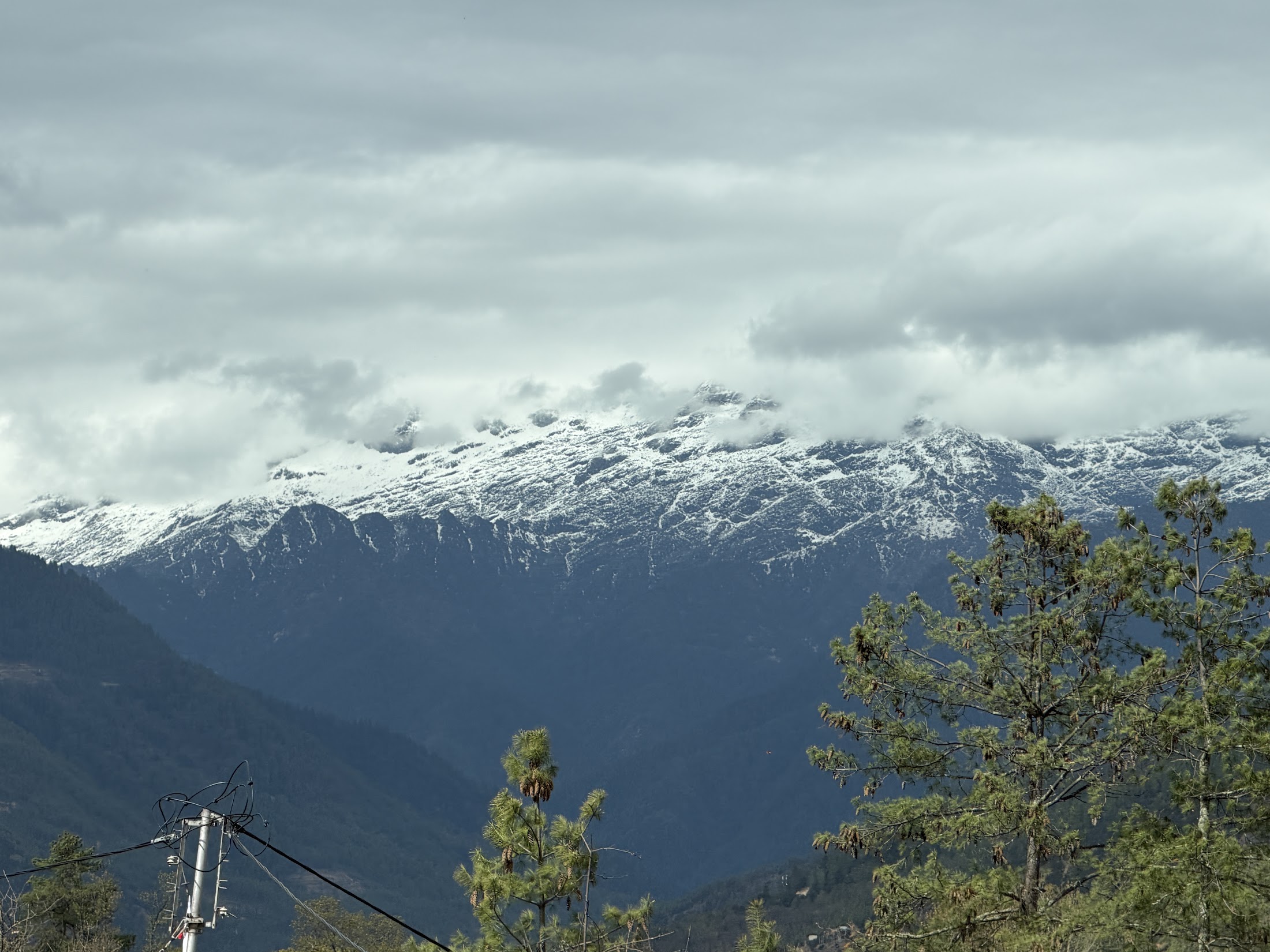
The Jomolhari Trek takes you up the Paro Chhu valley to Jangothang, the base camp below Jomolhari at about 4,080 m, where the 7,326 m peak fills the head of the valley. Our 9-day Jomolhari Trek starts and ends in Paro, with three camping days up the valley, a full day at base camp and two days back down.
It suits fit trekkers who want to stand below a great Himalayan peak without crossing a high pass. You walk an old trade route used by yak herders, past stone villages, army posts and a dzong ruin. No climbing skill is needed, but the first walking day is long.
We give the route two things many short versions skip. You hike to Tiger’s Nest at 3,120 m before the trek, and you spend two nights at Jangothang, with a day hike to about 4,500 m. Climbing high and sleeping lower is the best way we know to adjust to the height.
The hard part is plain. The first day from Shana to Thangthangka is about 22 km and 7 to 8 hours, and Jangothang drops well below freezing at night. Afternoon cloud can hide the mountain, so mornings at base camp matter most.
The reward comes at dawn at Jangothang, when the east face of Jomolhari turns gold above the ruined fort, with Jichu Drake to the north. Herders’ stone houses and yaks grazing on the flats make it feel lived in, not remote.
Prices start at US$ 1,965 per person in a group of six or more and US$ 2,360 each for two. Short on time? The Druk Path Trek fits in a week, and our altitude sickness guide explains how to prepare for the height.
Highlights
- Jangothang base camp at about 4,080 m, directly below the east face of Jomolhari
- Two nights at base camp with a day hike to about 4,500 m
- Jichu Drake, the sharp 6,794 m peak north of Jomolhari
- Paro Chhu valley, an old yak herders’ route through pine and rhododendron
- Soi Thangthangka, a meadow camp with a first view of Jomolhari
- Yak herders’ villages of stone houses on the high pastures
- Tiger’s Nest hike before the trek as acclimatisation
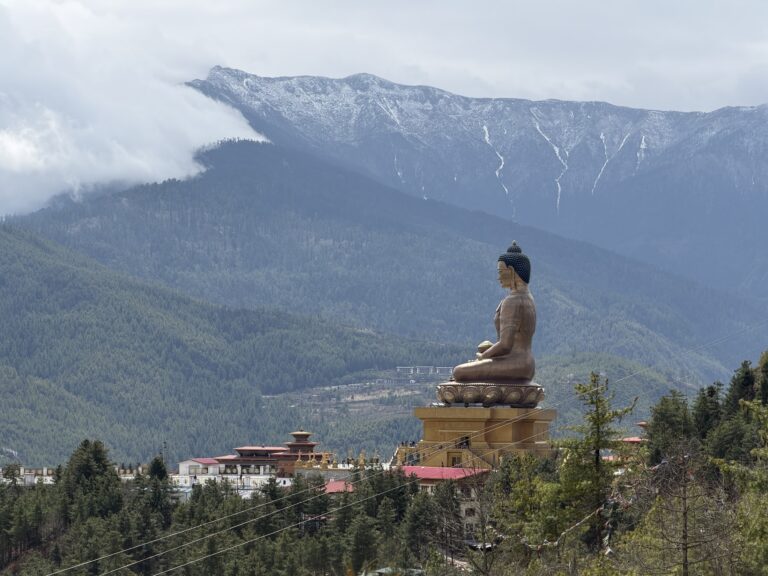
- A day in Thimphu after the trek, with the dzong and the Buddha Dordenma
Itinerary
Altitude profile
On footBy road
The altitude listed for each day, from 2,250 m to 4,080 m. Select a point to read that day.
The highest point on the route is 4,500 m.How we handle altitude
- Nights
- 4 nights in 3-star hotels, 4 nights in tents
- Meals in the price
- 8 breakfasts, 8 lunches, 8 dinners
- On the move
- 6 days on foot, 2 days by road, 1 day with a flight
Day 1Arrive in Paro2,250 m
Your Jomolhari Trek begins with the flight into Paro, and on a clear day the mountain you are going to see is visible from the plane. Sit on the left from Kathmandu for Everest and Kanchenjunga; from Delhi or Bangkok, ask for a window on the side facing north.
Our guide meets you outside arrivals and drives 10 minutes to the hotel at about 2,250 m. Lunch is at the hotel, and the afternoon is kept easy so your body can start getting used to the height.
Later we stroll through Paro town, a single main street of painted wooden shopfronts, and walk down to the cantilever bridge below Rinpung Dzong. If the dzong is open, we step into the courtyard, where monks and district officials share the building.
After dinner the guide holds a short briefing on the trek. We look at the route, check your boots, sleeping bag and down jacket, and arrange any rentals. You also hand over the duffel you will use on the trail, since the horses are loaded early on the first trek morning.
- TravelFlight, 1-3 hours
- Stay3-Star Hotel
- MealsLunch, Dinner
Day 2Tiger's Nest Hike3,120 m
We use Bhutan’s best-known walk as the first acclimatisation day of the Jomolhari Trek. The trail to Taktsang climbs about 900 m from the valley floor to the monastery at roughly 3,120 m, which is close to the height of the second trek camp.
Expect 2 to 3 hours up on a broad, dusty path through pine and oak, with prayer flags strung between the trees. Horses can be hired for the first half if you want to save your legs; most trekkers walk.
From the cafeteria viewpoint the monastery looks glued to the cliff. The last stretch crosses a gorge on stone steps beside a waterfall, and inside the guide tells the story of Guru Rinpoche meditating in the cave here in the 8th century. Bags and cameras stay in lockers at the gate.
Coming down takes about 1.5 hours. In the afternoon we visit Kyichu Lhakhang, a 7th-century temple with orange trees in the courtyard, and then rest. The guide takes your first oxygen reading tonight, so we have a baseline to compare against higher up.
- TravelHiking, 4-6 hours
- Stay3-Star Hotel
- MealsBreakfast, Lunch, Dinner
Day 3Shana to Thangthangka3,610 m
The trekking starts with a 1.5 hour drive north past the ruins of Drukgyel Dzong to the road head at Shana, about 2,850 m. From here it is about 22 km to Soi Thangthangka, the longest day of the trek, gaining roughly 750 m over 7 to 8 hours.
The trail follows the Paro Chhu upstream, crossing it several times on wooden bridges. It climbs and drops constantly through oak, rhododendron and pine, and in spring the forest floor is bright with primulas. Expect mud in places, and mind the roots.
The horses go ahead with the tents. Lunch is served hot by the river around the halfway point, and the guide sets a steady pace with regular stops, so even slower walkers reach camp before dark.
Thangthangka is a meadow at about 3,610 m with a small stone house nearby. If the evening is clear, you get the first view of Jomolhari above the trees at the head of the valley. The cook has tea ready when you arrive, and dinner is early so everyone can sleep after the long walk.
- TravelTrekking, 7-9 hours
- StayTented Camp
- MealsBreakfast, Lunch, Dinner
Day 4Thangthangka to Jangothang4,080 m
Today the Jomolhari Trek climbs above the tree line to base camp. We walk about 19 km in 5 to 6 hours, gaining roughly 470 m to Jangothang at about 4,080 m.
The morning starts with a short climb to an army post, where the guide shows our permits. The valley then widens, and the trail passes the first yak herders’ settlements, stone houses with wooden shingle roofs weighed down by rocks.
Above the last trees the land turns to grass and juniper, and the views open. Yaks graze on the flats beside the river, and herders’ dogs bark at the horses as we pass. Walk slowly here; the height is starting to count.
Jangothang sits on a grassy terrace beside the ruins of an old fort, with the east face of Jomolhari rising almost straight above it. The camp has a basic stone shelter used by trekking crews. Tonight the guide checks oxygen levels again, and anyone with a headache should tell him straight away.
- TravelTrekking, 4-6 hours
- StayTented Camp
- MealsBreakfast, Lunch, Dinner
Day 5Rest and Hike at Jangothang4,080 m
This is the day the Jomolhari Trek is built around: a full day at base camp, with a hike higher for views and acclimatisation. Get up before sunrise, because the first light on Jomolhari is the best of the trip.
After breakfast we offer two hikes. The first climbs north-east towards the Tshophu lakes at about 4,350 m, a pair of glacial lakes where blue sheep are often seen. The second climbs the ridge behind camp to about 4,500 m for a view of Jomolhari, Jichu Drake and Tserim Kang in one line.
Either walk takes 4 to 5 hours with stops and climbs 300 m to 400 m. The trail is rough and pathless in places, so the guide leads at a slow pace and turns back if cloud closes in.
The afternoon is free to rest, read in the dining tent, or wander to the herders’ houses with the guide. Sleeping back at 4,080 m after a higher hike is the classic way to adjust, and most people sleep better on this second night than the first.
- TravelHiking, 4-6 hours
- StayTented Camp
- MealsBreakfast, Lunch, Dinner
Day 6Jangothang to Thangthangka3,610 m
We turn back down the valley today, retracing about 19 km to Thangthangka. Downhill most of the way, the walk takes 4 to 5 hours and drops about 470 m.
Look back often in the first hour, as Jomolhari stays in view behind you until the valley bends. The light is different going down, and photographers often prefer this direction for the herders’ houses and the river.
Losing height usually lifts any headache from base camp, and appetites come back. Lunch is served on the grass near the army post. The guide uses the slower pace to talk about the herders’ year: summer in the high pastures, winter in the villages lower down.
Back at Thangthangka, the camp is pitched on the same meadow. With the afternoon free, it is a good time to wash in a basin of hot water the crew warms up, dry out socks and enjoy a last evening under the stars before the walk out.
- TravelTrekking, 4-6 hours
- StayTented Camp
- MealsBreakfast, Lunch, Dinner
Day 7Thangthangka to Shana and Paro2,250 m
The last trekking day of the Jomolhari Trek is the long walk out, about 22 km down the Paro Chhu to Shana in 6 to 7 hours. The trail drops about 750 m in total, with short climbs where it leaves the river.
The forest feels different on the way down: you notice the moss on the oaks, the waterfalls on the far bank and the woodcutters’ paths you missed on the way up. Watch your footing on the wet stones near the bridges.
At Shana the horsemen unload the camp for the last time, and this is the moment to thank the crew and hand over tips if you wish. Our vehicle meets you at the road head and drives about 1.5 hours back to Paro.
Tonight is a hotel night in Paro, with a hot shower and a real bed. If you would like a hot stone bath, a traditional Bhutanese soak in water heated with river stones, the guide can book one at a farmhouse; it costs extra and is worth every ngultrum after a week of camping.
- TravelTrekking, 7-9 hours
- Stay3-Star Hotel
- MealsBreakfast, Lunch, Dinner
Day 8Paro to Thimphu2,320 m
After the trek we spend a gentle day in Bhutan’s capital. The drive from Paro to Thimphu takes about 1.5 hours along the Paro Chhu and Wang Chhu rivers, past the iron bridge at Tamchog Lhakhang.
Our first stop is the Buddha Dordenma, a 51 m bronze and gold statue on a hill above the city, with a view down the whole valley. Then we visit the Memorial Chorten, where older people walk circuits from dawn to dusk, spinning prayer wheels and chatting.
After lunch we visit the Folk Heritage Museum, or the Takin Preserve to see Bhutan’s odd national animal, part goat and part antelope. Late in the afternoon, when government offices close, we walk into the courtyards of Tashichho Dzong, the seat of government and the main monastic body.
Dinner is at a restaurant in town. Thimphu is the only capital in the world without traffic lights, and the policeman directing cars at the main junction is a sight in his own right. Tonight is in a 3-star hotel in Thimphu, ready for the drive to the airport.
- TravelCar, 1-3 hours
- Stay3-Star Hotel
- MealsBreakfast, Lunch, Dinner
Day 9Depart from Paro2,250 m
Your Jomolhari Trek ends with the drive from Thimphu to Paro airport, about 1.5 hours. Flights from Paro mostly leave in the morning, when the wind is calm, so breakfast may be early and the guide will confirm the time the night before.
The road follows the river through pine forest and past the confluence at Chhuzom, where three chortens in Bhutanese, Nepali and Tibetan style mark the meeting of the Paro and Thimphu rivers.
At the airport the guide helps with check-in and says goodbye at the terminal door. Keep your visa letter handy for the exit check. If your flight is in the afternoon, we can fit in Paro’s National Museum or a last walk in town.
Many travellers continue to Nepal, and we can arrange your Kathmandu hotel, sightseeing or a trek there as part of the same booking. If you prefer a buffer day before a long-haul flight, tell us when you book and we will add a night in Paro or Kathmandu.
- TravelCar, 1-3 hours
- MealsBreakfast
What's included
Included in the price
- Bhutan visa: the application and the US$ 40 visa fee
- Sustainable Development Fee: US$ 100 per person for each of the 8 nights
- Airport transfers: pickup and drop at Paro airport
- Hotels: 3-star rooms on a twin-share basis in Paro and Thimphu
- Camping: two-person tents, foam mats, dining, kitchen and toilet tents
- All meals: from lunch on arrival to breakfast on departure
- Drinking water: boiled and filtered on the trek, bottled on the road
- Guide: a licensed English-speaking Bhutanese trekking guide
- Camp crew: a cook and assistants for the whole trek
- Pack horses: horses or yaks and their handlers for tents, food and your duffel
- Vehicle: a private car or van with a driver for every road transfer
- Park and route permits: Jigme Dorji National Park entry and the trek permit
- Entrance fees: Tiger’s Nest and the sites in Thimphu
- Duffel bag: a waterproof duffel for the pack animals, yours to keep
- Safety kit: a first-aid kit and pulse oximeter carried by the guide
- Emergency help: evacuation arranged by us and billed to your insurer
Not included
- Flights to and from Paro on Drukair or Bhutan Airlines, which we book at cost
- International airfare to your connecting city
- Travel insurance covering trekking to 4,600 m and helicopter evacuation
- Single supplement for your own hotel room or tent
- Drinks other than water and hot drinks at meals
- Sleeping bag and down jacket, which we can rent to you in Paro
- Extra nights from flight delays or leaving the trek early
- Laundry, phone and internet charges
- Tips for the guide, driver, cook, crew and horsemen
- Personal spending on souvenirs, snacks and hot stone baths
Dates and price
These are our fixed group dates. Prices change with the season, so each date shows its own price. Please book at least 30 days ahead, so we have time to arrange your Bhutan visa.
US$ 2,360per person
| Starts | Ends | Status | Price | Book |
|---|---|---|---|---|
| Departs: Fixed group dates. Book your date | ||||
Trip information
Price by Group Size
| Group size | Price per person |
|---|---|
| 1 traveller (private) | US$ 2,950 |
| 2 travellers | US$ 2,360 |
| 3 to 5 travellers | US$ 2,120 |
| 6 to 12 travellers | US$ 1,965 |
To book: choose a departure below. A 20% deposit confirms your place, and the balance is due before we lodge your Bhutan visa, about 30 days before you fly.
Joining alone: join any fixed date and pay the rate for the group size on the day it runs. Once six or more have booked, everyone pays the lowest rate and we refund any difference.
Private trek: any date from April to May or September to November can run privately, at the one and two traveller rates above.
Not in the price: flights into Paro, insurance, a sleeping bag, drinks and tips. Eight nights of Bhutan’s Sustainable Development Fee come to US$ 800 per person, and that sum is already inside every price shown.
Best Time to Visit
The Jomolhari Trek runs best in April and May and from September to November, and our group dates leave Paro on the 1st, 11th and 21st of those months. Outside them, snow or monsoon rain make the upper valley hard going.
October and November are the clearest months. Jomolhari usually shows from Jangothang at dawn and often stays clear until mid-morning, and the nights are cold, dropping to around minus 10 degrees C at base camp by late November.
April and May bring warmer nights and rhododendrons in the lower forest below Thangthangka. Spring cloud builds earlier in the day, so we plan the base camp hike for the first hours after sunrise.
September can still be wet in the first half, with leeches in the lower forest. From June to August the monsoon soaks the trail and hides the mountain, and from December to March snow often closes the upper valley. We do not list group dates in those months, though we will discuss a private trek in a dry year.
Difficulty and Fitness
We grade the Jomolhari Trek as moderately difficult. There is no pass to cross on this base camp route, but the walking days are long and the camps sit between 3,600 m and 4,080 m.
The first trek day is the toughest: about 22 km from Shana to Thangthangka, gaining roughly 750 m over 7 to 8 hours on a trail that climbs and drops along the river. The second day is about 19 km and 5 to 6 hours, rising another 470 m to Jangothang.
The way back is downhill and easier on the lungs but hard on knees, so walking poles are worth bringing. The base camp hike to about 4,500 m is optional, and anyone who feels the height can rest in camp instead.
To prepare, train for two to three months with hill walks or stair sessions, building up to back-to-back days of 6 hours or more. You should be able to walk 20 km in a day on uneven ground without needing the next day off.
Food, Water and Dietary Needs
All meals are included on the Jomolhari Trek, cooked fresh each day by our camp cook. Breakfast brings porridge, eggs, pancakes and toast; lunch is a hot meal carried in flasks; dinner is soup followed by rice, dal, vegetables and a meat or cheese dish.
Fresh vegetables and meat are bought in Paro before the trek and carried by the horses, so tell us your diet when you book. Vegetarian, vegan and gluten-free meals are all possible, and the cook can keep the chilli for those who want it.
At Jangothang the herders may offer fresh yak cheese or butter tea, which is salty rather than sweet. Try it if you like; your guide will say whether the source is good.
Our crew boils and filters all drinking water on the trail, so you never need to buy plastic bottles. Bring two 1 litre bottles, one insulated, and plan to drink 3 to 4 litres a day at altitude. In Paro and Thimphu we keep bottled water in the vehicle.
Altitude, Health and Safety
The Jomolhari Trek sleeps two nights at about 4,080 m and reaches about 4,500 m on the base camp hike, so headaches and broken sleep are common on the first night at Jangothang. The plan is built to keep those symptoms mild.
Before the trek you hike to Tiger’s Nest at 3,120 m. On the trail we go from Paro at 2,250 m to 3,610 m and then 4,080 m, and the rest day lets your body adjust before you head higher for the day and return to sleep lower.
Your guide checks each trekker’s oxygen level and pulse with an oximeter morning and evening and carries a first-aid kit. If symptoms grow worse, we descend at once, back towards Thangthangka. Read our altitude sickness guide before you travel.
The upper Paro valley has an army camp and a basic health post on the way, and helicopter evacuation is possible from Jangothang in clear weather. Your insurance must cover trekking to 4,600 m and helicopter rescue. Talk to your doctor before booking if you have heart, lung or blood pressure problems.
Local Etiquette
Jangothang and the villages below it are home to yak-herding families, and the Jomolhari Trek passes their houses and grazing grounds. Ask before you photograph people or step into a yard, and walk around a herd rather than through it.
Jomolhari is a sacred mountain, believed to be the home of the goddess Jomo. Do not throw rubbish or relieve yourself near streams and springs, and keep voices low near the chortens and mani stones along the trail.
Pass chortens, prayer wheels and mani walls with them on your right, walking clockwise. In temples and dzongs, cover shoulders and knees, take off your hat and shoes, and do not take photographs inside the shrine rooms.
Our crew carries out all rubbish, including toilet paper, and the national park asks the same of every group. Smoking is restricted in public places in Bhutan, and you must declare any tobacco you bring into the country.
Visa, Permits and Documents
You need a Bhutan visa for the Jomolhari Trek unless you hold an Indian, Bangladeshi or Maldivian passport. Only a licensed operator can apply, and we do so once your balance is paid.
Send us a scan of your passport, valid for at least six months after arrival, and a passport photo. The visa fee is US$ 40, and the Sustainable Development Fee is US$ 100 per person per night until 31 December 2029; we pay both for you as part of the price.
The route runs through Jigme Dorji National Park, and the trek also needs a route permit, which we arrange with the visa. Your guide carries the permits and shows them at the army and park checkpoints on the way up the valley.
Print or save your visa clearance letter for check-in on your Paro flight and for immigration on arrival. Indian nationals need a permit rather than a visa and pay a lower SDF. Rules are published by the Department of Tourism at bhutan.travel.
Transport, Money and Connectivity
You arrive and leave through Paro airport on Drukair or Bhutan Airlines, with flights from Kathmandu, Delhi, Kolkata, Bagdogra, Bangkok and Singapore. The trailhead at Shana is about 1.5 hours by road from Paro, past Drukgyel Dzong.
On the trek, pack horses or yaks carry the camp, and the crew moves ahead so tents are up when you arrive. After the trek our vehicle meets you at Shana and drives you back to Paro.
Bhutan’s currency is the ngultrum, tied to the Indian rupee. Bring US dollars in new notes, since banks refuse old or torn ones, and change some in Paro for tips and snacks. Cards work in larger hotels and some shops, but not on the trail.
Mobile signal reaches the lower valley around Shana, and there is sometimes coverage near the army camp, but expect none at Jangothang on most days. Buy a B-Mobile or TashiCell SIM at Paro airport, and use hotel Wi-Fi in Paro and Thimphu.
Questions about this trip
How long is the Jomolhari Trek?
Our Jomolhari Trek is 9 days from Paro to Paro, with five days on the trail. You walk about 82 km in total: two days up the Paro Chhu valley to Jangothang, a rest and hike day at base camp, and two days back down. The trip adds Tiger’s Nest before the trek and a day in Thimphu after it.
How much does the Jomolhari Trek cost?
The Jomolhari Trek costs from US$ 1,965 per person in a group of six or more, US$ 2,120 for three to five, US$ 2,360 each for two and US$ 2,950 for one. Prices include the visa, eight nights of SDF, hotels, camping, all meals, guide, crew and horses. Flights to Paro are not included.
How hard is the Jomolhari Trek?
The Jomolhari Trek is moderately difficult. There is no high pass on this base camp route, but the walk in and out is long, with one 22 km day of 7 to 8 hours. You sleep two nights at about 4,080 m. Fit hill walkers who train for two to three months manage it well.
What is the highest point of the Jomolhari Trek?
The highest camp on the Jomolhari Trek is Jangothang at about 4,080 m. On the rest day you can hike to about 4,500 m on the ridge behind camp or to the Tshophu lakes at about 4,350 m. Both hikes are optional and return to sleep at base camp.
When is the best time to do the Jomolhari Trek?
The best time for the Jomolhari Trek is April to May and September to November. October and November give the clearest views of Jomolhari, while spring has warmer nights and rhododendrons in the lower forest. The June to August monsoon and the snowy winter months are not suitable for group departures.
Is the Jomolhari Trek the same as the Jomolhari Loop?
No. Our Jomolhari Trek goes to Jangothang base camp and returns the same way, with no high pass. The Jomolhari Loop Trek continues over the Bonte La at about 4,890 m and the Takhung La, returning by a different valley. The loop is harder and a day longer.
Where do we sleep on the Jomolhari Trek?
On the Jomolhari Trek you sleep four nights in tents and four in 3-star hotels in Paro and Thimphu. Our crew pitches two-person tents with foam mats, plus a heated dining tent where possible and a toilet tent. There are no lodges in the upper Paro valley, so camping is the only option.
How cold is Jangothang on the Jomolhari Trek?
Jangothang base camp on the Jomolhari Trek drops below freezing every night in season, reaching around minus 10 degrees C in late November. Days in the sun are often pleasant. Bring a sleeping bag rated to minus 15 degrees C, a down jacket, warm hat, gloves and thermal layers for the evenings.
What food is served on the Jomolhari Trek?
Our cook serves three hot meals a day on the Jomolhari Trek, using fresh food bought in Paro: porridge, eggs and pancakes at breakfast, a hot lunch on the trail, and soup with rice, dal, vegetables and a meat or cheese dish for dinner. Vegetarian, vegan and gluten-free diets are catered for.
Will I get altitude sickness on the Jomolhari Trek?
Some trekkers get mild altitude symptoms on the Jomolhari Trek, such as headaches at Jangothang. Serious illness is uncommon because we hike Tiger’s Nest first, spend two nights at base camp and check your oxygen level twice a day. If symptoms worsen, we descend the valley straight away.
Is the Jomolhari Trek safe?
The Jomolhari Trek is a safe, well-used route with an army post and park checkpoints along the valley. Your guide carries a first-aid kit and pulse oximeter, and helicopter evacuation is possible from Jangothang in clear weather. Your insurance must cover trekking to 4,600 m and helicopter rescue.
Do I need a visa for the Jomolhari Trek?
Yes, all visitors except Indian, Bangladeshi and Maldivian nationals need a Bhutan visa for the Jomolhari Trek, arranged by a licensed operator such as us. The US$ 40 visa fee and US$ 100 per night SDF are included in our price. We also arrange the national park and route permits.
How much is the SDF for the Jomolhari Trek?
The SDF for our 9-day Jomolhari Trek is US$ 800 per person, because Bhutan charges US$ 100 per person for each of the eight nights you spend in the country. That rate is confirmed until 31 December 2029, and it is already included in every price on this page.
Who carries my bags on the Jomolhari Trek?
Pack horses, or yaks higher up, carry the tents, food and your duffel on the Jomolhari Trek, led by local handlers. You carry only a day pack with water, snacks, a jacket and a camera. Keep your duffel under about 15 kg; we give you a waterproof one to use and keep.
Can I see Jomolhari from base camp?
Yes. Jomolhari rises directly above Jangothang, so on a clear day the 7,326 m peak fills the head of the valley from your tent door. Mornings are the clearest, especially in October and November. That is why our Jomolhari Trek includes two nights at base camp rather than one.
How fit do I need to be for the Jomolhari Trek?
You should be able to walk 20 km on uneven ground in a day and repeat it the next day. Train for two to three months before the Jomolhari Trek with long hill walks or stair sessions carrying a light pack. Previous experience above 3,500 m helps but is not required.
Is there phone signal on the Jomolhari Trek?
Phone signal on the Jomolhari Trek is limited to the lower valley near Shana and occasionally near the army post. Expect no signal at Jangothang most days. Tell family you will be out of touch for four days, and use hotel Wi-Fi in Paro and Thimphu before and after.
Can the Jomolhari Trek be done privately?
Yes, the Jomolhari Trek can run as a private trek on any date in the season. Private trips have their own guide, cook and horses, and the one and two traveller prices on this page are private prices. On a private trek we can also add an extra night at Jangothang.
How big are the groups on the Jomolhari Trek?
Our Jomolhari Trek groups have between 2 and 12 trekkers, with a second guide once a group passes six. The per-person price falls as the group grows. Solo travellers are welcome on any fixed departure, and we hold your seat whatever size the group ends up being.
How do I get to the start of the Jomolhari Trek?
Fly into Paro on Drukair or Bhutan Airlines, which connect Paro with Kathmandu, Delhi, Kolkata, Bagdogra, Bangkok and Singapore. The trek starts at Shana, about 1.5 hours by road from Paro, and our vehicle takes you there and picks you up at the end.
What should I pack for the Jomolhari Trek?
For the Jomolhari Trek, pack waterproof boots, a sleeping bag rated to minus 15 degrees C, a down jacket, fleece, waterproof shell, thermals, walking poles, warm hat, gloves, sun hat, sunglasses, sunscreen, two water bottles and a headtorch. Bring modest clothes covering shoulders and knees for dzong visits.
Do I need travel insurance for the Jomolhari Trek?
Yes. Your policy for the Jomolhari Trek must cover trekking up to 4,600 m and helicopter evacuation, plus medical treatment and cancellation. Bhutan also expects visitors to hold health cover during their stay. Send us the policy number before departure so the guide has it on the trail.
What makes your Jomolhari Trek different?
Our Jomolhari Trek includes two nights at Jangothang instead of one, so you have a full morning at base camp and a higher day hike to about 4,500 m. We also hike Tiger’s Nest first for acclimatisation, check oxygen levels twice daily and finish with a full day in Thimphu.
Can I combine the Jomolhari Trek with a Nepal trip?
Yes. We are a Kathmandu company, and the flight from Kathmandu to Paro takes about an hour. Many trekkers spend a few days in Nepal before or after the Jomolhari Trek, and we can arrange both countries, the flights and every transfer as one booking.
Ask us about the Jomolhari Trek
We reply from Kathmandu within 24 hours with available dates, your exact price and answers to your questions.
- 16 years guiding in the Himalaya
- Registered in Nepal, Reg. 187391
- Group departures of 12 travelers at most
- Private dates on any day
Call, WhatsApp or Viber
Jomolhari Trek, from US$ 1,965 per person. Dates and booking at treknepalhimalayas.com/trip/jomolhari-trek/
Trek Nepal Himalayas Pvt Ltd, Reg. 187391. Bhagawatisthan, Thamel, Kathmandu, Nepal. Call or WhatsApp +977 98510 13196. [email protected]