Kailash Mansarovar Yatra from Lucknow
Based on 2100 reviews
Trip Overview
Embark on a spiritual journey of a lifetime to the sacred Mount Kailash and Lake Mansarovar. This 9-day Kailash Mansarovar Yatra from Lucknow is tailored for Indian travelers, beginning from Lucknow and using helicopter and flight transfers to maximize comfort and safety.
The pilgrimage is a fully guided group tour (minimum 25 people) with all logistical details handled by our team – from permits and flights to meals and accommodation. When weather and road conditions are favorable, you’ll travel during the best season (May to early October).
Throughout the journey, you’ll stay in basic lodges and guesthouses (the best available in these remote areas) and enjoy full board vegetarian meals prepared to suit pilgrims’ tastes. Our experienced guides and support staff will accompany you at every step, ensuring a safe, meaningful, and memorable yatra.
Trip Highlights
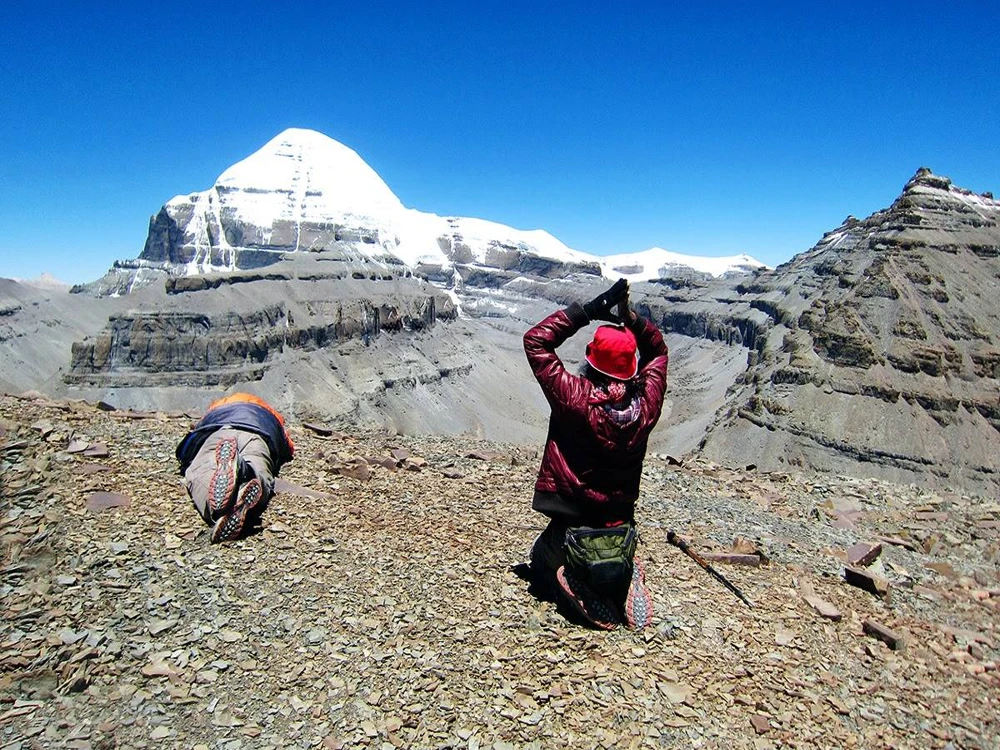
- Holy Lake Mansarovar & Mount Kailash Darshan: Experience the divine energy at Lake Mansarovar with a ritual holy dip and prayer ceremony. Enjoy awe-inspiring views of Mount Kailash – a 6,714 m peak revered in Hindu, Buddhist, Jain, and Bon traditions – especially during the parikrama (circumambulation) when you see Kailash up close from various angles.
- Helicopter-Assisted Route: By flying from Nepalgunj to Simikot and taking a helicopter from Simikot to Hilsa, we drastically reduce travel time and avoid long overland drives. This convenient route allows you to reach the Tibet border swiftly, making the journey smoother and less strenuous.
- Kailash Parikrama Trek (3 Days): Undertake the sacred 3-day, 38 km trek around Mount Kailash. Hike from Yama Dwar to Dirapuk, cross the Dolma La Pass (about 5,600 m) – the yatra’s highest and most challenging point – and descend past Gauri Kund to Zuthulpuk. The trekking portion is challenging but rewarding, filled with breathtaking alpine scenery and profound spiritual significance. (Those unable to trek can opt for a horse ride or return to Darchen to wait for the group, ensuring everyone can participate comfortably.)
- Acclimatization & Support: An extra day is scheduled in Taklakot (Purang) to acclimate to the high altitude. Our team guides adjust to thin air and offer emergency oxygen and a basic medical kit during the trip. You’ll be accompanied by knowledgeable Sherpa guides and a local Tibetan guide, with a support crew to handle luggage and logistics so that you can focus on the pilgrimage without worry.
- All-Inclusive Convenience: The package covers all ground transfers, domestic flights, helicopter rides, Tibet travel permits and visa, accommodation, and all meals. We ensure pure vegetarian meals are served throughout. With our full-service arrangement, you can undertake this journey with peace of mind, knowing that every detail from airport pick-up in Lucknow to your return is taken care of. (Package price: INR 2,75,000 per person).
Short Itinerary
Lucknow (India) to Nepalgunj (Nepal) – Drive 190 km (4–5 hours)
Fly from Nepalgunj to Simikot (2,910 m), Helicopter to Hilsa (3,640 m), Drive to Taklakot (Purang, 4,000+ m)
Acclimatization Day in Taklakot (Purang)
Taklakot to Lake Mansarovar (4,550 m) – Drive 100 km (approx. 1.5 hours)
Mansarovar to Darchen (4,650 m) – Short Drive; Preparation for Parikrama
Drive to Yama Dwar; Trek to Dirapuk (4,909 m) – 1st Day of Parikrama (12 km trek)
Dirapuk to Zutulpuk (4,760 m) via Dolma La Pass (5,600+ m) – 2nd Day of Parikrama (22 km trek)
Zutulpuk – Trek End (8 km); Drive back to Taklakot (Purang)
Taklakot to Hilsa – Fly to Simikot & Nepalgunj – Drive to Lucknow
Full Itinerary
We begin our journey with a pick-up in Lucknow and a scenic drive to Nepalgunj, a town just across the Nepal border.
The drive takes around 5 hours as we pass through the plains of Uttar Pradesh into Nepal. Upon arrival in Nepalgunj (approx. 150 m altitude), relax in your hotel.
Our tour leader will brief the group about upcoming flights and procedures in the evening. Dinner will be provided at the hotel. This first day allows the group to assemble and prepares you for the adventure.
We transfer to the Nepalgunj airport early for a flight to Simikot. The fixed-wing flight (about 1 hour) takes us to the mountain airstrip of Simikot in the Humla district.
Simikot’s fresh mountain air and vistas of lush hills signal the start of the remote journey. After landing, we rest briefly while our team coordinates the next leg.
From Simikot, we board a helicopter to Hilsa, the Nepal–Tibet border point. The helicopter ride (around 20 minutes) is a spectacular experience, flying over deep gorges of the Karnali River and emerald hills up to the border.
Upon reaching Hilsa, we walk across a small suspension bridge that marks the Nepal-China (Tibet) border. After clearing Nepal exit formalities, we met our Tibetan guide on the other side and went through immigration into Tibet (China).
Our awaiting vehicles drive us about 30–40 minutes to Taklakot (Purang), a border town in Tibet at roughly 4,025 m elevation. Check into the guesthouse in Taklakot and take a well-earned rest.
Breakfast, lunch, and dinner are provided. (If flight schedules or weather caused any delay, contingency plans are in place – our priority is everyone’s safety and comfort.)
Today is a rest and acclimatization day in Taklakot. After breakfast, you have the entire day to relax and adjust to the high altitude.
Taklakot is a trading town where you can explore the local market, interact with fellow pilgrims, or meditate and conserve energy.
This day is crucial for allowing your body to adapt to the thinner air (as we’ve ascended to about 4,000 m) before moving higher.
Our team will monitor everyone’s health; you can consult with the guides for any concerns. All meals (B/L/D) are included as we spend a second night in Taklakot.
After an early breakfast, we drove towards the holiest lake of the pilgrimage, Lake Mansarovar. The journey by comfortable coach takes about 1.5 to 2 hours (roughly 100 km).
En route, we pause at a viewpoint by Rakshas Tal (Lake Rakshastal) – a striking blue lake associated with Ravana in Hindu mythology.
From here, you will catch your first breathtaking glimpse of Mount Kailash in the distance and the sapphire expanse of Lake Mansarovar. Emotions run high for many pilgrims upon seeing these sacred sights for the first time.
Continuing our drive, we arrive at Mansarovar Lake, situated at about 4,550 m altitude and surrounded by panoramic mountain views. We check into a basic guesthouse near the lake.
This afternoon is devoted to spiritual activities: take a holy dip (snan) in the lake’s waters (weather permitting) and perform puja or meditation on the shores.
The atmosphere at Mansarovar is serene and charged with spiritual energy. We will also drive around the lake (Mansarovar parikrama by vehicle), roughly 90 km, to circumambulate this sacred lake and soak in its beauty from different vantage points.
Enjoy the tranquil views of Mount Kailash’s silhouette reflecting in Mansarovar as the sun sets. Dinner and overnight at the guesthouse by Lake Mansarovar.
Wake up to a glorious sunrise over Mansarovar and partake in morning prayers. After breakfast, we take a short drive (approximately 35 km, 1 hour) to Darchen, the small town at the foot of Mount Kailash that serves as the base for the Kailash Parikrama.
On arrival in Darchen (around 4,650 m), we check into a guesthouse/hotel and have lunch. The rest of the day is spent resting and preparing for the trek.
You can reorganize your luggage for the upcoming 3-day trek, packing only essentials (our crew and yaks/porters will help sort the group’s gear during the trek).
If you need any last-minute supplies (like walking sticks or snacks), Darchen has a few basic shops. Our guide will brief everyone on the trekking route and weather expectations and provide tips for a successful parikrama.
Dinner is served at Darchen, and we retire early to gather energy for the big trek starting the next morning.
After an early breakfast, we embark on the sacred Mount Kailash Parikrama (circumambulation) today. A short drive (about 45 minutes) takes us to Yama Dwar (also known as Tarboche), the gateway to the kora (parikrama).
Yama Dwar, which translates to “Gate of the Lord of Death,” is a significant spot where pilgrims offer prayers and ask Lord Shiva’s permission for the journey ahead. From here, we begin trekking on foot toward Dirapuk.
The trail to Dirapuk is about 12 km and is generally a moderate walk on relatively flat terrain, following the Lha Chu river valley.
You will immediately be rewarded with awe-inspiring views: towering cliffs, occasional waterfalls, and the west face of Mount Kailash coming into view.
As we progress, the north face of Mount Kailash – with its sheer, divine presence – reveals itself, seeming almost within reach. Pilgrims often pause to marvel and pray upon seeing this unforgettable sight.
We reach Dirapuk by late afternoon. Dirapuk is located at approximately 4,900 m, next to the river and directly facing the north face of Kailash.
The proximity to Mount Kailash here is a highlight of the journey – on a clear day, you feel as if Lord Shiva’s abode is towering right above you.
We settle into a basic dormitory guesthouse (mud-house) at Dirapuk for the night. It’s a long day, but our team will have packed lunch en route and a hot vegetarian dinner ready in the evening.
Overnight in Dirapuk. (Those not undertaking the trek will return to Darchen from Yama Dwar until the group returns from the parikrama.)
Today is the most challenging and rewarding day of the Kailash Parikrama. We start pre-dawn from Dirapuk, after a light early breakfast, to tackle the high pass.
The trail soon begins a steep ascent toward Dolma La Pass, at around 5,650–5,700 m, the highest point of the pilgrimage.
This 8 km uphill section is physically demanding due to the altitude – we take it slowly, with frequent small breaks to catch our breath. The sense of determination and devotion keeps everyone moving.
Upon reaching the summit of Dolma La, marked by prayer flags flapping in the wind, take a moment to rejoice – you’ve conquered the most challenging part of the journey. Many pilgrims leave offerings here, as Dolma La is named after the Goddess Tara and is a sacred milestone.
Right after the pass, the trail descends very steeply. The holy Gauri Kund (5,560 m) is just below Dolma La, a small emerald lake in the rocky terrain. According to legend, this is where Goddess Parvati bathed; the lake is revered, and some pilgrims collect its water.
We won’t linger long at this altitude, but you’ll have a chance to view Gauri Kund from the trail. The descent can be tricky on the knees, so we take care with each step.
After a few kilometers of steep downhill, the path evens out, and we stop for a rest at a flat area (around Phedi). Here, you’ll feel relief as the most challenging part is over. We continue trekking along a gentler route, following a stream.
The landscape gradually transforms – you’ll see green meadows and the valley opening up as we approach our second night’s halt, Zutulpuk.
The distance from Phedi to Zutulpuk is about 12 km, and by afternoon, we arrive at Zutulpuk Monastery, which houses a cave associated with Saint Milarepa.
We check into a basic guesthouse near Zutulpuk (approx. 4,760 m). You can rest and reflect on the incredible journey so far.
All pilgrims share a sense of accomplishment this evening, completing the most challenging part of the Kailash Kora. Our crew will serve dinner, and you’ll sleep in simple dormitory quarters. (Total trekking today ~22 km).
This morning, we will complete the final segment of the Kailash Parikrama. After breakfast, we set out from Zutulpuk for the last stretch – about 8 km of easy trekking (around 2-3 hours).
The trail follows the riverbank, and gradually the sacred Mount Kailash disappears from view as we finish the loop and approach the ending point of the trek.
Feel the sense of spiritual fulfillment as you have now completed the circumambulation of Mount Kailash – a feat devotees consider highly meritorious.
Our vehicles meet us at the trail’s end, and we reunite with any group members who stayed back. From here, we drive back to Darchen, where the whole group has lunch together and shares experiences of the parikrama.
After lunch, we continue our drive back towards the Tibet-Nepal border, retracing our route via Lake Mansarovar and Taklakot.
We will have arrived in Taklakot (Purang) by late afternoon or evening. Proceed through the Tibet immigration to sign out of China. We stay overnight in Taklakot or the vicinity.
A farewell dinner is enjoyed with our Tibetan crew, as this is our last night in Tibet. Rest well, as tomorrow we make the return journey homeward.
(Note: If time and weather permit, we might cross the border this evening itself to stay in Hilsa or Simikot on the Nepal side.
However, usually it’s more comfortable to stay in Purang and cross the next morning to avoid being stuck with limited facilities in Hilsa. Our itinerary is flexible to ensure everyone’s safety.)
After an early breakfast, we head to the border. We say goodbye to our Tibetan guide and complete exit formalities on the Chinese side.
A short drive (around 30 minutes) brings us to Hilsa on the Nepal side, where we clear Nepal immigration. We boarded the helicopter from Hilsa to Simikot, bidding farewell to Tibet’s landscapes.
In Simikot, we catch the next available flight back to Nepalgunj. Upon arrival in Nepalgunj (usually by midday), we have lunch and then drive back to Lucknow, India. The 4-5 hour drive brings us back to our starting point by evening.
Back in Lucknow, your Kailash Mansarovar Yatra concludes as we drop you off at your preferred location (airport or meeting point).
You return with a heart filled with spiritual bliss, wonderful memories of camaraderie with fellow yatris, and the satisfaction of completing a profound pilgrimage.
Breakfast and lunch are included today (dinner on your own after reaching home)—end of our services.
Price Includes
Accommodation:
- Hotel stay in Nepalgunj (twin/triple sharing with attached bathroom)
- Hotel stay in Taklakot & Darchen (twin/four sharing with attached bathroom)
- Guesthouse stay in Simikot, Hilsa, Chiugompa, and during the trek (on a dormitory basis)
Meals:
- All pure vegetarian meals throughout the trip (breakfast, lunch, dinner)
- Meals are provided in both the Nepal and Tibet regions
Transportation:
- Private AC vehicle transfer: Lucknow ⇄ , Nepalgunj
- Domestic flight: Kathmandu ⇄ , Nepalgunj ⇄ , Simikot (fixed-wing aircraft)
- Helicopter ride: Simikot ⇄ Hilsa (5 persons per flight)
- Tibet travel: Deluxe tourist bus for all road travel in Tibet
- Support truck for logistics during the Tibet portion
- Sightseeing tour in Kathmandu with a private vehicle
Permits & Visa:
- Tibet group visa and travel permits
- Humla restricted area permit & royalties
- All border formalities and assistance
- Domestic airport taxes (all sectors)
Guided Support:
- English-speaking Tibetan guide
- Nepali tour leader and experienced Sherpa support staff
- Porter service at Hilsa (both ways)
Additional Services:
- Oxygen cylinders & basic medical first aid kit for emergency use
- Manasarovar Parikrama by vehicle
- Complimentary use of down jacket (returnable after trip)
- Gift kit: duffle bag, backpack, beanie hat, and passport pouch
- Arrival/departure assistance in Kathmandu and Nepalgunj
Price Excludes
Travel & Personal Insurance:
- International air tickets to/from Kathmandu
- Nepal visa fee (only for NRI passengers)
- Travel insurance (mandatory): medical, baggage loss, trip delay
- Emergency evacuation/rescue insurance
Trekking & Personal Services:
- Personal horse or porter during Kailash Kora (approx. 3,600 Yuan)
- Asthapad Darshan (restricted by Chinese authorities; can be arranged if permitted at extra cost)
Personal Expenses:
- Bottled drinks, beverages, juices, alcohol, or extra snacks
- Laundry, phone calls, or other personal items
- Tips for guides, drivers, and support crew (customary and appreciated)
Extra Charges (If Applicable):
- Extra night stays/meals in Nepalgunj, Simikot, or Hilsa due to weather delays or flight cancellations
- Early return expenses (accommodation, transfers, meals, permits, visa split, etc.)
- Unforeseen natural calamities, political unrest, or additional rescue costs
Tax-Related Costs (India-specific):
- 5% GST if payment is made through an Indian bank
- 5% Remittance tax for transfers from India to Nepal
Trip Information
Best Time for Kailash Mansarovar Yatra
The Kailash Mansarovar Yatra via helicopter is best undertaken from May to the first week of October.
This period offers the most favorable weather across Nepalgunj, Simikot, Hilsa, and Tibet, ensuring smooth travel, safe trekking, and clear mountain views.
- May to June: Cool and scenic with snow-capped Mount Kailash; peaceful and less crowded.
- July to Mid-September: Warmest months with lush green valleys and steady helicopter operations; ideal for high-altitude trekking.
- Late September to Early October: Crisp air, crystal-clear views, and a quieter, more spiritual atmosphere.
Beyond mid-October, heavy snow and extreme cold make the route unsafe. For the best experience, we recommend planning your yatra between June and September when conditions are stable and views are at their finest.
Age Limit for Kailash Mansarovar Yatra
The Kailash Mansarovar Yatra via helicopter is physically and logistically demanding due to high altitudes, rugged terrain, and remote travel conditions.
Therefore, the maximum age limit for this yatra is 69 years. All participants must be physically healthy and capable of walking in high-altitude areas.
A valid medical fitness certificate is mandatory, and those with chronic health conditions such as heart disease, asthma, or uncontrolled diabetes are advised to consult their doctor before booking.
Safety is our top priority, and we strictly follow age and health protocols to ensure a secure and smooth pilgrimage for every yatri.
Equipment List
Clothing
- 2–3 pairs of quick-dry trekking pants
- 4–5 full-sleeve moisture-wicking T-shirts
- 2 warm thermal sets (inner layers – top and bottom)
- 1 fleece or woolen sweater
- 1 heavy down jacket (you can use the complimentary jacket we provide)
- 1 windproof/waterproof outer shell jacket (with hood)
- 2–3 pairs of warm trekking socks + 3 pairs of regular cotton socks
- 1 warm woolen cap or beanie (a free one provided)
- 1 sun cap or wide-brim hat (for daytime sun protection)
- 1 pair of woolen gloves + 1 pair of waterproof gloves
- 1 pair of trekking shoes (comfortable, waterproof, with good grip – well broken-in)
- 1 pair of sandals or slippers (for use inside the lodge)
Lodging & Sleeping Aids
- Sleeping bag (good for up to -10°C; optional but useful for extra warmth)
- Eye mask & earplugs (for light sleepers in shared rooms)
Personal Hygiene Kit
- Toothbrush, toothpaste, biodegradable soap, shampoo, face wash
- Wet wipes/tissue roll/hand sanitizer
- Small quick-dry towel
- Lip balm with SPF & sunscreen (SPF 30 or higher)
- Moisturizer (dry air causes cracked skin)
- Female hygiene products (as needed)
Health & First Aid
- Personal prescription medications (enough for 10–12 days)
- Basic medicines: paracetamol, anti-diarrheal, anti-nausea, antacid
- Diamox (consult your doctor for high altitude sickness prevention)
- ORS / electrolyte powder/glucose powder
- Pain relief spray or balm
- Adhesive band-aids and blister pads
- Small first-aid pouch
Spiritual Items
- Rudraksha mala, prayer beads, small idol, or religious book (if desired)
- Ganga jal or holy water bottle (optional, for rituals at Lake Mansarovar)
- Steel or copper water bottle (for collecting Mansarovar jal)
Travel Accessories
- Duffle bag (provided by us) or large backpack (60–70L)
- Daypack/small backpack (20–30L) for daily use during parikrama
- Waist pouch or money belt (passport, cash, permits)
- UV-protection sunglasses
- Water bottles (2 x 1L) or hydration bladder
- Flashlight or headlamp with extra batteries
- Trekking pole or walking stick (recommended, especially for Dolma La)
- Power bank & universal charger
- Passport photocopies, ID cards, 6 passport-size photos
Optional (But Useful)
- Oxygen canister (emergency use – our team also carries backup)
- Energy bars / dry fruits/snacks
- Hot water bag (for keeping warm in bed)
- Travel thermos (for hot drinks during trek)
- Small prayer flag (optional, for offering at Dolma La)
Grace Educational Organisation
The Grace Educational Organisation is a government-registered charity dedicated to empowering students in Nepal through education.
With a 100% donation policy, every contribution directly supports the children and schools, providing essential resources like supplies, infrastructure, and extracurricular programs.
This initiative fosters a transparent connection between donors and students, ensuring every action leaves a lasting impact.
The Nuwakot School, located in a picturesque rural setting, is one of the beneficiaries of this mission.
By visiting, you witness these students’ educational journey and become part of a transformative effort to uplift the community.
Trip Reviews
Be first to post a review in this trip.

More Trips


