Kali Gandaki Rafting
Based on 2100 reviews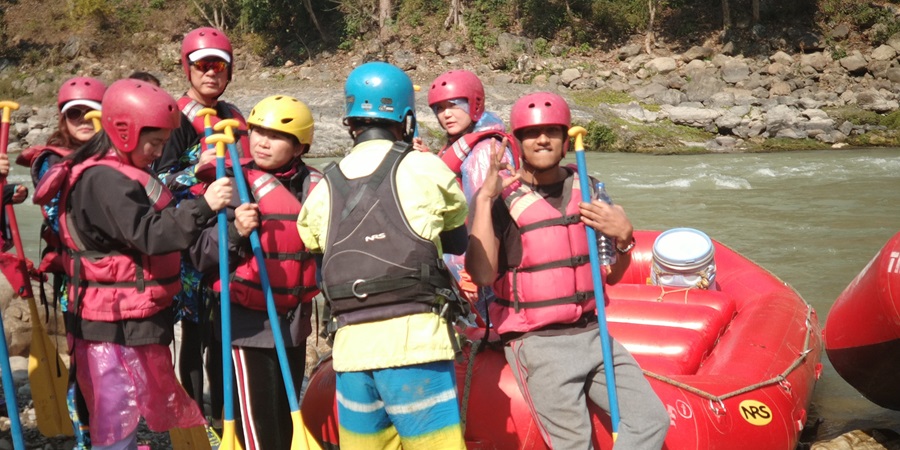
Trip Overview
This isn’t a lazy river. Kali Gandaki Rafting isn’t a theme park ride — it’s a pilgrimage. Named after the Hindu goddess of destruction, it carves between Dhaulagiri (8,167m) and Annapurna I (8,091m), creating the Andha Galchi — the deepest gorge on the planet, with a vertical relief of 5,571 meters between the riverbed and the surrounding peaks.
If you want a “nestled” experience with “panoramic vistas,” go sit on a hotel balcony in Pokhara. If you want to feel the pulse of the Himalayas crashing against your chest while you paddle through a canyon so deep the sun only hits the water for four hours a day, keep reading.
We’ve run this river when it was a monsoon-swollen beast in October and a technical, jade-green tactician in April. Here is the truth the glossy brochures leave out: the Kali Gandaki A dam at Mirmi has altered the final stretch.
The last hour is flatwater across a 7-kilometer reservoir — not whitewater, not scenic, just honest work. We tell you this upfront because no one else will. Everything before that reservoir? It earns its reputation completely.
Trip Highlights
- The Deepest Cut: You are paddling the floor of the Andha Galchi. The riverbed is 5,571 meters lower than the peak of Annapurna I. It feels claustrophobic in the best way possible.
- Class IV Mayhem: Forget the “bouncy” Class III stuff. Rapids like “Big Brother,” “Little Brother,” and “Refund” are technical, heavy, and unforgiving.
- The Shaligram Rule: The banks are littered with black ammonite fossils (Shaligrams). They are the physical manifestation of Lord Vishnu. Look. Touch. Do not take.
- Seti Beni Pilgrimage: We stop at the confluence to see a house-sized boulder—the largest Shaligram in the world. Watch the pilgrims circle it. Keep your voice down.
- Sandbagged Camping: No lodges. We sleep on fine white sand beaches. The stars are a sliver between the canyon walls. It’s cold, it’s damp, and it’s perfect.
Short Itinerary
Mal Dhunga
Purtighat
Pokhara
Full Itinerary
The Mid-Hill Highway expansion is a 4.5-hour bone-rattling ride through active construction zones. Wear an N95 mask on the bus.
The dust is as fine as talcum powder and gets into everything: your camera, your lungs, your optimism.
At Maldhunga, we inflate and launch. There is no warm-up stretch.
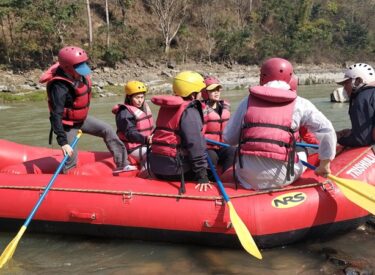
Within 20 minutes, Kali introduces herself to Big Brother (Class IV). This is not a wave train. It’s a technical drop with a serious hole at the bottom that doesn’t negotiate. When the raft tilts into that hole, you don’t need luck — you need Raj.
Our lead guides have run this river 200+ times. When they yell “Forward Hard,” you execute it because they know exactly where the rocks are. Trust the call.
Paddle hard. Little Brother follows immediately, and by the time you pull into the eddy above Modi Beni, your hands are shaking, and you are fully, completely awake.
We camp at the confluence of the Modi Khola, where the grey glacial silt of the Kali meets the blue clarity of the tributary.
That colour split — two rivers refusing to fully merge for a kilometre — is one of the quieter wonders of this trip.
If you’re extending your time in the region, the Annapurna Circuit Trek follows this same valley above you.
Camp Life: The cook team sets up fast. By 6:30 PM, there’s hot dal bhat or pasta, a fire, and usually someone’s portable speaker playing a mix of Nepali folk and whatever the guides’ current obsession is.
There is no formal programme. You eat, your guide tells stories about swims and close calls, someone pulls out a flask, and the canyon walls do the rest. The gorge amplifies sound — laughter carries far here. So does silence.
Moment of Zen: After dinner, when the campfire settles into embers, sit still for five minutes. The gorge funnels the river’s sound upward. It is not a roar — it is a low, resonant hum, like the canyon itself is breathing. You will not hear that sound anywhere else on the planet.
Tip: Walk up to the suspension bridge at Modi Beni before dark. The view of the two rivers colliding is the best photograph of the entire trip.
Wake up stiff. The gorge walls have closed in — or at least it feels that way. You are in the Gorge Proper now. Pack gear quickly; the sun won’t reach camp until late morning, and the wind off the water has teeth.
Before we launch, a cultural briefing that matters more than any safety talk:
The riverbanks here are active cremation grounds. You will see white ash, bamboo structures, and occasionally funeral pyres still smouldering on the shore.
Walk around them. Do not photograph them. And critically, never use driftwood that appears charred or cut for your campfire. It may be wood from a funeral pyre. Burning it is a profound spiritual taboo.
It is deeply offensive to your guides, to the local Magar communities, and to every pilgrim on this river. This is not a rule we invented. It is a line you do not cross.
The rapids today are relentless. “Refund” (Class IV) is the main event. The joke is that if you swim here, you don’t get your money back. It earns the name. The walls narrow just before the drop, and the hydraulic is aggressive. Keep your head on a swivel.
We stop at Seti Beni mid-afternoon. A house-sized black boulder sits in the river — the largest Shaligram in the world, a fossilized ammonite considered the physical manifestation of Lord Vishnu. Watch the pilgrims circumambulate it in silence. Give them space. Lower your voice.
The black stones covering the beach are also Shaligrams. Pick one up. Feel the spiral fossil under your thumb — it is 66 million years old. Then put it back.
Exporting Shaligrams from Nepal is illegal without a government archaeological permit. We have seen tourists detained at Kathmandu airport for a single stone in their carry-on.
It is not worth missing your flight or facing a fine. Nepal Police seized 894 kg of Shaligrams in Mustang in April 2025 alone. Take a photo. Leave the stone.
Camp Life: Purti Ghat beach is wider and warmer than Modi Beni. The guides usually get the fire going fast here. If you hiked up to the village and brought back Sel Roti, tonight is when the camp really comes alive — the guides appreciate it more than you’d expect.
There is something about eating local food bought from a local shopkeeper on a beach inside a 5,000-metre gorge that makes the conversation go on longer and the fire feel warmer.
Moment of Zen: In the late afternoon, the canyon walls turn amber, then deep red. The waterfalls — thin silver threads dropping thousands of feet — catch the last light. The smell of woodsmoke from Purti Ghat village drifts down and mixes with the river silt still on your skin. Sit with it.
Tip: Ask your guide to take you up to Purti Ghat village in the evening. Steep 15-minute hike. Buy Sel Roti from the local Magar shopkeepers. Put money into the local economy, not just the tour operator’s pocket.
The vegetation thickens on Day 3. The gorge softens. The walls pull back, and for the first time in two days, you feel the sun on your arms for more than a few hours. The rapids ease into Class II wave trains — rolling, forgiving, almost playful compared to what came before.
The Reservoir Reality: Around noon, the current stops. You have reached the backwaters of the Kali Gandaki A Hydropower Project.
The dam creates a 7-kilometer flatwater reservoir. No current. Jade-green. Silent. We tie the rafts together, row in rotation, and treat it as a team effort. It is the price of admission for everything that came before. Dig in.
We pull out at the dam site and load into the bus. The drive back to Pokhara is winding but paved. You’ll be back in Lakeside by 5:00 PM — exhausted, river-scented, and carrying something that is difficult to name but impossible to forget.
Moment of Zen: On the bus ride back, when the adrenaline has fully drained, and the dust is settling on your forearms, you’ll notice everyone in the raft has gone quiet. Not from exhaustion alone — from the particular silence that follows two days inside something ancient and indifferent and completely, overwhelmingly alive.
Tip: Keep a dry set of clothes in the bus. The return air conditioning will freeze you if you’re still damp.
Price Includes
- Transport: Private bus — built for rough roads, not for comfort. Manage expectations.
- Permits: ACAP (Annapurna Conservation Area) fees and TIMS cards — legally required, fully handled.
- Gear: High-buoyancy life jackets, helmets, paddles, self-bailing rafts — all expedition-grade.
- Shelter: Tents and sleeping mats on the best sand beaches in the gorge.
- Fuel: Hot meals twice daily — curry, pasta, porridge — designed to combat glacial cold, not win awards.
- The Guides: SRT-certified lead guides with 200+ runs on this specific river. They know where the rocks are. Listen to them.
Price Excludes
- Insurance Not Included: It’s important for participants to note that personal insurance is not part of the Kali Gandaki Rafting trip package. We recommend arranging your insurance coverage for a secure rafting experience in Nepal.
- Nepal Visa Fees: Participants are responsible for their own Nepal visa fees. This exclusion is a standard procedure for most rafting adventures in Nepal and should be planned for accordingly.
- Exclusion of Personal Expenses: Any personal expenses beyond what is specified by our company, such as additional gear or snacks, are not included in the rafting trip package. Participants should budget for these potential expenses for their comfort during the rafting journey.
- Gratuities Not Included: While not mandatory, gratuities for our guides and support staff are greatly appreciated but are not included in the tour cost. Tipping is left to the discretion of each participant to acknowledge the service provided.
Complimentary
- The “Sin” Tax: Beer, soda, cigarettes — yours to source and carry.
- Insurance: Non-negotiable. Must cover Class IV whitewater rafting.
- Tips: If your guide kept you off the rocks, tip them. Standard is 10–15%.
- Footwear: Heel-strap sandals only — Chacos, Tevas, or Keen. See our complete rafting gear checklist.
Trip Information
The “Gorge Effect” on Gear
Because the walls are so steep, it gets dark early—around 3:00 PM in the shadows.
- Eyewear: Do not bring pitch-black glacier glasses. Bring amber or rose-tinted polarized sunglasses. You need to see the rocks in the shadows, not just block the sun.
- Power: Solar chargers are useless here due to limited sun hours. Bring a 20,000mAh Power Bank.
Shaligram Ethics during Kali Gandaki Rafting
You will see black stones with spiral fossils. These are Shaligrams.
- The Law: It is illegal to export them from Nepal without a government archaeological permit. Customs at the airport do check.
- The Respect: Do not skip them. Do not stack them for Instagram cairns. Look, marvel, and put them back.
Cremation Site Protocol
The river banks are active cremation grounds.
- Rule 1: If you see a pile of white cloth, ash, or bamboo structures, walk around it.
- Rule 2: NEVER use driftwood that looks charred or cut for your campfire. It could be wood from a funeral pyre. Burning it is a massive spiritual taboo and deeply offensive to the guides and locals.
- Rule 3: Use the toilet tent. Do not leave landmines on the beach.
Road Conditions (2026 Update)
The expansion of the Pokhara-Baglung highway is massive. Expect dust. If you have asthma, bring a mask. This isn’t fear-mongering; it’s the reality of Nepal’s infrastructure development.
Equipment List
On the River:
- River Sandals: Chacos, Tevas, or Keen. Must have a heel strap.
- Shorts/T-shirt: Quick-dry nylon. No Cotton. Cotton stays wet and sucks the heat out of you.
- Sunscreen: Apply it even if it looks shady. UV bounces off the water.
At Camp:
- Headlamp: Essential. It gets dark fast.
- Fleece/Down Jacket: Evenings in the gorge are surprisingly cold due to the wind tunnel effect.
- Dry Bag: We provide big drums, but bring a small 5L dry bag for your phone/camera on the boat.
Frequently Asked Questions
As covered in Day 3 — it’s a grind, not a danger. We do it as a team. You’ll survive, and you’ll have earned the drive home.
Only when the guide says so. Calm stretches exist for body surfing, but undercut rocks are a genuine hazard in the gorge. Wait for the call.
You can do this. The Kali Gandaki is suitable for fit beginners who follow instructions. When the guide calls a stroke, you execute it. That’s the entire job description.
We don’t run commercial trips then. Levels become unpredictable and visibility drops sharply. Stick to Sept–Nov or Mar–May.
Leave suitcases at your hotel in Pokhara. Bring only what you need for 3 days in a duffel bag.
Grace Educational Organisation
The Grace Educational Organisation is a government-registered charity dedicated to empowering students in Nepal through education.
With a 100% donation policy, every contribution directly supports the children and schools, providing essential resources like supplies, infrastructure, and extracurricular programs.
This initiative fosters a transparent connection between donors and students, ensuring every action leaves a lasting impact.
The Nuwakot School, located in a picturesque rural setting, is one of the beneficiaries of this mission.
By visiting, you witness these students’ educational journey and become part of a transformative effort to uplift the community.
Trip Reviews
Be first to post a review in this trip.

More Trips