

14 Days
Moderate

Birendra Lake, also known as Birendra Tal, is a beautiful alpine lake in Nepal. It is located in the Manaslu region, close to the village of Samagaon in Gorkha District.
The melting glaciers of Manaslu made this beautiful blue-green lake. Tall Himalayan peaks and thick forests surround it. This spot gives trekkers a peaceful place to rest on the challenging Manaslu Circuit.
Birendra Lake is a must-see if you want natural beauty, local culture, or a great hike. It offers a stunning view on your journey around Mount Manaslu (8,163 m).
Birendra Lake is in the Manaslu Conservation Area in north-central Nepal. It is a short hike from Samagaon, a main village on the Manaslu Circuit. The lake is located at the base of the Manaslu Glacier, also known as the Punhyen Glacier.
This glacier provides the lake with meltwater. The lake’s elevation is approximately 3,600–3,700 meters (around 12,000 feet) above sea level. Birendra Lake’s setting is truly idyllic, surrounded by pine and rhododendron forests and backed by snow-clad mountains.

The waters reflect the nearby peaks on clear days, creating a mirror-like panorama. The location is easy to reach from Samagaon. This makes it a great side trip for trekkers. They can see a high-altitude lake without going far from the main trail.
Despite its remote location, Birendra Lake carries both natural and cultural significance. The lake is named after King Birendra of Nepal. This shows its importance and the respect it received when named. Locally, it’s known as “Birendra Taal” (ताल, meaning lake) and is cherished as one of the region’s scenic marvels.
Birendra Lake is not a pilgrimage site like some lakes in the Himalayas. However, it is essential because it is an excellent example of a glacier-fed lake ecosystem. Trekkers often say it is a highlight of the Manaslu Circuit. Its calm beauty provides a peaceful break from the rugged trails.
The area around is filled with Buddhist prayer flags and mani walls. This shows the Tibetan Buddhist culture of Samagaon village in the Nubri Valley. Birendra Lake is a beautiful spot and an important cultural site. It is a place to enjoy Nepal’s natural beauty and the mountain spirit of the Manaslu region.
Many trekkers go to Birendra Lake as a quick side trip from Samagaon (3,530 m). They often visit on a rest day or to help with acclimatisation. The trail from Samagaon to the lake is well-trodden and relatively moderate. It’s about 3 km (1.8 miles) each way, with roughly 120 meters of ascent – the lake sits above the village.
This hike usually takes 30 minutes to 2 hours one way. The time depends on your speed and how well you adjust. The path starts near the Gompa in Samagaon and gently climbs through meadows and moraine terrain toward the base of Manaslu.
The difficulty is considered easy to moderate. It’s a shorter hike, but remember you’re at a high altitude, so a slow and steady pace is wise. No technical skills are required, and the trail is clearly defined.
Trekkers often pack a small day bag with water and a jacket for this walk, leaving heavy packs at their lodge. As you approach the lake, you’ll notice the air gets cooler and the landscape more barren, with the great bulk of Mt. Manaslu looming above.

When you reach Birendra Lake, marked by prayer flags, you will see stunning views of the clear lake and snowy peaks. Many spend an hour or two at the lake’s shore, savouring the scenery, before tracing their steps back to Samagaon. It’s an ideal acclimatisation hike – helping your body adjust to the altitude while providing a memorable excursion.
Tip: If you have the energy and time, some trails continue beyond the lake up the moraine for higher viewpoints. Be careful not to go onto the glacier. Keep checking the conditions, especially if there is snow.
Autumn and spring are the best times to hike to Birendra Lake and do the Manaslu Circuit. Late September to early November is the best time to visit. The stable weather, clear skies, and mountain views are stunning after the monsoon. During autumn, days are mild, and visibility is excellent.
It is perfect for photographing the lake with crystal-clear reflections, though nights will be chilly at Samagaon’s altitude. The autumn air is cool and dry. The nearby forests are green from summer rains. Flowers like gentians are blooming against a backdrop of fall colours.
The spring season (March to May) is the second prime time to visit. As winter’s grip loosens, temperatures rise, and rhododendron forests on the lower parts of the trail come alive with blooms. In spring, you’ll enjoy clear mornings and gradually warm days.
The skies are generally clear of monsoon clouds, affording brilliant views of Manaslu and its neighbours. Spring is usually quieter on the Manaslu trail than autumn. This means Birendra Lake may be more peaceful with fewer trekkers. You might even spot new wildflowers popping up around the lake’s fringes.
Off-season: Trekking in winter (December–February) is possible but challenging. Temperatures in Samagaon drop well below freezing at night. The lake may be frozen or covered in snow.
The Larkya La Pass (5,106 m) beyond Samagaon is often closed or dangerous because of heavy snow. Only experienced hikers with the right winter gear should consider visiting in winter. Even then, being flexible for weather delays is very important.
The monsoon months (June–August) are not the best time to visit. Heavy rain makes the trails slippery and can cause landslides. Clouds hide the mountains, and leeches can be a nuisance at lower elevations.
The Budhi Gandaki River valley, which leads to Manaslu, gets a lot of rain. This heavy rain can cause landslides or floods that may block trails. In summary, plan for autumn or spring to have the safest and most enjoyable Birendra Lake experience.
Samagaon, also spelt Sama Gaun, is the closest hub for trekkers to Birendra Lake. It provides the last major comfort stop before reaching the higher, more remote areas of the Manaslu Circuit.
Despite being at 3,530 m, Samagaon has a range of teahouses and lodges that cater to trekkers. Several family-run guesthouses offer simple twin-bed rooms. Most of these rooms have shared bathrooms. There is also a cosy dining hall where trekkers gather around the stove.
As Manaslu became more popular, Samagaon improved its facilities. You can usually find hot bucket showers, solar lights, and devices that charge for a small fee.
Some lodges offer Wi-Fi and satellite phone access for emergency calls. This is important because the village is a key acclimatisation stop. Please remember that internet and phone signals can be weak. You may need to buy Wi-Fi cards, which cost between 500 and 1000 for slow service.
Food: The teahouse menus in Samagaon are more varied than in smaller villages lower on the trail. Dal bhat is a popular Nepali dish that includes lentil curry and rice. There are also noodle dishes, fried rice, and momos. Sometimes, you can even find surprising treats like pancakes, pasta, or pizza to satisfy Western cravings.
Trekkers enjoy Tibetan bread or porridge in the mornings to fuel their side hikes. Be sure to try a mug of hot butter tea or masala chai to warm up – nights and early mornings here are cold year-round.
There are a few small shops in Samagaon. They sell snacks like chocolate and biscuits. They also sell basic toiletries and some trekking gear. However, prices are high because it costs a lot to transport goods here.
Amenities: Samagaon has a community health post (clinic). It can handle fundamental medical issues. This is an essential place for altitude sickness symptoms or minor injuries. A historic monastery called Sama Gompa is at the far end of the village.
It is worth a visit. You can see prayer wheels and ancient murals there. In the town, electricity often comes from solar panels or small hydropower. This means the lighting is dim, with little space to charge devices.
It is a good idea to bring a power bank for convenience. At night, the village is dark and quiet. There is little light pollution, so the stars over Manaslu are amazing on clear nights.
Trekking to Birendra Lake on the Manaslu Circuit needs several permits. You must follow special rules because this area is restricted. It is close to the Tibetan border. Make sure to get all necessary permits ahead of time. You usually need to go through a trekking agency, as solo trekkers cannot get them alone.
The licenses and rules for this section are as follows:
Manaslu Restricted Area Permit (RAP): You need this special permit from the Department of Immigration for the Manaslu region. This includes the trek from Jagat to Dharapani. The cost changes with the season.
It is $100 per person for the first 7 days. After that, it is $15 per day during peak season, from September to November. In the off-season (December–August), it’s about $75 for the first week and $10 for each additional day.
Important: You must hike with a licensed guide to get a RAP. You also need to be in a group of at least two trekkers. The permit will only be issued through registered Nepal trekking agencies.
Your passport and visa details will be needed, and the permit will be checked at checkpoints (e.g., at Jagat, where the restricted area begins).
Manaslu Conservation Area Permit (MCAP): Birendra Lake lies inside the Manaslu Conservation Area, so an entry permit is required. The fee is NPR 3,000 for each person.
This is about USD 25 to 30. This rate applies to all foreign nationals. Citizens from SAARC countries pay a lower fee. This is a one-time fee (not per day), and the permit is usually obtained from the Nepal Tourism Board in Kathmandu or Pokhara.
It helps fund conservation and local community projects. You will need a passport-sized photo for this. Nowadays, you can also upload a digital photo through an agency.
Permissum Conservationis Area Annapurna (ACAP): Circuitus Manaslu exit per Dharapani, quod in Area Conservationis Annapurna est. Itaque trekkers etiam opus habent ad permissum ACAP intrandi (NPR 3,000, simile pretium et processus ad MCAP).
This is mandatory for side trips or exits involving Annapurna region trails. Like the MCAP, it’s a single fee and can be arranged alongside your other permits.
If you are only hiking to Birendra Lake and back, you don’t need ACAP. However, most Manaslu Circuit routes go through the Annapurna region.
Guides and Regulations: As of 2025, Nepal has reinforced rules that no independent trekking is allowed in restricted regions. Solly trekking anywhere in Nepal’s national parks/conservation areas now requires a guide.

To trek the Manaslu Circuit, you must go with a registered guide or a porter. Your permit will show your guide’s name and license number. Agencies often handle all paperwork. Remember that you must trek in a group of at least two people for Manaslu.
If you travel alone, agencies can sometimes match you with another trekker. They can also arrange a second “ghost permit” by paying for an extra permit to meet the rule. However, you will still need a guide. Always keep copies of your permits and passport with you. There are many checkpoints in Jagat, Deng, Ghap, Samagaon, and Samdo. Officials will check and log your details there.
Tsum Valley (Optional): If your trek plan includes the Tsum Valley side trip, you need a separate Tsum Valley RAP. This trip is not on the main route to Birendra Lake, but some people do it before reaching Samagaon.
This costs roughly $40 per week (peak season) per person. (This is only relevant if you divert off the main Manaslu Circuit to visit Tsum Valley’s monasteries and villages.)
Permit checks: Your permits will be inspected and stamped at various points. In Jagat, officials check that you have a valid RAP and conservation permits when you enter the restricted area.
Similarly, when you exit Dharapani, your permits may be checked to ensure you have ACAP. Trekking with a guide also ensures someone is there to help navigate these checkpoints and any paperwork.
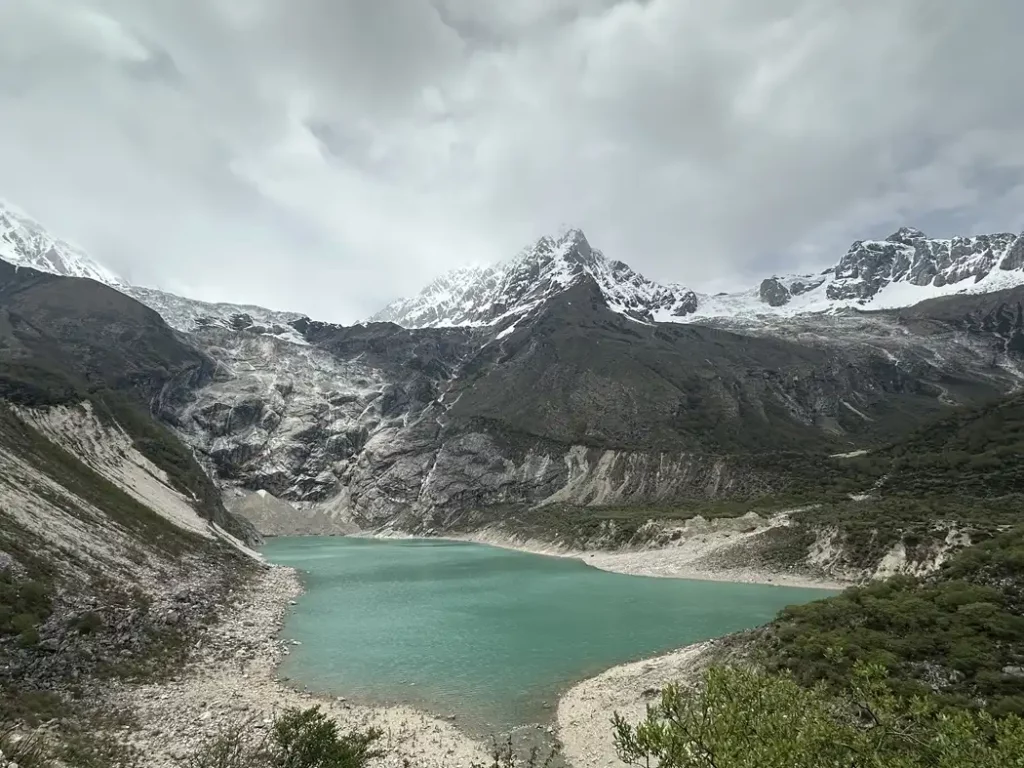
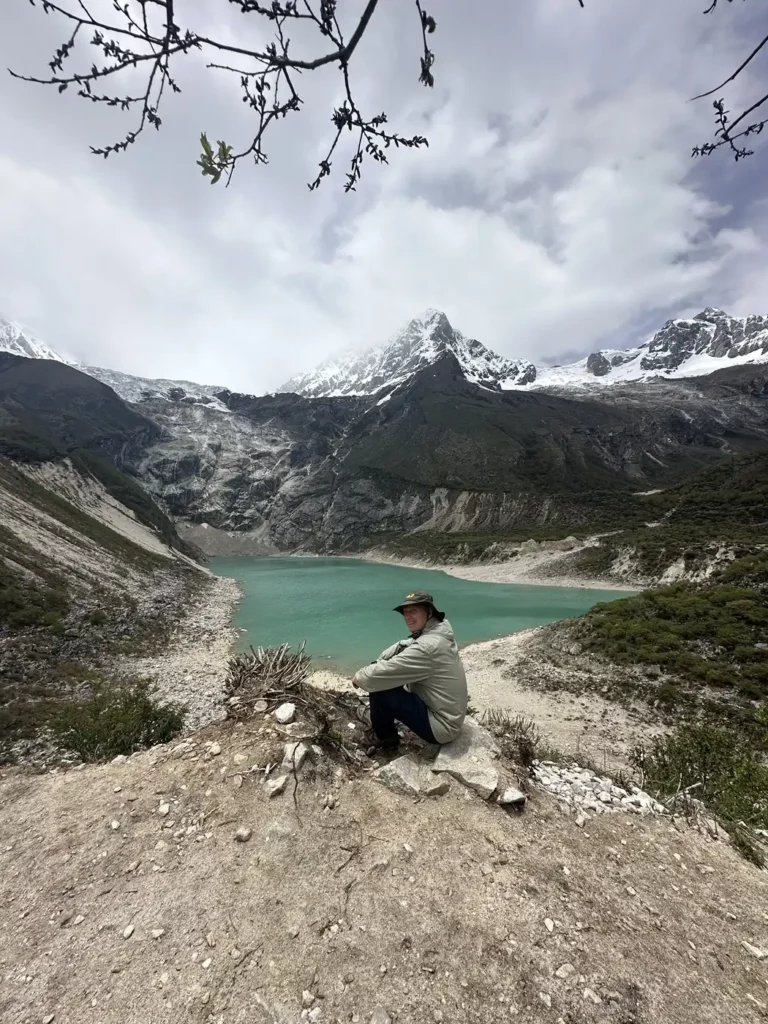
A scene of alpine serenity: As you arrive at Birendra Lake, the first thing you’ll notice is the striking colour of the water. The deep turquoise blue can show up under clear skies. It can look like a milky aquamarine when it has glacial silt.
The lake’s surface is often calm, perfectly mirroring the surrounding peaks on a windless day. Jagged ice-capped mountains, including Manaslu, encircle the lake basin, creating a dramatic backdrop.
On one side of the lake, you can see the terminal moraine and debris from the Manaslu Glacier. This shows that this beautiful lake was formed by glacial activity. Small icebergs or pieces of ice can sometimes be seen on the lake.
This is especially true in colder months or after an avalanche on the glacier. The atmosphere at Birendra Lake is calm and a bit magical. Besides the occasional chatter of trekkers or the flutter of prayer flags, it is quiet.
You might hear the distant rumble of ice and rock falling from the glacier. This sound shows the living and changing nature of the Himalayas. In April 2024, a large ice avalanche from Mt. Manaslu hit Birendra Lake.
This caused a temporary flood downstream, but luckily, there were no casualties. By the next day, the lake had returned to normal levels, but the event highlighted that these mountains were dynamic.
Don’t let this scare you, though – such events are rare, and visiting the lake is generally very safe. Standing by the shore, you’ll likely feel a sense of tranquillity and awe. Many trekkers use the moment to meditate, take photos, or absorb the grandeur of nature.
Wildlife and nature: The area around Birendra Lake is a protected zone. This means you can see wildlife, which makes the experience even better. Look at the slopes. You might see Himalayan tahr or blue sheep eating the sparse plants, especially in the morning or late afternoon.
Birdwatchers can enjoy species like Himalayan monals, snow pigeons, and various raptors (hawks or eagles) riding the mountain thermals. Being cold and oligotrophic, the lake doesn’t support much aquatic life besides some cold-water algae and plankton.
The area is home to rare animals. Locals and conservationists say the endangered snow leopard lives in the Manaslu Conservation Area. Seeing one is very rare. A lucky few might find paw prints in the winter snow.
Just knowing they are out there adds to the wild feeling. You may also encounter yak herds near Samagaon or on the trail, as yak grazing pastures are nearby. In spring, wildflowers and shrubs around the lake bring colour to the rocky landscape.
Tiny alpine flowers peek out from the ground. Rhododendron bushes, a bit lower down, may bloom in reds and pinks. Travellers often say that Birendra Lake feels calm and respectful.
You are near one of the world’s tallest mountains. The lake reflects the sky and is away from modern distractions. It’s where you might sit and feel a deep connection to nature.
Keep in mind that the weather can change fast at this altitude. A sunny morning can quickly turn cloudy by afternoon, or vice versa. So, bring a jacket even if the sun is shining.
Visiting Birendra Lake usually takes half a day. With good preparation and awareness, you can enjoy it even more. Here are some practical tips for trekkers and photography enthusiasts heading to the lake:
Acclimatise and take it slow: Although the hike from Samagaon is short, you’re going above 3,600 m. If you arrived in Samagaon yesterday, plan to hike to Birendra Lake.
This will help your body adjust to the thin air. Walk comfortably, stay hydrated, and listen to your body (headache or dizziness could be signs of rest). Most Manaslu itineraries include a rest day in Samagaon. Use this day to visit the lake or take other side trips. Make sure to rest in the morning if you need it.
Start early for the best views: Plan to depart in the early morning for Birendra Lake. Mornings in the Himalayas usually have clear skies. This means you can see the best mountain reflections on the lake.
The light is also great for photography. Starting early, like 7 AM, means you can hike in cooler weather. You will likely have the lake mostly to yourself before other groups arrive. If you love sunrises, you can hike up in the early morning darkness with a headlamp.
You can watch the sunrise glow on Manaslu. It is a magical sight as the peaks light up in golden colours. The lake also reflects the soft colours of the sky.
What to pack for the side trip: Bring the essentials in a small daypack. You should bring a water bottle that holds at least 1 litre. You can refill it from streams, but always use purification tablets or a filter.
Pack snacks or energy bars; no tea houses are at the lake. A packed lunch from Samagaon lodges is a good option. Bring one or two warm layers because the lake can be windy and cold, even if Samagaon feels mild.
Don’t forget a rain jacket or windproof shell. The weather can shift quickly near the glacier, so dressing in layers is key. Don’t forget sun protection – at high altitudes, the UV exposure is intense: wear sunscreen, sunglasses, and a sunhat. A basic first-aid kit with band-aids, ibuprofen, and Diamox (for altitude, if prescribed) is always good, even on short hikes.
Footwear and trekking gear: The trail to Birendra Lake is not technical; regular trekking shoes or boots are fine. Ensure your footwear has good tread, as sections near the lake’s edge can be slippery with pebble scree or ice (in winter).
Trekking poles can help on the short uphill sections, but are unnecessary for everyone. Use poles and stronger boots if you go from the lake to Manaslu Base Camp on the same day. The path is steeper and rockier.
Photography tips: Birendra Lake is a photographer’s dream for landscapes. For postcard-perfect shots, aim for that mirror-like reflection of the mountains in the water during calm conditions.
Bring a wide-angle lens to capture the entire lake and nearby peaks. Use a zoom lens for distant avalanches or wildlife on the ridges. A lightweight tripod helps you take steady shots.
This is especially useful for sunrise or sunset photos. It is also great for long exposures of smooth water and moving clouds. The best lighting is often in the morning. This is when the sun rises over the mountains behind you. It lights up the lake. You can also find good light in the late afternoon.
This is when the sun starts to set behind Manaslu. However, by then, the lake might be in shadow. If you stay until sunset, you might see the water glow with the colours of the sky. Remember, you will walk back to Samagaon in dim light, so bring a headlamp.
Drone photography is not allowed in conservation areas without permission. If you have a drone, check with your guide and local authorities. Flying drones can disturb wildlife and are often prohibited. Lastly, keep spare batteries warm (in an inner pocket) – cold temperatures drain camera batteries quickly.
Respect the environment and culture: Birendra Lake is a wild, unspoiled spot – please help keep it that way. Do not litter; carry all your trash (wrappers, bottles, etc.) back to the village.
There are no bins on the trail, so “pack it in, pack it out” is the rule. If you see any trash others leave, consider picking it up to help. Swimming or bathing in the lake is not a good idea. The water is icy, and it may pollute the clean waters.
Local people downstream use this water. Please follow all signs. If an area by the lake is marked off-limits for safety or restoration, do not enter. Culturally, Samagaon and the Nubri valley are Tibetan Buddhists.
You’ll likely encounter locals, perhaps grazing yaks or on pilgrimages to nearby monasteries. Always ask permission before photographing local people or inside monasteries. A simple “La chö parayo?” (Can I take your picture? – in local dialect) or gesturing to your camera with a smile works if language is a barrier.
The people are friendly and proud of their culture. Saying “Tashi Delek” or “Namaste” makes a big difference. Dress modestly when you visit nearby gompas (monasteries) like Pungyen Gompa.
Avoid wearing shorts or revealing tops. Be quiet, especially if monks are praying. By respecting nature and culture, you will have a more meaningful experience. This will help keep Birendra Lake enchanting for future visitors.
While Birendra Lake is a star attraction near Samagaon, it’s not the only point of interest in the area. Trekkers with extra time or energy can take a few side trips. These trips offer unique views of the Manaslu region.
Manaslu Base Camp is at 4,848 meters. If you want adventure, hiking to Manaslu Base Camp is a great experience. It takes you deep into the heart of Manaslu. The trailhead begins near Birendra Lake.
It climbs steeply up the moraine and hillside. This path leads to the base camp used by climbers trying to reach Manaslu. It’s a challenging full-day hike from Samagaon. It takes about 5 to 7 hours round-trip.
You will climb nearly 1,300 meters. It’s best to do this hike on its own. You can combine it with Birendra Lake if you are fit and well-acclimatised. The effort is rewarding – at base camp, you stand beneath the looming face of Mt. Manaslu, often among the fluttering prayer flags and the tents of climbers during peak climbing season (spring or fall).
The views from over 4,800 meters are amazing. You can look down at Birendra Lake, which is far below. You can see the Manaslu Glacier and the peaks of the Manaslu Himal range.
The base camp is on a rocky, icy ground with few plants. This shows the harsh conditions that mountaineers face. The ascending partway provides increasingly dramatic panoramas even if you don’t go to the official base camp.
Note: Because of the altitude gain, spend a few nights in Samagaon. You might also want to visit Birendra Lake before the base camp. Start early in the morning to avoid afternoon cloud cover blocking the views.
No lodges or tea stalls past Samagaon, so carry plenty of water and snacks. In spring, watch for avalanches on the opposite slopes – you can often see or hear distant avalanches from the safety of the trail. Many trekkers see the base camp side trip as a highlight of their trek. Standing near an 8000-meter giant is a humbling experience.
Pungyen Gompa (~4,000 m): Pungyen Gompa is an old Buddhist monastery on a ridge east of Samagaon. It offers cultural insight and beautiful views. The Gompa (monastery) sits below a side of Manaslu, known locally as Pungyen or Ponggen.
It was built after local people asked the mountain god for help. Legend says the monastery was made to please the god who lives on Mount Manaslu’s slopes. The hike to Pungyen Gompa takes about 3 to 4 hours round-trip from Samagaon.
The trail goes through yak pastures and along the stream of the Pungyen Glacier. It’s a steep but rewarding climb. At the top, you’ll find a small stone monastery and perhaps a few resident monks.
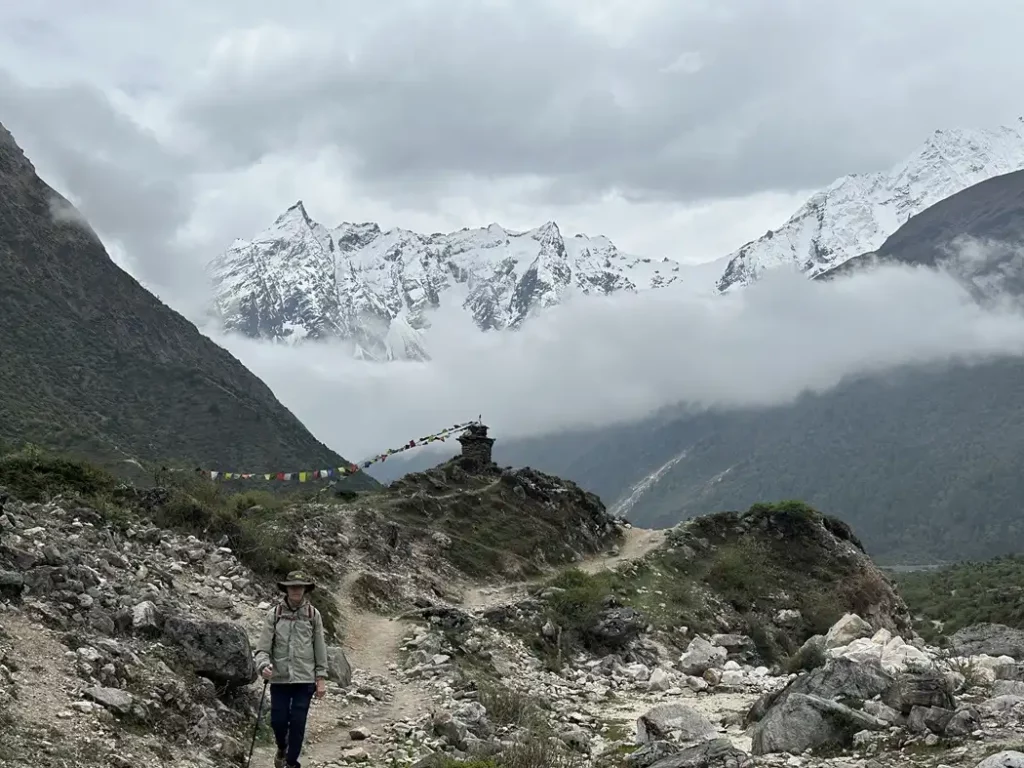
Colourful prayer flags wave in the wind. You will see beautiful views of Manaslu and the valley around it. The peace at Pungyen Gompa is remarkable. Often, you will hear only the sound of flags fluttering and distant prayers.
If you’re lucky, you might visit when monks are present, and their chanting carries on the breeze, adding a spiritual ambience to the setting. This side trip is a great way to learn about the region’s spiritual life.
The Gompa has statues and relics. The monks might offer you butter tea if they have visitors. You can also see glacial lakes (smaller than Birendra Tal) and a sweeping view of the Nubri Valley from the Gompa.
This hike is an excellent option for acclimatisation. Some trekking plans choose Pungyen Gompa for the acclimatisation day. Others may prefer Birendra Lake or add an extra day. If you have the time, both Birendra Lake and Pungyen Gompa are worth exploring to experience Samagaon’s surroundings fully.
Trekkers will head north to Samdo, which is at 3,860 meters. They will eventually cross the Larkya La Pass. Some may take a detour into Tsum Valley earlier in the trek. The main highlights of the Birendra Lake area are Manaslu Base Camp and Pungyen Gompa.
Birendra Lake is a true hidden gem of the Manaslu Circuit – a place where nature’s raw beauty is fully displayed. The lake has turquoise waters that reflect the Himalayan peaks. It brings a sense of peace to visitors.
This beauty shows what makes the Manaslu region special. It’s a beautiful place for your camera. It also reminds you to slow down and enjoy the journey, especially during a challenging, high-altitude hike.
Birendra Lake is an easy hike from Samagaon. It offers a great mix of adventure and relaxation. You can push yourself with a short climb. Then, enjoy peaceful moments by the lake’s shore.
When planning your Manaslu adventure, include time for Birendra Lake. Be prepared with knowledge about permits, the best seasons, and local customs. This way, you can travel responsibly. You’ll contribute to preserving this pristine area by respecting the local culture and environment.
Trekkers often leave Birendra Lake feeling grateful for the mountains and the friendly people of Nubri Valley. They also feel proud of reaching this beautiful place.
As you keep walking, maybe heading to Larkya La Pass, you will remember sitting by Birendra Lake. The lake’s shining water and the tall peaks will be a highlight of your trip around Manaslu. Safe travels and happy trekking!

