
14 Days
Moderate

Imagine walking through a hidden valley in the Himalayas. Ancient monasteries sit on the hillsides. Yaks graze in the high pastures. Towering snow peaks rise above you. The journey to Larke Pass (Larkya La) in Nepal’s Manaslu region offers all this and more.
This high-altitude trek goes around Mount Manaslu, which is 8,163 meters tall. It is the eighth-highest mountain in the world. The trek ends with the exciting Larkya La Pass, over 5,100 meters high.
The Manaslu Circuit via Larke Pass is less commercial than the Everest or Annapurna treks. It has beautiful nature. It provides rich cultural experiences. Adventurers can feel a sense of achievement on one of Nepal’s most challenging trails.
This guide is for adventure seekers, experienced trekkers, and first-time visitors to the Himalayas. It offers practical tips and interesting stories. Read on for key route highlights, cultural insights, trek planning tips, weather advice, photography spots, and ways to extend your trip.
By the end, you’ll be well-prepared (and inspired) to embark on this unforgettable Himalayan odyssey!
Below is a quick overview of key details for the Larke Pass (Manaslu Circuit) trek.
The Manaslu Circuit trek, which includes Larke Pass, is known as one of the best high-altitude adventures in Nepal. It offers diverse scenery and authentic cultural experiences.
The trail starts at the low area of Soti Khola, which is about 700 meters high. It follows the Budhi Gandaki River through terraced fields, subtropical forests, and Gurung farming villages.
Early days involve crossing suspension bridges over roaring rivers and walking alongside waterfalls and rice paddies. As you ascend, the landscape transitions from lush greenery to alpine meadows and eventually to barren, glacier-carved terrain.
Key stops on the route are the village of Jagat and Namrung. Jagat is the entry checkpoint for the restricted area. In Namrung, you can get your first view of Manaslu’s snowy peak. Further up is Lho, a village known for its beautiful monastery and a large Mani stone wall.

This spot gives a great view of Mount Manaslu, which stands at 8,163 meters. It is a popular place for trekkers to take photos with the towering peak above. The trail then leads to Samagaon (3,530 m), one of the region’s largest villages, in a broad valley beneath Manaslu.
Many trekkers stay an extra day here to adjust and enjoy the views. They visit the ancient Sama gompa, which is a monastery. They can also take a side hike to Birendra Lake. This beautiful turquoise glacial lake is at the base of Manaslu’s icefall.
You can take an optional day trip to Manaslu Base Camp (4,800 m) or Pungyen Gompa (3,800 m) from Samagaon. This trip gives you great views and a glimpse of mountaineering history. It also helps with acclimatization.
As you continue, you arrive at Samdo (3,860 m). This is the last permanent village before the pass. The town is home to people of Tibetan origin. Beyond Samdo, the environment feels remote – a high-altitude wilderness of moraine valleys and occasional grazing yaks.
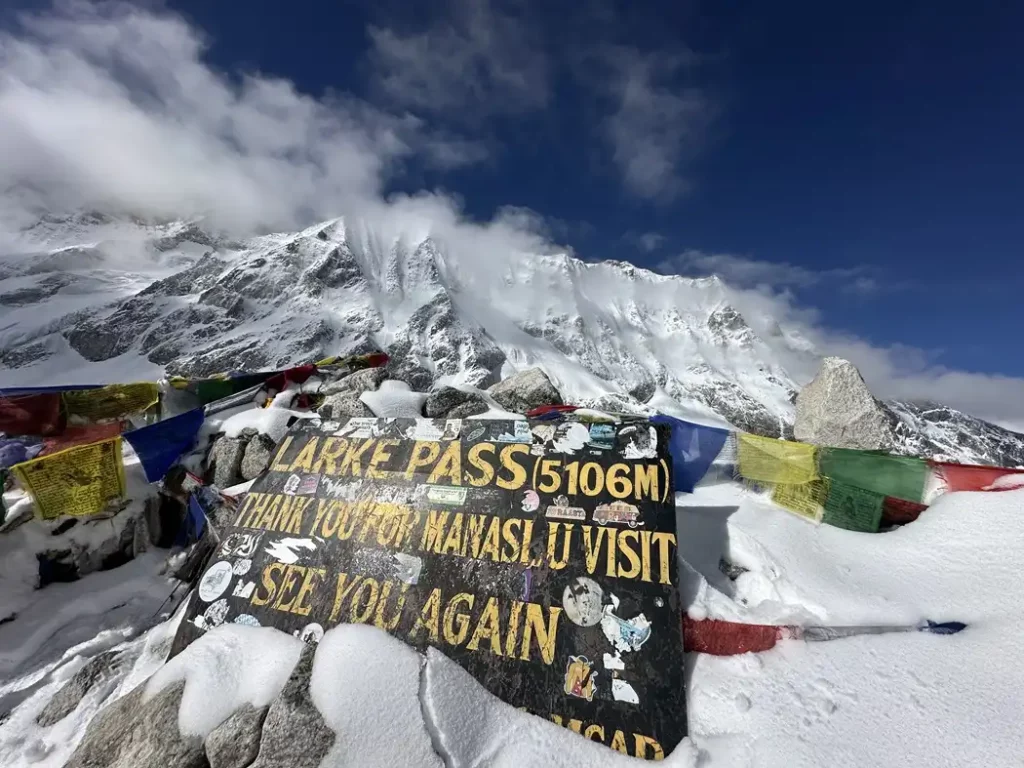
The trail winds up to Dharamsala (Larke Phedi, ~4,460 m), a basic high camp where trekkers rest before the big climb. Crossing Larke La Pass (5,106 m) is the trek’s crux and most memorable day.
Starting pre-dawn, you ascend steep, rugged paths, often snow-covered near the top. Reaching the summit of the pass – festooned with prayer flags – is both a physical triumph and a spiritual thrill.
At this high saddle, you see 360° views of the Himalayas. Peaks like Himlung Himal, Cheo Himal, Kang Guru, and part of the Annapurna range fill the horizon. It’s a breathtaking reward for the challenging ascent.
The descent from the Larke Pass leads into the Marsyangdi River valley on the other side. You’ll drop nearly 1,500 m the same day, passing frozen lakes and down through rocky scree to calmer pastures.
The most challenging work is done when you reach Bhimtang (3,720 m), a beautiful high meadow encircled by mountains. Many consider Bhimtang one of the most scenic campsites – you can look back towards the towering wall of Mt. Manaslu and the Larke Glacier and ahead towards the greener hills of Annapurna’s domain.
The next day’s hike goes through green pine and rhododendron forests. The trail leads to Tilije/Tilche and Dharapani. Dharapani (1,963 m) is where this trek intersects the Annapurna Circuit. Trekkers usually take a jeep back to Kathmandu through Besisahar. However, they can also continue into the Annapurna region.
The route spans tropical and tundra climate zones, showcasing everything from rice terraces and rhododendron forests to glacial moraines. It’s a challenging hike with long daily walks, usually 6 to 8 hours.

You will gain an altitude, but the reward is a view of Nepal’s amazing landscapes that keeps changing. Every turn in the trail shows new sights. You might see a herd of blue sheep on a cliff. You could find a line of prayer wheels and Mani walls leading you into a village. The morning sun lights up Manaslu’s tall peak.
Tip: While the Manaslu Circuit, including Larke Pass, is challenging, it’s achievable for trekkers with moderate fitness and determination. The key is to stay cool, drink plenty of water, and take time to adjust. You will enjoy one of the best trekking experiences in the Himalayas!
Trekking to the Larke Pass is a journey through stunning scenery and a walk back in time and tradition. The Manaslu region, called the Nubri and Tsum valleys, was removed from outsiders for many years.
It was officially opened to foreign trekkers in 1991. The local culture is well-preserved. Visiting these villages gives a rare look at an old Himalayan way of life.
For centuries, the trails around Manaslu were essential trade links between Nepal and Tibet. Larkya La Pass was an important route for traders and herders.
They moved salt, wool, and other goods using mule and yak caravans. As you trek, you are walking in the footsteps of those traders – a fact that adds a layer of historical intrigue to the journey.
You may notice old mani walls and flag-draped chortens at high passes, marking routes where caravans once crested the Himalayas. This cross-border trade also facilitated cultural exchange, which is evident in the Tibetan influence on local customs.
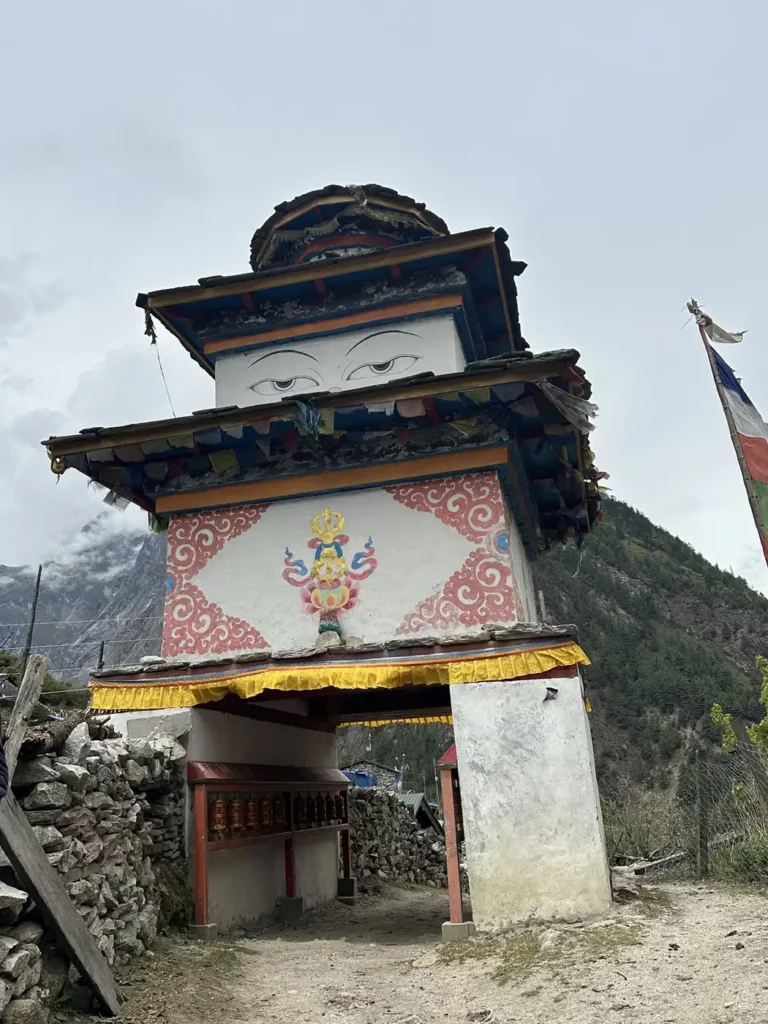
The upper Manaslu Circuit is mainly home to the Nubri people in Nubri Valley. They have relatives in Tsum Valley, and they are ethnically Tibetan. These communities have roots in Tibetan migrants from many centuries ago.
Local stories say Tibetan families came here in the 1600s. Villagers in places like Samagaon and Samdo still speak a Tibetan dialect. They wear traditional Tibetan clothing, like wraparound chubas, and practice Tibetan Buddhism.
When you visit monasteries or walk by spinning prayer wheels, you will hear the beautiful chanting of Tibetan prayers. You will also see colorful prayer flags sending blessings into the wind.
Most villages have a Gompa (monastery) or a small temple. They also have many stupas and Mani stones with prayers carved on them. Important religious sites include the Pungyen Gompa.
It is located on a ridge above the glacier. Another site is the old monastery in Lho. This monastery provides excellent views from the hilltop. Trekkers often see or take part in local customs.
You might watch monks perform evening puja (rituals). You may also find a mani wall. According to Buddhist tradition, you should pass it on the left (clockwise).
The rich Buddhist culture in the region is a highlight of the trek. You can see yak butter lamps flickering in dark temples. You can also hear a yak’s bell ringing with the chants of “Om mani padme hum” in the fresh mountain air.
Life in these high villages is rugged and simple. People farm potatoes, barley, and buckwheat on steep terraces, as well as herd yak and sheep, and trade goods at markets in lower towns.
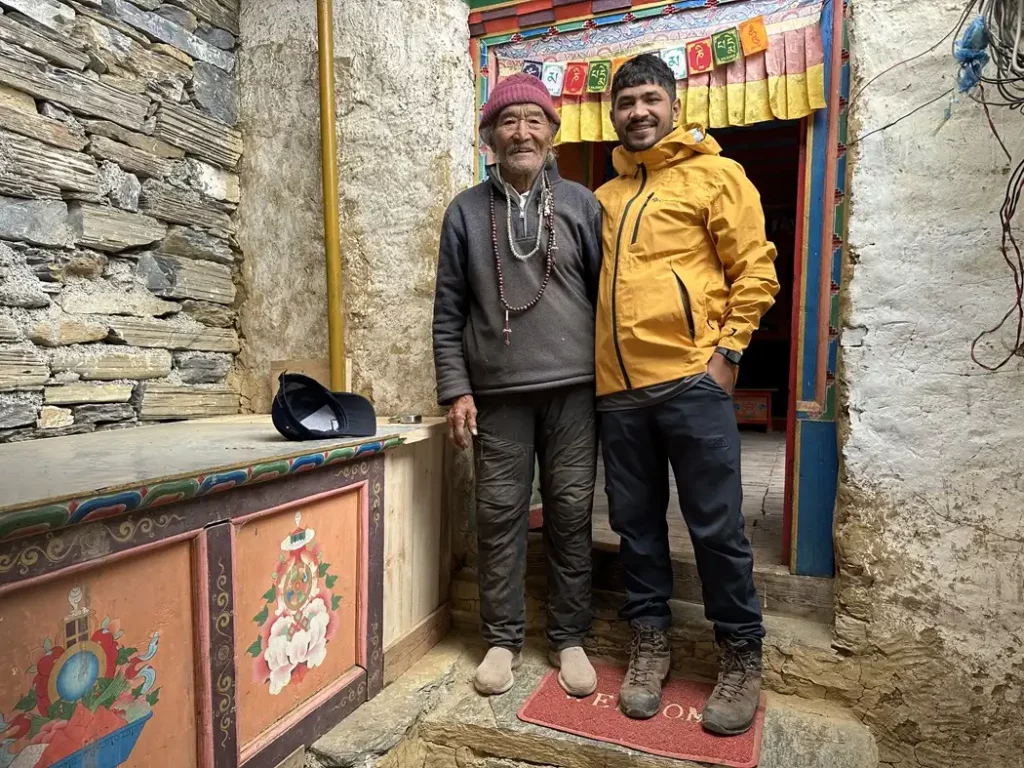
You will see the impressive self-sufficiency. For example, in Samdo (at 3,860 m), residents have greenhouses to grow vegetables. Tea houses along the trail are often family-run, and staying in them gives you a taste of local hospitality.

Don’t be surprised if you’re offered “dal bhat” (the Nepali staple of rice and lentils) or a cup of butter tea by the hearth. Despite the harsh climate, the people’s warmth is often what trekkers remember most.
Traveling here also means encountering unique festivals and beliefs. If you hike in autumn, you may see villagers celebrating harvest festivals or the Tibetan New Year (Losar). This usually happens around February or March if you visit in late winter.
Every stone and village has a story. Some tell of Buddhist saints who meditated in caves. Others speak of the legendary yeti that roams the mountains. Being respectful and curious about these traditions will significantly enrich your experience.
The Manaslu region’s culture is a fascinating blend of Nepali hill life and Tibetan highland heritage. By trekking the Larke Pass route, you cross a physical landscape and connect two worlds.
You will meet friendly locals in remote monasteries. You can learn about their festivals and daily routines. You will see how culture and nature have lived here long.
Planning and preparation are crucial for a successful Larke Pass trek. Here are some helpful tips about permits, gear, health, guides, and budgeting. These will help you have a safe and fun trip.
The Manaslu Circuit is restricted, so independent trekking is not allowed. Trekkers must obtain special permits and be accompanied by a licensed guide (usually arranged via a registered trekking agency). Permits required include:
This is the main permit for the Manaslu region. Its cost changes with the season. The first week is about USD 100 per person (Sept–Nov).
From December to August, it costs around USD 75 per week. There is also a daily fee for extra days. (Your agency will handle the paperwork, but budget for this significant cost.)
Required for entry into the Manaslu Conservation Area (about NPR 3,000, roughly USD 25–30).
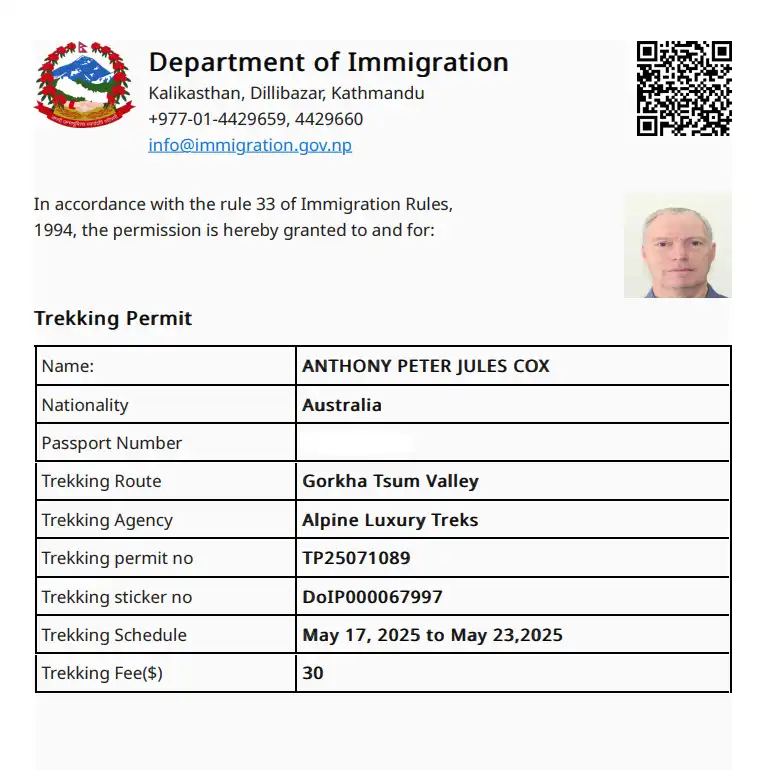
This is needed because the trek exits into the Annapurna region at Dharapani (also about NPR 3,000).
Regulations: At least two foreign trekkers are needed to get the Manaslu RAP. Agencies usually group solo travelers, or they must pay for two permits.
New rules state that having a guide is required for this trek. It is also highly recommended because of the remote terrain. Always carry your passport and permit documents on the trail. There are checkpoints, like at Jagat and Samagaon, where officials will check your permits.
The Larke Pass trek spans many altitudes and weather conditions, so packing smart is essential. Layering is the key for clothing, allowing you to adapt from hot, humid lowlands to freezing high passes. Here’s a brief packing checklist:
Clothing: Wear moisture-wicking base layers, a warm fleece or down jacket for cold nights, and a waterproof, windproof shell jacket. Bring trekking pants and thermal leggings for chilly nights. Don’t forget a good insulating hat and gloves. Don’t forget a sunhat and UV-blocking sunglasses for high-altitude sun.
Footwear: Sturdy, broken-in trekking boots are necessary for rough trails and snow. Bring comfortable camp shoes or sandals for the evenings. Several pairs of high-quality trekking socks (wool or synthetic) will help prevent blisters – keep one pair dry for the past day.
Sleeping & Bags: Nights can drop below freezing. A sleeping bag rated to -15 °C (5 °F) or lower is recommended, as teahouse blankets may not be enough at high camps. Also, use a sleeping bag liner for extra warmth and hygiene.
Trekking Gear: We highly recommend using trekking poles. They help reduce knee strain during steep descents, like from Larke Pass. Carry a reliable headlamp (with spare batteries) for early morning starts.
A water purification system, such as iodine, chlorine tablets, or a filter, helps you drink safely. This is important because you need to stay hydrated. Don’t forget a basic first aid kit with bandages, blister care, pain relievers, and any personal medications.

Miscellaneous: High SPF sunscreen and lip balm are vital (the mountain sun is intense). Pack some energy snacks (chocolate, nuts, energy bars) for long days.
A quick-dry travel towel, toiletries, hand sanitizer, and toilet paper will be handy (remote teahouses have fundamental facilities). Also, bring cash in small Nepali rupee notes. There are no ATMs or card payments in these villages. You will need money for meals, snacks, and tips.
Keep your daypack light but filled with daily essentials: pack water, snacks, a rain jacket, and a camera. Put bulkier items in a duffel bag carried by a porter if you hire one.
Travel insurance covering high-altitude trekking and emergency helicopter evacuation is strongly advised. Please have a copy of your policy details.
Trekking above 3,000 m means being vigilant about altitude sickness (AMS). The route is designed for gradual ascent, but everyone acclimatizes differently.
Plan for at least one or two acclimatization days (commonly at Samagaon and/or Samdo) – don’t rush the itinerary. Watch for early symptoms of AMS: headache, dizziness, loss of appetite, trouble sleeping. If you experience these, rest, hydrate, and inform your guide immediately.
The golden rule is not to go higher if your symptoms get worse. Going to a lower altitude is the best way to feel better. Guides usually carry a basic medical kit. They may also have Diamox (acetazolamide), which helps prevent AMS. Talk to your doctor before the trip if you plan to use it.
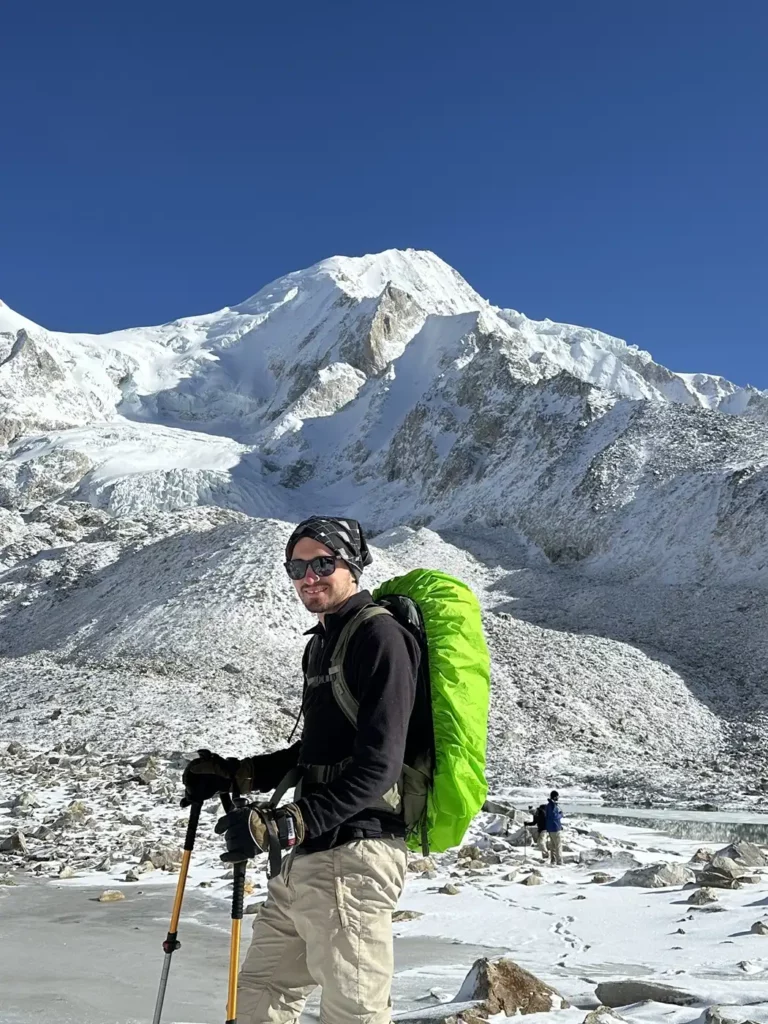
To stay healthy on the trail, follow some simple habits. Always purify your drinking water. Avoid uncooked foods that could upset your stomach. Also, pace yourself to prevent overexertion.
The trek is a marathon, not a sprint – walking too fast increases the risk of altitude issues and injury. Your calorie needs are higher at high altitudes. So, eat well even if you don’t feel hungry. Garlic soup is a popular local remedy to help you adjust.
At Larke Phedi and other high stops, nights are freezing – ensure you sleep warm to stay strong for the next day’s hike. Lastly, sun protection is critical at high altitudes. Bring a sun hat and sunglasses. Apply sunscreen often because UV rays are intense in the sun.
A knowledgeable guide isn’t just a permit requirement but enhances the trek. Local guides know the trail conditions, weather patterns, and culture. They can communicate with villagers, arrange lodging, and handle unforeseen issues, letting you focus on the experience.
A guide also monitors your health and can make decisions about adjusting the pace or itinerary for safety. Porters are optional but can be invaluable.
If you want to trek with a light daypack, a porter can carry about 10–15 kg. This weight can be shared between two trekkers. Hiring local guides/porters also supports the community by providing employment.
Costs can vary. On average, expect to pay about $45–50 per day for a licensed guide. For a porter, expect to pay $35–40 per day. This does not include their food and accommodation. These costs are usually covered by your trekking package or with a tip.
Many trekkers arrange a complete package through agencies, including a guide, porter, permits, transport, and meals/accommodation. This can simplify logistics greatly. Tipping at the end of the trek is common. Plan to budget extra for tips. This is often one day’s pay or more for good service.
When selecting a guide or agency, look for experience in the Manaslu region, good reviews, and proper licensing. It’s a bonus if the guide speaks good English and can share stories about local culture or point out names of mountains and wildlife. Building a good rapport with your crew goes a long way – you’ll be a team on an adventure!

Trekking in a remote area like Manaslu can cost more than other teahouse treks. This is because of special permits and logistical challenges. It’s important to budget wisely. Here are the major cost components:
Permits: The restricted area permit costs a lot, about $75 to $100 for the first week. The price depends on the season and may include extra fees. Conservation permits cost around $30 each. After adding agency service fees and taxes, these alone can total around $150–$200+ per person.
Guide/Porter & Agency Fees: A guided trek package usually costs between $1,500 and $2,600 per person. This price does not include international flights and is for a 2-week trip.
The price depends on the size of the group. Larger groups may share costs. It also depends on what includes transport, meals, and gear. The service level matters too.
This includes extra acclimatization days and the quality of lodging. If hiring personnel independently, calculate daily wages plus their insurance/equipment.
Transportation: To reach the trailhead, you usually take a jeep or bus from Kathmandu to Soti Khola or Arughat. A public bus costs about $10 to $20.
A private jeep costs around $150 to $200, but you can split this cost among your group. At the end of Dharapani, you can take a jeep to Besisahar. The ride to Kathmandu costs $20–$30, or more for a private jeep.
Accommodation & Food: Staying in a teahouse is quite affordable. It usually costs around NPR 500–800 per night, about $4–$7. However, meal prices go up as you gain altitude. A typical meal might be NPR 700–1000 ($8–$12).
On a two-week trek, you might spend $40–$50 daily on food and snacks. Hot showers and Wi-Fi (where available) cost extra. It’s wise to carry a contingency fund for additional days or emergencies.
Gear and Misc: If you need to rent or buy gear in Kathmandu (like down jackets, sleeping bags, and trekking poles), factor those costs in. Travel insurance is another cost (varying by provider/coverage).

Also, set aside some money for tips for the guide or porter. You might also want to buy souvenirs from the villages, like a thangka painting or prayer flags.
Because of the restricted-area requirements, the Manaslu Circuit via Larke Pass is pricier than treks like Annapurna. Still, most trekkers find it worth every penny for the exclusive experience.
To save money, travel in a group. This way, you can share costs for guides and transport. Also, consider going in the off-peak months of late fall or early spring.
The weather is still good, and some fees, like permits or agency rates, may be lower. You might also get better discounts for groups. Always keep extra cash for delays. This can help if landslides or bad weather make you change your trip or route.
Choosing the right season is vital for a successful Larke Pass trek. In the Himalayas, weather can make or break your trip, and high passes like Larkya La are weather-dependent. Here’s what to expect in different seasons:
Widely regarded as the best time for the Manaslu Circuit. Post-monsoon autumn brings crystal-clear skies, stable weather, and mild temperatures during the day.
The views of the mountains are at their best – crisp and unobscured, which is ideal for photography. Nights will be cold (often below freezing at high altitudes by November), but afternoons are pleasant for trekking. The trail is drier (less mud and leeches) after the monsoon, making hiking easier.
Additionally, autumn coincides with the festive season in Nepal (e.g., Dashain and Tihar festivals), adding cultural vibrancy.
This is also the busiest season on the Manaslu trek, but “busy” here is still far less crowded than popular trails elsewhere. Early autumn, from late September to October, is excellent. It gets much colder by late November. Early winter snows can sometimes close the pass.

Spring’s second most popular season offers moderate temperatures and another window of generally stable weather. Early spring in March can be cold at high elevations. There may still be some winter snow on the pass.
By April, the days get warmer. Rhododendron forests start to bloom. Pink, red, and white flowers cover the lower hillsides. The mountain views are usually excellent, especially in April and early May. However, there can be more clouds in the late afternoons than in autumn.
One thing to note: as May progresses, the atmosphere gets hazier with pre-monsoon moisture, and chances of rain showers increase.
Still, spring is an excellent time to trek, with long daylight hours and nature coming alive after winter. It’s a great time to see wildlife. You might spot birds, butterflies, and sometimes mammals like the Himalayan tahr on the higher slopes.
Not recommended for the Larke Pass trek. The summer monsoon brings heavy rain to Nepal, especially in June through early September. The Budhi Gandaki valley (the first half of the trek) becomes hot, humid, and plagued by leeches; trails can be muddy or landslide-prone.
Clouds often obscure the mountains for days. Moreover, washouts or delays frequently affect the road to the trailhead. The high areas north of Manaslu, near Samdo, get less rain than the lower valley.
However, reaching these areas is uncomfortable and risky. Trekking agencies mostly halt Manaslu trips during the monsoon season due to safety concerns.
On the bright side, the hills are a bright green, and wildflowers are everywhere. However, it is best to avoid the monsoon unless you are a very tough trekker or doing research.
Winter trekking is possible but challenging. Early December can still be okay weather-wise (cold but often clear). However, as winter sets in, temperatures plummet (night lows can reach –20 °C at Larke Phedi), and heavy snowfall can blanket the trail. Larkya La Pass can become impassable due to snow or closed informally if local guides deem it unsafe.
Tea houses in the highest villages, like Samdo and Dharamsala, may close for the off-season. They might also offer only limited services, which makes logistics more difficult.
If you are an experienced hiker, you can handle extreme cold. Consider a trek in December or late February if you have a flexible schedule. You will enjoy complete solitude and amazing snowy views.
However, you need to be well-prepared with gear and ready to change plans. For most trekkers, sticking to the prime seasons of spring or autumn ensures the best balance of safety, comfort, and spectacular views.
Tip: No matter the season, mountain weather is unpredictable. Always keep a buffer day or two in your itinerary if the weather (especially at the pass) causes delays.
Check the forecasts if you can. Listen to your guide’s local knowledge. They will know if you need to start even earlier in the morning to avoid noon winds.
With good timing and some luck with the weather, you will cross Larke Pass. You will see deep blue skies and the Himalayas all around you!
One of the joys of the Larke Pass trek is the countless photo-worthy vistas along the way. Whether you’re a professional photographer or just snapping memories on your phone, you’ll find spectacular scenes nearly daily. Here are some must-capture moments and locations:
As you get closer to Lho, turn around for a stunning view of Manaslu. It looks terrific in the early morning or late afternoon light. The white stupa and large monastery at Lho provide a perfect frame for the mountain.
This is often the first place trekkers get a clear full view of Mt. Manaslu’s summit, so it’s selfie time! The cultural elements (monastery, prayer flags, villagers) against the mountain backdrop make for a rich composition.

The stretch around Shyala (just before Samagaon) is often cited as having one of the most magnificent views. You stand in a broad meadow surrounded 360° by peaks – Himalchuli, Ngadi Chuli (Peak 29), Manaslu, and more.
The Pungyen Glacier spills off Manaslu to your right. Fitting it all in one frame is hard, but every direction is photogenic. In Samagaon, hike a little above the village at sunrise or sunset.
Head towards Birendra Lake or the hillside to see the town with Manaslu in the background. This classic shot encapsulates the scale of Himalayan life.
Bring your camera if you hike to Birendra Tal (lake) or towards Manaslu Base Camp. The turquoise glacial lake with the wall of ice and snow behind it is stunning on a clear day.
Further up, from the ridge by base camp (~4,800 m), you can look almost level with Manaslu’s hanging glaciers – a rare perspective. These side hikes are a photographer’s delight for capturing glacial landscapes up close.

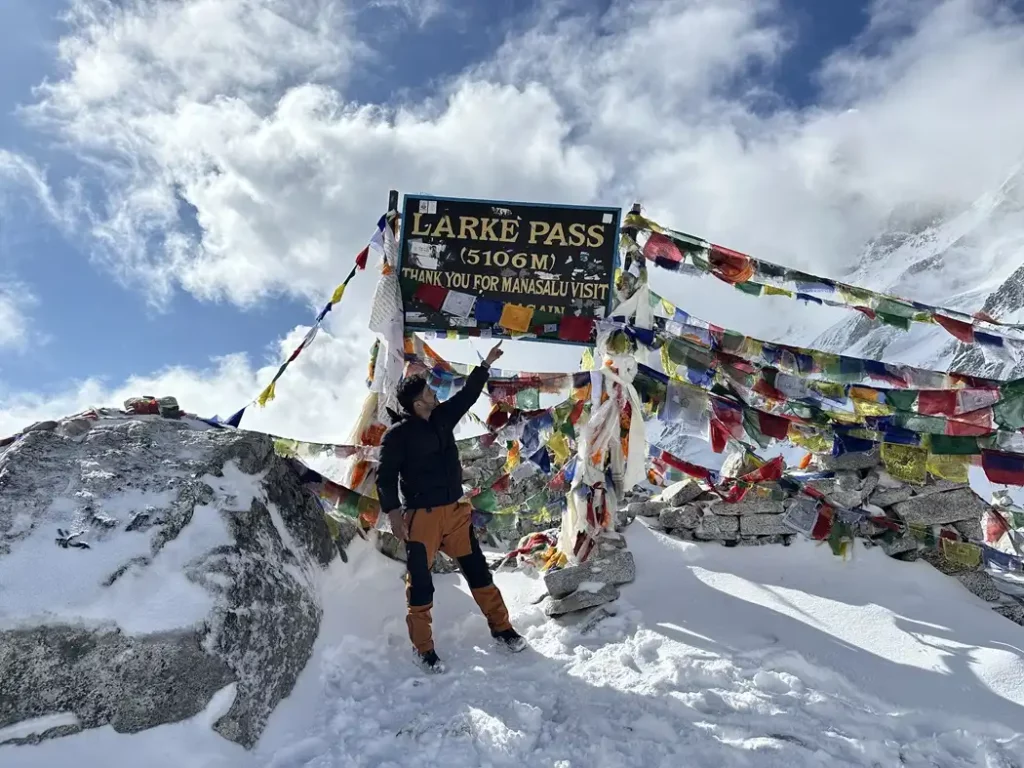
The ultimate photo op! At the top of Larke Pass, there’s usually a signboard and a flurry of prayer flags marking the spot. A triumphant photo here with the sign and flags is practically a rite of passage.
But remember to turn around and enjoy the expansive views. Looking back east, you can see part of the route you climbed. You will spot peaks like Manaslu and Cheo Himal. To the west, you can see the Annapurna region. Himlung Himal (7,126 m) stands out.
On a clear day, you can also see Annapurna II and other peaks in the Annapurna range. The morning sun (if you start early) often casts a golden glow on the snow.
Because of the cold, camera batteries can run out quickly here. Keep them warm and bring extra batteries. This way, you can capture the moment at the pass.
Crossing Larke La Pass (5,106 m) feels like standing on top of the world. The summit is decorated with colorful prayer flags from trekkers. On a clear morning, the tall mountains, from Manaslu to the Annapurnas, fill the horizon. The sense of achievement (and thin air!) is palpable at this point.
After the pass, when you reach Bimtang, do take time to photograph the scenic valley. Early mornings in Bimtang can show a beautiful sunrise. The peaks of Manaslu North and Phungi glow pink.

The mist from the river in the valley adds a sense of mystery. A short hike from Bimtang takes you to Ponkar Lake. This beautiful glacial lake has milky-blue waters and is surrounded by mountains. It is worth a visit for a unique photo. Fewer trekkers come here at dawn so you can capture pure Himalayan tranquility.
Don’t shy away from capturing the human element of the trek – with permission, of course. The colorful chortens, spinning prayer wheels, and local children with rosy cheeks are great subjects.
A caravan of mules carries supplies. A friendly host pours Tibetan tea. All these things tell the story of your journey. In Namrung or Samdo, you might catch a local festival or monks in traditional attire.
These honest cultural moments often become the most loved photos. They remind you that the Himalayas are about people as much as the mountains.
Keep your camera close in a dry bag or around your neck. The best scenes can appear suddenly. This could be a dramatic rainbow after a quick rain or wildlife, like a Himalayan Tahr on a distant slope.
In the forests below 2,500 m, you may even encounter troops of langur monkeys or exotic birds. Those famous long suspension bridges over the Budhi Gandaki swing high above a river gorge. They create a thrilling view.
Finally, be mindful of the environment and local sensibilities: ask before photographing individuals, and respect monasteries where flash might be forbidden inside.
The Manaslu region is excellent for photos. You can take amazing pictures of the Himalayas. Whether you are a serious photographer or just a casual traveler, this is true. You will come home with many unforgettable images.
A critical part of trekking in the Manaslu region is the chance to customize or extend your trip. Due to the remote location, many travelers enjoy exploring nearby areas or connecting their hikes. Here are a few ideas:
Often called the “Hidden Valley” of Happiness, Tsum Valley is a sacred side valley branching off the Manaslu Circuit. If you have an extra 5–7 days, adding Tsum Valley to your itinerary is highly recommended.
This valley was even more isolated (opened to trekkers only in 2008) and offers vibrant Tibetan Buddhist culture. You can visit old monasteries like Mu Gompa and Rachen Nunnery.
You might also meet communities that still practice polyandry and have special festivals. The scenery is different, too – narrow gorges opening into vast valley plains dotted with barley fields and yak herds.

You’ll need an additional permit for Tsum, but it’s relatively inexpensive compared to the Manaslu permit. You can visit Tsum Valley before going on the main Manaslu trail.
Usually, you would leave the trail after Jagat. Then, explore Tsum and return to the trail around Deng or Philim. This detour is a cultural treasure trove, less crowded than the Manaslu trail, making it feel like a journey back in time.
The standard Manaslu trek ends at Dharapani on the well-known Annapurna Circuit route. From Dharapani, you can continue trekking westward if your schedule and energy allow.
You can go on to Manang and try the Thorung La Pass (5,416 m). This will take you to the pilgrimage site of Muktinath or Jomsom. This would effectively combine two great treks into one grand traverse.
Doing the Annapurna Circuit from Dharapani would add another 7–10 days. Some trekkers pick a shorter route. They go from Dharapani to Tilicho Lake. This lake is the highest of its size at 4,919 m. The path goes through Khangsar, a beautiful side trip in the Annapurna region.
Remember, you need the Annapurna permit (ACAP) ready. You already have this from the Manaslu trek. Also, check if you need a TIMS card. The Annapurna Circuit is more developed now, with roads covering some parts.
Starting from midway after Manaslu, it offers the best of both worlds. You can enjoy the solitude of Manaslu and the classic highlights of Annapurna.
Another path from the Annapurna route leads to the Nar Phu valleys. These are two remote villages north of Annapurna. You can reach them from Koto, which is near Chame.
It takes about a day’s walk from Dharapani to get there. Nar Phu is a restricted area trek like Tsum. It is full of Tibetan culture and has dramatic landscapes. You will see eroded cliffs and high pasturelands.
If you’re not too tired after Larke Pass, you can explore Nar Phu for about 5 to 6 days. After that, you can exit at Thorung La or return to the Annapurna Circuit. It requires a separate permit and a guide as well. This is for the truly adventurous who want to combine multiple remote areas in one go.
Even if you don’t explore other areas, the Manaslu Circuit has small side trips. You shouldn’t miss them if you have time. We’ve mentioned the Manaslu Base Camp hike and Pungyen Gompa near Samagaon, both excellent acclimatization day trips.
Near Bimtang, if you have a restful afternoon, walk up to the ridge to see Ponkar Lake or the glacier viewpoint. When leaving Dharapani, some travelers visit the hot springs at Tatopani if they take the Besi Sahar route.
Others spend a day in Bandipur, a charming hill town, on their way back to Kathmandu. This stop is a nice way to relax after the trek.
Whatever extension or side trip you choose, ensure you plan the logistics and permits. Tsum, Nar Phu, and crossing Thorung La require extra planning. You need permits and may need additional gear for higher passes. Discussing these ideas with your trekking agency in advance is wise so that they can arrange the necessary support.
Finally, suppose your schedule is tight, or you prefer a shorter adventure. In that case, you can do a “Short Manaslu Circuit.” You can take a jeep to skip some parts.

For example, you can drive further into to start at Philim or Jagat. You can also take a jeep out from Bhimtang if one is available. However, shortening the trek means missing out on some villages and acclimatization time, so weigh those trade-offs. Trekking the whole circuit steadily is the best way to experience the region’s depth.
Whether you take a longer hike or follow the classic path, the Larke Pass adventure will inspire you. It will make you dream of future trips in the Himalayas.
Many who finish it say it is one of the most rewarding treks they have ever done. They even compare it to famous treks like Everest Base Camp or Annapurna.
With the world now “discovered,” Manaslu is still a hidden gem. Adding nearby places like Tsum or Nar Phu makes the experience even better.
Trekking over Larke Pass is more than just a physical feat – it’s a journey that touches your soul. Each day brings new challenges and rewards.
You start with the humid paths along the Budhi Gandaki. Then, you reach the windy summit of Larkya La. You will walk quiet trails that few people visit. You can make real connections with other hikers and locals.
You might also connect with a deeper part of yourself. The Manaslu Circuit requires respect and preparation. It gives a unique experience where nature’s beauty and human strength shine together.
As you enjoy a warm cup of tea in a teahouse after a long walk, you will see why some trekkers say this is the best trek in Nepal. It’s the ultimate Himalayan adventure for those seeking authenticity, adventure, and awe.
Pack your bags, train your legs, and open your heart – Larke Pass is calling, and the mountains are ready to share their story.
Safe travels and happy trekking! Namaste.
