Everest Bungee Jump
Based on 2100 reviews
Trip Overview
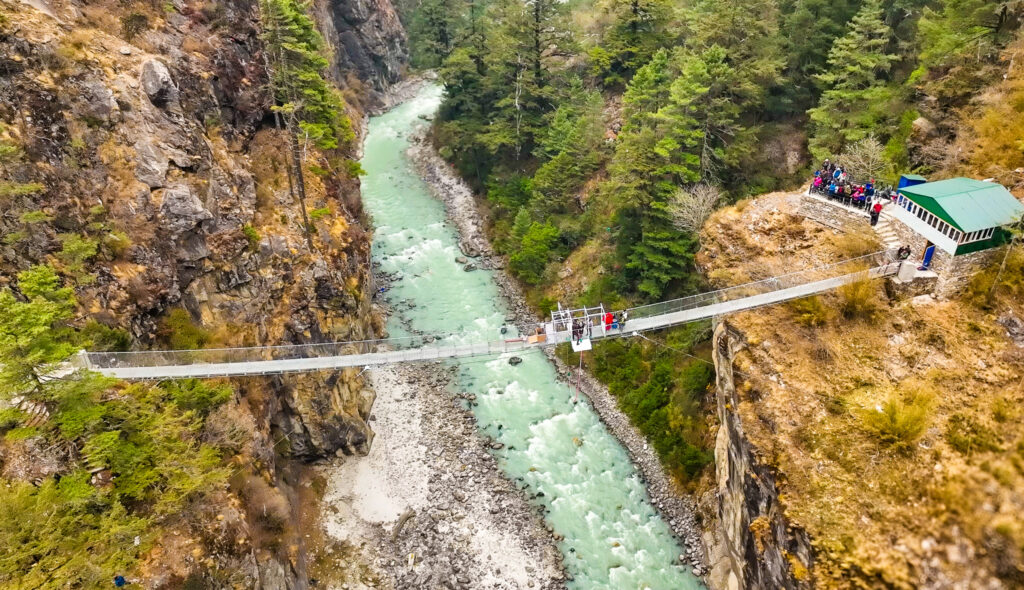
Everest Bungee Jump has the highest bungee jump in the world. It is at Hillary Bridge (Larja Dobhan) on the way to Mount Everest. This jump is about 2,885 m above sea level. This historic suspension bridge crosses a deep gorge between Phakding and Namche Bazaar on the Everest Base Camp trek.
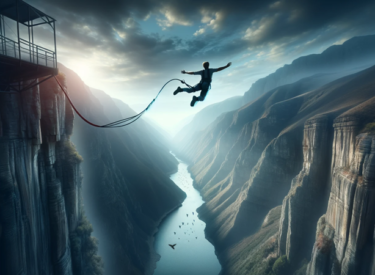
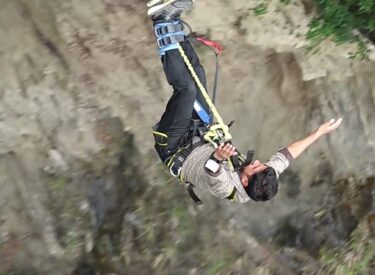
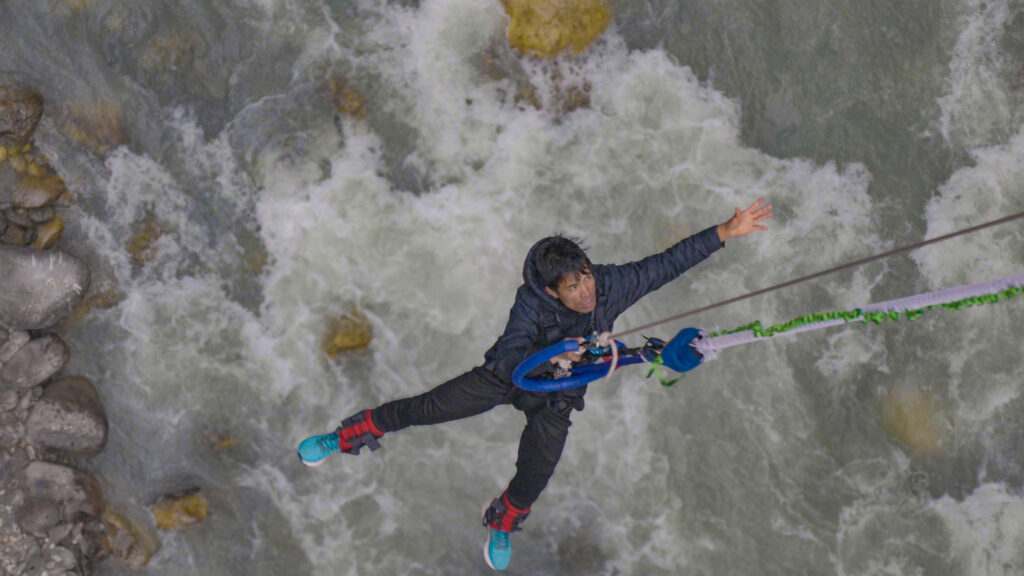
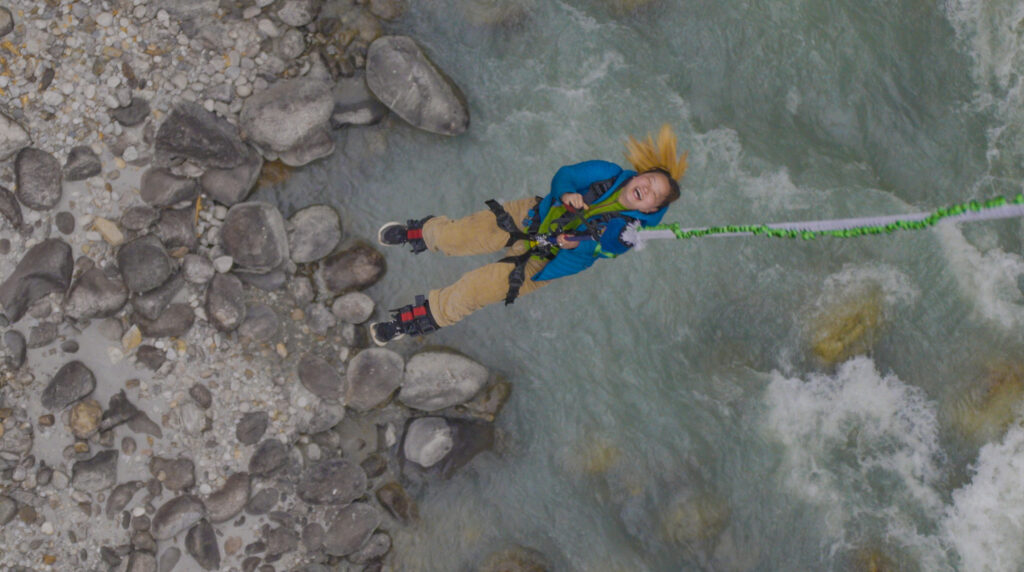
Jumpers free-fall from 145 feet (44 meters) above the loud Dudh Koshi River. A stunning view of the Himalayas surrounds them. The location is famous. Hillary Bridge is a high bridge on the way to Everest. It now has a special jumping platform for this exciting activity.
Key highlights include:
- The thrill of free-fall in Sagarmatha National Park.
- Stunning mountain views.
- The opportunity to say you jumped “from the top of the world.”
Everest Bungee is shorter than other bungees in Nepal. However, its height and views make it special. At 145 ft, it is the shortest bungee in Nepal. This makes it perfect for beginners who want to try the sport.
Trip Highlights
- Leap off the historic Hillary Suspension Bridge—a purpose‑built platform 145 ft / 44 m above the roaring Dudh Koshi River on the legendary Everest trail.
- Soak in epic Himalayan panoramas while you free‑fall; the site offers a once‑in‑a‑lifetime vantage point of Sagarmatha National Park’s dramatic peaks.
- Feel confident with veteran jump masters with 14‑plus years of global bungee expertise—from Macau Tower to Nepal’s pioneer sites—now leading the Everest crew.
- Safety first: industrial‑grade cord, dual‑harness system, a 40 m / min winch to haul you smoothly back, and a mandatory pre‑jump briefing for every participant.
- All‑weather operation & fair policies—jumps run in light rain, and if the team must halt for severe conditions, you receive a full refund.
- Memories captured in HD: multi‑angle photos and video packages available the same day, plus souvenir cap, tee, or down jacket with combo tickets.
- Unique perks: anyone aged 80 + jumps free, and repeat customers within 90 days enjoy 50 % off—a world‑class adrenaline fix with generous bonuses.
- Plug‑and‑play logistics—slot it into your Everest Base Camp trek, a short three‑day Lukla trek, or a same‑day helicopter dash from Kathmandu for maximum flexibility
Short Itinerary
Everest Bungee Jump Itinerary
Full Itinerary
Single‑Day Helicopter Adventure
- Morning Private helicopter Kathmandu ➜ Syangboche (≈ 45min); skyline views of Everest range
- Gentle downhill walk ≈ 1 hr to Hillary Suspension Bridge (2,885 m)
- Safety briefing ➜ Bungee jump (145ft free‑fall)
- Photo/video handover, light lunch in local lodge
- Afternoon Helicopter pick‑up ➜ Kathmandu; hotel drop mid‑afternoon
Three‑Day Bungee Trek
- Fly Kathmandu ➜Lukla (2 840 m); trek 8 km / 3‑4 hr to Phakding / Monjo (2 600 m) Phakding / Monjo
- Walk 5 km / 2- 3 hr to Hillary Bridge; safety briefing & bungee jump; continue 11 km / 4‑5 hr back to Lukla.
- Early flight Lukla ➜Kathmandu; free afternoon.
Everest Base Camp Trek Add‑On
- Outbound option: Travel from Phakding to Namche.
- Stop at the Hillary Bridge on Day 2.
- Jump and then climb to Namche.
- This is for acclimatization.
- Return option (Namche → Phakding): reserve a slot on descent day; hike 30 min down to the bridge, jump, then continue toward Lukla.
Custom Extensions
- An extra acclimatization day in Namche with local ridge hikes
- Combine a jump with an Everest helicopter tour.
Price Includes
- One Everest Bungee jump from the Hillary Suspension Bridge with a full industrial-grade cord & harness system.
- Professional jump master supervision and pre-jump safety briefing
- Digital HD photos & multi-angle video of your leap (Combo tickets)
- Souvenir Everest Bungee cap, premium T-shirt, and an official certificate (Combo tickets)
- Hot lunch at a local lodge near the bridge (Deluxe / Ultimate combos).
- Premium down jacket to keep (Ultimate combo)
Price Excludes
- Personal travel & adventure‑sports insurance (must cover bungee)
- Second/third jump, tandem‑jump surcharge, or photo/video pack when buying the $90 “jump‑only” ticket
Trip Information
Detailed Itinerary Options
Option 1: Single-Day Heli Adventure
For those short on time or not keen to trek, a heli-bungee day trip can be arranged (premium option).
In the early morning, take a helicopter from Kathmandu directly to the Namche area (landing near Namche or Lukla). Transfer to the Hillary Bridge jump site, receive a safety briefing, and take the plunge.
After the jump and some time to enjoy the scenery, the helicopter will fly you back to Kathmandu by late afternoon.
This option offers stunning aerial views of the Himalayas en route, and the thrill of bungee all within one day. (Note: Weather-dependent; contingency days recommended.)
Option 2: 3-Day Bungee Trek
A short trek itinerary lets you experience the Khumbu region’s culture and the bungee jump:
- Day 1: Fly 35 minutes from Kathmandu to Lukla (2,840 m) early morning. Begin the trek on the Everest trail, passing Sherpa villages.
- Hike for ~3–4 hours to Phakding or Monjo (2,600 m) and stay in a cozy lodge. Along the way, you’ll enter Sagarmatha National Park at Monjo (park permit checkpoint).
- Day 2: Hike from Phakding/Monjo to the Everest Bungee site at Hillary Bridge (Larja Dobhan). This hike takes about 2 to 3 hours and is a gradual uphill. Reach the Hillary Bridge area before midday. Gear up and jump from the suspension bridge, enjoying the adrenaline rush amid prayer flags and canyon views. After the jump, celebrate with your certificate and photos. Continue trekking down the trail toward Lukla (since you’ll already be on the descent side of Namche). Hike ~4 hours down through Phakding back to Lukla, arriving by evening.
- Day 3: Catch a morning flight from Lukla back to Kathmandu. Back in Kathmandu by mid-morning, with the rest of the day free for relaxation or sightseeing.
Option 3: Everest Base Camp Trek Add-On
If you are already on a multi-day Everest Base Camp (EBC) trek, try adding Everest Bungee. It will make your trip unforgettable. Trekkers typically encounter the bungee site on:
Day 2 of EBC Trek: Trek from Phakding to Namche Bazaar (3,440 m). En route, you cross the Hillary Bridge just before the big climb to Namche.
At this point, usually in the late morning of Day 2, you can jump when you arrive at the bridge.. Many trekkers wait until the return, but brave souls can start their trek with a bang!
After the jump (or if skipping for now), continue the hike up to Namche for acclimatization.
Last Trek Day (return leg)
After completing your trek (EBC or Gokyo), you’ll return to Namche Bazaar. Plan to stop at the Hillary Bridge site on the descent from Namche to Lukla.
It’s common to stay overnight in Namche on the second-to-last day. In the morning, hike down to the bridge. Your bungee jump takes about 30 minutes from Jorsalle. This jump is a great ending to your Everest adventure.. After you jump and get your photos and video, keep trekking down to Phakding or Lukla.
Many trekking groups include a jump at the end. This gives you an exciting reward after the trek.
(Note: If jumping on the return, inform your guide to reserve a time slot early.)
Option 4: Custom Multi-Day Package
Travelers can customize longer packages that include Everest Bungee and other activities.
For example, add an extra acclimatization day in Namche. This can be before or after the jump. Local attractions like the Sherpa Culture Museum or the Everest View Hotel lookout can be visited. You could also include a gentle Everest View Trek. This trek lasts 5 to 7 days and goes to Tengboche or Khumjung. The bungee jump can be part of the route.
Alpine Luxury Treks in Nepal can create a plan that fits your schedule. You can choose a quick thrill or a whole Everest region experience.
Add-On Activities
Currently, Everest Bungee focuses on the jump itself. There is no canyon swing or zipline at the Hillary Bridge site. This site is only for bungee jumps.
However, photographers capture your leap from multiple angles on-site, and you can opt for photo/video packages.
In Namche Bazaar, you can take short hikes. You can hike to the Sagarmatha National Park Visitor Center or Syangboche to enjoy Everest views.
In Kathmandu or Pokhara, you can add adventures like ziplining, paragliding, ultralight flights, or canyon swinging. These activities are great if you want more excitement after your Everest bungee experience. Your Nepal trip can thus be as thrill-filled or culturally enriching as you desire.
Pricing Breakdown
Bungee Jump Rates: Everest Bungee’s pricing is straightforward and depends on the number of jumps and any extras:
- Standard Jump (Foreigners): US$90 per person for the first jump.. If you want to jump again, a second jump on the same day costs $50. A third jump on the same day is $40. These rates apply to all non-Nepali visitors. Nepali citizens pay lower rates for skydiving. The first jump costs NPR 5,100. The second jump costs NPR 3,100.
- Combo Packages (Foreigners): There are value bundles that include the jump plus souvenirs and media:
- Basic Combo: 1 jump + HD photos/video + Everest Bungee cap + certificate for $115
- Standard Combo: 1 jump + HD photos/video + cap + premium T-shirt + certificate for $120
- Deluxe Combo: 1 jump + HD photos/video + cap + premium T-shirt + Lunch + certificate for $125. (Lunch is usually a hot meal at a nearby lodge or the bungee café.)
- Ultimate Combo: 1 jump + HD photos/video + cap + premium T-shirt + Lunch + premium down jacket + certificate for $175. The down jacket is a high-quality souvenir that is great for trekking.
All jumpers receive a commemorative certificate of courage. You can buy photo and video packages separately. These packages come from GoPros and DSLRs. If they are not in a combo, you can still get them. They will be delivered digitally on the same day.
Seniors aged 80 and older can jump for free. Yes, anyone over 80 gets a free jump! Also, repeat customers who jump again within 90 days receive 50% off.
In case of weather cancellation, full refunds are provided. All prices may have a 13% VAT added, unless it is already included. This follows Nepal regulations. Please check if the listed price is net or if tax needs to be added.
Accommodation Options
You’ll likely need lodging in Kathmandu (before/after the trip) and in the Everest region near the bungee site. Here’s an overview of options at various budgets:
Namche Bazaar (3,440 m) is the biggest village near the bungee site in the Everest region. It offers many places to stay, from simple teahouses to a few fancy lodges.
If you do the 3-day trek package, you might stay in Phakding/Monjo (budget lodges) and Lukla. If adding extra nights, Namche is recommended for comfort and acclimatization (plus Namche has bakeries, shops, and internet cafés).
Your guide or tour operator usually arranges tea house lodging. You pay on-site, often about $5 to $15 per person for a basic room. Meal costs are extra. Luxury lodges in the mountains should be pre-booked due to limited availability.
In Kathmandu, it is easy to find a place when you arrive. You can add a hotel to your package or ask your operator to book one for peace of mind. Many Everest packages include 2 to 3 nights in Kathmandu before or after the trek. You can choose a package that fits your budget.
Transportation Logistics (Kathmandu to Everest Bungee)
Getting to the Everest Bungee site is an adventure of its own. Kathmandu to Lukla is the standard route for many travelers. It involves a short but amazing flight on a small plane. The plane lands at the Tenzing-Hillary Airport in Lukla.
Flights operate daily in good weather, typically in the early morning. The flight takes about 30 minutes. From Lukla, you must trek on foot along the Everest trail to reach the bungee. Hiding at the Hillary Bridge site takes about 1.5 to 2 days. Most plans split the hike into two days. You can go from Lukla to Phakding or Monjo on Day 1. Then, you can reach the bridge on Day 2.
The bungee location is about 4 km past Jorsalle village and 7 km before Namche Bazaar on the trail. No roads in this part of the Everest region exist, so no direct bus or car access is available. All gear and travel beyond Lukla is by foot (or by porter/pack animal).
For those not trekking, a helicopter charter is the alternative. A helicopter can take you from Kathmandu or Phaplu to the Syangboche airstrip above Namche. It can also land near Thame/Namche.
From Syangboche, it’s a 1-hour downhill hike to the Hillary Bridge site. Coordinating a heli for drop-off and pick-up the same day can allow a whirlwind trip.
Helicopters typically carry 5–6 passengers; costs are high (6000 USD for charter), but splitting among groups helps. A heli ride also helps avoid cancellations that sometimes affect the Lukla flights due to weather.
If you are already trekking in the Everest region, you can include the bungee jump in your route. Ask your guide to reserve a jump slot in advance (ideally while in Namche before heading up or when coming down).
That way, the Everest Bungee team can expect you. The jump platform is on the trail side at the bridge – you’ll see the Everest Bungee check-in counter at Jorsalle nearby.
Trekkers often stop here for Lunch; the bungee staff can process your ticket immediately. Payment can be made at the site in cash or by card.
Return to Kathmandu: After your jump (and trek back to Lukla), you’ll fly from Lukla to Kathmandu. It’s wise to buffer an extra day in Kathmandu at the end in case weather delays the Lukla flight (a common occurrence).
For those on helicopter packages, you’ll return by heli directly to the city. The tour operator can arrange all transportation (domestic flights, heli, airport transfers) as part of the package.
Safety Protocols and Certifications
Safety is a top priority at Everest Bungee. Professional bungee experts designed the operation and adhere to international safety standards for equipment and procedures.
The bungee platform and steel cables on Hillary Bridge were engineered for secure jumping at high altitude and were rigorously tested before public use (it officially launched in late 2023 after extensive trials). All equipment – from the bungee cords to harnesses – is of high-quality, industrial-grade specifications.
The bungee cord is an elastic rope made explicitly for safe jumping, and it’s inspected regularly for wear and tear. A high-powered winch system is installed to retrieve jumpers back to the bridge deck after the rebound – the winch can haul up 40 meters per minute, ensuring you’re brought up smoothly and quickly after your jump.
The team running the show is highly experienced. Everest Bungee’s jump masters have over a decade of experience in bungee operations.
For example, the lead Bungee Masters previously worked at The Last Resort (the pioneer bungee site in Nepal) and even internationally (Macau Tower bungee) for 14–16 years.
Their collective expertise means the staff is well-versed in all safety measures, emergency procedures, and coaching nervous jumpers. Before any jumps begin, every participant attends a safety briefing.
In this briefing (about 5 minutes), the crew explains how the jump will proceed, demonstrates the body posture to maintain, details the harnessing process, and reviews retrieval procedures.
They also double-check each person’s harness, ankle straps, and connections. The jumper’s weight is recorded to select the proper cord settings (note: weight limit for solo jumpers is 35–120 kg).
During the jump, one crew member manages the harness attachment on the platform, another manages the rope slack and communications, and another operates the winch. Redundant connections (backup harnesses) are used for added safety.
The platform has railings and an anti-slip surface. For tandem jumps (two people together), the combined weight must be under 140 kg and the weight difference under 30 kilograms – the crew will assess if conditions are safe for tandem on that day.
Health precautions
If you have certain medical conditions (heart issues, epilepsy, pregnancy, etc.), you may be prohibited or required to show a doctor’s note. Everest Bungee follows guidelines to screen for these conditions – you’ll fill out a form or be asked verbally about any health issues. If in doubt, consult your doctor before the trip.
The Everest Bungee site is operated under the oversight of the local authorities (Khumbu Pasang Lhamu Rural Municipality) as a registered adventure activity, and it abides by the safety norms like other bungee sites in Nepal.
While Nepal doesn’t have a formal bungee regulatory body, Everest Bungee’s standards mirror those set by leading international bungee organizations. Regular maintenance and checks are scheduled: the bridge rigging and cords are inspected daily, and detailed inspections happen every few months or after a high volume of jumps.
Weather monitoring is also part of safety – jumps may be paused in case of dangerously high winds or lightning. The team won’t push anyone beyond their comfort; if a jumper decides to back out last-minute, they will be brought back to safety (typically, refunds for no-jump are not given, but you’re never forced).
The reassuring track record so far: no safety incidents have been reported since opening. As one of their mottos says, “Fear is the only discomfort – physically the jump is smooth and safe”. In short, you can trust that you’re in good hands – so take a deep breath, trust the equipment, and enjoy the leap!
Best Time of Year to Go
Bungee jumping at 2,800+ meters is subject to seasonal conditions in the Everest region. Spring (March to May) and Autumn (late September to November) are the best times for the Everest Bungee Jump.
During these seasons, the weather is relatively dry and stable, with clear skies offering stunning views of the mountains. Temperatures at Namche altitude are moderate (daytime ~10-15°C in spring, a bit cooler in Autumn), making it comfortable to trek and jump.
You’ll also find the Everest trail bustling with trekkers in these peak seasons, which adds to the camaraderie and excitement. If you plan to combine the jump with trekking, these seasons coincide with the prime trekking periods, meaning services are open and running full-swing.
Monsoon (June to August)
The Everest region experiences a monsoon, bringing heavy rainfall, especially in July/August. Everest Bungee does operate in rain and even cloudy weather; a slight drizzle won’t stop the jumps.
However, visibility will be low (no grand mountain views), and the trails get muddy/slippery. Also, flights to Lukla are frequently delayed or canceled due to weather during the monsoon. If you go in this period, build in buffer days.
On the bright side, the hills are lush green, and far fewer tourists are around. If it’s only light rain, you can still jump; in case of severe weather (thunderstorms, strong winds), the operation might halt – in which case, you get a full refund or can reschedule.
Winter (December to February)
Everest Bungee usually closes during the heart of winter. Temperatures can plummet (Namche can drop to -10°C or lower at night), and the Hillary Bridge area might be icy or snow-covered, making it hazardous.
Additionally, few trekkers visit in other seasons, so the company often pauses operations.
If they operate in early December or late February, be prepared for cold conditions: jumping in winter requires bundling up (the down jacket from the combo pack could be handy!).
The plus side is obvious skies in winter and serene trails, but again, check ahead – the facility might be on winter break.
Aim for mid-September to early December, March to April, or May to have the best experience. Late fall (October) probably offers the clearest skies of all.
Always check with Everest Bungee when planning your trip to confirm their operating dates, since local festivals or maintenance can also affect availability. And remember, time of day can matter too – morning light is beautiful, but many trekkers only reach the site by late morning.
If you want to jump with fewer onlookers or less rush, consider staying nearby and doing the first jump of the day. Conversely, if you love an audience cheering you on, midday, when trekkers pass, is fun. No matter when you go, the experience will be unforgettable, but good timing can make it even better.
Packing List & Preparation Tips
Heading to Everest Bungee requires considering both trekking needs and the jump itself. Here’s a handy packing checklist and prep tips:
Clothing: No special suit or gear is required for the jump – your regular trekking attire is acceptable. Wear comfortable, layered clothing suitable for hiking in mountain weather. Avoid very loose items that could flap around.
A windproof jacket is functional on the bridge (it can be windy). Long pants (trekking trousers or leggings) are better than shorts to avoid harness chafing. If coming in colder months, thermal base layers, fleece, and a down jacket are needed (you can also get an Everest Bungee down jacket in the combo!). Sturdy shoes/boots are a must for the trek; you’ll jump in your shoes (securely tied).
Accessories: Securely strap any glasses (or remove them) before the jump. Empty your pockets and remove dangling jewelry – the staff will have a storage area for small items while you jump. Bring sunglasses, a hat, and sunscreen – UV at high altitude is strong, even on cloudy days. If trekking, pack gloves and a warm hat for the mornings/evenings.
Documents & Money: Carry your identification (passport copy) and the Sagarmatha National Park permit and Khumbu rural entry permit (these are needed on the trail; your guide usually arranges them, but independent travelers must buy them in Kathmandu or Monjo).
Keep some cash (Nepalese rupees) for incidental expenses on the trek and at the bungee site – there may be souvenir t-shirts or snacks to buy. While Everest Bungee accepts cards and digital payments, remote card machines occasionally fail, so cash is a good backup.
Health & Safety Gear: Bring a small first aid kit with basics (band-aids, ibuprofen, Diamox for altitude, etc.). A reusable water bottle (water can be refilled/purified along the trek) to stay hydrated – remember, being well-hydrated and fed helps you handle the jump better.
If you have a history of any medical conditions (see the list of restrictions in the Safety section), bring necessary meds and a doctor’s note. It’s wise to have travel insurance that covers trekking and adventure sports (make sure bungee jumping is not excluded; some insurers require an extra premium for extreme sports).
Tech & Gadgets: Camera or smartphone for the trek – incredible scenery. However, you likely cannot carry your own GoPro or phone during the jump for safety reasons (risk of dropping), unless it’s chest-mounted and approved by the crew. The official team will capture your jump from various angles so that you can rely on their footage.
Talk to them if you want personal footage – they might allow a helmet-mounted GoPro if secured. A power bank can be helpful as charging spots are limited on the trail (often for a fee). A headlamp if you’re trekking early morning or late evening.
Physical Preparation
Though the jump only lasts a few seconds, you should be in reasonable shape to handle the trek. A bit of cardio training (hiking, jogging) beforehand helps.
At altitude, move comfortably and acclimatize properly (don’t rush to Namche in one day if you’re not used to altitude – risk of AMS). The night before the jump, get a good night’s sleep and have a decent breakfast – jumping on an empty or too-full stomach isn’t ideal.
Being well-rested, hydrated, and fed is recommended. Crucially, do not drink alcohol or take sedatives before the jump – you want to be alert. The company might refuse to serve intoxicated persons for safety reasons.
If you’re nervous, talk to the jump masters – they are experts at coaching and calming participants. Many people recite a mantra or have the crew count down loud (“1, 2, 3… BUNGEE!”) – find what works for you. Once you leap, enjoy that free-fall – it will be over before you know it, and you’ll want to do it again!
Booking Process, Payment, and Refund Policy
How to Book: You can book your Everest Bungee jump in advance to secure your spot (highly recommended, especially in peak seasons). There are a few ways to book:
Our website: The Alpine Luxury Treks official site has a “Book Now” form where you select your package (jump only, combos, etc.), date, and provide contact info.
This sends a request to their team, who will typically respond by email or phone to confirm availability and details.
Direct Contact: You may also book by contacting them via email or phone/WhatsApp. The official contact is [email protected] and phone +977-9851013196. They are pretty responsive on WhatsApp for quick coordination. When booking, mention your preferred date/time and any special requests (e.g., tandem jump, or if you need them to arrange a guide/porter from Lukla).
Through a Trek/Tour Operator: We offer Everest Bungee as an add-on. If you’re booking an Everest region trek or tour, tell us you want to include the bungee jump.
We will handle the reservation with Everest Bungee and build it into your itinerary (often they’ll have set package prices that include the jump fee). This is hassle-free as your guide handles the logistics on the ground.
On the Spot: It’s sometimes possible to book on the spot in the Everest region. Everest Bungee has a ticket counter at Jorsalle (a village just before the bridge) and Namche Bazaar.
Trekkers who decide at the last minute can inquire about open slots. However, there’s a risk they might be full for the day or closed by the time you arrive, so booking is safer.
Payment
Payment is generally done on-site before the jump. You do not usually need to pay online in advance (no upfront deposit is required via the website form now).
At the jump site or Namche office, you can pay in cash (Nepalese Rupees) or by card (they accept MasterCard, Visa, and even PayPal). NPR prices are fixed; if paying in USD, they’ll use the current exchange rate if needed.
Indian currency is usually accepted by Indian nationals (and they even have a special rate for SAARC nationals sometimes). Digital payments: Nepali and Indian customers can pay on-site via QR code (e-wallet).
Carrying cash as backup is wise because remote card machines depend on spotty connectivity. If you booked through an agency, you often pay the agency in advance as part of your package, and the agency pays Everest Bungee.
Refunds & Cancellation
Everest Bungee’s policy is quite accommodating if they must cancel the jumps (e.g., due to bad weather or technical issues). If we cancel and you cannot reschedule, you will be fully refunded the jump fee. This can be obtained on the spot (cash refund) or via the same method you paid (reverting a card charge, etc.).
If you decide to cancel or chicken out, generally, the fee is non-refundable if you cannot go through with the jump once you’re geared up.
Understandably, the costs have been incurred to reserve your slot. However, if you inform them well in advance (like a week before your booked date) that you can’t make it due to a change of plans, they may cancel without charge or refund any pre-payment (this is usually case-by-case, and if you booked directly).
If you don’t show up at the scheduled time, that’s a last-minute cancellation – no refund. Travel insurance might cover trip interruptions, but usually not voluntary cancellations or fear of jumping.
One friendly aspect: if you are too nervous to jump immediately, the team might allow you to wait and try again later the same day (time permitting) rather than forfeiting. They want you to have that experience and are known to be encouraging and patient with hesitant jumpers.
Rescheduling
If your Lukla flight was delayed and you missed your planned jump day, contact them as soon as possible – they can often reschedule your slot for the next available day without extra charge. Flexibility is generally feasible if there is open capacity. In peak season, slots might be tight, so keep communication open.
Optional Cultural and Adventure Extensions
While the Everest Bungee Jump is a spectacular standalone experience, many travelers incorporate it into a broader Nepal adventure. Here are some popular add-ons and extensions to consider:
Everest Base Camp Trek or Gokyo Trek
If you have more time (12–14 days), turn your trip into the classic Everest Base Camp trek. The bungee jump can be the cherry on top, either on the way up or down. Reaching Everest Base Camp (5,364 m) and doing a bungee jump on the way back down is the ultimate adventure combo – you conquer a high-altitude trek and an extreme jump in one trip.
Alternatively, the Gokyo Lakes or the Everest Three Passes trek are challenging and beautiful treks in the same region that could include a bungee stop. Local agencies can customize routes to include the jump. These treks offer cultural insight (Sherpa villages, monasteries like Tengboche) and amazing scenery (Ama Dablam, Pumori, the Khumbu Icefall).
Everest Helicopter Tour
If trekking isn’t your thing but you want to see Everest up close, consider an Everest helicopter tour. This is typically a one-day trip from Kathmandu that flies you to Kala Patthar (near EBC) or Everest Base Camp for a quick stop, and sometimes includes breakfast at Everest View Hotel.
After that heli tour, you could be dropped at the Everest Bungee site (or back in Kathmandu, and then do bungee separately. It’s a pricey add-on, but it lets you experience Everest panoramas and the jump all within a short time. Some helicopter tour operators might coordinate with Everest Bungee if requested.
Cultural Tours in Kathmandu Valley
After the thrill of Everest Bungee, spend a couple of days exploring Nepal’s rich culture. A Kathmandu city tour (guided day tour) can take you to UNESCO World Heritage Sites: Swayambhunath Stupa (the Monkey Temple), Boudhanath Stupa, Pashupatinath Temple, and the historic Durbar Squares of Kathmandu or Patan.
These sites offer a window into Buddhism, Hinduism, and Nepal’s medieval art/architecture. From bustling markets to serene monasteries, Kathmandu’s contrasts create a fulfilling cultural experience. You can easily arrange a 1- or 2-day city tour with a private guide or join a small group tour.
Pokhara & Adventure Sports
If your schedule permits, flying or driving to Pokhara (Nepal’s lake city) is highly recommended. Pokhara is an adventure hub offering paragliding over Phewa Lake, the World’s Steepest Zipline (a 1.8 km zipline dropping 600m vertically – another adrenaline rush!), ultralight aircraft flights, and serene activities like boating and cave exploration.
It’s a great way to unwind after the cold heights of Everest. You could do Everest Bungee, return to Kathmandu, then take a 25-minute flight to Pokhara for 2–3 days. Pokhara also has the bungee tower at Hemja if you fancy comparing jumps (a 70m drop).
Chitwan Jungle Safari
For a completely different adventure, head south to Chitwan National Park for a wildlife safari. In Chitwan’s subtropical jungles, you can ride on a jeep safari or do nature walks to spot rhinos, deer, crocodiles, and maybe even Bengal tigers.
Stay in a jungle lodge for 2 nights, enjoy Tharu cultural dances in the evening, and reflect on your Himalayan adventures by a campfire. This extension offers relaxation and nature after the mountains. Usually, 2 nights/3 days Chitwan packages are available from Kathmandu.
Other Adventure Activities
Nepal is a playground for adventure. If Everest Bungee whets your appetite, consider doing the canyon swing or bridge bungee at The Last Resort (near the Tibet border) – that jump is 160m, one of the world’s highest free-falls, offering a different thrill (and a beautiful resort setting with canyoning available).
Another insane option is the Cliff bungee at Kusma (Western Nepal) – a 228m jump, currently one of the tallest in the world. These can be combined if you plan a longer stay (e.g., after the Everest region, fly to Pokhara for the Kusma jump).
Additionally, you could try white-water rafting on rivers like the Bhote Koshi or Trisuli on your way back from the mountains. Many itineraries have folks trek, then when returning by road, do a day of rafting en route – a fun way to travel.
Local Experiences in Khumbu
Aside from trekking, you could engage in local cultural experiences if you stay an extra day in the Everest region. For instance, a day visit to Khumjung village to see the Edmund Hillary School and the famous yeti scalp at Khumjung Monastery, or a visit to Kunde Hospital (Hillary’s projects) can be enlightening.
You might also attend an evening of Sherpa folk singing/dancing in Namche (some lodges arrange this for groups). These cultural touches round out the high-adrenaline activities with meaningful connections.
Consider the total duration and sequence for acclimatization and rest when planning extensions. It often works well to do the strenuous stuff (trekking, bungee) first, then have more relaxed activities (touring, safari) at the end of your trip. Most travel agencies in Nepal offer combined packages (e.g., “Everest Bungee + Tour” bundles). Be sure to mention all your interests when booking, and they’ll craft a seamless itinerary.
With this Everest Bungee Jump travel package, you get an adventure that truly covers it all: the natural splendor of the Himalayas, the heart-pounding excitement of a free-fall, and opportunities to immerse yourself in local culture and other adventures.
From standing on the edge of Hillary Bridge, gazing at snowy peaks as the countdown begins, to celebrating your leap with fellow trekkers over a warm Sherpa stew in Namche, every moment is bound to be memorable.
This comprehensive package ensures you have clear guidance and top-notch services every step of the way, so you can fully enjoy the experience. Now all that’s left is to take a deep breath and yell “Jump!” – Everest Bungee awaits to make your Nepal journey one for the books. Are you ready to take the plunge?
Grace Educational Organisation
The Grace Educational Organisation is a government-registered charity dedicated to empowering students in Nepal through education.
With a 100% donation policy, every contribution directly supports the children and schools, providing essential resources like supplies, infrastructure, and extracurricular programs.
This initiative fosters a transparent connection between donors and students, ensuring every action leaves a lasting impact.
The Nuwakot School, located in a picturesque rural setting, is one of the beneficiaries of this mission.
By visiting, you witness these students’ educational journey and become part of a transformative effort to uplift the community.
Trip Reviews
Be first to post a review in this trip.

More Trips