Full Moon Kailash Mansarovar Yatra
Based on 2100 reviews
Trip Overview
The Full Moon Kailash Mansarovar Yatra is a 15-day spiritual adventure through Nepal and Tibet, culminating in a sacred circumambulation (parikrama) of Mount Kailash under the full moon’s light.
This journey blends deep spiritual significance with high-altitude adventure. Pilgrims visit holy sites in Kathmandu Valley for blessings before traversing the Himalayas into Tibet.
The itinerary includes a parikrama of Mount Kailash (6,638 m) and a visit to Lake Mansarovar (4,590 m) during the full moon, an experience believed to amplify spiritual energy.
Participants will witness stunning mountain vistas, ancient monasteries, and cultural sites while embracing personal devotion and physical challenge in one transformative journey.
Trip Highlights
- Full Moon at Mansarovar: Experience the serene Lake Mansarovar under the full moon, an auspicious moment for prayer and reflection.
- Mount Kailash Parikrama: Trek the 3-day, 53 km circumambulation of Mount Kailash, crossing the 5,630 m Dolma La Pass – a physically challenging yet deeply rewarding pilgrimage.
- Spiritual Sites: To seek blessings before the journey, visit sacred temples in Kathmandu (Pashupatinath, Budhanilkantha, Doleshwor Mahadev).
- Himalayan Scenery: Overland drive from Nepal to Tibet through lush valleys and high mountain passes, with panoramic views of the Himalayas and the vast Tibetan Plateau.
- Cultural Encounters: Interact with Tibetan guides and locals, and witness Buddhist prayer flags, monasteries, and the unique culture of remote western Tibet.
- Adventure & Acclimatization: Gradual ascent from 1,350 m to above 4,500 m with rest days for acclimatization (e.g., at Kerung), supported by oxygen backup and experienced guides for safety.
- Holy Bath: Opportunity (for those who wish) to take a ritual bath by the holy waters of Lake Mansarovar, believed to purify the soul, amid stunning natural surroundings.
- Comfort & Support: Well-organized logistics with vehicular support, accommodation ranging from Kathmandu hotels to basic guesthouses on the route, and an English-speaking Tibetan guide accompanying the group.
Short Itinerary
Kathmandu
Pashupatinath Darshan
Budhanilkantha & Doleshwor Mahadev
Briefing and Gear Check
Rasuwagadhi
Kerung
Saga
Mansarovar
Darchen
Dirapuk
Zutulpuk
Saga
Kerung
Kathmandu
Departure
Full Itinerary
- Travel: 30-minute drive from Tribhuvan International Airport
- Elevation: Kathmandu Valley at 1,350 m
Arrive in Nepal’s capital city, Kathmandu. Transfer to the hotel for check-in and a warm welcome.
The remainder of the day is free for rest after your flight or for exploring nearby markets and sights at your leisure.
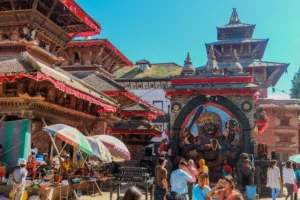
In the evening, convene for a short briefing about the upcoming Yatra schedule.
- Activities: Guided tour to Pashupatinath Temple; Chinese visa application process (passport submission).
- Travel: Short city drives (5 km to Pashupatinath, about 20–30 minutes each way).
Begin the morning with a visit to Pashupatinath Temple, one of the holiest Hindu temples dedicated to Lord Shiva.
Participate in a darshan (prayer ritual) on the temple premises, seeking blessings for a successful Yatra.

Today, all passports are collected and submitted for the Chinese group visa required for Tibet – a process handled by the tour staff in Kathmandu.
The afternoon can be spent preparing documents or enjoying Kathmandu’s cultural sites.
- Activities: Darshan at Budhanilkantha (Sleeping Vishnu) and Doleshwor Mahadev (Shiva) temples.
- Travel: 10 km to Budhanilkantha (30 min) and 20 km to Doleshwor Mahadev (1 hour) by private vehicle.
- Elevation: Kathmandu Valley 1,300–1,400 m throughout (no significant change).
Continue the spiritual preparation by visiting two important shrines. In the morning, travel to Budhanilkantha Temple at the northern edge of Kathmandu, where a large reclining Vishnu statue lies in a pond – a revered site for Hindu pilgrims.
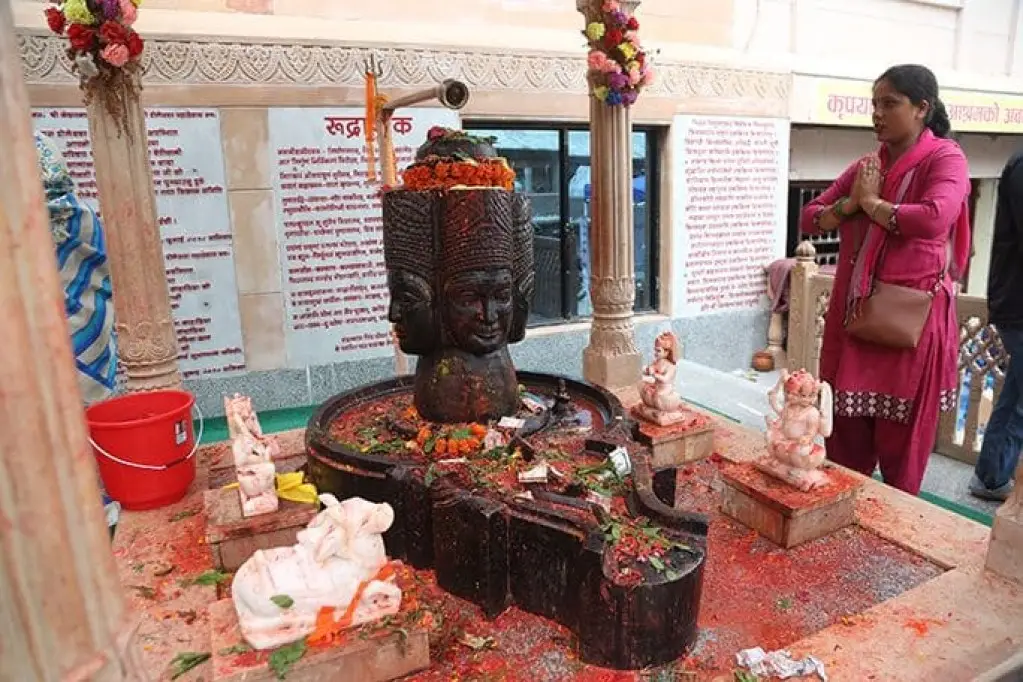
Afterwards, drive to Doleshwor Mahadev Temple in Bhaktapur, believed to be the head portion of the Kedarnath Temple (Shiva) according to legend.
Offer prayers at both temples, immersing in the peaceful atmosphere. The rest of the day can be used for last-minute shopping or packing.
- Activities: Trip briefing, route and safety orientation; gear distribution and preparation.
- Travel: None (day spent in Kathmandu).
Today is dedicated to preparing for the journey ahead. Attend a detailed Yatra briefing conducted by the tour leader.
The guide will review the itinerary, safety precautions, and cultural considerations. This is the time to ask questions and clarify any doubts.

After the briefing, there will be a thorough equipment check – ensure you have all necessary clothing and gear for high-altitude travel (rental gear provided by the company, such as sleeping bags, down jackets, and trekking poles, will be distributed today).
You are free to rest and adjust your packing for the day.
- Distance/Duration:150 km drive, approximately 7–8 hours (roads are mountainous and partly rough).
- Elevation: Kathmandu (1,350 m) to Rasuwagadhi (1,800 m)–gradual gain of 450 m.
Embark on an early morning drive from Kathmandu to Rasuwagadhi, the Nepal-China border point.
The journey winds through picturesque, terraced hillsides, along the Trishuli River, and passes small villages.

Enjoy views of lush green hills and distant snow-capped peaks as the road climbs toward the Himalayas. By late afternoon, reach Rasuwagadhi (on the Nepal side of the border).
Complete Nepal’s formalities if time permits, and settle into a basic lodge near the border. Rest well, as tomorrow you will cross into Tibet.
- Distance/Duration: 20 km drive from the border to Kerung, about 1 hour (including border formalities, which can take 2–3 hours).
- Elevation: Kerung (Gyirong) at 2,700 m – an increase of 900 m from Rasuwagadhi.
After breakfast, proceed through Nepalese immigration, then cross the friendship bridge at Rasuwagadhi into Tibet (China)—complete Chinese immigration and customs procedures at the Gyirong Port entry point. Meet your Tibetan guide and driver on the China side.
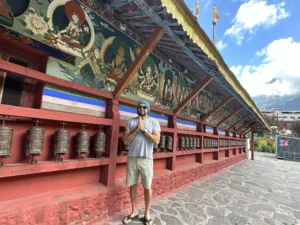
Take a short drive from the border to Kerung (Gyirong) Town. The altitude rises significantly here, so the rest of the day is set aside for acclimatization.
Relax at Kerung, take short walks around the town to help your body adjust, but avoid strenuous activity. You are now officially on the Tibetan Plateau.
- Distance/Duration: 300 km drive, approximately 6–7 hours (on well-paved roads).
- Elevation: Saga at 4,640 m – altitude gain of about +1,940 m from Kerung (a big jump, acclimatize accordingly).
Depart Kerung in the morning and journey across vast Tibetan landscapes towards Saga. The drive offers spectacular views: rolling high-altitude plains, distant snow-covered peaks, and maybe grazing yaks.
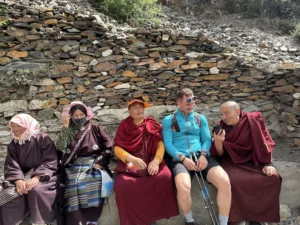
En route, you might catch glimpses of Shishapangma (8,013 m), one of the 8000-meter peaks, on a clear day. There will be a stop for lunch and rest, possibly at a small town like Old Tingri or a suitable waypoint.
By evening, arrive in Saga, an important city on the banks of the Brahmaputra (Yarlung Tsangpo) River. The altitude at Saga is much higher, so continue to hydrate and move slowly.
- Distance/Duration: 450 km drive, roughly 8–9 hours including stops.
- Elevation: Lake Mansarovar at 4,590 m (Saga was 4,640 m, so a slight descent of about 50 m).
Resume the drive westward from Saga, heading toward the sacred Lake Mansarovar. This is a long driving day crossing broad desert-like plateaus and high passes.

Along the way, pass by small settlements (like Zhongba or Paryang) and possibly spot wildlife such as wild donkeys or antelopes in the open plains.
By late afternoon, the turquoise waters of Lake Mansarovar come into view, with the majestic silhouette of Mount Kailash visible on clear days.
Upon reaching Mansarovar (approx. 4,590 m altitude), revel in the breathtaking scenery.
If time permits, visit the ancient Chiu Gompa Monastery on a hill by the lake.
As dusk falls, witness the full moon rising over Mansarovar, casting a silvery glow on the lake – a spiritually charged and unforgettable sight.
- Activities: Optional cleansing dip in Lake Mansarovar; short road transfer; acclimatization in Darchen.
- Distance/Duration: 40 km drive from Mansarovar to Darchen (1 hour).
- Elevation: Darchen at 4,575 m (a minor change from Mansarovar).
Wake up on the shores of Mansarovar. In the morning, those who wish can perform a ritual bath in the holy lake (weather permitting) or sprinkle the sacred water on themselves – an essential spiritual practice for many pilgrims.
The atmosphere at sunrise, with Mount Kailash possibly visible to the north and Gurla Mandhata mountain to the south, is serene and reverent.
After prayer rituals and perhaps a brief puja by the lake, drive to Darchen (4,575 m), the base town for Kailash parikrama.

It’s a short drive of about an hour. In Darchen, check into the guesthouse and have lunch.
The afternoon is spent resting and preparing for the trek – pack your daypack and arrange porters or horses if anyone has pre-booked a pony for the circuit.
An early dinner and sleep are recommended before tomorrow’s trek.
- Trek Distance: Approximately 11–12 km from Yam Dwar to Dirapuk.
- Trek Duration: 5–6 hours at a moderate pace with breaks.
- Elevation: Yam Dwar (4,675 m) to Dirapuk (4,900 m) – gradual ascent of 225 m.
Today marks the start of the Mount Kailash parikrama (Kora). In the morning, drive from Darchen to Yam Dwar (Tarboche), the gateway to the Kora.
At Yam Dwar (meaning “Gate of the God of Death”), pilgrims perform a brief ritual, praying for a successful trek.
Bid farewell to those not doing the trek (they will return to Mansarovar or wait in Darchen). Begin the trek to Dirapuk, following the Lha Chu (river) valley.
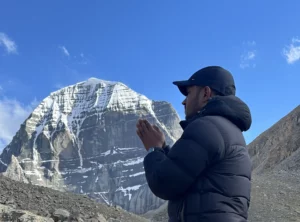
The trail is a gradual ascent, with Mount Kailash’s north face dramatically coming into view as you approach Dirapuk.
You’ll pass by cascading streams and high desert terrain and perhaps see pilgrims prostrating with every step as an act of devotion.
By late afternoon, arrive at Dirapuk, about 4,900–5,000 m, near a stream with a stunning close-up view of Kailash’s black granite walls.
Despite fatigue, the spiritual energy here is palpable, especially under the full moon if it coincides with this night.
- Trek Distance: 22 km (Dirapuk to Zutulpuk, via Dolma La).
- Trek Duration: 9–12 hours (start early; includes slow climb and careful descent).
- Elevation: Ascent of 730 m (4,900 m to 5,630 m at Dolma La), then descent of 810 m down to Zutulpuk (4,820 m).
The most challenging and significant day of the trek. Rise before dawn in Dirapuk; if skies are clear, you might see the first rays of sun illuminate Mount Kailash – an awe-inspiring sight.
After a light breakfast, trek towards Dolma La Pass. The trail initially is flat, but a steep ascent soon begins.
As you climb, you’ll pass the touching point called Shiva-sthal, where pilgrims symbolically leave behind personal items or prayers, representing the shedding of one’s past life.
The air is thin and progress is slow – take it one step at a time. Reach Dolma La Pass (5,630 m), the highest point of the Yatra, often festooned with prayer flags.
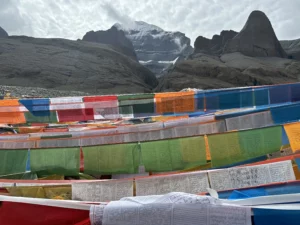
Pause here briefly to witness the spectacle of prayer flags flapping in the wind and offer prayers at this sacred pass (Dolma La is named after the goddess Tara).
Just below the pass, on the descent, you will encounter Gauri Kund (5,608 m), a small glacial lake also known as “Lake of Compassion,” which holds religious significance in Hindu lore.
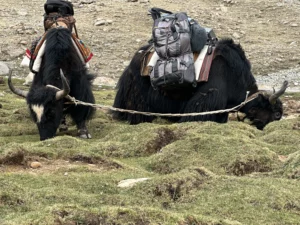
The descent is steep and slippery – continue carefully down the valley. By afternoon, arrive at Zutulpuk (4,820 m), named after the “miracle cave” of the sage Milarepa.
Today’s trek is long and demanding, but completing it is a profound accomplishment.
- Trek Distance: 8 km from Zutulpuk to the trek end point (near Darchen).
- Trek Duration: 3–4 hours, easy, gentle downhill walking.
- Drive Distance/Duration: 500 km from the Darchen area to Saga, approximately 8–9 hourshours’e.
- Elevation: Zutulpuk (4,820 m) down to Darchen (4,575 m) – descent 245 m. Saga remains around 4,640 m.
On the final day of the Kailash kora, wake up in Zutulpuk, perhaps after participating in a short morning prayer or visiting Zutulpuk Gompa (the cave and temple honoring Milarepa).
Then, trek the last segment of the circuit. The trail is relatively flat and follows the river valley out toward Darchen.

You will notice the landscape widening and green pastures appearing as you exit the inner sanctum of Kailash. After 3–4 hours, a vehicle will meet the group at the trail’s (near Darchen, where the circuit began).
Congratulations – you have completed the parikrama of Mount Kailash! Take a moment to celebrate this achievement with fellow pilgrims.

After regrouping and a quick lunch, start the long drive back towards Saga, retracing the route through the Tibetan Plateau.
This is a lengthy journey, but the sense of accomplishment keeps spirits high. Arrive in Saga in the late evening and check into the hotel for some well-earned rest.
- Distance/Duration: 300–320 km drive, about 6–7 hours.
- Elevation: Saga (4,640 m) down to Kerung (2,700 m) – loss of 1,940 m, which will feel relieving for the body.
After breakfast in Saga, drive east towards the Tibet–Nepal border. Retrace your steps via the route you came, enjoying the last views of the vast Tibetan landscape.
Descend from the high altitude of Saga and travel towards Kerung. With each passing hour, you’ll notice more greenery as you approach lower elevations.
Arrive in Kerung by late afternoon. This is the final night on the Tibetan side; take time to thank the Tibetan crew and perhaps do some simple shopping for souvenirs in Kerung’s market.
Rest overnight, with the comfort of thicker air at this lower altitude.
- Distance/Duration: 150 km drive from the border to Kathmandu, roughly 6–7 hours (the rough mountain roads mean slow travel).
- Elevation: Kerung (2,700 m) to Kathmandu (1,350 m) – descent of 1,350 m back into thicker air and warmer climate.
In the morning, say goodbye to Tibet. Complete Chinese exit formalities at Gyirong border and cross the bridge back into Nepal at Rasuwagadhi.
After clearing Nepal immigration, switch to Nepalese vehicles. Drive back to Kathmandu via Syabrubesi and Dhunche on the same mountain roads.
The drive is long and winding but filled with memories of the journey. Reach Kathmandu by late afternoon or evening.
Transfer to the hotel and enjoy a well-deserved rest. A trip completion gathering or farewell dinner (arranged independently) can be enjoyed in the evening to celebrate the successful Yatra.
- Travel: 30–40-minute drive (hotel to Tribhuvan Airport) for departure.
- Altitude: Kathmandu 1,350 m (final departure).
After completing the Kailash Mansarovar Yatra, it’s time to depart. You will be transferred from the hotel to Kathmandu’s airport for your onward flight.

If you plan to stay on in Nepal for additional tours or rest, arrangements can be made accordingly.
Carry with you the profound experiences and blessings of this journey—the end of Yatra.
Price Includes
- Airport Transfers: Kathmandu airport pick-up and drop-off by a private vehicle (comfortable transfer on arrival and departure).
- Hotel Accommodation: 5 nights in Kathmandu at a 3-star hotel with daily breakfast (twin-sharing basis).
- Kathmandu Sightseeing: Guided city tours in Kathmandu (English-speaking guide and private vehicle) to temples and heritage sites per the itinerary.
- Kathmandu–Rasuwagadhi Transport: Overland journey from Kathmandu to Rasuwagadhi border by private jeep or 4×4 (road transport in Nepal).
- Tibet Transportation: All ground transport in Tibet (Kerung to Kailash region and back) is by Chinese vehicles – car/jeep/van/bus, depending on the group size.
- Tibetan Guide: Services of an English-speaking Tibetan guide throughout the Yatra in Tibet (including their wages, meals, and accommodation).
- Permits & Visa: Tibet Travel Permit arrangements and Chinese group visa for entry into Tibet (for the Kailash Yatra duration).
- Entry Fees: All entrance and conservation fees for sites and regions visited during the Kailash Mansarovar Yatra.
- Accommodation in Tibet: Lodging in standard guesthouses/hotels at Rasuwagadhi (Nepal side), Kerung, Saga, and Darchen (twin or triple sharing where available).
- Dormitory-style basic accommodation at Lake Mansarovar, Dirapuk, and Zutulpuk during the parikrama (standard rooms, basic beddings).
- Meals: Breakfast is provided daily throughout the trip (from Day 2 in Kathmandu to Day 15 in Saga/Kerung).
- Emergency Kit: The guide carried out the first aid medical kit, including basic medicines and altitude sickness remedies.
- Oxygen Support: Oxygen cylinder (and mask) available as backup for emergency use during high-altitude portions of the Yatra.
- Certificate: A Trek/Yatra completion certificate from Alpine Luxury Treks, commemorating your successful Kailash Mansarovar journey.
- Equipment Usage: Complimentary use of high-quality trekking gear: sleeping bag, down jacket, duffel bag for packing, and trekking poles – to be returned after the Yatra.
Price Excludes
- International Airfare: Flights to/from Kathmandu (the tour price excludes international airline tickets).
- Nepal Visa Fee: Nepal entry visa cost (visa on arrival is available for many nationalities at the airport, fee payable in cash).
- Travel Insurance: Comprehensive travel insurance covering high-altitude travel, emergency evacuation, medical expenses, and trip cancellation (mandatory for all participants, but not included in the package).
- Meals (Lunch/Dinner): All lunches and dinners throughout the Yatra are excluded. Participants pay for their meals (aside from breakfasts) in Kathmandu and during the journey (restaurants or cooked meals are available for purchase).
- Personal Expenses: Personal expenses include laundry, phone calls, internet, alcoholic or bottled drinks, snacks, and extra beverages. This also includes additional hotel services (room service, mini-bar) not covered in the itinerary.
- Tips/Gratuities: Tips for guides, drivers, and support staff (optional but customary as a gesture of appreciation).
- Miscellaneous: Anything not explicitly listed in the “Inclusions” section is not covered.
Trip Information
Full Moon Kailash Mansarovar Yatra Departure Dates (2026)
For 2026, special departure dates are aligned so that the Lake Mansarovar visit and Mount Kailash parikrama coincide with the full moon night. Below are the scheduled full moon departures and the required arrival dates in Kathmandu:
- May 31, 2026 – Arrive in Kathmandu by May 24, 2026; Yatra departs Kathmandu on May 28, 2026.
- June 30, 2026 – Arrive in Kathmandu by June 22, 2026; Yatra departs Kathmandu on June 27, 2026.
- July 29, 2026 – Arrive in Kathmandu by July 20, 2026; Yatra departs Kathmandu on July 26, 2026.
- August 27, 2026 – Arrive in Kathmandu by August 18, 2026; Yatra departs Kathmandu on August 24, 2026.
- September 26, 2026 – Arrive in Kathmandu by September 16, 2026; Yatra departs Kathmandu on September 23, 2026.
Each trip is 15 days Kathmandu-to-Kathmandu (plus arrival/departure days). The above arrival dates ensure sufficient time in Kathmandu for visa processing and preparation before heading to Kailash.
The full moon is spent at Lake Mansarovar (or during the parikrama, depending on the schedule), maximizing the spiritual experience.
Weather and Temperature
Lake Mansarovar under clear skies. The region’s summer climate is dry and sunny, but nights can be frigid at high altitudes.
The Yatra season (May to September) corresponds to late spring and summer, which offers the most favorable conditions for Kailash Mansarovar. In Kathmandu, expect mild to warm temperatures (20–30°C in daytime) with rain chances, especially in June and August due to the monsoon.
However, once you enter Tibet’s Ngari region, the climate is generally dry (rain-shadow of the Himalayas). Days are sunny with temperatures around 10–20°C at 4,500 m altitude, but conditions change rapidly with elevation and time of day.
Night temperatures at Mansarovar, Darchen, and during the trek can drop below freezing (0°C to -10°C), even in mid-summer. The Dolma La pass area may have snow or sleet at any time – the weather is unpredictable and can be very cold and windy.
Pilgrims should be prepared for strong UV sunlight (bring sunscreen and sunglasses) during the day and freezing nights. Dressing in layers is essential to adjust to daytime warmth and nighttime chill.
The full moon nights are usually clear (weather permitting), offering stunning moonlit skies, but expect cold temperatures and possibly frost in the early morning hours. It is advisable to have a good down jacket
Accommodation (Hotels & Lodging)
Accommodation during the Yatra ranges from comfortable city hotels to remote pilgrim guesthouses:
Kathmandu
You will stay in a reputable 3-star hotel with modern amenities (electricity, hot shower, Wi-Fi, restaurant). Rooms are twin-sharing with breakfast included, providing a comfortable start and end to the journey.
En Route to Kailash (Nepal side)
At Rasuwagadhi (border), lodging is basic. Likely a small guesthouse or lodge with simple facilities (twin sharing if possible, sometimes common bathrooms). This is a rustic stop primarily for the night before crossing into Tibet.
Tibet Side Towns
In Kerung, Saga, and Darchen, you will stay in guesthouses or hotels that are clean but simple. These often have twin or triple sharing rooms. Kerung and Saga accommodations might have attached bathrooms with hot showers (depending on availability), though hot water can be limited.
Darchen’s guesthouses are basic; you’ll have a bed and blankets, but heating is minimal (expect cold indoor temperatures). Electricity is available, but power outages can occur.
Mansarovar and Trek Lodges
At Lake Mansarovar, Dirapuk, and Zutulpuk, the accommodation is fundamental, dormitory-style. Typically, these are stone or wood lodge houses where many pilgrims share a common hall or several beds in a room. There may be no heating and sometimes limited electricity (generator or solar power lighting in evenings).
Toilets are usually communal and rudimentary (pit toilets or basic outhouses). Warm bedding might be provided in a limited manner, so use your sleeping bag for comfort and warmth. Despite the lack of luxury, these places offer proximity to the holy sites – e.g., sleeping near Lake Mansarovar or at the foot of Mount Kailash- an exceptional experience.
Note: Flexibility is key – lodging can be crowded in peak season. Our team makes prior arrangements to secure the best available options at each stop. It’s advisable to carry a lightweight sleeping liner and your toiletries. Embrace the simple living during the pilgrimage part of the journey as part of the adventure.
Food and Drink
Throughout the Yatra, meals will vary from city restaurants to simple mountain fare:
Kathmandu
A wide variety of cuisines is available. Breakfast at the hotel is included (typically continental or Nepali options). For lunch and dinner, you can explore local eateries offering Nepali, Indian, Chinese, or Western dishes. Before departure, many prefer light vegetarian meals as a spiritual practice (optional).
On the Road (Nepal side)
During the drive to Rasuwagadhi, you will stop at highway restaurants or tea-houses. Expect simple Nepali or Tibetan dishes like dal bhat (lentil curry with rice), momos (dumplings), noodle soup, etc. Sticking to cooked foods and avoiding raw salads is advisable to minimize any risk of stomach issues.
Tibet Side
Breakfast is included daily and often consists of items like porridge, Tibetan bread, boiled eggs or pancakes, and tea/coffee. Lunches and dinners are on your own (not included), but your guide will arrange meal stops. There are small restaurants and guesthouse kitchens in Kerung, Saga, and Darchen.
Typical meals include vegetable stir-fries, noodle soups, fried rice, instant noodles, thukpa (noodle soup), and sometimes Indian vegetarian dishes (as many pilgrims are from India/Nepal). Non-vegetarian food is usually available in Tibetan towns (like yak meat momos), but many pilgrims stick to vegetarian food during the Yatra.
Mansarovar and Trek Days
Food becomes very basic. At Mansarovar, our crew or the guesthouse kitchen will prepare simple hot meals – often rice or chapati with vegetable curry, noodle soup, and hot tea. During the parikrama trek, you might carry a packed lunch (for Dolma La day, a light packed meal is typically given because there are no shops on the route).
At Dirapuk and Zutulpuk, meals are modest: soup, potatoes, rice, and tea, enough to replenish energy. It’s essential to drink plenty of fluids: hot water, tea, or soup to stay hydrated at altitude.
Water
Safe drinking water is critical. Carry a reusable water bottle. In cities and lodges, use either bottled water (available for purchase everywhere in Nepal and Tibet) or water that has been boiled/treated by the crew.
We advise using water purification tablets or drops as a backup. Avoid untreated tap water. Also, limit alcohol and caffeine – focus on water, herbal teas, or electrolyte drinks to stay hydrated, which helps with altitude.
Dietary Needs
If you have specific nutritional requirements (e.g., vegan, gluten-free), please inform us. While options might be limited in remote areas, we will do our best to accommodate or advise you on suitable foods (e.g., bringing some of your snacks). Generally, vegetarian food is readily available and is the norm for many doing this pilgrimage.
Transportation
Transportation logistics are well-managed to ensure safe and comfortable travel where possible:
Kathmandu City: Private cars/vans are used for airport transfers and sightseeing in the city. These vehicles are comfortable and suited to city traffic.
Kathmandu to Rasuwagadhi (Border)
A private jeep or 4×4 is used due to the mountainous terrain. Depending on group size, it could be Toyota Land Cruiser-type jeeps or a mini-coaster bus for larger groups.
Especially in some sections, the road can be bumpy and narrow, so a sturdy vehicle with an experienced driver is essential. Due to road conditions, travel time can be long, so expect an early departure and multiple stops en route for rest and meals.
Within Tibet
After crossing into Tibet, we will switch to a Chinese vehicle with a local driver by regulation. Usually, for small groups, a van or 4WD is provided; for larger groups, a comfortable tourist bus may be arranged.
These vehicles are well-suited for the paved highways of the Tibetan Plateau. The journey times are still long due to distance, but roads are generally in good condition (highways). All vehicles in Tibet are equipped with oxygen (for emergencies) and driven by skilled drivers who know the routes well.
During Parikrama (Trek)
There is no vehicular support for most of the trekking route around Kailash (except to drop off at Yam Dwar and to pick up at the end point near Darchen). However, support yaks or porters can be arranged to carry your heavier bags during the trek if needed (extra cost).
Additionally, suppose a participant cannot continue walking. In that case, there is an option to hire a horse (pony) and a horse rider for riding during the trek (this should be pre-arranged or at least requested in Darchen before starting the Kora, at extra expense). Emergency evacuations on the trail would be done by horse or carried by the support team to the nearest road if required.
Communication on the Road
Our guides and drivers communicate via mobile phones or walkie-talkies where a network is available. In remote stretches, communication can be limited. For participants, note that Nepali SIM cards work in Nepal, and a Chinese SIM (or roaming) is needed in Tibet – though the network is weak around Kailash. The guide will typically have a phone for essential communications.
Return Journey
The same arrangements are in reverse—a Chinese vehicle from Kailash region to Kerung, and a Nepali vehicle from the border to Kathmandu. We ensure the border crossing timing is planned so that cars on each side are ready to minimize waiting.
Overall, expect long drives, but also scenic ones. We prioritize safety – drivers will not drive at night on mountain roads, and there will be appropriate speed and caution on the highways. The mix of transportation modes is integral to this overland pilgrimage experience.
Visa and Permit Requirements
Travel to Mount Kailash in Tibet requires special permits and visas, which we assist in obtaining. Key points:
Chinese Group Visa
Unlike a standard tourist visa, Kailash Yatra foreign nationals (including Indian citizens) must travel on a group visa issued by the Chinese Embassy in Kathmandu. This paper visa lists all group members (not stamped in individual passports).
Our team will handle the application once everyone arrives in Kathmandu. The visa processing takes about 3–4 working days. During this time (Day 2 to Day 4 of the itinerary), your original passport will be at the Chinese Embassy for visa issuance.
Important: All participants (except that exempt, see below) must arrive in Kathmandu by the specified date to submit passports for this process.
Tibet Travel Permit
In addition to the visa, a Tibet Travel Permit (and Alien Travel Permit for the Ngari region) is required to visit Mount Kailash and Mansarovar. We arrange these in advance through our Tibet partner office. The permit process uses your passport details and takes a couple of weeks.
The permit is an authorization that allows entry into Tibet and travel specifically to restricted areas like Kailash. Our guide will hold and present the permit at border crossings and checkpoints en route.
Visa-Exempt Nationals
China has recently granted visa-free entry for citizens of several countries. As of 2025/2026, nationals of certain countries do not need a visa to enter China for short durations (15 or 30 days, depending on the country).
For example, many European citizens (Schengen countries like France, Germany, Italy, Spain, the Netherlands, Switzerland, etc., and the UK) and countries like Australia, New Zealand, and Malaysia are eligible for a 15-day visa-free stay in China. Similarly, citizens of Singapore, Thailand, and the UAE (among others) enjoy 30-day visa-free entry.
If you hold a passport from one of these visa-exempt countries, you do not need the Chinese group visa in Kathmandu. This gives you flexibility: such travelers can arrive later than the usual report date (essentially, arriving one day before Yatra departure is sufficient, since you skip the visa processing period).
However, even visa-free nationals still need the Tibet Travel Permit, so you must provide passport details in advance for the permit.
Note: Visa exemption policies are subject to change. We will inform eligible travelers if any documentation or a different procedure is needed.)
For Indian Passport Holders
Indian citizens have a separate arrangement for Kailash Yatra via the official Indian government route. For our private overland tour via Nepal, Indian passport holders also get the Chinese group visa in Delhi. Make sure to register with us early, as sometimes additional information may be required.
After the Yatra
The group visa is single-entry and is taken away by Chinese authorities upon exit (at the border). You will need a separate visa if you plan to re-enter China independently later.
Generally, once the Yatra is finished and you exit Tibet, the purpose of the group visa is over.
Our company will provide guidance throughout and handle all the paperwork; ensure that the required documents are sent in advance and present in Kathmandu on time.
Documents Required for Visa/Permits
To process your Chinese group visa and Tibet permit for the Kailash Mansarovar Yatra, we will need the following documents and details from each participant in advance:
Passport Copy
A clear, color-scanned copy of your passport’s photo page. The passport must be valid for at least 6 months beyond the date of Yatra departure. (Bring the same original passport to Kathmandu – it will be submitted for the visa.)
Passport Photos
Two recent passport-sized photographs (approx. 2 x 2 inches or standard passport photo size) with a plain white or light background. These may be needed for the visa application or permits. It’s good to have a few extra copies of photos with you.
Personal Details Form
We will provide a form (or format) to fill in personal information required for the Tibet Travel Permit and visa application. This typically includes your full name (as in passport), nationality, date of birth, passport number, issue/expiry date, and occupation.
An occupation is needed because certain professions (journalists, diplomats) may face additional restrictions. (If you are in such a category, inform us, as special permission may be required.)
Emergency Contact and Insurance
While not for visa processing, you must share an emergency contact (name/phone of a family member) and your travel insurance details (policy number, insurer contact). This ensures we have the necessary info in case of any incident.
Medical Fitness (if applicable)
Generally, no official certificate is required by Chinese authorities for the overland route. However, suppose you are above 70 years of age or have known medical conditions.
In that case, it is advisable to carry a doctor’s fitness certificate stating you can travel at high altitude. (In some cases, our company might request a fitness certificate for participants of advanced age as a precaution.)
China Visa (if any)
Please notify us if you already hold a China visa in your passport before the trip. The group visa is separate and will not be stamped in your passport, but having an individual China visa might be a bit complicated (the Chinese Embassy may cancel other valid China visas when issuing the group visa).
It’s usually recommended that you do not obtain any other Chinese visa to avoid conflicts if you plan to do the group tour.
Please email the required documents at least 30-45 days before departure so we can start the permit process. Carry original documents (passport, photos, printouts of any forms sent) when you come.
Our team in Kathmandu will guide everyone through the visa form-filling and submission process on Day 2.
Remember that once your passport is submitted for the group visa, you cannot leave Nepal until the visa is issued, so you must remain in Kathmandu during that time. With proper paperwork provided and our guidance, the visa and permit acquisition is usually smooth.
Equipment List
Clothing
- 2–3 moisture-wicking t-shirts / thermal tops (for trekking & warm days)
- 1 fleece jacket or warm sweater (insulation for mornings & evenings)
- Waterproof / windproof jacket with hood (outer shell against wind, rain, or snow)
- 1–2 long-sleeve thermal tops (for nights and Dolma La day)
- 2 pairs trekking pants (quick-dry, comfortable)
- 1–2 pairs thermal leggings (for night use or under pants in cold)
- Windproof / rain trousers (or poncho for rain protection)
- Sun hat / cap (strong UV at altitude)
- Woolen hat / beanie (for cold nights & high pass)
- Scarf or buff (for dust and cold wind)
- Warm gloves (fleece/wool or ski type) + inner gloves
- Enough quick-dry undergarments for the journey
Footwear
- Sturdy waterproof trekking boots (well broken-in, with ankle support)
- Lightweight sandals / camp shoes (for evening wear & bathroom use)
- 3 pairs wool trekking socks (warmth even when damp)
- 3–4 pairs light socks (for warm days or layering)
Personal Gear
- Daypack: 25–30L backpack for daily items (water, snacks, extra layer, camera, medicines)
- Duffel Bag: Provided by Alpine Luxury Treks (~80–90L, carried by support staff)
- Sleeping Bag: Provided (suitable for -15°C nights)
- Headlamp / flashlight with extra batteries
- UV sunglasses (category 3 or 4, to protect from sun & snow glare)
- Water bottles (2 × 1L) or hydration bladder (total 2L capacity)
- Trekking poles (provided, or bring your own if preferred)
Health & Safety
- Personal medical kit (in addition to group first aid):
- Regular prescriptions
- Pain/fever medicine (ibuprofen/paracetamol)
- Altitude medicine (Diamox, if advised by your doctor)
- Anti-diarrheal & laxative
- Blister plasters / bandages
- Antiseptic cream, muscle relief balm
- Travel insurance details (must cover high altitude trekking)
Sun & Skin Protection
- Sunscreen (SPF 50+)
- Lip balm with SPF
- Moisturizer / cold cream (dry weather at altitude)
- Toiletries & Hygiene
- Toothbrush, toothpaste, soap, shampoo (travel-size)
- Quick-dry towel (small, lightweight)
- Hand sanitizer & wet wipes
- Toilet paper or tissue packets (not always available)
- Feminine hygiene products (not easily found in Tibet)
Snacks & Extras
- High-energy snacks: nuts, energy bars, chocolates, trail mix
- Power bank & spare batteries (limited electricity in Tibet)
- Lightweight lock for duffel
- Earplugs (for shared rooms)
- Dust mask / bandana (road dust common)
- Notebook & pen (or travel diary)
- Camera / phone + extra memory & charging cable
Documents & Money
- Passport (with valid visa & permits)
- Passport photocopies & passport-size photos (for permits)
- Travel insurance copy
- Secure money pouch / belt (keep on you at all times)
- Some cash in CNY (Chinese Yuan) for small expenses
Frequently Asked Questions
The full moon is considered highly auspicious in many spiritual traditions. During the Kailash Mansarovar Yatra, being at Lake Mansarovar or on Mount Kailash under the full moon is believed to enhance the spiritual merit of the pilgrimage.
The moonlight illuminating the sacred lake and the holy mountain creates a profoundly serene and charged atmosphere for prayer and meditation. Many pilgrims plan their journey to coincide with the full moon to take advantage of this spiritually potent time. Additionally, the full moon provides extra light during the night at camps, which can be comforting during the remote trek.
The Yatra is a moderate to strenuous journey, primarily due to the high altitude rather than technical terrain. The overland travel (jeeps/bus) is long but not physically demanding.
The challenge is the 3-day Mount Kailash parikrama (trek), especially crossing Dolma La at 5,630 m. Participants should be in good health with a reasonable level of fitness and stamina. Prior trekking experience is helpful but not mandatory.
It’s more important that you do some preparation: regular walking or hiking practice, cardiovascular exercise, and possibly altitude training if available.
During the Yatra, move at your own pace – the group usually spreads out during the trek with guides supporting at the front and back.
There’s an option to hire a horse to ride during the trek if you feel you cannot walk the entire way. We also schedule acclimatization (an extra day at Kerung) to help your body adjust.
With a positive mindset and adequate preparation, many people of various ages (even over 60) complete the Yatra yearly.
Altitude sickness (Acute Mountain Sickness, AMS) is a genuine concern because the journey involves reaching elevations above 4,500 m.
We take several precautions to mitigate this: a gradual ascent profile (staying at 2,700 m in Kerung, then 4,640 m in Saga, etc.), a rest day for acclimatization, and advising everyone to stay hydrated and avoid over-exertion. Our guides are experienced in recognizing AMS symptoms.
The first signs might include headache, nausea, loss of appetite, or difficulty sleeping. If anyone experiences severe symptoms, we implement immediate measures: rest, providing oxygen from our backup cylinder, and if needed, descending to a lower altitude.
The itinerary has built-in flexibility for minor adjustments if a group member needs extra time. We also recommend that you discuss preventive medication such as acetazolamide (Diamox) with your doctor, which some travelers use to aid acclimatization (beginning a day before ascent).
Most importantly, we encourage honest communication – inform the guide at the earliest sign of discomfort. Most of our participants handle the altitude well with proper acclimatization and precautions.
However, if someone cannot acclimate, we prioritize their safety, which might mean returning early with assistance.
Throughout the Yatra, vegetarian meals are readily available and standard, as many pilgrims prefer a pure vegetarian diet for spiritual reasons. In Kathmandu, you can find all varieties of food, including Indian vegetarian cuisine.
On the journey in Tibet, the guesthouse kitchens and our support team typically prepare simple vegetarian dishes: rice, lentils, vegetable curries, noodle soups, steamed momos with veg stuffing, chapatis, etc.
Eggs are usually available for breakfast in Tibet if you consume them. Non-veg items (like yak meat or dried meats) might be present in some places, but those are optional and not typically included in group meals.
We advise sticking to vegetarian food during the high altitude portion as it’s easier to digest. Also, plenty of hot drinks (ginger tea, hot water, soup) will be provided to keep you warm and hydrated.
You can bring snacks or comfort foods (dry fruits, energy bars, instant coffee sachets, etc.) from home or Kathmandu.
If you have specific dietary needs, let us know, and we will try our best to accommodate, but options are naturally limited in remote areas.
No strict age limit is imposed by authorities for the Kailash Mansarovar Yatra, but tour operators (like us) will evaluate participants’ health and fitness, especially if they are older.
Typically, we have had pilgrims ranging from age 18 up to their 70s. If someone is above 70, we require a medical fitness certificate and ideally a travel companion.
The primary consideration is health – whether young or old, you must have no serious heart, lung, or uncontrolled medical conditions because remote high altitude is not the place to risk a medical emergency.
Children below 12-13 are generally not seen on this Yatra, and we usually recommend it for adults due to the physical and mental endurance required.
Ultimately, age is not a barrier if you are fit, have your doctor’s approval, and are mentally determined. We tailor our pace to the slowest in the group and ensure support for everyone.
The Mount Kailash parikrama is voluntary – while it’s a key highlight, not everyone chooses or manages to complete it. If a participant feels unwell or unfit to continue during the trek, there are a few options:
Turn Back to Darchen: You can return to Darchen (the starting point) either on foot or with the help of a horse/porter.
One of our support staff can accompany you back. You would then wait in Darchen or Mansarovar (with our team’s coordination) until the rest of the group finishes the parikrama. Darchen has basic facilities to rest for an extra day.
Partial Parikrama by Vehicle: Some pilgrims can do an “Asthapad” or shorter version where they start the trek and then return, or visit specific points by vehicle (for example, going up to Yam Dwar and then driving around to meet the group at another point).
However, due to restrictions, vehicles cannot go in a full circle or reach Dirapuk/Zutulpuk. So this is limited.
Horse Rental: As mentioned, if the issue is fatigue but you still wish to continue, a horse can be rented (with a horse handler) from Darchen or even at Dirapuk for the second day.
Many older pilgrims do the entire Kora on horseback. This comes at an additional cost and is subject to the availability of horses, but it’s a lifesaver for those who can’t walk further.
Our priority is safety – if the guide advises you to stop (due to health concerns), please heed the advice.
Evacuation in this terrain means taking you down on a horse or foot to the nearest road, which is time-consuming.
Fortunately, many who acclimatize well can finish the trek, but there is no shame in deciding not to continue. Even being at Mansarovar and seeing Kailash from Darchen/Yam Dwar is spiritually fulfilling.
We will ensure that anyone who opts out or cannot continue is adequately cared for and rejoins the group smoothly.
The best time is from May to September, when our Full Moon departure batches are scheduled. Late spring through early autumn offers moderate temperatures on the Tibetan Plateau (manageable cold at night, but not the extreme winter freeze), and access roads/passes are open. Among these months:
May and June: Generally obvious weather in Tibet, excellent visibility of mountains. It’s just before or early in the monsoon, so that the Nepal side might see rain by June.
These months often coincide with the Saga Dawa festival (around May/June full moon), a major Tibetan Buddhist event, so the energy and number of pilgrims (both Indian and Tibetan) can be higher around that time.
July and August: Warmer temperatures; however, the Nepal side is the monsoon season, so the drive to the border can be occasionally affected by landslides or delays.
October doesn’t get much rain, but you might see some clouds around Kailash during the peak monsoon season.
Many pilgrims go in these months because of vacation time and the full moon (Guru Purnima often falls in July). We manage contingencies for the road conditions in Nepal if needed.
September: Post-monsoon, the weather starts to clear up significantly. Late August and September often have crisp skies, less haze, and stunning views.
It’s slightly cooler, which can mean freezing nights by late September, but overall, it’s also a great time.
All these months are considered the Yatra “season” because winters (Oct-Apr) are generally closed off due to heavy snow and extreme cold.
So, any date May through September, aligned with a full moon as you prefer, is reasonable. If we have to pick, early September or late May might offer the best combination of clear weather and road conditions.
But we adjust our support in all cases to make the journey as smooth as possible.
Given the remote nature of the route, we prioritize being self-sufficient in emergencies:
Our crew carries a first aid kit with common medicines (for headache, altitude, diarrhea, etc.), a portable oxygen cylinder, and an oximeter to check blood oxygen levels if needed. The guide and staff are trained in basic first aid and AMS management.
If someone falls ill with mild symptoms, we may halt and rest extra time (the itinerary can be tweaked slightly, for example, an additional night in Saga or Darchen if needed for recovery).
For more serious cases, descent to a lower altitude is the first remedy. Kerung (2,700 m) or Kathmandu (1,350 m) are the nearest significantly lower points.
We always have vehicles on stand-by; if someone needs evacuation in Tibet, we can arrange a jeep to bring them back to Kerung (even as the rest continue).
If at Dolma La or during the trek, as discussed, a horse can get them to Darchen, and then vehicle evacuation.
Medical facilities: Tibet, Saga has a basic hospital/clinic, as does Darchen (very rudimentary). Kathmandu has excellent hospitals.
For anything serious, evac to Kathmandu is best for proper medical care. That is why travel insurance covering emergency evacuation (including helicopter evacuation from the Nepali side) is mandatory.
Suppose someone, for instance, develops severe AMS or another illness once back at the Nepal border.
If feasible, a helicopter can be chartered (from Dunche or even directly from the border) to airlift to Kathmandu. Insurance typically covers that if it’s an emergency.
Note that in Tibet, there are no helicopter rescues (not permitted). So we rely on ground evacuation.
However, the new roads to Darchen mean we can get a vehicle near most points except the middle of the trek.
We plan conservatively with health in mind, but rest assured, contingencies are in place. The guide keeps a daily health check on members, and our success rate of safe completion is very high.
You’ll have countless photo opportunities as the scenery is breathtaking! Photography is generally allowed throughout the journey, with a few considerations:
At customs/immigration areas (Nepal-Tibet border), it’s best not to take photos of military personnel or border facilities. Authorities might be sensitive about that. Similarly, the army camps or soldiers should not be photographed in Saga.
Mount Kailash and Lake Mansarovar themselves can be freely photographed. Capturing the sunrise on Kailash or the moon over Mansarovar will be the highlights of your album.
Just be respectful at holy sites, e.g., inside monasteries or temples like Pashupatinath, where photography may be restricted or require a fee.
Always ask the guide or notice signs – some monasteries don’t allow pictures of deities or ceremonies.
If you take photos of local Tibetan or Nepali people, asking for permission is polite, especially for close-ups.
Most locals are friendly; some might ask for a small tip or to see the photo on your camera. Our guide can help communicate.
Make sure to protect your camera against cold and dust. Bring spare batteries (batteries drain faster in freezing conditions) and memory cards.
There will be limited charging opportunities on trek days, so have your devices charged in Saga/Darchen and consider a power bank.
Drones: Bringing a drone is generally not recommended. Tibet, being a sensitive region, has restrictions on drone usage.
It could be confiscated at the border if found. If you want aerial shots, you’d need special permission, which is hard to obtain. So better to leave the drone at home.
In summary, feel free to capture the journey – it’s one of the most photogenic pilgrimages in the world. Just heed any local guidelines on when to refrain from photography.
Absolutely, comprehensive travel insurance is mandatory for this trip. Even if you are perfectly healthy, the Yatra takes place in high-altitude, remote areas where unforeseen events can occur (e.g., altitude sickness, injuries from a fall, road accidents, or the need for evacuation due to natural events).
Your travel insurance should specifically cover high-altitude travel (up to 6,000 m) because standard policies sometimes exclude very high altitudes. Key things the insurance must cover:
Medical Expenses: Any costs of treatment in Kathmandu or during the trip. For instance, if you need to visit a hospital in Nepal or require medicine.
Emergency Evacuation: This is crucial. It should cover helicopter rescue/evacuation from the Himalayas or emergency transport. For example, an evac from the Nepal side by helicopter can cost thousands of dollars – insurance should cover that.
Trip Cancellation/Interruptions: Given the nature of the trip, if you had to cancel at the last minute due to illness or if the trip is interrupted (say, a border closure or natural disaster), insurance can help recover some costs.
Repatriation: This is important in the improbable event of a severe medical emergency requiring you to be sent back to your home country.
We will ask for your insurance details before departing Kathmandu. It’s one of those things you hope not to use, but it’s critical to have.
Many past yatris have utilized their insurance for minor issues like flight cancellations or minor hospital visits, and a few for altitude-related evacuations. So, invest in a good policy – it buys peace of mind.
The primary currencies you’ll deal with are Nepalese Rupee (NPR) in Nepal and Chinese Yuan (CNY) in Tibet. Here are some guidelines:
In Kathmandu, you can easily exchange major currencies (USD, EUR, INR, etc.) to NPR at banks or money changers.
Many shops in Nepal also accept Indian Rupees (at a fixed rate of 1 INR = 1.6 NPR, roughly), but it’s best to have NPR for convenience.
Credit cards are accepted in big stores and hotels in Kathmandu (usually with a 3-4% surcharge), but once you leave Kathmandu, it’s a cash economy.
In Tibet, the Chinese Yuan is needed. You cannot get CNY in Nepal’s formal exchange easily, but our company can assist you in arranging the exchange of some NPR or USD into Yuan before crossing the border.
Alternatively, at the border or in Kerung, money changers can change USD or NPR to Yuan (rates might be slightly lower than the bank rate, but it’s workable).
It’s illegal to take Indian rupees into China, so don’t plan on using INR there. Small USD notes are sometimes accepted by sellers in Tibet, but are not guaranteed. Better to have Yuan.
How much to carry: This depends on your spending habits. Typically, additional expenses during the Yatra (meals not included, any horse/porter hiring, tips, etc.) amount to some amount.
A rough estimate: you might spend about CNY 150–200 per day in Tibet for meals and small purchases (about USD 25–30/day).
So for 10 days in Tibet, consider CNY 1,500–2,000. Plus, on the Nepal side, NPR 25,000–40,000 for meals in Kathmandu, tips, etc.
Additionally, if you plan to hire a horse for the trek, that can be around CNY 2,000–3,000 for the whole circuit (prices vary, to be negotiated in Darchen).
Also, keep some cash for souvenirs (prayer flags, small trinkets, etc. ), which can cost a few hundred Yuan if you buy some.
Therefore, carrying around USD 700–$800 worth of currency (in a mix of NPR and CNY) for personal expenses is not unreasonable.
It’s better to have a bit extra than to run short since ATMs are inaccessible after Kathmandu (Saga might have an ATM, but don’t rely on it).
ATMs/Cards: ATMs exist in Kathmandu (you can withdraw NPR easily). In Lhasa or big Tibetan cities, there are ATMs, but in Saga/Darchen, there may be none, or they may not work for foreign cards. Once you leave Kathmandu, think of it as no ATM access. Credit cards won’t work in remote areas.
Keep your cash secure (a money belt is handy). Our guide can help advise about the exchange at the border.
Also, any unspent Chinese Yuan you can change back to Nepali rupees or USD in Kathmandu after the trip.
All foreign nationals – whether of Indian origin or Western countries – must travel in an organized tour for Kailash, and the permit rules apply similarly. The key difference historically was that
Indian passport holders had separate government-run Yatras, but nowadays many Indians also go via Nepal with private operators (like this trip). For our Yatra:
Indian and other foreign nationals will be part of the same group permit and group visa obtained in Kathmandu.
When issuing the Tibet Travel Permit for Kailash, the Chinese authorities treat the group as one, regardless of nationality.
American, European, and Australian passport holders have no additional restrictions but require a regular Chinese visa unless visa-free (as covered earlier).
One thing to note: citizens of some countries (e.g., the USA, Canada) are not in the visa-free list, so they must come to Kathmandu early for the group visa.
There was a period when some nationalities faced minor diplomatic-related delays (for instance, Americans sometimes had slightly higher visa fees). Still, everyone pays the standard cost for a group visa, which our package usually covers.
One practical difference is that Indian passport holders cannot get the Chinese visa for Kailash in their home country; it must be via the Kathmandu group visa.
Similarly, other nationalities should not try to get individual China visas in advance because Tibet entry is only via the group visa for this route.
There are some extra guidelines: e.g., if you have a journalist background or are a diplomat, it can be tricky as Chinese rules might deny a Tibet permit for those.
That’s why occupation info is needed. But this is rare and not specific to nationality, more to profession.
Once in Tibet, the rules (no independent wandering, stick to the route, etc.) apply equally.
Everyone must stay with the group; no one can stray off designated areas, and photography of sensitive places should be avoided (as mentioned).
Our Tibetan guide will inform the group of any do’s and don’ts specific to the region.
In summary, aside from the visa process timing and some being visa-exempt, the experience is the same for all foreign pilgrims. We ensure all paperwork is handled so you can focus on the journey.
We specialize in small to medium group sizes to ensure personalized attention and better management at high altitude. A typical Full Moon Kailash Yatra group might have 15–20 participants.
We generally keep it under 25 to maintain quality (and also because accommodation at some places has limited capacity per group). In some cases, groups could be as small as 8-10 people if it’s early/late season, or slightly larger if there’s high demand, but always within a manageable size.
Accompanying the group will be an experienced Tour Leader/Guide from Nepal (especially if we have a mostly Indian/Nepali group, we may send a Nepali tour leader who speaks Hindi/English to coordinate until the border and join the team for the entire trip).
Additionally, from the Tibet side, an English-speaking Tibetan Guide will join from Kerung onwards as the official guide in Tibet (required by law). This Tibetan guide is well-versed in local customs, languages, and emergency handling in that region.
For support, we have drivers for each vehicle (so if we have three jeeps or one bus, the driver(s) are part of the team).
We also typically include one cook or kitchen helper, especially if the group is large, who helps in preparing meals/tea at Mansarovar and during the trek, where guesthouse staff might be limited. They also ensure our dietary requirements (like pure veg) are adequately met.
Additional support staff, such as yak men or porters, may carry the group’s heavier bags to each night stop during the parikrama. They are arranged in Darchen.
Their number depends on how many people require assistance with loads or have hired personal horses. One Nepali Sherpa staff member might trek along to assist any slower members (ordinary in our groups) if needed.
So overall, a group of 15 pilgrims might have a support team of about 8–10 people (guides, drivers, helpers, etc.). This healthy ratio ensures help is at hand for individuals when needed.
We strive to maintain a friendly, devotional group atmosphere – everyone encourages each other, and the staff-to-client ratio aids in safety and comfort for the group.
For each traveler, the primary document is your passport, which you must always carry. Once the Chinese group visa is issued in Kathmandu, we will provide a copy of the Group Visa document.
Typically, the guide keeps one original, and another may be given to the group or required at checkpoints. It’s a sheet with all names and passport numbers.
While traveling in Tibet, you won’t have your passport stamped with a visa, but you will have entry and exit stamps.
Keep your passport with you (do not pack it in luggage) during border crossings and while in Tibet, as there will be multiple checkpoints where you must show it.
Additionally, the guide will be holding the Tibet Travel Permit. It’s not usually given to individuals, but at some checkpoints (like entering a new region), the guide may have to show it to officials who want to match a name.
Sometimes, we make photocopies of the permit and group visa for each member, just in case – the guide will advise if you should keep a copy.
Other helpful documents:
A printed copy of your travel insurance policy/card with emergency contact numbers (carry one with you and give one copy to our staff).
Personal ID photos: a few spare passport photos as mentioned – sometimes useful if a new permit form is to be filled out or in case of emergency documentation.
COVID-19 or Health documents: As of now (2025/2026), travel restrictions are relaxed, but it’s good to carry your COVID vaccination certificate if you have one, as rules can change. Also, any prescription or doctor’s note for medicines you take, to avoid issues at customs.
In summary, the passport is king. The guide will manage permits/visa copies, but you should safeguard whatever documents are handed to you. Always keep a set of essential document copies separate in your luggage for backup.
Tipping is not mandatory, but it is a common practice in Nepal and Tibet to show appreciation for the services of the crew.
Our staff works hard to make your journey smooth and memorable, often going above and beyond in harsh conditions. If they did a good job, a collective tip at the end is much appreciated. Here are some guidelines:
In Kathmandu, you might tip drivers or hotel bellhops a small amount (e.g., a dollar or two, or equivalent in NPR, for carrying luggage, etc.). This is minor and up to you.
For the Tibetan guide and drivers: Usually, at the end of the trip (when back in Kathmandu or at the border), the group can pool together a tip.
A typical amount might be around CNY 100–150 per traveler for the guide, and maybe CNY 50–100 per traveler for each driver (if multiple drivers). This can vary; if the group is small, sometimes individuals tip directly. Our tour leader can facilitate a group collection if preferred.
Tipping in Nepali rupees or USD is acceptable for the Nepali tour leader/Sherpa staff who stay with you throughout.
An approximate guideline could be NPR 1,000–1,500 per traveler for the Nepali guide (or about $10–15 per person), and maybe NPR 500–1000 per support staff, like cooks or helpers. Again, it depends on your satisfaction and group size.
For porters/yak handlers hired during the trek: Often their fee is paid as part of your package or extra cost you paid, but if someone helped you personally (carried your bag or provided horse service), it’s courteous to give something directly, say CNY 50 or NPR 500, as a thank-you.
We suggest preparing some small denominations of Yuan and Rupees for tips. Pooling money as a group and presenting it in an envelope to the guide/crew on the last day with a word of thanks is a nice gesture.
They will appreciate it but won’t demand it, so it’s your choice. Remember, a smile and a sincere thank-you go a long way, too!
Grace Educational Organisation
The Grace Educational Organisation is a government-registered charity dedicated to empowering students in Nepal through education.
With a 100% donation policy, every contribution directly supports the children and schools, providing essential resources like supplies, infrastructure, and extracurricular programs.
This initiative fosters a transparent connection between donors and students, ensuring every action leaves a lasting impact.
The Nuwakot School, located in a picturesque rural setting, is one of the beneficiaries of this mission.
By visiting, you witness these students’ educational journey and become part of a transformative effort to uplift the community.
Trip Reviews
Be first to post a review in this trip.
