Jomolhari Lingshi Trek
Our trips are rated 5 out of 5 in more than 950 traveler reviews.
Trip overview
The Jomolhari Lingshi Trek is Bhutan’s classic crossing from the Paro valley to Thimphu by the high route: up to Jomolhari base camp, over the Nyile La to the Lingshi basin and its hilltop dzong, then over the Yeli La at about 4,930 m and down the long Wang Chhu valley. Our 11-day Jomolhari Lingshi Trek has eight days on the trail.
It suits experienced trekkers who want a true traverse rather than a return trip. Each day brings a new valley, and you meet the people of Lingshi, a highland community of yak herders whose dzong once guarded the trade route to Tibet.
We start with Tiger’s Nest and two nights at Jangothang before the first pass. After that, the route never sleeps above 4,080 m, though it crosses two passes close to 4,900 m.
The hard part is the Yeli La day: about 22 km and 8 hours from Lingshi to Shodu, crossing the highest point of the trek. Late in the trek the descent through Barshong and Dolam Kencho is long and rough underfoot, with many river crossings.
The reward is the range of country. In eight days you see Jomolhari, Jichu Drake and Tserim Kang up close, pass glacial lakes and old dzong ruins, and walk from yak pasture down to pine forest above the capital.
Prices start at US$ 2,445 per person in a group of six or more and US$ 2,935 each for two. For a shorter taste of the same mountains, see our Jomolhari Trek, and read our altitude sickness guide before choosing a route that crosses 4,900 m.
Highlights
- A full traverse from the Paro valley to Thimphu, never retracing a step after base camp
- Two nights at Jangothang below the east face of Jomolhari
- Nyile La at about 4,870 m, with views of Jomolhari, Jichu Drake and Tserim Kang
- Lingshi Dzong, a small fortress on a hill above the Lingshi basin
- Yeli La at about 4,930 m, the high point of the trek
- Barshong, with the ruins of a small dzong above the Wang Chhu
- Lingshi herding families and their stone villages
- Finish at Dodina, a short drive from Thimphu
Itinerary
Altitude profile
On footBy road
The altitude listed for each day, from 2,250 m to 4,080 m. Select a point to read that day.
The highest point on the route is 4,930 m.How we handle altitude
- Nights
- 7 nights in tents, 3 nights in 3-star hotels
- Meals in the price
- 10 breakfasts, 10 lunches, 10 dinners
- On the move
- 9 days on foot, 1 day by road, 1 day with a flight
Day 1Arrive in Paro2,250 m
The Jomolhari Lingshi Trek starts with a landing in the Paro valley at about 2,250 m. On a clear flight from Kathmandu, the left side of the plane shows a line of Himalayan giants, and the last minutes of the approach weave between forested ridges.
Our guide meets you outside the terminal and drives you to a 3-star hotel nearby. Lunch is waiting, and the rest of the day is deliberately slow. Drink plenty of water and avoid alcohol tonight.
In the afternoon we walk to Rinpung Dzong across its covered cantilever bridge and look into the courtyards. From the riverbank you can see Ta Dzong, the round watchtower above, and the long valley that leads north towards Jomolhari.
Over dinner the guide lays out the traverse on a map, from Shana to Dodina. We check sleeping bags, boots and warm layers, and arrange any rentals. Your duffel is packed tonight for the animals, which leave early on the first trek morning.
- TravelFlight, 1-3 hours
- Stay3-Star Hotel
- MealsLunch, Dinner
Day 2Tiger's Nest Hike3,120 m
Our first walk is the climb to Taktsang, the Tiger’s Nest, which doubles as an acclimatisation hike. The monastery sits at about 3,120 m on a sheer cliff, roughly 900 m above the start of the trail.
The path climbs for 2 to 3 hours through pine forest strung with prayer flags. At the halfway teahouse you get the classic view of the monastery across the gorge, and the last part drops to a waterfall before climbing stone steps to the gate.
The guide tells the story of Guru Rinpoche, who is said to have arrived here on a flying tigress to meditate in the cave. Bags and cameras are left in lockers, and visitors walk barefoot through the chapels.
After lunch and the descent, we visit Kyichu Lhakhang on the valley floor. Back at the hotel, the guide takes a first oximeter reading for each trekker. It gives us a baseline for the days ahead, when the readings matter more.
- TravelHiking, 4-6 hours
- Stay3-Star Hotel
- MealsBreakfast, Lunch, Dinner
Day 3Shana to Thangthangka3,610 m
The traverse begins after a 1.5 hour drive past the ruined Drukgyel Dzong to the road head near Shana, about 2,850 m. Ahead is the longest valley walk of the trek: about 22 km to Thangthangka at 3,610 m, 7 to 8 hours on foot.
The trail stays close to the Paro Chhu through mixed forest of oak, rhododendron and blue pine, crossing the river several times on log and plank bridges. The gradient is gentle at first and steeper in the afternoon.
The kitchen team serves a hot lunch beside the river, and the horses carry the camp ahead of the group. Walk at the guide’s pace; this first day is about steady effort, not speed.
Thangthangka is a clearing at the top of the forest with a small herders’ house. Weather permitting, Jomolhari’s summit appears above the trees in the evening light. Dinner is early and the camp is quiet soon after.
- TravelTrekking, 7-9 hours
- StayTented Camp
- MealsBreakfast, Lunch, Dinner
Day 4Thangthangka to Jangothang4,080 m
Leaving the trees behind, the Jomolhari Lingshi Trek climbs to Jangothang base camp today. The walk is about 19 km and gains about 470 m in 5 to 6 hours.
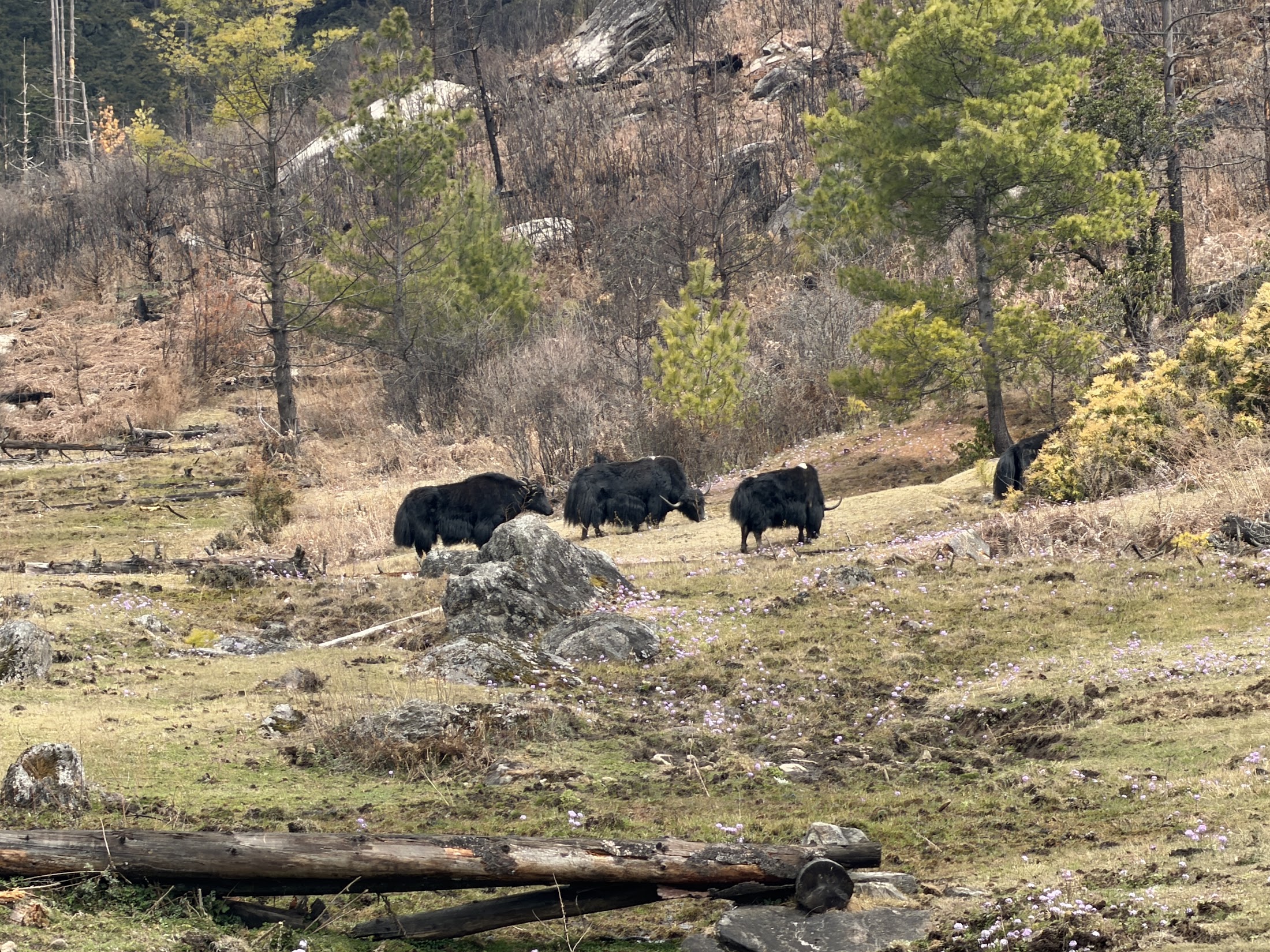
Soon after camp we pass the army post, where the guide shows our permits, then the valley widens into open pasture. Stone herders’ houses with shingle roofs appear on both banks, and yaks graze on the river flats.
The last hours are flat or gently rising, but you are now near 4,000 m, so even small climbs feel harder. Slow down, drink often and keep warm layers handy, since the wind usually picks up in the valley after midday.
Camp is next to the ruins of an old fort, with Jomolhari towering directly above. The guide checks oxygen levels before dinner. Tomorrow is a rest day at the same camp, so any headache tonight is no cause for alarm, but do tell the guide.
- TravelTrekking, 4-6 hours
- StayTented Camp
- MealsBreakfast, Lunch, Dinner
Day 5Rest Day at Jangothang4,080 m
A full day at base camp is the most important day of the Jomolhari Lingshi Trek, because the next two days cross passes close to 4,900 m. Start with sunrise on Jomolhari, which lights the summit while the camp is still frozen.
After breakfast we hike towards the Tshophu lakes at about 4,350 m, climbing about 300 m beside a stream. Blue sheep often graze above the lakes, and Jichu Drake rises sharp and white to the north. Allow about 4 hours there and back.
An alternative is the ridge above camp, where you look across at the Nyile La route you will take tomorrow. Either way, the aim is to climb a little higher than camp and come back down to sleep.
In the afternoon the guide reviews every trekker’s oxygen readings and talks through the pass plan. If anyone is not adjusting well, they walk back down the valley tomorrow with a crew member, and the rest of the group carries on.
- TravelHiking, 4-6 hours
- StayTented Camp
- MealsBreakfast, Lunch, Dinner
Day 6Nyile La to Lingshi4,010 m
The first pass of the traverse is the Nyile La. We walk about 18 km in 6 to 7 hours, climbing about 800 m to the pass at roughly 4,870 m and dropping to Lingshi at about 4,010 m.
The climb starts across a river and then up open slopes and moraine, steady rather than steep. Near the top the air is thin, and the guide sets a slow rhythm with frequent short stops. Prayer flags mark the pass.
From the Nyile La, the view takes in Jomolhari, Jichu Drake and Tserim Kang, with the Lingshi basin spreading out below. The descent is long and steady over grassy slopes, with marmots whistling from their burrows in season.
As you come down, Lingshi Dzong appears on a hilltop in the middle of the basin. Camp is near the village, and the animals often change here from horses to yaks for the Yeli La. The guide checks oxygen levels again tonight.
- TravelTrekking, 7-9 hours
- StayTented Camp
- MealsBreakfast, Lunch, Dinner
Day 7Lingshi to Shodu over the Yeli La4,080 m
This is the biggest day of the Jomolhari Lingshi Trek: about 22 km in 8 hours or more, crossing the Yeli La at about 4,930 m, the highest point of the route, and descending to Shodu at about 4,080 m.
We set off early and, if it is open, stop briefly at Lingshi Dzong on the way out of the basin. The trail climbs steadily up a side valley past a small lake, then over rock and scree to the pass.
On a clear day the Yeli La shows Jomolhari, Gangchhenta and Tserim Kang. Take your photos, eat a snack and then start down; the wind is strong on top, and the descent to Shodu takes 3 to 4 hours down a long valley.
Shodu sits beside the Wang Chhu in a meadow at the edge of the tree line, with cliffs above that hold meditation caves. After the long day, dinner is early and sleep comes easily. From here the route descends towards Thimphu.
- TravelTrekking, 7-9 hours
- StayTented Camp
- MealsBreakfast, Lunch, Dinner
Day 8Shodu to Barshong3,710 m
Below the high passes, the Jomolhari Lingshi Trek follows the Wang Chhu downstream. We walk about 16 km in 5 to 6 hours to Barshong at about 3,710 m, losing about 400 m with several short climbs.
The trail drops into forest of fir, birch and rhododendron, crossing the river a few times. Past the cliffs of Shodu, look out for the meditation caves high on the rock walls; the guide knows which ones are still used.
The air feels thicker today, and most trekkers find their energy returning. This is a good day to enjoy the walking and notice the birds and plants that return below the tree line.
Barshong has the ruins of a small dzong on a ridge above camp, worth a short walk before dinner. Camp is in a meadow nearby. It is warmer down here, so the evening around the dining tent tends to last longer.
- TravelTrekking, 4-6 hours
- StayTented Camp
- MealsBreakfast, Lunch, Dinner
Day 9Barshong to Dolam Kencho3,320 m
The descent continues through forest towards the last camp of the Jomolhari Lingshi Trek. We cover about 15 km in about 5 hours, dropping about 400 m to Dolam Kencho at roughly 3,320 m.
The path runs down through thick rhododendron, fir and bamboo, sometimes high above the Wang Chhu and sometimes beside it. Roots and stones make it rough in places, and after rain it can be muddy, so take care on the steeper sections.
There are a few short uphill stretches where the trail leaves the river to cross side ridges. Lunch is in a clearing in the forest, served hot by the kitchen team.
Dolam Kencho is a pasture at the edge of the forest, and tonight is the final camp. The crew often prepares a farewell dinner, and this is a good evening to thank them. The guide explains tomorrow’s short walk out and the drive to Thimphu.
- TravelTrekking, 4-6 hours
- StayTented Camp
- MealsBreakfast, Lunch, Dinner
Day 10Dolam Kencho to Dodina and Thimphu2,320 m
The last trek day is short. We walk about 8 km in 3 to 4 hours, descending about 700 m to the road head at Dodina, about 2,640 m, on the northern edge of the Thimphu valley.
The trail follows the Wang Chhu through forest, with the river growing louder as it drops through a gorge. Near the end you pass the first farmhouses and the bridge at Dodina, close to Cheri Monastery.
Our vehicle meets you at the bridge, and the drive to Thimphu takes about 30 minutes. Before leaving, the crew and handlers say goodbye, and tips are customarily given here.
After a shower and lunch in Thimphu, we visit the Memorial Chorten and, late in the afternoon, Tashichho Dzong, the seat of government. Dinner is in town and tonight is in a 3-star hotel. After eight days on the trail, the noise of the capital comes as a surprise.
- TravelTrekking, 4-6 hours
- Stay3-Star Hotel
- MealsBreakfast, Lunch, Dinner
Day 11Depart from Paro2,250 m
Your Jomolhari Lingshi Trek ends with the 1.5 hour drive from Thimphu to Paro airport. Paro flights usually leave in the morning, so the guide confirms the pickup time the night before.
The road follows the river past Chhuzom, where three chortens mark the meeting of the Paro and Thimphu rivers, and the iron bridge at Tamchog Lhakhang. We stop for photos if there is time.
At the airport the guide helps with check-in and says goodbye at the terminal. Keep the visa letter with your passport for the exit check. If your flight leaves later in the day, we can visit Paro’s National Museum or the town first.
If you are flying on to Nepal, we can arrange your Kathmandu hotel and transfers on the same booking. For long-haul connections, we suggest a buffer night in Paro or Kathmandu; tell us when you book and we will add it.
- TravelCar, 1-3 hours
- MealsBreakfast
What's included
Included in the price
- Bhutan visa: processing and the US$ 40 visa fee
- Sustainable Development Fee: US$ 100 per person for each of the 10 nights
- Airport transfers: arrival and departure at Paro airport
- Hotels: 3-star rooms, twin share, in Paro and Thimphu
- Camping: two-person tents, mats, dining, kitchen and toilet tents
- All meals: from lunch on arrival to breakfast on departure
- Drinking water: boiled and filtered throughout the trek
- Guide: a licensed English-speaking Bhutanese trekking guide
- Camp crew: a cook and assistants for all eight trek days
- Pack animals: horses and yaks with handlers, including the change of animals at Lingshi
- Vehicle: a private car or van with a driver for all road transfers
- Permits: route permit and Jigme Dorji National Park entry
- Entrance fees: Tiger’s Nest and the sites in Thimphu
- Duffel bag: a waterproof duffel for the pack animals, yours to keep
- Safety kit: first-aid kit and pulse oximeter carried by the guide
- Emergency support: evacuation arranged by us and billed to your insurer
Not included
- Flights to and from Paro, which we can book at cost
- International airfare to your connecting city
- Travel insurance covering trekking to 5,000 m and helicopter evacuation
- Single supplement for your own room or tent
- Drinks other than water, tea and coffee
- Sleeping bag and down jacket, available to rent in Paro
- Extra nights from flight changes or leaving the trek early
- Laundry, phone and internet charges
- Tips for the guide, driver, cook, crew and animal handlers
- Personal costs such as souvenirs and hot stone baths
Dates and price
These are our fixed group dates. Prices change with the season, so each date shows its own price. Please book at least 30 days ahead, so we have time to arrange your Bhutan visa.
US$ 2,935per person
| Starts | Ends | Status | Price | Book |
|---|---|---|---|---|
| Departs: Fixed group dates. Book your date | ||||
Trip information
Price by Group Size
| Group size | Price per person |
|---|---|
| 1 traveller (private) | US$ 3,670 |
| 2 travellers | US$ 2,935 |
| 3 to 5 travellers | US$ 2,640 |
| 6 to 12 travellers | US$ 2,445 |
To book: select a departure below. A 20% deposit confirms your place, and the balance is due before we lodge your Bhutan visa, about 30 days before you fly.
Joining alone: you can join any departure on your own. You pay the rate for the group size when it leaves, and if six or more have booked we refund the difference to everyone.
Private trek: any April, May, September or October date can run privately at the one or two traveller price.
Not in the price: Paro flights, insurance, sleeping bag, drinks and tips. Ten nights of Bhutan’s SDF account for US$ 1,000 of each price, and that sum is already included.
Best Time to Visit
The Jomolhari Lingshi Trek has the shortest season of our Jomolhari routes: April and May, then September and October. Departures leave on the 1st, 11th and 21st of those months.
Both the Nyile La and the Yeli La sit close to 4,900 m and can hold snow into April and from November. Early October is usually the best balance of clear skies, dry trails and open passes, and the herders are still up at Lingshi with their yaks.
May is warmer and greener, with primulas and rhododendron in flower lower down. Cloud forms earlier, so we start the pass days at first light and aim to be over the top by late morning.
We do not run the route from June to August, when the descent through Barshong and Dolam Kencho turns to mud and leeches, or from November to March, when the passes are often closed by snow. A dry November occasionally allows a private trek; we will tell you honestly if it does.
Difficulty and Fitness
We grade the Jomolhari Lingshi Trek as difficult. It is not technical, but it crosses two passes close to 4,900 m and has eight trek days in a row, four of them 7 hours or more.
The longest days are the walk in to Thangthangka, about 22 km, and Lingshi to Shodu over the Yeli La, also about 22 km with roughly 900 m of climbing. The Nyile La day is about 18 km. After Shodu the route descends for three days with many short climbs and river crossings.
This is not a first trek. You should have done at least one multi-day trek before, ideally above 4,000 m, and be comfortable walking 7 to 8 hours on rough ground with only a day pack.
Train for three months. Long hill days with 1,000 m of ascent, back-to-back weekend walks and stair sessions in the week are the best preparation. Strong knees matter as much as lungs, because the last three days lose more than 2,000 m.
Food, Water and Dietary Needs
All meals on the Jomolhari Lingshi Trek are cooked fresh by our camp cook and included in the price. Breakfast is porridge, eggs and bread or pancakes; lunch is hot and carried in flasks; dinner is soup, rice, dal, vegetables and a meat or cheese dish.
Supplies are bought in Paro and topped up where possible, and the cook plans the menu so fresh vegetables last through the trek. Tell us at booking about vegetarian, vegan, gluten-free or other diets, and we will plan around them.
On the two pass days we add snacks and extra hot drinks, as appetite tends to drop above 4,500 m. Many trekkers like to bring their own energy bars or dried fruit as well.
All drinking water is boiled and filtered by the crew. Carry two bottles, one insulated against freezing on cold mornings, and drink 3 to 4 litres a day. Bottled water is supplied in the vehicle in Paro and Thimphu.
Altitude, Health and Safety
The Jomolhari Lingshi Trek crosses the Nyile La at about 4,870 m and the Yeli La at about 4,930 m, so altitude is the central risk. The highest camps are Jangothang and Shodu at about 4,080 m.
We acclimatise before the passes: Tiger’s Nest at 3,120 m, a night at 3,610 m, and two nights at 4,080 m with a day hike higher. Each pass is crossed in a single day from a camp below 4,100 m, so you climb high and sleep lower.
The guide checks oxygen saturation and pulse every morning and evening. Anyone whose readings or symptoms worsen at Jangothang walks back out to Shana with a crew member rather than crossing the Nyile La. Read our altitude sickness guide before you travel.
Lingshi has a basic health unit, and helicopter evacuation is possible from several camps in clear weather. Your insurance must cover trekking to 5,000 m and helicopter rescue. See your doctor before booking if you have heart, lung or blood pressure concerns.
Local Etiquette
Lingshi is a living community, not a sight, and the Jomolhari Lingshi Trek passes through the herders’ homes and grazing grounds. Ask before taking photographs, greet people with “kuzuzangpo la”, and keep to the path through fields.
Lingshi Dzong is an active religious and administrative building. If it is open, dress modestly, remove your hat and shoes in shrine rooms, and do not photograph inside. Walk clockwise around the chortens and prayer walls you pass.
The passes are sacred places marked with prayer flags and stone cairns. Leave them as they are; if you want to add something, the guide can help you hang a prayer flag in the proper way.
Our crew carries out all rubbish, and the park asks every group to leave camps clean. Keep soap away from streams, and use the toilet tent rather than the open ground near water.
Visa, Permits and Documents
Everyone except Indian, Bangladeshi and Maldivian nationals needs a Bhutan visa for the Jomolhari Lingshi Trek, applied for by a licensed operator. We submit it after your balance is paid.
We need a passport scan, valid at least six months after arrival, and a photo. The visa fee is US$ 40 and the SDF is US$ 100 per person per night until 31 December 2029; both are included in our price.
The route crosses Jigme Dorji National Park and needs a trekking route permit, which we arrange with the visa. Your guide carries the permits and shows them at the army post in the Paro valley and at Lingshi.
Keep the visa clearance letter for your Paro check-in and arrival. Indian nationals need a permit instead of a visa and pay a lower SDF. Official rules are published by the Department of Tourism on bhutan.travel.
Transport, Money and Connectivity
You arrive and leave through Paro airport, served by Drukair and Bhutan Airlines from Kathmandu, Delhi, Kolkata, Bagdogra, Bangkok and Singapore. The trek starts near Shana, 1.5 hours from Paro, and finishes at Dodina, about 30 minutes from Thimphu.
Horses carry the camp up the Paro valley, and at Lingshi the loads usually move to yaks for the Yeli La. Your duffel travels with them, so keep a day pack with everything you need between camps.
The ngultrum is Bhutan’s currency, tied to the Indian rupee. Change clean US dollar notes in Paro before the trek, since you will need cash only for tips and small purchases at Lingshi.
Phone signal is rare between the army post and Dodina, although Lingshi sometimes has coverage near the dzong. Expect to be out of contact for most of the eight days, and use hotel Wi-Fi in Paro and Thimphu.
Questions about this trip
How long is the Jomolhari Lingshi Trek?
The Jomolhari Lingshi Trek is 11 days from arrival in Paro to departure, with eight days on the trail and about 120 km of walking. You go up to Jangothang, cross the Nyile La to Lingshi and the Yeli La to Shodu, then descend the Wang Chhu valley to Dodina near Thimphu.
How much does the Jomolhari Lingshi Trek cost?
The Jomolhari Lingshi Trek costs from US$ 2,445 per person in a group of six or more, US$ 2,640 for three to five, US$ 2,935 each for two and US$ 3,670 for one. Prices include the visa, ten nights of SDF, hotels, camping, meals, guide, crew and pack animals.
How hard is the Jomolhari Lingshi Trek?
The Jomolhari Lingshi Trek is difficult. It crosses two passes near 4,900 m and has eight trek days in a row, four of them 7 hours or longer. It is not technical, but it suits trekkers with previous multi-day experience, ideally above 4,000 m.
What is the highest point on the Jomolhari Lingshi Trek?
The highest point on the Jomolhari Lingshi Trek is the Yeli La at about 4,930 m, crossed between Lingshi and Shodu. The Nyile La, crossed the day before, is about 4,870 m. The highest camps are Jangothang and Shodu, both at about 4,080 m.
What is Lingshi Dzong?
Lingshi Dzong is a small fortress on a hill in the Lingshi basin, built in the 17th century to guard the trade route between Bhutan and Tibet. On the Jomolhari Lingshi Trek we visit it on the way out of the basin if it is open, and its white walls stand out above camp from far across the basin.
When is the best time for the Jomolhari Lingshi Trek?
The best months for the Jomolhari Lingshi Trek are April, May, September and October, when the two high passes are usually open. Early October tends to give the clearest skies. Snow often closes the passes from November to March, and the June to August monsoon makes the descent muddy.
How is the Jomolhari Lingshi Trek different from the Jomolhari Trek?
The Jomolhari Trek visits base camp and returns the same way. The Jomolhari Lingshi Trek continues over the Nyile La and Yeli La through Lingshi and ends near Thimphu, so it is a full traverse. It is two days longer and much harder.
Is the Jomolhari Lingshi Trek safe?
The Jomolhari Lingshi Trek is safe with good pacing. We spend two nights at Jangothang before the first pass, check oxygen levels twice daily and carry a first-aid kit. Lingshi has a basic health unit and helicopters can reach several camps in clear weather, so insurance must cover rescue to 5,000 m.
How do you acclimatise on the Jomolhari Lingshi Trek?
We acclimatise on the Jomolhari Lingshi Trek with the Tiger’s Nest hike, a night at 3,610 m and two nights at Jangothang at 4,080 m with a day hike higher. Each pass is crossed in a single day from a camp below 4,100 m, and anyone unwell turns back before the Nyile La.
Where do we sleep on the Jomolhari Lingshi Trek?
On the Jomolhari Lingshi Trek you camp for eight nights and spend three in 3-star hotels in Paro and Thimphu. Camps are at Thangthangka, Jangothang for two nights, Lingshi, Shodu, Barshong and Dolam Kencho, in two-person tents with dining and toilet tents.
Do yaks carry the loads on the Jomolhari Lingshi Trek?
Yes. On the Jomolhari Lingshi Trek, horses usually carry the camp to Lingshi, and yaks take over there for the Yeli La, which they cross more easily in snow. Their handlers walk with them. You carry only a day pack with water, layers and snacks.
What food is served on the Jomolhari Lingshi Trek?
Our cook serves three hot meals a day on the Jomolhari Lingshi Trek: porridge and eggs at breakfast, a hot lunch carried in flasks, and soup with rice, dal, vegetables and a curry at dinner. Vegetarian, vegan and gluten-free menus are possible with notice.
How cold is it on the Jomolhari Lingshi Trek?
Nights on the Jomolhari Lingshi Trek fall below freezing at Jangothang, Lingshi and Shodu, often to minus 5 to minus 10 degrees C in October. The passes are windy and cold even on sunny days. A sleeping bag rated to minus 15 degrees C and a down jacket are essential.
Do I need a visa for the Jomolhari Lingshi Trek?
Yes. Except for Indian, Bangladeshi and Maldivian nationals, everyone needs a Bhutan visa for the Jomolhari Lingshi Trek, applied for by a licensed operator. We apply once your balance is paid. The US$ 40 fee, the nightly SDF and the trek permits are already in our price.
What is the SDF for the Jomolhari Lingshi Trek?
The SDF for our 11-day Jomolhari Lingshi Trek is US$ 1,000 per person: US$ 100 for each of your ten nights in Bhutan. That rate is confirmed until 31 December 2029 and is included in every price on this page, so there is nothing extra to pay on arrival.
Can beginners do the Jomolhari Lingshi Trek?
We do not recommend the Jomolhari Lingshi Trek as a first trek. It suits trekkers who have completed at least one multi-day trek, ideally above 4,000 m. Beginners do better on the Druk Path Trek or the Jomolhari base camp route first.
How fit should I be for the Jomolhari Lingshi Trek?
For the Jomolhari Lingshi Trek you should be able to hike 7 to 8 hours with about 1,000 m of ascent and do it again the next day. Train for three months with long hill days, back-to-back weekend walks and stair sessions, and strengthen your knees for the long descents.
Is there phone signal on the Jomolhari Lingshi Trek?
Phone signal is rare on the Jomolhari Lingshi Trek between the army post in the Paro valley and Dodina. Lingshi sometimes has coverage near the dzong. Expect to be out of contact for most of the eight trek days, and use hotel Wi-Fi in Paro and Thimphu.
Can the Jomolhari Lingshi Trek be done privately?
Yes, the Jomolhari Lingshi Trek can run privately on any season date at the one and two traveller prices. A private trek has its own guide, cook, crew and animals, and can add a rest day at Lingshi to explore the dzong and villages.
What should I pack for the Jomolhari Lingshi Trek?
Pack waterproof boots with good grip, gaiters, a sleeping bag rated to minus 15 degrees C, a down jacket, fleece, waterproof shell, thermal layers, walking poles, warm gloves, warm hat, sun hat, sunglasses, sunscreen, two water bottles and a headtorch, plus modest clothes for dzong visits.
Do I need insurance for the Jomolhari Lingshi Trek?
Yes. Insurance for the Jomolhari Lingshi Trek must cover trekking up to 5,000 m and helicopter evacuation, as well as medical care and cancellation. Send us your policy details before you travel so the guide carries them on the trail.
Where does the Jomolhari Lingshi Trek finish?
The Jomolhari Lingshi Trek finishes at Dodina, at the head of the Thimphu valley near Cheri Monastery. Our vehicle meets you at the bridge and drives about 30 minutes to your Thimphu hotel, and the next morning we drive about 1.5 hours to Paro airport.
What makes your Jomolhari Lingshi Trek different?
Our Jomolhari Lingshi Trek keeps two nights at Jangothang before any pass, crosses each pass from a camp below 4,100 m, and checks oxygen levels twice a day. Groups stay at 12 or fewer, and a crew member is ready to walk anyone out before the Nyile La if needed.
Can I combine the Jomolhari Lingshi Trek with Nepal?
Yes. We are a Kathmandu-based company, and Paro is about an hour’s flight from Kathmandu. We can arrange your days in Nepal, the flights and the Jomolhari Lingshi Trek as a single booking, with our own team meeting you in both countries.
Ask us about the Jomolhari Lingshi Trek
We reply from Kathmandu within 24 hours with available dates, your exact price and answers to your questions.
- 16 years guiding in the Himalaya
- Registered in Nepal, Reg. 187391
- Group departures of 12 travelers at most
- Private dates on any day
Call, WhatsApp or Viber
Jomolhari Lingshi Trek, from US$ 2,445 per person. Dates and booking at treknepalhimalayas.com/trip/jomolhari-lingshi-trek/
Trek Nepal Himalayas Pvt Ltd, Reg. 187391. Bhagawatisthan, Thamel, Kathmandu, Nepal. Call or WhatsApp +977 98510 13196. [email protected]