Kailash Mansarovar Yatra from Canada
Based on 2100 reviews
Trip Overview
Embark on a once-in-a-lifetime Kailash Mansarovar Yatra from Canada, a 15-day spiritual adventure that takes you from the comforts of home to the sacred heights of the Himalayas.
After flying into Kathmandu, you’ll explore revered temples and prepare for the journey ahead. Traveling overland by private jeep through the Nepal-Tibet border at Kerung, you’ll witness breathtaking landscapes—from lush hills to the vast Tibetan Plateau.
The pilgrimage culminates in a holy Lake Mansarovar ritual bath and a challenging 3-day Kora (circumambulation) of Mount Kailash, reaching altitudes over 5,600m.
Trip Highlights
- Sacred Temples in Nepal: Visit Pashupatinath and Doleshwor Mahadev before heading toward Kailash.
- Scenic Overland Drive: Travel by private jeep via Kerung, which has Himalayan views, including Shishapangma.
- Holy Lake Mansarovar: Take a sacred bath, meditate by the lakeshore, and enjoy the reflection of Kailash.
- Kailash Kora Trek: Complete the 3-day circuit of Mount Kailash, crossing Drolma-La Pass (5,636m).
- Seamless Arrangements: All logistics from visa to meals and lodging are managed so you can focus entirely on the Yatra.
Short Itinerary
Canada to Kathmandu
Passport Submission & Pashupatinath Darshan
Doleshwor Mahadev & Budhanilkantha Visit
Yatra Briefing & Preparation
Rasuwagadhi
Kerung (Gyirong)
Saga
Lake Mansarovar
Darchen
Dirapuk – Kailash Kora Day 1
Zutulpuk -Kailash Kora Day 2
Saga- Kora Day 3
Kerung
Kathmandu
Back to Canada
Full Itinerary
- Distance: 12,500 km by air (international flight)
- Travel Time: 20+ hours, including connecting flights.
Your journey begins with an international flight from Canada to Kathmandu, Nepal. After a long flight, you arrive at Kathmandu’s Tribhuvan International Airport, where our team will greet you.
We’ll transfer you to your hotel in the city. The rest of the day is free to rest and recover from jet lag.
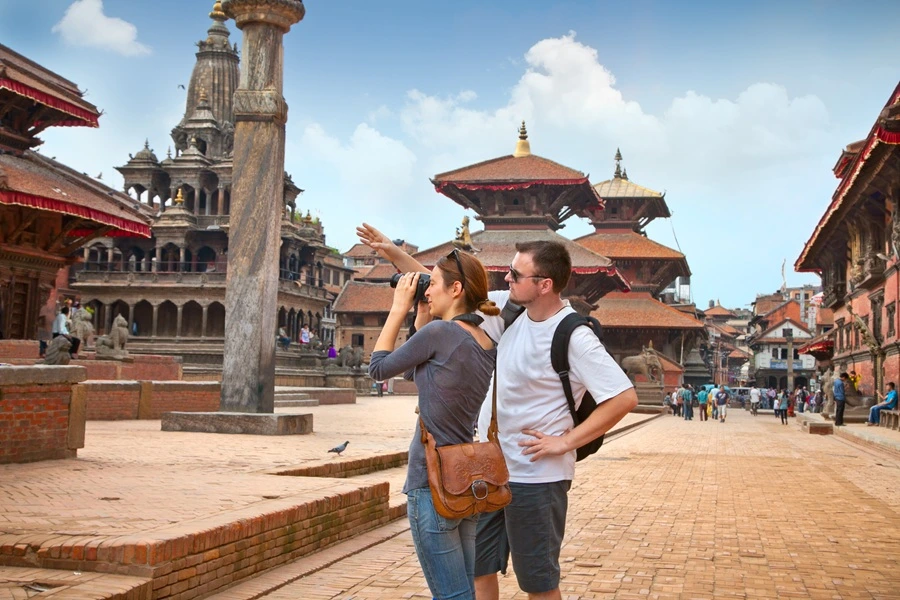
Take it easy and enjoy the comforts of your hotel or stroll around the neighborhood to get a first taste of Nepal.
Welcome to the Himalayas! Tomorrow, your spiritual adventure truly starts with explorations in Kathmandu.
- Distance: Approx. 20 km of city driving (Kathmandu sights).
- Elevation: Kathmandu remains at 1,400m.
After breakfast, you will submit your passport and required documents to our staff for the Chinese group visa processing. With the paperwork underway, the focus shifts to spiritual preparation.
You’ll visit Pashupatinath Temple, one of the most sacred Hindu temples dedicated to Lord Shiva.
Stroll through the temple complex along the holy Bagmati River, witness the rituals and prayer ceremonies, and if timing allows, observe the vibrant evening Aarti (prayer ritual).

Breathing in the incense and chanting, you’ll feel a deep sense of peace and purpose. After this soul-stirring darshan (visit), return to your hotel.
Spend the evening at leisure, knowing that your journey’s bureaucratic necessities are being handled while you immerse yourself in Nepal’s spiritual ambiance.
- Distance: Approx. 60 km round-trip drive (Kathmandu Valley tour).
- Elevation: Around 1,400–1,500m during visits (valley floor).
Today, we are dedicated to visiting two critical religious sites around Kathmandu. First, travel to Doleshwor Mahadev Temple in Bhaktapur.
This sacred shrine is believed to be the head portion of the Kedarnath Temple (one of the twelve Jyotirlingas of Lord Shiva).
You can offer prayers here, further aligning with Lord Shiva’s blessings before heading towards Kailash.
Next, drive north of the valley to visit Budhanilkantha, an open-air temple famous for its colossal statue of Lord Vishnu reclining on a bed of serpents in the middle of a pond.
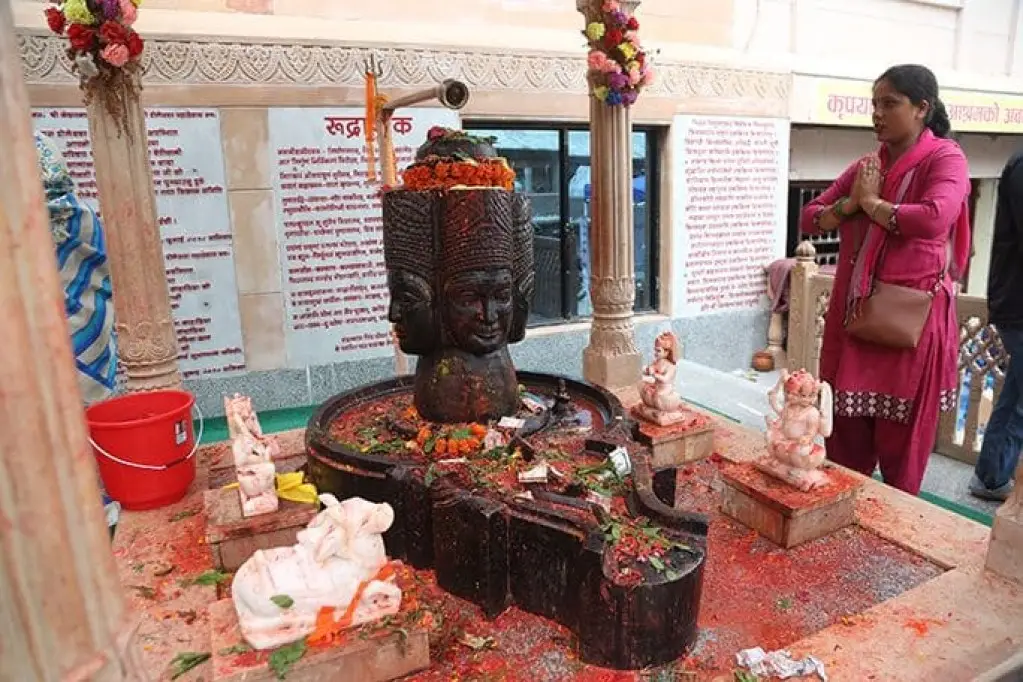
Standing before the serene 5-meter-long Sleeping Vishnu statue, you can appreciate the rich tapestry of Hindu mythology and how it interweaves with your forthcoming journey.
By afternoon, return to Kathmandu. Use the remainder of the day to pack any last-minute items, check your gear, and do a final shopping for essentials.
- Distance: Minimal travel within the city for any last-minute errands.
- Elevation: 1,400m (Kathmandu).
With your Chinese Tibet Travel Permit and group visa likely approved by today, the morning is spent on final preparations.
Attend a detailed briefing conducted by your tour leader/guide. In this session, you’ll review the entire route, safety guidelines, and what to expect during the high-altitude trek.
This is a great time to ask questions and ensure you’re mentally and physically ready.
After the briefing, our team assists you in checking your equipment: warm clothing, comfortable trekking shoes, medications, and any pilgrimage items you want to take along.

If you need to rent or purchase any gear, we’ll help you find it in Kathmandu. The rest of the day is free for you to relax.
In the evening, enjoy a wholesome dinner and an early night’s rest — tomorrow, the overland journey begins!
- Distance: 152 km by road – Driving Time: 7 hours.
- Elevation: Kathmandu (1,400m) to Rasuwagadhi ( 2,500m)
- Elevation gain: +1,100m.
After an early breakfast, you depart Kathmandu in a private jeep (or comfortable private vehicle), heading north towards the Nepal–Tibet border.
The road winds through scenic, terraced countryside and lush green hills. You’ll pass small towns like Trishuli Bazaar and Dhunche, and as you climb higher, enjoy glimpses of the Langtang mountain range on clear days.
The drive, though long, is an adventure in itself, filled with waterfalls, deep river gorges, and occasional rough patches of mountain road.
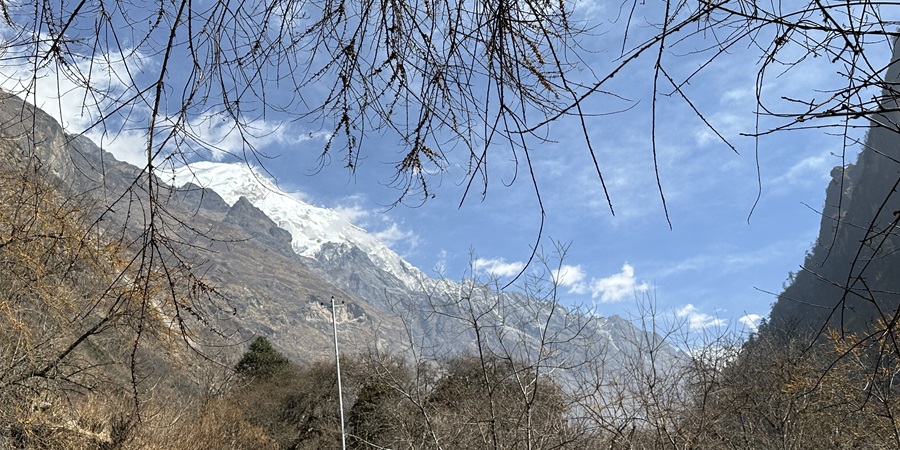
By late afternoon, you reach Rasuwagadhi, the Nepalese border post beside the Bhote Koshi river.
The elevation here is around 2,500m, and you can feel the air getting cooler and thinner.
You’ll stay at a simple lodge/guesthouse near the border tonight. Get a good night’s rest – tomorrow you’ll cross into Tibet (China) for the next leg of your pilgrimage.
- Distance: 24 km by road – Driving Time: 1 hour (plus border formalities).
- Elevation: Rasuwagadhi (2,500m) to Kerung/Gyirong (2,700m)
- Elevation gain: +200m.
Today, you officially enter Tibet! In the morning, you’ll go through Nepalese and Chinese immigration at Rasuwagadhi.
Our team will assist in making the border crossing smooth, but do expect some waiting during customs and paperwork.
Once on the Tibet side, you meet your Tibetan guide and driver. The journey resumes by private jeep into China’s Tibet Autonomous Region.
A short drive of about 24 km takes you to Kerung (Gyirong Town) at 2,700m elevation.
The road ascends through a gorge to the high plateau, and you’ll notice the landscape changing – evergreen forests give way to more arid, rocky terrain.
Upon reaching Kerung, settle into your guesthouse and make it easy to acclimate to the higher altitude. If you feel up to it, you can briefly walk around the town to stretch your legs.
Kerung is a small border town, but you might catch distant views of Tibetan peaks and get your first taste of Tibetan culture here. Rest well, as longer drives into the plateau await.
- Distance: 170 km by road – Driving Time: 5–6 hours.
- Elevation: Kerung (2,700m) to Saga (4,640m)
- Elevation gain: +1,940m.
Leaving Kerung after breakfast, you continue the overland journey deeper into Tibet. The drive to Saga is stunning and dramatic.
The road climbs onto the vast Tibetan Plateau, often exceeding 4,000m. En route, you cross high mountain passes (like the Lalung La at around 5,050m) that offer panoramic views of Shishapangma (8,013m), one of Tibet’s celebrated Himalayan peaks, and the bright blue Pelku Tso lake shimmering in the distance.
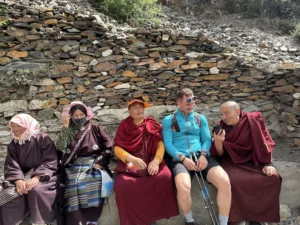
As you travel, you might spot nomadic herders with their yaks grazing on the sparse alpine grasslands. By late afternoon, you arrive in Saga, a town on the Brahmaputra River’s banks (Yarlung Tsangpo).
At an elevation of 4,640m, Saga is an essential stop for acclimatization. Check into a guesthouse or hotel and spend the evening resting.
Your body will likely feel the altitude here, so it’s crucial to stay hydrated, keep warm, and move gently. Tomorrow, you head for the holy lake!
- Distance: 450 km by road –Driving Time: 8 hours.
- Elevation: Saga (4,640m) to Lake Mansarovar (4,590m)
- Elevation change: 50m (net descent, but crossing high passes over 5,000m).
Rise and shine early for one of the most anticipated days of the journey. Leaving Saga, you drive westward toward Lake Mansarovar, the sacred lake at the foot of Mount Kailash.
The drive is long but rewarding, traversing breathtaking desert-like plateaus and rugged terrain.
You cross the significant Mayum La Pass (around 5,216m) – the last high pass before Mansarovar.
As you crest this pass, the first glimpses of Mount Kailash (6,638m) might appear on the horizon, filling you with excitement and reverence.
By afternoon, you arrive at the shores of Lake Mansarovar, one of the highest freshwater lakes in the world.
The lake’s deep blue waters and the backdrop of Gurla Mandhata (7,728m) mountain create a scene of otherworldly beauty.

Upon reaching Mansarovar (4,590m), you can perform your holy rituals – many pilgrims take a ceremonial bath by the lakeside or fill bottles with its sacred water to take home.
There will be time for meditation and prayers by the lake’s edge; this is a profound moment to reflect on your journey.
In the evening, you’ll stay at a basic guesthouse near the lake (likely near Chiu Gompa).
The night sky here is incredible – with minimal light pollution, expect a dazzling display of stars over Mansarovar.
- Distance: 40 km by road – Driving Time: 1 hour.
- Elevation: Lake Mansarovar (4,590m) to Darchen (4,575m)
- Elevation change: negligible (15m).
Savor a peaceful morning at Lake Mansarovar. You might wake up early to catch the sunrise over the lake – the first rays of sun illuminating Mount Kailash in the distance is a sight you’ll never forget.
After breakfast, a short drive takes you to Darchen, the pilgrim’s gateway at the base of Mount Kailash.
Darchen is a small settlement, and though the distance is short, the drive is slow due to rough roads.
Reaching Darchen (about 4,575m), you check into a guesthouse. Take the afternoon to rest and acclimatize further.
Darchen will be the starting and ending point of your 3-day Kailash Kora (parikrama).
Here, you’ll meet any additional crew, like porters or yak handlers, who will accompany you on the trek, and prepare your backpack with essentials for the coming days.
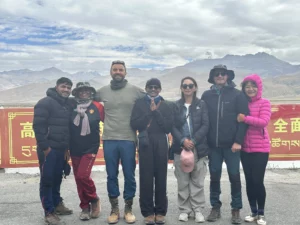
If energy permits, you can explore the area around Darchen: prayer flags fluttering, and pilgrims often chant or prepare for their own Kora. From town, you might glimpse the south face of Mount Kailash.
In the evening, have an early dinner and get to bed – tomorrow is the first day of trekking around Kailash, a day you’ve been preparing for physically and spiritually.
- Trek Distance: 18 km – Trekking Time: 6–7 hours.
- Elevation: Darchen (4,575m) to Dirapuk (4,900m)
- Elevation gain: +325m.
Today marks the beginning of your Mount Kailash Kora, the sacred circuit trek around the holy mountain.
After a hearty early breakfast, a short drive (around 8 km) brings you to Tarboche, the trek’s starting point, where an auspicious flagpole (Tarboche flagpole) stands adorned with prayer flags.
This is also the site of the Yam Dwar (Gateway of the God of Death), where you might pause for a moment of prayer, seeking blessings for the journey ahead. From here, you start trekking towards Dirapuk.
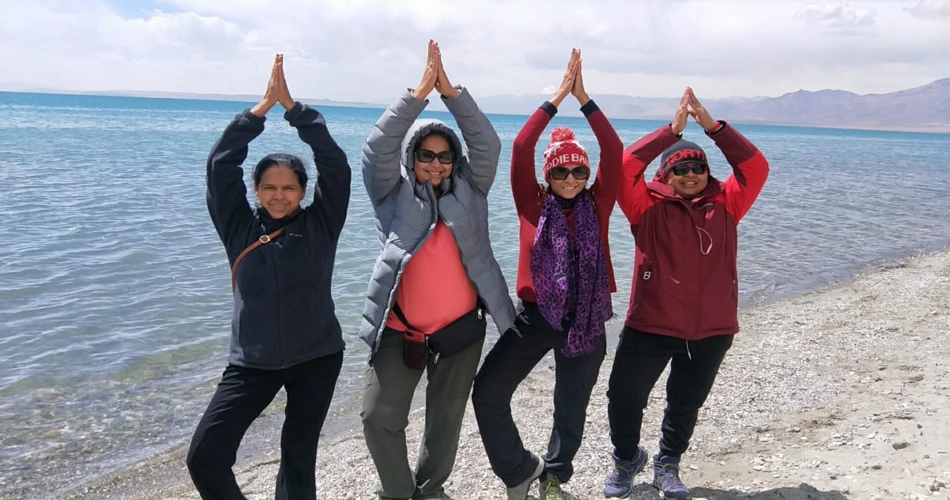
The trail follows the Lha Chu (river) valley, gradually ascending. You’ll walk at a comfortable, steady pace—remember, it’s not a race, and the altitude is significant.
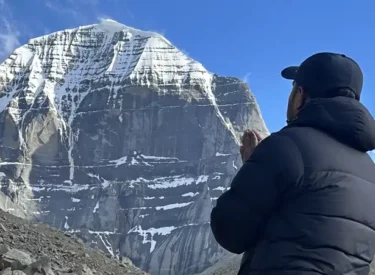
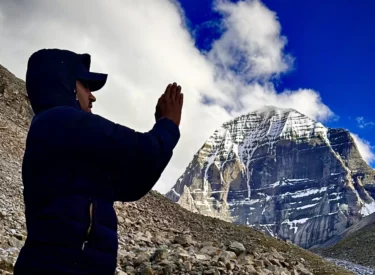
Along the way, you’ll catch magnificent views of Mount Kailash’s north face, which grows larger and more awe-inspiring as you approach Dirapuk.
Prayer flags line parts of the trail, and you may encounter pilgrims performing the Kora, some even prostrating themselves every few steps as an act of devotion.
By mid-afternoon, you arrive at Dirapuk Monastery and the nearby guesthouse (around 4,900m).
The sight here is breathtaking: Kailash’s black rock face towers above you, often draped in wisps of cloud or shining under the sun.
Take time to rest, sip warm fluids, and marvel at the divine presence many say can be felt here.
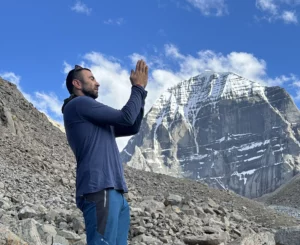
Tonight, accommodations are fundamental (dormitory style), but the experience of sleeping in the shadow of Mount Kailash is profound.
Wrap yourself in warm layers, gaze at the myriad stars if the sky is clear, and get some sleep. Tomorrow is the most challenging day of the Kora.
- Trek Distance: 22 km
- Elevation: Dirapuk (4,900m) over Drolma-La Pass (5,636m) to Zutulpuk (4,790m).
- Elevation Change: +736m up to the pass, then –846m down to Zutulpuk.
Today is the most challenging and most rewarding day of your pilgrimage trek. You’ll start pre-dawn, as it’s essential to cross the high pass before the weather potentially turns in the afternoon.
Bundled up against the cold, you leave Dirapuk and begin the slow ascent towards Drolma-La Pass (5,636m), the highest point of the entire journey.
The path is steep and rocky in sections – take it one step at a time, pausing to catch your breath in the thin air.

You’ll likely feel the altitude intensely here; even yaks tread slowly. Colorful prayer flags mark the summit of the pass.
Upon reaching Drolma-La, you can rejoice – the most challenging part is over! Many pilgrims toss offerings (like prayer flags or personal tokens) at the top, symbolizing the shedding of burdens and the start of a new life chapter.
Just over the pass, you will see a small glacial lake, Gauri Kund (Tukje Chenpo Dzingbu) at about 5,608m.
Hindus revere this lake as where Goddess Parvati bathes – its bright turquoise water is enchanting against the barren landscape.
From here, the trail descends. The downhill is steep initially, so be careful with your footing on the rocky terrain.
As you lose altitude, breathing becomes easier. The valley opens into a river plain leading to Zutulpuk, named after the famous cave of miracles associated with the Buddhist saint Milarepa.

By late afternoon, you stumble gratefully into Zutulpuk (around 4,790m). Here, a humble monastery and a few basic lodgings await.
You’ll be physically exhausted, but spiritually invigorated. Enjoy a simple hot meal and share camaraderie with fellow pilgrims recounting the day’s trials.
Overnight in a bare guesthouse dorm at Zutulpuk, where you can feel the pilgrimage’s profound impact as you rest.
- Trek Distance: 10 km (Zutulpuk to trek endpoint near Darchen)
- Drive Distance: 450 km (Darchen to Saga)
- Elevation: Zutulpuk (4,790m) down to Darchen (4,575m), then drive to Saga (4,640m).
This morning, you’ll complete the final stretch of the Kailash Kora. After breakfast, set out from Zutulpuk following the river valley.
The terrain is relatively flat and gentle compared to yesterday, and the walk is peaceful.
After about 3 hours, you’ll reach the point where you began the trek (near Darchen), officially completing your parikrama of Mount Kailash – congratulations!
A sense of accomplishment washes over you; many pilgrims kneel or bow, offering a final prayer of gratitude.

Your driver will be waiting here to welcome you back. After regrouping and perhaps grabbing a quick lunch at Darchen, you begin the long drive back eastward to Saga, retracing the route.
Though it’s a lengthy haul (approximately 450 km), the drive gives you time to relax and absorb what you’ve just experienced.
You’ll pass Lake Mansarovar again and bid farewell to the holy mountain’s distant silhouette. By late evening, arrive in Saga and check into your guesthouse/hotel.

A hot dinner and a comfortable bed in Saga will make you feel heavenly after the rigorous Kora.
Take time to care for any sore muscles and get a good night’s sleep. Tomorrow, you start the journey back towards Nepal.
- Distance: 170 km by road
- Elevation: Saga (4,640m) to Kerung (2,700m)
- Elevation loss: –1,940m.
After breakfast in Saga, you continue the return leg of the journey across the Tibetan Plateau.
Driving back the way you came, you’ll notice the landscape in reverse – perhaps seeing details you missed on the way in.
The travel goes quicker as you’re descending in altitude. You might feel your energy improving with each lower elevation milestone.
By midday, cross the high passes once more (taking a last look at the sweeping mountain panoramas) and begin the descent towards the lush border regions.
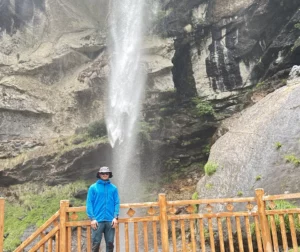
Arrive in Kerung in the afternoon and check into the guesthouse. With the significant goals of the Yatra accomplished, tonight is a time to unwind and celebrate with your group.
You have descended significantly, so breathing is easier. Enjoy your final evening in Tibet, maybe with a warm Tibetan tea or simply sharing stories with your travel companions. Rest well, as tomorrow you re-enter Nepal.
- Distance: 130 km by road (Kerung to Kathmandu
- Elevation: Kerung (2,700m) to Kathmandu (1,400m)
- Elevation loss: –1,300m.
Today, you bid farewell to Tibet and return to Nepal. After breakfast, you head to the Chinese immigration office in Kerung for exit formalities.
Once cleared, walk across the Friendship Bridge back to Rasuwagadhi and go through Nepali immigration.
Our Nepali staff will be there to welcome you back. Transferring to your Nepali vehicle, you set off to Kathmandu.
The drive, though long, might feel easier now with lower altitude and the familiarity of lush greenery and bustling villages.
Enjoy the winding road and remember to look back at the Himalayan range at viewpoints—those peaks have been your companions for the last two weeks.
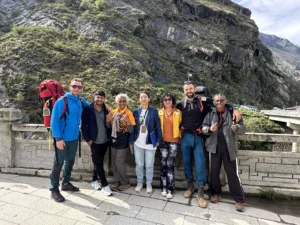
By late afternoon or early evening, you arrive in Kathmandu, marking the completion of your overland pilgrimage loop.
Check in to your Kathmandu hotel for a well-deserved shower and rest. In the evening, we’ll host a farewell dinner for you.
Savor Nepali cuisine and perhaps some cultural music and dance, celebrating the successful completion of your Kailash Mansarovar Yatra.
- Distance: Flight back home (travel distance & time will vary by airline and route).
- Elevation: Descend from Kathmandu (1,400m) to sea level upon arrival in Canada.
After two incredible weeks, it’s time to head home. Depending on your flight schedule, you may have some free time in Kathmandu in the morning for souvenir shopping or one last stroll through the city.

Our team will transfer you to Tribhuvan International Airport with ample check-in time. As you board your flight out of Nepal, you carry with you the blessings of Mount Kailash and Lake Mansarovar, countless memories, and a profound sense of achievement.
Safe travels back to Canada! We hope the spiritual energy and experiences of the Yatra stay with you for a lifetime.
Price Includes
- Kathmandu airport pick up and drop off by private vehicle.
- 5 nights in a 3-star Kathmandu hotel with breakfast (twin sharing).
- Sightseeing in Kathmandu with a private vehicle and a licensed guide.
- Kathmandu to Kerung and Kerung to Kathmandu by jeep.
- All permits needed for Tibet travel and the Tibet group visa.
- An English-speaking Tibetan guide and his expenses.
- Breakfast in Nepal and Tibet during the yatra.
- Provided equipment: sleeping bag, down jacket, trekking poles, duffle bag.
- First aid kit and oxygen backup.
- Yatra completion certificate.
Price Excludes
- International airfare USA–Kathmandu–USA.
- Travel insurance (mandatory).
- Nepal visa fee (obtain upon arrival).
- Food (lunch & dinner) during the yatra.
- Porter or pony hire during the kora.
- Personal expenses (mineral water, bar bills, laundry, phone calls, etc.).
- Tipping.
- Anything not mentioned in “Inclusions.”
Trip Information
Best time for Kailash Mansarovar Yatra from Canada
The best time for the Kailash Mansarovar Yatra is during the late spring, summer, and early autumn months. Generally, May through September is ideal. During this window, the high Himalayan passes to Tibet are open and the weather is relatively mild.
May and June offer pleasant temperatures in Tibet (with daytime temperatures around 10–15°C at high altitudes, though nights are cold). July and August are the warmest months; however, these are also monsoon months in Nepal.
This means you might encounter rain on the Nepal side (Kathmandu to the border), but the Tibetan Plateau remains mostly in a rain shadow (drier).
September is another excellent month – post-monsoon skies are clear, offering great visibility of the mountains, though the temperature begins to drop, especially at night.
Winter (October through April) is not recommended, as temperatures plummet well below freezing at Mansarovar and Darchen, and heavy snowfall can close the border passes.
Whenever you go, be prepared for dramatic temperature swings. At high altitudes near Kailash, days can be sunny and relatively warm, but nights will drop below freezing even in summer. Always bring layered clothing to adapt to conditions.
Additionally, the weather in the mountains can be unpredictable; snow or sudden cold snaps can occur, particularly at Drolma-La Pass. Our itinerary includes built-in acclimatization and buffer days to account for any weather delays or needed rest – safety is our priority.
Accommodation
A range of accommodations is arranged throughout your Yatra to balance comfort with authenticity. In Kathmandu, you’ll stay in a comfortable hotel (3 star) with amenities like hot showers, wifi, and cozy beds – a nice treat before and after the rugged journey.
Along the overland route in Tibet, accommodations are more basic due to the region’s remoteness. In Kerung and Saga, you will stay in guesthouses or simple hotels.
These are clean and safe, but keep expectations modest: rooms might be twin-sharing with en-suite bathroom if available, or in some cases, shared bathrooms. Hot water may be limited, and heating is basic (extra blankets are provided for the cold nights).
At Lake Mansarovar, the lodging is fundamental. We typically use a guesthouse near Chiu Gompa or a similar facility. Expect simple dormitory-style rooms or multi-share rooms. Facilities are rudimentary – you’ll have a bed with a mattress and blankets, but sometimes no running hot water.
Despite the simplicity, the location near the holy lake makes up for it with its spiritual atmosphere. In Darchen, accommodations improve slightly – small hotels/guesthouses with private or shared bathrooms. They serve as a decent staging point for the trek.
Be prepared for basic accommodation during the Kailash Kora (Dirapuk and Zutulpuk). These are pilgrim guesthouses or lodges. At Dirapuk and Zutulpuk, you’ll likely stay in a communal dormitory (6–10 beds per room, blankets provided).
There is minimal electricity (dim solar-powered lights) and no heating, so having your warm sleeping bag is crucial. Toilets at these locations are usually squat-style outhouses and quite basic. Despite the lack of comforts, spending the nights in these holy spots is a profound experience that most yatries cherish.
Meals and Drinking Water
Maintaining your energy and health is vital on this pilgrimage. Meals are provided throughout the trip, emphasizing simple, nourishing food that is easy to digest at high altitudes. In Kathmandu, you can savor various cuisines (Nepali, Indian, Continental, etc.), and we ensure the restaurants maintain good hygiene.
Once you reach Kailash, the meal plan becomes vegetarian primarily by tradition and necessity. Along the route (Kerung, Saga, Mansarovar, Darchen, etc.), you’ll be served pure vegetarian meals – typically rice, lentils (dal), seasonal vegetables, soups, chapatis, noodles, and porridge for breakfast.
Eggs and dairy may be available for protein, but no meat is usually consumed during the Yatra to honor the spiritual ethos of the journey. Our crew sometimes prepares packed lunches or hot lunches en route on long driving days.
Expect some repetition in the menu due to limited ingredients in these remote areas, but we strive to make meals tasty and filling.
It’s essential to stay hydrated, especially at altitude. We will provide you with safe drinking water during the trip. In Kathmandu, stick to bottled or purified water (readily available).
During the overland journey and trek, our staff boils water in the mornings and evenings, which you can fill into your bottles (carry two reusable bottles or a hydration bladder). We also have water purification tablets and a filter for additional safety.
Avoid drinking untreated water from streams or taps, no matter how clean it looks. Hot tea (often ginger or herbal) will be offered at meals – this helps with hydration and acclimatization.
We recommend avoiding alcohol and excessive caffeine during the high-altitude portions, as these can dehydrate you and hinder acclimatization. Rest assured, we pay careful attention to food hygiene and water safety, so you can focus on the journey without worrying about stomach issues.
If you have special dietary requirements (vegan, gluten-free, etc.), let us know in advance, and we will do our best to accommodate them within the local limitations.
Visa and Documentation
Traveling from Canada to Nepal and onward to Tibet requires a few essential visas and permits, which we will help coordinate:
Nepal Visa
Canadian citizens can obtain a tourist visa on arrival at Kathmandu’s airport. The process is straightforward.
You’ll need a valid passport (with at least 6 months’ validity remaining and a couple of blank pages) and the visa fee in cash (for most, a 15-day visa is USD 30 and a 30-day visa is $50; fees are payable in major currencies).
You’ll fill out an arrival form (either online before travel or at an airport kiosk) and provide a passport-sized photo. Our representative will guide you through this if needed upon arrival.
China/Tibet Group Visa and Permits
Mount Kailash lies in the Tibet Autonomous Region of China, which has special entry requirements.
Do not apply for a Chinese visa in your home country for this trip – instead, a group Chinese visa is processed through our Kathmandu office specifically for Yatra participants.
On Day 2 in Kathmandu, we will collect your original passport and passport photos to submit to the Chinese Embassy for this group visa. The visa usually takes 3-4 working days to be issued.
In addition to the visa, we secure your Tibet Travel Permit and other required local permits for the Mount Kailash region in advance. All these permits are included in the package and arranged by us.
You won’t need to worry about the paperwork details – ensure you provide us with the necessary information and your passport on time. By Day 4, we should have your passport back with the visa. Throughout the journey, our guides will handle permit checkpoints.
Passport and ID
Always carry your passport with you during the overland journey, as there will be several checkpoints in Tibet where you must show it.
It’s a good idea to bring photocopies of your passport and extra passport photos (for any unforeseen permit requirements or in case of a lost passport emergency).
Also, if you have any medical or vaccination cards (like COVID-19 vaccination proof, if required at the time), keep them handy, though there are no special vaccination requirements for these regions.
Travel Insurance
While not a document for entry, comprehensive travel insurance covering high-altitude trekking (up to 5,636m), emergency evacuation, and medical treatment is highly recommended. I
n case of altitude sickness or any other emergency, a helicopter evacuation from the Tibet side is complicated (and from the Nepal side can be costly), so insurance gives peace of mind. Carry a copy of your insurance policy/details with you and leave one with us or your emergency contact.
Our team will brief you in Kathmandu about all necessary documents and will double-check that you have everything in order before departure.
The visa process for Tibet is handled in groups, so you will not have your passport for a few days in Kathmandu – this is normal.
By the end of the trip, you’ll have Nepal exit/entry stamps and the group Chinese visa in your passport as memorable mementos of the journey!
Health and Altitude Considerations
The Kailash Mansarovar Yatra is a high-altitude journey and can be physically demanding, but it is safe and achievable with the proper preparation and precautions.
Acclimatization is key: our itinerary includes multiple days in Kathmandu (1,400m) and gradual ascent through Kerung (2,700m) and Saga (4,640m) before you tackle the Kailash trek.
This slow approach greatly helps your body adjust to thinner air. Even so, altitude sickness (Acute Mountain Sickness) can affect anyone.
Common symptoms include headache, nausea, loss of appetite, and trouble sleeping. We recommend visiting your doctor before the trip; some travelers bring prophylactic medication like Diamox (acetazolamide) after medical advice to aid acclimatization.
Throughout the journey, listen to your body. Our guides carry a basic first aid kit and portable oxygen for emergency use. If you experience severe symptoms, we will not hesitate to descend or evacuate you to safety – your health comes first.
It’s wise to have a basic health check-up before the trip. If you have pre-existing conditions (heart, lung, or blood pressure issues), get explicit clearance from your doctor that high-altitude travel is okay.
We also advise some physical preparation: regular cardio exercise, hiking practice, and yoga or breathing exercises can boost your stamina for the trek. Remember, the most challenging part is crossing Drolma-La Pass at 5,636m.
You will be going very slowly, and that’s expected. We maintain a flexible pace, with a guide at the front and another accompanying the slower walkers. There is no rush or race; the goal is for you to complete the circuit safely.
Hydration, nutrition, and rest are your best friends at altitude. Drink water frequently, eat even if you don’t feel hungry (your body needs fuel), and sleep well. We schedule early nights on the trip to help you rest.
If you decide not to continue the high-altitude trek (Kora), you can stay back in Darchen or even at Mansarovar with our staff and rejoin the group afterwards. Your safety and comfort level are paramount.
With proper care and our experienced team’s guidance, you’ll handle the altitude and enjoy a successful Yatra.
Equipment List
Provided by Us
- First Aid & Oxygen: Comprehensive kit with portable oxygen cylinder.
- Sleeping Bag: High-altitude bag (-10°C to -15°C) available if you don’t bring your own.
- Duffle Bag: Durable bag for your gear; extra luggage can be stored in Kathmandu.
- Emergency Shelter: Guesthouses are used, but tents/gear are on standby if needed.
- Permits & ID: All paperwork and permits arranged, plus a Yatra ID card.
Personal Gear to Bring
Clothing
- Base layers (2–3 sets), fleece/wool sweater, insulated down jacket.
- Waterproof/windproof jacket & trousers.
- Trekking pants (2 pairs), casual evening wear, thermal nightwear.
- Warm hat, sun hat/cap, buff/neck gaiter.
- Warm gloves + lighter gloves.
- Sufficient underwear, moisture-wicking preferred.
Footwear
- Sturdy trekking boots (well broken-in).
- Comfortable camp shoes/sandals.
- 3–4 pairs warm trekking socks + lighter pairs.
Bags
- Daypack (30–40L) with rain cover.
- Money belt/passport pouch.
- Accessories & Essentials
- Trekking poles (highly recommended).
- Sunglasses (UV protection, Cat 3/4).
- Headlamp with spare batteries.
- 2–3L water capacity (bottles or bladder).
- Water purification tablets or a filter.
- High SPF sunscreen, lip balm, moisturizer.
- Personal medications + small first aid kit.
- High-energy snacks (bars, trail mix, electrolytes).
- Wet wipes, sanitizer, toilet paper, toiletries.
Extras
- Camera with spare batteries/cards.
- Power bank or solar charger.
- Diary, book/Kindle, prayer beads, or small offerings.
- Earplugs, eye mask, small flag/photo for blessing.
Frequently Asked Questions
The Yatra is moderately complex due to high altitude and basic conditions, but it’s achievable with reasonable fitness and determination.
Most of the trip involves driving and light walking at altitude. The main challenge is the 3-day trek (Kailash Kora), especially the second day over Drolma-La Pass (5,636m).
You don’t need to be an elite athlete, but good cardiovascular fitness and some prior hiking experience help.
We recommend regular walking, jogging, or yoga for a few months before the trip to build stamina.
During the Yatra, go at your own pace – our team will support you, and there’s a horse/pony ride option for parts of the trail if you feel exhausted (available at extra cost).
With the acclimatization days built in, even first-time high-altitude trekkers have completed the journey.
You will be accompanied by an experienced team throughout. A local guide/tour leader will show you around Nepal and handle logistics.
Once in Tibet, a licensed Tibetan guide joins you (as required by Chinese regulations) and will be your cultural and language bridge.
We also have a supportive crew, including drivers, and during the trek, helpers or yak handlers to carry group gear.
Our guides are trained in high-altitude first aid and communication. They will monitor your health daily (checking oxygen levels, etc., if needed) and make sure you’re safe and comfortable.
You can approach them anytime with concerns or needs. Additionally, the group will have access to a basic first aid kit and emergency oxygen.
While it’s not a luxury tour in terms of amenities, you will have robust support and knowledgeable staff who have led many pilgrims to Kailash.
You’re in good hands – we treat you like family during the journey.
It’s a good idea to carry some personal spending money for the journey. The package covers accommodations, meals, permits, and group transportation, but you’ll want some cash (in small denominations) for bottled drinks, snacks, tips, and souvenirs.
In Kathmandu, there are ATMs and money exchange counters where you can get Nepali Rupees. In Tibet, the Chinese Yuan (CNY) is used.
We suggest exchanging some currency in Kathmandu for your Tibet portion (your guide can help facilitate this).
Along the route, Saga and Darchen might have ATMs, but they can be unreliable, so carrying enough Yuan in cash is safer.
As for amount, the equivalent of USD 400-500 in total (some in NPR, some in CNY) is usually more than enough for extras, given that the major expenses are included.
Additionally, if you plan to hire a porter or yak for personal use during the Kailash Kora, or a horse ride, those costs are extra (we can advise on current rates; typically, you pay the yak/horse handler directly in Yuan).
Also, it’s customary (though voluntary) to tip your crew at the end of the trip as a token of appreciation.
Set aside some cash for that purpose (the guide can suggest a ballpark figure, or we will mention it in the briefing).
Credit cards are mostly sound only in Kathmandu (for big purchases or hotel incidentals), but not in the remote areas, so cash is king once you leave the city.
Maintaining hygiene on this trip requires flexibility because facilities are basic once you leave Kathmandu.
In Kathmandu, you’ll have full bathroom facilities with hot showers at the hotel. However, hot showers are scarce during the overland journey in Tibet, especially during the Kailash trek.
Guesthouses in Kerung and Saga might have hot water buckets or occasional running hot water, but it’s not guaranteed consistently.
Many travelers make do with minimal sponge baths or by wiping down with wet wipes.
At Lake Mansarovar, some hardy pilgrims take a quick dip in the cold lake for ritual purposes – but this isn’t for cleanliness (and it’s optional and very chilly!).
At Darchen, depending on the guesthouse, you might get a chance to rinse off with warm water before/after the Kora, but there are no shower facilities during the Kora (Dirapuk & Zutulpuk).
You’ll likely go 3-4 days without a conventional bath. We recommend bringing biodegradable wet wipes, a small quick-dry towel, hand sanitizer, and other personal toiletries to stay fresh.
Also, get a few pairs of moisture-wicking inner layers to change into. Despite the limited bathing, the dry, cold climate means you won’t sweat as much as in lower altitudes, and everyone is in the same situation.
Rest assured, after completing the trek and returning to Kathmandu on Day 14, you can enjoy a hot shower and proper rest, which feels amazingly rewarding after roughing it out in the wilderness!
Your safety is our top priority, and we have protocols in place if someone falls ill or cannot continue.
You have a couple of options if you cannot proceed with the Kailash Kora trek. You could stay back in Darchen or at the guesthouse by Lake Mansarovar (depending on where the group is) and rest while others do the Kora.
We can arrange for someone from our crew to stay with you and address your needs. If it’s a case of mild altitude issues, sometimes resting at a lower altitude (like Darchen at 4,575m) while skipping the highest part can help you recover, and you can join the group when they return.
In case of a more serious medical emergency (severe AMS, injury, etc.), we will arrange immediate descent. If on the Tibet side, descent might mean returning to Saga or even to Kerung, where medical help is more available.
In extreme cases, evacuation by land to Kathmandu is arranged (note: helicopter evacuations are typically unavailable in remote Tibet, which is why we stress good preparation).
We carry a satellite phone or a reliable communication device during the trek to contact help if needed. You must have travel insurance covering evacuation. We will coordinate with your insurance for any evacuation logistics. O
ur guides are trained to make quick decisions in such scenarios and will not take risks with anyone’s health.
Fortunately, major incidents are rare, and with proper pacing and care, most travelers complete the Yatra safely.
But know that if you need to turn back or get help, you won’t be alone – we’ll ensure you’re taken care of every step of the way.
You’ll want to capture this journey’s stunning landscapes and sacred moments! Photography is allowed in most places, including at Lake Mansarovar and during the Kailash Kora.
Mount Kailash itself can be freely photographed. Just be respectful at sensitive sites: for example, inside temples like Pashupatinath or around certain monastery interiors, photography might be restricted or require a fee.
Always ask your guide if unsure. As for electricity and charging, in Kathmandu, there’s full electricity (bring an adapter for Nepal’s plug type).
During the Tibet overland trip, Kerung, Saga, and Darchen guesthouses usually have evening electricity.
However, power can be unreliable or limited (sometimes generator-powered). We recommend bringing a portable power bank to top up your devices.
In Dirapuk and Zutulpuk (trek lodges), electricity is minimal; some places may allow you to charge for a fee, but the power supply might only last a couple of hours after sunset.
It’s best to charge up fully whenever you have access. Solar chargers can be helpful given the intense sun at altitude, but nights are when you’ll want to charge, so a power bank is more practical.
Don’t forget extra batteries or memory cards for your camera, as cold temperatures can drain batteries faster.
By planning, you can keep your camera and phone alive to document this incredible journey.
Many pilgrims find being present in the moment is equally vital beyond photos, so balance your picture-taking with personal reflection time.
Grace Educational Organisation
The Grace Educational Organisation is a government-registered charity dedicated to empowering students in Nepal through education.
With a 100% donation policy, every contribution directly supports the children and schools, providing essential resources like supplies, infrastructure, and extracurricular programs.
This initiative fosters a transparent connection between donors and students, ensuring every action leaves a lasting impact.
The Nuwakot School, located in a picturesque rural setting, is one of the beneficiaries of this mission.
By visiting, you witness these students’ educational journey and become part of a transformative effort to uplift the community.
Trip Reviews
Be first to post a review in this trip.