Kailash Mansarovar Yatra from the USA
Based on 2100 reviews
Trip Overview
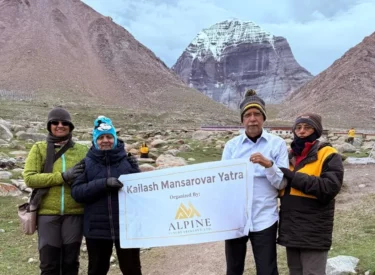
Kailash Mansarovar Yatra from the USA is one of the most revered pilgrimages.
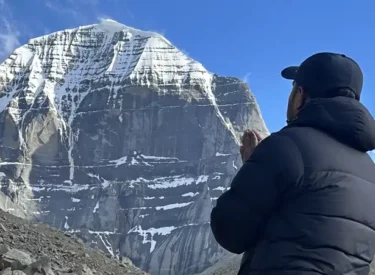
Located in western Tibet, Mount Kailash (6,638 m) and the adjacent Lake Mansarovar (4,590 m/15,060 ft) draw devotees seeking spiritual cleansing and breathtaking Himalayan scenery.
Departing from the USA, this 15‑day Yatra takes you to Kathmandu for visa processing and visits to sacred Nepali temples before crossing Tibet via the Kerung (Rasuwagadhi) border.
A scenic overland journey across high‑altitude passes leads you to the turquoise waters of Lake Mansarovar and the three‑day kora (circumambulation) of Mount Kailash.
Trip Highlights
- Sacred pilgrimage: Circumambulate Mount Kailash, believed to bestow liberation when completed
- Holy lakes: Bathe by the lakeside of the crystal‑clear waters of Lake Mansarovar (4,590 m/15,060 ft).
- Cultural immersion: Visit Pashupatinath Temple, Doleshwor Mahadev, and Budhanilkantha in Kathmandu.
- Overland adventure: Drive across the Tibetan plateau, crossing Thong La (5,153 m) and Lalung La (5,030 m) passes and viewing peaks like Shishapangma (8,027 m).
- High‑altitude passes: Trek over Drolma La Pass (5,630 m) during the kora, the route’s highest point.
- Panoramic lakes: See Peiku Tso, Gurla Mandhata, and Gauri Kund en route.
- Complete support: English‑speaking Tibetan guide, comfortable vehicles, oxygen back‑up, and yatra completion certificate.
Short Itinerary
USA to Kathmandu
Passport submission & Pashupatinath Darshan
Doleshwor Mahadev & Budhanilkantha visit
Yatra briefing & preparation
Drive to Rasuwagadhi (border)
Kerung
Saga
Lake Mansarovar
Darchen
Dirapuk(Kora Day 1)
Zutulpuk via Drolma La(Kora Day 2)
Saga(Kora Day 3)
Kerung
Kathmandu
Back to USA
Full Itinerary
- Distance/travel: International flight (approx. 15–20 h).
- Elevation: Kathmandu 1,300 m / 4,265 ft.
You depart from the USA and cross time zones and the International Date Line.
Upon arriving in Kathmandu, you will be welcomed by Alpine Luxury Treks and transferred to a comfortable 3‑star hotel for rest.

Use the evening to recuperate from jet lag and sample Nepali cuisine.
- Distance/travel: Around Kathmandu.
- Elevation: 1,300 m / 4,265 ft.
Your morning is spent submitting your passport to the Chinese embassy for the Tibet group visa.
Processing usually takes 3–5 working days, so you must remain in Kathmandu.
Afterwards, visit Pashupatinath Temple, a UNESCO World Heritage site and the holiest Shiva shrine in Nepal.

Participate in a puja (worship), witness evening aarti on the Bagmati River, and return to your hotel.
- Distance/travel: Approx. 1 h drive.
- Elevation: 1,300 m / 4,265 ft.
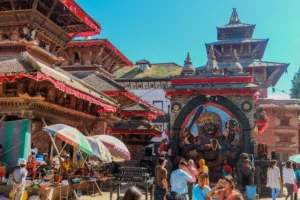
In Bhaktapur, you will visit Doleshwor Mahadev Temple, considered the head portion of Kedarnath, and make offerings.
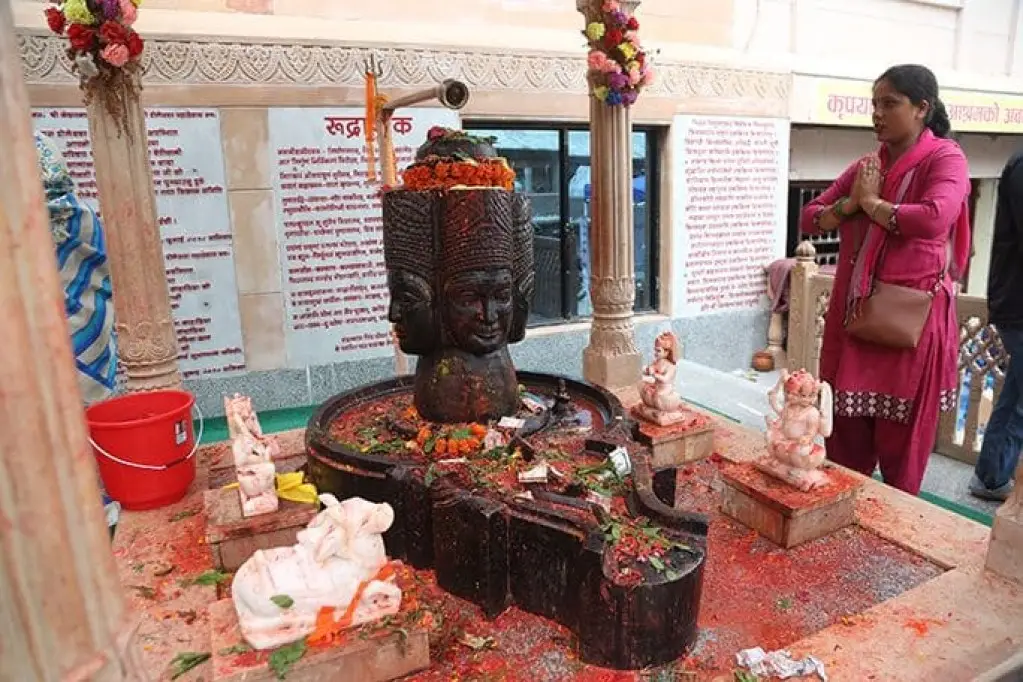
In the afternoon, drive to Budhanilkantha to view the 5‑metre reclining statue of Lord Vishnu.
Return to Kathmandu and explore Thamel markets for last‑minute equipment.
- Distance/travel: Minimal.
- Elevation: 1,300 m / 4,265 ft.
Attend a detailed briefing covering altitude, health, packing, and cultural etiquette.
Meet your Tibetan guide, check permits, and collect rented gear (sleeping bag, down jacket, trekking poles).

Spend the remainder of the day packing and exploring the UNESCO-listed Boudhanath Stupa or Swayambhunath with your guide if time permits.
- Distance/travel: 150 km drive; 6–7 h.
- Elevation: Rasuwagadhi 1,800 m (5,905 ft).
Leaving Kathmandu, drive through the Pasang Lhamu Highway along terraced hillsides and the Trishuli River.
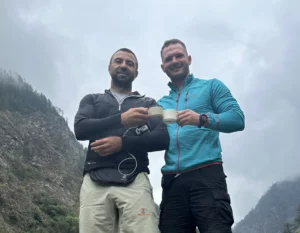
View Ganesh, Manaslu, and Annapurna mountains as you enter the Langtang region.
After Dhunche, descend to the border town of Rasuwagadhi. Overnight at a simple guest house.
- Distance/travel: 35 km; about a two-hour drive.
- Elevation: Kerung 2,800 m / 9,186 ft.
After clearing Nepali immigration and crossing the Friendship Bridge, your Tibetan guide completes visa formalities.
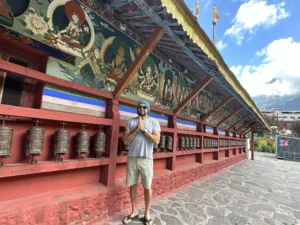
Continue to Kerung (also called Kyirong), a small town near the Nepal–China border.
Spend the afternoon acclimatizing, exploring Pakpa Monastery, and tasting Tibetan, Nepali, and Chinese food. Rest early to adjust to the thin air.
- Distance/travel: 165 km; 4–5 h drive.
- Elevation: Saga 4,640 m / 15,223 ft.
Drive north through a canyon and ascend Thong La (5,153 m) and Lalung La (5,030 m) passes.
Snow-capped Shishapangma (8,027 m) and Gaurishankar (7,134 m) tower above.
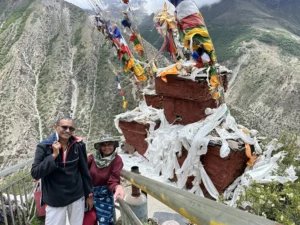
Descend to turquoise Peiku Tso and watch wild yaks and antelopes before crossing the Yarlung Tsangpo (Brahmaputra) River.
Arrive in Saga—a bustling town on the Tibetan plateau—for the night.
- Distance/travel: 500 km; 8–9 h drive.
- Elevation: Lake Mansarovar 4,590 m / 15,060 ft.
Journey across the high altitude desert, passing the ancient village of Dzongba and Paryang.
Climb Mayum La Pass (5,211 m) before glimpsing Mt Kailash and Gurla Mandhata peaks.
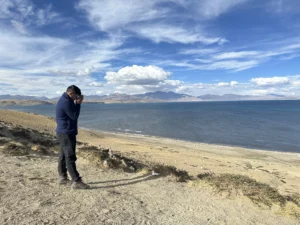
Your first view of Lake Mansarovar—believed to have been created by Lord Brahma—appears as a blue expanse of sacred water.
Perform circumambulation of the lake by jeep and overnight in a lakeside guest house.
- Distance/travel: 40 km; 1 h drive.
- Elevation: Darchen 4,670 m / 15,320 ft.
Rise early for meditation and a ritual bath by the holy lake. Collect sacred water, perform a havan, and pray for your ancestors.
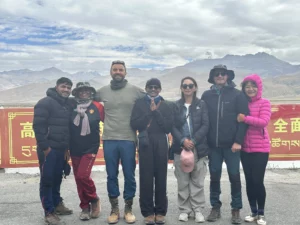
Optionally visit Chiu Gompa monastery and hot springs. Later, drive along barren plains to Darchen, the base camp for the Kailash kora.
Consult your guide about renting yaks or porters for the trek.
- Distance/travel: 5 km drive + 12 km trek; 5–6 h.
- Elevation: Yam Dwar 4,725 m / 15,502 ft; Dirapuk 5,080 m / 16,673 ft.
A short drive takes you to Yam Dwar (Tarbooche Flagpole), the symbolic Gateway of the God Yama.
Here you’ll see multicoloured prayer flags and sky burial sites. Begin the first day of the kora by walking along the Lha Chu valley.
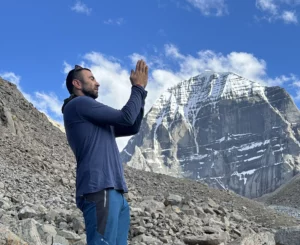
Yak and pony services are available. Arrive at Dirapuk Monastery, a simple guest house beside the north face of Kailash, offering unmatched views.
- Distance/travel: 22 km trek; 9–10 h.
- Elevation: Drolma La Pass 5,630 m / 18,471 ft; Zutulpuk 4,800 m / 15,748 ft.
This is the toughest day of the kora. Walk gradually to Shiva Tsal cemetery and offer something (hair, clothing, coins) to symbolize leaving your old self.
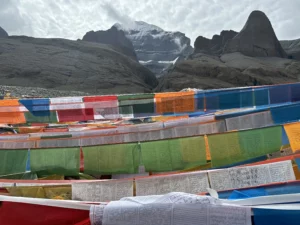
Climb steeply to Drolma La Pass—the highest point of the trek—and ask for blessings from Goddess Tara.
Descend past Gauri Kund (5,608 m), a turquoise sacred lake, then follow the river to Zutulpuk Monastery, known for the meditation cave of Milarepa.
- Distance/travel: 8 km trek + 470 km drive; 7–8 h.
- Elevation: Finish trek at Darchen (4,670 m).
Walk along the gentle Barkha plain, completing your 52 km Kora.

Celebrate your accomplishment before returning to Saga, retracing the route past Mayum La and Paryang.
On the way, enjoy the final views of Lake Mansarovar and Chiu Gompa.
- Distance/travel: 165 km; 4–5 h drive.
- Elevation: Descend to 2,800 m / 9,186 ft.
Drive along the Yarlung Tsangpo, crossing the long bridge to Saga. Continue over Lalung La and Thong La passes again.
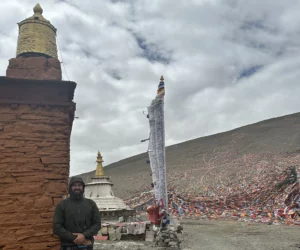
Stop to admire Peiku Tso and the snow-capped peaks before reaching Kerung. Overnight in a local hotel.
- Distance/travel: 175 km; 8 h drive.
- Elevation: Kathmandu 1,300 m / 4,265 ft.
Complete border formalities and say goodbye to your Tibetan team.
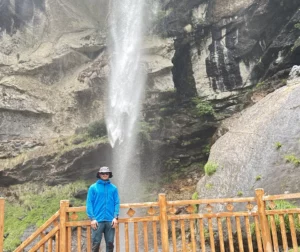
Drive back through Dhunche and Syabrubesi to Kathmandu. In the evening, enjoy a farewell dinner and rest at your hotel.
- Distance/travel: Short drive to Tribhuvan International Airport.
- Elevation: 1,300 m / 4,265 ft.
After breakfast, our representative transfers you to the airport. Fly home carrying blessings and memories of Mount Kailash.
Price Includes
- Kathmandu airport pick up and drop off by private vehicle.
- 5 nights in a 3-star Kathmandu hotel with breakfast (twin sharing).
- Sightseeing in Kathmandu with a private vehicle and a licensed guide.
- Kathmandu to Kerung and Kerung to Kathmandu by jeep.
- All permits needed for Tibet travel and the Tibet group visa.
- An English-speaking Tibetan guide and his expenses.
- Breakfast in Nepal and Tibet during the yatra.
- Provided equipment: sleeping bag, down jacket, trekking poles, duffle bag.
- First aid kit and oxygen backup.
- Yatra completion certificate.
Price Excludes
- International airfare USA–Kathmandu–USA.
- Travel insurance (mandatory).
- Nepal visa fee (obtain upon arrival).
- Food (lunch & dinner) during the yatra.
- Porter or pony hire during the kora.
- Personal expenses (mineral water, bar bills, laundry, phone calls, etc.).
- Tipping.
- Anything not mentioned in “Inclusions.”
Trip Information
When to go on the Kailash Mansarovar Yatra from the USA
The optimal seasons for the Kailash Mansarovar Yatra are May–June and September–October.
During these months, the weather is stable, trails are open, and temperatures range roughly 5 °C to 20 °C. Monsoons (July–August) bring heavy rain in Nepal that can cause landslides, while Tibet remains mostly dry.
Winter (November–April) is frigid; night temperatures can drop below –15 °C with heavy snow. Most guesthouses close during winter, so this season is generally avoided.
Visa & permits
Mount Kailash lies in Tibet, so you cannot visit it independently. Alpine Luxury Treks arranges your Tibet Travel Permit and Chinese group tourist visa.
Submit your passport (valid for at least six months) and passport photo in Kathmandu. The group visa takes 3–5 working days to process; your passport is returned on the fourth/fifth day.
The permit is valid only for the dates and route of your tour and cannot be extended; you must enter and exit Tibet as part of the group.
Accommodations & food
Kathmandu hotels are comfortable with en suite bathrooms and Wi Fi. In Kerung, Saga, and Darchen, lodging is in basic hotels or guesthouses with twin rooms and simple washrooms.
At Lake Mansarovar and during the kora, accommodation is in monastery guesthouses or mud houses with dormitories of 4–8 beds; hot showers and heating are limited.
Breakfast is provided; lunches and dinners consist of vegetarian Nepali and Tibetan dishes (thukpa, momos, dal bhat). Carry snacks and instant food if you have specific dietary needs.
Altitude & health
The itinerary gradually ascends from 1,300 m to over 5,600 m. Acclimatization days in Kerung and Kathmandu allow your body to adjust.
Symptoms of acute mountain sickness (headache, nausea, shortness of breath) can occur above 3,000 m.
Drink plenty of water, avoid alcohol,strolly, and consult your guide if you feel unwell. Portable oxygen and first aid kits are carried for emergencies.
Fitness & preparation
While the trek involves no technical climbing, you will walk up to 22 km (13 mi) at high altitude.
Regular cardio exercise, hill walking, and endurance training for at least two months before departure will improve your chances of completing the kora.
Inform your doctor about the trip and carry prescribed medication. Travel insurance covering emergency evacuation is mandatory.
Money & communication
Carry enough Chinese Yuan (CNY) and Nepalese rupee (NPR for personal expenses; no ATMs exist beyond Kerung.
Mobile coverage exists in Kerung and Saga but becomes intermittent deeper in Tibet; there is no signal during the kora.
Inform family about limited connectivity. Electricity is available at guesthouses, but power cuts are common—bring a power bank.
Cultural etiquette
- Respect local customs: remove shoes when entering temples/monasteries.
- Do not point at or disturb prayer flags, stupas, and mani stones.
- Photography may be restricted inside monasteries—ask your guide.
- Avoid touching the heads of people or children (considered disrespectful).
- Dress modestly; shoulders and knees should be covered when visiting religious sites.
Equipment List
Clothing
- Moisture-wicking base layers
- Thermal underwear
- Fleece jacket & insulating mid-layer
- Waterproof/windproof outer jacket & pants
- 2 pairs of warm trekking trousers
- T-shirts (quick dry)
- Warm hat & sun hat
- Buff/scarf
- Gloves
- Several pairs of warm socks
Footwear
- Sturdy, broken-in trekking boots
- Sandals or camp shoes
- Gaiters (optional)
- Accessories
- UV-protected sunglasses
- Wide-brim hat
- Sunscreen (SPF 50+) & lip balm
- Personal toiletries & quick dry towel
- Hand sanitizer & wet wipes
Hydration
- Reusable water bottles (min. 2 litres total) or hydration bladder
- Water purification tablets or a filter
Electronics
- Headlamp/flashlight with spare batteries
- Camera or phone
- Power bank
- Universal travel adaptor
Health & Safety
- Personal medication
- Altitude sickness medicine (consult your doctor)
- Basic first aid kit & blister plasters
- Insect repellent
- Reusable face mask/bandana
Documents & Money
- Passport & extra passport photos
- Copies of travel insurance and permits
- Cash (USD, CNY, NPR) in small denominations
- Credit card (limited acceptance)
Other Essentials
- Small daypack with rain cover
- Snacks/energy bars
- Zip-lock bags for waste
- Personal trekking poles (if preferred)
- Journal/pen
- Spiritual items (incense, prayer beads) if desired
Frequently Asked Questions
Late May to June and September to October offer the most stable weather and comfortable temperatures (5–20 °C).
Monsoons in July–August may cause landslides on the Nepali side, while winter is freezing and is generally not recommended.
The kora is considered moderate to strenuous because of its length (about 52 km/32 mi) and altitude—reaching 5,630 m over Drolma La Pass.
However, the path is well defined and doesn’t require technical climbing.
Acclimatization days and optional pony hire help first-timers complete the journey.
All foreign pilgrims require a Chinese group tourist visa and a Tibet Travel Permit issued through a registered travel agency.
You must submit your passport in Kathmandu; the group visa takes 3–5 working days.
Independent travel in Tibet is prohibited, so you must enter and leave with the group.
Expect a mix of 3-star hotels in Kathmandu and basic guesthouses in Tibet.
Rooms may be dormitory style near Mansarovar and during the kora.
Food is mainly vegetarian with Tibetan and Nepali dishes. Carry personal snacks if needed.
Ascend gradually, stay hydrated, avoid alcohol and smoking, consume a light diet, and rest well.
Inform your guide if you experience headaches, nausea, or dizziness. Medicine such as acetazolamide (Diamox) may be prescribed by your doctor.
Portable oxygen is available in vehicles and guesthouses.
There is no official age limit, but due to high altitude most operators accept participants between 10 and 70 years who are physically fit.
People with heart, lung, or chronic diseases should consult their doctor before booking. A medical fitness certificate is often required.
Mount Kailash is considered the abode of Lord Shiva by Hindus, the seat of Buddha Demchok by Buddhists, and a place of liberation in Jain and Bon traditions.
Pilgrims believe that one circumambulation washes away sins and 108 parikramas lead to nirvana.
Lake Mansarovar’s crystal waters are thought to cleanse the soul and were created by Lord Brahma.
Hiring yaks/ponies and porters is optional but recommended if you find walking at altitude challenging.
Arrangements are made in Darchen, and fees are paid directly to the yak herders. This cost is not included in the package.
Yes. Comprehensive travel insurance covering high altitude trekking, medical treatment, and emergency evacuation is mandatory.
Helicopter rescue in Tibet is costly; insurance protects you against unexpected costs.
The itinerary spans 15 days, including international travel. Actual flight duration from the USA to Kathmandu varies (around 15–20 hours with connections).
The overland tour through Tibet lasts about 10 days, including the kora.
Grace Educational Organisation
The Grace Educational Organisation is a government-registered charity dedicated to empowering students in Nepal through education.
With a 100% donation policy, every contribution directly supports the children and schools, providing essential resources like supplies, infrastructure, and extracurricular programs.
This initiative fosters a transparent connection between donors and students, ensuring every action leaves a lasting impact.
The Nuwakot School, located in a picturesque rural setting, is one of the beneficiaries of this mission.
By visiting, you witness these students’ educational journey and become part of a transformative effort to uplift the community.
Trip Reviews
Be first to post a review in this trip.