Punakha Drubchen Festival Tour
Our trips are rated 5 out of 5 in more than 950 traveler reviews.
Trip overview
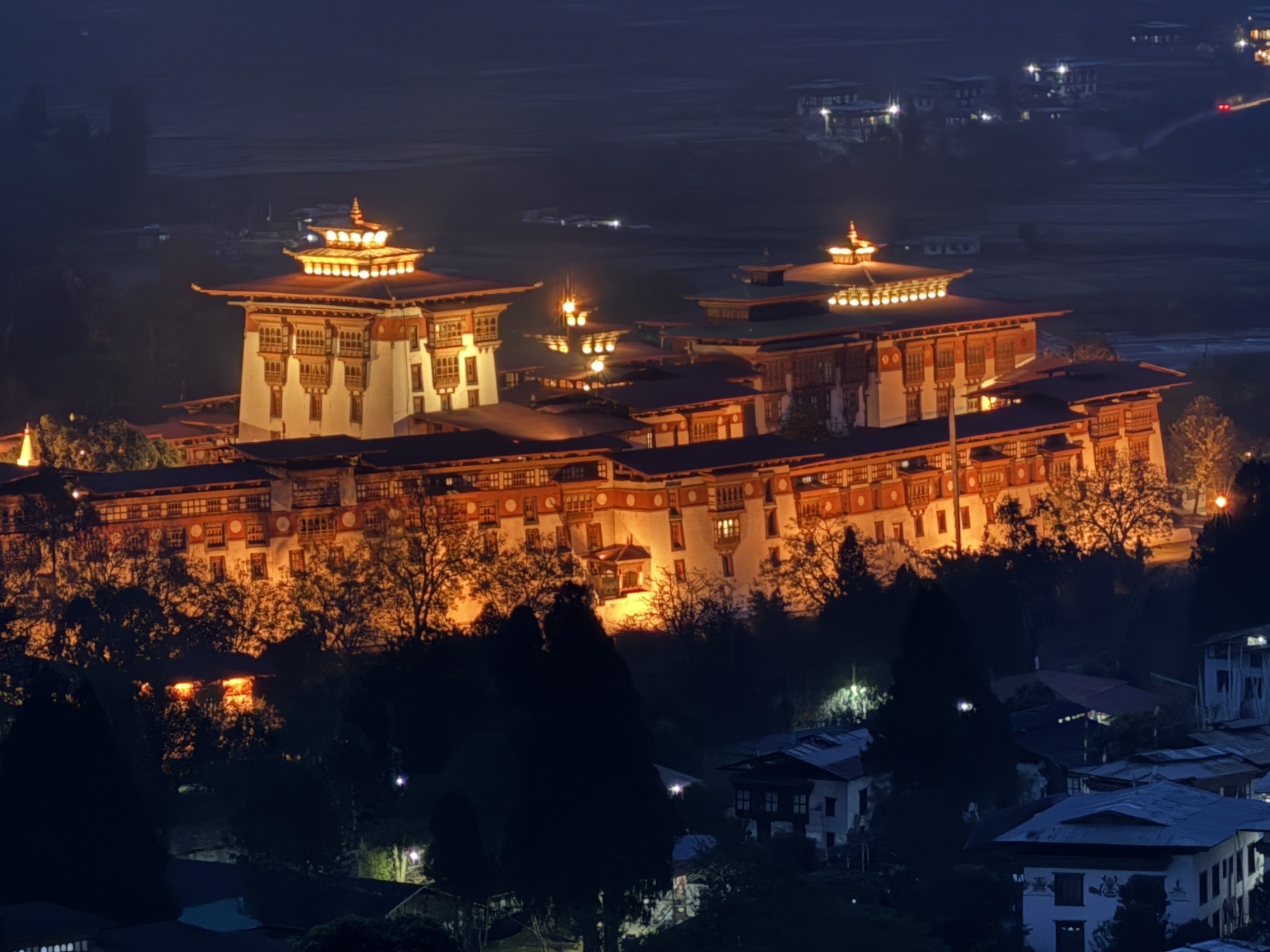
Our Punakha Drubchen Festival Tour is timed for Bhutan’s most dramatic festival: the Punakha Drubchen, when hundreds of men dressed as 17th-century militia, the pazap, re-enact the defeat of a Tibetan army at Punakha Dzong, followed straight after by the Punakha Tshechu with its masked dances. In 8 days you see both, plus Thimphu and Tiger’s Nest, with the visa, Sustainable Development Fee, hotels, guide, car and all meals included.
It suits travellers who want a festival with history as well as ritual. The Drubchen recalls how Zhabdrung Ngawang Namgyal, who unified Bhutan, used a ruse to drive out invaders, and it is performed in front of the most beautiful dzong in the country.
We base ourselves in Punakha for four nights, so you can watch the key days without long drives, and walk to Chimi Lhakhang and the river between sessions.
The honest part: late winter is cool in Paro and Thimphu, Punakha hotels fill up, and festival dates follow the lunar calendar, so we confirm them with you when you enquire. Crowds are large on the pazap day.
The reward is unique to Bhutan: drums, shouts and gunfire salutes as the pazap charge down the dzong steps, then the quieter beauty of masked monks dancing in courtyards framed by jacaranda trees and the meeting of two rivers.
Prices start at US$ 1,745 per person in a group of six or more and US$ 2,095 each for two. For a spring festival, see our Paro Tshechu Festival Tour, or our 6-Day Bhutan Tour on any date.
Highlights
- The pazap, a re-enactment of the 17th-century victory over Tibetan invaders
- The Punakha Tshechu, with masked cham dances in the dzong courtyards
- Four nights in Punakha, close to the festival with no long daily drives
- Punakha Dzong at the meeting of the Pho Chhu and Mo Chhu rivers
- Chimi Lhakhang through the rice fields of Lobesa
- Dochula Pass, often clear in late winter
- Tiger’s Nest after the festival
- Thimphu, with the Buddha Dordenma and Tashichho Dzong
Itinerary
Altitude profile
On footBy road
The altitude listed for each day, from 1,250 m to 3,120 m. Select a point to read that day.
The highest point on the route is 3,120 m.
- Nights
- 7 nights in 3-star hotels
- Meals in the price
- 7 breakfasts, 7 lunches, 7 dinners
- On the move
- 1 day on foot, 4 days by road
Day 1Paro to Thimphu2,320 m
The Punakha Drubchen Festival Tour begins with the landing at Paro, often in clear late-winter air that shows the snow peaks on the way in. Your guide meets you with a white khadar scarf and loads your bags into the car.
We drive about 1.5 hours to Thimphu, stopping at Tamchog Lhakhang with its iron chain bridge and at Chhuzom, where three chortens mark the meeting of the Paro and Thimphu rivers.
In the afternoon we visit the Buddha Dordenma, a 51 m gilded statue above the city, and the Memorial Chorten, where elders walk circuits through the day. In winter, the central monk body has already moved from Thimphu to Punakha, and the guide explains this seasonal migration.
Late in the day we visit Tashichho Dzong once its offices close. Over dinner, the guide tells the story behind the Drubchen: how Zhabdrung Ngawang Namgyal defended Punakha against Tibetan armies in the 17th century. Tonight is in a 3-star hotel in Thimphu, and the evening is cold, so bring warm layers.
- TravelCar, 1-3 hours
- Stay3-Star Hotel
- MealsLunch, Dinner
Day 2Thimphu to Punakha and the Drubchen1,250 m
Today the Punakha Drubchen Festival Tour crosses the Dochula Pass at about 3,100 m, where 108 chortens stand below Druk Wangyal Lhakhang. Late winter mornings are often clear, with a long view of the snow peaks along the northern border.
We descend to Punakha, about 3 hours from Thimphu in all, and the air grows noticeably warmer. After checking in, we walk to Punakha Dzong for the opening rituals of the Drubchen, the festival that leads up to the pazap re-enactment.
The first days of the Drubchen are mostly ceremonial, with monks performing rituals and processions inside the dzong. Your guide explains what is happening and where it is permitted to watch.
Later we stroll along the riverbank below the dzong, where the Pho Chhu and Mo Chhu meet. Tonight is the first of four nights in a 3-star hotel in the Punakha valley, so you can unpack for the festival days.
- TravelCar, 1-3 hours
- Stay3-Star Hotel
- MealsBreakfast, Lunch, Dinner
Day 3Punakha and Chimi Lhakhang1,250 m
A gentler day on the Punakha Drubchen Festival Tour gives time to explore the valley between festival sessions. In the morning we walk about 20 minutes through rice fields to Chimi Lhakhang, the temple of the Divine Madman, Drukpa Kunley.
The 15th-century saint taught with humour and provocation, and couples come here to pray for children. The village around the temple is known for its painted protective symbols, which locals treat with good humour.
In the afternoon we return to Punakha Dzong to watch more of the Drubchen rituals and visit the great assembly hall, if open. The dzong’s courtyards, painted woodwork and towering utse make it the finest in Bhutan.
Before dinner we walk across the long suspension bridge over the Pho Chhu, decked with prayer flags. The guide explains tomorrow’s pazap and finds the best place to watch. Tonight is the second night in the same Punakha hotel.
- TravelSightseeing, 1-3 hours
- Stay3-Star Hotel
- MealsBreakfast, Lunch, Dinner
Day 4The Pazap Battle Re-enactment1,250 m
This is the big day of the Punakha Drubchen Festival Tour. On the final day of the Drubchen, hundreds of men dressed as pazap, the local militia of the 17th century, re-enact the battle in which the Zhabdrung’s forces drove out a Tibetan army.
The pazap rush down the dzong steps and across the courtyard in traditional armour, shouting war cries and firing old muskets into the air. The story ends with a ritual in which a sacred relic, said to have been the prize the invaders wanted, is symbolically thrown into the river, a ruse that is said to have sent the Tibetans home.
We arrive early to find a good place with the guide, who explains each stage of the drama. The crowd is large, with families from across the western districts in their finest dress.
After the climax the festival mood continues into the afternoon. Lunch is a packed meal or a restaurant nearby. Tonight is the third night in the same Punakha hotel, and dinner is a lively one after the day’s excitement.
- TravelSightseeing, 4-6 hours
- Stay3-Star Hotel
- MealsBreakfast, Lunch, Dinner
Day 5Punakha Tshechu1,250 m
The day after the Drubchen, the Punakha Tshechu begins, and the Punakha Drubchen Festival Tour spends the morning watching its masked dances in the courtyard of the dzong.
The cham dances are performed by monks in brocade costumes and painted masks, accompanied by cymbals, drums and long horns. Your guide explains each one: the Black Hat dancers, the dance of the stags and hounds, and the dances that represent wrathful protectors.
Atsaras, the masked clowns, wander through the crowd, joking and blessing people. Compared with the pazap, the mood is quieter and more devotional, and the setting by the rivers is beautiful.
In the afternoon you can stay at the festival or walk to Khamsum Yulley Namgyal Chorten through the rice fields, about 2 hours there and back. Tonight is the fourth and last night in the Punakha hotel.
Dinner tonight is at a farmhouse restaurant near the hotel if the group wishes, with red rice and local vegetables.
- TravelSightseeing, 4-6 hours
- Stay3-Star Hotel
- MealsBreakfast, Lunch, Dinner
Day 6Punakha to Paro2,250 m
We leave Punakha after breakfast and drive about 4 hours back over the Dochula to Paro, with a stop at the pass if the morning is clear. This is the longest drive of the Punakha Drubchen Festival Tour, broken with tea and photos.
In Paro, after lunch, we visit Rinpung Dzong across its covered wooden bridge and the National Museum in the round watchtower above it. Both help put the festival into a wider picture of Bhutanese history and religion.
Later we visit Kyichu Lhakhang, a 7th-century temple with orange trees in its courtyard, one of the two oldest in Bhutan.
Tonight is the first of two nights in a 3-star hotel in Paro. Dinner is early, ahead of tomorrow’s Tiger’s Nest hike, and the guide explains the trail and what to bring.
If the weather is clear, the guide may suggest a short walk along the Paro river at sunset.
- TravelCar, 4-6 hours
- Stay3-Star Hotel
- MealsBreakfast, Lunch, Dinner
Day 7Tiger's Nest Hike3,120 m
The Punakha Drubchen Festival Tour ends its touring with the hike to Taktsang, the Tiger’s Nest. We start by about 8 am, when the air is cool and the late-winter light is clear.
The path climbs about 900 m through blue pine to the monastery at roughly 3,120 m, which takes 2 to 3 hours. At the halfway teahouse you see the monastery on its cliff, and the last section crosses a gorge by stone steps beside a waterfall, which may be partly frozen in February.
Inside, the guide tells the story of Guru Rinpoche, who is said to have arrived on a flying tigress to meditate in the cave. Bags and phones stay in lockers, and the descent takes about 1.5 hours.
The afternoon is free for a hot stone bath at a farmhouse, at extra cost, which is especially welcome in the cold months. Tonight is a farewell dinner in Paro.
- TravelHiking, 4-6 hours
- Stay3-Star Hotel
- MealsBreakfast, Lunch, Dinner
Day 8Depart from Paro2,250 m
The Punakha Drubchen Festival Tour ends with a short drive to Paro airport. Most flights leave in the morning, and the guide confirms your pickup time the evening before.
If your flight leaves later in the day, we can visit the ruins of Drukgyel Dzong in the upper valley or browse Paro’s textile shops for a last souvenir.
Your guide helps with check-in and says goodbye at the terminal door. Keep your visa letter with your passport for the exit check, and allow two hours before departure.
Late winter is a fine time for sightseeing in Kathmandu, where we are based, with clear skies over the valley. We can arrange your Nepal hotel and sightseeing on the same booking.
For long-haul connections, a buffer night in Paro or Kathmandu protects your onward plans if a flight is delayed. Thank you for joining the Drubchen with us.
We hope the pazap stays with you.
- TravelCar, 30-60 minutes
- MealsBreakfast
What's included
Included in the price
- Bhutan visa: the visa application and US$ 40 fee
- Sustainable Development Fee: US$ 100 per person for each of the 7 nights
- Airport transfers: pickup and drop at Paro airport
- Hotels: 3-star rooms, twin share, in Thimphu, Punakha and Paro, reserved for festival week
- All meals: from lunch on arrival to breakfast on departure
- Guide: a licensed English-speaking guide who explains the history and dances
- Vehicle: a private car or van with driver throughout
- Festival days: the Drubchen with the pazap, and the first day of the Tshechu
- Route permits: permits for Punakha
- Entrance fees: every site on the itinerary, including Tiger’s Nest
- Drinking water: bottled water in the vehicle and at the festival
- Welcome scarf: a khadar greeting at the airport
- Taxes: all government taxes and service charges
- Support: 24-hour contact with our team during the tour
- Date check: festival dates confirmed with you before your visa is lodged
Not included
- Flights to and from Paro, best booked early for festival week
- International airfare to your connecting city
- Travel insurance with medical cover
- Single supplement for your own room
- Gho or kira if you want to wear national dress
- Drinks other than water, tea and coffee
- Extra nights caused by flight delays
- Laundry, phone and internet charges
- Tips for the guide and driver
- Personal costs such as souvenirs and festival snacks
Dates and price
This trip runs once a year, timed to the festival. Festival dates follow the lunar calendar, so ask us for this year's dates.
Trip information
Price by Group Size
| Group size | Price per person |
|---|---|
| 1 traveller (private) | US$ 2,620 |
| 2 travellers | US$ 2,095 |
| 3 to 5 travellers | US$ 1,885 |
| 6 to 12 travellers | US$ 1,745 |
To book: ask us for the confirmed festival dates, then pay a 20% deposit. The balance is due before we lodge your Bhutan visa, about 30 days before you fly. Book early: Punakha has few hotels and they fill fast.
Joining alone: solo travellers can join the group departure and pay the rate for the group that travels; once six or more are booked, we refund the difference to everyone.
Private tour: a private Punakha Drubchen Festival Tour can add the Phobjikha valley, where black-necked cranes winter until about February, or extra days in Paro.
Not in the price: Paro flights, insurance, national dress, drinks and tips. Seven nights of Bhutan’s SDF, US$ 700 per person, are already included in every price.
Best Time to Visit
The Punakha Drubchen Festival Tour runs once a year, on the festival dates. The Drubchen and the Tshechu that follows it are held in late winter, usually in February or March, on dates set by the Bhutanese lunar calendar.
The calendar is published as tentative and can shift by a day or two. We send you the confirmed dates when you enquire and check them again before we lodge your visa.
Late winter is a good time to visit. Punakha is mild, with sunny days around 15 to 20 degrees C, while Thimphu and Paro are cold at night. Skies are often clear, giving good views of the northern peaks from the Dochula Pass.
By March, blossom appears in the valleys and the jacaranda trees around Punakha Dzong start to flower. If you cannot travel in late winter, the Paro Tshechu in spring and the Thimphu Tshechu in autumn are other options.
Difficulty and Fitness
The Punakha Drubchen Festival Tour is easy. Festival days involve standing or sitting for several hours in the dzong courtyards or on the riverbank, so a cushion or small folding seat helps.
The one demanding day is Tiger’s Nest near the end, which climbs about 900 m to roughly 3,120 m, about 5 hours there and back. Horses can carry you up the first half at extra cost.
The walk to Chimi Lhakhang through the rice fields takes about 20 minutes each way and is flat and easy.
Drives are moderate: about 1.5 hours from Paro to Thimphu, about 3 hours to Punakha and about 4 hours back to Paro. Tell us about mobility needs, and we will plan seating and walking accordingly.
Food, Water and Dietary Needs
All meals are included on the Punakha Drubchen Festival Tour, at hotels and local restaurants. On festival days, lunch is a packed meal or a restaurant near the dzong.
Punakha is known for its red rice and fresh river vegetables, and farmhouse restaurants near Chimi Lhakhang serve home-style food. At the festival, stalls sell momos, puffed rice and butter tea.
Vegetarian meals are easy, and vegan and gluten-free diets can be arranged with notice. Tell us about allergies at booking, so the guide can brief every kitchen.
Tap water is not safe to drink. Bottled water is in the vehicle, and we carry extra on festival days in the Punakha sun.
Hot drinks are welcome on the cold mornings in Thimphu and Paro, and the guide always carries a flask of tea on festival days.
Altitude, Health and Safety
The Punakha Drubchen Festival Tour stays at moderate heights: Punakha at about 1,250 m, Thimphu at about 2,320 m and Paro at about 2,250 m, with Tiger’s Nest and the Dochula at about 3,100 m.
Altitude illness is rare at these levels. In late winter, the bigger concern is the temperature change between warm Punakha days and cold nights in Thimphu and Paro, so pack layers.
During the pazap, men fire old muskets into the air as salutes. It is loud but safe; keep behind the lines the organisers set and follow the guide’s directions.
Punakha, Thimphu and Paro all have hospitals. Your insurance should include medical cover, and anyone with heart or lung conditions should ask a doctor about Tiger’s Nest.
Local Etiquette
The Drubchen and Tshechu are religious festivals, and the Punakha Drubchen Festival Tour asks you to behave as a guest at a ceremony. Dress modestly in long sleeves and long trousers or skirts, or wear a gho or kira.
Keep out of the dancers’ and pazap’s path, and follow the guide’s lead on where to stand. The pazap move fast and in large numbers down the dzong steps and across the courtyard.
Photography is allowed at most events, but no flash, drones or tripods in the crowd. Inside the shrine rooms, photography is never allowed.
The atsaras, masked clowns, may tease or bless you with good humour; laugh along. Walk clockwise around chortens and temples, and greet people with “kuzuzangpo la”. Smoking in public places is restricted in Bhutan.
Visa, Permits and Documents
Everyone except Indian, Bangladeshi and Maldivian nationals needs a Bhutan visa, arranged by a licensed operator. We apply for your Punakha Drubchen Festival Tour visa once the balance is paid.
We need a passport scan, valid six months beyond arrival, and a passport photo. The visa costs US$ 40 and the SDF is US$ 100 per person per night until 31 December 2029; both are included.
Travel to Punakha needs a route permit, which we arrange in Thimphu. The festival itself needs no ticket.
Print the visa clearance letter for check-in and arrival. Indian nationals need a permit instead and pay a lower SDF. Official rules and the festival calendar are on bhutan.travel.
Carry your passport during the tour, as it may be checked at the road checkpoint on the way to Punakha.
Transport, Money and Connectivity
You fly in and out of Paro on Drukair or Bhutan Airlines. Festival flights fill early, so book as soon as your dates are confirmed; we can book them for you at cost.
Your private car and driver cover all transfers. During the pazap, roads near the dzong are crowded, so we walk the last stretch from the hotel or a parking area.
The ngultrum is Bhutan’s currency, tied to the Indian rupee. Bring small notes for stalls and offerings; cards are not accepted at the festival ground.
Mobile networks slow down in the festival crowds, so agree meeting points rather than relying on calls. Hotels in Punakha have Wi-Fi, though it can be slow when the valley is full.
Questions about this trip
When is the Punakha Drubchen?
The Punakha Drubchen is held each year in late winter, usually in February or March, on dates set by the Bhutanese lunar calendar, and the Punakha Tshechu follows straight after. We send you the confirmed dates for the Punakha Drubchen Festival Tour when you enquire.
How much does the Punakha Drubchen Festival Tour cost?
The Punakha Drubchen Festival Tour costs from US$ 1,745 per person in a group of six or more, US$ 1,885 for three to five, US$ 2,095 each for two and US$ 2,620 for one. Prices include the visa, seven nights of SDF, festival-week hotels, meals, guide and car.
What is the Punakha Drubchen?
The Punakha Drubchen is a festival at Punakha Dzong that commemorates the 17th-century defence of Bhutan against Tibetan armies by Zhabdrung Ngawang Namgyal. Its climax is the pazap, a re-enactment by local men dressed as militia, which our Punakha Drubchen Festival Tour is timed to include.
What is the pazap?
The pazap were the local militia who defended Bhutan in the 17th century. At the Punakha Drubchen, hundreds of men in traditional armour re-enact their victory, rushing down the dzong steps with war cries and musket salutes. It is the highlight of the Punakha Drubchen Festival Tour.
What is the difference between the Drubchen and the Tshechu?
The Punakha Drubchen re-enacts a historic battle and ends with the pazap, while the Punakha Tshechu that follows is a festival of masked cham dances honouring Guru Rinpoche. The Punakha Drubchen Festival Tour includes both, so you see the history and the dances.
Are the Punakha festival dates fixed?
No. Bhutan publishes festival dates as tentative, and they can shift by a day or two. For the Punakha Drubchen Festival Tour we confirm the dates with you when you enquire and again before lodging your visa, adjusting the tour if needed.
Is the Punakha Drubchen crowded?
Yes, the pazap day draws large crowds from across western Bhutan. They are friendly, and on the Punakha Drubchen Festival Tour we arrive early, find good viewing spots with the guide and agree a meeting point in case anyone is separated.
Is it safe to watch the pazap?
Yes. The pazap fire old muskets into the air as salutes, which is loud but safe, and the organisers set lines to keep spectators back. On the Punakha Drubchen Festival Tour the guide chooses a safe place and tells you what will happen next.
Can I take photos at the Punakha Drubchen?
Yes, photos are allowed at most events of the Punakha Drubchen and Tshechu, but no flash, drones or tripods in the crowd, and never inside shrine rooms. On the Punakha Drubchen Festival Tour the guide tells you where photos are welcome.
What is the weather like at the Punakha Drubchen?
Late winter in Punakha is mild and mostly sunny, around 15 to 20 degrees C by day, while Thimphu and Paro are cold at night. Pack layers for the Punakha Drubchen Festival Tour: light clothes for Punakha, warm ones for the passes and evenings.
Does the Punakha Drubchen Festival Tour include Tiger's Nest?
Yes. The Punakha Drubchen Festival Tour includes the Tiger’s Nest hike after the festival, from Paro. The climb takes 2 to 3 hours up and about 1.5 hours down, and the waterfall on the trail may be partly frozen in February.
Do I need a visa for the Punakha Drubchen Festival Tour?
Yes, unless you are Indian, Bangladeshi or Maldivian. We arrange the Bhutan visa for the Punakha Drubchen Festival Tour once your balance is paid, and you only send a passport scan and photo. The visa fee, SDF and route permits are included.
How much is the SDF on the Punakha Drubchen Festival Tour?
The SDF on the Punakha Drubchen Festival Tour is US$ 700 per person, since Bhutan charges US$ 100 per person for each of the seven nights. The rate is confirmed until 31 December 2029 and is already included in every price.
When should I book the Punakha Drubchen Festival Tour?
Book the Punakha Drubchen Festival Tour six months or more ahead if you can. Punakha has a small number of hotels, and they fill quickly for festival week. A 20% deposit holds your place, and the balance is due before your visa.
Where do we stay on the Punakha Drubchen Festival Tour?
On the Punakha Drubchen Festival Tour you stay in 3-star hotels: one night in Thimphu, four in the Punakha valley close to the festival, and two in Paro, all twin share with private bathrooms. Single rooms are available for a supplement.
Can children join the Punakha Drubchen Festival Tour?
Yes. Children usually enjoy the noise and colour of the pazap and the atsara clowns. Under-sixes pay no SDF and children aged 6 to 11 pay half. Bring ear protection for small children on the pazap day, as the musket salutes are loud.
Is the Punakha Drubchen Festival Tour private or a group?
The Punakha Drubchen Festival Tour runs as one small group departure of up to 12 travellers each year, or privately. The one and two traveller prices on this page are the private prices, and private tours can add the Phobjikha valley.
Can I see black-necked cranes on this tour?
The cranes winter in the Phobjikha valley until about February, close to the Punakha festival dates. A private Punakha Drubchen Festival Tour can add a night in Phobjikha to see them, depending on the year’s dates. Ask us early, as it depends on the calendar.
What food is served at the Punakha Drubchen?
All meals are included on the Punakha Drubchen Festival Tour. On festival days, lunch is packed or at a nearby restaurant, and stalls sell momos, puffed rice and butter tea. Punakha’s red rice and farmhouse cooking are highlights. Vegetarian food is easy.
Can I combine the Punakha Drubchen with Nepal?
Yes. Late winter is clear and pleasant in Kathmandu, and we are based there. We can arrange Nepal sightseeing before or after the Punakha Drubchen Festival Tour, with the flights and every transfer on one booking. Ask us for a combined quote.
Do I need travel insurance for the Punakha Drubchen Festival Tour?
Yes. Insurance for the Punakha Drubchen Festival Tour should include medical cover, evacuation and cancellation, ideally with cover for flight delays in festival week. Send us your policy details before you travel, and the guide will carry a copy. Bhutan expects visitors to hold health cover.
What makes your Punakha Drubchen Festival Tour different?
Our Punakha Drubchen Festival Tour stays four nights in Punakha, so you see the Drubchen rituals, the pazap and the first day of the Tshechu without long drives. We add Thimphu, Chimi Lhakhang and Tiger’s Nest, and reserve festival-week hotels early.
Ask us about the Punakha Drubchen Festival Tour
We reply from Kathmandu within 24 hours with available dates, your exact price and answers to your questions.
- 16 years guiding in the Himalaya
- Registered in Nepal, Reg. 187391
- Private dates on any day
Call, WhatsApp or Viber
Punakha Drubchen Festival Tour, from US$ 1,745 per person. Dates and booking at treknepalhimalayas.com/trip/punakha-drubchen-festival-tour/
Trek Nepal Himalayas Pvt Ltd, Reg. 187391. Bhagawatisthan, Thamel, Kathmandu, Nepal. Call or WhatsApp +977 98510 13196. [email protected]