Black-Necked Crane Festival Tour
Our trips are rated 5 out of 5 in more than 950 traveler reviews.
Trip overview
Our Black-Necked Crane Festival Tour takes you to the Phobjikha valley for the small, joyful festival held each November in the courtyard of Gangtey Goenpa to welcome the cranes back from Tibet. In 8 days you see the festival, spend two nights in the valley watching the cranes, and visit Thimphu, Punakha and Tiger’s Nest, with the visa, Sustainable Development Fee, hotels, guide, car and all meals included.
It suits nature lovers and anyone who wants a festival with a village feel rather than a city crowd. The dances are performed by local schoolchildren and villagers, many dressed as cranes, and the songs carry a message about protecting the birds and their wetland.
We give Phobjikha two nights, so you see the cranes at dawn and dusk on the marsh, walk the Gangtey Nature Trail and have a full day at the festival without rushing back over the pass.
The honest part: Phobjikha in November is cold, often below freezing at night, and lodges are simple, warmed by wood stoves. The festival is short, mostly one morning and early afternoon, and crane numbers vary from year to year.
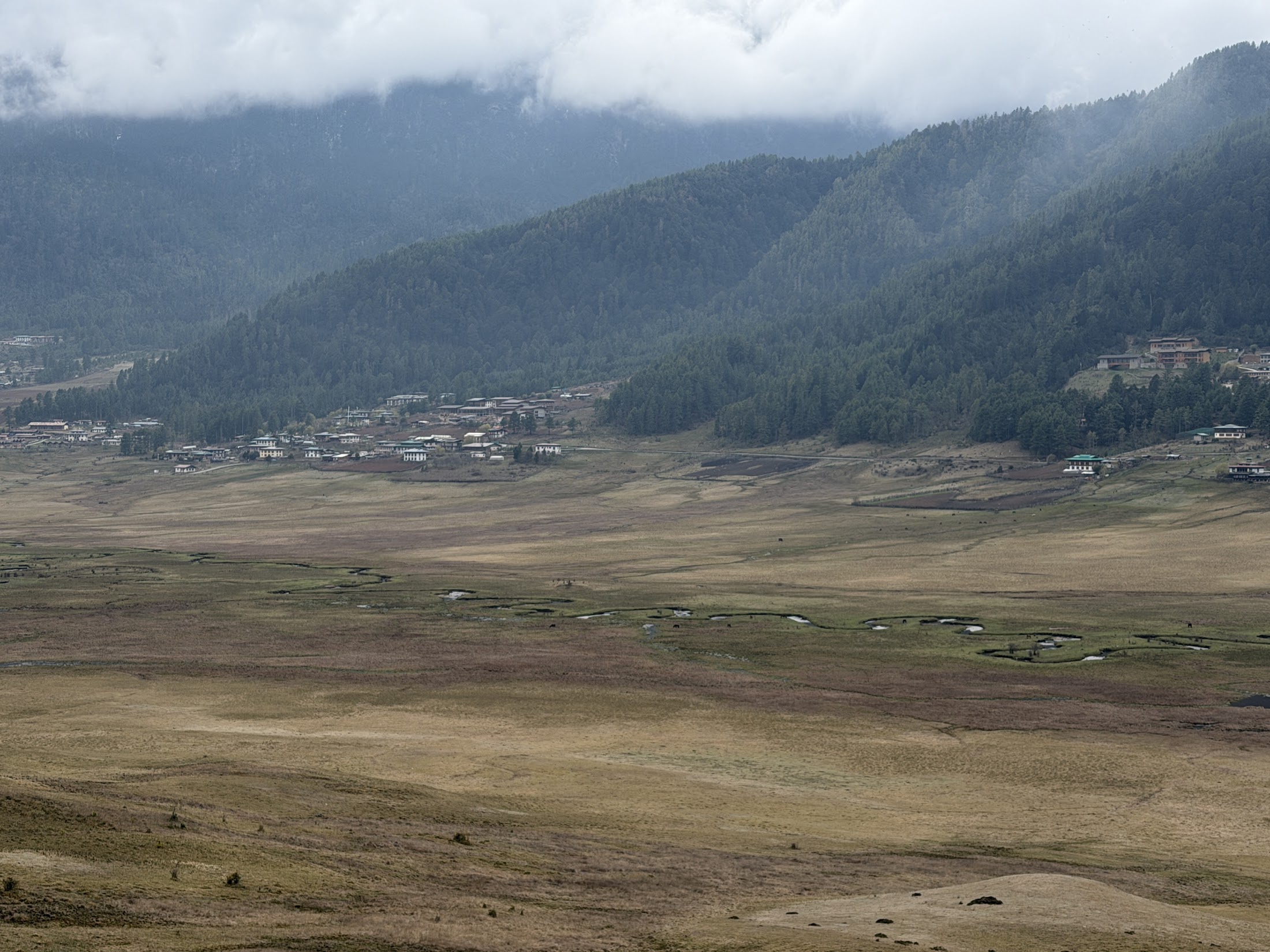
The reward is a valley that feels like a secret: wide marshland, potato fields, farmhouses with smoke rising from their roofs, and the trumpet calls of the cranes as they fly in at sunset.
Prices start at US$ 1,775 per person in a group of six or more and US$ 2,130 each for two. On another date, our 8-Day Bhutan Tour also stays in Phobjikha, and our Thimphu Tshechu Festival Tour is the big autumn festival.
Highlights
- The Black-Necked Crane Festival at Gangtey Goenpa, with crane dances by local children
- Two nights in Phobjikha to watch the cranes at dawn and dusk
- Gangtey Nature Trail across the valley floor
- Black-Necked Crane Information Centre, with telescopes over the marsh
- Gangtey Goenpa, a 17th-century monastery above the valley
- Punakha Dzong and the Dochula Pass
- Tiger’s Nest on the way out
- Clear November skies and mountain views
Itinerary
Altitude profile
On footBy road
The altitude listed for each day, from 1,250 m to 3,120 m. Select a point to read that day.
The highest point on the route is 3,360 m.
- Nights
- 7 nights in 3-star hotels
- Meals in the price
- 7 breakfasts, 7 lunches, 7 dinners
- On the move
- 2 days on foot, 5 days by road
Day 1Paro to Thimphu2,320 m
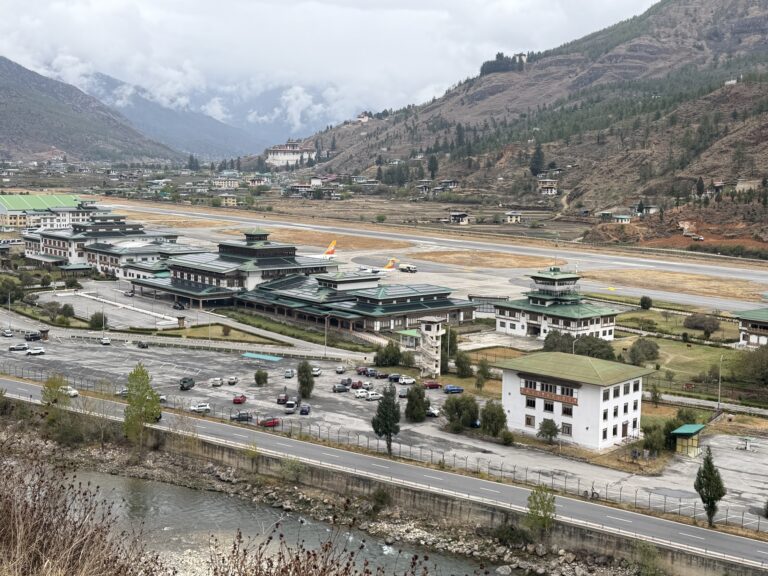
The Black-Necked Crane Festival Tour begins with the landing at Paro, usually under clear November skies. Your guide meets you with a white khadar scarf, and we drive about 1.5 hours to Thimphu, stopping at Tamchog Lhakhang and the river confluence at Chhuzom.
After lunch we visit the Buddha Dordenma, a 51 m gilded statue on a ridge above the city, and the Memorial Chorten, where Thimphu’s elders walk circuits and spin prayer wheels through the day.
If time allows, we visit the Royal Society for Protection of Nature’s displays or the textile museum. The guide introduces the black-necked crane: a bird that breeds on the Tibetan plateau and winters in a few high valleys of Bhutan, India and China.
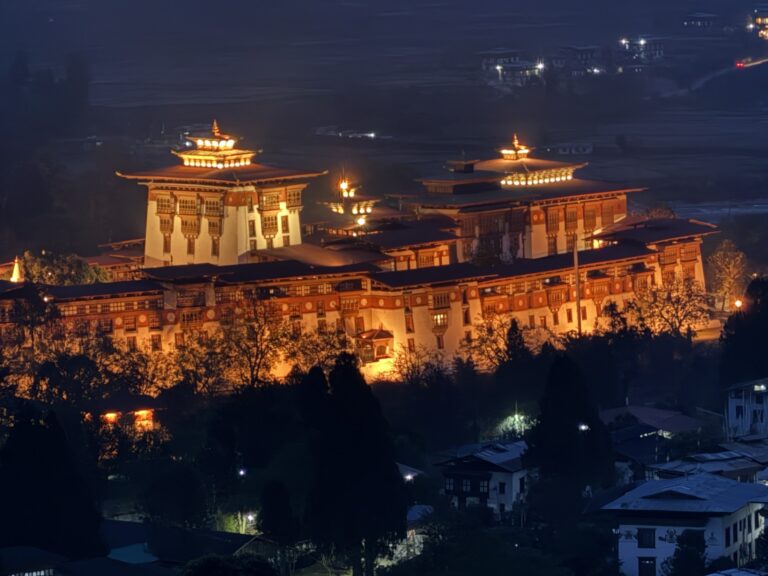
Late in the afternoon we visit Tashichho Dzong once its offices close. Dinner is in town, and tonight is in a 3-star hotel in Thimphu. The evenings are cold in November, so keep a warm layer handy for the walk back from dinner.
- TravelCar, 1-3 hours
- Stay3-Star Hotel
- MealsLunch, Dinner
Day 2Thimphu to Punakha1,250 m
Today the Black-Necked Crane Festival Tour crosses the Dochula Pass at about 3,100 m. November mornings are often clear, and the 108 chortens on the pass frame a long line of snow peaks along the northern border.
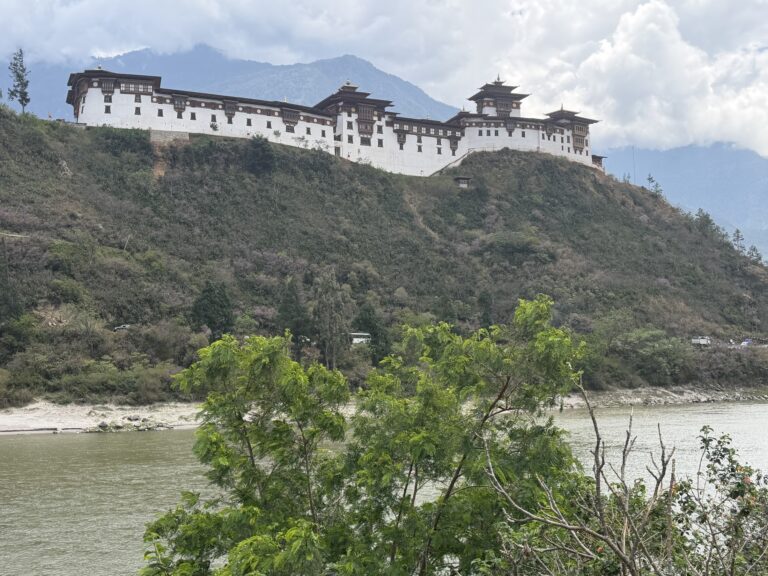
We descend to the warm Punakha valley, about 3 hours from Thimphu in all, and visit Punakha Dzong at the meeting of the Pho Chhu and Mo Chhu rivers. In November, the central monk body moves here from Thimphu for the winter.
After lunch we walk about 20 minutes through freshly harvested rice fields to Chimi Lhakhang, the temple of the Divine Madman. The village is known for its painted protective symbols, which locals treat with good humour.
If time allows, we cross the long suspension bridge over the Pho Chhu before dinner. Tonight is in a 3-star hotel in the Punakha valley, much warmer than the high country we head for tomorrow.
- TravelCar, 1-3 hours
- Stay3-Star Hotel
- MealsBreakfast, Lunch, Dinner
Day 3Punakha to Phobjikha3,000 m
The Black-Necked Crane Festival Tour climbs into the hills today. We drive about 3 hours from Punakha past Wangdue, then through oak and rhododendron forest over the Lawa La at about 3,360 m, before dropping into the Phobjikha valley at about 3,000 m.
The first view of the valley is a broad, flat marsh ringed by pine-covered hills, with farmhouses and potato fields around its edges. In November, small groups of grey cranes are already feeding on the wetland.
In the afternoon we visit the Black-Necked Crane Information Centre, run by the Royal Society for Protection of Nature, which has telescopes trained on the marsh and displays on the birds’ migration and the valley’s conservation.
At dusk we watch the cranes fly in to roost, calling as they land. Tonight is the first of two nights in the best available lodge in Phobjikha, heated with wood stoves. The guide explains tomorrow’s festival over dinner.
- TravelCar, 1-3 hours
- Stay3-Star Hotel
- MealsBreakfast, Lunch, Dinner
Day 4Black-Necked Crane Festival3,000 m
This is festival day on the Black-Necked Crane Festival Tour. The festival is held in the courtyard of Gangtey Goenpa, a 17th-century monastery on a ridge above the valley, to celebrate the cranes’ return and to encourage people to protect them.
The programme starts in the morning. Local schoolchildren perform crane dances in costumes with long necks and wings, and villagers sing folk songs and perform masked dances. Many of the songs carry a conservation message, written in Dzongkha and explained by the guide.
The atmosphere is relaxed and local, with families from across the valley in their best clothes. Stalls sell snacks, butter tea and handicrafts, and proceeds often support crane conservation.
The festival usually ends by early afternoon. Later we visit the main hall of Gangtey Goenpa, then return to the marsh edge at dusk for another look at the cranes. Tonight is the second night in the same Phobjikha lodge.
- TravelSightseeing, 4-6 hours
- Stay3-Star Hotel
- MealsBreakfast, Lunch, Dinner
Day 5Gangtey Nature Trail to Punakha1,250 m
The Black-Necked Crane Festival Tour starts the morning on foot, on the Gangtey Nature Trail. It begins near the monastery and winds down through pine forest and fields to the valley floor, about 2 hours of gentle walking.
Early morning is the best time to see the cranes feeding on the marsh, often in family groups of two adults and a juvenile. The guide points out their red crowns and black necks, and explains why they return each year to the same valley.
The trail passes farmhouses where families dry chillies and stack firewood for the winter. You may be invited in for a cup of butter tea.
After lunch we drive about 3 hours back over the Lawa La to Punakha. Tonight is in a 3-star hotel in the Punakha valley, a welcome warmth after two cold nights in the hills.
On the drive, the guide points out the forest of the Lawa La, where Himalayan monals are sometimes seen beside the road.
- TravelHiking, 4-6 hours
- Stay3-Star Hotel
- MealsBreakfast, Lunch, Dinner
Day 6Punakha to Paro2,250 m
We leave Punakha after breakfast on the Black-Necked Crane Festival Tour and drive about 4 hours back over the Dochula to Paro, stopping at the pass if the views are clear.
In Paro, after lunch, we visit Rinpung Dzong across its covered wooden bridge and the National Museum in the round watchtower above it. Both help put the festival into a wider story of Bhutanese culture.
Later we visit Kyichu Lhakhang, a 7th-century temple with orange trees in its courtyard. In November the trees are often heavy with fruit.
Tonight is the first of two nights in a 3-star hotel in Paro. Dinner is early, ahead of tomorrow’s Tiger’s Nest hike. The guide explains the trail, the timing and what to carry in your day pack, including a warm layer for the top.
If you would like a farmhouse dinner in Paro tonight, tell the guide in the morning and he will arrange it.
- TravelCar, 4-6 hours
- Stay3-Star Hotel
- MealsBreakfast, Lunch, Dinner
Day 7Tiger's Nest Hike3,120 m
The last full day of the Black-Necked Crane Festival Tour is the hike to Taktsang, the Tiger’s Nest. November is a good month for it, with cool air and clear views across the Paro valley.
The path climbs about 900 m through blue pine to the monastery at roughly 3,120 m, which takes 2 to 3 hours. The halfway teahouse frames the monastery on its cliff, and the last section crosses a gorge by stone steps beside a waterfall.
Inside, the guide tells the story of Guru Rinpoche, who is said to have arrived on a flying tigress to meditate in the cave. Bags and phones stay in lockers, and the descent takes about 1.5 hours.
The afternoon is free for a hot stone bath at a farmhouse, at extra cost, which is especially good in the cold season. Tonight is a farewell dinner in Paro, a good time to share crane photos with the guide.
- TravelHiking, 4-6 hours
- Stay3-Star Hotel
- MealsBreakfast, Lunch, Dinner
Day 8Depart from Paro2,250 m
The Black-Necked Crane Festival Tour ends with a short drive to Paro airport. Most flights leave in the morning, when the valley winds are calm, and the guide confirms your pickup time the evening before.
If your flight leaves later, we can visit the ruins of Drukgyel Dzong in the upper valley or browse Paro’s craft shops for crane-themed textiles and souvenirs.
Your guide helps with check-in and says goodbye at the terminal door. Keep your visa letter with your passport for the exit check, and allow two hours before departure.
November is also a fine month in Nepal, where we are based, with clear skies for Kathmandu sightseeing or a short trek. We can arrange it on the same booking.
For long-haul flights, a buffer night in Paro or Kathmandu protects your onward plans if a flight is delayed. Thank you for welcoming the cranes with us, and we hope to see you in Bhutan again.
- TravelCar, 30-60 minutes
- MealsBreakfast
What's included
Included in the price
- Bhutan visa: the visa application and US$ 40 fee
- Sustainable Development Fee: US$ 100 per person for each of the 7 nights
- Airport transfers: pickup and drop at Paro airport
- Hotels: 3-star rooms in Thimphu, Punakha and Paro, and the best available lodge in Phobjikha
- All meals: from lunch on arrival to breakfast on departure
- Guide: a licensed English-speaking guide with knowledge of the cranes
- Vehicle: a private car or van with driver throughout
- Festival day: the festival at Gangtey Goenpa
- Crane centre: entry to the Black-Necked Crane Information Centre
- Route permits: permits for Punakha and Phobjikha
- Entrance fees: every site on the itinerary, including Tiger’s Nest
- Drinking water: bottled water in the vehicle
- Taxes: all government taxes and service charges
- Support: 24-hour contact with our team during the tour
- Date check: festival date confirmed with you before your visa is lodged
Not included
- Flights to and from Paro, best booked early for November
- International airfare to your connecting city
- Travel insurance with medical cover
- Single supplement for your own room
- Binoculars, which we recommend you bring
- Drinks other than water, tea and coffee
- Extra nights caused by flight delays or snow on the pass
- Laundry, phone and internet charges
- Tips for the guide and driver
- Personal costs such as souvenirs and donations to the crane fund
Dates and price
This trip runs once a year, timed to the festival. Festival dates follow the lunar calendar, so ask us for this year's dates.
Trip information
Price by Group Size
| Group size | Price per person |
|---|---|
| 1 traveller (private) | US$ 2,660 |
| 2 travellers | US$ 2,130 |
| 3 to 5 travellers | US$ 1,915 |
| 6 to 12 travellers | US$ 1,775 |
To book: ask us for the confirmed festival date, then pay a 20% deposit. The balance is due before we lodge your Bhutan visa, about 30 days before you fly. Phobjikha lodges are few, so book early.
Joining alone: solo travellers can join the group departure and pay the rate for the group that travels; once six or more are booked, we refund the difference to everyone.
Private tour: a private Black-Necked Crane Festival Tour can add a third night in Phobjikha, or continue east to Bumthang, where the Jambay Lhakhang Drup is often held in the same month.
Not in the price: Paro flights, insurance, binoculars, drinks and tips. Seven nights of Bhutan’s SDF, US$ 700 per person, are already included in every price.
Best Time to Visit
The Black-Necked Crane Festival Tour runs once a year, in November. The festival is held at Gangtey Goenpa on 11 November each year, to celebrate the cranes’ arrival from Tibet, and we confirm the date with you when you enquire.
The cranes begin arriving in late October and stay until about February, so the whole tour falls within their season. Numbers peak in mid-winter, but November already offers good sightings on the marsh.
November is one of Bhutan’s clearest months. Days are bright and dry, with good views of the snow peaks from the Dochula Pass, while nights are cold, especially in Phobjikha at about 3,000 m.
If you cannot travel in November, our 8-Day Bhutan Tour visits Phobjikha all year, and from November to February it gives a very good chance of seeing the cranes without the festival.
Difficulty and Fitness
The Black-Necked Crane Festival Tour is easy. The festival is held in a monastery courtyard, and you watch from the steps or the grass around it for several hours.
The Gangtey Nature Trail is about 2 hours of gentle, mostly downhill walking across fields and pine forest. The Tiger’s Nest hike near the end climbs about 900 m to roughly 3,120 m, about 5 hours there and back; horses can carry you up the first half at extra cost.
Drives are moderate: about 1.5 hours from Paro to Thimphu, about 3 hours to Punakha, about 3 hours from Punakha to Phobjikha over the Lawa La at about 3,360 m, and about 4 hours from Punakha to Paro.
The cold is the main challenge. Dress in layers, and bring a warm hat, gloves and a down jacket for early mornings by the marsh.
Food, Water and Dietary Needs
All meals are included on the Black-Necked Crane Festival Tour, at hotels, lodges and local restaurants. Phobjikha meals are simple and hearty, with local potatoes, rice, vegetables and meat or cheese curries.
Phobjikha is known for its potatoes, which you can try in kewa datshi, potatoes cooked with cheese. On festival day, villagers sell snacks and butter tea around the monastery.
Vegetarian meals are easy, and vegan and gluten-free diets can be arranged with notice. Tell us about allergies at booking, so the guide can brief every kitchen.
Tap water is not safe to drink. Bottled water is in the vehicle, and lodges provide boiled water and hot drinks on cold evenings.
Pack lunches on the drives are hot and filling, and the guide carries a flask of tea for the cold crane-watching sessions.
Altitude, Health and Safety
The Black-Necked Crane Festival Tour reaches about 3,360 m on the Lawa La by road and sleeps two nights in Phobjikha at about 3,000 m, the highest stops of the trip. Other nights are between about 1,250 m and 2,320 m.
Some people feel a light headache or broken sleep on the first night in Phobjikha. Drink plenty of water and avoid too much alcohol. Serious altitude illness is very rare at this height.
November nights in Phobjikha fall well below freezing. Lodges have wood stoves or heaters and extra blankets, but bring warm sleepwear and a hot water bottle if you feel the cold.
Your insurance should include medical cover. Wangdue, Punakha, Thimphu and Paro have hospitals, and anyone with heart or lung conditions should ask a doctor about Tiger’s Nest.
Local Etiquette
The cranes are sacred to the people of Phobjikha, who believe they bring good fortune. On the Black-Necked Crane Festival Tour we keep to the trails, stay quiet near the marsh and never approach or chase the birds.
The valley has no overhead power lines because they were buried to protect the cranes in flight, a sign of how seriously local people take them. Drones are not allowed near the wetland.
At Gangtey Goenpa, dress modestly in long sleeves and long trousers or skirts, remove hats and shoes in shrine rooms, and do not photograph inside. Photography of the festival dances is welcome without flash.
Greet people with “kuzuzangpo la”, and ask before photographing children or families. Smoking in public places is restricted in Bhutan.
Visa, Permits and Documents
Everyone except Indian, Bangladeshi and Maldivian nationals needs a Bhutan visa, arranged by a licensed operator. We apply for your Black-Necked Crane Festival Tour visa once the balance is paid.
We need a passport scan, valid six months beyond arrival, and a passport photo. The visa costs US$ 40 and the SDF is US$ 100 per person per night until 31 December 2029; both are included.
Travel to Punakha and Phobjikha needs route permits, which we arrange in Thimphu. The festival itself needs no ticket.
Print the visa clearance letter for check-in and arrival. Indian nationals need a permit instead and pay a lower SDF. Official rules and the festival calendar are on bhutan.travel.
Carry your passport during the tour, as it may be checked at road checkpoints on the way to Punakha and Phobjikha.
Transport, Money and Connectivity
You fly in and out of Paro on Drukair or Bhutan Airlines. November is a busy month for flights, so book early; we can book them for you at cost.
Your private car and driver cover every transfer. The road over the Lawa La to Phobjikha is in good condition, but early snow can slow it; the driver adjusts the timing day by day.
The ngultrum is Bhutan’s currency, tied to the Indian rupee. Bring small notes for festival snacks and donations to the crane conservation fund; cards rarely work in Phobjikha.
Mobile signal reaches Phobjikha but data is slow, and lodge Wi-Fi is basic. Thimphu, Punakha and Paro have good coverage and hotel Wi-Fi.
Your driver waits near the monastery on festival day, so you can return to the car for warm layers.
Questions about this trip
When is the Black-Necked Crane Festival?
The Black-Necked Crane Festival is held each year on 11 November in the courtyard of Gangtey Goenpa in the Phobjikha valley. Our Black-Necked Crane Festival Tour is timed so you arrive in Phobjikha the day before and stay two nights. We confirm the date with you when you enquire.
How much does the Black-Necked Crane Festival Tour cost?
The Black-Necked Crane Festival Tour costs from US$ 1,775 per person in a group of six or more, US$ 1,915 for three to five, US$ 2,130 each for two and US$ 2,660 for one. Prices include the visa, seven nights of SDF, hotels, meals, guide and car.
What happens at the Black-Necked Crane Festival?
At the Black-Necked Crane Festival, local schoolchildren perform crane dances in costume, and villagers sing folk songs and perform masked dances, many with a conservation message. It is a small, local festival, and our Black-Necked Crane Festival Tour gives you the full morning there.
Will I see black-necked cranes on this tour?
Very likely. The cranes arrive in Phobjikha from late October and stay until about February. On the Black-Necked Crane Festival Tour we spend two nights in the valley and watch at dawn and dusk, the best times. Numbers vary from year to year.
Where is the Phobjikha valley?
Phobjikha is a glacial valley at about 3,000 m in Wangdue Phodrang district, about 3 hours by road from Punakha over the Lawa La. It is a protected wetland and one of the main wintering grounds of black-necked cranes in Bhutan.
How cold is Phobjikha in November?
Phobjikha in November is cold, with nights well below freezing and frosty mornings, though days are often sunny. On the Black-Necked Crane Festival Tour, lodges have wood stoves and extra blankets, but bring a down jacket, warm hat, gloves and warm sleepwear.
What are the lodges like in Phobjikha?
Phobjikha has a small number of lodges and farmhouse guesthouses. On the Black-Necked Crane Festival Tour we use the best available, with private bathrooms, wood stoves or heaters and hot water bottles. They are simpler than hotels in Thimphu or Paro.
Is the Black-Necked Crane Festival crowded?
No. The Black-Necked Crane Festival is a local event, much smaller than the big tshechus in Paro and Thimphu. You share it mainly with villagers and a modest number of visitors, which gives the Black-Necked Crane Festival Tour a relaxed, friendly feel. It feels like a village celebration.
Can I photograph the cranes?
Yes, from a respectful distance. On the Black-Necked Crane Festival Tour we watch from the trails and the information centre. Bring a long lens or binoculars, never approach or chase the birds, and do not fly drones near the wetland.
Does the Black-Necked Crane Festival Tour include Tiger's Nest?
Yes. The Black-Necked Crane Festival Tour includes the Tiger’s Nest hike near the end, from Paro. The climb takes 2 to 3 hours up and about 1.5 hours down. Horses can carry you up the first half at extra cost.
Do I need a visa for the Black-Necked Crane Festival Tour?
Yes, unless you are Indian, Bangladeshi or Maldivian. We arrange the Bhutan visa for the Black-Necked Crane Festival Tour once your balance is paid, and you only send a passport scan and photo. The visa fee, SDF and route permits are included.
How much is the SDF on the Black-Necked Crane Festival Tour?
The SDF on the Black-Necked Crane Festival Tour is US$ 700 per person, since Bhutan charges US$ 100 per person for each of the seven nights. The rate is confirmed until 31 December 2029 and is already included in every price.
When should I book the Black-Necked Crane Festival Tour?
Book the Black-Necked Crane Festival Tour several months ahead if you can. Phobjikha has very few lodges, and November is a busy month for flights to Paro. A 20% deposit holds your place, and the balance is due before your visa.
Is the Black-Necked Crane Festival Tour hard?
No. The Black-Necked Crane Festival Tour is easy, with a gentle 2 hour nature trail and an optional Tiger’s Nest hike. The main challenge is the cold in Phobjikha, so warm clothing matters more than fitness. Most ages manage it well.
Can children join the Black-Necked Crane Festival Tour?
Yes. Children usually love the crane dances, which are performed by local schoolchildren. Under-sixes pay no SDF and children aged 6 to 11 pay half. Make sure they have warm clothing for the cold nights in Phobjikha. Ask us for a family quote.
Is the Black-Necked Crane Festival Tour private or a group?
The Black-Necked Crane Festival Tour runs as one small group departure of up to 12 travellers each year, or privately. The one and two traveller prices on this page are the private prices, and private tours can add nights. Solo travellers are welcome.
Can I combine this festival with Jambay Lhakhang Drup?
Often, yes. The Jambay Lhakhang Drup in Bumthang usually falls in October or November, and in some years close to the crane festival. A private Black-Necked Crane Festival Tour can continue east to Bumthang if the dates line up. Ask us early to check the dates.
What food is served on the Black-Necked Crane Festival Tour?
All meals are included on the Black-Necked Crane Festival Tour. Phobjikha meals feature the valley’s famous potatoes, and festival stalls sell snacks and butter tea. Vegetarian food is easy, and other diets can be arranged with notice. Hot drinks come with every meal.
Why are there no power lines in Phobjikha?
Phobjikha’s power lines were buried underground to protect the cranes, which can collide with overhead cables when flying in to roost. The Black-Necked Crane Festival Tour guide explains this and other conservation work by local people and the Royal Society for Protection of Nature.
Can I combine the Black-Necked Crane Festival Tour with Nepal?
Yes. November is a fine month in Nepal, with clear skies for sightseeing and trekking. We are based in Kathmandu and can arrange your Nepal days with the Black-Necked Crane Festival Tour on one booking. Ask us for a combined quote.
Do I need travel insurance for the Black-Necked Crane Festival Tour?
Yes. Insurance for the Black-Necked Crane Festival Tour should include medical cover, evacuation and cancellation, ideally with cover for flight delays. Send us your policy details before you travel, and the guide will carry a copy. Bhutan also expects visitors to hold health cover.
What makes your Black-Necked Crane Festival Tour different?
Our Black-Necked Crane Festival Tour spends two nights in Phobjikha, so you see the cranes at dawn and dusk and the full festival without rushing. We add the nature trail, the crane centre, Punakha and Tiger’s Nest, and book the valley’s few lodges early.
Ask us about the Black-Necked Crane Festival Tour
We reply from Kathmandu within 24 hours with available dates, your exact price and answers to your questions.
- 16 years guiding in the Himalaya
- Registered in Nepal, Reg. 187391
- Private dates on any day
Call, WhatsApp or Viber
Black-Necked Crane Festival Tour, from US$ 1,775 per person. Dates and booking at treknepalhimalayas.com/trip/black-necked-crane-festival-tour/
Trek Nepal Himalayas Pvt Ltd, Reg. 187391. Bhagawatisthan, Thamel, Kathmandu, Nepal. Call or WhatsApp +977 98510 13196. [email protected]