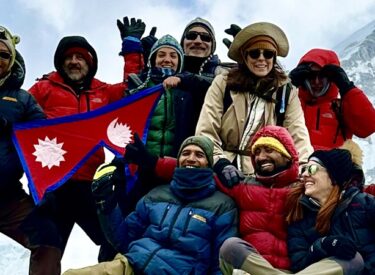
Everest Base Camp Trek By Road
Based on 2100 reviews
Short Itinerary
Arrival in Kathmandu (1,350 m / 4,429 ft)
Drive to Thamdanda (2,700 m / 8,858 ft)
Drive to Surke, Trek to Phakding (2,610 m / 8,563 ft)
Trek to Namche Bazaar (3,440 m / 11,286 ft)
Acclimatization Hike to Everest View Hotel (3,880 m / 12,730 ft)
Trek to Tengboche (3,860 m / 12,664 ft)
Trek to Dingboche (4,410 m / 14,464 ft)
Acclimatization Hike to Nagarjun Hill (5,100 m / 16,732 ft)
Trek to Lobuche (4,910 m / 16,108 ft)
Trek to Everest Base Camp (5,364 m / 17,598 ft), Stay at Gorakshep
Hike to Kalapatthar (5,545 m / 18,192 ft), Trek to Pheriche (4,240 m / 13,910 ft)
Trek back to Namche Bazaar (3,440 m / 11,286 ft)
Trek back to Lukla (2,860 m / 9,383 ft)
Trek down to Surke, Drive back to Kathmandu (1,350 m / 4,429 ft)
Departure from Kathmandu
Full Itinerary
- Distance: ~6 km / 3.7 miles (airport to hotel)
- Travel Time: 30–60 minutes
- Elevation Gain: Minimal
Your Everest Trek without Lukla flight begins with your arrival in Kathmandu, Nepal’s historic capital. A staff member will greet you after you land at Tribhuvan International Airport. They will take you to your hotel in a private transfer.
The ride through the city takes around 30 to 60 minutes, depending on traffic. Along the way, you’ll first see Kathmandu’s mix of heritage, busy streets, and mountain views in the distance.

Once you’ve checked into your hotel, you’ll have the rest of the day to relax or explore nearby. If you feel rested enough, we recommend a short walk through Thamel, a lively neighborhood filled with shops, restaurants, and trekking gear stores. It’s a convenient place to pick up any last-minute items for your Everest base camp trek.

This day also marks the start of your altitude adjustment. Staying hydrated and taking it easy is helpful. You’ll begin your EBC trek by road the next morning, giving you more time to acclimate than those who fly directly to higher elevations.
Evening Tips:
- Avoid alcohol and oily food to help your body adjust.
- Charge your electronics and double-check your gear.
- Distance: ~270 km / 168 miles
- Travel Time: Approx. 10 hours
- Elevation Gain: +1,350 m
Today, your journey towards the Himalayas officially begins. Unlike most trekkers who fly to Lukla, you skip the weather delays. You choose the Everest Trek without the Lukla flight. Instead, you travel overland to Thamdanda, the gateway for the alternate trail to the Khumbu region.
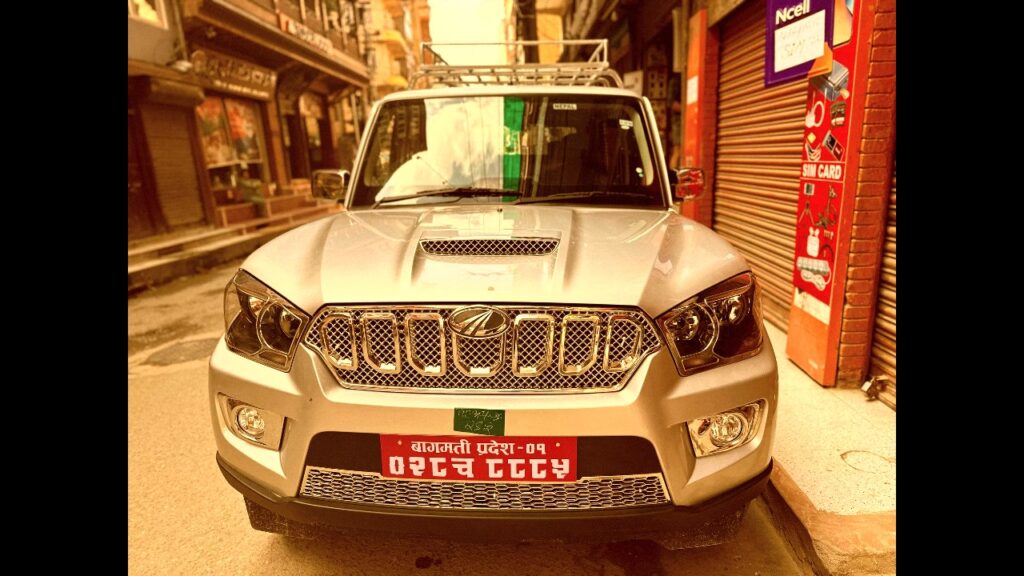
The day starts early with breakfast in Kathmandu, followed by a private jeep ride heading east. The first few hours take you through rural Nepal’s lush hills and river valleys. As the road climbs, the urban views fade, replaced by terraced farmland, dense forest, and mountain villages.

Lunch is enjoyed at a simple highway restaurant. They serve warm Nepali meals like rice, lentils, and seasonal vegetables.
As you gain altitude, the air becomes fresher and cooler. The last part of the drive gets bumpy and slow after you pass Salleri. However, the views become more dramatic with each turn.
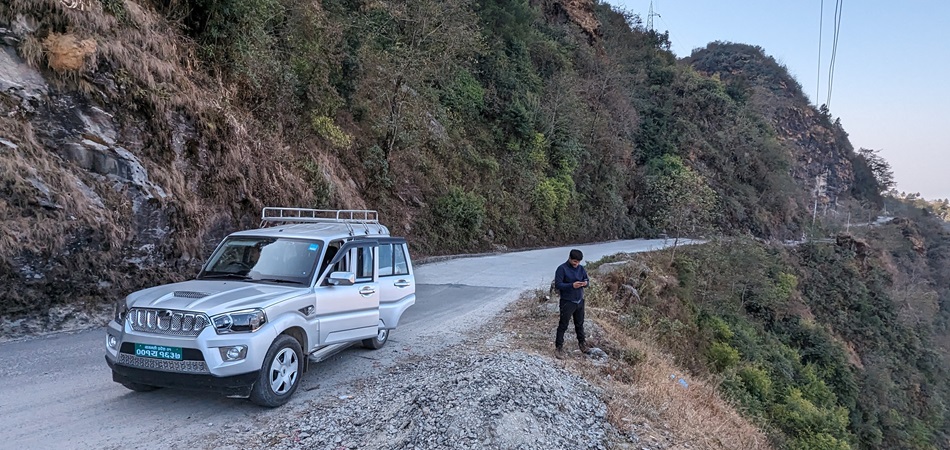
By evening, you will arrive in Thamdanda, which is located at 2,700 meters. It’s a small settlement with basic lodges, surrounded by forested hills.
This stopover prepares you for the trek ahead, giving your body time to adjust before physical exertion begins.
Why This Route?
- This new approach is becoming popular for those who want to trek to Everest base camp with less flight risk. It’s also more scenic and immersive from the beginning.
- Distance: ~12 km / 7.5 miles (drive + trek)
- Travel Time: 2 hours’ drive + 4 hours trek
- Elevation Loss: -90 m
Your third day brings a shift from roads to trails as the real trekking begins. After breakfast, you leave Thamdanda by jeep for a short but steep drive to Surke.
The road is rugged, winding through pine-covered hills with views of the valley below. Once you reach Surke, your guide and porters will help you prepare for the trek.
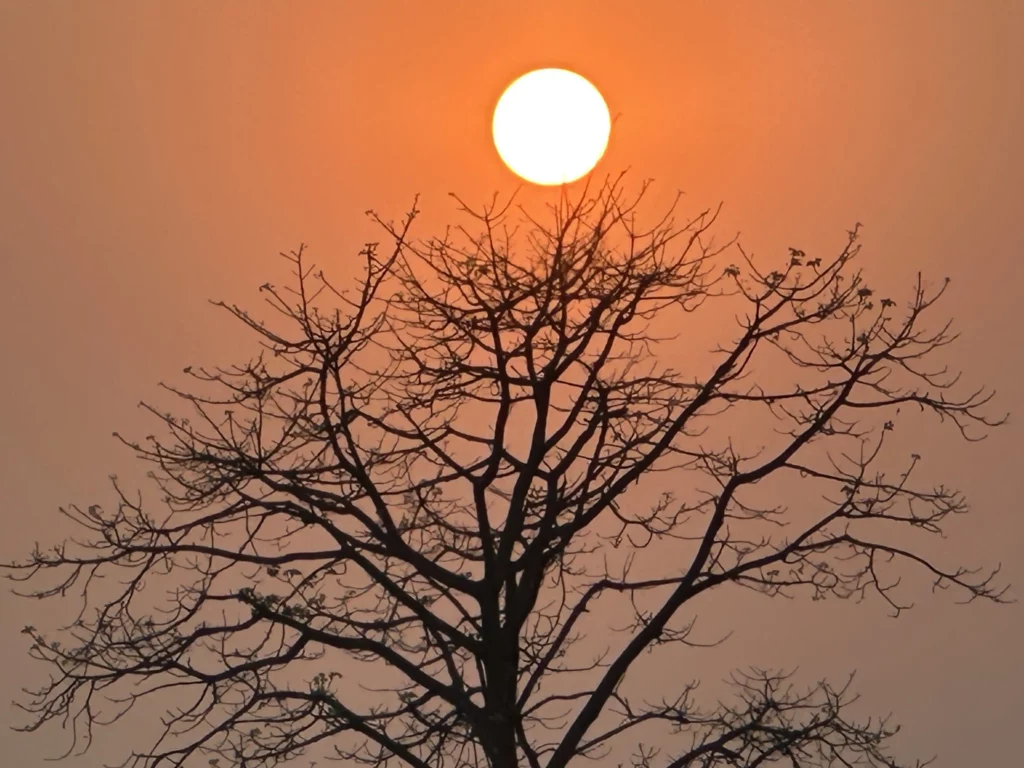
The walk from Surke to Phakding marks your first steps on the trek to Everest Base Camp. The path follows the Dudh Koshi River, passing through peaceful villages and cultivated fields.
This road-based approach is different from the air route. It takes you to the quiet side of the Khumbu. Here, you will share trails with local residents, schoolchildren, and yaks that carry supplies uphill.

Today’s route includes gentle ascents and descents, making it a manageable introduction to the rhythm of Himalayan walking.
As you walk, you will cross small wooden bridges. You will also see mani stones, which are prayer-carved rocks. This gives you a first look at the spiritual culture of the Everest region.

After about four hours of walking, you reach Phakding, a village along the river with several lodges built for trekkers.
The sound of the Dudh Koshi and the surrounding pine forests create a calm resting setting after your first trekking day.
- Distance: ~11 km / 6.8 miles
- Trekking Time: 6–7 hours
- Elevation Gain: +830 m
Today’s trek takes you deeper into the Everest trek route as you move toward the gateway of the Khumbu region—Namche Bazaar. After breakfast in Phakding, you walk along the Dudh Koshi River. You will cross several suspension bridges that sway gently as you walk.

The trail weaves through rhododendron forests and charming villages like Monjo and Jorsalle. At Monjo, your guide will help register your trekking permits as you officially enter Sagarmatha National Park. From here, the path continues along the river until you reach the base of the final climb to Namche.

This section is known for its steep uphill ascent that gains over 600 meters in just a few hours. The climb can feel demanding, but it’s also where you might catch your first glimpse of Mount Everest, weather permitting.
The guide will keep a slow, steady pace with breaks along the way to allow your body to adjust to the rising altitude.

By late afternoon, you’ll reach Namche Bazaar, a horseshoe-shaped town built into the mountain slope.
It’s the biggest village on the EBC trek route. It has bakeries, gear shops, and amazing views of nearby peaks like Thamserku and Kongde Ri.
Spend the evening resting, sipping warm tea, or strolling through the colorful alleys of the village.
- Distance: ~5 km / 3.1 miles
- Hiking Time: 3–4 hours
- Elevation Gain: +440 m
Your body needs time to adjust to the rising altitude, and today’s acclimatization hike supports that process. After breakfast in Namche Bazaar, your guide takes you on a slow uphill hike to the Everest View Hotel.
This hotel is at 3,880 meters. Though the distance is short, the steady climb helps condition your body for higher elevations ahead on the EBC trek.

As you gain height, panoramic views begin to unfold. Within an hour, peaks like Thamserku and Kongde rise sharply in the distance.
Continuing higher, the iconic triangle of Mount Everest appears alongside Lhotse and Nuptse, framed beautifully against the sky.

The Everest View Hotel is known for being one of the highest-altitude luxury hotels in the world. Once you arrive, you can relax with a hot drink.
Enjoy the clear views of Everest and Ama Dablam, one of the most beautiful peaks in the area. This spot is perfect for taking photos, resting, and absorbing the mountain silence.

After a break, you descend gradually back to Namche. The rest of the afternoon is free. You can explore the village, visit the Sherpa Museum, or relax at a bakery.
This slower day is key in making your Everest Trek without the Lukla flight safer and more comfortable.
- Distance: ~9.5 km / 5.9 miles
- Trekking Time: 5–6 hours
- Elevation Gain: +420 m (includes descent and final ascent)
After breakfast in Namche, your Everest trek continues with one of the most scenic sections of the trail. The first part of the route follows a gently sloping path that contours along the hillside. Walking, you’ll see distant snow peaks on your left and green valleys stretching far below.

By midday, you reach the riverside village of Phunki Tenga. This is the day’s lowest point, sitting beside the Dudh Koshi River.
Here, you stop for lunch and prepare for the afternoon’s challenge—a steady climb through pine and rhododendron forests up to Tengboche.

The final section is a steady uphill walk. Along the way, the forest offers shade and quiet. In spring, rhododendrons bloom in brilliant red and pink, adding color to the trail.
As you gain height, you may hear monks chanting from a distance—your cue that Tengboche Monastery is close.
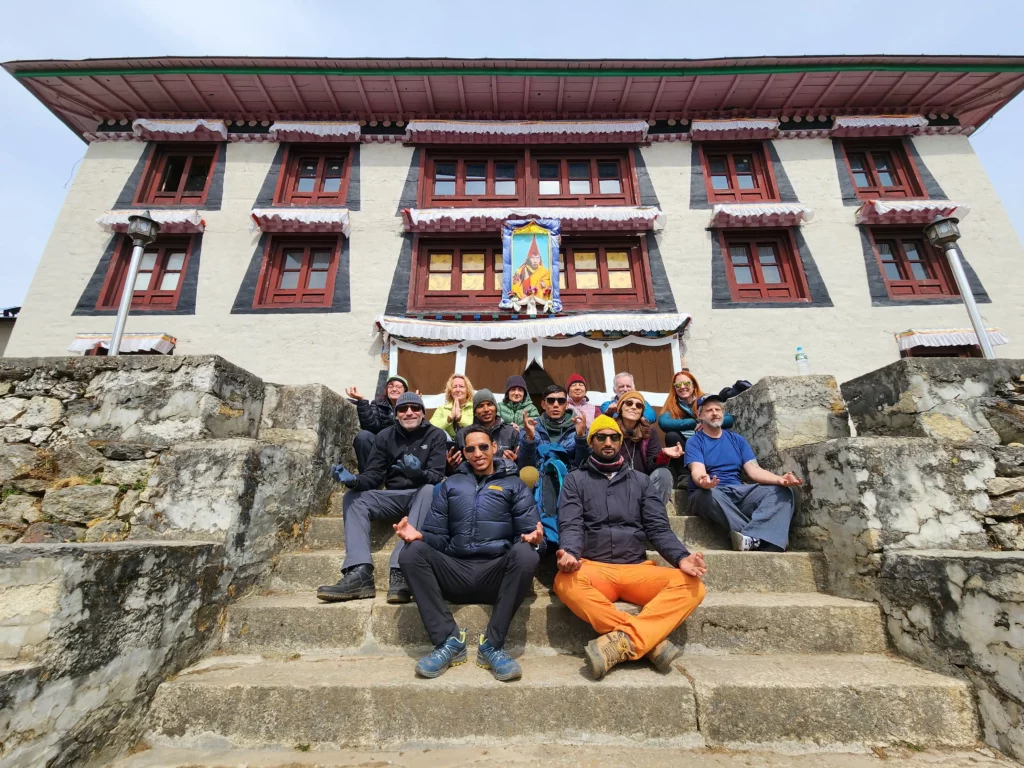
At 3,860 meters, Tengboche sits on a broad hilltop with one of the best panoramic views in the region.
The monastery is the largest in the Khumbu and holds great spiritual value for trekkers and local Sherpa communities. If timing allows, you can attend an afternoon prayer session.

From Tengboche, you can see Ama Dablam, Everest, and Lhotse. The view is fantastic, especially at sunset when the golden light shines on the peaks.
- Distance: ~11 km / 6.8 miles
- Trekking Time: 6–7 hours
- Elevation Gain: +550 m
After breakfast at Tengboche, the trail begins gently through a forest of fir and birch. The morning walk offers fresh air and quiet surroundings, with occasional yak trains moving supplies uphill.
You start a slow climb as you go down to the river and cross the wooden bridge at Debuche. This climb takes you to Pangboche, one of the oldest Sherpa villages in the area.

Pangboche is worth a short stop. Here, you can see the oldest monastery in the Khumbu. You will also pass traditional stone houses that have stood for many years.
The views of Ama Dablam become sharper as the path ascends, and the trail opens into a wide valley shaped by glacial erosion.

As you gain elevation, the landscape shifts. Trees give way to low shrubs and alpine grasses. The air gets thinner, and the pace slows naturally.
Eventually, you reach Dingboche, a small village surrounded by stone walls built to protect crops from wind and grazing yaks. Dingboche sits at 4,410 meters, a crucial acclimatization stop on the Everest base camp trek.

Unlike the lower villages, Dingboche has an open layout with views stretching in every direction. You can see the peaks of Lhotse, Island Peak, and part of Makalu on clear days.
After checking into your lodge, enjoy a warm meal and rest early to support your acclimatization.
- Distance: ~4 km / 2.5 miles
- Hiking Time: 3–4 hours
- Elevation Gain: +690 m
Today is another planned rest day—but not without movement. This pause allows your body to adapt to higher elevation while preparing for even more demanding terrain. After breakfast, your guide leads you uphill to Nagarjun Hill, a rocky ridge just above Dingboche.

The trail is steep but manageable with steady pacing. Along the way, you’ll have frequent chances to stop, catch your breath, and enjoy sweeping views of the surrounding Himalayan peaks.
As you go higher, the village of Dingboche looks smaller. The white slopes of Lhotse, Makalu, and Island Peak rise sharply ahead. On a clear day, you may even catch a glimpse of the north face of Ama Dablam.

When you reach the ridge at 5,100 meters, take a break. Drink some water and enjoy a snack. Take in the views of the Imja Valley and the glaciers below.
This hike plays a key role in preventing altitude sickness as your body continues to adjust to thinner air. Spending time at this height, even briefly, strengthens your ability to sleep well and trek comfortably in the days ahead.

After taking in the mountain silence and capturing a few photos, you return to Dingboche for a hot lunch. The rest of the afternoon is free for relaxation. Some trekkers use this time to wash clothes, read, or talk with fellow hikers about the route ahead.
- Distance: ~8.5 km / 5.3 miles
- Trekking Time: 5–6 hours
- Elevation Gain: +500 m
After breakfast in Dingboche, your Everest trek continues. The trail climbs steadily toward Lobuche, a small place surrounded by tall peaks. The land gets drier and rockier. The green fields from before change into a rough alpine area.

The path follows the wide glacial valley and gradually gains elevation. You’ll pass through Dughla (Thukla), where you stop for a break and hot tea.
Just past this point, a steep climb takes you to an essential part of the journey—the memorials for climbers who died on Everest.
Prayer flags flutter in the wind as you walk past stone monuments built in honor of mountaineers worldwide. It’s a quiet, powerful place that encourages reflection.

From the top of the ridge, the trail levels out and continues to Lobuche, where you’ll spend the night. The village is small, consisting of a few stone lodges built to serve trekkers on the EBC trek. Temperatures here can drop significantly, especially after sunset, so warm layers are essential.
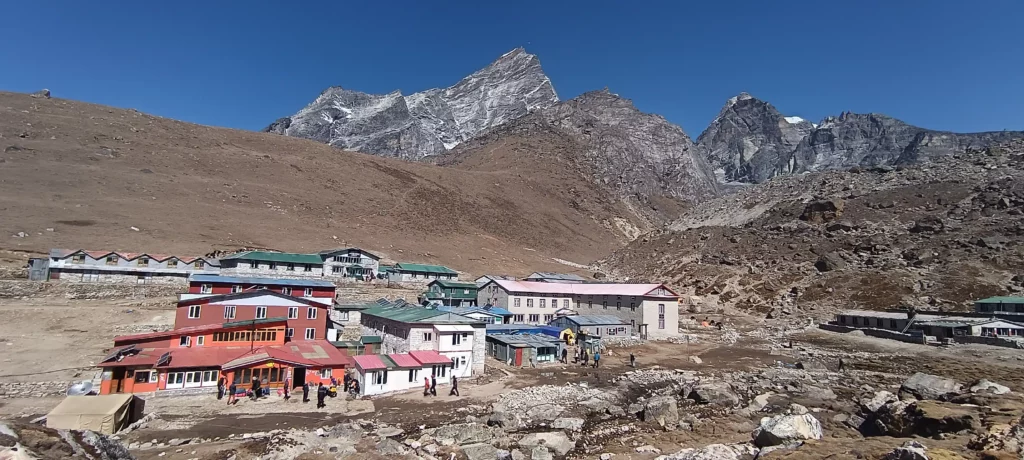
Though today’s walk isn’t very long, the higher altitude makes every step feel more challenging. It’s essential to stroll, stay hydrated, and avoid overexertion.
You’re just one day from reaching Everest Base Camp—a significant goal for trekkers worldwide.
- Distance: ~12 km / 7.5 miles
- Trekking Time: 7–8 hours
- Elevation Gain: +454 m
Today is your Everest base camp trek’s most exciting and rewarding day. After an early breakfast, you leave Lobuche and begin the journey toward Gorakshep, the final settlement before base camp.
The walk starts with a steady ascent alongside the Khumbu Glacier, offering dramatic views of ice ridges and jagged peaks.

The trail is uneven and rocky in places, requiring steady footing and a slow pace. After about three hours, you reach Gorakshep, a flat area surrounded by snowy peaks.
You’ll check into your lodge, drop unnecessary gear, and then continue to Everest Base Camp with a light daypack.

The round trip from Gorakshep to base camp takes another 2 to 3 hours. The route follows the glacier’s edge, with a winding trail that moves through rocky debris and ice formations.
You’ll follow climbers preparing for Everest expeditions and pass colorful prayer flags tied near base camp markers.

Standing at 5,364 meters, you’ve reached your trek’s highest point. There is no permanent structure here, but the location carries immense meaning.
Trekkers often take photos near the stones that mark the site. The Khumbu Icefall is visible just ahead. It is one of the most complex parts for climbers trying to reach the summit.

After spending time at base camp, you return to Gorakshep for the night. This is a high-altitude sleep, so light meals and rest are essential.
- Distance: ~13 km / 8.1 miles
- Time: 7–8 hours
- Elevation Gain: +181 m (Kalapatthar), followed by ~1,000 m descent
The day starts early, well before sunrise. Before dawn, you will leave your lodge in Gorakshep. You will hike to Kalapatthar, a viewpoint with the best view of Mount Everest.
This trail climbs steadily over rocky ground, and due to the high elevation, even a short distance takes effort.

As dawn breaks, Everest’s black pyramid begins to glow orange with the first light of day. From 5,545 meters, Kalapatthar gives you a sweeping view of Everest, Lhotse, Nuptse, and the Khumbu Glacier below.
It’s one of the most rewarding moments of the entire EBC trek. After photos and quiet reflection, you descend back to Gorakshep for breakfast.
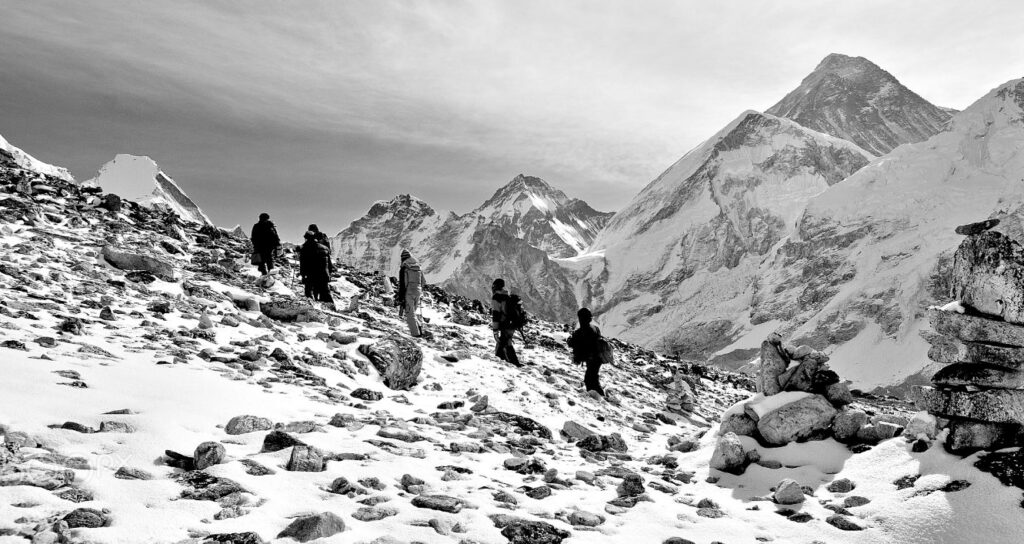
The second part of the day is the descent to Pheriche, a windswept village that sits lower in the valley.
The route retraces part of the earlier trail, moving through glacial moraine and eventually entering a more alpine environment. As the air thickens with each step down, you’ll feel a boost of energy.

The drop in elevation—about 1,000 meters—makes breathing easier. In Pheriche, the teahouse is more comfortable, and temperatures are milder compared to the previous nights.
This descent also plays a key role in safe altitude adjustment after reaching base camp and Kalapatthar.
- Distance: ~22 km / 13.7 miles
- Time: 7–8 hours
- Elevation Loss: -960 m
After several days at high elevation, today’s long walk brings you back into more familiar terrain. You will begin the morning with a gentle stroll down Pheriche Valley.
You will rejoin the trail that goes through Pangboche and Debuche. The surroundings become greener, and the air feels warmer as you lose altitude.

You’ll pass monasteries, chortens, quiet fir and juniper forests along the way. There are plenty of rest points for snacks and tea, especially at Tengboche, where you may stop again briefly.
From here, the trail descends steeply to the river, crosses the Dudh Koshi once more, and climbs gradually back up to Namche Bazaar.

By arriving in Namche, you’ve officially completed the main section of your trek to Everest Base Camp. Most trekkers celebrate with fresh food and some well-earned rest.
You may want to stop by a local bakery, visit souvenir shops, or relax with a warm drink.

This return marks the change from high mountains to lower valleys in the Khumbu. It lets you think about everything you’ve experienced, from snowy ridges to sacred sites and famous views.
- Distance: ~19 km / 11.8 miles
- Time: 7–8 hours
- Elevation Loss: -580 m
Today marks your final trekking day in the Himalayas. After breakfast in Namche Bazaar, you walk down to Lukla.
You will follow the same path that brought you into the Khumbu Valley. The trail starts with a steady downhill, weaving through pine forests and over long suspension bridges that now feel familiar.

The energy on this day is usually high. Many trekkers walk with joy. They know they have finished one of the world’s most famous hikes—the Everest base camp trek—without taking a flight from Lukla.
Along the way, you’ll pass the villages of Monjo, Jorsalle, and Phakding, where you may pause briefly for tea or lunch.

Though you’re heading downhill, the distance and steps require focus. The trail undulates often, especially toward the end.
You’ll reach Lukla by mid-afternoon, where your trekking journey officially concludes.
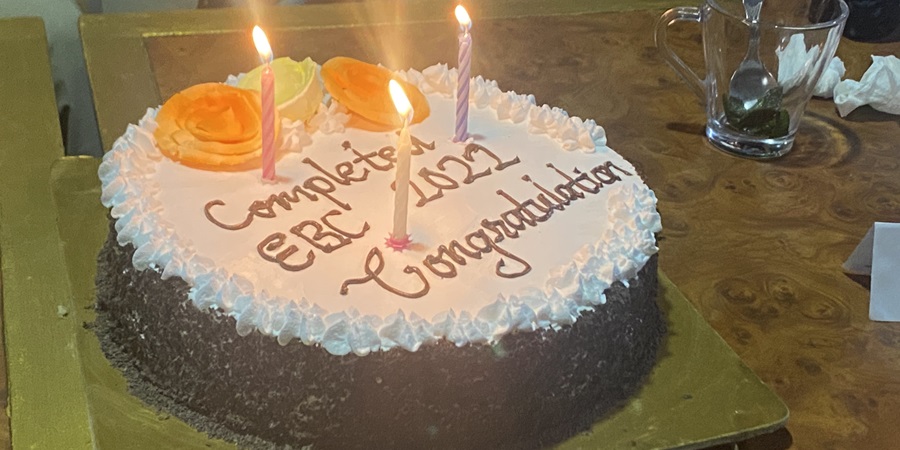
In the evening, you gather with your guide, porters, and team for a warm meal and a quiet celebration. Many travelers take time to thank their porters, exchange contacts, and share stories of the trail.
It’s a great way to end your mountain experience. It feels even more special because you didn’t fly into Lukla.
- Distance: ~270 km / 168 miles
- Travel Time: 10–11 hours
- Elevation Loss: -1,510 m
The final stretch of your journey begins with a short downhill walk from Lukla to Surke, where your vehicle will be waiting.
This section usually takes about an hour, leading you out of the high mountains and into the lower foothills. Once at Surke, you’ll say farewell to the trails and begin your return drive to Kathmandu.

The road journey is long—approximately 270 kilometers—but it’s filled with ever-changing views. The route passes through hillside farms, river gorges, and traditional villages.
Stops are arranged for meals and rest along the way. Compared to the challenges of the trek, the ride feels easy, even if bumpy in some areas.

Arriving in Kathmandu by evening, you’re brought directly to your hotel. After checking in, you’ll have time to take a hot shower, change into clean clothes, and enjoy the comforts of city life again.
Whether you go out for dinner, relax at your hotel, or start packing, consider what you’ve done.

Completing the Everest Trek without the Lukla flight offers a deeper connection to the land, the people, and the trail.
It’s a choice that adds resilience and authenticity to your experience and avoids the uncertainty of mountain flights.
- Distance: ~6 km / 3.7 miles (to airport)
- Time: 30–60 minutes
- Elevation: Same (1,350 m / 4,429 ft)
Your Everest Trek without the Lukla flight ends today. After breakfast at your hotel, you’ll have a few final hours in Kathmandu before your flight home.
Depending on your schedule, you can relax, enjoy a quiet coffee, or do some last-minute shopping in nearby Thamel.

Thamel’s market streets are full of handicrafts, trekking souvenirs, spices, and local art. These items make great gifts or keepsakes to remember your trip.
If you’d rather take it easy, your hotel offers a quiet space to rest, check your gear, and prepare for travel.

When it’s time, our team arranges your transfer to Tribhuvan International Airport. The drive is short, usually 30 to 60 minutes, depending on traffic.
We recommend arriving at the airport at least 3 hours before your flight to ensure a smooth departure.

You leave Nepal with more than just photos. You go with the satisfaction of finishing a challenging and rewarding trek to Everest base camp.
Choosing the route without the Lukla flight made the experience more real and meaningful. Traveling through remote areas helped me connect closely with the land.

We thank you for trekking with us and hope to welcome you back again for another adventure in the Himalayas.
Trip Reviews
Be first to post a review in this trip.

More Trips