Nepal · Climbing · Difficult
Himlung Expedition
Trip overview
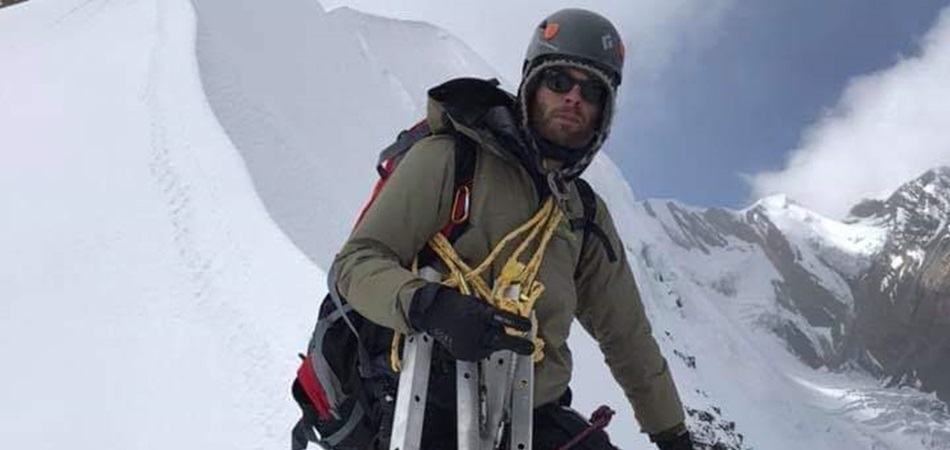
Our Himlung Expedition is a 32-day climb of Himlung Himal (7,126 m) through the remote Nar Phu valley, near the Tibetan border in the Annapurna region. You drive to Koto on the Annapurna Circuit, trek through the medieval villages of Meta and Phu Gaon, then set up base camp at about 4,900 metres. From there you climb through three high camps to the summit with climbing Sherpas, fixed ropes and full base camp support.
This expedition suits climbers with experience on 6,000-metre peaks who want their first 7,000-metre summit. Himlung is one of the most accessible 7,000-metre peaks in Nepal, with a route that is long and crevassed but not steep for long sections. It is often used as training for Manaslu, Cho Oyu and other 8,000-metre peaks.
What we do differently is the approach. The walk through the Nar Phu valley, with an acclimatisation day in Phu Gaon, prepares your body well before base camp. We keep 17 days for the puja, rotations and summit window, so the team can wait for good weather.
The honest hard part is the length and the wind on the upper mountain, where long snow slopes and hidden crevasses demand care. Summits are never guaranteed. The reward is a 7,000-metre summit with views into Tibet and across to the Annapurna and Manaslu ranges.
The expedition costs US$ 9,000 per climber. Build up to it with our Everest Three Peaks Challenge, or go further with the Mount Pumori Expedition.
Highlights
- Climb Himlung Himal, 7,126 m, near the Tibetan border
- A first 7,000-metre summit for climbers with 6,000-metre experience
- Trek through the remote Nar Phu valley and its stone villages
- An acclimatisation day at Phu Gaon, at 4,200 m
- Summit views into Tibet and across to Annapurna and Manaslu
- Climbing Sherpas, fixed ropes and three high camps
- 17 days for the puja, rotations and summit window
- Full base camp with dining, kitchen and communications tents
Itinerary
Route map
Each stop on the route with its altitude, from 823 m to 7,126 m.
On footBy roadRouteHighest point
Day 1Arrive in Kathmandu1,400 m
Our team meets you outside the arrivals hall at Tribhuvan International Airport and drives you to your hotel, about 20 to 40 minutes away. The first day is for rest after your flight. Please bring your passport, several passport photos, your climbing CV and a copy of your insurance policy, which we need for the Himlung permit and the Nar Phu restricted area permit.
In the evening your expedition leader meets you at the hotel for a first talk about the climb. We cover the route through the Nar Phu valley, the camps on Himlung, the rotation plan and how summit decisions are made. We also check your previous climbing experience.
If you shipped expedition barrels, our team collects them and takes them to our store for packing. Dinner is your own choice tonight, and your leader can suggest places nearby. Tomorrow is for permits, gear and briefings.
Get as much sleep as you can to recover from the journey. Overnight in a 3-star hotel in Kathmandu.
Day 2Permits, gear check and briefing in Kathmandu1,400 m
Today prepares the expedition before you leave for the mountains. Our office completes the Himlung Himal climbing permit with the Department of Tourism, the Nar Phu restricted area permit and the Annapurna Conservation Area permit. You attend the expedition briefing at the ministry with your leader.
Your climbing Sherpa checks every item of your personal gear, including high-altitude double boots, down jacket and pants, harness, crampons, ascender and sleeping bags. Anything missing or not warm enough can be bought or hired in Thamel, and your Sherpa goes with you to the shops. Food, tents and equipment for base camp are packed into barrels for the drive and porters.
If there is time, you can visit Boudhanath or Swayambhunath in the afternoon. Many climbers simply rest and eat well before the long drive. Your leader confirms the departure time for the morning.
Overnight in a 3-star hotel in Kathmandu. Bring snacks you like from home for the high camps.
Day 3Drive Kathmandu to Besisahar823 m
After an early breakfast we leave Kathmandu by private vehicle on the Prithvi Highway, following the Trishuli River west. The road passes busy roadside towns and terraced hills before turning north at Dumre into the Marsyangdi valley. Besisahar, at 823 metres, is the headquarters of Lamjung district and the traditional start of the Annapurna Circuit.
The drive takes about seven to eight hours, depending on traffic and road works. Lunch is at a roadside restaurant on the way. Besisahar is warm and low, with rice fields and banana trees around the town.
Our cargo travels with us or on a separate vehicle, ready for the next stage. You stay in a simple hotel with private rooms. The evening is free to rest and repack for the jeep drive tomorrow.
Your leader checks the road conditions up the valley, which can change after rain. Overnight in a hotel in Besisahar. Bring a light jacket for the cooler air in the evening.
Day 4Drive Besisahar to Koto2,610 m
Today a jeep takes you up the Marsyangdi valley on a rough mountain road. The road climbs past waterfalls, suspension bridges and villages such as Jagat, Tal and Dharapani, with the river roaring below. As you climb, rice fields give way to pine forest, and the first snow peaks of the Annapurna and Manaslu ranges appear.
The road is bumpy and slow, so the drive takes most of the day, with stops for tea and lunch. You reach Koto at 2,610 metres, a small village just beyond Chame, where the Nar Phu valley branches north from the main Annapurna Circuit. Koto has comfortable teahouses and a police checkpoint where we register the restricted area permit.
The air is cooler now, and the mountains feel close. In the afternoon you can walk around the village or rest. Your leader checks how everyone is feeling after the long drive.
Overnight in a teahouse at Koto.
Day 5Koto to Meta3,560 m
The trek begins today. You leave the main Annapurna Circuit at Koto and cross the Marsyangdi on a suspension bridge into the Nar Phu valley. The trail follows the Phu Khola north through a narrow gorge, with pine and fir forest and waterfalls on both sides.
You pass small hot springs and caves along the river, and the valley gradually opens as you climb. Beyond Dharmasala the trees thin and the landscape becomes dry and rocky. Meta, at 3,560 metres, is a seasonal settlement on a flat terrace with views of Annapurna II and Lamjung Himal behind.
The walk takes about six to seven hours, with a height gain of nearly 1,000 metres. This is a long day, so walk slowly and drink plenty. Meta has simple lodges.
Your leader checks oxygen levels and pulse in the evening, which we repeat daily from here on. Overnight in a teahouse at Meta.
Day 6Meta to Phu Gaon4,200 m
The trail continues up the Phu Khola valley past old chortens and the winter settlements of Chyako and Kyang. The landscape is high desert, with eroded cliffs, rock spires and wide views back down the valley. You climb through a narrow gateway carved by the river and pass a line of old stupas before reaching Phu Gaon.
Phu Gaon, at 4,200 metres, is one of the highest permanently lived-in villages in Nepal, with stone houses stacked on a ridge above the river. Its people are of Tibetan origin and keep yaks, goats and sheep. The walk takes about six to seven hours.
Arrive slowly, as the height gain is significant. Phu has a few simple lodges and a small monastery, Tashi Lhakhang, on the hill across the river. Your leader watches closely for altitude symptoms.
A mild headache tonight is normal; tell your leader if it gets worse. Overnight in a teahouse at Phu Gaon.
Day 7Acclimatisation day at Phu Gaon4,200 m
Today is a rest and acclimatisation day in Phu. After breakfast you can visit Tashi Lhakhang Gompa, a small monastery on the hill across the river, where a lama may show you the old statues and paintings. A walk above the village takes you higher for a few hours, with views up the valley toward Himlung and the Tibetan border peaks.
Climbing high and sleeping low in this way helps your body adjust before base camp. In the afternoon, explore the village lanes, where women weave on looms and herders bring animals in from the hills. Your climbing Sherpa uses part of the day for a rope-skills refresher on rocks near the village.
Rest, eat well and drink plenty of fluids. Phu feels remote and timeless, with very few visitors, so please respect local customs and ask before taking photographs. Your leader goes over the walk to base camp.
Overnight in a teahouse at Phu Gaon.
Day 8Phu Gaon to Himlung Base Camp4,900 m
Today you leave the last village and climb to base camp. The trail follows the valley north from Phu, then climbs steadily over grassy slopes and moraine toward the foot of Himlung. Blue sheep often graze on the hillsides, and the views open to the glaciers and snow peaks along the Tibetan border.
Himlung Base Camp sits at about 4,900 metres on a flat area below the mountain’s western glaciers. Our crew has set up the camp before you arrive, with individual sleeping tents, a dining tent, kitchen, toilet and communications tent. The walk takes about four to five hours.
Rest as soon as you arrive, drink plenty and eat what you can. The first night at base camp is often uncomfortable, with a headache and broken sleep, which improves after a few days. Your leader checks every climber’s oxygen level and pulse in the evening.
Overnight in tents at Himlung Base Camp.
Day 9-25Rotations and summit window on Himlung7,126 m
These days cover the puja, acclimatisation rotations and the summit push, with time held open for the right weather. The Sherpa team first holds a puja at base camp to ask for safe passage. The first rotation climbs a moraine and snow slope to Camp 1 at about 5,400 metres, then returns to base camp.
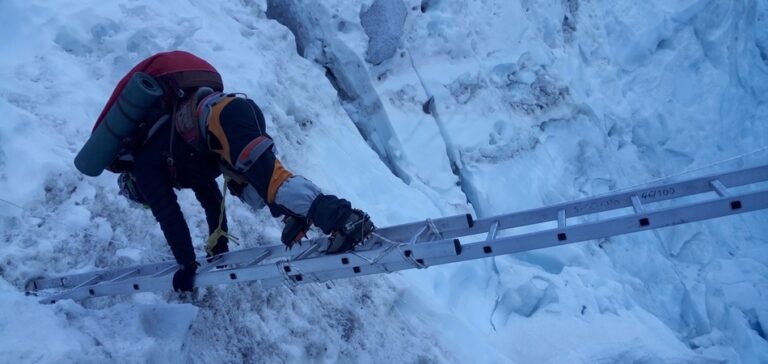
The second rotation climbs a crevassed glacier on fixed ropes to Camp 2 at about 6,000 metres, and where conditions allow touches Camp 3 at about 6,300 metres before returning to rest. Himlung’s route is not steep for long, but crevasses, long snow slopes and wind on the upper mountain make it a serious climb. When the forecast shows a window of light wind, you climb back through the camps for the summit push.
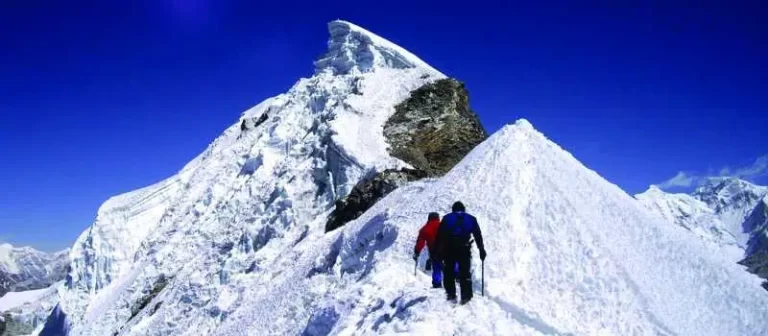
On summit day you leave Camp 3 around midnight and climb long snow slopes and a broad ridge to the summit at 7,126 metres. From the top you see Tibet to the north and the Annapurna and Manaslu ranges to the south. Your Sherpa sets a firm turnaround time and will bring you down if time, weather or health say so.
Nights in tents at base camp and the high camps.
Day 26Himlung Base Camp to Phu Gaon4,200 m
After the summit push, the Sherpa team clears the high camps and packs up base camp. Tents, equipment and all waste are packed for the porters, as the Annapurna Conservation Area requires every expedition to bring its rubbish down. In the evening before you leave, the team shares a last dinner at base camp to mark the end of the climb, and many climbers hand over the summit bonus and tips then.
Today you walk back down the valley to Phu Gaon, about four hours. The air grows thicker with every step, and most climbers feel their energy return quickly. Back in Phu, a warm teahouse and a hot meal are very welcome after weeks in tents.
Your leader checks every climber for frostbite and exhaustion, and arranges a helicopter evacuation for anyone who needs medical care. The evening is relaxed, with time to rest and share stories of the climb with the crew. Overnight in a teahouse at Phu Gaon.
Day 27Phu Gaon to Meta3,560 m
The trail retraces the route down the Phu Khola valley, past the old stupas, the narrow rock gateway and the winter settlements of Kyang and Chyako. Going down is faster than coming up, and the walk to Meta takes about four to five hours. With the climb behind you, there is time to enjoy the dramatic high desert scenery, the eroded cliffs and the views of Annapurna II and Lamjung Himal ahead.
Blue sheep and lammergeier vultures are often seen along this stretch. Meta feels warm and green compared with base camp. You have the afternoon to rest, wash and sort your gear.
Your appetite usually returns strongly at this lower height, so eat well. Your leader checks in with each climber about any lingering health issues from the climb. Sleep comes easily at Meta after weeks at altitude.
Tomorrow you walk back to Koto and the main Annapurna Circuit. Overnight in a teahouse at Meta.
Day 28Meta to Koto2,610 m
The last day of walking follows the Phu Khola back down through the gorge to Koto. The trail drops through pine and fir forest, past waterfalls and the small hot springs by the river. The descent of nearly 1,000 metres is hard on the knees, so use trekking poles and take your time.
The walk takes about five to six hours. At Koto you rejoin the Annapurna Circuit, and the busy trail and lodges feel a world away from the quiet Nar Phu valley. Our team checks out the restricted area permit at the police post.
In the evening you share a final dinner with the porters and crew who carried the expedition cargo. It is a good time to thank the trekking team, and tips are usually handed over at this dinner. A hot shower and a comfortable room make a fine end to the trek.
Your leader confirms the jeep for tomorrow. Overnight in a teahouse at Koto.
Day 29Drive Koto to Besisahar823 m
After breakfast the jeep takes you back down the Marsyangdi valley on the rough mountain road. The drive passes Chame, Dharapani, Tal and Jagat, with waterfalls and suspension bridges along the way. The pine forest slowly gives way to terraced fields and banana trees as you descend.
The road is bumpy and slow, so the drive takes most of the day, with stops for tea and lunch. You reach Besisahar in the late afternoon. After weeks in the mountains, the warmth of the lowlands feels very different.
You stay in a simple hotel with private rooms and hot showers. The evening is free to rest and enjoy a good meal. Your leader confirms the drive to Kathmandu tomorrow.
If you prefer to go to Pokhara for a few days of rest, we can arrange that instead. Overnight in a hotel in Besisahar. Your leader checks in with the Kathmandu office before you leave.
Day 30Drive Besisahar to Kathmandu1,400 m
After breakfast we drive back to Kathmandu by private vehicle, following the Marsyangdi down to Dumre and then the Prithvi Highway east along the Trishuli River. The drive takes about seven to eight hours, with a lunch stop on the way. You reach Kathmandu in the late afternoon and check in at your hotel.
After weeks in the mountains, the noise and traffic of the city take some getting used to. Take the evening easy with a long shower and a good meal. Your expedition barrels arrive with you or follow by road, and are delivered to your hotel or our store.
Your leader completes the expedition debrief with the Department of Tourism, which records summits for the official certificate. Climbers who reached the summit provide summit photos and details from their Sherpa. Return any hired gear to the shop or our office.
Overnight in a 3-star hotel in Kathmandu.
Day 31Reserve day and farewell dinner in Kathmandu1,400 m
This day is kept as a reserve in case of delays on the road or the mountain. If everything ran to plan, it is a free day in Kathmandu. You might visit Boudhanath, Swayambhunath or Patan, shop in Thamel or simply rest.
Many climbers use the time to sort photos and write up their notes from the expedition. The summit certificate from the Department of Tourism is usually ready by now, and your leader delivers it to your hotel. In the evening we take you to a farewell dinner with your leader and, where possible, your climbing Sherpa.
It is a chance to look back over the expedition, from the gorges of the Nar Phu valley to the summit ridge of Himlung. We are glad to hear your feedback on the logistics, food and support, which helps us improve future expeditions. Your leader confirms the airport pickup time for tomorrow.
Overnight in a 3-star hotel in Kathmandu.
Day 32Depart Kathmandu1,400 m
Your last morning in Kathmandu is free until it is time to leave for the airport. If your flight is later, there is time for a final walk in Thamel or a visit to a stupa. Hotel check-out is usually around noon, and we can arrange late check-out or luggage storage if needed.
About three hours before your international flight, our team collects you from the hotel and drives you to Tribhuvan International Airport, a drive of 20 to 40 minutes. Expedition barrels can be shipped home through a cargo agent if you prefer not to fly with them, and we help arrange this before you leave. We say goodbye at the departure entrance.
If you are planning your next objective, such as Manaslu, Cho Oyu or another 8,000-metre peak, your leader can talk through the experience and preparation you would need. Himlung is one of the best training climbs for those peaks. We hope to climb with you again.
What's included
Included in the price
- Airport transfers: international arrival and departure in Kathmandu.
- Kathmandu hotel: 3-star hotel with breakfast, as in the itinerary.
- Road transport: private vehicle to Besisahar and jeep to Koto, both ways.
- Lodges: hotels in Besisahar and teahouses on the trek.
- Climbing permit: Himlung Himal permit and Department of Tourism fees.
- Area permits: Nar Phu restricted area permit and Annapurna Conservation Area entry.
- Liaison officer: government liaison officer costs, as required.
- Expedition leader: licensed leader managing the expedition.
- Climbing Sherpas: experienced climbing Sherpas, one for every two climbers on summit day.
- Base camp: sleeping, dining, kitchen, toilet and communications tents.
- High camps: tents, stoves, fuel and food at Camps 1 to 3.
- Meals: all meals on the trek, at base camp and on the mountain.
- Fixed ropes: route fixing on the glacier and steep sections.
- Porters: porters for team and personal cargo to base camp and back.
- Communications: satellite phone at base camp, radios on the mountain.
- Weather forecasts: daily forecasts throughout the climb.
- Medical kit: full first aid kit and emergency oxygen at base camp.
- Staff insurance: insurance for all Sherpas, porters and kitchen staff.
- Garbage deposit: waste management and the conservation garbage deposit.
- Summit certificate: issued by the Department of Tourism after a verified summit.
- Farewell dinner: in Kathmandu after the expedition.
Not included
- International flights: travel to and from Nepal.
- Nepal visa: fees for your tourist visa.
- Insurance: travel, medical, rescue and evacuation insurance covering climbing to 7,200 m, which is required.
- Personal climbing gear: high-altitude boots, down clothing, harness and personal equipment.
- Supplementary oxygen: available on request at extra cost; not standard on Himlung.
- Personal climbing Sherpa: a one-to-one Sherpa, available at extra cost.
- Kathmandu meals: lunch and dinner in Kathmandu, except the farewell dinner.
- Trek extras: hot showers, charging and bottled drinks in lodges.
- Rescue costs: helicopter rescue and evacuation, billed to your insurer.
- Summit bonus: the customary summit bonus for climbing Sherpas.
- Tips: for base camp staff, porters and crew.
- Personal expenses: phone data, laundry and souvenirs.
Dates and price
A new group leaves every Saturday. Private dates are available on any day of the week.
| Starts | Ends | Status | Price | Book |
|---|---|---|---|---|
| Departs: Every Saturday. Book your date | ||||
Trip information
Price by Group Size
| Service | Price per climber |
|---|---|
| Full-service expedition, shared climbing Sherpa support | US$ 9,000 |
To book: a 20% deposit confirms your place. You pay the balance when you arrive in Kathmandu.
Joining alone: solo climbers join our team at the same price, with their own sleeping tent at base camp.
Private expedition: teams who want their own leader, a personal Sherpa each or supplementary oxygen can ask us for a private price.
Not in the price: international flights, visa, insurance, personal gear, oxygen, summit bonus and tips.
Best Time for the Himlung Expedition
Himlung is climbed in both main seasons, mid-March to mid-June and mid-October to mid-December. Autumn is the most popular, with stable weather and clear skies after the monsoon. Spring brings warmer days and more snow on the route.
The Nar Phu valley lies partly in the rain shadow of the Annapurnas, but monsoon rain still affects the road and lower trail from June to September. We confirm the start date at booking, and the summit day depends on the forecast.
Difficulty and Fitness
This is a difficult climb. The route has glacier travel with crevasses, fixed ropes on steeper sections and long snow slopes above 6,000 metres, often in strong wind.
You should have climbed at least one 6,000-metre peak and be comfortable with crampons, ascenders and rappelling. Train for at least four to six months with long loaded days, endurance cardio and strength work. The summit day lasts ten to twelve hours.
Food, Water and Dietary Needs
On the trek you eat at teahouses, with dal bhat, noodles, potatoes and eggs. At base camp our cook prepares three meals a day with fresh food carried in by porters, and hot drinks are always available.
On the mountain, meals are simpler, with dehydrated food and soups. Tell us about vegetarian, vegan, gluten-free or allergy needs when you book, and we plan the menus around them. All water is boiled or filtered.
Altitude, Health and Safety
The approach climbs steadily through the Nar Phu valley, with an acclimatisation day at Phu Gaon before base camp. Rotations to the high camps prepare your body for the summit. Your leader checks oxygen levels and pulse every day.
Crevasses on the glacier are the main hazard, so the team moves roped together on fixed lines. Your Sherpa sets a firm turnaround time on summit day. Your insurance must cover climbing to 7,200 metres and helicopter evacuation.
Local Etiquette
The people of Nar and Phu are of Tibetan origin and follow Tibetan Buddhism. Pass mani walls and chortens on the left, keeping them on your right, and walk clockwise around monasteries. Ask before photographing people, especially in Phu.
Every Sherpa team holds a puja at base camp before climbing, and climbers join with respect. Treat your climbing Sherpas as partners; the summit bonus and tips are an important part of how they are paid. Leave no rubbish on the mountain.
Visa, Permits and Documents
You need the Himlung Himal climbing permit, the Nar Phu restricted area permit and Annapurna Conservation Area entry. We arrange all of them and include them in the price. The restricted area permit requires a licensed guide and at least two foreigners in the group, which our expedition structure covers.
Send us a passport copy, photos, your climbing CV and proof of insurance when you book. Most nationalities get a tourist visa on arrival in Kathmandu; our Nepal visa guide has the details.
Transport, Money and Connectivity
You drive from Kathmandu to Besisahar by private vehicle and on to Koto by jeep, about two days each way. Expedition cargo goes by vehicle and then porters to base camp.
Carry US dollars for the summit bonus and tips, and Nepali rupees for the trek. The last ATMs are in Besisahar and Chame. Mobile signal is patchy in the Nar Phu valley and absent at base camp, where we use a satellite phone.
Questions about this trip
How much does the Himlung Expedition cost?
The Himlung Expedition costs US$ 9,000 per climber. The price includes the climbing permit, Nar Phu restricted area permit, climbing Sherpas, base camp and high camp services, all meals on the trek and mountain, road transport and a 3-star hotel in Kathmandu.
How high is Himlung Himal?
Himlung Himal is 7,126 metres high. It stands in the Nar Phu valley of the Annapurna region, close to the border with Tibet. It was opened for climbing in 1992 and has become one of the most popular 7,000-metre peaks in Nepal.
Is Himlung a good first 7,000-metre peak?
Yes. Himlung is one of the most accessible 7,000-metre peaks in Nepal. The route is long and crevassed but not steep for long sections, so it suits climbers with 6,000-metre experience who want to step up to 7,000 metres. Many climbers return for an 8,000-metre peak after it.
How difficult is the Himlung Expedition?
Himlung is a difficult climb but not highly technical. The route crosses crevassed glaciers on fixed ropes and climbs long snow slopes above 6,000 metres, often in strong wind. The summit day lasts ten to twelve hours. Wind is usually the main challenge.
What experience do I need for the Himlung Expedition?
You should have climbed at least one 6,000-metre peak, such as Island Peak, Mera Peak or Lobuche East, and be comfortable with crampons, ascenders and rappelling on fixed lines. We ask for your climbing CV before confirming your place. We review each climber individually.
How long is the Himlung Expedition?
The Himlung Expedition takes 32 days from arrival in Kathmandu to departure. That includes permits, two days of driving, a four-day trek to base camp with an acclimatisation day, 17 days on the mountain and the return. Book at least four months ahead.
When is the best time to climb Himlung?
Himlung is climbed in spring, mid-March to mid-June, and autumn, mid-October to mid-December. Autumn is the most popular, with stable weather and clear skies after the monsoon. We confirm the start date at booking. A reserve day in Kathmandu protects your flight home.
Is oxygen used on the Himlung Expedition?
Supplementary oxygen is not standard on Himlung, and most climbers summit without it. We keep emergency oxygen at base camp for medical use. If you want oxygen for the summit push, we can arrange it at extra cost. Ask us which season suits you best.
What are the high camps on Himlung?
The route uses Camp 1 at about 5,400 metres, Camp 2 at about 6,000 metres and Camp 3 at about 6,300 metres, below the summit slopes. Our Sherpa team stocks each camp with tents, food and fuel. Ask us for a quote before you travel.
What is the Nar Phu valley?
The Nar Phu valley is a remote side valley of the Annapurna region, opened to visitors in 2003. Its stone villages, monasteries and high desert landscape feel close to Tibet. A restricted area permit is needed, which we arrange. Heights vary a little with conditions each season.
Do I need a special permit for Himlung?
Yes. Besides the Himlung climbing permit and Annapurna Conservation Area entry, you need a Nar Phu restricted area permit. It requires a licensed guide and at least two foreigners in the group. We arrange all permits as part of the price.
How many climbing Sherpas are on the Himlung Expedition?
We provide one climbing Sherpa for every two climbers on summit day, with more Sherpas fixing the route and carrying loads to the high camps. A personal one-to-one Sherpa is available at extra cost if you prefer. Ask us for the one-to-one price when you book.
What is the summit success rate on Himlung?
Himlung has a relatively high success rate for a 7,000-metre peak, but weather, wind and snow conditions still turn teams back. We do not promise a summit. We keep 17 days on the mountain to give the team the best chance.
Is Himlung good preparation for an 8,000-metre peak?
Yes. Himlung gives you experience of high camps, glacier travel and summit days above 7,000 metres. Many climbers use it before Manaslu, Cho Oyu or Everest. Your leader can advise on the right next step after the climb. Your leader can advise on the right next step.
What insurance do I need for the Himlung Expedition?
Your insurance must cover mountaineering to 7,200 metres, medical treatment, and helicopter rescue and evacuation from high altitude. Many policies exclude this, so check the wording carefully. We ask for your policy details before departure. Ask your insurer for written confirmation.
What gear do I need for the Himlung Expedition?
You need high-altitude double boots, a down jacket and pants, warm mitts, harness, crampons, ice axe, ascender, belay device, helmet and warm sleeping bags. We send a full kit list at booking, and your Sherpa checks everything in Kathmandu. Hired items are available in Thamel.
How do we get to Himlung Base Camp?
We drive from Kathmandu to Besisahar, then take a jeep to Koto on the Annapurna Circuit. From Koto we trek through the Nar Phu valley via Meta and Phu Gaon to base camp at about 4,900 metres, with an acclimatisation day at Phu.
Can I join the Himlung Expedition on my own?
Yes. Solo climbers join our expedition team at the same per-climber price, with their own sleeping tent at base camp. Joining a team also meets the two-person rule for the Nar Phu permit. Private expeditions are priced on request. We reply within 24 hours.
How do I train for the Himlung Expedition?
Train for at least four to six months. Focus on long days carrying 15 kg, endurance cardio, stair climbing and leg and core strength. A recent 6,000-metre climb is the best preparation for the altitude and the glacier skills. A strong mind matters as much as fitness.
What happens if I cannot reach the summit of Himlung?
If weather, health or time stop your attempt, your Sherpa brings you down safely and the team decides whether another window is possible. There is no refund for an unsuccessful summit, but safety always comes before the summit. Every decision on the mountain puts life first.
Do I get a certificate for climbing Himlung?
Yes. After a verified summit, the Department of Tourism issues an official summit certificate. Your Sherpa provides the summit details and photos, and we deliver the certificate to your hotel in Kathmandu before you fly home. It usually takes a day or two to be issued.
How do I book the Himlung Expedition?
Send us your climbing CV, preferred season and a passport copy. A 20% deposit confirms your place. You pay the balance when you arrive in Kathmandu. We then arrange the permits, team and cargo, and send a full kit list.
Plan this trip
Ask us about the Himlung Expedition
We reply from Kathmandu within 24 hours with available dates, your exact price and answers to your questions.
- 16 years guiding in the Himalaya
- Registered in Nepal, Reg. 187391
- Group departures of 12 travelers at most
- Private dates on any day
Call, WhatsApp or Viber