Bhutan Birdwatching Tour
Our trips are rated 5 out of 5 in more than 950 traveler reviews.
Trip overview
Our Bhutan Birdwatching Tour is a 14-day journey across western and central Bhutan with a specialist birding guide, from the high pheasant country of the Chele La to the lowland forests of Tingtibi and the cloud forest of the Thrumshing La. It includes the visa, Sustainable Development Fee, hotels, birding guide, cultural guide, private vehicle, the domestic flight back to Paro and all meals.
It suits keen birders and naturalists. More than 700 bird species have been recorded in Bhutan, and the country’s forests are among the best preserved in the Himalaya, with a steep range of habitats from about 600 m to 4,000 m within a few hours’ drive.
We plan each day around the birds, not the sights. Most mornings start at dawn on a quiet road or forest track, and the afternoons are kept flexible for rest, a temple visit or another session in the field.
The honest part: birding in Bhutan means early starts, long drives on winding roads and simple lodges in Tingtibi and Phobjikha. Some target species, such as Ward’s trogon and the satyr tragopan, are never guaranteed.
The reward is a list that few places can match, with chances of Himalayan monal, blood pheasant, black-necked crane, white-bellied heron, rufous-necked hornbill and beautiful nuthatch, plus golden langur in the forests near Tingtibi.
Prices start at US$ 3,295 per person in a group of six or more and US$ 3,955 each for two. For the crane valley alone, see our Black-Necked Crane Festival Tour, or our Bhutan Hiking Tour for walking.
Highlights
- Chele La at dawn for Himalayan monal, blood pheasant and kalij pheasant
- Mo Chhu and Pho Chhu near Punakha, home of the rare white-bellied heron
- Phobjikha valley, winter home of black-necked cranes
- Tingtibi and Zhemgang lowland forest for hornbills and golden langur
- Thrumshing La cloud forest, with chances of Ward’s trogon and satyr tragopan
- Jigme Dorji National Park forests above Punakha
- A specialist birding guide with scope and local knowledge
- Domestic flight from Bumthang back to Paro
Itinerary
Altitude profile
By roadBy air
The altitude listed for each day, from 650 m to 3,988 m. Select a point to read that day.
The highest point on the route is 3,988 m.How we handle altitude
- Nights
- 9 nights in 3-star hotels, 4 nights in tourist standard hotels
- Meals in the price
- 13 breakfasts, 13 lunches, 13 dinners
- On the move
- 13 days by road, 1 day with a flight
Day 1Arrive in Paro2,250 m
The flight into Paro is the first birding session of the Bhutan Birdwatching Tour, so take a window seat on the left when flying from Kathmandu or Delhi for the Himalayan range. Our birding guide and cultural guide meet you outside the small terminal at about 2,250 m.
After a short drive to the hotel and lunch, we keep the afternoon gentle to let you adjust to the height. A slow walk along the Paro Chhu, the river that runs past the town, usually gives the first good birds of the trip.
In winter, the shingle banks here are one of the easier places in the Himalaya to find ibisbill, a grey wader with a red, curved bill. River lapwing, brown dipper, white-capped redstart and plumbeous water redstart work the stones in most months, and black-billed magpies call from the willows.
We walk for about two hours on the flat, with no real height gain. The guide checks your binoculars and camera gear, runs through the daily plan, and agrees the target species list with you. Dinner is at the hotel, a 3-star in the Paro valley, and the night is at about 2,250 m.
- TravelCar, 30-60 minutes
- Stay3-Star Hotel
- MealsLunch, Dinner
Day 2Chele La birding3,988 m
We leave Paro before first light and climb for about an hour on a winding road to the Chele La, at about 3,988 m the highest road pass in western Bhutan. Dawn is the best time for the pheasants here, so the packed breakfast is eaten in the field with hot tea from a flask.
The fir and rhododendron forest below the pass holds Himalayan monal, the iridescent national bird of Nepal, along with blood pheasant and kalij pheasant. We drive slowly, stop on the bends and scan the open slopes, which is where the guide’s experience counts most.
Later in the morning we walk short sections of trail near the pass for small birds: rufous-vented and spotted laughingthrush, white-throated redstart, fire-tailed sunbird in spring, Himalayan buzzard and, with luck, lammergeier riding the ridge.
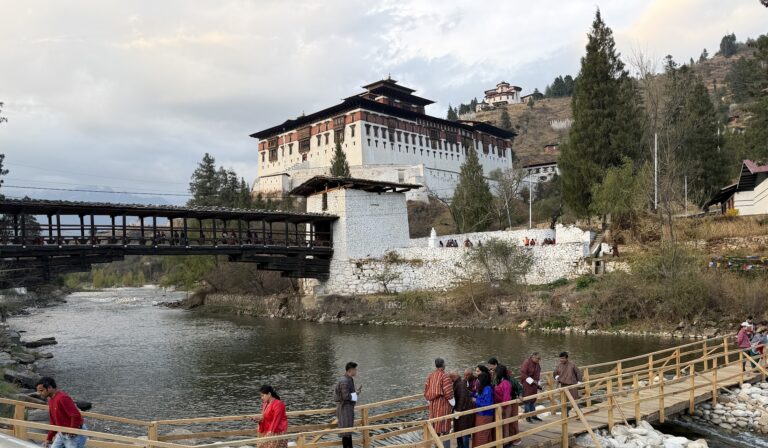
The walking is easy but high, so move slowly and drink plenty. We are back down in Paro by late afternoon after roughly six hours in the field, with the evening free to rest or visit the Rinpung Dzong. Dinner and the night are at the same 3-star hotel in Paro, at about 2,250 m.
- TravelCar, 1-3 hours
- Stay3-Star Hotel
- MealsBreakfast, Lunch, Dinner
Day 3Paro to Thimphu2,350 m
The drive from Paro to Thimphu takes about an hour and a half along the Paro Chhu and Wang Chhu, and we break it with roadside stops for wallcreeper and dippers at the river confluence at Chuzom. Brown dipper is common here, and crested kingfisher sometimes perches on the rocks.
In Thimphu, at about 2,350 m, we head north of the city to the forests near Cheri and Dodina, where the road ends and a trail crosses a covered bridge. The mixed broadleaf and conifer forest here is good for yellow-billed blue magpie, spotted nutcracker and several warblers and tits.
We walk slowly for about three hours, covering four to five kilometres with little height gain. In spring, the valley is busy with breeding birds such as green-tailed sunbird and rufous sibia, and the guide works the mixed flocks as they move through the canopy.
The afternoon is kept free for the National Memorial Chorten or a rest before the next early start. The guide arranges the route permits for central Bhutan while we are in the capital, which we need from Trongsa onward. Dinner and the night are at a 3-star hotel in Thimphu.
- TravelCar, 1-3 hours
- Stay3-Star Hotel
- MealsBreakfast, Lunch, Dinner
Day 4Over the Dochula to Punakha1,250 m
Leaving Thimphu early, we climb for about forty minutes to the Dochula at 3,100 m, where 108 chortens stand on the pass. On a clear winter or spring morning the eastern Himalaya lines the horizon, and the forest on the far side is our main birding stop of the day.
The moss-heavy oak and rhododendron forest below the pass holds fire-tailed myzornis, a small green bird that birders travel far to see, as well as rufous-bellied woodpecker and several fulvettas. We work the roadside on foot for two to three hours, stopping wherever a mixed flock appears.
The road then drops about 1,850 m into the warm Punakha valley, and the birds change with the height. By the time we reach the river at about 1,250 m, there are red-vented bulbuls, oriental magpie robins and river birds in place of the high forest species.
In the afternoon, we walk the bank of the Pho Chhu for the white-bellied heron, one of the rarest birds in the world, with only a few dozen thought to survive in Bhutan. The guide knows the stretches it uses but never promises it. The night is at a 3-star hotel near Punakha.
- TravelCar, 4-6 hours
- Stay3-Star Hotel
- MealsBreakfast, Lunch, Dinner
Day 5Jigme Dorji National Park forest1,250 m
Today we drive north up the Mo Chhu valley to the edge of Jigme Dorji National Park, the largest protected area in western Bhutan. The road follows the river past Punakha Dzong and climbs gently into subtropical forest, and we start birding from the vehicle within half an hour.
The warm broadleaf forest here holds some of the colourful lowland birds of the trip: scarlet minivet, long-tailed broadbill, sultan tit, crested serpent eagle over the valley, and several species of barbet calling from the treetops. Wallcreeper and ibisbill sometimes winter on the river shingle.
We walk sections of the road and forest edge for about five hours in total, covering six to eight kilometres on the flat or gentle grades. The guide uses this day to catch up on anything missed, and we check the river again for the white-bellied heron on the way back.
Lunch is a picnic in the field. In the late afternoon there is time to visit the Punakha Dzong at the meeting of the two rivers, one of the finest buildings in Bhutan. Dinner and the night are at the same 3-star hotel near Punakha, at about 1,250 m.
- TravelCar, 1-3 hours
- Stay3-Star Hotel
- MealsBreakfast, Lunch, Dinner
Day 6Punakha to Phobjikha2,900 m
The drive from Punakha to the Phobjikha valley takes about four hours, climbing through Wangdue and up into the hills of the Black Mountains. We stop at forest patches on the way, where the guide often finds yellow-browed tit, grey-crested tit and several laughingthrush species in the oak forest.
Phobjikha, at about 2,900 m, is a wide glacial valley with a marsh at its centre, and from late October to February it is the winter home of several hundred black-necked cranes from the Tibetan plateau. They are sacred in local belief, and the valley has been kept free of overhead power lines to protect them.
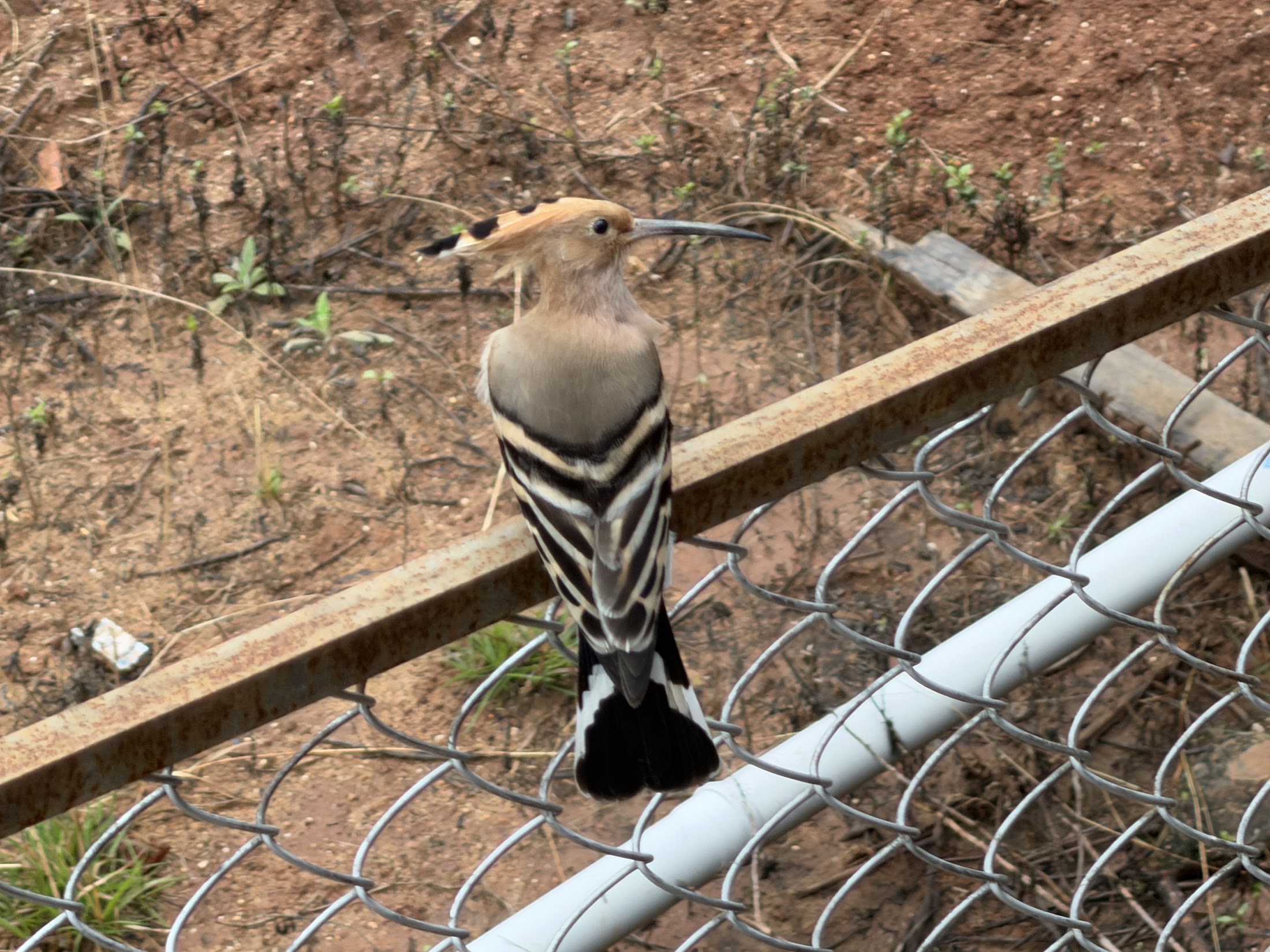
In the afternoon, we walk the nature trail along the edge of the valley for about two hours, watching cranes feed and fly in from the far side. In spring, when the cranes have gone, the valley and its pine forest are good for rosefinches, buntings and Eurasian hoopoe.
The Crane Information Centre, run by the Royal Society for Protection of Nature, has spotting scopes and a short film. Dinner and the night are at a tourist-standard hotel in the valley, which is colder than most stops, so pack a warm layer for the evening.
- TravelCar, 4-6 hours
- StayTourist Standard Hotel
- MealsBreakfast, Lunch, Dinner
Day 7Over the Pele La to Trongsa2,200 m
On winter departures, we start at dawn at the crane roosts, when the birds call loudly before flying out to feed; in spring, the guide works the pine forest instead. Then we cross the Lawa La out of the valley and join the main road east, climbing to the Pele La at about 3,420 m, the traditional boundary between western and central Bhutan.
The dwarf bamboo and rhododendron forest around the Pele La is one of the better places for satyr tragopan, a crimson pheasant with blue face wattles that is shy and seldom seen. We search the slopes slowly, and also look for great parrotbill and spotted laughingthrush in the bamboo.
Below the pass, the road follows a long valley down to Trongsa at about 2,200 m, with stops for birding and for the Chendebji Chorten, a white stupa built in the Nepali style. We usually see Himalayan griffon and steppe eagle overhead on this stretch.
The day has about six hours in the vehicle with three to four hours of birding on foot. In Trongsa, the dzong sits on a spur above the gorge, and the watchtower above it houses a museum. Dinner and the night are at a tourist-standard hotel facing the dzong.
- TravelCar, 4-6 hours
- StayTourist Standard Hotel
- MealsBreakfast, Lunch, Dinner
Day 8Trongsa to Tingtibi650 m
Today the Bhutan Birdwatching Tour turns south toward the lowlands, and the drop is dramatic. From Trongsa at about 2,200 m, the road follows the Mangde Chhu gorge down through Zhemgang to Tingtibi at about 650 m, a descent of more than 1,500 m in about five hours of driving.
The forests along this road are some of the richest in Bhutan for birds and primates. Golden langur, a monkey found only in Bhutan and a small corner of Assam, lives in the trees here, and the guide watches the canopy for its pale gold coat. Capped langur and Assamese macaque also appear.
For birds, the road passes through altitude bands with different species, from black-faced warbler and rufous-throated partridge higher up to great hornbill, wreathed hornbill and pin-tailed green pigeon lower down. We walk sections of the road whenever the canopy is active.
The heat and humidity increase as we descend, so swap your fleece for a light shirt and add repellent. Tingtibi is a small roadside town with simple lodges, and the night here is at the best available tourist-standard lodge, with home-style dinner and a basic but clean room.
- TravelCar, 4-6 hours
- StayTourist Standard Hotel
- MealsBreakfast, Lunch, Dinner
Day 9Tingtibi lowland forest650 m
The whole of this day is spent birding the lowland forests around Tingtibi, and it is often the busiest list of the tour. We drive short distances along the Gelephu road and the Mangde Chhu, then walk forest edges and quiet tracks for most of the day.
The prize birds here are rufous-necked hornbill, a large and threatened hornbill that the protected forests of central Bhutan still hold, and beautiful nuthatch, a striking blue and black bird of the mid-hill forest. Neither is guaranteed, and the guide plans the day around the best chance of each.
Supporting cast includes red-headed trogon, sultan tit, several sunbirds and spiderhunters, and mixed flocks of minlas and yuhinas. River lapwing and crested kingfisher use the larger rivers, and the evening chorus around the lodge is loud with cuckoos in spring.
Expect around six to seven hours in the field with eight to ten kilometres of easy walking, broken by a picnic lunch and a rest in the heat of the day. Leeches can be active after rain, so wear leech socks. Dinner and a second night are at the same lodge in Tingtibi.
- TravelCar, 1-3 hours
- StayTourist Standard Hotel
- MealsBreakfast, Lunch, Dinner
Day 10Tingtibi to Bumthang2,800 m
This is the longest drive of the Bhutan Birdwatching Tour, so we start at first light and bird the lower forest for an hour before climbing back north through Zhemgang to Trongsa. The road gains more than 2,000 m in total, and the birds change band by band as we climb.
Above Trongsa, we cross the Yotong La at about 3,425 m into the Bumthang district, with its wide valleys, pine forest and fields of buckwheat. The pass forest is another chance for satyr tragopan and for spotted nutcracker, and we stop wherever the guide hears a mixed flock.
The day has seven to eight hours on the road with breaks for birding, lunch and stretching your legs. It is tiring, and we keep the evening quiet with an early dinner at the hotel.
Jakar, the main town of Bumthang, sits at about 2,800 m in the Chamkhar valley. The guide checks the Thrumshing La road report this evening, since snow or landslides can affect it in winter and the monsoon edges. The night is at a 3-star hotel in the valley, with wood stoves in many rooms.
- TravelCar, 7-9 hours
- Stay3-Star Hotel
- MealsBreakfast, Lunch, Dinner
Day 11Thrumshing La cloud forest3,750 m
The day trip to the Thrumshing La is the reason many birders choose this route. We leave Jakar long before dawn and drive east for about two and a half hours to the pass, at about 3,750 m, so that we reach the forest as the birds wake.
The cloud forest of the Thrumshing La National Park, with old firs, rhododendrons and dense bamboo, is the home of Ward’s trogon, a large crimson and maroon bird that is rarely seen anywhere else. Satyr tragopan, Himalayan monal, golden-breasted fulvetta and fire-tailed myzornis are also possible.
We walk the quiet road below the pass in both directions for four to five hours, covering six to eight kilometres with gentle grades. Mist can roll in fast, so a waterproof jacket and warm hat are needed even on a sunny morning.
After a picnic lunch on the pass, we drive back west to Bumthang, birding on the way, and arrive by late afternoon. If the road is closed by snow, the guide swaps this day with the Bumthang birding day and tries again. Dinner and the night are at the same 3-star hotel in Jakar, at about 2,800 m.
- TravelCar, 4-6 hours
- Stay3-Star Hotel
- MealsBreakfast, Lunch, Dinner
Day 12Bumthang valley birding2,800 m
A slower day after the long trip east, spent around the four valleys of Bumthang at about 2,600 to 3,000 m. We bird the blue pine forest and riverside willows near Jakar in the early morning, when the light is soft and the birds are most active.
Species here include black-faced laughingthrush, Himalayan bluetail, red-billed chough over the fields, and in spring, the colourful rosefinches and buntings of the dry valleys. The Chamkhar Chhu and Tang Chhu rivers hold dippers, forktails and occasionally ibisbill in winter.
The walking is easy, about six kilometres in total on village paths and forest tracks. Around midday we visit Jambay Lhakhang, one of the oldest temples in Bhutan, and Kurjey Lhakhang, where Guru Rinpoche is said to have left his body print in the rock.
The afternoon is free for a last session in the forest or a walk through Jakar town. In the evening, the guide reviews the full bird list with you and confirms the morning flight to Paro. Dinner and the night are at the same 3-star hotel in Bumthang.
- TravelCar, 1-3 hours
- Stay3-Star Hotel
- MealsBreakfast, Lunch, Dinner
Day 13Fly Bumthang to Paro2,250 m
A short transfer takes us to Bathpalathang airport near Jakar for the Drukair flight back to Paro, which takes about half an hour over the ridges we drove across. The flight replaces two long days on the road and runs on a fixed schedule, so the guide confirms the time the evening before.
If the flight is cancelled for weather, we drive back to Paro over two days with birding on the way, and any extra night is excluded, as noted in the price. Camera bags and binoculars should go in the cabin, since the hold allowance is low.
Back in Paro at about 2,250 m, there is time for lunch and then a choice. Some birders walk to the Tiger’s Nest viewpoint at the cafeteria, a climb of about 350 m and two hours round trip, where the forest holds a few more species.
Others return to the Paro Chhu for a last look at the river birds, or visit the National Museum above the dzong. In the evening, we share a farewell dinner, and the guide hands over the final checklist for the trip. The night is at a 3-star hotel in Paro.
- TravelFlight, 30-60 minutes
- Stay3-Star Hotel
- MealsBreakfast, Lunch, Dinner
Day 14Depart Paro2,250 m
Your last morning of the Bhutan Birdwatching Tour depends on the flight time. Most departures leave Paro in the morning, so there is often time for a short walk near the hotel after an early breakfast, when a final species or two can still turn up.
Flights from Paro are timed around the weather, since the valley is narrow and the pilots fly by sight. Keep your passport, printed visa clearance and boarding details together, and bring any heavy camera gear in your hand luggage.
Our guide and driver take you to the airport, about fifteen minutes from most Paro hotels, and help with check-in. The guide also sends the full checklist of species seen to your email, which makes it easy to enter the records into eBird or your own list.
If you are flying on to Kathmandu, Delhi or Bangkok, we can help with a connecting stay or a Nepal birding extension; just ask before you book. The departure day includes breakfast and the transfer. Thank you for travelling with us, and we hope to see you on another trip in the Himalaya.
- TravelCar, 30-60 minutes
- MealsBreakfast
What's included
Included in the price
- Bhutan visa: the visa application and US$ 40 fee
- Sustainable Development Fee: US$ 100 per person for each of the 13 nights
- Birding guide: a specialist Bhutanese bird guide with a spotting scope
- Cultural guide: a licensed English-speaking guide for sites and logistics
- Domestic flight: Bumthang to Paro on Drukair, subject to schedule
- Airport transfers: at Paro and Bumthang
- Hotels: 3-star rooms where available and the best available lodges in Tingtibi, Trongsa and Phobjikha, twin share
- All meals: including early packed breakfasts and field lunches
- Vehicle: a private vehicle with driver, stopping wherever birds are
- Route permits: permits for central Bhutan and protected areas
- Park entry: national park and protected area fees on the route
- Entrance fees: dzongs and temples on the itinerary
- Drinking water: bottled water in the vehicle
- Bird list: a daily checklist kept by the guide
- Support: 24-hour contact with our team during the tour
Not included
- International flights to and from Paro
- Connecting airfare to your gateway city
- Travel insurance with medical cover and evacuation
- Binoculars and cameras, which you should bring
- Single supplement for your own room
- Drinks other than water, tea and coffee
- Extra nights if the domestic flight is cancelled
- Excess baggage on the domestic flight, which matters for camera gear
- Tips for the birding guide, cultural guide and driver
- Personal costs such as souvenirs and laundry
Dates and price
These are our fixed group dates. Prices change with the season, so each date shows its own price. Please book at least 30 days ahead, so we have time to arrange your Bhutan visa.
US$ 3,955per person
| Starts | Ends | Status | Price | Book |
|---|---|---|---|---|
| Departs: Fixed group dates. Book your date | ||||
Trip information
Price by Group Size
| Group size | Price per person |
|---|---|
| 1 birder (private) | US$ 4,940 |
| 2 birders | US$ 3,955 |
| 3 to 5 birders | US$ 3,560 |
| 6 to 12 birders | US$ 3,295 |
To book: choose a departure below and pay a 20% deposit. The balance is due before we lodge your Bhutan visa, about 30 days before you fly. Send us your target species list, and the guide will plan around it.
Joining alone: solo birders can join any group date and pay the rate for the group that travels; once six or more are booked, we refund the difference.
Private tour: the Bhutan Birdwatching Tour runs privately on any date in the season, and private groups can extend east to Mongar and Yongkola for more lowland species.
Not in the price: international flights, insurance, binoculars, drinks and tips. Thirteen nights of Bhutan’s SDF, US$ 1,300 per person, and the Bumthang to Paro flight are already included.
Best Time to Visit
We run group departures of the Bhutan Birdwatching Tour on the 1st, 11th and 21st from March to May and from November to February. The two seasons offer different birds.
Spring, from March to May, is the peak birding season. Resident birds are in breeding plumage and singing, migrants are passing through, and the rhododendron forests of the passes are in flower. April is the favourite month for most birders.
Winter, from November to February, brings altitudinal migrants down into the valleys, black-necked cranes to Phobjikha and ibisbill to the river beds of Paro. Days are clear and cold, and some high passes can hold snow.
We avoid the June to September monsoon, when rain and leeches make forest birding hard, and autumn, when birds are quieter. Private dates outside our seasons can be discussed.
Difficulty and Fitness
The Bhutan Birdwatching Tour is easy in terms of walking: most birding is along quiet roads and short forest trails, rarely more than a few kilometres a day. The challenge is the schedule.
Days start at dawn, often before 6 am, and include long drives on winding mountain roads between birding areas. Some days have five hours or more in the vehicle, broken by frequent stops.
Several birding sites are high: the Chele La at about 3,988 m and the Thrumshing La at about 3,750 m. Walking slowly at this height is fine for most people, but breathlessness is normal.
The tour suits most fit adults. Bring good walking shoes with grip for wet forest tracks, and tell us about any mobility needs so the guide can plan suitable sessions.
Food, Water and Dietary Needs
All meals are included on the Bhutan Birdwatching Tour. On early days, breakfast is packed and eaten in the field, often with hot tea from a flask, and lunch is a picnic or a roadside restaurant.
Dinners are at hotels and lodges, with Bhutanese dishes such as red rice, ema datshi and dal alongside milder food. Lodges in Tingtibi and Phobjikha serve simple, home-style meals.
Vegetarian, vegan and gluten-free meals can be arranged with notice. Tell us about allergies at booking, so the guide can brief each kitchen ahead of time.
Tap water is not safe to drink. Bottled water is in the vehicle, and the guide carries a flask of hot water for early mornings.
Our guide carries snacks, fruit and biscuits in the vehicle for long birding sessions between meals.
Altitude, Health and Safety
The Bhutan Birdwatching Tour ranges from about 650 m near Tingtibi to about 3,988 m on the Chele La, with overnight stops between about 650 m and 2,900 m. Altitude problems are rare, but take the high passes slowly.
Lowland forests near Tingtibi have leeches in wet weather and mosquitoes in warm months. Bring repellent, leech socks and long trousers, and ask your doctor about malaria advice for the southern foothills.
Roads are narrow and winding, and drivers are experienced on them. On roadside birding stops, keep to the edge, watch for traffic and follow the guide’s instructions.
There are hospitals in Paro, Thimphu, Punakha, Trongsa, Gelephu and Jakar. Your insurance should include medical cover and evacuation.
Bring any personal medicines in your hand luggage, with enough for the full fourteen days.
Local Etiquette
Bhutan protects its wildlife firmly, and the Bhutan Birdwatching Tour follows strict field ethics. Do not use playback near nesting birds without the guide’s agreement, never approach nests, and keep to paths in protected areas.
In Phobjikha, the cranes are sacred to local people. Keep your distance, stay quiet near the marsh and do not fly drones, which are banned near the wetland.
At dzongs and temples, wear long sleeves and long trousers or skirts, remove hats and shoes in shrine rooms, and do not photograph inside.
Greet people with “kuzuzangpo la”, and ask before photographing villagers. Tipping the guides and driver at the end is customary but never expected. Smoking in public places is restricted in Bhutan.
Dress in muted colours in the field, which helps both the birds and the villagers feel at ease.
Visa, Permits and Documents
Everyone except Indian, Bangladeshi and Maldivian nationals needs a Bhutan visa, arranged by a licensed operator. We apply for your Bhutan Birdwatching Tour visa once the balance is paid.
We need a passport scan, valid six months beyond arrival, and a passport photo. The visa costs US$ 40 and the SDF is US$ 100 per person per night until 31 December 2029; both are included.
Travel to central Bhutan and some protected areas needs route permits, which we arrange in Thimphu. Your passport is also needed for the domestic flight from Bumthang.
Large camera lenses and binoculars are allowed in Bhutan for personal use. Print the visa clearance letter for check-in and arrival. Official rules are on bhutan.travel.
Carry two printed copies of your passport and visa letter, kept separate from the originals.
Transport, Money and Connectivity
You fly into and out of Paro on Drukair or Bhutan Airlines. Within Bhutan, a private vehicle and driver take you across the country, stopping wherever birds are, and a Drukair flight returns you from Bumthang to Paro.
The domestic flight has a lower baggage allowance, which matters for heavy camera gear; we can arrange excess baggage or send bags back to Paro by road.
The ngultrum is Bhutan’s currency, tied to the Indian rupee. Bring clean US dollar notes to change at the airport, since cards rarely work outside the main towns.
Mobile signal covers most towns but fades in forests and on passes. Hotel Wi-Fi is basic outside Paro and Thimphu. eBird works offline, so download Bhutan’s checklist before you travel.
Questions about this trip
How much does the Bhutan Birdwatching Tour cost?
The Bhutan Birdwatching Tour costs from US$ 3,295 per person in a group of six to twelve, US$ 3,560 for three to five, US$ 3,955 for two and US$ 4,940 for a private solo birder. The price includes the visa, thirteen nights of SDF, hotels, all meals, both guides, the vehicle and the domestic flight.
How long is the Bhutan Birdwatching Tour?
The Bhutan Birdwatching Tour is 14 days and 13 nights, from arrival in Paro to departure from Paro. It covers the Chele La, Punakha, Phobjikha, Trongsa, Tingtibi and Bumthang, with a domestic flight back to Paro at the end to save two long days of driving on the same road.
What is the best time for the Bhutan Birdwatching Tour?
The best time for the Bhutan Birdwatching Tour is March to May, when birds are breeding, singing and in full colour. November to February is the second window, bringing black-necked cranes to Phobjikha, ibisbill to the rivers and high-altitude birds down into the valleys. We avoid the monsoon.
How many bird species can we see on the Bhutan Birdwatching Tour?
On the Bhutan Birdwatching Tour, a spring group often records well over 200 species. Numbers depend on the month, the weather, the group’s pace and luck, so we never promise a total. The range of habitats, from about 650 m in the lowland forest to almost 4,000 m on the passes, is what makes a long list possible.
Will we see Ward's trogon on the Bhutan Birdwatching Tour?
Ward’s trogon is a target of the Bhutan Birdwatching Tour but never guaranteed. We give it a full dawn session in the Thrumshing La cloud forest, where it is regular, and if the road is closed we swap days to try again. Many groups see it, and some miss it despite good effort.
Can we see the white-bellied heron on the Bhutan Birdwatching Tour?
The white-bellied heron is possible on the Bhutan Birdwatching Tour along the Pho Chhu and Mo Chhu near Punakha. It is one of the rarest birds in the world, with only a few dozen in Bhutan, so we treat any sighting as a bonus. The guide knows the stretches it uses and checks them twice.
Is the Bhutan Birdwatching Tour physically hard?
The Bhutan Birdwatching Tour is easy in walking terms, with short, gentle walks along roads and forest tracks. The hard parts are dawn starts, long drives on winding roads and birding at up to 3,988 m on the Chele La. Most fit adults manage it well with good shoes and a steady pace.
Who guides the Bhutan Birdwatching Tour?
The Bhutan Birdwatching Tour has two guides: a specialist Bhutanese bird guide who knows the calls and the sites, and a licensed cultural guide who handles permits, hotels and temple visits. The bird guide carries a spotting scope and keeps the daily checklist, so you can focus on watching.
Is the Bhutan visa included in the Bhutan Birdwatching Tour?
Yes, the Bhutan Birdwatching Tour includes the Bhutan visa and its US$ 40 fee. We apply once the balance is paid, about 30 days before travel, using a scan of your passport and a photo. The visa clearance letter comes by email, and the visa is stamped when you land in Paro.
Is the SDF included in the Bhutan Birdwatching Tour price?
Yes, the Sustainable Development Fee is included in the Bhutan Birdwatching Tour price. The fee is US$ 100 per person per night until 31 December 2029, so thirteen nights come to US$ 1,300 per person, already counted in every tier of the price table. There is nothing extra to pay at the border.
What should I bring for the Bhutan Birdwatching Tour?
For the Bhutan Birdwatching Tour, bring binoculars, a camera with a long lens if you photograph, a field guide or app, a warm down jacket, a waterproof shell, fleece, light shirts for the lowlands, walking shoes with grip, leech socks, repellent, sunscreen, a headtorch and a small daypack.
Are binoculars provided on the Bhutan Birdwatching Tour?
Binoculars are not included on the Bhutan Birdwatching Tour, so please bring your own pair, ideally 8×42 or 10×42. The bird guide carries a spotting scope that the group shares for distant birds such as cranes, raptors and waders. If you forget binoculars, they are hard to buy in Bhutan.
Can we photograph birds on the Bhutan Birdwatching Tour?
Yes, the Bhutan Birdwatching Tour suits bird photographers, and long lenses are allowed in Bhutan for personal use. The guide stops whenever there is a chance, but the pace follows the group. Photography inside dzongs and temples is not allowed, and drones need a permit and are banned near crane areas.
What hotels are used on the Bhutan Birdwatching Tour?
The Bhutan Birdwatching Tour uses 3-star hotels in Paro, Thimphu, Punakha and Bumthang, and the best available tourist-standard lodges in Phobjikha, Trongsa and Tingtibi, where choices are limited. Rooms are twin share with private bathrooms. Single rooms are available for a supplement.
What food is served on the Bhutan Birdwatching Tour?
All meals are included on the Bhutan Birdwatching Tour. Breakfasts on early days are packed and eaten in the field with hot tea, lunches are picnics or roadside restaurants, and dinners are at the hotels. Food mixes Bhutanese dishes such as red rice and ema datshi with milder options, and diets are catered.
Is there a domestic flight on the Bhutan Birdwatching Tour?
Yes, the Bhutan Birdwatching Tour includes the Drukair flight from Bumthang to Paro, which takes about thirty minutes and saves two days of driving. The flight depends on weather and the airline’s schedule. If it is cancelled, we drive back with birding stops, and any extra night is not included.
Can I join the Bhutan Birdwatching Tour on my own?
Yes, solo birders can join any group date of the Bhutan Birdwatching Tour. You pay the rate for the group size that travels, and once six or more are booked we refund the difference. A single room supplement applies if you want your own room, otherwise we pair you with another birder of the same sex.
Can the Bhutan Birdwatching Tour run as a private trip?
The Bhutan Birdwatching Tour runs privately on any date in the spring or winter season, priced by the table for your group size. Private groups can also change the pace, add an extra day at Tingtibi or the Thrumshing La, or extend east to Mongar and Yongkola for more lowland species.
How do I book the Bhutan Birdwatching Tour?
To book the Bhutan Birdwatching Tour, choose a departure on this page and pay a 20% deposit through our secure booking checkout. The balance is due before we lodge your Bhutan visa, about 30 days before travel. Send us your target species list after booking, and the guide will plan around it.
Are there leeches on the Bhutan Birdwatching Tour?
Leeches can be active in the lowland forests near Tingtibi on the Bhutan Birdwatching Tour, mainly after rain in late spring. They are harmless but unpleasant. Leech socks, long trousers tucked in and repellent keep most away, and the guide checks the group after forest walks. Winter departures see very few.
Is altitude a problem on the Bhutan Birdwatching Tour?
Altitude is rarely a problem on the Bhutan Birdwatching Tour, since nights are between about 650 m and 2,900 m. The highest birding is on the Chele La at about 3,988 m and the Thrumshing La at about 3,750 m, visited for a few hours each. Walk slowly, drink well and tell the guide if you feel unwell.
What is the group size on the Bhutan Birdwatching Tour?
The Bhutan Birdwatching Tour runs for two to twelve birders, and we keep groups small so everyone gets a view through the scope and a seat by a window. Larger groups use two vehicles. A private tour for one birder is also possible at the solo rate in the price table.
Do we visit temples on the Bhutan Birdwatching Tour?
Yes, the Bhutan Birdwatching Tour includes short cultural visits fitted around the birding, such as Rinpung Dzong in Paro, Punakha Dzong, Trongsa Dzong and Jambay Lhakhang in Bumthang. Entrance fees are included. Wear long sleeves and long trousers for these visits, which usually happen in the quieter middle of the day.
Can I add a Nepal birding extension to the Bhutan Birdwatching Tour?
Yes, many birders combine the Bhutan Birdwatching Tour with Nepal, flying between Paro and Kathmandu. Chitwan’s lowland forests and wetlands add many species that Bhutan lacks. Ask us when you book, and we will plan the connection, a buffer night and the Nepal visa details around your dates.
Reading for this trip
Ask us about the Bhutan Birdwatching Tour
We reply from Kathmandu within 24 hours with available dates, your exact price and answers to your questions.
- 16 years guiding in the Himalaya
- Registered in Nepal, Reg. 187391
- Group departures of 12 travelers at most
- Private dates on any day
Call, WhatsApp or Viber
Bhutan Birdwatching Tour, from US$ 3,295 per person. Dates and booking at treknepalhimalayas.com/trip/bhutan-birdwatching-tour/
Trek Nepal Himalayas Pvt Ltd, Reg. 187391. Bhagawatisthan, Thamel, Kathmandu, Nepal. Call or WhatsApp +977 98510 13196. [email protected]