
Everest Base Camp Trek Difficulty: How Hard Is It Really?
Everest Base Camp Trek Difficulty: How Hard Is It Really?
Every week, someone asks us the same question, just phrased differently. A runner from Sydney wants to know if her marathon fitness is enough. A retired engineer from California wonders if he is too old. A couple from Mumbai asks whether a first-time hiker can really stand at the foot of the world’s highest mountain. Underneath it all is one simple question about the Everest Base Camp Trek: how hard is it, really?
The honest answer is this. The Everest Base Camp Trek is not a technical climb. You need no ropes, no ice axe and no mountaineering experience. But it is not an easy walk either. You will walk for around two weeks, cover roughly 130 kilometres on mountain trails and sleep at altitudes where the air carries about half the oxygen you breathe at sea level. The trail itself is rarely the problem. The altitude, the cold and the accumulation of tired days are.
In this guide, our Sherpa team shares what they have learned from leading trekkers through the Khumbu season after season. We break down every factor behind the Everest Base Camp trek’s difficulty, from Namche Hill to the final push to Gorakshep, and explain exactly how to prepare so the trek feels like the adventure of a lifetime, not a struggle.
How Hard Is the Everest Base Camp Trek? The Short Answer
Most trekking companies grade the Everest Base Camp trek as moderate to challenging. On a simple scale, it sits above short lowland hikes such as the Ghorepani Poon Hill Trek and below technical routes like Island Peak Climbing. Our package page lists it as moderate, which is fair for a trekker who prepares properly and follows a well-paced itinerary.
What makes it hard is not one single thing but the combination of five factors:
- Altitude: You climb from Lukla (2,860 m) to Everest Base Camp (5,364 m) and, for most trekkers, to Kala Patthar (around 5,545 m).
- Duration: You walk for most of 12 to 14 days, with very few true rest days.
- Distance: The round trip from Lukla is about 130 km (80 miles), mostly on uneven stone and dirt trails.
- Climate: Mornings and nights above 4,000 m are freezing, especially in late autumn and winter.
- Basic living: Teahouses become simpler and colder the higher you go, which affects sleep and recovery.
None of these is extreme on its own. Together, they create a trek that rewards patience and preparation far more than raw athletic ability. That is the most important idea in this entire article, and we will come back to it again and again.
Understanding the EBC Trek Difficulty Level
Nepal’s trekking routes are often informally graded. Easy treks stay below 3,000 m and involve a few hours of walking each day. Moderate treks reach between 3,000 and 4,500 m. Challenging treks go above 5,000 m and last two weeks or more. Strenuous treks add high passes, remote terrain or very long days.
At that scale, the EBC trek sits firmly in the challenging-but-achievable category. It goes above 5,000 m on several days, but it follows a well-established trail with lodges, rescue posts and villages all the way to Gorakshep. Compare that with routes such as the Everest 3 Pass Trek, which crosses three passes above 5,300 m, or the remote Kanchenjunga Base Camp Trek, where facilities are far fewer. Those are a clear step up in difficulty.
This is why the classic Everest Base Camp trek is often the first high-altitude trek people ever do. It is genuinely hard, but it is also forgiving if you respect the mountains.
Factor 1: Altitude, the Real Challenge of the Everest Region
If you remember only one thing about the Everest Base Camp Trek difficulty, make it this: altitude is the real test. The trail would be a pleasant two-week hike at sea level. At 5,000 m, the same path can make a strong athlete stop every twenty steps to catch their breath.
How Thin Is the Air?
At Everest Base Camp, air pressure is roughly half that at sea level, so every breath delivers far less oxygen to your body. Your heart beats faster, your breathing quickens, and simple tasks such as tying your boots or climbing a short flight of lodge stairs leave you breathless. This is normal. Your body is adapting, and it needs time.
Here is how the altitude builds along the classic route:
- Lukla: about 2,860 m, where the trek begins.
- Phakding: about 2,610 m, a gentle first day downhill along the Dudh Koshi River.
- [Namche Bazaar](https://www.treknepalhimalayas.com/namche-bazaar/): about 3,440 m, the Sherpa capital and your first acclimatisation stop.
- [Tengboche](https://www.treknepalhimalayas.com/tengboche/): about 3,860 m, home of the famous monastery.
- [Dingboche](https://www.treknepalhimalayas.com/dingboche/): about 4,410 m, your second acclimatisation stop.
- [Lobuche](https://www.treknepalhimalayas.com/lobuche/): about 4,910 m, at the edge of the Khumbu Glacier.
- [Gorakshep](https://www.treknepalhimalayas.com/gorakshep/): about 5,160 m, the last settlement before base camp.
- Everest Base Camp: 5,364 m.
- [Kala Patthar](https://www.treknepalhimalayas.com/kala-pathar/): about 5,545 m, the highest point of the trek and the best viewpoint for Everest.
Acute Mountain Sickness on the Everest Trail
Acute Mountain Sickness, usually called AMS, is the single biggest reason people turn back on the trek. Early symptoms include headache, loss of appetite, nausea, dizziness, poor sleep, and unusual tiredness. Mild AMS is common and usually improves with rest, hydration and a pause in ascent. If ignored, it can progress into High Altitude Pulmonary Oedema (HAPE) or High Altitude Cerebral Oedema (HACE), both of which are life-threatening and require immediate descent.
The important thing to understand is that fitness does not protect you from altitude sickness. Doctors in the Everest region regularly see young, fit trekkers struggle because they climbed too fast, while slower, older trekkers reach base camp comfortably. Altitude does not care about your gym routine. You can read more about warning signs and prevention on our dedicated Acute Mountain Sickness guide.
Acclimatisation: The Secret to Making It Easier
The golden rule of high-altitude trekking is “climb high, sleep low.” Once you pass 3,000 m, medical advice is to increase your sleeping altitude by only about 300 to 500 m per day and to add a rest day for every 1,000 m or so of gain. On a good itinerary, you spend two nights in Namche Bazaar and two nights in Dingboche. These are not lazy days. You hike higher during the day, to the Everest View Hotel above Namche or up Nangkartshang Peak above Dingboche, and then return to sleep lower.
That rhythm is built into our Everest Base Camp Trek itinerary, and it is the main reason our trekkers succeed. If you see an itinerary that rushes from Lukla to base camp in six or seven days, be cautious. Saving two days rarely saves anything when altitude sickness forces you to descend.
On the way down, many trekkers pass through Pheriche, where the Himalayan Rescue Association runs a well-known aid post. During the trekking season, its volunteer doctors give a free afternoon talk on altitude sickness. It is worth attending, both for your safety and to better understand what your body has just been through.
Factor 2: Distance and Daily Walking Hours
The total distance of around 130 km round trip sounds manageable when spread over 12 days. The catch is that mountain distance doesn’t measure effort well. A 10 km day at 4,500 m can take longer and feel harder than a 20 km day at home. For a full stage-by-stage breakdown, see our guide to the Everest Base Camp Trek distance.
What a Typical Trekking Day Looks Like
Most days involve five to seven hours of walking at a slow, steady pace. A typical day follows this pattern:
- Early morning: Wake up around six, pack your duffel for the porter and have breakfast in the warm dining room.
- Morning walk: Trek for three to four hours, with short breaks for water, photos and tea.
- Lunch: A hot meal at a teahouse along the trail, often dal bhat, noodle soup or fried rice.
- Afternoon walk: Two to three more hours to reach your overnight lodge.
- Evening: Rest, a short acclimatisation walk, dinner, a briefing from your guide and an early night.
A few days are notably longer. The day from Lobuche to Gorakshep, Everest Base Camp, and back to Gorakshep can take seven to nine hours at the trek’s highest altitude. The next day starts in the dark with the climb to Kala Patthar, then a long descent to Pheriche. These two days are the toughest part of the journey, and you are already tired. Planning your energy for them is part of the strategy.
The Cumulative Fatigue Factor
One hard day is easy to recover from. Twelve days in a row is different. Fatigue builds up slowly, sleep at altitude is lighter, and appetite often drops above 4,000 m. This cumulative tiredness is one of the most underestimated parts of the Everest Base Camp Trek difficulty. Trekkers who train for endurance, eat well even when they are not hungry and keep a steady pace handle it far better than those who start too fast.
Factor 3: Terrain and Trail Conditions
The trail to Everest Base Camp is well marked and well used. You will not need to scramble, use your hands or cross glaciers with ropes. Still, the terrain changes dramatically over the trek and brings its own difficulties.
Lower Khumbu: Forests, Bridges and Stone Steps
From Lukla to Namche Bazaar, the trail winds through pine and rhododendron forest along the Dudh Koshi River. You cross several high suspension bridges, including the famous Hillary Bridge, which can feel exciting or nerve-wracking depending on your relationship with heights. The bridges are sturdy and safe, and yak trains share them with trekkers, so always wait on the hillside when animals pass.
The trail here mixes dirt paths and stone staircases. There are many ups and downs, so even though you start and finish the day at similar altitudes, your legs will feel the climbing.
The Namche Hill: Your First Real Test
The climb to Namche Bazaar is the trek’s first major challenge. After crossing the Hillary Bridge, the trail rises steeply for around 600 m with very few flat sections. Most trekkers take two to three hours for this climb. It is hard, but it is also an excellent test. If you can walk up the Namche Hill at a steady pace, you have the fitness for the rest of the trek. If you find it very difficult, slow down and listen closely to your guide.
Upper Khumbu: Moraine, Rocks and Thin Air
Above Pangboche, the trees disappear. The landscape becomes open, windswept and rocky. After Dingboche, the trail climbs past the memorials at Thukla, then follows the Khumbu Glacier’s lateral moraine to Lobuche and Gorakshep. This section is uneven, loose and dusty in places, with constant small climbs and drops. Combined with the altitude, it is the most physically demanding terrain on the trek.
The final walk from Gorakshep to Everest Base Camp crosses a rough, rocky path along the glacier. Base camp itself sits on moving ice and rubble at the foot of the Khumbu Icefall. It is not a peak or a summit, and views of Everest’s summit are limited from there. That is why the sunrise climb to Kala Patthar is so important: it gives you the full, classic view of Everest, Nuptse, Lhotse and Pumori.
The Descent Is Also Hard Work
Many people focus only on the climb, but the descent from Gorakshep back to Lukla takes three to four days and is hard on the knees. Long downhill sections, especially the drop from Namche to the Dudh Koshi, test your joints. Trekking poles help enormously here, and strength training before your trip makes a real difference.
Factor 4: Weather, Temperature and Seasons
Weather can make the same trek feel easy or punishing. The Everest region can move from warm sunshine to snow flurries within hours, and temperatures fall sharply after sunset at every altitude above Namche.
Spring (March to May)
Spring is one of the two main trekking seasons. Rhododendron forests bloom in the lower valleys, days are relatively warm, and climbing expeditions keep Everest Base Camp busy. Afternoon clouds and haze are more common than in autumn, but the conditions are generally comfortable. Difficulty level: moderate.
Autumn (September to November)
Autumn brings the year’s clearest skies, sharp mountain views, and stable weather after the monsoon. It is the most popular season, so trails and lodges are busier. Nights become very cold from November, with temperatures at Gorakshep often well below freezing. Difficulty level: moderate, rising to challenging in late November.
Winter (December to February)
Winter is quiet, clear and very cold. Nights at Lobuche and Gorakshep can drop to around minus 20°C, and snow can occasionally block the higher trail. Some lodges in the upper villages close. For experienced, well-equipped trekkers, winter offers solitude and superb visibility. For first-timers, the cold adds a serious layer of difficulty to the Everest Base Camp Trek. Difficulty level: challenging.
Monsoon (June to August)
The summer monsoon brings rain, mud, leeches in the lower forest, cloud-covered peaks and frequent flight cancellations at Lukla. The upper Khumbu is drier than the lowlands, but views are unreliable. Difficulty level: challenging, mostly because of logistics and slippery trails rather than the walking itself.
For most trekkers, spring and autumn are the right choice. They make the trek easier, safer and more rewarding.
Factor 5: Teahouse Life and Basic Comforts
Part of the difficulty of trekking in the Everest region is simply living for two weeks in basic mountain conditions. Below Namche, many teahouses offer comfortable rooms, hot showers and good food. As you climb, things become simpler.
- Rooms: Usually twin beds with foam mattresses in unheated rooms. At Lobuche and Gorakshep, nights can drop below freezing, so a good sleeping bag rated to about minus 20°C is essential.
- Dining hall: The only heated room, warmed by a stove. Trekkerss eat, chat, and keep warm n the evening.
- Food: Dal bhat, noodles, pasta, potatoes, soups and eggs are reliable choices. Many experienced trekkers avoid meat above Namche, since it is carried up without refrigeration.
- Water: Tap water is not safe to drink. Use purification tablets, a filter or boiled water.
- Toilets: Flush toilets are common lower down, while higher lodges often have squat toilets. Carry your own toilet paper and hand sanitiser.
- Charging and Wi-Fi: Available in most villages for a fee, but slower and less reliable above Dingboche.
These conditions add to the Khumbu’s charm and authenticity, but poor sleep and cold nights slow recovery. To reduce this part of the challenge, the Everest Base Camp Luxury Lodge Trek uses the best lodges along the route, with heated dining areas, attached bathrooms in the lower villages, and better beds. Better rest improves acclimatisation, which directly lowers the difficulty.
Getting There: The Lukla Flight and Ramechhap Drive
The adventure begins before you take your first step. Flights to Lukla’s Tenzing-Hillary Airport are short, dramatic and entirely dependent on mountain weather. Delays of a day or more are common, so we always recommend keeping one or two buffer days in Kathmandu at the end of your trip.
During peak spring and autumn, Nepal’s aviation authority shifts most Lukla flights from Kathmandu to Manthali Airport in Ramechhap, about 132 km away. That usually means a very early start and a four- to five-hour drive before your flight. It is tiring, so plan for it. Our Ramechhap airport transportation service makes the transfer as smooth as possible, and some trekkers choose to drive the day before and stay overnight near the airport.
If you would rather avoid flying entirely, the Everest Base Camp Trek by Road uses a jeep drive to the lower Solukhumbu. It adds a few extra days of walking, which also helps with acclimatisation. History lovers might consider the classic Jiri to Everest Trek, the route the first Everest expeditions walked. It is longer and has more ups and downs, but it builds fitness gradually before you reach high altitude.
How Fit Do You Need to Be for the Everest Base Camp Trek?
You do not need to be an athlete. You do need good, reliable endurance. A useful benchmark is this: if you can comfortably hike five to six hours on hilly terrain with a light daypack, and do it again the next day, you have a solid base for the Everest Base Camp trek.
A Practical Training Plan
Start training at least two to three months before your trek. A simple, effective approach looks like this:
- Cardio three to five times a week: Brisk walking, running, cycling, swimming or stair climbing, building up to 45 to 60 minutes per session.
- Weekly long hike: Walk four to six hours on hills or trails, ideally with 5 to 8 kg in your backpack. This is the single best preparation you can do.
- Stairs and incline work: Use stairs, steep hills or an incline treadmill to train your legs for long climbs like the Namche Hill.
- Strength training twice a week: Squats, lunges, step-ups and calf raises for your legs, plus core exercises to support your back.
- Downhill practice: Walk down steep slopes to condition your knees and quads for the long descent.
- Back-to-back days: In the last month, do two long hikes on consecutive days to simulate trekking fatigue.
Break in your trekking boots during this training. Blisters are one of the most avoidable causes of misery on the trail, and new boots on day one in Lukla are a mistake we see far too often. Our trekking equipment checklist covers everything you need, from layers and sleeping bags to poles and headlamps.
Health Checks Before You Go
If you have a heart condition, high blood pressure, asthma, diabetes or any other medical concern, see your doctor well before your trek. Talk to them about altitude and about medication such as acetazolamide (Diamox), which some trekkers use under medical guidance. Travel insurance that covers high-altitude helicopter evacuation up to at least 6,000 m is essential for every trekker.
Mental Difficulty: The Part Nobody Talks About
Ask anyone who has completed the trek, and many will say the mental challenge was harder than the physical one. You will have headaches. You will wake at 3 a.m. at Lobuche, cold and unable to sleep. You will walk slowly behind a yak train with your lungs burning, wondering why you signed up for this.
The trekkers who succeed are not always the strongest. They are the ones who stay patient, keep a positive attitude and take the trek one day at a time. A few simple habits help:
- Focus on the next village, not the final destination.
- Walk slowly enough that you can talk while you trek. Sherpas call this the “bistari, bistari” pace, which means slowly, slowly.
- Celebrate small milestones, such as your first view of Everest from the Namche trail or the sunrise over Ama Dablam at Tengboche.
- Talk openly with your guide about how you feel. Hiding symptoms to keep up with the group is the worst decision you can make at altitude.
- Accept that turning back is sometimes the right choice, and that the mountain will still be there.
The cultural side of the journey also helps. Spinning prayer wheels, watching monks chant at Tengboche Monastery, sharing tea with Sherpa families and seeing the memorials at Thukla give the trek meaning beyond physical effort. Those moments carry you through the hard ones.
Who Can Do the Everest Base Camp Trek?
The Everest Base Camp Trek difficulty is manageable for a much wider range of people than many assume. Over the years, our guides have led first-time trekkers, families with teenagers, solo travellers joining small groups and trekkers in their sixties and seventies to base camp.
First-Time Trekkers and Beginners
Yes, beginners can do it, as long as they train, choose a well-paced itinerary and walk with an experienced guide. If you want to test yourself first, a shorter trek such as the Ghorepani Poon Hill Trek or the Langtang Valley Trek is a great introduction to teahouse life and mountain walking.
Older Trekkers
Age is far less important than health, fitness and pace. Older trekkers often do very well because they naturally walk slowly and listen to their bodies. Adding an extra acclimatisation day, or choosing a more comfortable lodge option, can make a big difference.
Children and Teenagers
Fit teenagers who enjoy walking often handle the trek well. Younger children can be harder to monitor for altitude symptoms, so families with small children may prefer lower routes or the shorter Everest View Trek, which offers excellent Everest views without going above about 3,900 m.
Trekking With a Guide
Nepal now requires foreign trekkers in national parks and conservation areas to walk with a licensed guide, and in the Everest region this is a real safety advantage. An experienced guide sets the right pace, spots early signs of AMS, manages lodges and logistics, and arranges evacuation if needed. Porters carry your main bag, so you only carry a light daypack, which makes the trek noticeably easier. You can meet the people who lead our treks on our Our Team page.
Everest Base Camp Trek Difficulty Compared With Other Treks in Nepal
Comparing treks helps put the challenge in context. If you are deciding between routes, our list of the top 50 trekking routes in Nepal is a useful resource.
Everest Base Camp vs Annapurna Base Camp
The Annapurna Base Camp Trek reaches about 4,130 m, more than 1,200 m lower than Everest Base Camp. Altitude sickness is less of a concern, but the trail has thousands of stone steps and many steep ups and downs. Overall, ABC is a little easier, mainly because of the lower altitude. Our ultimate guide to the Annapurna Base Camp Trek explains it in detail.
Everest Base Camp vs Gokyo Lakes
The Gokyo Lakes Trek is similar in difficulty, reaching Gokyo Ri at around 5,357 m. It is quieter than the main EBC trail and rewards you with turquoise glacial lakes and views of four 8,000 m peaks. Combining Gokyo with Everest Base Camp via the Cho La Pass adds a real step up in challenge.
Everest Base Camp vs Annapurna Circuit and Manaslu Circuit
The Annapurna Circuit Trek and the Manaslu Circuit Trek both cross high passes above 5,000 m, Thorong La and Larke Pass. The pass days are long and demanding, and the Manaslu route is more remote. Many trekkers find these slightly harder than EBC overall, although the gradual altitude gain on both circuits helps acclimatisation.
Everest Base Camp vs the Everest Three Passes
The Everest 3 Pass Trek includes Everest Base Camp and Kala Patthar but adds Kongma La, Cho La and Renjo La, all above 5,300 m. It is much longer and more strenuous, and it is best saved for trekkers with high-altitude experience. Many people complete the classic EBC trek first and return later for the three passes.
How to Make the Everest Base Camp Trek Easier
You cannot change the altitude, but you can change almost everything else. These are the strategies our guides recommend most often:
- Choose a well-paced itinerary: Two acclimatisation days, in Namche and Dingboch, are the minimum. Consider an extra night if you know you acclimatise slowly.
- Walk slowly from day one: Most altitude problems start because people walk too fast on the early days when they feel strong.
- Drink plenty of water: Aim for three to four litres a day. Garlic soup, ginger tea and hot lemon also count, and they are trail favourites.
- Eat well: Carbohydrate-rich meals such as dal bhat fuel long days. Keep eating even when your appetite drops.
- Avoid alcohol and smoking at altitude: Both make acclimatisation harder and dehydrate you.
- Sleep warm: A quality sleeping bag, a liner and a hot water bottle filled at dinner make cold nights far more bearable.
- Protect against the Khumbu cough: The cold, dry, dusty air causes a persistent cough for many trekkers—a buff over your mouth and throat, plus lozenges, help.
- Use trekking poles: They reduce strain on your knees, especially on the descent.
- Hire a porter: Carrying only a light daypack saves enormous energy over two weeks.
- Keep buffer days: Weather delays at Lukla are common. Building in spare days removes stress and allows an extra rest day if needed.
Luxury and Helicopter Options That Reduce the Difficulty
For travellers who want more comfort or less time on the trail, excellent options lower the Everest Base Camp Trek difficulty without removing the magic.
Luxury Lodge Trekking
Our Everest Base Camp Luxury Lodge Trek follows the same classic route but uses the finest lodges in each village, with better food, warmer rooms and more personal service. Good sleep and good food speed up recovery and acclimatisation. It is the perfect choice for travellers who want the full Everest journey with luxury trekking comfort.
Trek In, Fly Out by Helicopter
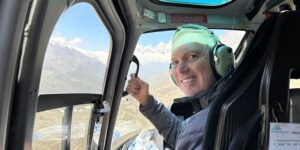
For many people, the hardest part is the long descent after base camp. The Luxury Everest Base Camp Trek with Helicopter Return lets you walk up the full route, reach base camp and Kala Patthar, and then fly back by helicopter with spectacular aerial views. The Everest Base Camp Helicopter Trek and the exclusive Everest Elite Luxury Heli Trek take this idea further for travellers with limited time.
See Everest Without Trekking
If trekking to 5,364 m isn’t right for you, you can still stand face to face with the world’s highest mountain. The Everest Helicopter Tour and Mt Everest by Helicopter Tour fly you over the Khumbu, land at a viewpoint, and often serve breakfast with Everest in view. The Sharing Everest Helicopter Tour with Kala Patthar Landing is a popular group option. Our blog on the Everest Base Camp helicopter tour explains how these flights work.
Wellness on the Trail
For a more mindful journey, the Everest Base Camp Yoga Trek adds daily yoga, stretching and breathing sessions. Gentle stretching after long days reduces stiffness, and breathing practice can make the altitude feel more manageable.
Common Mistakes That Make the Trek Harder
After guiding thousands of trekkers in the Khumbu, our team sees the same avoidable mistakes again and again:
- Rushing the itinerary: Skipping acclimatisation days is the number one reason people fail to reach base camp.
- Walking too fast early on: Feeling strong on day two often leads to headaches on day five.
- Hiding symptoms: Telling your guide about a headache early keeps a small problem small.
- Under-training: People who trust their general fitness without trekking-specific training often struggle with long climbs and descents.
- New boots: Unworn boots cause blisters that can ruin the trek.
- Poor sleeping bag: A bag that isn’t warm enough means poor sleep, which slows acclimatisation.
- No buffer days: Tight international flight connections create stress when Lukla flights are delayed.
- Not eating enough: Calories are fuel. Skipping meals because of low appetite leaves you weak for the hardest days.
A Day-by-Day Look at Where the Difficulty Lies
To clarify the challenge, here is how difficulty changes across a typical 14-day itinerary. You can find the complete schedule in our detailed Everest Base Camp Trek itinerary guide.
- Arrival in Kathmandu: Gear check, permits and briefing. Use spare time to explore UNESCO World Heritage sites in Kathmandu.
- Lukla to Phakding: A short walk mostly downhill after an exciting flight.
- Phakding to Namche Bazaar: Moderate to hard. The Namche Hill is the first real test.
- Acclimatisation in Namche: A short, steep hike to the Everest View Hotel or Khumjung village.
- Namche to Tengboche or Deboche: A scenic traverse, a drop to the river and a steep climb to the monastery.
- Tengboche to Dingboche: You cross the tree line and feel the altitude for the first time.
- Acclimatisation in Dingboche: Moderate to hard. The hike up Nangkartshang Peak takes you above 5,000 m for the first time.
- Dingboche to Lobuche: Moderate to hard. The climb to Thukla Pass and its memorials is at around 4,900 m.
- Lobuche to Gorakshep and Everest Base Camp: The longest day at the highest altitude.
- Kala Patthar and descent to Pheriche: A pre-dawn climb to the highest point, followed by a long descent.
- Pheriche to Namche: Thicker air makes you feel strong again.
- Namche to Lukla: A long day with a final uphill into Lukla.
- Flight to Kathmandu: Easy, weather permitting.
Permits and Practical Requirements
The trek requires two local permits: the Sagarmatha National Park entry permit and the Khumbu Pasang Lhamu Rural Municipality permit. When you book with us, our team arranges both. You will also need a Nepal visa, which most nationalities can get on arrival in Kathmandu; see our Nepal visa guide for details.
Respecting the environment is also part of trekking in the Khumbu. Carry your rubbish down, use refillable water bottles and support local businesses. Our responsible tourism page explains how we work with local communities and porters.
Beyond Base Camp: What Comes Next?
Many trekkers return from Everest Base Camp hungry for more. Suppose you loved the Khumbu;t he Ama Dablam Base Camp Trekking route offers a quieter way to explore the valley beneath one of the world’s most beautiful peaks. Learn more about the mountain in our Ama Dablam guide.
For those ready for a first climbing experience, Lobuche Peak Climbing, Island Peak Climbing and Mera Peak Climbing combine trekking with basic mountaineering under expert supervision. If you are curious about Everest from the Tibetan side, our Lhasa to Everest Base Camp overland tour offers a completely different perspective on the mountain.
Frequently Asked Questions About Everest Base Camp Trek Difficulty
Is the Everest Base Camp trek hard for beginners?
It is challenging but achievable for beginners who train for two to three months, choose an itinerary with proper acclimatisation days and trek with an experienced guide. No technical climbing skills are needed.
What is the hardest part of the Everest Base Camp trek?
For most people, the hardest part is the stretch from Lobuche to Gorakshep, Everest Base Camp and Kala Patthar. These days are long, cold, and at thetrek’s highest altitude, coming after more than a week of walking.
How many hours a day do you walk on the EBC trek?
Most days involve five to seven hours of walking, while the base camp day can take seven to nine hours. Acclimatisation days are shorter, usually three to four hours.
Can I get altitude sickness even if I am very fit?
Yes. Physical fitness does not prevent altitude sickness. Ascend slowly, take acclimatisation days, stay hydrated, and report symptoms early to stay safe.
How cold does it get at Everest Base Camp?
Daytime temperatures in spring and autumn can feel pleasant in the sun, but nights at Lobuche and Gorakshep often fall well below freezing. In late autumn and winter, night temperatures can reach around -15 to-20°C.
Is the Everest Base Camp trek harder than Kilimanjaro?
The two are different. Kilimanjaro reaches a higher summit in much less time, with a very tough summit night. The EBC trek reaches a lower highest point but takes much longer, with more cumulative fatigue. Many trekkers find EBC easier to acclimatise to because of its gradual ascent.
Do I need a guide for the Everest Base Camp trek?
Nepal now requires foreign trekkers to walk with a licensed guide in most trekking areas. A guide also makes the trek safer and easier by managing pace, acclimatisation, lodges and emergencies.
How can I make the trek less difficult?
Train with long hikes, choose a well-paced itinerary, hire a porter, walk slowly, drink plenty of water and sleep warm. Luxury lodge or helicopter return options can also reduce the physical demands.
What is the success rate of the Everest Base Camp trek?
Success rates are high for trekkers who follow a well-paced itinerary with proper acclimatisation. Rushing the ascent is the main reason people fail to reach base camp.
Is there a shorter or easier way to see Everest?
Yes. The Everest View Trek offers excellent views in about a week at lower altitude, and Everest helicopter tours let you see the mountain up close in a single day.
Final Thoughts: Is the Everest Base Camp Trek Worth the Challenge?
So, how hard is the Everest Base Camp trek? It is hard enough to test you and achievable enough to welcome almost anyone who prepares well. The Everest Base Camp Trek is challenging mostly because of altitude and endurance, not technical terrain. With good training, a sensible itinerary, an experienced guide and a patient mindset, thousands of ordinary people stand at the foot of Everest every season.
The rewards are extraordinary. Sunrise over Everest from Kala Patthar, the chanting monks of Tengboche, the warmth of Sherpa hospitality and the pride of reaching 5,364 m stay with you for life. Every tired step makes those moments even more meaningful.
If you are ready to take on the challenge, explore our full Everest Base Camp Trek itinerary, or choose the comfort of the Everest Base Camp Luxury Lodge Trek. Our Sherpa team is happy to help you choose the right route, pace and comfort level. Plan your trip or contact us today, and let us help you walk to the foot of the world’s highest mountain.
Quick Inquiry
Explore More


