
Sagarmatha National Park: Wildlife, Forests and Trekking Guide
Sagarmatha National Park: Wildlife, Forests and Trekking Guide
Most people arrive in the Khumbu thinking only about one mountain. They want to see Everest, stand at its base and take the photo they have dreamed about for years. Then, somewhere between the pine forests of Monjo and the windswept moraine above Lobuche, something changes. They notice the Himalayan tahr balancing on a cliff above the trail, the scarlet flash of a monal in the rhododendrons, the monks chanting at Tengboche and the Sherpa grandmother spinning a prayer wheel in Namche. They realise they are walking through one of the most extraordinary protected landscapes on Earth.
That landscape is Sagarmatha National Park. It is the home of Mount Everest, a UNESCO World Heritage Site, and the setting for every classic trek in the region, from the Everest Base Camp Trek to the turquoise lakes of Gokyo. Yet many trekkers walk through it without understanding what makes it so special.
In this guide, our Sherpa team takes you inside Sagarmatha National Park: its geography, forests, wildlife, culture, rules and the best ways to explore it. Whether you are planning your first Everest trek or returning for a quieter route, knowing the park will make every step more meaningful.
What Is Sagarmatha National Park? An Overview
Sagarmatha National Park protects the upper Khumbu region of Solukhumbu District in north-eastern Nepal. “Sagarmatha” is the Nepali name for Mount Everest, often translated as “forehead of the sky” or “head in the sky.” The Sherpa people call the mountain Chomolungma, the “Mother Goddess of the World.”
Here are the essential facts every trekker should know:
- Size: About 1,148 square kilometres of mountains, glaciers, valleys and forests, roughly the size of a small country’s capital region.
- Buffer zone: A further 275 square kilometres around the southern edge, where Sherpa villages, farms and lodges sit alongside conservation work.
- Elevation range: From about 2,845 m at Monjo, the park entrance, to 8,848 m at the summit of Mount Everest. Few protected areas anywhere span such a vertical range.
- World Heritage status: It was one of Nepal’s first national parks and the first in the country to be listed by UNESCO as a natural World Heritage Site.
- Neighbours: It borders Tibet’s Qomolangma National Nature Preserve to the north and the Makalu Barun National Park to the east.
Inside the park stand some of the world’s most famous mountains: Everest, Lhotse, Cho Oyu, Nuptse, Pumori, Thamserku, and the elegant Ama Dablam. Three of the world’s six highest peaks rise within or along its borders, which is why trekkers often call it “the roof of the world.”
Geography of the Park: Rivers, Valleys and Glaciers
To understand how the trails work, it helps to understand the land’s shape. Sagarmatha National Park centres on a handful of deep river valleys that run down from the glaciers of the high Himalaya.
The Dudh Koshi Valley
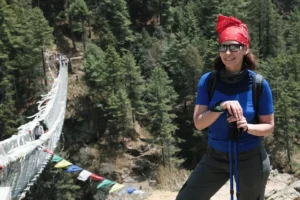
The Dudh Koshi, or “Milk River,” gets its name from its pale, glacier-fed water. It is the spine of the Khumbu. Almost every trekker enters the park by following it upstream from Lukla, crossing high suspension bridges between Phakding, Monjo and Jorsalle before climbing to Namche Bazaar. Further north, the Dudh Koshi drains the Ngozumpa Glacier, Nepal’s longest glacier, beside the famous Gokyo Lakes.
The Imja and Khumbu Valleys
Above Pangboche, the main trail divides. The Imja Valley leads east to Dingboche and Chhukung beneath Lhotse and Island Peak. The Khumbu Valley heads north past Thukla and Lobuche, along the edge of the Khumbu Glacier, to Gorakshep and Everest Base Camp. This is the route most trekkers follow on the classic Everest Base Camp Trek.
The Bhote Koshi and Thame Valley
West of Namche, the Bhote Koshi Valley leads to Thame and on toward the Renjo La Pass and the ancient trade route over Nangpa La into Tibet. It is much quieter than the main trail and full of traditional Sherpa life.
Glacial Lakes and High Passes
The Gokyo Lakes are among the world’s highest freshwater lake systems and are protected as a wetland of international importance. High passes such as Cho La, Renjo La and Kongma La link the valleys and form the backbone of the challenging Everest 3 Pass Trek.
About two-thirds of the park is barren land above 5,000 m: rock, ice, scree and permanent snow. Roughly a quarter is grazing land used by yaks, and only a small share is forest. That makes the forests that do exist all the more precious.
Forests and Plant Life of Sagarmatha National Park
One of the biggest surprises for first-time visitors is how green the lower park is. As you climb, you pass through distinct vegetation zones, each with its own character. Watching them change day by day is one of the quiet joys of trekking in Sagarmatha National Park.
Lower Forests: Pine, Hemlock and Oak (Below about 3,000 m)
Around Phakding, Monjo, and Jorsalle, the trail runs through blue pine, hemlock, and oak forest, with ferns, mosses, and orchids in the damp gullies. In spring, magnolia and early rhododendron add colour. The air is rich and humid, and the river is never far away.
Subalpine Forests: Fir, Birch and Rhododendron (About 3,000 to 4,000 m)
Between Namche, Tengboche and Deboche, the forest becomes fir, silver birch with its peeling bark, and towering rhododendron trees. This is the most beautiful forest on the trek. In April and May, rhododendrons bloom in red, pink, and white, turning the trail between Phunki Tenga, Tengboche, and Deboche into a tunnel of colour. Nepal’s national flower is at its finest here.
Alpine Scrub: Juniper and Dwarf Rhododendron (About 4,000 to 5,000 m)
Above Pangboche, the trees give way to low juniper and dwarf rhododendron hugging the ground against the wind. Juniper is sacred to Sherpa Buddhists, and you will smell its smoke at monasteries and homes, where they burn it as incense. Yak pastures, stone walls and summer herding huts dot this zone.
High Alpine Zone: Mosses, Lichens and Cushion Plants (Above about 5,000 m)
Near Lobuche, Gorakshep and Kala Patthar, life is sparse. Lichens paint the rocks orange and green, and tiny cushion plants survive between the stones. In the brief summer, hardy alpine flowers such as edelweiss, primulas and gentians appear.
The park records over a thousand flowering plant species, including medicinal herbs that Sherpa healers have used for generations. Collecting plants is not allowed, so enjoy them with your eyes and your camera.
Why Forest Conservation Matters Here
Trees grow very slowly at high altitude, and decades ago heavy demand for firewood from lodges and expeditions caused serious forest loss. Today, cutting live trees is restricted; many lodges cook with kerosene, gas or electricity, and community forest groups manage the buffer zone. The park returns part of its revenue to local communities for development and conservation. When you choose a responsible operator and avoid demanding wood-heated hot showers, you help protect these forests. You can read more about our approach on our responsible tourism page.
Wildlife of Sagarmatha National Park
Wildlife is one of the Khumbu’s most overlooked highlights. With patience, a good guide and a little luck, you can see animals and birds found almost nowhere else. Here are the species our guides point out most often in Sagarmatha National Park.
Himalayan Tahr
The Himalayan tahr is the animal you are most likely to see. These wild mountain goats, with thick reddish-brown coats and a shaggy mane on the males, graze on steep grassy slopes around Namche, Khumjung and the trail to Tengboche. They are remarkably calm around trekkers. Look up at the cliffs on the walk from Namche towards Kyangjuma, and you will often spot a group resting on ledges.
Musk Deer
The shy Himalayan musk deer lives in the birch and rhododendron forests between Namche, Tengboche and Phortse. It has no antlers, but the males have long, tusk-like canine teeth. People once hunted musk deer heavily for their scent glands, and protecting them is one of the park’s conservation success stories. Early mornings in the forest near Tengboche and Deboche offer the best chance of a sighting.
Snow Leopard
The snow leopard is the ghost of the Himalaya. It lives above about 3,500 m and hunts tahr and other prey on rocky slopes. Snow leopards returned to the Khumbu after decades of absence, and camera traps have confirmed their presence in several valleys. Very few trekkers ever see one, but knowing it shares the mountain with you adds a thrill to every high valley walk.
Red Panda
The red panda is a small, rust-coloured, bamboo-loving mammal of the temperate forests. It is rare and shy in the lower park, and sightings are uncommon. If seeing red pandas is a priority, the bamboo forests of the Langtang Valley Trek offer better chances.
Other Mammals
Other residents include the Himalayan serow, a goat-antelope of steep forested slopes; the yellow-throated marten; the Himalayan black bear in the lower forests; wolves in remote high valleys; and the pika, a small, round relative of the rabbit that darts between rocks near Lobuche and Gorakshep. Pikas are easy to spot and a favourite of trekkers on rest stops.
Birds of Sagarmatha National Park
The park is recognised as an Important Bird Area, with well over a hundred bird species recorded, and some counts put the number above two hundred. For bird lovers, these are the highlights:
- Himalayan monal (Danphe): Nepal’s national bird. The male shines in metallic green, blue, purple and copper. Look for it on open slopes around Tengboche, Deboche and Phortse, especially in the early morning.
- Blood pheasant: A smaller, grey-and-crimson pheasant often seen in small flocks in the rhododendron forest near Tengboche.
- Lammergeier (bearded vulture): A huge vulture with a wingspan close to three metres, often seen gliding above the valleys near Namche and Dingboche.
- Himalayan griffon: Another large vulture circling the ridges.
- Tibetan snowcock: A plump, grey game bird of the high slopes whose call echoes across the moraine.
- Alpine and red-billed choughs: Black crows with yellow or red bills that follow trekkers up to base camp and even the summit slopes of Everest.
- Snow pigeons and rosefinches: Common around high villages and yak pastures.
Bring compact binoculars if you enjoy wildlife. Our guides know where the monals feed and where the tahr gather, and they are always happy to stop and point them out.
Where to See Wildlife in the Park
The best wildlife areas are the forests and slopes between Namche, Khumjung, Tengboche, Deboche and Phortse. Phortse, in particular, is a quiet village where local monasteries have long discouraged hunting, and the animals are noticeably relaxed. Taking the slightly longer trail via Phortse on the way to or from the Gokyo Lakes Trek is a great way to add wildlife to your adventure.
Sherpa Culture Inside Sagarmatha National Park
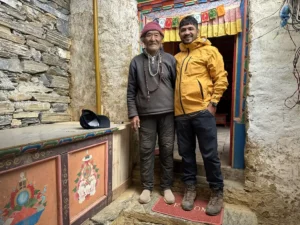
Sagarmatha National Park is not a wilderness empty of people. It is a living cultural landscape, home to a few thousand Sherpa people whose ancestors crossed from Tibet several centuries ago. Their Buddhist faith, farming traditions and famous mountaineering skills are as much a part of the park as its peaks.
Monasteries and Sacred Sites
Tengboche Monastery, perched on a ridge facing Ama Dablam and Everest, is the spiritual heart of the Khumbu. Other important monasteries include Pangboche, believed to be the region’s oldest, as well as Thame and Khumjung. The Mani Rimdu festival, with masked dances performed by monks, is celebrated at Tengboche, Thame, and Chhukung; Dumje is another important village festival.
Along the trail, you will pass mani walls carved with prayers, chortens and prayer flags. Always walk to their left, keeping them on your right, as Buddhist tradition requires. Our article on the Eight Great Stupas explains what the chortens you see mean.
Sherpa Villages
Namche Bazaar is the trading hub and the busiest village in the park, with bakeries, gear shops, a Saturday market and the park’s visitor centre. Khumjung and Khunde, a short walk above Namche, are quieter traditional villages with potato fields, the Hillary School and the Khunde Hospital, both founded with help from Sir Edmund Hillary’s trust. Dingboche and Pheriche sit higher, surrounded by stone-walled barley fields and yak pastures.
Sacred Mountains and Hidden Valleys
For Sherpas, many peaks are home to protective deities. Khumbila, the peak rising above Khumjung, is the home of the region’s guardian god and is never climbed. Respecting these beliefs, from not shouting near sacred places to asking before photographing ceremonies, is part of trekking well in the Khumbu.
Best Treks Inside Sagarmatha National Park
The park offers routes for almost every ability and interest. Here are our team’s top recommendations, all of which pass through the heart of Sagarmatha National Park.
Everest Base Camp Trek
The classic journey from Lukla to Everest Base Camp (5,364 m) and Kala Patthar (about 5,545 m), through Namche, Tengboche, Dingboche, and Lobuche. It covers all the main vegetation zones, the most famous monasteries, and the best views of Everest. Our Everest Base Camp Trek includes two acclimatisation days for safety. If you want to know how demanding it is, read our guide to Everest Base Camp Trek difficulty and the stage-by-stage Everest Base Camp Trek itinerary.
Gokyo Lakes Trek
A quieter alternative that follows the Dudh Koshi to the sacred Gokyo Lakes and the summit of Gokyo Ri, with views of Everest, Lhotse, Makalu, and Cho Oyu. It is excellent for wildlife and photography. See our Gokyo Lakes Trek for the full route.
Everest 3 Pass Trek
For experienced trekkers, the Everest 3 Pass Trek crosses Kongma La, Cho La, and Renjo La, and visits Everest Base Camp, Gokyo, and the Thame Valley. It is the most complete way to explore the park.
Everest View Trek
Short on time or prefer lower altitude? The Everest View Trek stays below about 3,900 m and visits Namche, Khumjung and Tengboche, with superb views of Everest and Ama Dablam. It is ideal for families, older travellers and first-time trekkers.
Ama Dablam Base Camp Trek
The Ama Dablam Base Camp Trekking route leads to meadows beneath one of the world’s most beautiful mountains. It is shorter and quieter than the main EBC trail. Climbers can learn more in our Ama Dablam expedition guide.
Jiri to Everest Trek
Before the Lukla airstrip was built, every expedition walked in from the lowlands. The Jiri to Everest Trek follows that historic route through the middle hills of Solu before entering the park, giving you a gradual, natural acclimatisation.
Sagarmatha National Park for Luxury and Helicopter Travellers
You do not need to rough it to experience the park. Several of our journeys combine Sagarmatha National Park with comfort and time-saving options.
- Luxury lodges: The Everest Base Camp Luxury Lodge Trek uses the finest lodges in each village, with warmer rooms, better food and more personal service.
- Trek up, fly down: The Luxury Everest Base Camp Trek with Helicopter Return lets you walk the full route and fly back over the glaciers.
- Exclusive heli trekking: The Everest Elite Luxury Heli Trek and Everest Base Camp Helicopter Trek combine short walks with helicopter transfers.
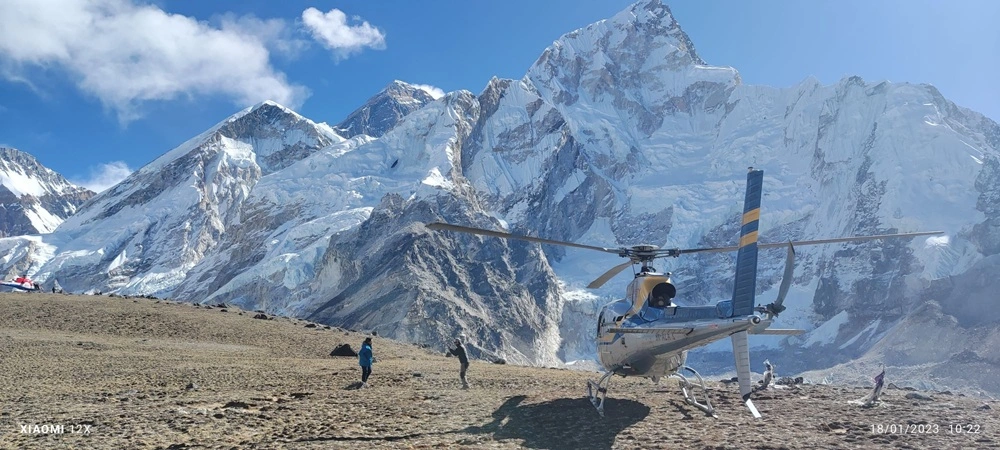
- See it in a day: The Everest Helicopter Tour, Mt Everest by Helicopter Tour, and Gokyo Lakes Helicopter Tour fly you over the park, landing at a viewpoint.
- Culture by helicopter: The Everest Heli Sherpa Village Walk adds a guided walk through a Sherpa village.
Helicopter flights in the park follow specific regulations on landing sites and routes. Our blogs on Everest helicopter tour restrictions and the best seasons for an Everest helicopter tour explain what to expect.
Best Time to Visit Sagarmatha National Park
Each season shows the park in a different light.
Spring (March to May)
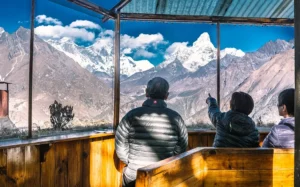
Spring is warm, lively and colourful. Rhododendrons bloom in the subalpine forests, birds are active and calling, and Everest Base Camp fills with climbing expeditions. Afternoons can be hazy, but mornings are often clear. This is the best season for flowers and birdlife.
Autumn (September to November)
Autumn offers the clearest skies of the year after monsoon rains wash the air clean. Views are sharp, daytime temperatures are comfortable, nights are cold, and the trails are at their busiest. It is the best season for mountain views and photography.
Winter (December to February)
Winter is cold but peaceful. Skies are often clear, the trails are quiet, and wildlife moves lower down the slopes, so tahr and monal sightings can be good around Namche and Tengboche. High lodges may close, and nights above 4,500 m are bitterly cold.
Monsoon (June to August)
The summer monsoon brings rain, cloud and lush green growth in the lower park. Alpine flowers bloom in the high meadows, but mountain views are unreliable, and Lukla flights are often delayed. It suits experienced travellers who prefer solitude over views.
Permits and Park Rules
Every trekker entering Sagarmatha National Park needs two permits: the Sagarmatha National Park entry permit and the Khumbu Pasang Lhamu Rural Municipality permit. The municipality permit is checked near Lukla, and the national park permit is checked at the Monjo entrance gate, where you also pass the park office and a small information centre. When you trek with us, our team arranges both permits in advance.
Nepal requires foreign trekkers to walk with a licensed guide in most trekking areas, including the Khumbu. Beyond permits, these are the key rules and good practices in the park:
- Stay on established trails to protect fragile soil and vegetation.
- Do not collect plants, seeds, rocks or animal products. All flora and fauna are protected.
- Never feed or chase wildlife. Keep a respectful distance from tahr, musk deer and birds.
- Carry out your rubbish, especially batteries, plastic and wrappers.
- Avoid single-use plastic. The local municipality has restricted single-use plastic items in the Khumbu, so bring a refillable bottle and purification tablets or a filter.
- Respect religious sites by walking clockwise around stupas and mani walls and asking before entering monasteries or photographing people.
- No drones without permission. Flying drones requires special approval.
You will also need a Nepal visa, which most nationalities can get on arrival in Kathmandu. Our Nepal visa guide explains the process.
How to Reach Sagarmatha National Park
Several routes lead into the park, each offering a different experience.
- Fly to Lukla: The fastest and most popular route. A short, spectacular flight lands at Tenzing-Hillary Airport, then you walk about two days to Namche. During the peak seasons, most Lukla flights leave from Manthali Airport in Ramechhap, a few hours’ drive from Kathmandu. Our Ramechhap airport transportation service handles that transfer.
- Drive and walk: The Everest Base Camp Trek by Road uses a jeep to the lower Solukhumbu, then walks in, avoiding the flight entirely.
- Walk from Jiri: The historic approach, taking about a week through the middle hills before reaching the park.
- By helicopter: For travellers with limited time, a helicopter can fly directly to Lukla or higher in the valley.
If you want to see Everest from the other side of the border, our guide to the Lhasa to Everest Base Camp overland tour covers the Tibetan approach through the neighbouring nature preserve.
Altitude and Safety in Sagarmatha National Park
Because the park rises from under 3,000 m to over 8,000 m, altitude is the main safety concern for every visitor. Acute mountain sickness can affect anyone above about 2,500 m, regardless of fitness. The key is a slow ascent, acclimatisation days in Namche and Dingboche, plenty of fluids, and honest communication with your guide.
The Himalayan Rescue Association runs an aid post in Pheriche during the trekking season, and a hospital is in Khunde. Helicopter evacuation is available for emergencies, so travel insurance covering high-altitude rescue is essential. Read our Acute Mountain Sickness guide for symptoms and prevention, and use our trekking equipment list to make sure you are ready for the cold.
Conservation Challenges and How Trekkers Can Help
Popularity brings pressure. Tens of thousands of trekkers and climbers visit Sagarmatha National Park each year, and their impact shows up in waste, water use, firewood demand, and crowded trails. Climate change is also shrinking glaciers and creating new glacial lakes, such as Imja Tsho near Chhukung, which scientists closely monitor.
Encouragingly, local communities have led many solutions. The Sagarmatha Pollution Control Committee manages waste collection on the trails and at base camp. Community groups run tree nurseries, and initiatives near Syangboche turn mountain waste into art and recycled products. Many lodges now use solar and hydroelectric power.
Here is how you can help as a visitor:
- Use a refillable water bottle and purify water instead of buying plastic bottles.
- Carry your batteries and non-burnable rubbish back to Kathmandu.
- Take short showers, especially higher up, and avoid wood-fired heating where alternatives exist.
- Buy local products from Sherpa-run businesses.
- Trek with an operator that treats porters fairly and supports local communities.
At Alpine Luxury Treks, our guides are from the mountains, and protecting them is personal. Meet the people behind our journeys on our Our Team page, or learn more about our company.
Sample Route Through Sagarmatha National Park
To bring it all together, here is how a typical journey through Sagarmatha National Park unfolds, highlighting the landscapes and wildlife you’ll meet along the way.
- Lukla to Phakding: Enter the Dudh Koshi valley through farms and pine forest.
- Phakding to Namche Bazaar: Pass the Monjo gate, cross the Hillary Bridge and climb to the Sherpa capital. Watch for tahr on the cliffs.
- Namche acclimatisation day: Hike to Syangboche, the Everest View Hotel and Khumjung, with views of Everest and Ama Dablam.
- Namche to Tengboche or Deboche: Walk through the park’s best rhododendron and birch forest, home to monals and musk deer.
- Tengboche to Dingboche: Pass Pangboche monastery and leave the trees behind for juniper and yak pastures.
- Dingboche acclimatisation day: Climb Nangkartshang above the Imja Valley with views of Makalu.
- Dingboche to Lobuche: Climb to Thukla and the climbers’ memorials, then follow the Khumbu Glacier.
- Lobuche to Gorakshep and Everest Base Camp: Walk the glacial moraine to the foot of the Khumbu Icefall.
- Kala Patthar and descent: Watch sunrise over Everest, then descend through the valleys back to Namche and Lukla.
See the full itinerary on our Everest Base Camp Trek page, or read our in-depth guide to the Everest Base Camp Trek distance.
Photography and Wildlife-Watching Tips for the Park
Sagarmatha National Park is one of the most photogenic places on Earth, but the light, altitude, and cold create their own challenges. A few simple habits will help you come home with images that do the mountains justice.
- Shoot early and late: The best light falls in the first hour after sunrise and the last hour before sunset. Sunrise from Kala Patthar, Gokyo Ri or the Everest View Hotel terrace is unforgettable, and the golden glow on Ama Dablam from Tengboche in the evening is a classic.
- Keep batteries warm: Cold drains batteries fast above 4,000 m. Store spares in an inside pocket by day and in your sleeping bag at night.
- Use a zoom lens for wildlife: Tahr, monals and vultures are often some distance away. A 200 mm lens or more, or a phone with good optical zoom, makes a big difference.
- Move slowly and quietly: In the forests near Tengboche, Deboche and Phortse, walking quietly at dawn greatly improves your chances of seeing musk deer and pheasants.
- Respect people and sacred places: Always ask before photographing Sherpa families, monks or ceremonies, and follow monastery rules about photography inside prayer halls.
- Protect your gear from dust: The trail above Pheriche is dry and dusty. Change lenses quickly and carry a small blower and cleaning cloth.
Most importantly, put the camera down sometimes. Some of the best moments in the park, such as the silence at dawn above the Khumbu Glacier or the sound of monks chanting at Tengboche, are best experienced rather than recorded.
What to Pack for Sagarmatha National Park
Because the park spans subtropical valleys and arctic heights, your gear must handle warm forest days and freezing nights at 5,000 m. These are the essentials our guides check before every trek:
- Layered clothing: Moisture-wicking base layers, a warm fleece, an insulated down jacket and a waterproof, windproof shell.
- Warm accessories: A warm hat, sun hat, buff, insulated gloves and liner gloves.
- Footwear: Broken-in waterproof trekking boots with good ankle support, plus light shoes for evenings in the lodges.
- Sleeping bag: A bag rated to about -15 to-20°C, since rooms above Dingboche are unheated.
- Sun protection: Category 3 or 4 sunglasses, high-SPF sunscreen and lip balm, as UV is intense at altitude.
- Water treatment: A refillable bottle with purification tablets or a filter, in line with the park’s push to reduce plastic.
- Health kit: Blister care, personal medication, rehydration salts and any altitude medication your doctor recommends.
- Trekking poles and a headlamp: Poles protect your knees on descents, and a headlamp is essential for early starts and lodge evenings.
You can rent or buy most of this gear in Thamel before your trek. Our full trekking equipment checklist covers everything in detail, and our team checks your kit during the pre-trek briefing in Kathmandu.
Beyond Sagarmatha: Other National Parks and Treks in Nepal
If you fall in love with the Khumbu, Nepal has many more protected areas to explore. The Annapurna Base Camp Trek crosses the Annapurna Conservation Area, Nepal’s largest protected area. The Manaslu Circuit Trek explores a remote conservation area around the world’s eighth-highest mountain. The Lower Dolpo Trekking route enters Shey Phoksundo, Nepal’s largest national park.
For wildlife in the lowlands, the Chitwan Jungle Safari and Bardia National Park Tour offer the chance to see rhinos, elephants and even tigers. For more inspiration, browse our list of the top 50 trekking routes in Nepal.
Frequently Asked Questions About Sagarmatha National Park
Where is Sagarmatha National Park?
It is in the Khumbu region of Solukhumbu District in north-eastern Nepal, bordering Tibet to the north. The park entrance is at Monjo, a short walk from Phakding on the Lukla-to-Namche Bazaar trail.
Why is Sagarmatha National Park a UNESCO World Heritage Site?
It was listed for its exceptional natural beauty, dramatic glaciers and high peaks, including Mount Everest, and rare wildlife such as the snow leopard and red panda. The Sherpa culture within it adds further significance.
What animals can I see in Sagarmatha National Park?
The most commonly seen animals are the Himalayan tahr, pika and many birds, including the Himalayan monal, blood pheasant, lammergeier and choughs. You may see musk deer occasionally, while snow leopards and red pandas are rare.
Do I need a permit to enter Sagarmatha National Park?
Yes. You need the Sagarmatha National Park entry permit and the Khumbu Pasang Lhamu Rural Municipality permit. Our team arranges both when you book a trek with us.
Can I trek in Sagarmatha National Park without a guide?
Nepal now requires foreign trekkers to walk with a licensed guide in most trekking areas, including the Khumbu. A guide also improves safety and helps you spot wildlife and understand the culture.
What is the best time to visit Sagarmatha National Park?
Spring (March to May) is best for rhododendrons and birdlife, while autumn (September to November) offers the clearest mountain views. Winter is quiet and cold, and the monsoon is wet with limited views.
How high is Sagarmatha National Park?
The park ranges from about 2,845 m at Monjo to 8,848 m at the summit of Mount Everest, one of the greatest elevation ranges of any protected area in the world.
Is Namche Bazaar inside Sagarmatha National Park?
Yes. Namche Bazaar is the main Sherpa village inside the park and the usual first acclimatisation stop on treks to Everest Base Camp and Gokyo.
Can I visit Sagarmatha National Park without trekking to base camp?
Yes. The Everest View Trek explores the lower park around Namche, Khumjung and Tengboche, and Everest helicopter tours let you see the park from the air in a single day.
Is single-use plastic allowed in the park?
Local authorities have restricted single-use plastic items in the Khumbu. Bring a refillable bottle and purification tablets or a filter, and carry your rubbish back out.
Final Thoughts: Walk Through the Roof of the World
Sagarmatha National Park is far more than the setting for an Everest photo. It is a world of rhododendron forests and glacial rivers, of tahr on the cliffs and monals in the morning light, of ancient monasteries and warm Sherpa homes, all crowned by the highest mountains on Earth. Understanding it turns a trek into a true journey.
Whether you dream of standing at Everest Base Camp, gazing over the Gokyo Lakes or simply sipping tea in Namche with Everest on the horizon, our Sherpa team is ready to guide you. Explore our classic Everest Base Camp Trek, or choose the comfort of the Everest Base Camp Luxury Lodge Trek. Plan your trip or contact us today, and let us show you the wild, sacred heart of the Khumbu.


