
Pangboche: Oldest Monastery Village in the Khumbu
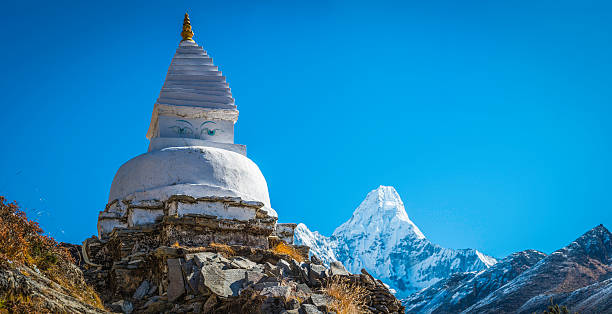
Pangboche: Oldest Monastery Village in the Khumbu
Most trekkers walk straight through Pangboche. After a long morning from Tengboche, they cross the roaring Imja Khola, pass a few lodges, sip tea, and keep going toward Dingboche. Only a few take the short path up the hillside, through ancient juniper trees, to a small stone temple that has watched over the valley for centuries.
That temple is Pangboche Monastery, believed to be the oldest monastery in the Khumbu. It is a place of legends, holy relics, yeti stories and blessings for climbers bound for the world’s highest peaks. The village around it, sitting directly beneath the soaring face of Ama Dablam, is one of the most traditional and photogenic Sherpa settlements on the Everest Base Camp Trek.
In this guide, our Sherpa team shares the history, legends and highlights of Pangboche Monastery and its village, along with practical tips on how to include it in your trek, where to stay and what to see.
Pangboche at a Glance
Here are the essentials about Pangboche before we explore it in more detail:
- Location: On the main Everest Base Camp trail in the Imja Khola valley, between Tengboche and Dingboche, inside Sagarmatha National Park.
- Altitude: About 3,930 m for the lower village on the main trail and about 3,985 m for Upper Pangboche around the monastery.
- Famous for: Pangboche Monastery, the oldest in the Khumbu; legends of the saint Lama Sangwa Dorje; the yeti relics; sacred juniper trees; superb Ama Dablam views; and a long tradition of Sherpa climbers.
- Walking time: About two to three hours from Tengboche, and another two to three hours to Dingboche.
- Side trips: The day hike to Ama Dablam Base Camp, and the high trail to Phortse.
- Best for: A cultural stop on the way to Dingboche, a quiet overnight away from busier villages, and climbers seeking blessings.
To see where Pangboche fits into the full journey, our Everest Base Camp Trek itinerary shows each day of the classic route.
The Legend of Lama Sangwa Dorje
The story of Pangboche Monastery begins with a saint. Lama Sangwa Dorje is one of the most revered figures in Sherpa history, believed to have lived several centuries ago and to have been among the first great Buddhist teachers in the Khumbu. Sherpa tradition holds that he meditated in caves above the valley and travelled across the region, spreading the teachings of the Nyingma school of Tibetan Buddhism.
The Founding of the Monastery
According to legend, Lama Sangwa Dorje founded the gompa at Pangboche as the first monastery in the Khumbu, more than three centuries ago. He is also credited with sanctifying several other sacred sites in the region, including the ridge at Tengboche, where he is said to have left a footprint on a rock and foretold that a great monastery would one day stand. That prophecy was fulfilled when people built Tengboche Monastery many generations later.
The Sacred Juniper Trees
Around the monastery in Upper Pangboche stand some of the Khumbu’s oldest and largest juniper trees. Local legend says they grew from the hair of Lama Sangwa Dorje, which he scattered on the ground as a blessing. Whether you believe the story or not, people protect the trees and treat them with great reverence. Walking beneath their twisted, ancient branches on the path to the monastery feels magical.
A Line of Reincarnations
Lama Sangwa Dorje is believed to have been reborn in later lamas of the region, and his spiritual lineage remains deeply connected to the monasteries of the Khumbu. For Sherpas, visiting Pangboche means visiting the roots of their faith in this valley.
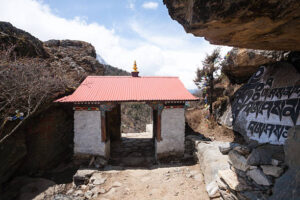
Inside Pangboche Monastery
Pangboche Monastery is much smaller and more intimate than Tengboche. No grand courtyards or crowds, just a quiet stone temple surrounded by prayer flags, chortens, mani walls, and old juniper trees.
The Prayer Hall
Remove your shoes and step inside. The prayer hall is dim, fragrant with incense and butter lamps, and filled with statues, thangka paintings and murals darkened by centuries of smoke. Look for images of Guru Rinpoche, the founder of the Nyingma tradition, Shakyamuni Buddha and Chenrezig, the Buddha of Compassion. Ancient scriptures, wrapped in cloth, are stacked on shelves around the hall. Our article on Guru Padmasambhava explains why he is so central to Sherpa faith.
The Caretaker and Lamas
Unlike the large monastic community at Tengboche, Pangboche has traditionally been a village temple looked after by a caretaker and village lamas, who may be married householders rather than celibate monks. They lead ceremonies for the community, bless homes and families, and welcome visitors. The caretaker will usually open the temple for you, explain its treasures, and accept a donation to support its upkeep.
Prayer Wheels and Chortens
Around the monastery, you will find rows of prayer wheels, a large chorten and mani stones carved with “Om Mani Padme Hum.” Walk clockwise around them, spinning the prayer wheels with your right hand. Our guide to the Eight Great Stupas explains the meaning of the chortens you see.
The Yeti Relics of Pangboche
Pangboche Monastery is famous far beyond Nepal for its yeti relics. For generations, the monastery kept a mummified hand and a scalp said to belong to a yeti, the mysterious wild creature of Himalayan legend.
The Pangboche Hand
According to monastery tradition, a yeti disciple left his hand to the monastery after his death. In the mid-twentieth century, Western explorers and yeti hunters heard of the relic and came to Pangboche to see it. Photographs of the “Pangboche Hand” spread worldwide, and scientists argued for years over whether it was human, animal, or something else.
Later expeditions examined the relic, and many concluded it was likely made from human or animal remains. Scientific testing of a fragment eventually suggested it was human. Sadly, thieves stole the original hand from the monastery toward the end of the twentieth century, and it has never been returned.
The Replica
Many years after the theft, a special effects workshop created a detailed replica of the hand, along with a replica scalp, and returned it to the monastery as a gift. Visitors can see these replicas today, and the caretaker often tells the story.
What the Yeti Means to Sherpas
For Sherpas, the yeti, or migoi, is part of a rich folklore of mountain spirits and wild beings, told to children around the fire and remembered in monastery rituals. Whatever the science says, the relics carry spiritual significance for the community. Treat them with respect, and do not ask to handle them. Khumjung monastery keeps a similar yeti scalp, which you can read about in our guide to Khumjung and Khunde.
Upper and Lower Pangboche
Pangboche is divided into two parts, and understanding the difference helps you plan your visit.
Lower Pangboche
The main Everest Base Camp trail passes through Lower Pangboche, where you will find most of the lodges, teahouses and small shops. Most trekkers stop here for lunch or tea on the way from Tengboche to Dingboche. The views of Ama Dablam from here are already spectacular.
Upper Pangboche
A short, steep climb of about fifteen to twenty minutes above the main trail brings you to Upper Pangboche, the original village. Here, stone houses, potato fields and juniper trees surround Pangboche Monastery. It feels quiet and timeless, far from the steady stream of trekkers below. An upper trail continues from here along the hillside toward Somare and Dingboche, so you don’t have to retrace your steps.
Our guides recommend taking this upper route whenever possible. It adds only a little extra time and climbing, rewards you with the monastery and views, and helps you acclimatise by gaining a bit more altitude during the day.
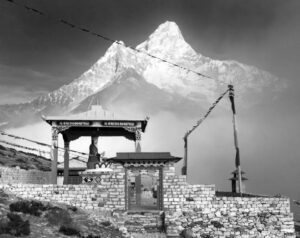
Ama Dablam: The Mountain Above Pangboche
Pangboche sits at the foot of Ama Dablam, one of the most beautiful mountains on Earth. Its name means “mother’s necklace,” referring to the long ridges that resemble a mother’s arms and the hanging glacier that looks like a dablam, the traditional amulet worn by Sherpa women. From the village, the mountain fills the sky in a sweep of rock, ice and snow.
The views are especially beautiful at sunrise and sunset, when Ama Dablam’s face turns gold, pink, and orange. Staying overnight in Pangboche gives you the best chance to see this. Learn more about the mountain in our Ama Dablam guide.
Day Hike to Ama Dablam Base Camp
From Pangboche, a trail crosses the Imja Khola and climbs to Ama Dablam Base Camp at about 4,600 m, a broad meadow beneath the mountain’s west face. The round trip takes about six to seven hours and makes a superb acclimatisation hike if you spend an extra night in Pangboche. During climbing season, the base camp is busy with expedition tents. Our Ama Dablam Base Camp Trekking itinerary includes this route in full.
Climbing Ama Dablam
For experienced mountaineers, Ama Dablam is one of the world’s most coveted climbs. Our Ama Dablam expedition guide and Ama Dablam questions answered cover what the climb involves.
Pangboche and the Mountaineering Tradition
Pangboche has produced many of the Khumbu’s most accomplished climbers, including Sherpas who have summited Everest many times and guided expeditions on peaks across the Himalaya. In many households, almost every family has a climber, and the village’s history is closely tied to Himalayan mountaineering.
Blessings for Climbers
For generations, climbers heading to Everest, Lhotse, Ama Dablam and other peaks have stopped in Pangboche to receive blessings before entering the mountains. A respected lama in the village has blessed countless expeditions over the years, offering prayers for safety and giving climbers sungdi, red protection cords tied around the neck. Many Sherpa climbers would not go to the mountain without such a blessing.
If you are on a peak climbing trip, such as Island Peak Climbing or Lobuche Peak Climbing, your guide may arrange a blessing in Pangboche or hold a puja ceremony at base camp.
Respecting the Risks
The mountains have also taken many lives from Pangboche, and families here know the risks of climbing better than anyone. The memorials at Thukla, on the trail above Dingboche, honour climbers and Sherpas who did not return. When you visit Pangboche, you are visiting a community that has given a great deal to mountaineering.
Village Life in Pangboche
Beyond the monastery, Pangboche is a working Sherpa village where traditions remain strong.
Farming at High Altitude
At almost 4,000 m, Pangboche is one of the highest permanent farming villages in the Khumbu. Families grow potatoes, barley and buckwheat in stone-walled fields, and yaks graze on the slopes above. In autumn, you may see families harvesting potatoes and storing them for the long winter.
Stone Houses and Prayer Flags
Traditional two-storey stone houses with wooden windows line the village paths, with prayer flags fluttering from rooftops. Many homes have a family shrine room on the upper floor. Smoke from juniper incense often drifts from the houses in the morning, a daily offering to the gods.
Festivals
Pangboche celebrates the main Sherpa festivals, including Losar, the Sherpa New Year, and Dumje, the summer village festival with prayers, dances and feasting. Our guide to Sherpa culture and traditions explains these celebrations in detail.
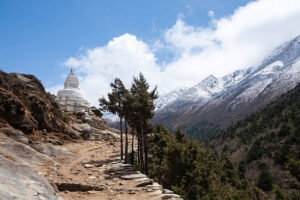
Pangboche on the Everest Base Camp Trek
On the classic Everest Base Camp Trek, Pangboche usually falls on the day from Tengboche or Deboche to Dingboche. Here is how that day unfolds:
- Tengboche to Deboche: A gentle descent through rhododendron and birch forest, home to monals and musk deer.
- Deboche to the Imja Khola: The trail crosses the river on a suspension bridge above a dramatic gorge.
- Climb to Pangboche: A steady climb past mani walls and chortens brings you to Lower Pangboche.
- Optional detour to Upper Pangboche: Visit Pangboche Monastery, then follow the upper trail along the hillside.
- Pangboche to Somare and Orsho: The landscape opens out above the tree line, with juniper scrub, yak pastures and views of Ama Dablam, Taboche and Cholatse.
- Orsho to Dingboche: The trail divides, with the right branch climbing to Dingboche in the Imja valley and the left leading to Pheriche.
The full day from Tengboche to Dingboche takes around five to six hours. Pangboche is a great place for lunch or a mid-day tea break. On the return journey, many trekkers pass through Pangboche again on the way back to Namche, offering a second chance to visit the monastery if you missed it.
Altitude Considerations
Pangboche marks the point where the trees thin out and the altitude becomes more noticeable. At around 3,900 to 4,000 m, you may feel short of breath on climbs and notice a slight headache. Walk slowly, drink plenty of water and tell your guide how you feel. Our Acute Mountain Sickness guide explains symptoms and prevention, and our Everest Base Camp Trek difficulty guide covers how altitude affects the whole trek.
Staying Overnight in Pangboche
Most itineraries stay overnight in Tengboche or Deboche, then in Dingboche, but spending a night in Pangboche is a great option for some trekkers.
Why Stay in Pangboche
- Quieter nights: Pangboche is calmer than Tengboche and Dingboche during the busy seasons.
- Ama Dablam at sunrise and sunset: Some of the best mountain light on the trek.
- Better acclimatisation: Pangboche makes a good intermediate stop between Tengboche and Dingboche for slower acclimatizers.
- Cultural immersion: More time to explore the monastery, Upper Pangboche and village life.
- Ama Dablam Base Camp: An extra night allows the day hike to base camp.
Lodges and Food
Pangboche has a range of family-run lodges, from simple teahouses to more comfortable options with attached bathrooms and heated dining rooms. Meals include dal bhat, Sherpa stew, potatoes, noodles, soups and pancakes. Because the village grows its own potatoes, the potato dishes here are especially good. As in all high villages, rooms are unheated, so bring a warm sleeping bag rated to well below freezing.
For more comfort throughout your trek, our Everest Base Camp Luxury Lodge Trek uses the best available lodges in each village, including well-appointed lodges in the Pangboche and Dingboche area.
Pangboche and Phortse: The High Trail
Across the valley from Pangboche lies Phortse, a sunny Sherpa village perched on a shelf above the Dudh Koshi. A high trail links Pangboche and Phortse, contouring along the hillside with spectacular views of Ama Dablam, Thamserku and Kangtega. It is quiet, wild and excellent for wildlife, with Himalayan tahr, monals and occasional musk deer.
This trail is a favourite on longer treks that combine the Everest Base Camp route with the Gokyo Valley. It lets you avoid retracing your steps through Tengboche and Namche. We can design our Gokyo Lakes Trek and Everest 3 Pass Trek to include it. Phortse is also known for its climbing heritage and its training programmes for Nepali climbers.
Wildlife and Nature Around Pangboche
Pangboche sits near the upper edge of the forest zone, which makes it an excellent place for wildlife. The forests between Deboche and Pangboche are home to the Himalayan monal, Nepal’s colourful national bird, and the blood pheasant. Himalayan tahr graze on the slopes above the village, and lammergeiers glide overhead. In spring, rhododendrons bloom in the forests below the village, painting the valley in red and pink.
Above Pangboche, the trees give way to juniper and alpine scrub, and the landscape becomes more open and dramatic. Read our guide to Sagarmatha National Park for more about the region’s wildlife and ecosystems.
How Buddhism Came to the Khumbu
To appreciate Pangboche Monastery, it helps to know how Buddhism arrived in this remote valley. When Sherpa ancestors migrated from eastern Tibet over the Nangpa La, they carried their Nyingma Buddhist faith with them. At first, worship centred on household shrines, sacred caves and village temples. Great teachers like Lama Sangwa Dorje travelled the valleys, meditated in hermitages, and established places of practice, laying the Khumbu’s spiritual foundations.
Over the following centuries, people built monasteries at Thame, Khumjung, Namchehe, and elsewhere. In the early twentieth century, Tengboche became the first large celibate monastery, linked to Rongbuk Monastery in Tibet. Pangboche remained the ancestral heart of this tradition, the place where it all began.
The Khumbu’s faith belongs to a much wider world of Himalayan Buddhism that stretches across Tibet, Bhutan and the Himalayan regions of Nepal. Our guides to Buddhism in Tibet, the great yogi Milarepa and the Dalai Lama, offer a deeper look at this tradition.
Pangboche Monastery vs Tengboche Monastery
Many trekkers wonder whether it is worth visiting Pangboche Monastery after seeing Tengboche. The answer is yes, because they offer very different experiences:
- Age: Pangboche is the oldest monastery in the Khumbu, while Tengboche was founded much later, in the early twentieth century.
- Size: Tengboche is large, with a big courtyard, a grand prayer hall and a community of monks. Pangboche is small and intimate, more like a village temple.
- Atmosphere: Tengboche is busy with trekkers, especially during the afternoon prayers and Mani Rimdu. Pangboche is quiet, and you may be the only visitor.
- Treasures: Tengboche is known for its huge Buddha statue, murals and festival dances. Pangboche is known for its ancient atmosphere, yeti relics and sacred juniper trees.
- Setting: Both have spectacular mountain views, Tengboche with Everest and Ama Dablam, and Pangboche directly beneath Ama Dablam.
Visiting both gives you a fuller understanding of Sherpa Buddhism, from its humble beginnings to its grandest expression. Our guide to Tengboche explains what to see in the village itself.
Sample Itinerary With a Night in Pangboche
If you would like to include a night in Pangboche, here is how our team often adapts the classic route for trekkers who want more culture and better acclimatisation:
- Day 1: Arrive in Kathmandu, gear check and briefing.
- Day 2: Fly to Lukla and trek to Phakding.
- Day 3: Trek to Namche Bazaar.
- Day 4: Acclimatise in Namche with a hike to Khumjung and Khunde.
- Day 5: Trek to Tengboche and attend afternoon prayers at the monastery.
- Day 6: Short walk to Pangboche, visit Pangboche Monastery and explore Upper Pangboche.
- Day 7: Optional hike to Ama Dablam Base Camp, or continue to Dingboche.
- Day 8 onwards: Continue to Dingboche, Lobuche, Gorakshep, Everest Base Camp and Kala Patthar, then return via Pheriche and Namche to Lukla.
This slower pace is ideal for older trekkers, first-time high-altitude trekkers and anyone interested in culture and photography. Our team can tailor it to your timeframe when you plan your trip.
Photography Tips for Pangboche
Pangboche is one of the most photogenic villages on the Everest trail. These tips will help you make the most of it:
- Shoot Ama Dablam at golden hour: Early morning and late afternoon light bring out the texture of the mountain’s ridges and hanging glaciers.
- Frame with juniper trees and chortens: The ancient trees and whitewashed chortens of Upper Pangboche make beautiful foreground subjects.
- Capture village life: Stone houses, potato fields and yaks tell the story of high-altitude farming.
- Ask before photographing people and the monastery interior. Respect any refusal.
- Keep your batteries warm: At nearly 4,000 m, cold drains batteries quickly.
For a completely different perspective, the Mt Everest by Helicopter Tour offers aerial views of Ama Dablam and the valleys around Pangboche.
Other Ancient Monasteries in the Himalaya
If the timeless atmosphere of Pangboche Monastery moves you, Nepal and its neighbours are full of ancient monasteries to discover:
- Upper Mustang: Centuries-old monasteries and cave temples in the walled city of Lo Manthang, explored on the Upper Mustang Trek.
- Tsum Valley: Mu Gompa and Rachen Gompa in a sacred hidden valley on the Tsum Valley and Ganesh Himal Trek.
- Manaslu: The beautiful Pungyen Gompa beneath Manaslu on the Manaslu Circuit Trek.
- Tibet: The great monasteries of Lhasa and Shigatse on our Lhasa Tibet Tour, and Rongbuk, the mother monastery of Tengboche, on the Lhasa to Everest Base Camp overland tour.
Best Time to Visit Pangboche
Each season gives Pangboche a different character:
- Spring (March to May): Rhododendrons bloom in the forest below the village, and expeditions pass through on their way to Everest and Ama Dablam, often stopping for blessings.
- Autumn (September to November): Clear skies and the sharpest views of Ama Dablam. It is the busiest season on the trails, but Upper Pangboche remains peaceful.
- Winter (December to February): Very cold, but often clear and quiet. Some lodges close, so check with our team before planning a winter trek.
- Monsoon (June to August): Green, misty and quiet, with limited mountain views.
Autumn and spring are the best seasons for most trekkers, balancing views, comfort and cultural life.
Yaks and the High Pastures Above Pangboche
Above Pangboche, the valley opens into wide yak pastures that stretch towards Dingboche, Pheriche and the foot of Ama Dablam. For centuries, Pangboche families have moved their herds up and down these slopes with the seasons, following a pattern called transhumance. In summer, when the grass is green, yaks graze in high pastures near settlements such as Orsho and Somare, and herders live in simple stone huts called goths. In winter, the herds return to lower ground near the village.
Yaks, along with naks (female yaks) and dzo and dzomo (yak-cow crossbreeds), provide almost everything a high-altitude family needs. They provide milk, butter, and cheese; wool for clothing and rope; dung for cooking fuel; and transport for goods and trekking gear. On the trail, you will often meet yak trains carrying supplies to lodges and expeditions. Always step to the uphill side of the trail and wait for them to pass; a yak’s load can easily knock a trekker off balance.
Walking through these pastures gives you a real sense of how Sherpa life has adapted to the Khumbu’s extreme conditions. Ask your guide about his family’s yaks; many guides grew up herding them before working in trekking and mountaineering.
Common Mistakes When Passing Through Pangboche
Pangboche is a short stop for most trekkers, but a few avoidable mistakes can mean missing its best experiences:
- Skipping Upper Pangboche: Many trekkers follow the lower trail and never see Pangboche Monastery. The detour is short and worth it.
- Rushing the climb from the river: The ascent from the Imja Khola to Pangboche is steady, and you are approaching 4,000 m. Walk slowly to avoid headaches later in the day.
- Arriving too late in the afternoon: The monastery caretaker may not be available late in the day, and clouds often cover Ama Dablam by the afternoon. Aim to pass through around late morning or midday.
- Forgetting cash: There are no ATMs above Namche. Carry small notes for donations, tea and snacks.
- Not asking about blessings: If you are climbing a peak, ask your guide whether a blessing can be arranged in Pangboche.
- Treating the relics as a curiosity only: The yeti relics are part of a sacred collection. Enjoy their story, but treat them with the same respect you would any religious object.
How to Visit Pangboche Monastery Respectfully
Pangboche Monastery is sacred to the Sherpa community. These guidelines help you visit with respect:
- Remove your shoes and hat before entering the prayer hall.
- Walk clockwise around the monastery, chortens and mani walls.
- Ask before taking photographs inside the monastery and of the relics. The caretaker may allow it, but always ask first.
- Do not touch statues, relics or offerings.
- Do not point your feet towards the altar when sitting.
- Leave a donation for the monastery’s upkeep.
- Respect the juniper trees; do not break branches or climb them.
- Keep your voice low and switch off your phone.
Our responsible tourism page explains how we support local communities and monasteries throughout the Khumbu.
Pangboche on Other Treks and Journeys
Pangboche appears on many of the region’s best journeys:
- [Everest Base Camp Trek](https://www.treknepalhimalayas.com/trip/everest-base-camp-trek/): Passes through Pangboche on the way up and down.
- [Ama Dablam Base Camp Trekking](https://www.treknepalhimalayas.com/trip/ama-dablam-base-camp-trekking/): Uses Pangboche as the base for the hike to Ama Dablam Base Camp.
- [Everest 3 Pass Trek](https://www.treknepalhimalayas.com/trip/everest-3-pass-trek/): Passes Pangboche on the way to Chhukung and Kongma La.
- [Everest Base Camp Yoga Trek](https://www.treknepalhimalayas.com/trip/everest-base-camp-yoga-trek/): The peaceful monastery is a natural stop on a mindful trek.
- [Jiri to Everest Trek](https://www.treknepalhimalayas.com/trip/jiri-to-everest-trek/): The historic route reaches Pangboche after a long cultural journey.
- [Luxury Everest Base Camp Trek with Helicopter Return](https://www.treknepalhimalayas.com/trip/luxury-everest-base-camp-trek-with-helicopter-return/): Walk through Pangboche on the way up, then fly back by helicopter.
- [Everest Elite Luxury Heli Trek](https://www.treknepalhimalayas.com/trip/everest-elite-luxury-heli-trek/): A premium heli-trekking journey through the Khumbu.
For an aerial view of the region, the Everest Helicopter Tour flies up the valley past Pangboche toward Everest.
Practical Tips for Visiting Pangboche
- Allow extra time: The detour to Upper Pangboche adds about thirty minutes to an hour, including the monastery visit.
- Carry small notes for donations, tea, and snacks. There are no ATMs above Namche.
- Dress in layers: The weather changes quickly, and the monastery interior is cold.
- Stay hydrated: You are close to 4,000 m. Drink regularly.
- Ask your guide for stories: Many Sherpa guides know the legends of Lama Sangwa Dorje and the yeti well.
- Pack properly: Use our trekking equipment list to prepare for cold nights.
To reach Pangboche, most trekkers fly to Lukla, often via Manthali Airport in Ramechhap during the trekking season, then walk through Namche Bazaar and Tengboche. Our Ramechhap airport transportation service handles the transfer. If you prefer to avoid flying, the Everest Base Camp Trek by Road begins with a jeep drive to the lower Solukhumbu.
Frequently Asked Questions About Pangboche Monastery
Is Pangboche Monastery the oldest in the Khumbu?
Yes. According to Sherpa tradition, Pangboche Monastery is widely believed to be the oldest monastery in the Khumbu, founded more than three centuries ago by the saint Lama Sangwa Dorje.
Where is Pangboche?
Pangboche is on the main Everest Base Camp trail, between Tengboche and Dingboche, in the Imja Khola valley inside Sagarmatha National Park.
What is the altitude of Pangboche?
Lower Pangboche is at about 3,930 m, and Upper Pangboche, around the monastery, is at about 3,985 m.
Can I see the yeti hand in Pangboche?
The original hand was stolen many years ago. The monastery now displays a detailed replica of the hand and scalp, and the caretaker usually shares their story.
How long does it take to walk from Tengboche to Pangboche?
It usually takes about two to three hours, descending through forest to the Imja Khola and climbing to Pangboche.
Can I hike to Ama Dablam Base Camp from Pangboche?
Yes. The round trip from Pangboche to Ama Dablam Base Camp takes about six to seven hours and makes an excellent acclimatisation hike.
Should I stay overnight in Pangboche?
It is a great option if you want quieter nights, Ama Dablam sunrise views, extra acclimatisation, or a day hike to Ama Dablam Base Camp.
Do climbers receive blessings in Pangboche?
Yes. For generations, climbers heading to Everest, Ama Dablam and other peaks have received blessings and protection cords from lamas in Pangboche.
Is Pangboche Monastery open to visitors?
Yes. The caretaker usually opens the monastery for respectful visitors. Remove your shoes, ask before taking photos and leave a donation.
Why are the juniper trees in Pangboche sacred?
Local legend says they grew from the hair of Lama Sangwa Dorje, the saint who founded the monastery. The community protects and deeply respects them.
Final Thoughts: Where Sherpa Faith Took Root
Pangboche is easy to pass by, but it is one of the most meaningful places on the Everest trail. In the quiet of Pangboche Monastery, beneath ancient juniper trees and the soaring face of Ama Dablam, you can feel the beginnings of Sherpa faith in the Khumbu, along with legends of saints, yaks, and the climbers who carry the village’s blessings to the world’s highest summits.
Let our Sherpa team guide you to this hidden treasure. Join our classic Everest Base Camp Trek, explore the mountain above the village on our Ama Dablam Base Camp Trekking, or travel in comfort on the Everest Base Camp Luxury Lodge Trek. Plan your trip or contact us today, and discover the oldest monastery village in the Khumbu.


