
Hotel Everest View and the Syangboche Hike

Hotel Everest View and the Syangboche Hike
You wake early in Namche Bazaar, legs still tired from yesterday’s climb. Your guide says today is a “rest day,” then points straight up the hillside. An hour later, breathing hard, you crest a ridge, walk through a quiet juniper forest and step onto a sunny stone terrace. There, framed perfectly in front of you, Mount Everest stands with Lhotse, Nuptse, and the elegant peak of Ama Dablam lined up beside it. A waiter brings you a hot cup of tea. It might be the best tea break in the world.
This is the Hotel Everest View, perched on the Syangboche ridge high above Namche, and the hike to reach it is one of the most rewarding half-days in the Himalaya. It is the highlight of our Everest View Trek and a classic acclimatisation hike on the Everest Base Camp Trek.
In this guide, our Sherpa team tells the story of the Hotel Everest View, explains the Syangboche hike step by step, and shares tips on views, acclimatisation, photography and how to make this hike a highlight of your Everest adventure.
Hotel Everest View at a Glance
Here are the key facts before we explore the hotel and the hike in detail:
- Location: On the Syangboche ridge above Namche Bazaar and Khumjung, inside Sagarmatha National Park in the Khumbu region.
- Altitude: About 3,880 m, roughly 440 m above Namche Bazaar.
- Famous for: A panoramic terrace with views of Everest, Lhotse, Nuptse, Ama Dablam, Thamserku, Kangtega and more.
- History: Built by a Japanese visionary in the early years of Himalayan tourism, and once recognised by Guinness World Records as the world’s highest hotel.
- Hiking time: About 1.5 to 2 hours from Namche to the hotel, and around 4 to 6 hours for the full loop, including Khumjung and Khunde.
- Best for: Acclimatisation, Everest views without extreme altitude, families, shorter treks, and photography.
See how the hotel fits into the wider route in our guide to Namche Bazaar and our Everest Base Camp Trek itinerary.
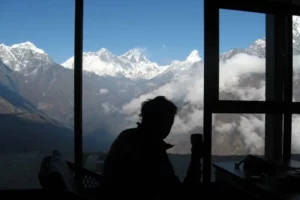
The Story of the Hotel Everest View
The Hotel Everest View is not just a place with a view. It is one of the most remarkable buildings in the Himalaya, with a story of ambition, hardship and love for the mountains.
A Japanese Dream in the Khumbu
Takashi Miyahara, a Japanese entrepreneur and mountain lover with a deep attachment to Nepal, envisioned the hotel. IN the early days of tourism in the Khumbu, when Namche Bazaar had almost no accommodation for visitors, he imagined a hotel where travellers could enjoy the world’s highest mountains in comfort. He also hoped it would create jobs for Sherpa families and help build sustainable tourism in the region.
Building on the Roof of the World
Constructing a hotel at nearly 3,900 m, with no roads, was an enormous challenge. Equipment and materials from Japan travelled by ship and land to Kathmandu, and from there everything had to be carried into the mountains. Sherpa porters walked for around two weeks from the end of the road, carrying timber, tools, fittings and food on their backs. S one was quarried locally, and the work took several years to complete. The finished hotel features stone terraces that blend into the ridge, and nearly every room faces the mountains.
A Record-Breaking Hotel
When it opened, the Hotel Everest View became famous worldwide as one of the highest hotels on Earth, and Guinness World Records once listed it as the highest-placed hotel in the world. Higher lodges and hotels have since been built elsewhere, but its location, history and views keep it among the most celebrated hotels in the Himalaya.
Challenges at Altitude
In its early years, many guests flew directly from Kathmandu to the nearby airstrip at Syangboche, gaining over 2,000 m of altitude in less than an hour. Surprisingly, some suffered from altitude sickness. On a typical day, most visitors arrive on foot after acclimatising in Namche, which is far safer and more enjoyable. If you arrive by helicopter, keep your stay short and watch for symptoms. Our Acute Mountain Sickness guide explains what to look out for.
The Hotel Today
Today, the Hotel Everest View remains a peaceful retreat on the ridge, popular with trekkers stopping for tea, helicopter visitors enjoying breakfast and a smaller number of guests staying overnight. Its stone terraces, wood-panelled lounge and wide windows are designed around the mountains, so the view is never far away. Staff are friendly and used to welcoming tired trekkers in hiking boots, and the atmosphere is relaxed rather than formal. For many visitors, simply sitting on the terrace with a warm drink and watching clouds drift around Everest and Ama Dablam is one of the most peaceful moments of the whole journey. Please remember that the hotel is a private business; respect its spaces, follow staff guidance and order something if you use its terrace.
The View from the Terrace
The main reason everyone comes to the Hotel Everest View is, of course, the view. On a clear morning, the terrace panorama is one of the finest in the Khumbu.
Mountains You Can See
- Mount Everest: The summit pyramid appears above the long ridge of Nuptse and Lhotse, often with a plume of snow blowing from the top.
- Lhotse: The world’s fourth-highest mountain, rising right next to Everest.
- Nuptse: The great wall that hides much of Everest’s lower slopes.
- Ama Dablam: One of the world’s most beautiful peaks, seen in perfect profile to the right of Everest. Read our Ama Dablam guide for its story.
- Thamserku and Kangtega: Dramatic snowy peaks to the south-east, towering above Namche.
- Taboche: A sharp peak further up the valley towards Pheriche.
- Khumbila: The sacred mountain behind Khumjung, home of the Khumbu’s guardian deity.
The terrace looks straight up the Dudh Koshi and Imja valleys so that you can trace the route to Tengboche and beyond. Many trekkers find that seeing Everest from here, before the hard days higher up, gives them extra motivation for the journey ahead.
When to See the Best View
Early morning offers the clearest views. Clouds often build up by late morning, especially in spring and during the monsoon. Guides often start the hike right after breakfast to reach the terrace by mid-morning. Autumn and winter generally bring the clearest skies.
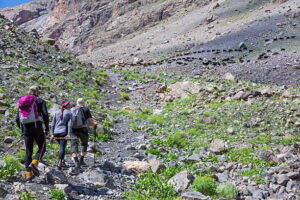
The Syangboche Hike: Step by Step
The hike from Namche to the Hotel Everest View is short but steep, and it is one of the best ways to acclimatise in the Everest region. H re is how it unfolds.
Namche to Syangboche
The trail leaves the upper part of Namche Bazaar and climbs a long series of stone steps and switchbacks above the village. Views of Namche’s horseshoe-shaped bowl, with Kongde and Thamserku across the valley, improve with every step. This is the steepest part of the hike, gaining about 300 m. Take it slowly, breathe deeply, and stop often.
The Syangboche Airstrip
At the top of the climb, the trail reaches the Syangboche ridge and its small, dusty airstrip at about 3,750 m. It is not used for regular passenger flights, but helicopters and cargo flights sometimes land here. Nearby, you may see grazing yaks, along with a few lodges and teahouses.
Through the Juniper Forest
From the airstrip, the trail climbs gently through juniper, rhododendron and fir forest towards the hotel. This section is quieter and beautiful, with occasional glimpses of the peaks through the trees. Look out for Himalayan monal and other forest birds. In spring, the rhododendrons bloom here in red and pink.
Arriving at the Hotel
After about 1.5 to 2 hours from Namche, the trail reaches Hotel Everest View. Walk to the terrace, find a seat, order a hot drink, and enjoy the panorama. Spending time at this altitude is exactly what your body needs to acclimatise.
The Full Acclimatisation Loop: Hotel, Khumjung and Khunde
Most of our groups combine the Hotel Everest View with a visit to the nearby Sherpa villages of Khumjung and Khunde before returning to Namche. This makes a full, varied day of four to six hours.
- Hotel Everest View to Khumjung: A short descent through forest brings you to Khumjung, a traditional Sherpa village with green roofs and potato fields.
- Khumjung village: Visit the Hillary School, founded with the help of Sir Edmund Hillary, and the Khumjung monastery, which displays a famous relic said to be a yeti scalp.
- Khunde: A short walk west to the twin village and the Khunde Hospital, also founded by Hillary’s Himalayan Trust.
- Return to Namche: Climb back over the ridge and descend steeply into Namche for lunch or a late afternoon rest.
For more about these villages, read our guide to Khumjung and Khunde. The loop follows the classic “climb high, sleep low” principle, taking you to nearly 3,900 m before returning to sleep at Namche.
Why the Syangboche Hike Is So Good for Acclimatisation
The day you hike to the Hotel Everest View is often called a “rest day,” but it is really an active acclimatisation day. H re is why it matters:
- Climb high, sleep low: Gaining about 400 m and returning to sleep lower helps your body adapt to thinner air.
- Gentle stress: Short, steep effort at altitude encourages your body to produce more red blood cells over the following days.
- Better sleep and appetite: Many trekkers feel better the night after an acclimatisation hike.
- A safe test: If you feel unusually tired or develop a headache on the hike, tell your guide right away.
Skipping the hike to lie in bed all day may feel tempting, but it is less effective. Walk slowly, drink plenty of water and enjoy the views. Our guide to Everest Base Camp Trek difficulty explains why acclimatisation is the key to success.
Hotel Everest View on the Everest View Trek
For travellers who want to see Everest without reaching extreme altitude, our Everest View Trek centres on the Hotel Everest View and the cultural highlights of the lower Khumbu. It is perfect for families, older travellers, first-time trekkers and anyone with limited time.
How the Everest View Trek Unfolds
- Day 1: Fly to Lukla and trek along the Dudh Koshi River to Phakding.
- Day 2: Trek through Monjo and the national park gate, cross the Hillary Bridge and climb to Namche Bazaar.
- Day 3: Hike to the Hotel Everest View via Syangboche, then visit Khumjung and return to Namche.
- Day 4: Trek to Tengboche, home of the Khumbu’s largest monastery, with views of Everest and Ama Dablam.
- Day 5: Return to Namche Bazaar.
- Day 6: Trek back to Lukla.
- Day 7: Fly back to Kathmandu.
The highest point is around 3,880 to 3,890 m, low enough to reduce the risk of serious altitude sickness while still giving you outstanding views of Everest and the surrounding peaks. Our guides to Phakding, Monjo, and Tengboche Monastery describe other highlights of the route.
Who the Everest View Trek Suits
- Families with children: Shorter days and lower altitude make it more manageable.
- Older travellers: A good balance of challenge and comfort.
- First-time trekkers: A great introduction to Himalayan trekking and Sherpa culture.
- Short-on-time travellers: Everest views in about a week.
- Travellers worried about altitude: Stays below 4,000 m.
Hotel Everest View on the Everest Base Camp Trek
On the classic Everest Base Camp Trek, the hike to Hotel Everest View usually happens on the acclimatisation day in Namche, before continuing to Tengboche, Dingboche, Lobuche, Gorakshep, and Everest Base Camp. It is your first chance for a big, clear view of Everest and a vital step in preparing your body for the higher altitudes ahead.
Many other Everest region treks include this hike, including the Gokyo Lakes Trek, the Everest 3 Pass Trek, Ama Dablam Base Camp Trekking, and the Everest Base Camp Yoga Trek. Climbers heading to Island Peak, Lobuche Peak, or Mera Peak also benefit from similar acclimatisation hikes.
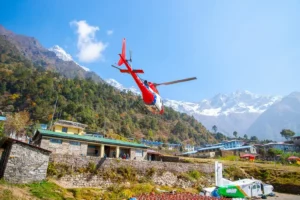
Visiting the Hotel Everest View by Helicopter
For travellers who cannot trek, or who want to see Everest in a single day, helicopter tours offer a spectacular alternative. Many Everest helicopter tours land near the Hotel Everest View for breakfast on the terrace, with Everest straight ahead.
- [Everest Helicopter Tour](https://www.treknepalhimalayas.com/trip/everest-helicopter-tour/): A scenic flight over the Khumbu with a landing and breakfast stop.
- [Mt Everest by Helicopter Tour](https://www.treknepalhimalayas.com/trip/mt-everest-by-helicopter-tour/): Fly close to Everest and enjoy a meal with mountain views.
- [Sharing Everest Helicopter Tour with Kala Patthar Landing](https://www.treknepalhimalayas.com/trip/sharing-everest-helicopter-tour-with-kalapatthar-landing/): A group option with a landing high in the valley.
- [Everest Heli Sherpa Village Walk](https://www.treknepalhimalayas.com/trip/full-day-everest-helicopter-tour-with-village-walk/): Combines a flight with a guided walk through Sherpa villages near Khumjung.
Remember that flying directly from Kathmandu to almost 3,900 m is a big altitude jump. Helicopter visits are kept short for safety. Our blogs on the Everest Base Camp helicopter tour, best seasons for an Everest helicopter tour and Everest helicopter tour restrictions explain more.
Staying Overnight at the Hotel Everest View
Some travellers choose to spend a night at the Hotel Everest View itself. Waking up to sunrise over Everest from your bedroom window is unforgettable. The hotel’s rooms face the mountains, and the lounge and terrace offer comfortable places to relax.
However, sleeping at almost 3,900 m is a significant step up from Namche. We recommend staying overnight only after at least one or two nights in Namche, never on arrival by helicopter from Kathmandu. Our team can include an overnight stay in a tailor-made itinerary or as part of a luxury journey such as the Everest Base Camp Luxury Lodge Trek.
Everest Viewpoints Compared: Hotel Everest View, Tengboche, Kala Patthar and Gokyo Ri
The Khumbu has several famous Everest viewpoints, each offering a different experience. Here is how the Hotel Everest View compares:
- Hotel Everest View (about 3,880 m): The easiest major viewpoint to reach, just a few hours from Namche. Everest appears in the distance above the Nuptse-Lhotse wall, with Ama Dablam beside it. Ideal for acclimatisation, families and shorter treks.
- Tengboche (about 3,867 m): A similar altitude, with Everest rising behind the famous monastery and Ama Dablam towering to the east. Read our guide to Tengboche Monastery and the Mani Rimdu festival.
- Nangkartshang Peak (around 5,000 m): The acclimatisation hike above Dingboche, with views of Makalu, Lhotse and the Imja valley.
- Kala Patthar (about 5,545 m): The classic sunrise viewpoint above Gorakshep, with Everest’s full south-west face just a few kilometres away. The highest point of the Everest Base Camp trek. See our Kala Patthar
- Gokyo Ri (about 5,357 m): A view over the turquoise Gokyo Lakes and the Ngozumpa Glacier to four 8,000 m peaks: Everest, Lhotse, Makalu and Cho Oyu. Reached on the Gokyo Lakes Trek.
The Hotel Everest View gives you the most accessible taste of Everest; the higher viewpoints reward the extra effort with closer, more dramatic perspectives. Many trekkers enjoy the hotel early in their trek and then compare it with Kala Patthar or Gokyo Ri a week later.
A Sample Timeline for the Syangboche Hike
Here is how our guides typically plan the day:
- Around 7:00: Breakfast in Namche, with plenty of water and tea.
- Around 7:45: Start the steep climb above Namche, walking slowly and taking photo breaks.
- Around 8:45: Reach the Syangboche airstrip and rest briefly.
- Around 9:30: Arrive at the Hotel Everest View terrace for tea and views while the sky is clear.
- Around 10:30: Descend through the forest to Khumjung.
- Around 11:00: Visit the Khumjung monastery, the Hillary School grounds and the village.
- Around 12:00: Lunch in Khumjung or continue to Khunde.
- Around 13:30: Climb back over the ridge and descend to Namche.
- Afternoon: Rest, hydrate and explore Namche’s shops and museum.
Timings vary with your pace and the weather, and your guide will adjust the plan to how you are feeling.
What to Pack for the Day Hike
Even though you return to Namche the same day, the hike to the Hotel Everest View reaches nearly 3,900 m, where weather changes quickly. Pack these essentials in your daypack:
- Warm layers: A fleece or light down jacket, plus a windproof shell.
- Hat and gloves: The ridge can be windy and cold, especially in the morning.
- Sun protection: Sunglasses, sunscreen and lip balm; the sun is strong at altitude.
- Water: At least one to two litres, treated with tablets or a filter.
- Snacks: Energy bars, nuts or chocolate for the climb.
- Camera and spare batteries: Keep batteries warm in an inside pocket.
- Cash: For drinks, snacks and monastery donations.
- Trekking poles: Helpful on the steep steps above and below Namche.
What to Do in Namche Before and After the Hike
Your acclimatisation day in Namche is not just about the Hotel Everest View. Use the afternoon to explore the Sherpa capital:
- Sherpa Culture Museum: Learn about traditional Sherpa homes, clothing, and mountaineering history, with views of Everest from a nearby hill.
- Sagarmatha National Park visitor centre: Exhibits on the park’s geography, wildlife and conservation.
- Namche Gompa: The village monastery, a peaceful place to visit in the late afternoon.
- Bakeries and cafés: Fresh coffee, cakes, and pastries, one of Namche’s great pleasures.
- Gear shops: Last chance to buy or rent forgotten gear before heading higher.
- The weekly market: On market day, traders and porters bring goods from lower valleys and even across the border.
Our guide to Sherpa culture and traditions explains the customs you will see around Namche and its monasteries.
Hotel Everest View for Luxury Travellers
For travellers seeking comfort and exclusivity, the Hotel Everest View fits naturally into a luxury Himalayan journey. Combine it with the finest lodges on our Everest Base Camp Luxury Lodge Trek, or choose a premium heli-trekking experience such as the Everest Elite Luxury Heli Trek or the Luxury Everest Base Camp Trek with Helicopter Return. Our team can arrange private guides, flexible pacing and special experiences such as a sunrise breakfast on the terrace.
Photography Tips at the Hotel Everest View
The terrace offers some of the best mountain photography in the Everest region. These tips will help you get great shots:
- Arrive early: Morning light is clearest, and clouds often build after late morning.
- Use a zoom lens: Everest is far away. A telephoto lens or good phone zoom brings the summit closer.
- Include foreground interest: Prayer flags, the terrace, juniper trees or fellow trekkers add depth.
- Watch the snow plume: On windy days, a white plume of snow streams from Everest’s summit, a dramatic detail worth capturing.
- Try a panorama: The view stretches from Kongde to Thamserku; a panoramic shot captures the whole sweep.
- Keep batteries warm: The cold drains them quickly at this altitude.
For even more dramatic views of Everest, the sunrise from Kala Patthar on the Everest Base Camp trek is hard to beat.
Nature and Wildlife on the Syangboche Hike
The Syangboche area is part of Sagarmatha National Park and home to beautiful forests and wildlife. The juniper and rhododendron forests near the hotel shelter Himalayan monals, Nepal’s national bird, along with blood pheasants and many smaller birds. Himalayan tahr graze on the slopes around Namche and Khumjung, and lammergeiers glide over the ridges.
In spring, the rhododendrons bloom in red and pink, while autumn brings golden grasses and crisp, clear air. Walk quietly, especially in the early morning, for the best chance of seeing wildlife. Our guide to Sagarmatha National Park describes the region’s plants and animals in detail.
Conservation Around Syangboche
The Syangboche area also hosts environmental projects that help protect the Khumbu. Near the ridge, a waste management and recycling centre transforms mountain rubbish into art and useful products, helping to reduce the waste left by trekkers and expeditions. If open, visiting it is a great way to learn how the Khumbu is tackling the challenges of popularity.
As a visitor, you can help by carrying a refillable water bottle, taking your batteries and non-burnable waste back to Kathmandu and supporting local businesses. Our responsible tourism page explains how we protect the mountains we call home.
Everest View Trek or Everest Base Camp Trek?
Many travellers ask whether to do the shorter trek to Hotel Everest View or go all the way to Everest Base Camp. Both are wonderful, but they suit different people:
- Time: The Everest View Trek takes about a week from Kathmandu, while the Everest Base Camp Trek needs around two weeks.
- Altitude: The Everest View Trek stays below about 3,900 m. The Everest Base Camp Trek reaches 5,364 m at base camp and around 5,545 m at Kala Patthar.
- Difficulty: The Everest View Trek is moderate, with steep sections but short days. The Everest Base Camp Trek is more demanding because of altitude, cold and accumulated fatigue.
- Views: Both offer superb views of Everest and Ama Dablam. The Base Camp trek adds close-up views of the Khumbu Glacier, the Icefall and the full face of Everest from Kala Patthar.
- Culture: Both visit Namche, Khumjung and Tengboche. The longer trek adds Pangboche, Dingboche and the climbers’ memorials at Thukla.
If you have limited time, are concerned about altitude, or are travelling with children or older family members, the Everest View Trek is a great choice. If you dream of standing at the foot of the world’s highest mountain and have the time and fitness, go for Everest Base Camp. Our team can help you decide when you plan your trip.
Continuing Your Journey Beyond Syangboche
The Hotel Everest View is often just the beginning. From Namche, the trail continues to some of the most memorable places in the Khumbu:
- Pangboche: The oldest monastery village in the Khumbu, at the foot of Ama Dablam. Read our Pangboche
- Pheriche: Home of the Himalayan Rescue Association aid post and its daily altitude talk. See our guide to Pheriche and the HRA aid post.
- Lobuche and Gorakshep: The final villages before Everest Base Camp, beside the Khumbu Glacier. Learn more in our guides to Lobuche and Gorakshep.
If you fall in love with Himalayan trekking, Nepal offers many more short, scenic routes to explore, such as the Ghorepani Poon Hill Trek, the Mardi Himal Trek, and the Langtang Valley Trek. Browse our list of the top 50 trekking routes in Nepal for more ideas.
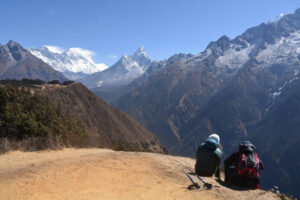
Best Time for the Syangboche Hike
- Autumn (September to November): Clear skies and the sharpest views of Everest. The most popular season.
- Spring (March to May): Rhododendrons in bloom and pleasant temperatures, though afternoons are often cloudy.
- Winter (December to February): Cold but frequently crystal clear, with very few trekkers. A great time for photography.
- Monsoon (June to August): Lush and green but often cloudy, with limited mountain views and frequent rain.
For the best chance of a perfect view, plan your trek in autumn or spring and hike early in the morning.
Common Mistakes on the Syangboche Hike
Avoid these common errors to get the most from your day:
- Starting too late: By late morning, clouds may hide Everest. Leave right after breakfast.
- Rushing the steep climb: The first section above Namche is steep. Walking too fast can leave you exhausted and with a headache.
- Not carrying layers: The ridge can be windy and cold, even on sunny days. Bring a warm jacket, hat and gloves.
- Forgetting water and sun protection: You will need water, sunscreen, sunglasses and lip balm.
- Skipping the hike altogether: Lying in bed in Namche does not help acclimatisation nearly as much as this gentle hike.
- Staying too high, too long, on arrival by helicopter: If you fly in, keep your visit short.
Use our trekking equipment list to pack the right layers and gear.
Practical Tips for Visiting the Hotel Everest View
- Bring cash: Useful for drinks, snacks and donations in Khumjung. There are no ATMs at Syangboche.
- Be respectful: The hotel is a private property welcoming visitors to its terrace and restaurant. Be polite and follow staff guidance.
- Pace yourself: Even though the hike is short, you are approaching 3,900 m. Drink plenty of water.
- Combine it with culture: Don’t miss Khumjung’s monastery and the nearby Hillary School.
- Talk to your guide: Many Sherpa guides have family ties to Khumjung and Khunde and know the area’s stories well.
- Plan buffer days: Weather can delay Lukla flights, so keep spare days in Kathmandu at the end of your trip.
To reach Namche and the Syangboche ridge, most trekkers fly to Lukla, often via Manthali Airport in Ramechhap during the peak seasons. Our Ramechhap airport transportation service handles the transfer. Travellers who prefer not to fly can take the Everest Base Camp Trek by Road, or follow the historic Jiri to Everest Trek.
Frequently Asked Questions About the Hotel Everest View
What is the altitude of the Hotel Everest View?
The Hotel Everest View sits at about 3,880 m on the Syangboche ridge above Namche Bazaar.
How long is the hike from Namche to the Hotel Everest View?
It takes about 1.5 to 2 hours one way. The full loop, including Khumjung and Khunde, takes about four to six hours.
Can I see Everest from the Hotel Everest View?
Yes. On a clear day, the terrace offers superb views of Everest, Lhotse, Nuptse, Ama Dablam,m and other peaks. Mornings usually give the clearest views.
Is the Hotel Everest View the highest hotel in the world?
Guinness World Records once listed it as the highest-placed hotel in the world. Higher lodges have since been built, but it remains one of the most famous high-altitude hotels.
Who built the Hotel Everest View?
Takashi Miyahara, a Japanese entrepreneur who loved Nepal, built it with Sherpa porters carrying materials into the mountains.
Is the Syangboche hike good for acclimatisation?
Yes. It follows the “climb high, sleep low” principle, gaining about 400 m before returning to sleep in Namche, which helps your body adapt to altitude.
Can I stay overnight at the Hotel Everest View?
Yes, but we recommend doing so only after acclimatising for at least one or two nights in Namche, and never on arrival by helicopter.
Can I visit the Hotel Everest View by helicopter?
Yes. Many Everest helicopter tours land near the hotel for breakfast with views of Everest. Visits are kept short to avoid altitude problems.
Is the Everest View Trek suitable for beginners?
Yes. The Everest View Trek stays below about 3,900 m and suits beginners, families and older travellers with reasonable fitness.
Is the Syangboche airstrip used for flights?
It doesn’t handle regular passenger flights, but helicopters and occasional charter or cargo flights land there.
Final Thoughts: The World’s Most Famous Tea Break
The hike from Namche to the Hotel Everest View is short, steep and utterly rewarding. In a single morning, you climb through forests, cross a high ridge, sip tea facing Mount Everest and wander through traditional Sherpa villages shaped by Hillary’s legacy. Whether it is part of a full Everest Base Camp journey or the highlight of a shorter trek, it is a day you will remember for a lifetime.
Let our Sherpa team guide you to this extraordinary viewpoint. Join our Everest View Trek, continue on our classic Everest Base Camp Trek, or travel in comfort on tourEverest Base Camp Luxury Lodge Trek. Plan your trip or contact us today, and enjoy the world’s most famous tea break.
Quick Inquiry
Explore More


