
Jiri to Everest Base Camp Trek: The Complete Guide

Long before an airstrip reached Lukla, every Everest expedition began the same way: on foot, from the green hills east of Kathmandu. Climbers, porters, and Sherpas walked for weeks through terraced valleys, rhododendron forests, and Sherpa villages, crossing ridge after ridge until the Khumbu’s great peaks finally came into view. The team that made the first ascent of Everest walked this route. So did generations of trekkers who wanted to earn their first sight of the world’s highest mountain step by step.
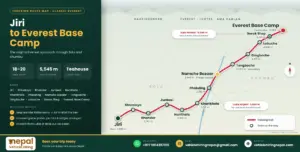
That journey still exists. The Jiri to Everest Base Camp Trek follows the historic approach through the Solu region, then joins the classic trail at Lukla and continues to Namche Bazaar, Tengboche, Gorakshep, and the foot of Everest. It is longer, quieter, and far more varied than the standard trek, offering something few routes can: gradual, natural acclimatisation and a deep cultural journey through Nepal’s middle hills.
In this complete guide, our Sherpa team explains everything you need to plan the Jiri to Everest Base Camp Trek: the route and its history, a detailed day-by-day itinerary, the choice between starting at Jiri or Bhandar, permits, difficulty, seasons, accommodation, culture, packing and safety. It is based on our own Jiri to Everest Trek and years of guiding on this classic route.
Jiri to Everest Base Camp Trek at a Glance
Here are the essential facts before we look at the route in detail:
- Start point: Jiri (about 1,900 to 2,100 m) in Dolakha District, or Bhandar (about 2,190 m) further along the road.
- End point: Lukla, with a flight back to Kathmandu, or a walk back down the trail for the adventurous.
- Highest point: Kala Patthar, about 5,545 m, with Everest Base Camp at 5,364 m.
- Duration: Around 19 days in our standard itinerary, and between 18 and 24 days depending on your start point, pace and side trips.
- Total walking distance: Roughly 200 km, depending on start point and route.
- Difficulty: Moderate to challenging. Long days with many ascents and descents in the lower section, then high altitude in the Khumbu.
- Major passes before the Khumbu: Deurali (about 2,700 m), Lamjura La (about 3,530 m) and Taksindu La (about 3,071 m).
- Accommodation: Teahouses and family-run lodges throughout.
- Best seasons: Spring (March to May) and autumn (September to November).
- Highlights: The historic expedition route, quiet trails, Sherpa, Rai, Tamang and Jirel villages, Junbesi and its monasteries, Lamjura La’s rhododendron forests, Tengboche Monastery, Everest Base Camp and sunrise from Kala Patthar.
Why Choose the Jiri Route to Everest?
Most trekkers reach Everest Base Camp by flying to Lukla and trekking for about eight days. It is a wonderful journey, but the Jiri to Everest Base Camp Trek offers advantages that the standard route cannot match.
Better Acclimatization
Flying into Lukla takes you from about 1,400 m in Kathmandu to about 2,860 m in a single short flight. On the Jiri route, your body climbs slowly, crossing passes and dropping into valleys for a week before reaching Namche Bazaar. By the time you arrive in the Khumbu, you are fitter, stronger and better adapted to altitude. As a result, many trekkers find the high section of the trek noticeably easier.
Walking in the Footsteps of History
The route from Jiri, and from Kathmandu before the road existed, is the same approach used by the early Everest expeditions, including the team that made the first ascent. Walking it connects you with the great age of Himalayan exploration in a way that a flight can’t.
Quiet Trails and Authentic Villages
While the main trail above Lukla can be busy in peak season, the Solu section between Jiri and Lukla sees only a small number of trekkers. You will share the path with farmers, porters, schoolchildren, and mule trains, stay in simple family lodges, and experience everyday village life in the middle hills.
Cultural Diversity
The lower route passes through the homelands of many communities: Jirel and Tamang people around Jiri; Newar and Magar traders in the bazaar villages; Sherpas in Junbesi and the upper Solu; and Rai communities in the lower Dudh Koshi valley. Each brings different architecture, food, festivals and faith. Our guide to Sherpa culture and traditions explains the Buddhist culture you will encounter as you climb higher.
No Dependence on Flights to Start
Lukla flights are famously weather-dependent, and during busy seasons most depart from Manthali Airport in Ramechhap, a long drive from Kathmandu. Starting by road from Kathmandu avoids the risk of flight delays at the beginning of your trek. You will normally fly out from Lukla at the end, but if weather delays your return, you already have the trek behind you.
The History of the Jiri Route
In the early days of Himalayan mountaineering, no roads reached east of Kathmandu, and no airstrips served the Solu-Khumbu. Expeditions set out from the Kathmandu Valley on foot, with hundreds of porters carrying supplies across the hills for weeks. The route passed through the area where Jiri now stands, crossed the Lamjura La into Solu and followed the Dudh Koshi north into the Khumbu.
Jiri developed as the centre of a Swiss-supported development programme, which brought a hospital, agricultural projects, and a road from Kathmandu. Its green, rolling landscape and Swiss connections later earned it the nickname “the Switzerland of Nepal.” With the road in place, Jiri became the natural starting point for walking to Everest.
When Sir Edmund Hillary helped build the Lukla airstrip to bring building materials for his schools and hospitals, it opened a new, faster gateway. Over time, most trekkers switched to flying, and the Jiri route became the quieter classic path, cherished by trekkers who prefer a slower, deeper journey. Today, roads extend beyond Jiri, giving trekkers new options for where to start walking.
Jiri or Bhandar? Choosing Your Starting Point
Road construction in the region has changed how the Jiri to Everest Base Camp Trek begins. Today you have three main options:
Starting in Jiri
The traditional start. After a long drive from Kathmandu, you begin walking in Jiri and cross the Deurali ridge to reach Bhandar. This adds a day of walking, but it gives you the complete historic route and an extra day of gentle acclimatisation. We recommend it for purists and trekkers with time.
Starting in Shivalaya or Bhandar
Roads now continue beyond Jiri to Shivalaya and Bhandar, and many trekkers drive further and start walking from one of these villages. This saves a day and avoids some sections where the trail now follows or crosses the road. The drive is long and rough, but the trade-off is attractive if you have limited time.
Starting from Phaplu or Salleri
Some trekkers fly or drive to the Phaplu and Salleri area in the Solu region and join the trail near Ringmo or Junbesi. This shortens the lower route further but misses the Lamjura La. It is a good option if you want a taste of Solu culture with fewer days.
Our team will recommend the best acclimatisation starting point based on your time, interests, and the latest road conditions when you plan your trip.
Day-by-Day Itinerary: Jiri to Everest Base Camp Trek
The following itinerary is based on our 19-day Jiri to Everest Trek. Altitudes are approximate and can vary slightly between sources. Walking times depend on your pace, the weather and how long you stop for photos and tea.
Day 1: Drive from Kathmandu to Jiri (about 1,900 to 2,100 m)
The journey begins with a long drive east of Kathmandu, along the Arniko Highway and then the mountain road through Charikot towards Jiri. The road winds through terraced hills, small bazaars and forests, with views of the Ganesh Himal, Langtang and Gaurishankar ranges on clear days. The drive takes most of the day. Jiri is a pleasant town spread across a green valley, home to the Jirel people, a small ethnic group with their own language and traditions.
Day 2: Jiri to Bhandar (about 2,190 m)
Your first trekking day climbs through forest and farmland to Deurali Pass (around 2,700 m), decorated with mani walls and prayer flags, after passing through the village area of Shivalaya on the Khimti Khola. From Deurali, the trail descends gently to Bhandar, a Sherpa village set among fields, with a small monastery and two large chortens. It is a long day of ups and downs that tests your legs and starts your acclimatisation.
Day 3: Bhandar to Sete (about 2,575 m)
The trail descends through terraced fields to the Likhu Khola, a river valley well below 2,000 m, then follows it to the bazaar village of Kenja, where Newar and Magar families run shops and teahouses. From Kenja, a long, steep climb begins towards the Lamjura La. You stop for the night at Sete, a small settlement with a monastery and wonderful views back down the valley. This is one of the hardest days on the lower route, with a long descent followed by a long climb.
Day 4: Sete to Junbesi via Lamjura La (pass about 3,530 m)
Today you cross the highest pass of the lower route. The trail climbs through magnificent rhododendron, oak, fir, and pine forests to the acclimatisation village of Goyom, then to Lamjura La at about 3,530 m. In spring, rhododendrons bloom here in red, pink, and white, creating some of the finest displays in Nepal. In winter, the pass can be snowy and cold. From the pass, the trail descends through forest to Junbesi, one of the most beautiful Sherpa villages in the Solu region. Our package lists the day’s highest point at about 3,530 m, while Junbesi sits around 2,700 m.
Day 5: Junbesi to Nunthala (about 2,200 to 2,300 m)
Junbesi is a wonderful place to linger, with its large monastery and stone houses. A short side trip leads to Thupten Chholing, a large Tibetan Buddhist monastery and nunnery complex in the hills above, home to hundreds of monks and nuns. The day’s trail climbs to a ridge for your first view of Everest, then descends to Ringmo, known for its apple orchards and the nearby Taksindu Monastery. After crossing Taksindu La (aroundd 3,071 m), the trail descends steeply through forest to Nunthala. On the way, you may pass small cheese factories, a legacy of Swiss-supported dairy projects in the region.
Day 6: Nunthala to Bupsa (about 2,300 m)
The trail descends to the Dudh Koshi River, the same river that flows from Everest’s glaciers, and crosses it on a long suspension bridge. You then climb to Jubing, a Rai village surrounded by terraced fields and banana and orange trees. Continuing through Kharikhola, a lively village with a monastery and small bazaar, you climb steadily to Bupsa. You are now in Rai country, with different farming styles, houses and food from the Sherpa villages above.
Day 7: Bupsa to Surke or Chheplung (about 2,300 to 2,860 m)
The trail climbs through forest to the Khari La and continues along the hillside to Paiya, also known as Chutok, with views of Cho Oyu and Gyachung Kang in the far distance on clear days. After crossing the Paiya La, the trail drops to Surke, near a waterfall and gorge, then climbs to join the main Lukla trail at Chheplung, just below Lukla. Some itineraries continue directly towards Phakding.
Day 8: Chheplung to Namche Bazaar (about 3,440 m)
Joining the main Everest trail, you follow the Dudh Koshi through Phakding, Benkar, and Monjo as you enter Sagarmatha National Park. Beyond Jorsalle, you cross the famous Hillary Suspension Bridge and climb steeply to Namche Bazaar, the Sherpa capital. Because you have already walked a week, many Jiri trekkers find the Namche Hill easier than those who flew to Lukla. Our guide to Phakding and Monjo describes this section in detail.
Day 9: Acclimatisation Day in Namche Bazaar
Even with the lower route, an acclimatisation day in Namche is essential. Hike up to the Syangboche ridge and the Hotel Everest View for your first panoramic view of Everest, Lhotse and Ama Dablam, then visit Khumjung and Khunde, home of the Hillary School. Spend the afternoon exploring Namche’s bakeries, gear shops and Sherpa Culture Museum.
Day 10: Namche Bazaar to Tengboche (about 3,860 m)
The trail follows the hillside with spectacular views of Everest and Ama Dablam, drops to the river at Phunki Tenga, and climbs through rhododendron forest to Tengboche. Visit the monastery for the afternoon prayers. Our guide to Tengboche Monastery and the Mani Rimdu festival explains its history and traditions.
Day 11: Tengboche to Dingboche (acclimatisation). The trail descends through forest to Deboche, crosses the Imja Khola, and climbs to Pangboche, home of the Khumbu’s oldest monastery. Above the tree line, the valley opens out into yak pastures, and you continue to Dingboche, a high village of stone-walled fields beneath Ama Dablam and Island Peak.
Day 12: Acclimatisation Day in Dingboche
Climb Nangkartshang Peak above Dingboche for views of Makalu, Lhotse and the Imja valley, or take a gentler walk towards Chhukung. Return to Dingboche to rest, hydrate and prepare for the higher days ahead.
Day 13: Dingboche to Lobuche (about 4,910 m)
The trail climbs gently above Pheriche to Thukla, then steeply up the moraine to the Thukla Pass, where stone memorials honour climbers and Sherpas who lost their lives on Everest. From there, you follow the Khumbu Glacier to Lobuche.
Day 14: Lobuche to Gorakshep and Everest Base Camp (5,364 m)
The longest and hardest day of the trek. You walk along the rocky moraine of the Khumbu Glacier to Gorakshep, the last settlement, then continue to Everest Base Camp at the foot of the Khumbu Icefall. After celebrating your achievement, you return to Gorakshep for the night.
Day 15: Kala Patthar (about 5,545 m) and Descent to Pheriche
Wake before dawn and climb Kala Patthar, the highest point of the trek, for the classic sunrise view of Everest, Nuptse, Lhotse and Pumori. Then descend past Lobuche and Thukla to Pheriche, home of the Himalayan Rescue Association aid post. Our guide explains Pheriche and the HRA aid post’s role on the trail.
Day 16: Pheriche to Namche Bazaar
With your lungs full of thicker air, you walk back down through Pangboche, Tengboche and the forest to Namche Bazaar. It is a long day, but most trekkers feel strong and happy, enjoying the views they may have missed on the way up.
Day 17: Namche Bazaar to Phakding
Descend the Namche Hill, cross the Hillary Bridge and follow the Dudh Koshi back through Monjo to Phakding.
Day 18: Phakding to Lukla
A short final walk brings you to Lukla, with a last uphill climb into the village. In the evening, celebrate with your guides and porters, the team who made your journey possible.
Day 19: Fly from Lukla to Kathmandu
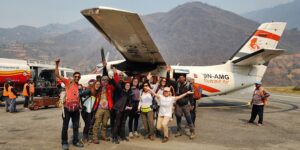
An early morning flight takes you back over the hills you crossed on foot, giving you an aerial view of the route from Jiri. Weather can delay flights, so always keep buffer days at the end of your trip. During peak seasons, flights may land at Manthali Airport in Ramechhap, then you’ll drive to Kathmandu; our Ramechhap airport transportation service handles the transfer.
For a closer look at the upper section from Lukla to base camp, see our Everest Base Camp Trek itinerary and Everest Base Camp Trek distance guides.
Highlights of the Lower Route: Jiri to Lukla
Many trekkers know the upper Khumbu well, but the lower section of the Jiri to Everest Base Camp Trek has its own treasures:
- Jiri and the Jirel people: A small ethnic community with a unique culture, found mainly around Jiri.
- Deurali Pass: Your first ridge crossing, with mani walls and wide views over the hills.
- The Likhu Khola valley: A warm, low valley with suspension bridges and terraced farmland.
- Lamjura La: A forested pass with some of the best rhododendron displays in Nepal in spring.
- Junbesi: A beautiful Sherpa village with a historic monastery, often described as one of the prettiest in the Solu region.
- Thupten Chholing: A large Tibetan Buddhist monastery and nunnery complex above Junbesi.
- First view of Everest: From the ridge beyond Junbesi, a distant but thrilling first glimpse.
- Ringmo’s apple orchards and Taksindu Monastery: A peaceful monastery on the ridge near the Taksindu La.
- The Dudh Koshi crossing: Your first meeting with the river that flows from Everest.
- Rai villages of Jubing and Kharikhola: Terraced hillsides, orange and banana trees and a different culture from the Sherpa villages above.
Jiri to Everest Base Camp Trek Difficulty
The Jiri to Everest Base Camp Trek is graded moderate to challenging. It requires no technical climbing skills, but it is longer and more physically demanding than the standard trek from Lukla.
The Lower Section: Ups and Downs
Between Jiri and Lukla, the trail crosses a series of north-south ridges and valleys. Each day involves long climbs followed by steep descents, often of more than 1,000 m. The altitude is moderate, mostly between 1,500 and 3,500 m, but the cumulative climbing makes these days tiring. Good knees and strong legs are essential, and trekking poles help a great deal.
The Upper Section: Altitude
Above Namche, the challenge becomes altitude. The days from Dingboche to Lobuche, Gorakshep, Everest Base Camp and Kala Patthar are at or above 4,400 m, with thin air, cold nights and long walking hours. The good news is that the lower section prepares you well, both physically and for acclimatisation. For a detailed look at this part of the journey, read our guide to Everest Base Camp Trek difficulty.
Fitness Preparation
Start training at least two to three months before your trek. Focus on long hikes with a light pack, hill and stair training, leg strength and downhill walking to prepare your knees. In the final month, practise back-to-back long hikes to simulate consecutive trekking days. If you can walk six to seven hours on hilly terrain and repeat it the next day, you are well prepared.
Permits for the Jiri to Everest Base Camp Trek
Trekking from Jiri to Everest Base Camp requires several permits. When you trek with us, our team arranges all of them in advance:
- Sagarmatha National Park acclimatisation is required for the Khumbu and is checked at the Monjo entrance gate.
- Khumbu Pasang Lhamu Rural Municipality permit: The local permit for the Khumbu region.
- Gaurishankar Conservation Area permit: The section around Jiri and Shivalaya lies within the Gaurishankar Conservation Area, so you usually need a conservation area permit if you start walking from Jiri or Shivalaya.
Nepal also requires foreign trekkers to walk with a licensed guide in most trekking areas. You will need a valid Nepal visa, which most nationalities can obtain on arrival in Kathmandu; see our Nepal visa guide for details. Permit rules can change, so always confirm the latest requirements with our team before you travel.
Best Time for the Jiri to Everest Base Camp Trek
Each season brings a different experience to the trail:
Spring (March to May)
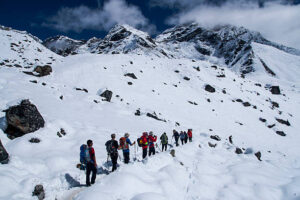
The best season for the lower route. Rhododendron forests on the Lamjura La and around Junbesi burst into bloom, days are warm, and the trails are lively. Expeditions fill Everest Base Camp. Afternoon clouds are common, but mornings are often clear.
Autumn (September to November)
The most popular season for clear skies and sharp mountain views after the monsoon. Temperatures are pleasant in the lower hills and cold at night in the high Khumbu. Festivals such as Dashain and Tihar bring colour to the villages, and Tengboche may celebrate Mani Rimdu.
Winter (December to February)
The lower route is quiet and often clear, but Lamjura La can be snowy, and the high Khumbu is very cold. Some lodges close in winter. Suitable for experienced trekkers with good gear.
Monsoon (June to August)
The lower route is green but wet, with leeches, mud and a risk of landslides on roads and trails. Views are limited, and Lukla flights are often delayed. We do not recommend this season for most trekkers.
Accommodation and Food on the Jiri Route
Teahouses and family-run lodges are available throughout the Jiri to Everest Base Camp Trek, though the experience varies by section.
Lodges Between Jiri and Lukla
In the Solu section, lodges are simpler and quieter than in the Khumbu. Rooms usually have twin beds and shared toilets, and a stove warms the dining room. Because fewer trekkers walk this section, you often have the lodge almost to yourself and can spend evenings talking with the family. Some villages, such as Junbesi, have more comfortable lodges with gardens and good food.
Lodges in the Khumbu
From Phakding onward, you join the main Everest trail, where lodges are more numerous and often better developed, with better rooms, bakeries, and, in Namche, a wide choice of cafés. Higher up, at Lobuche and Gorakshep, facilities are basic, and rooms are very cold. If you prefer more comfort in the Khumbu, ask about upgrading to the lodges used on our Everest Base Camp Luxury Lodge Trek.
Food on the Trail
Dal bhat is the staple meal throughout the trek, served with lentil soup, vegetable curry and pickles, often with free refills. You will also find noodles, fried rice, potatoes, soups, momos, pancakes and porridge. In the Solu section, look out for local apples near Ringmo, yak cheese and fresh vegetables. In the Khumbu, try Sherpa stew and potato pancakes. Our guides recommend vegetarian meals in the higher villages.
Culture Along the Jiri to Everest Route
The Jiri to Everest Base Camp Trek’s cultural richness is one of its greatest rewards.
Communities of the Middle Hills
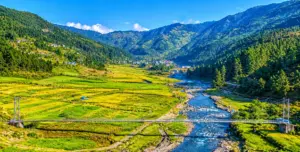
Around Jiri and Shivalaya, you meet Jirel, Tamang and Chhetri communities, with Hindu temples and Buddhist shrines side by side. In bazaar villages such as Kenja, Newar and Magar families run shops and teahouses. In the Solu, from Bhandar to Junbesi and Ringmo, Sherpa villages with monasteries, mani walls and chortens dominate. In the lower Dudh Koshi valley, around Jubing and Kharikhola, Rai communities farm the terraced hillsides with distinctive houses and traditions.
Monasteries of Solu
Junbesi’s monastery, Thupten Chholing above it and Taksindu Monastery near Ringmo are among the most important Buddhist sites of the lower route. Chiwong Monastery near Phaplu, one of the venues of the Mani Rimdu festival, is worth adding with a short detour. Remember to walk clockwise around chortens and mani walls, remove your shoes in prayer halls and ask before taking photos. Our article on the Eight Great Stupas explains the monuments you will pass.
Khumbu Sherpa Culture
Above Lukla, you enter the Sherpa heartland of the Khumbu, with famous monasteries at Tengboche and Pangboche, the Hillary School in Khumjung and a strong mountaineering tradition. Our guide to Sagarmatha National Park describes the region’s culture and wildlife.
Jiri Route vs Lukla Route: Which Is Right for You?
Both routes reach the same destination, but they offer very different experiences:
- Duration: The Jiri route takes about 18 to 24 days, while the standard Everest Base Camp Trek from Lukla takes about 12 to 14 days.
- Acclimatisation: The Jiri route offers a much more gradual ascent, while the Lukla route starts with a sudden altitude gain.
- Crowds: The lower Jiri section is very quiet. The Lukla route is busier, especially in peak season.
- Culture: The Jiri route passes through many ethnic communities and quiet villages. The Lukla route focuses on Khumbu Sherpa culture.
- Physical demand: The Jiri route involves more total climbing and descending. The Lukla route has fewer days but a faster altitude gain.
- Flights: The Jiri route avoids the initial flight. The Lukla route relies on flights both ways.
If you have three weeks, enjoy long walks and want a richer, more authentic journey, choose the Jiri route. If your time is limited, the Lukla route is the better option. A third choice, the Everest Base Camp Trek by Road, drives further into the Solukhumbu to shorten the walk-in while still avoiding the Lukla flight at the start.
Variations and Extensions
The Jiri to Everest Base Camp Trek can be extended or adapted in many ways:
- Add the Gokyo Lakes: Cross the Cho La from Dzongla to Gokyo, or return via the Gokyo valley, combining the classic route with the turquoise lakes of the Gokyo Lakes Trek.
- The Three Passes: Experienced trekkers can add Kongma La, Cho La and Renjo La, as on our Everest 3 Pass Trek.
- Peak climbing: Combine the trek with Island Peak Climbing or Lobuche Peak Climbing. The long approach provides excellent acclimatisation.
- Ama Dablam Base Camp: Add a day hike from Pangboche to the base of one of the world’s most beautiful mountains, or follow our Ama Dablam Base Camp Trekking
- Helicopter return: After reaching base camp, fly back to Kathmandu by helicopter, saving several days of descent. See our Luxury Everest Base Camp Trek with Helicopter Return for this style of journey.
- Walk all the way back: For the ultimate adventure, some trekkers walk back to Jiri or out via Phaplu instead of flying from Lukla.
Packing List for the Jiri to Everest Base Camp Trek
Because the trek spans warm valleys at around 1,500 m and freezing nights above 5,000 m, layering is essential. These are the key items our guides check:
- Base: Acclimatisation-wicking tops and leggings for walking and sleeping.
- Mid layers: A warm fleece and a light insulated jacket.
- Down jacket: A warm down jacket for the high Khumbu.
- Waterproof shell: A waterproof jacket and trousers for rain and wind.
- Trekking trousers and shorts: Shorts are useful in the warm lower valleys.
- Footwear: Broken-in waterproof boots with good ankle support, plus light camp shoes.
- Sleeping bag: Rated to about minus 15 to minus 20°C.
- Accessories: Warm hat, sun hat, buff, gloves, sunglasses and headlamp.
- Trekking poles: Essential for the steep descents of the lower route.
- Water treatment: Purification tablets or a filter and a refillable bottle.
- First aid and personal medication: Including blister care and any altitude medication your doctor recommends.
- Rain cover and dry bags: To protect your gear in the lower forests.
Our full trekking equipment list covers everything in detail.
Health and Safety on the Jiri Route
Safety is our top priority on every trek. Here is what to know for the Jiri to Everest Base Camp Trek:
- Altitude sickness: Even with the gradual approach, altitude sickness can affect anyone above about 2,500 m. Follow the itinerary’s acclimatisation days, drink plenty of water and tell your guide about any symptoms. Our Acute Mountain Sickness guide explains the warning signs.
- Stomach problems: Drink only treated water, wash your hands and stick to freshly cooked food.
- Knees and joints: The long descents of the lower route are hard on the knees. Use trekking poles and walk steadily.
- Weather and landslides: During the monsoon and shoulder seasons, landslides can affect roads and trails. Our team monitors conditions and adjusts plans when necessary.
- Remoteness: The Solu section has fewer medical facilities than the Khumbu. Experienced guides and good communication are essential.
- Insurance: Travel insurance covering high-altitude helicopter acclimatisation is mandatory.
Practical Tips for the Jiri to Everest Base Camp Trek
- Allow buffer days: Keep one or two spare days at the end for Lukla flight delays.
- Carry enough cash: ATMs are limited along the lower route and unreliable above Namche. Bring Nepali rupees from Kathmandu.
- Charge when you can: Electricity is reliable in some villages and limited in others. Carry a power bank.
- Mobile coverage: Coverage is patchy in the Solu section and higher in the Khumbu. Expect long stretches without signal.
- Learn a few words: “Namaste” works everywhere, and “Tashi delek” is a warm greeting in Sherpa villages.
- Respect local customs: Ask before photographing people, dress modestly and walk clockwise around religious sites.
- Support local businesses: Buying apples, cheese and handicrafts in the villages helps communities along the route.
- Trek responsibly: Carry out your rubbish and use a refillable bottle. Our responsible tourism page explains our approach.
Why Trek from Jiri with Trek Nepal Himalayas?
The Jiri to Everest Base Camp Trek rewards experience. Our Sherpa guides know the lower route intimately, from the best lodges in Junbesi to the shortcuts around road sections, and they have family connections in the Solu and Khumbu villages along the way. We handle permits, transport ,and logistics,;monitor road and weather conditions,;and design flexible itineraries ttomatch your pace and interests.
Whether you want the full historic walk from Jiri, a shorter start from Bhandar, extra days for culture, or a helicopter return, our team will tailor the journey to you. Meet our guides on our Our Team page and learn more about our company.
Frequently Asked Questions About the Jiri to Everest Base Camp Trek
How long is the Jiri to Everest Base Camp Trek?
Our standard itinerary takes 19 days, round-trip from Kathmandu. Depending on your starting point, pace, and side trips, the trek can take 8 to 24 days.
How many kilometres is the Jiri to Everest Base Camp Trek?
The total walking distance is roughly 200 km, depending on your start point and whether you fly out from Lukla or walk back.
Is the Jiri to Everest Base Camp Trek harder than the Lukla route?
It is longer and involves more total climbing and descending in the lower section. However, the gradual ascent improves acclimatisation, so many trekkers find the high-altitude section easier.
Can I start the trek from Bhandar instead of Jiri?
Yes. Roads now continue beyond Jiri, and many trekkers drive to Shivalaya or Bhandar to save a day. Starting in Jiri gives you the complete historic route.
What permits do I need for the Jiri to Everest trek?
You need the Sagarmatha National Park permit, the Khumbu Pasang Lhamu Rural Municipality permit, and usually a Gaurishankar Conservation Area permit if you start walking from Jiri or Shivalaya. Our team arranges all permits.
What is the highest point on the Lamjura La?
Lamjura La is about 3,530 m, the highest point on the lower route between Jiri and Lukla.
When is the best time for the Jiri to Everest Base Camp Trek?
Spring (March to May) and autumn (September to November) are the best seasons. Spring is famous for rhododendrons on the Lamjura La, while autumn offers the clearest mountain views.
Are there teahouses along the Jiri route?
Yes. Teahouses and family-run lodges line the route, though they are simpler and quieter in the lower Solu section.
Do I need a guide for the Jiri to Everest trek?
Nepal requires foreign trekkers to walk with a licensed guide in most trekking areas. A guide is especially valuable on the lower route, where trails can be confusing near new road sections.
Can I fly back by helicopter after reaching Everest Base Camp?
Yes. You can arrange a helicopter return from Gorakshep or Pheriche, saving several days of descent.
Final Thoughts: The Classic Way to Everest
The Jiri to Everest Base Camp Trek is more than a longer version of the standard trek. It is a journey through the heart of Nepal: from the green hills of Jiri, over the rhododendron forests of the Lamjura La, through the monasteries of Junbesi and the terraced villages of the Rai, and finally into the Sherpa heartland of the Khumbu. By the time you stand at Everest Base Camp, you will have earned every view.
If you have the time and the spirit of adventure, there is no better way to reach the foot of the world’s highest mountain. Join our Jiri to Everest Trek, choose the shorter classic Everest Base Camp Trek, or ask us to design a custom journey with a helicopter return. Plan your trip or contact us today, and walk the historic route to Everest with our Sherpa team.
Quick Inquiry
Explore More


