
EBC Trek or Helicopter Tour? The Kala Patthar Reopening
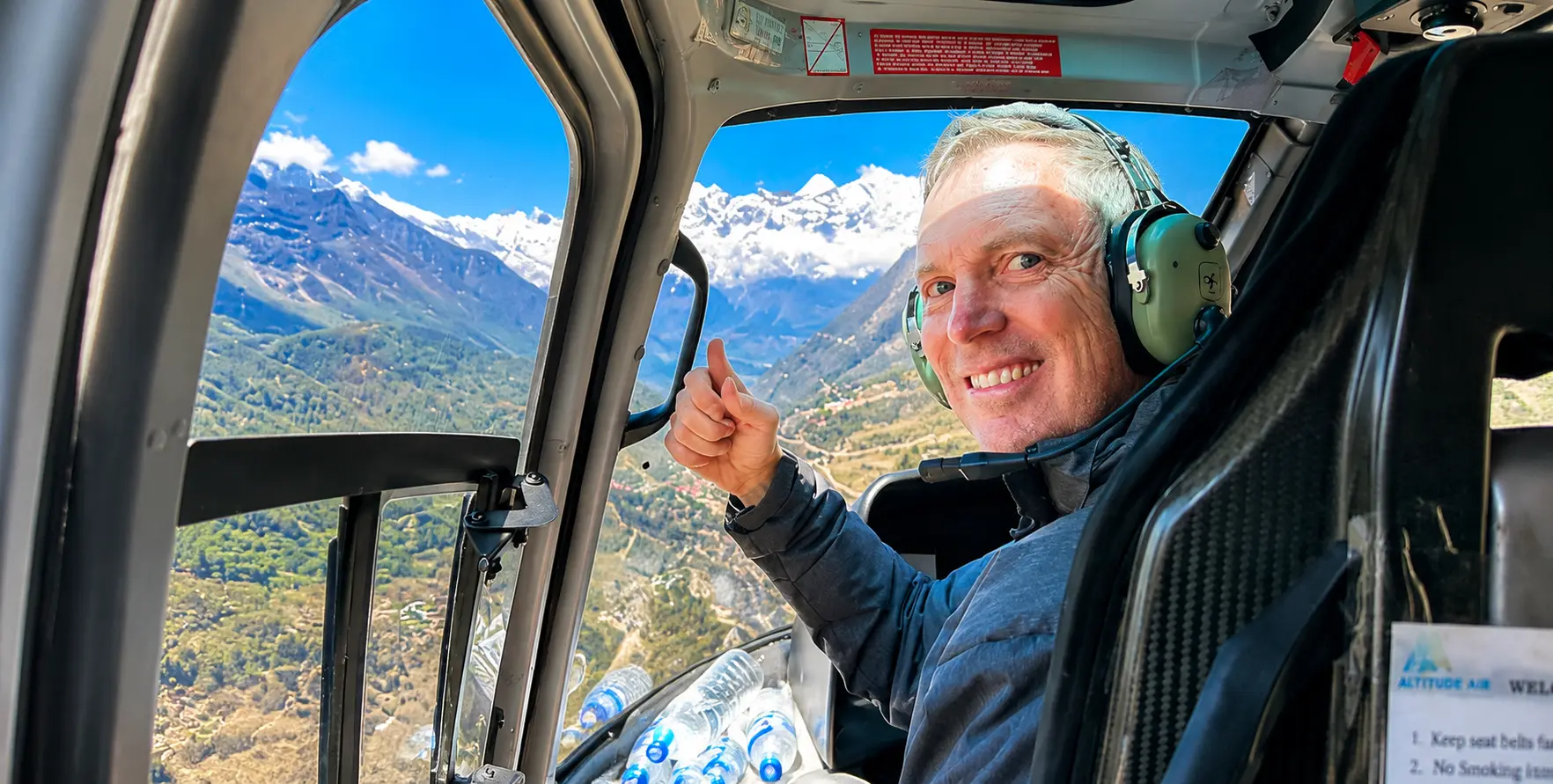
EBC Trek or Helicopter Tour? The Kala Patthar Reopening
Two travellers stand side by side on Kala Patthar, looking at the same Everest summit in the same golden morning light. One has walked for nine days to get here, through rhododendron forests, Sherpa villages and freezing nights in mountain lodges. The other left a hotel in Kathmandu barely two hours ago. Both are speechless. Both will remember this moment for the rest of their lives. But their journeys could hardly be more different.
With Kala Patthar landing tours back on the market, more travellers than ever are asking the same question: EBC Trek or Helicopter Tour? The classic Everest Base Camp Trek and our Sharing Everest Helicopter Tour with Kala Patthar Landing now lead to the same famous viewpoint. Still, they offer completely different experiences, demands and rewards.
In this guide, our team compares the two honestly, factor by factor: time, fitness, altitude, culture, views, comfort, weather, safety, budget planning and impact on the mountains. We also explain the hybrid options that combine the best of both, and help you decide which journey is right for you.
The Quick Answer
If you need a fast answer, here it is:
- Choose the trek if you have around two weeks, good fitness and a love of adventure, culture and achievement. Nothing compares to walking to the foot of Everest.
- Choose the helicopter tour if you have only a day, cannot or don’t want to trek at high altitude, or want to share Everest with family members of different ages and abilities.
- Choose a hybrid if you want the trek experience in less time, by flying up and back on the Everest Base Camp Helicopter Trek, or by adding a flight to a shorter trek.
The rest of this guide explains why, so you can choose with confidence.
What the Kala Patthar Reopening Changes
For several seasons, shared helicopter tours could fly over Kala Patthar and Everest Base Camp but could not land at the viewpoint. After a helicopter accident in the region, Nepal’s aviation authority tightened rules on high-altitude landings, and only private charters could still land there. Travellers on a budget-friendly shared flight saw Everest through the window, landed for breakfast at the Hotel Everest View and flew home.
Now, operators have resumed landings at Kala Patthar on shared tours using a new shuttle system: the group flies to Pheriche, and the helicopter carries passengers up to the viewpoint two at a time for around ten minutes on the ground. We explain the details in our guide to the reopening of the Kala Patthar landing.
This matters for the comparison. Before, the helicopter offered a view of Kala Patthar; now it offers a short visit. The gap between the two experiences has narrowed, which is why the EBC Trek vs Helicopter Tour question feels more real than ever. But as you will see, the remaining differences are still enormous.
EBC Trek vs Helicopter Tour at a Glance
- Time: The trek takes about 12 to 14 days from Kathmandu; the helicopter tour takes about four to five hours.
- Highest point: Both reach Kala Patthar at about 5,545 m. Trekkers also walk to Everest Base Camp at 5,364 m; helicopter tours fly over it.
- Time at the top: Trekkers can stay as long as their bodies and the weather allow; helicopter passengers spend around ten minutes at Kala Patthar.
- Fitness: The trek needs good fitness for five to seven hours of walking a day; the tour needs very little.
- Altitude: Trekkers acclimatise gradually over about nine days; helicopter passengers rise from about 1,400 m to over 5,500 m in under two hours, for a short stay.
- Culture: The trek immerses you in Sherpa villages, monasteries and lodges; the tour shows them from the air, with a breakfast stop.
- Comfort: The trek means simple teahouses and cold nights; the tour returns you to your Kathmandu hotel by lunchtime.
- Weather: Both depend on clear mornings, but the trek gives you many mornings and many chances for views.
- Impact: The trek supports guides, porters and lodges for two weeks; the helicopter is quick but noisier and more resource-intensive.
Questions to Ask Yourself Before You Decide
Before weighing the details of an EBC Trek or Helicopter Tour, take a few minutes to answer these honest questions:
- How many days can I really spend in the mountains? Two weeks, ten days or a single morning?
- How fit am I, and how much time do I have to train? The trek rewards preparation.
- What do I want to remember? The view of Everest, or the journey, the people and the effort of getting there?
- Who am I travelling with? A fit friend, a partner, young children or older parents?
- How do I feel about altitude, cold and simple lodges? Some people love the simplicity; others prefer a hotel bed every night.
- Do I want to stand at Everest Base Camp itself? Only trekkers walk among the camp’s boulders and prayer flags.
- How important is supporting local communities? Trekking spreads your spending across many mountain families.
Your answers will point you clearly towards one option, or towards a hybrid that combines the two.
Each Journey in Brief
The Trek, Step by Step
The classic trek begins with the flight to Lukla and a gentle walk to Phakding. You climb to Namche Bazaar, rest, and hike to Hotel Everest View, then continue to Tengboche, Dingboche, and Lobuche, with a second rest day along the way. On the big day, you reach Gorakshep and Everest Base Camp, then climb Kala Patthar the next morning for sunrise before descending through Pheriche and Namche back to Lukla. It is a journey of around two weeks, rich in culture, landscape and personal achievement.
The Helicopter Tour, Step by Step
The helicopter tour begins with a dawn pickup in Kathmandu and a roughly one-hour flight to Lukla, where the helicopter refuels. It continues up the Khumbu Valley to Pheriche, from where passengers are shuttled to Kala Patthar two at a time for around ten minutes facing Everest. After breakfast at Hotel Everest View, the helicopter returns via Lukla to Kathmandu, usually around midday. The journey takes four to five hours and focuses entirely on the mountains.
Time: Two Weeks or One Morning
Time is the deciding factor for most people. The classic Everest Base Camp Trek takes about 12 to 14 days from Kathmandu, including the flight to Lukla, two acclimatisation days, about eight days walking to base camp, and two to three days walking back down. Our Everest Base Camp Trek itinerary details each day, and our Everest Base Camp Trek distance guide explains how far you walk.
A helicopter tour takes a single morning. You leave your hotel around dawn, fly to Lukla, continue to Pheriche and Kala Patthar, enjoy breakfast above Namche and are back in Kathmandu around midday. For travellers on a short holiday, a business trip or a multi-country tour, that difference is everything.
Between the two lies a middle path. Walking up and flying back saves two to three days, fitting the full base camp experience into about ten days. Our guide to the short Everest Base Camp Trek explains how to do it safely.
Fitness and Physical Effort
The trek is not technical, but it is physically demanding. Most days involve five to seven hours of walking on steep, uneven trails, with long climbs such as the ascent to Namche Bazaar and the push to Gorakshep and base camp, all in thin air. You need good cardio fitness, strong legs and the stamina to walk day after day. Our honest look at Everest Base Camp Trek difficulty and our 12-week training plan will help you prepare.
The helicopter tour asks very little physically. You walk a few steps at each landing site, and the main challenge is moving slowly at Kala Patthar, where even a short walk can leave you breathless. It is accessible to many people who could never trek, including older travellers and those with limited mobility, subject to medical advice.
Altitude: A Different Kind of Risk
This is the most misunderstood part of the comparison. Some helicopter companies suggest that flying avoids altitude problems altogether. It does not. It changes the type of risk.
The Trekker’s Altitude
Trekkers climb slowly, increasing their sleeping altitude gradually and resting in Namche and Dingboche. This gives the body time to adapt, breathing faster and deeper and producing more red blood cells. Even so, altitude sickness can affect anyone, and trekkers spend many days and nights high up, so they must know the symptoms and descend if they worsen. Read our guide to altitude sickness on the Everest Base Camp Trek.
The Helicopter Passenger’s Altitude
Helicopter passengers have no time to acclimatise. They rise from Kathmandu to more than 5,500 m in under two hours, where each breath holds roughly half the oxygen available at sea level. The visit is short, which keeps the risk low for most healthy people, and the helicopter descends quickly to lower altitude. But passengers may still feel breathless, light-headed or headachy during the landing, and the rapid change is not suitable for everyone.
People with heart or lung conditions, high blood pressure, anaemia, pregnancy or recent surgery should consult a doctor before either option, and may be advised to avoid the highest landing. Our Acute Mountain Sickness page explains the effects of altitude in detail.
The Experience: A Journey or a View?
When travellers compare the EBC Trek or Helicopter Tour, they often focus on the destination. But the real difference is the journey.
What the Trek Gives You
- Sherpa culture: Spend days in villages such as Namche, Khumjung, Pangboche, and Dingboche, meeting the people who call the Khumbu home. Our guide to Sherpa culture and traditions explains their way of life.
- Monasteries: Morning prayers at Tengboche Monastery, the largest in the Khumbu, and the ancient gompa at Pangboche.
- Landscapes that change every day: From pine and rhododendron forests to alpine pastures, moraines and glaciers.
- Friendship: Evenings around the teahouse stove with your guide, porters and trekkers from around the world.
- Achievement: The deep satisfaction of standing on your own feet. At base camp
- Base camp itself: Walking among the boulders and prayer flags of Everest Base Camp beside the Khumbu Icefall, which helicopter tours only see from the air.
- Spiritual depth: Mani walls, prayer wheels, and chortens at every turn, explained in our article on chortens in Tibetan Buddhism, and a living Buddhist culture rooted in the teachings of Guru Padmasambhava, traced in our overview of Buddhism in Tibet.
What the Helicopter Gives You
- The big picture: A bird’s-eye view of the whole Everest region in one flight, from the middle hills to the Khumbu Glacier.
- Kala Patthar, now on shared flights: Around ten minutes standing face to face with Everest.
- Breakfast with a view: Relax at Hotel Everest View, with Everest and Ama Dablam on the horizon.
- Comfort and speed: No cold nights, no shared bathrooms and no long days on the trail.
- Inclusion: The chance to share Everest with family members or friends who could never trek.
What You See: Comparing the Views
Both journeys deliver unforgettable views, but in different ways. The trek reveals the mountains slowly. You see Everest for the first time above Namche, watch Ama Dablam grow taller day by day, and finally stand beneath Nuptse and Lhotse at base camp. From Kala Patthar, trekkers usually watch sunrise or sunset, with time to sit, breathe and absorb the panorama. Our comparison of Gokyo Ri vs Kala Patthar shows how trekkers can even choose between the region’s two great viewpoints.
The helicopter shows you the entire landscape at once: the Dudh Koshi gorge, the horseshoe of Namche, the forested ridge of Tengboche, the moraines of Lobuche and Gorakshep and the chaos of the Khumbu Icefall from above. At Kala Patthar, you see the same classic view of Everest as trekkers, though usually in morning light and only for a few minutes.
Comfort and Accommodation
On the trek, you sleep in teahouses: simple, family-run lodges with twin rooms, warm, stove-heated dining rooms, and hearty meals like dal bhat. Lower down, in Phakding and Namche, rooms are comfortable and sometimes have attached bathrooms. Higher up, rooms are basic, nights are cold, and bathrooms are shared. For many trekkers, this simplicity is part of the charm. For more comfort, the Everest Base Camp Luxury Lodge Trek uses the best available lodges.
On a helicopter tour, you sleep in your Kathmandu hotel before and after the flight. The only real discomfort is the cold at Kala Patthar and the early start. For travellers who value comfort above all, this difference is decisive.
Weather and Flexibility
Mountain weather affects both options, but in different ways. Helicopters fly only in good visibility, usually in the early morning, so a cloudy day means waiting for the next clear morning. If your schedule allows a spare day or two, this is rarely a problem, but it is wise not to book the flight on the day before your international departure.
Trekkers also depend on the weather, starting with the flight to Lukla, which in busy seasons usually departs from Manthali in Ramechhap after a night drive arranged by our Ramechhap airport transportation team. Once on the trail, however, trekkers have many mountain mornings and plenty of chances for clear views. If Kala Patthar is cloudy at sunrise, the views on the way up and down often make up for it.
For both options, autumn and spring are the best seasons. Our guides to the best time for Everest Base Camp Trek and the best seasons for an Everest helicopter tour explain each month, and our guide to the Everest Base Camp Trek in October covers the most popular month.
Planning Your Budget Without Surprises
We never quote figures in our blogs, because they change with season, group size and options, but it helps to understand where your spending goes. On a trek, your budget spreads over about two weeks: flights to Lukla, permits, lodges, meals, guides, and porters, with most of it flowing directly into mountain communities. On a helicopter tour, your budget focuses on a few hours of flying, with the helicopter itself as the main expense.
Group size makes a big difference to helicopter tours. A shared tour splits the helicopter among several passengers, which suits solo travellers and couples. Private charters, such as the Everest Helicopter Tour or the Mt Everest by Helicopter Tour, reserve the whole aircraft for your group. Treks can be joined as a small group or arranged privately. Our team will give you clear, all-inclusive details for whichever option you choose, and our payment options page explains how booking works.
Safety: Trekking Risks and Flying Risks
Both options are safe when run by experienced professionals, but the risks are different.
- Trekking risks: Altitude sickness, slips on icy or rocky trails, cold, and weather changes. These are managed through gradual ascent, licensed guides, good equipment, and daily health checks, including pulse oximeter readings.
- Flying risks: Mountain flying is demanding, especially at high landing sites. Experienced mountain pilots, strict weather minimums, weight limits, the two-passenger shuttle to Kala Patthar, and short ground time help manage these risks.
- Rules and regulations: Helicopter operations in the Khumbu have seen new rules in recent seasons, from landing limits to local restrictions on commercial flights. Our guide to Everest helicopter tour restrictions explains the background.
- Insurance: Trekkers need insurance covering trekking up to about 5,600 m and helicopter evacuation. Helicopter tour passengers should check that their travel insurance covers the flight.
Whichever you choose, book with a registered, experienced company. You can view our company registration and legal documents online and meet our licensed guides on our team page.
Permits and Paperwork for Each Option
The paperwork differs significantly between the two journeys, and our team handles most of it for you.
- For the trek: You need a Sagarmatha National Park entry permit, checked at the Monjo park entrance, and a Khumbu Pasang Lhamu Rural Municipality permit, issued at the Lukla check post. Trekking rules in Nepal have changed in recent years, and many areas now require a licensed guide; rules vary by area and can change, so check the latest before you travel. We strongly recommend trekking with a licensed guide in any case.
- For the helicopter tour: The operator arranges the flight permissions and park formalities. You provide your passport details and body weight in advance and bring your passport on the day.
- For both: A valid Nepal visa, explained in our visa guide, and travel insurance. Trekkers need cover for trekking up to about 5,600 m and helicopter evacuation; helicopter passengers should check that their policy covers the scenic flight.
Because the trek involves several permits, checkpoints and days of logistics, booking through an experienced local company makes it far smoother. For the helicopter tour, choose an operator that follows current rules and confirms landing arrangements before you fly.
Age, Health and Accessibility
The trek suits fit, healthy people of a wide age range, from teenagers with hiking experience to active trekkers in their sixties and beyond. What matters most is fitness, health and the willingness to walk slowly. First-timers should read our guide to the Everest Base Camp Trek for beginners.
The helicopter tour suits most healthy travellers, including many older people and children, and it opens Everest to those with limited mobility. However, because of the rapid altitude gain, anyone with health conditions should seek medical advice before booking, and some may be advised to stay in the helicopter at the highest landing. The Everest Heli Sherpa Village Walk offers a gentler alternative with time on the ground at lower altitude.
Photography: Which Gets the Better Shots?
Photographers often struggle with this choice. The trek gives you time: sunrise and sunset from Kala Patthar, portraits of Sherpa elders, yak caravans on suspension bridges, monastery details and the quiet light of high valleys. You can return to the same viewpoint, wait for the clouds to clear and shoot the same mountain in a dozen moods.
The helicopter gives you perspective: aerial images of glaciers, ridges and villages that no trekker can capture, plus the classic view from Kala Patthar in crisp morning light. The limitation is time: only about ten minutes on the ground at the top. Serious photographers often do both, or choose a private charter for more flexibility.
Impact on the Mountains and Their People
The Khumbu is a living homeland as well as a spectacular landscape, and the way you visit makes a difference. Trekking spreads income across lodges, shops, guides and porters along the whole route, supporting families for two weeks per visitor. It is also quieter and lower in emissions.
Helicopter flights bring visitors who could never trek and support aviation jobs. Still, they are noisier, and the growing number of flights has led Khumbu communities to raise concerns about noise over villages and monasteries, disturbance to wildlife and lost work for porters. If you choose to fly, you can help by booking with responsible operators who follow the agreed rules, keeping landings short, and spending time and money in the villages, for example, on a village walk. Learn more on our responsible tourism page and in our Sagarmatha National Park guide.
The Best of Both Worlds: Hybrid Options
The answer to EBC Trek or Helicopter Tour does not have to be one or the other. Some of the most popular journeys combine trekking and flying:
- Trek up, fly back: The Everest Base Camp Helicopter Trek and the Luxury Everest Base Camp Trek with Helicopter Return give you the full acclimatised ascent, base camp and Kala Patthar, then a helicopter flight home.
- Luxury with helicopter transfers: The Everest Elite Luxury Heli Trek combines premium lodges with helicopter time-savers.
- A short trek plus a flight: Walk the Everest View Trek to Namche, Khumjung and Tengboche, then add a helicopter tour to Kala Patthar.
- A different base camp: Trek to the foot of Ama Dablam on the Ama Dablam Base Camp Trekking, described in our Ama Dablam Base Camp Trek guide, and fly over Everest on another day.
- Mindful trekking: Join the Everest Base Camp Yoga Trek, explained in our guide to mindful trekking in the Himalayas.
- Gokyo by air: Combine a trek with the Gokyo Lakes Helicopter Tour over the turquoise lakes of the neighbouring valley.
Which Traveller Are You?
Still undecided between an EBC Trek or Helicopter Tour? These five travellers might help you see yourself:
- The adventurer with two weeks: Fit, curious and hungry for a challenge. The classic Everest Base Camp Trek is your journey.
- The professional with ten days: You want base camp but cannot take two weeks off. Trek up and fly back.
- The family with grandparents: Three generations want to see Everest together. Book a private flight or the Sharing Everest Helicopter Tour with Kala Patthar Landing if your group is small.
- The traveller with one free morning: You are in Nepal for business or between tours of Bhutan and Tibet. A helicopter tour fits perfectly.
- The returning trekker: You walked to base camp years ago and want to share the view with someone special. Fly together and tell the stories on the way.
Other Ways to See Everest
The trek and helicopter tour aren’t the only options. Experienced trekkers can take on the Gokyo Lakes Trek or the Everest 3 Pass Trek, crossing high passes such as the Cho La Pass. Slow travellers can join the historic Jiri to Everest Trek, described in our Jiri to Everest Base Camp trek guide, or start by jeep on the Everest Base Camp Trek by Road.
Climbers can stand on a summit with views of Everest on Island Peak Climbing or Lobuche Peak Climbing, or venture to the wild Hinku valley on Mera Peak Climbing; check the latest NMA peak permit updates before you plan. Dreaming of bigger summits? Read our Ama Dablam expedition guide and our article on Nepal’s eight-thousand-metre peaks. Runners can tackle the high-altitude Everest Marathon. On the Tibetan side, the Lhasa to Everest Base Camp Overland Tour reaches Everest’s north face by road, as explained in our Lhasa to Everest Base Camp guide.
Helicopter Tours Beyond Everest
If flying appeals to you, Nepal has other spectacular helicopter journeys. The Annapurna Helicopter Tour lands in the Annapurna Sanctuary, which you can also reach on foot on the Annapurna Base Camp Trek. The Langtang Helicopter Tour visits the valley you can reach on the Langtang Valley Trek, and the Muktinath Yatra by Helicopter takes pilgrims to the sacred temple of Muktinath. For Bhutan, the Luxury Bhutan Tour and the Luxury Nepal Bhutan Tour include the unforgettable approach to Paro and the cliffside Tiger’s Nest Monastery.
Nepal Beyond Everest
Whether you choose the EBC Trek or a Helicopter Tour, Nepal has much more to offer, especially if a helicopter tour leaves you with free days. Browse our list of the top 50 treks in Nepal, or try one of these:
- Near Kathmandu: Sunrise over the Himalaya on Nagarkot Hiking, forest trails on Nagarjun Hiking or a two-day walk on the Chisapani Nagarkot Trek.
- Pokhara and the Annapurnas: Lakeside relaxation described in our Pokhara sightseeing guide, Paragliding in Pokhara and short treks such as the Ghorepani Poon Hill Trek, the Australian Camp Trek and the Dhampus Sarangkot Trek.
- Wildlife and rivers: A Chitwan Jungle Safari, the Bardia National Park Tour or a day of Trishuli River Rafting.
- Culture and heritage: The Classic Nepal Tour brings together the country’s great temples, stupas and old towns.
- Tibet and Bhutan: The Kathmandu to Lhasa Tour, the Lhasa Tibet Tour, the Nepal Tibet Bhutan Tour and the 7 Day Bhutan Tour. Our guide compares Bhutan’s legendary trek with the Everest route in Everest Base Camp Trek vs Snowman Trek.
Making the Most of Either Choice
If You Choose the Trek
- Train for two to three months with long hikes, stair climbing and strength work.
- Pack well but light: follow our Everest Base Camp Trek packing list and check our trekking equipment.
- Keep both acclimatisation days and never rush the ascent.
- Trek with a licensed guide: rules vary by area and can change, and our article on Nepal’s mandatory guide rules explains how they work.
- Leave buffer days for Lukla flights at the end.
If You Choose the Helicopter
- Book early in October, November, April and May.
- Send your passport details and weight in advance for flight planning.
- Dress for winter, even if Kathmandu is warm.
- Move slowly at Kala Patthar and tell the crew if you feel unwell.
- Keep a spare morning in case weather delays the flight.
- Spend the afternoon exploring Kathmandu on our Kathmandu Day Tour or with our Kathmandu sightseeing.
Whichever you choose, check entry requirements in our Nepal visa guide and read our wider trekking in Nepal guide for practical advice.
Common Mistakes When Choosing
- Believing the helicopter avoids altitude effects: It shortens your exposure but does not remove the risk.
- Underestimating the trek: It is non-technical, but long days at altitude demand real fitness.
- Booking a flight on your last day: Weather delays are common for both options.
- Choosing the trek with no buffer days: Lukla flights can be delayed at the start and the end.
- Choosing purely on speed: Ask yourself what you want to remember, not just how fast you can get there.
- Ignoring medical advice: Check with your doctor if you have heart, lung or blood-pressure conditions.
- Forgetting the people: No matter how you travel, respect Sherpa culture and support local communities.
Frequently Asked Questions About the EBC Trek and Helicopter Tour
Is it better to trek to Everest Base Camp or take a helicopter tour?
It depends on your time, fitness and goals. The trek offers culture, achievement and a walk to base camp itself; the helicopter tour offers the view in a single morning with little effort. Many travellers choose a hybrid: trek up and fly back.
Can helicopter tours land at Kala Patthar again?
Yes. Operators have resumed Kala Patthar landings on sharing tours using a shuttle from Pheriche, carrying two passengers at a time for about ten minutes, subject to weather, weight, and the day’s rules.
Do helicopter tours land at Everest Base Camp?
Sightseeing tours usually fly over Everest Base Camp rather than landing. Only trekkers walk among the tents and prayer flags at base camp itself.
How long does each option take?
The classic trek takes about 12 to 14 days from Kathmandu; a helicopter tour takes about four to five hours; a trek with a helicopter return takes about ten days.
Is the helicopter tour safer than trekking?
Neither is inherently safer; each carries different risks. Trekkers face long exposure to altitude and mountain terrain, which gradual acclimatisation helps manage. Helicopter passengers face a rapid rise in altitude and aviation risks, managed by short stays and strict flight rules.
Can I get altitude sickness on a helicopter tour?
You may feel altitude effects during the short landing at Kala Patthar, such as breathlessness or a headache. Still, serious illness is unlikely for healthy people on such a brief visit. Anyone with health conditions should consult a doctor first.
Do I need to be fit for the helicopter tour?
No special fitness is needed, though you should be able to walk a few steps on rocky ground and climb in and out of the helicopter.
Which option is better for photography?
The trek gives you time, sunrise and sunset light and cultural subjects; the helicopter gives you aerial perspectives and a quick visit to Kala Patthar. Many photographers do both.
Which option is better for the environment and local communities?
Trekking spreads income across lodges, guides and porters and has a lighter footprint. If you fly, choose a responsible operator and, if you can, spend time in the villages.
Can I combine a trek and a helicopter tour?
Yes. You can trek up and fly back, combine a short trek with a flight, or add a village walk to a helicopter tour. Our team can design the right mix for you.
Final Thoughts: The Same Summit, Two Different Stories
The reopening of Kala Patthar landings on sharedtours has made Everest more accessible than ever, but the choice between an EBC trek and a helicopter tour still comes down to the story you want to tell. The trek is a journey of effort, culture and transformation; the helicopter tour is a breathtaking glimpse of the roof of the world in a single morning. Neither is wrong, and both will leave you speechless.
If you have the time and the fitness, walk to Everest on our classic Everest Base Camp Trek. If you have a morning, book a seat on the Sharing Everest Helicopter Tour with Kala Patthar Landing. If you want both, trek up and fly back on the Everest Base Camp Helicopter Trek. Learn more about our company, then plan your trip or contact us today, and our team will help you choose the Everest journey that is right for you.
Quick Inquiry
