
Ama Dablam Base Camp Trek: The Quiet Side of Khumbu
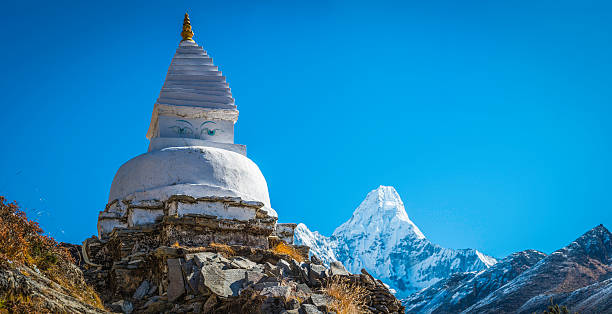
Ama Dablam Base Camp Trek: The Quiet Side of Khumbu
It is early morning in Pangboche. Smoke curls from the chimneys of stone houses, a yak bell clinks somewhere below the village, and a single mountain fills the sky across the valley. Its summit is a perfect fin of ice and rock, its long ridges reach down like open arms, and a glacier hangs on its face like a jewel. As the sun rises behind it, the whole mountain glows. This is Ama Dablam, and today you are walking to its feet.
The Ama Dablam Base Camp Trek follows the famous Everest region trail through Lukla, Namche Bazaar, and Tengboche, then leaves the crowds behind at Pangboche for a steep, beautiful climb to the broad meadow at the base of what many call the most beautiful mountain in the world. It is shorter and lower than the classic Everest Base Camp Trek. Yet, it delivers some of the finest mountain scenery, the oldest monasteries and the warmest Sherpa culture in the Khumbu.
In this guide, our team explains everything you need to know about our Ama Dablam Base Camp Trekking journey: the route day by day, the hike from Pangboche to base camp, altitude and acclimatisation, the best seasons, permits, food and lodging, Sherpa culture, photography, ways to extend the trek and much more.
Ama Dablam Base Camp Trek at a Glance
- Region: Khumbu (Everest region), inside Sagarmatha National Park, north-eastern Nepal.
- Ama Dablam summit: 6,812 m.
- Ama Dablam Base Camp: About 4,600 m. Figures from roughly 4,570 to 4,650 m are quoted, because the base camp is a wide meadow rather than a single point.
- Duration: 10 days on our standard itinerary, from Kathmandu back to Kathmandu.
- Highest night: Pangboche, at about 3,930 to 3,985 m. Visit the base camp on a day hike.
- Start and finish: Lukla, reached by a short mountain flight.
- Difficulty: Moderate, with one long, steep day to base camp. No technical climbing is needed.
- Accommodation: Teahouses on a twin-sharing basis.
- Best seasons: Spring (March to May) and autumn (late September to November).
- Permits: Sagarmatha National Park entry permit and Khumbu Pasang Lhamu Rural Municipality permit.
- Highlights: Ama Dablam up close, Tengboche and Pangboche monasteries, Namche Bazaar, Everest views, quiet trails and Sherpa village life.
Why Ama Dablam Is Called the Most Beautiful Mountain in the World
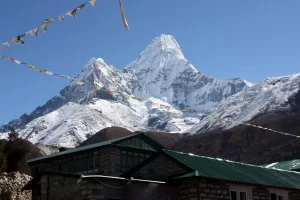
Many great mountains are taller, but few are as striking. Seen from Tengboche or Pangboche, Ama Dablam rises in a single, soaring sweep of granite, snow and ice. It is often called the Matterhorn of the Himalaya, and for countless trekkers it is the mountain they remember most, even more than Everest itself. It dominates the skyline for days on the trail to Everest, appearing first above Namche and looking different from every angle. Our overview of Ama Dablam introduces the mountain in more detail.
The Meaning of the Name
In the Sherpa language, Ama means mother, and a dablam is the precious pendant, or charm box, that Sherpa women traditionally wear around the neck, holding images of deities and family treasures. The mountain’s two long ridges are said to look like a mother’s arms embracing her child, while the hanging glacier below the summit resembles the dablam. So Ama Dablam is often translated as “mother’s necklace” or “mother’s charm box”, a warm name for one of Earth’s most dramatic peaks.
A Mountain Climber’s Dream Of
Members of Sir Edmund Hillary’s Silver Hut expedition were the first to climb Ama Dablam; the scientific project spent a winter in a prefabricated laboratory hut on a glacier at about 5,800 m, studying how the human body adapts to extreme altitude. The climbers reached the summit by the southwest ridge, the same route most expeditions use today. The Nepalese government had not authorised their ascent, which caused a brief diplomatic stir, but it opened the mountain to climbers from around the world.
Today, Ama Dablam is one of Nepal’s most popular expedition peaks, famous for its steep rock towers, exposed ridges, and hanging ice. It is a serious technical climb for experienced mountaineers, not a trekking peak. If you dream of climbing it one day, read our Ama Dablam expedition guide and our answers to the most common questions about climbing Ama Dablam. The Ama Dablam Base Camp Trek lets you stand where those climbers begin.
Why Choose the Quiet Side of Khumbu?
The classic route to Everest is one of the world’s great treks, but in peak season its lodges and trails can feel busy. The Ama Dablam Base Camp Trek offers a different experience. Here is why trekkers choose it:
- Fewer crowds: Above Pangboche, the base camp trail sees only a fraction of the traffic on the main route to Everest.
- A shorter trip: Ten days is enough for a complete Himalayan adventure, ideal if you have limited holiday time.
- Lower altitude: You sleep no higher than Pangboche, which reduces the risk of altitude sickness compared with treks that sleep above 4,900 m.
- Rich culture: The trek visits Namche Bazaar, Tengboche, Pangboche and Khumjung, the cultural heart of the Sherpa homeland.
- Spectacular scenery: Ama Dablam, Everest, Lhotse, Nuptse, Thamserku and Kangtega surround you for days.
- A real objective: Reaching the base camp of a famous Himalayan peak gives the trek a clear and rewarding goal.
It is perfect for trekkers who want the beauty and culture of the Everest region without the extreme altitude, for families with older children who are fit and experienced walkers, and for anyone who has already done the classic route and wants to see the Khumbu from a fresh angle.
The Ama Dablam Base Camp Trek Itinerary, Day by Day
Here is how the journey unfolds on our standard ten-day Ama Dablam Base Camp Trekking itinerary. Your guide may adjust the pace and stops according to weather, flights and how the group feels.
Day 1: Fly to Lukla and Trek to Phakding (about 2,610 m)
The trek begins with a thrilling mountain flight to Lukla, which, in busy seasons, usually departs from Manthali in Ramechhap after an early drive arranged by our Ramechhap airport transportation team. From Lukla, a gentle three-hour walk along the Dudh Koshi River leads to Phakding, past mani walls, prayer wheels, and small farms.
Day 2: Trek to Namche Bazaar (about 3,440 m)
The trail crosses the river several times on suspension bridges, enters Sagarmatha National Park at Monjo and crosses the high Hillary Suspension Bridge before the long, steady climb to Namche Bazaar, the bustling Sherpa capital. Allow around six hours.
Day 3: Acclimatisation Day in Namche
A rest day helps your body adjust to the altitude. Most groups hike up to the Hotel Everest View for a first view of Everest and Ama Dablam, then visit the Sherpa museum or explore the market. Some trekkers take the quiet trail west towards Thame for a taste of village life.
Day 4: Trek to Tengboche (about 3,860 m)
The trail winds high above the valley, with Ama Dablam ahead the whole way, before dropping to Phunki Thenga and climbing through rhododendron forest to Tengboche. Its monastery, the largest in the Khumbu, faces a breathtaking panorama of Everest, Lhotse and Ama Dablam. Read our guide to Tengboche Monastery and the Mani Rimdu festival.
Day 5: Trek to Pangboche (about 3,930 to 3,985 m)
A shorter day of about three to four hours descends through birch and juniper forest to Deboche, crosses the Imja Khola on a suspension bridge and climbs gently to Pangboche. In the afternoon, visit Pangboche Monastery, believed to be the oldest in the Khumbu, surrounded by ancient juniper trees in the upper village.
Day 6: Hike to Ama Dablam Base Camp and Back to Pangboche
The highlight of the trek: a steep and rewarding climb to Ama Dablam Base Camp at about 4,600 m, then a return to Pangboche to sleep lower. Allow six to seven hours for the round trip. We describe this day in detail in the next section.
Day 7: Trek to Khumjung (about 3,790 m)
A long, beautiful day of seven to eight hours leads back down the valley and through dense forest, where you may spot musk deer and Himalayan monal, to Khumjung, home to Sir Edmund Hillary’s first school and a monastery that keeps a famous yeti scalp.
Day 8: Trek to Phakding
The trail descends through Namche and leaves the national park at Monjo before following the Dudh Koshi to Phakding. Your knees will appreciate trekking poles on the long descent.
Day 9: Trek to Lukla
A final three- to four-hour walk climbs gently back to Lukla, where you celebrate the end of the trek with your guides and porters.
Day 10: Fly Back to Kathmandu
An early flight returns you to Kathmandu, or to Manthali followed by a drive in the busy seasons. We recommend keeping one or two buffer days in case weather delays the flight.
The Hike From Pangboche to Ama Dablam Base Camp
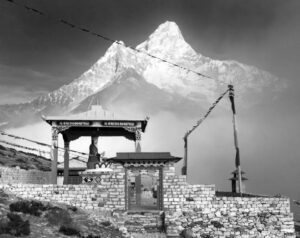
The day hike from Pangboche is the heart of the Ama Dablam Base Camp Trek, and one of the most rewarding day walks in the entire Everest region. Here is what to expect.
Crossing the River
Start early, ideally soon after breakfast, because clouds often build around the mountain by late morning. From Pangboche, the trail drops steeply to the Imja Khola, which you cross on a small bridge close to the rushing water. Looking back, you can see Pangboche’s stone houses, the main trail toward Dingboche, and the high trail to Phortse across the valley.
Climbing the Mingbo Valley
Beyond the river, the path climbs steeply up a grassy slope to a viewpoint decorated with prayer flags. A gentler section follows across open pastures where yaks graze in summer, before a final steep climb beside a stream into the wide bowl of the base camp. The trail climbs into the lower Mingbo valley, a quiet side valley between Ama Dablam and its neighbours, where you may meet more yaks than trekkers. In total, you gain around 600 to 700 m, which usually takes three to four hours at a steady, acclimatising pace.
The Base Camp Meadow
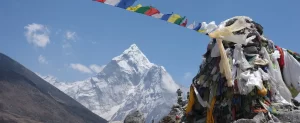
Ama Dablam Base Camp is a broad, grassy and sandy meadow beneath the southwest ridge, the classic climbing route. Above you, the mountain’s ridges and towers rise almost vertically into the sky, and the hanging glacier glints in the sun. Around you, the view opens to Kangtega and Thamserku, the peaks above Pangboche and the great wall of Lhotse and Nuptse. Prayer flags flutter over stone platforms left by expeditions, and in the climbing seasons the meadow is dotted with colourful tents.
There are no regular lodges at the base camp, so carry a packed lunch, plenty of water, snacks, sun protection and warm layers. Enjoy the views, but keep an eye on the weather and your energy.
The Return to Pangboche
The descent follows the same trail and usually takes two to three hours. The steep sections are hard on the knees, so use trekking poles and take your time; back in Pangboche, hot tea, a warm dining room and a hearty plate of dal bhat await. Sleeping lower after climbing high is one of the best ways to acclimatise, following the golden rule of climb high, sleep low.
Ama Dablam Base Camp in the Climbing Season
Ama Dablam is one of Nepal’s most popular expedition peaks, so during the main climbing seasons the base camp becomes a lively tented village. Autumn is the busiest time, with a smaller climbing season in spring. Expedition teams set up dining, kitchen, and sleeping tents, and Sherpa climbing guides prepare ropes and equipment for the route above, as described in our Ama Dablam expedition guide. Many of these guides come from the villages you walk through, carrying on a mountaineering tradition explored in our guide to Sherpa culture.
Before climbing, expeditions hold a puja, a Buddhist ceremony in which a lama blesses the climbers, their equipment and the mountain, and strings of prayer flags are raised over the camp. If you happen to arrive during a puja, watch quietly from a respectful distance. Remember that the camp is home to climbers preparing for a dangerous ascent: do not enter tents uninvited, ask before taking photos and keep your voice low.
Outside the climbing season, the meadow is empty and peaceful, and you may have the base camp almost to yourself. Both experiences are special. If the climbing world inspires you, Nepal’s trekking peaks offer a first step, such as Island Peak Climbing, Lobuche Peak Climbing and Mera Peak Climbing. Check the latest NMA peak permit updates before you plan, and read about the giants of the Himalaya in our article on Nepal’s new eight-thousanders.
Altitude and Acclimatisation
One of the great advantages of the Ama Dablam Base Camp Trek is its sensible altitude profile. You sleep no higher than Pangboche and climb to about 4,600 m only for a few hours before descending again. Even so, you are trekking at high altitude, and altitude sickness can affect anyone, regardless of fitness.
- Ascend gradually: The itinerary slowly increases your sleeping altitude, from Namche to Tengboche to Pangboche, with a rest day in Namche.
- Climb high, sleep low: The day hike to base camp follows this principle perfectly.
- Know the symptoms: Headache, nausea, dizziness, loss of appetite, unusual fatigue and poor sleep are early warning signs.
- Tell your guide: Our licensed guides check every trekker’s health daily and carry a pulse oximeter.
- Descend if symptoms worsen: Descent is the most effective treatment for altitude sickness.
- Stay hydrated and avoid alcohol: Drink plenty of water and eat well.
Read our Acute Mountain Sickness page and our detailed guide to altitude sickness on the Everest Base Camp Trek to understand the risks and how to prevent them. If you need medical help higher up the valley, the Pheriche aid post is a few hours from Pangboche, and helicopter evacuation is possible in an emergency, so make sure your travel insurance covers trekking at altitude and helicopter rescue.
How Difficult Is the Ama Dablam Base Camp Trek?
The Ama Dablam Base Camp Trek is graded moderate, a little easier overall than the classic Everest Base Camp Trek because you never sleep above about 4,000 m. Most days involve five to seven hours of walking on well-used trails, with plenty of ups and downs. The hardest days are the climb to Namche, the long return from Pangboche to Khumjung and, above all, the base camp day, with its steep climbs and knee-testing descent.
You don’t need technical skills or previous Himalayan experience, but you should be fit, healthy, and comfortable walking for several days in a row. Regular hiking, stair climbing, cycling, and leg-strength exercises in the months before your trip will make a big difference. Follow our 12-week training plan, read our guide to the Everest Base Camp Trek for beginners and compare the effort with our honest look at Everest Base Camp Trek difficulty.
Best Time for the Ama Dablam Base Camp Trek
The best seasons for the trek are the same as for the rest of the Everest region. Our guide to the best time forthe Everest Base Camp Trek covers each month in detail.
Spring (March to May)
Spring brings warmer days, blooming rhododendrons in the forests around Tengboche and Pangboche, and the colourful buzz of the spring climbing season. Mornings are usually clear, with more cloud in the afternoons, so start the base camp hike early.
Autumn (Late September to November)
Autumn offers the clearest skies, the most stable weather and the busiest climbing season at Ama Dablam Base Camp. It is also the season of the Mani Rimdu festival at Tengboche. Nights are cold, but the views are at their sharpest. Read our guide to the Everest Base Camp Trek in October for a taste of the season.
Winter (December to February)
Winter is quiet, crisp and often clear, but very cold, and snow can cover the final section of the base camp trail, making the route harder to follow. Go only with an experienced guide and in good weather.
Monsoon (June to August)
The monsoon brings rain, clouds, leeches at lower altitudes and frequent flight delays. The trails are green and quiet, but views are often hidden, so we do not recommend it for most trekkers.
Sherpa Culture and Monasteries Along the Way
The Ama Dablam Base Camp Trek passes through theSherpa cultural heartland, whose ancestors crossed the high passes from Tibet centuries ago. In Sherpa tradition, the Khumbu is a beyul, a sacred hidden valley blessed by Guru Padmasambhava, the great teacher who helped bring Buddhism to the Himalaya. Their Buddhist faith shapes every village, every bridge and every trail, and you will see it in the mani stones carved with Om Mani Padme Hum, the whitewashed chortens and the prayer flags that carry blessings on the wind. Our guide to Sherpa culture and traditions explores this heritage, and our article on the chorten in Tibetan Buddhism explains the stupas you pass.
Pangboche: The Spiritual Roots of the Khumbu
Pangboche is one of the Khumbu’s oldest villages, and its monastery is linked to the revered saint Lama Sangwa Dorje, who is believed to have brought Buddhist teachings to the valley. The monastery was once famous for its yeti relics, and the giant juniper trees around it are said to have grown from the saint’s hair. Pangboche is also home to many renowned Sherpa climbers, and climbers bound for Ama Dablam and Everest often visit the village to receive blessings before their expeditions.
Tengboche, Khumjung and Namche
Tengboche Monastery is the largest and most famous in the Khumbu. Khumjung, one of the largest Sherpa villages, has a monastery that keeps a famous yeti scalp and the school founded by Sir Edmund Hillary. Namche Bazaar, the region’s trading capital, has its own gompa and a small museum of Sherpa culture. Together they offer a rich introduction to Sherpa life and to the roots of Himalayan Buddhism, explored in our guide to Buddhism in Tibet.
Monastery Etiquette
- Walk clockwise around monasteries, chortens and mani walls.
- Remove your hat and shoes when asked before entering a prayer hall.
- Ask before taking photos, especially inside monasteries and during prayers.
- Dress modestly and speak quietly.
- Never sit on mani walls or touch religious objects.
- Make a small offering in the donation box if you wish.
Wildlife and Nature on the Quiet Trails
Because fewer people walk the side valley below Ama Dablam, it is one of the best places on the trek to enjoy Sagarmatha National Park’s nature. Look out for:
- Himalayan tahr: Wild goats with shaggy coats, often grazing on steep slopes near Pangboche and Tengboche.
- Musk deer: Shy, small deer that live in the birch and rhododendron forests between Tengboche and Khumjung.
- Himalayan monal: Nepal’s colourful national bird, known locally as the danphe.
- Snow leopard: The elusive ghost of the mountains lives in the Khumbu’s high valleys, though sightings are very rare.
- Pikas and choughs: Small mountain mammals and acrobatic black birds that thrive at high altitude.
- Forests and flowers: Rhododendron, birch, fir and juniper forests below Pangboche, and alpine flowers in the meadows above.
Accommodation and Food
You stay in teahouses throughout the trek, sharing a twin bed. Lodges in Phakding, Namche and Lukla are comfortable, with hot showers and some rooms with attached bathrooms. Higher up, in Tengboche and Pangboche, rooms are simpler, with shared bathrooms, warm, stove-heated dining rooms, and friendly Sherpa hosts. There are no lodges at the base camp itself, so trekkers visit it on a day hike.
Teahouse menus are surprisingly varied, but the trekker’s favourite is dal bhat: lentil soup, rice, vegetable curry and pickles, usually with free refills. Other options include noodle soups, fried rice, potatoes, Tibetan bread, porridge, pancakes and momos. We recommend vegetarian food at higher altitudes, plenty of hot drinks and soups, and no alcohol until you are back in Lukla. Refill your bottle with purified or boiled water instead of buying plastic bottles.
For more comfort, our Everest Base Camp Luxury Lodge Trek uses the finest lodges in the Khumbu, and we can arrange lodge upgrades on the Ama Dablam route wherever available.
Permits and Guide Rules
Two permits are needed for the trek, and our team arranges both:
- Sagarmatha National Park entry permit: Checked at the Monjo park entrance.
- Khumbu Pasang Lhamu Rural Municipality permit: Issued at the Lukla check post.
Trekking rules in Nepal have changed in recent years, and many trekking areas now require visitors to trek with a licensed guide. Rules vary by area and can change, so always check the current regulations before you travel; our article on Nepal’s mandatory guide rules explains how they work. Whatever the local rules, we strongly recommend a licensed guide for this trek: the side trail to the base camp is less marked than the main route, the weather can change quickly, and a guide makes every day safer and richer. Our trek leaders are government-licensed, English-speaking professionals; meet them on our team page. For wider advice, read our trekking in Nepal guide and check entry requirements in our Nepal visa guide. Always book with a registered operator; you can view our company registration and legal documents online.
Getting There: Lukla Flights and Buffer Days
The Ama Dablam Base Camp Trek begins and ends with the short flight between Kathmandu and Lukla. During the busy spring and autumn seasons, flights usually depart from Manthali Airport in Ramechhap, a several-hour drive from Kathmandu that often starts in the middle of the night; our Ramechhap airport transportation service handles the transfer. Flights operate only in good weather, so delays are common, and we always recommend one or two buffer days at the end of your trip. Our Lukla Airport guide explains everything you need to know.
If you prefer to avoid the flight at the start, the Everest Base Camp Trek by Road begins with a jeep drive into the Solukhumbu, and the historic Jiri to Everest Trek follows the old walk-in route described in our Jiri to Everest Base Camp trek guide. You can adapt both to include Ama Dablam Base Camp.
If you don’t need buffer days, there is plenty to enjoy in and around Kathmandu. Explore the city’s temples and stupas on our Kathmandu Day Tour, plan your visits with our Kathmandu sightseeing guide, or stretch your legs on Nagarkot Hiking or Nagarjun Hiking in the hills around the valley.
What to Pack
Packing for the Ama Dablam route is similar to packing for any Everest region trek. Remember the Lukla baggage limit, usually around 10 kg checked and around 5 kg hand luggage. Key items include:
- Layers: Thermal base layers, a fleece, a warm down jacket and a waterproof shell.
- Footwear: Broken-in waterproof trekking boots and camp shoes.
- Sleeping bag: Rated for cold nights at around 4,000 m.
- Trekking poles: Essential for the steep descent from base camp.
- Sun protection: Sunglasses, sun hat, sunscreen, and lip balm.
- Daypack for the base camp hike: Two litres of water, a packed lunch, snacks, a warm layer, gloves and a hat.
- Water purification: Tablets, drops or a filter.
- Headlamp, power bank and basic first aid kit.
See our complete Everest Base Camp Trek packing list and our trekking equipment page for everything you need.
Extending the Trek: Combine Ama Dablam Base Camp With More of the Khumbu
The Ama Dablam route connects easily with other famous trails in the Everest region so that you can tailor a longer adventure:
- Everest Base Camp: Turn the trip into the full Everest Base Camp Trek. From Pangboche, continue to Dingboche or to Pheriche, home of the HRA aid post, then on to Lobuche and Gorakshep for Everest Base Camp and the sunrise viewpoint of Kala Patthar. Our Everest Base Camp Trek itinerary and distance guides explain the route.
- Gokyo Lakes: Cross over to the turquoise lakes of the Gokyo Lakes Trek, and compare the viewpoints in our guide to Gokyo Ri vs Kala Patthar.
- Three Passes: Experienced trekkers can combine Ama Dablam Base Camp with the Everest 3 Pass Trek, crossing the Cho La Pass and other high passes.
- Island Peak: Continue to Chhukung and climb Island Peak, one of Nepal’s most popular trekking peaks.
- Mindful trekking: Join the Everest Base Camp Yoga Trek, described in our guide to mindful trekking in the Himalayas, and add a day hike to Ama Dablam Base Camp from Pangboche.
- A gentler option: The Everest View Trek visits Namche, Khumjung and Tengboche, with superb Ama Dablam views, in less time and at lower altitude.
You can also see Everest from its northern side in Tibet, where the Lhasa to Everest Base Camp Overland Tour reaches the mountain by road, as explained in our Lhasa to Everest Base Camp guide.
Beyond the base camp, the remote Mingbo La pass leads over to the Hongu valley. It is a serious mountaineering route for experienced, fully equipped teams only, not a trekking trail.
Luxury and Helicopter Options
The Ama Dablam route can be as comfortable as you wish. Upgraded lodges are available in Lukla, Phakding and Namche, and a helicopter can save time on the way back. In good weather, helicopters can pick up trekkers from the Pangboche area and fly them directly to Lukla or Kathmandu, turning the long descent into a breathtaking scenic flight.
For more ideas, explore the Luxury Everest Base Camp Trek with Helicopter Return, the Everest Base Camp Helicopter Trek and the Everest Elite Luxury Heli Trek. If you only have a day, the Everest Helicopter Tour, the Mt Everest by Helicopter Tour, the Sharing Everest Helicopter Tour with Kala Patthar Landing and the Everest Heli Sherpa Village Walk fly right past Ama Dablam. At the same time, the Gokyo Lakes Helicopter Tour explores the turquoise lakes of the neighbouring valley. Our guides to the Everest Base Camp helicopter tour, the best seasons for an Everest helicopter tour and Everest helicopter tour restrictions explain how these flights work.
Photography Tips for Ama Dablam
Ama Dablam is one of the most photographed mountains on Earth, and the trek offers endless opportunities. Here are our favourite tips:
- Evening light from Tengboche and Pangboche: The mountain’s west face catches the warm alpenglow of late afternoon and sunset, best seen from the monastery grounds at Tengboche.
- Panoramas from above Namche: The Hotel Everest View terrace frames Ama Dablam beside Everest and Lhotse.
- Morning from Pangboche: At sunrise, the sun rises behind Ama Dablam, creating dramatic silhouettes and rays of light.
- The classic view from Kyangjuma: On the trail between Namche and Tengboche, Ama Dablam above the Dudh Koshi Valley is a postcard favourite.
- Close-ups at base camp: Use a wide-angle lens to capture the ridges towering above the meadow.
- Include people and culture: Prayer flags, chortens, yaks and teahouses make wonderful foregrounds.
- Protect your batteries: Keep them warm in your sleeping bag at night, as cold drains them quickly.
- Respect privacy: Always ask before photographing people, monks or the inside of monasteries.
Other Quiet Treks in Nepal
If you love the idea of a quieter Himalayan trail, Nepal offers many more peaceful routes. Browse our list of the top 50 treks in Nepal, or consider these:
- Annapurna region: The Mardi Himal Trek, Khopra Ridge Trek, Muldai View Trek and North Annapurna Base Camp Trek offer quiet trails and big views. Read our North Annapurna Base Camp trek details.
- Langtang region: The Langtang Valley Trek, Langtang Gosaikunda Trek and Tamang Heritage Trekking start just a day’s drive from Kathmandu, and the Langtang Helambu Trek adds forested Hyolmo villages. Read our Langtang Valley Trek details.
- Hidden valleys: The Tsum Valley and Ganesh Himal Trek, Nar Phu Trek and Upper Mustang Trek explore remote Buddhist valleys, described in our guide to trekking in Upper Mustang.
- Wilderness treks: The Manaslu Circuit Trek, crossing the high Larke Pass, Lower Dolpo Trekking and Kanchenjunga Base Camp Trek offer true remoteness for experienced trekkers.
- Short and peaceful: The Chisapani Nagarkot Trek, Australian Camp Trek and Dhampus Sarangkot Trek offer quiet trails and mountain views in just a few days.
- Beyond Nepal: Bhutan’s legendary Snowman Trek is one of the most remote treks on Earth; compare it with the Everest route in our guide to the Everest Base Camp Trek vs Snowman Trek.
Trekking Responsibly in the Khumbu
The quiet side of the Khumbu, protected within Sagarmatha National Park, stays quiet and beautiful only if every visitor treads lightly. Carry out non-burnable waste, refill water instead of buying plastic bottles, stay on the trails to protect fragile meadows and keep a respectful distance from wildlife and yaks. Pack light so that porter loads stay safe, buy local products where you can and respect the customs of your Sherpa hosts. Read how we care for our crews, communities and the mountains on our responsible tourism page.
Common Mistakes to Avoid
- Rushing the acclimatisation: Skipping the rest day in Namche increases the risk of altitude sickness.
- Starting the base camp hike late: Clouds often build by late morning, hiding the mountain.
- Forgetting lunch and water: There are no lodges at base camp.
- Underestimating the descent: The steep return is tough on the knees; use poles.
- Walking the side trail alone in bad weather: The path is less defined than the main trail and can be hard to follow in snow or cloud.
- Disturbing expedition camps: Never enter tents uninvited or interrupt a puja.
- Ignore symptoms: Tell your guide about headaches, nausea, or dizziness right away, and learn the signs of acute mountain sickness before you go.
- No buffer days: Lukla flights are often delayed, so leave time before your flight home.
Frequently Asked Questions About the Ama Dablam Base Camp Trek
How high is Ama Dablam Base Camp?
Ama Dablam Base Camp is at about 4,600 m. Different sources cite figures between 4,570 and 4,650 m because the base camp is a wide meadow—Ama Dablam’s summit is6,812 m.
How long is the Ama Dablam Base Camp Trek?
Our standard Ama Dablam Base Camp Trekking itinerary takes 10 days from Kathmandu back to Kathmandu, including a rest day in Namche and a day hike from Pangboche to the base camp.
Do you sleep at Ama Dablam Base Camp?
No. There are no lodges at the base camp, so trekkers sleep in Pangboche and visit the base camp on a day hike, which also helps with acclimatisation.
How long does it take to hike from Pangboche to Ama Dablam Base Camp?
Usually three to four hours up and two to three hours down, so plan six to seven hours for the round trip.
Is the Ama Dablam Base Camp Trek difficult?
It is a moderate trek. You need good fitness for several days of walking and a steep base camp day, but no technical climbing skills.
Can beginners do the Ama Dablam Base Camp Trek?
Yes, fit beginners with some hiking experience can do it, especially with good preparation and an experienced guide. Its lower sleeping altitude makes it a good first Himalayan trek.
What is the best time to trek to Ama Dablam Base Camp?
Spring (March to May) and autumn (late September to November) offer the best weather and views. Autumn is also the busiest climbing season at the base camp.
Can I see Everest on the Ama Dablam Base Camp Trek?
Yes. You can see Everest from the Hotel Everest View above Namche, from the trail to Tengboche, and from Tengboche itself, along with Lhotse, Nuptse, and Ama Dablam.
Can I combine Ama Dablam Base Camp with Everest Base Camp?
Yes. From Pangboche, you can continue to Dingboche, Lobuche and Gorakshep to reach Everest Base Camp. Our team can design a combined itinerary for you.
What does Ama Dablam mean?
Ama means mother, and a dablam is a traditional Sherpa pendant wo wear. The mountain’s ridges look like a mother’s arms, and its hanging glacier resembles the pendant.
Final Thoughts: Walk to the Feet of the Mother Mountain
The Ama Dablam Base Camp Trek is the Everest region at its most graceful: quieter trails, gentler altitudes, ancient monasteries, warm Sherpa hospitality and the unforgettable sight of Ama Dablam rising above a meadow of prayer flags. It is the perfect choice for trekkers with limited time, first-time visitors to the Himalaya, and anyone who wants to see the Khumbu’s most beautiful mountain up close, away from the crowds.
Join our Ama Dablam Base Camp Trekking adventure and let our experienced Sherpa guides lead you to the feet of the mother mountain. Prefer more comfort? Combine your journey with the Everest Base Camp Luxury Lodge Trek or return by helicopter. Meet our guides on our team page, learn more about our company, then plan your trip or contact us today. Ama Dablam is waiting.
Quick Inquiry
