
Everest Base Camp Helicopter Tour vs Trek With Helicopter Return
Everest Base Camp Helicopter Tour vs Trek With Helicopter Return
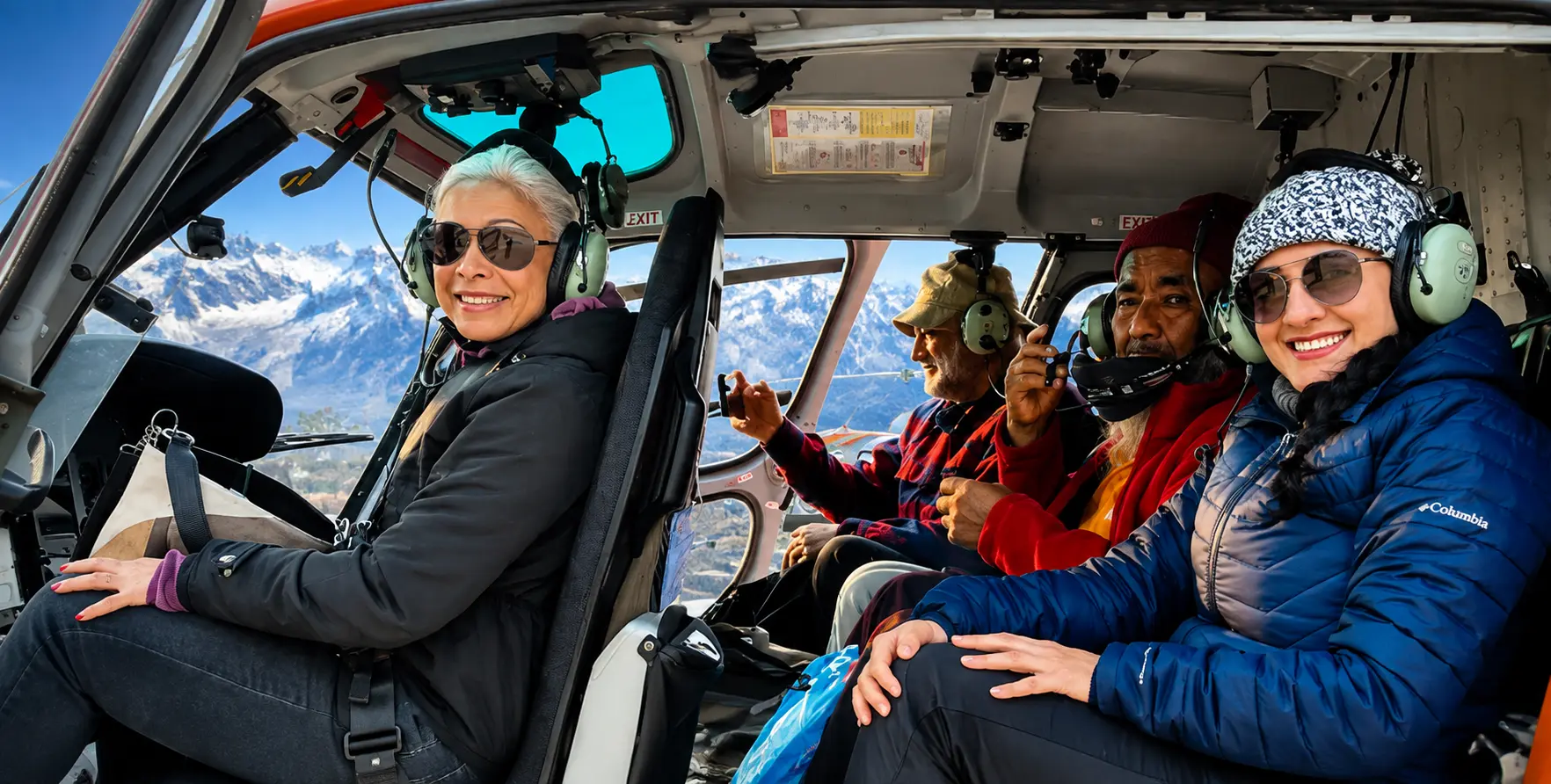
Both journeys end the same way: with the thud of rotor blades, a lurch as the skids leave the ground, and a breathtaking flight down the Khumbu Valley, past Ama Dablam and the monastery of Tengboche, toward Lukla and Kathmandu. But one of these journeys began that same morning in a Kathmandu hotel, while the other began more than a week earlier, on foot, at the bottom of the valley.
For travellers who want to include a helicopter in their Everest adventure, there are two main choices. The first is a one-day sightseeing flight such as our Sharing Everest Helicopter Tour with Kala Patthar Landing. The second is to trek up to Everest Base Camp and fly back by helicopter, as on our Everest Base Camp Helicopter Trek. Choosing between a helicopter tour vs a trek with helicopter return is one of the most common decisions our team helps travellers make.
This guide compares the two options in detail: what you experience, how much time each takes, how the altitude affects you, what you see, how the helicopter is used and who each option suits best. If you are still deciding between flying and walking the whole way, read our broader comparison of the EBC trek versus the helicopter tour.
The Two Options in One Minute
- The helicopter tour: A four-to-five-hour flight from Kathmandu over the Everest region, with a short landing at Kala Patthar when conditions allow, breakfast at the Hotel Everest View and a return to Kathmandu by midday. No trekking, no acclimatisation, no nights in the mountains.
- The trek with helicopter return: About eight days of trekking up the classic route to Everest Base Camp and Kala Patthar, with two acclimatisation days, followed by a helicopter flight back to Kathmandu instead of walking down—around ten days in total, including a spare day.
In short, the tour gives you the view; the trek with helicopter return gives you the journey, base camp itself and the view, with the helicopter saving you the descent.
At a Glance: Helicopter Tour vs Trek With Helicopter Return
- Total time: Tour, about four to five hours. Trek with helicopter return: about ten days from Kathmandu.
- Everest Base Camp: Tour, seen from the air. Trek, visited on foot.
- Kala Patthar: Tour, around ten minutes on the ground when landing is possible. Trek, climbed on foot, usually for sunrise, with as much time as the weather and your body allow.
- Acclimatisation: Tour, none; a rapid rise to over 5,500 m for a short stay. Trek, gradual, with rest days in Namche and Dingboche.
- Fitness needed: Tour, very little: Trek, good fitness for five to seven hours of walking a day.
- Nights in the mountains: Tour, none. Trek, about eight nights in teahouses.
- Helicopter time: Tour, a full morning of flying with several landings; Trek, a single flight from the upper Khumbu to Kathmandu.
- Culture: Tour, from the air and at breakfast. Trek, days in Sherpa villages and monasteries.
- Weather risk: Both depend on clear mornings; the trek also depends on the flight to Lukla at the start.
Option 1: The One-Day Everest Helicopter Tour
In any comparison of a helicopter tour vs trek with helicopter return, the tour wins on speed: it is the fastest way to see Everest up close. It suits travellers with only a day, those who cannot or do not wish to trek at high altitude, or those who want to share the experience with family members of different ages.
How the Day Unfolds
- Dawn pickup: Our team collects you from your Kathmandu hotel early in the morning and takes you to the domestic terminal.
- Flight to Lukla: About an hour over the middle hills and the Lamjura ridge to the famous mountain airstrip, where the helicopter refuels. Read our Lukla Airport guide to learn about this remarkable place.
- Up the Khumbu valley: Over Namche Bazaar, Tengboche and Pangboche, with Ama Dablam towering to the east.
- Pheriche and Kala Patthar: On shared tours, the group arrives in Pheriche, then shuttles to Kala Patthar in groups of two for about ten minutes, facing Everest. Our guide to the Kala Patthar landing reopening explains this new system.
- Breakfast with a view: Stop at the Everest View Hotel above Namche, with Everest and Ama Dablam on the horizon.
- Return to Kathmandu: A final refuelling stop in Lukla and the flight home, usually arriving around midday.
Private or Shared?
The Sharing Everest Helicopter Tour with Kala Patthar Landing lets solo travellers and couples book individual seats. For a group of four or five, or for a special occasion, a private charter such as the Everest Helicopter Tour or the Mt Everest by Helicopter Tour reserves the whole aircraft for you. The Everest Heli Sherpa Village Walk adds a guided walk in Khumjung for a taste of village life.
Option 2: The Trek With Helicopter Return
The trek with helicopter return, as on our Everest Base Camp Helicopter Trek, is the safest way to experience Everest Base Camp on foot when you have only about ten days. You walk the classic route at a sensible pace, with the acclimatisation your body needs, reach base camp and Kala Patthar, and then let a helicopter carry you home, saving 2 to 3 days of walking down.
A Sample Ten-Day Plan
- Day 1: Fly to Lukla and walk to Phakding, about 2,610 m.
- Day 2: Trek to Namche Bazaar, about 3,440 m, entering Sagarmatha National Park at Monjo.
- Day 3: Acclimatisation day in Namche, with a hike to the Hotel Everest View.
- Day 4: Trek to Tengboche (about 3,860 m), home to the monastery described in our guide, and the Mani Rimdu festival.
- Day 5: Trek to Dingboche, about 4,410 m.
- Day 6: Acclimatisation day in Dingboche, with a hike up Nangkartshang.
- Day 7: Trek to Lobuche, about 4,910 m, via the memorials at Thukla Pass.
- Day 8: Trek to Gorakshep, about 5,164 m, and on to Everest Base Camp at 5,364 m.
- Day 9: Climb Kala Patthar at sunrise, about 5,545 m, then fly back to Kathmandu by helicopter.
- Day 10: A spare day in Kathmandu in case weather delays the flight.
Our guide to the short Everest Base Camp Trek explains this plan in more detail, including why you must never skip the acclimatisation days.
Where the Helicopter Picks You Up
Return flights do not land at Everest Base Camp itself. They usually pick you up from the helipad at Gorakshep after your Kala Patthar sunrise or, depending on current rules, passenger numbers, and conditions, lower in the valley, such as Pheriche. From the highest landing sites, a helicopter can carry only two or three passengers at a time, so groups may be shuttled to a lower point before flying on together, usually with a stop in Lukla. Our article Can a Helicopter Land at Everest Base Camp? explains why.
What Each Option Feels Like
A Morning on the Helicopter Tour
The alarm rings in the dark, and within an hour you are buckled into your seat as the helicopter lifts off over Kathmandu’s rooftops. The city gives way to terraced hills, then forested ridges, and suddenly a white wall of mountains fills the windscreen. After a quick refuelling stop at Lukla, you race up the Dudh Koshi gorge, over the horseshoe of Namche and past the gleaming roofs of Tengboche Monastery, with Ama Dablam close enough to make you gasp. At Pheriche, you wait your turn, then fly up to Kala Patthar with one other passenger and step out into thin, icy air facing Everest. Ten minutes later you are back in the helicopter, and an hour after that you are drinking coffee at the Hotel Everest View, still trying to believe what you have just seen. By lunchtime, you are back in your hotel.
A Day on the Trek
You wake in a teahouse in Tengboche to the sound of the monastery horns and the smell of juniper smoke. After porridge and ginger tea, you set off through the forest, cross the river below Pangboche, and climb up the Imja Valley at a slow, steady pace, with your guide pointing out Himalayan tahr on the slopes and prayer flags on every ridge. You stop for tea in a stone-walled hamlet, eat a hearty lunch and arrive in Dingboche by early afternoon, where you rest, read, play cards with fellow trekkers and watch the evening light turn Ama Dablam gold. After a plate of dal bhat and a health check from your guide, you crawl into your sleeping bag, tired, happy and a little closer to Everest. Multiply that by eight days, add base camp and a Kala Patthar sunrise, and finish with a helicopter flight home.
The Biggest Difference: Standing at Everest Base Camp
For many travellers, this is the deciding factor. On the trek with helicopter return, you walk the final kilometres along the Khumbu Glacier from Gorakshep and stand at Everest Base Camp itself, beside the marker rock wrapped in prayer flags, with the Khumbu Icefall rising above you. In spring, you walk among expedition teams’ tents as they prepare to climb the mountain.
On the helicopter tour, you see base camp from the air. The view is spectacular, but sightseeing flights don’t land at the camp; those flights are reserved for rescue and expedition support. If your dream is to say “I stood at Everest Base Camp”, only the trek can give you that. When weighing a helicopter tour vs ta trek with helicopter return, ask yourself how much that moment matters to you.
Kala Patthar: Ten Minutes or a Sunrise
Both options can take you to Kala Patthar, the viewpoint with the classic close-up view of Everest, but the experience is very different.
On the helicopter tour, you land for around ten minutes, usually in clear morning light, with Everest, Nuptse, Pumori and the Khumbu Icefall all around you. It is exhilarating, if brief, and you arrive with no physical effort.
On the trek, you climb Kala Patthar from Gorakshep before dawn, step by slow step, and watch the first light touch Everest’s summit. Stay as long as your body and the weather allow, share the moment with your guide and fellow trekkers, and feel the deep satisfaction of having walked every metre. Our comparison of Gokyo Ri vs Kala Patthar explains why this viewpoint is so special.
Altitude and Acclimatisation Compared
Altitude is where the helicopter tour vs trek with helicopter return comparison matters most for your health. Each option handles altitude completely differently, and it is important to understand both.
On the Helicopter Tour
You rise from about 1,400 m in Kathmandu to more than 5,500 m in less than two hours, with no time to acclimatise. The stay at Kala Patthar is short, and the helicopter descends quickly, so most healthy passengers feel only mild effects, such as breathlessness or a lightheaded feeling. However, the rapid rise is not suitable for everyone, and anyone with heart or lung conditions, high blood pressure, anaemia or pregnancy should consult a doctor first.
On the Trek With Helicopter Return
You climb gradually over about eight days, increasing your sleeping altitude slowly and resting in Namche and Dingboche, following the climb-high, sleep-low principle. This gives your body time to adapt, but you also spend several nights above 4,000 m, so you must know the symptoms of altitude sickness and tell your guide if they appear. The helicopter replaces only the descent, when your body no longer needs time to adapt.
Learn the warning signs on our Acute Mountain Sickness page and in our guide to altitude sickness on the Everest Base Camp Trek. If you need help on the trail, the aid post at Pheriche and rescue helicopters are close by.
Fitness: What Each Option Asks of Your Body
The helicopter tour asks almost nothing of your body. You need to be able to climb in and out of the helicopter, walk a few steps on rocky ground at Kala Patthar and move slowly in thin air.
The trek with helicopter return asks a lot. The ascent is the same as on the classic trek, so you need the same fitness: five to seven hours of walking a day on steep, uneven trails at increasing altitude for about eight days. The helicopter removes the long descent, which helps tired knees, but all the hardest days, from the climb to Namche to the push to base camp and Kala Patthar, remain on foot. Our honest look at Everest Base Camp Trek difficulty and our 12-week training plan will help you prepare.
Time: One Morning or Ten Days
Time is often the simplest way to decide. If you have one free morning in Kathmandu, perhaps between business meetings or between tours of Bhutan and Tibet, the helicopter tour is your only realistic option. If you have around ten days, a trek with a helicopter return lets you reach the full ascent to base camp. If you have two weeks, you may prefer to walk both ways on the classic Everest Base Camp Trek, as shown in our Everest Base Camp Trek itinerary.
The Helicopter Experience in Each Option
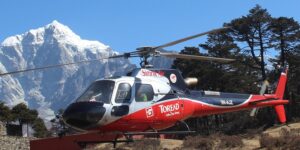
Interestingly, the helicopter tour gives you more time in the helicopter. You spend a full morning flying through the upper Khumbu, with several landings and a long, close look at the highest mountains on Earth. The flight is the whole experience.
On the trek with helicopter return, the helicopter is the grand finale: a single flight from the upper valley down to Kathmandu, sometimes with a short shuttle and a stop in Lukla. It is a wonderful way to relive your journey in reverse, spotting the villages you walked through, the bridges you crossed and the teahouses where you slept. Many trekkers say it is the perfect ending, a bird’s-eye view of everything they achieved on foot.
Culture and People
On the helicopter tour, you see Sherpa villages from the air and meet a few local people at breakfast. It is a glimpse rather than an encounter.
On the trek, you live among the Sherpa people for more than a week. You eat dal bhat in family-run teahouses, hear monks chanting at Tengboche, pass mani walls carved with prayers, spin prayer wheels and share stories with your guide and porters each evening. Our guide to Sherpa culture and traditions explains what you will discover, and our article on the chorten in Tibetan Buddhism explains the stupas along the trail. If culture matters to you, the trek is in a different league.
Weather, Delays and Backup Plans
Both options depend on the weather. Helicopters fly only in good visibility, usually in the early morning. If the weather is poor on your tour day, the flight moves to the next clear morning, so keep a spare day before your international departure.
The trek with helicopter return has two weather-dependent moments: the flight to Lukla at the start and the helicopter at the end. In the busy seasons, Lukla flights usually depart from Manthali in Ramechhap after a night drive arranged by our Ramechhap airport transportation team. If the helicopter cannot fly, you wait at the lodge or walk down to a lower elevation until it can. That is why we build a spare day into every short itinerary.
For both options, autumn and spring are the best seasons. See our guides on the best time for the Everest Base Camp Trek, the Everest Base Camp Trek in October, and the best seasons for an Everest helicopter tour.
Rules That Affect Each Option
Helicopter operations in the Everest region have seen new rules in recent seasons, and both options are affected differently.
- For the helicopter tour: Kala Patthar landings on shared tours have resumed under a shuttle system from Pheriche, with two passengers per flight. Landings depend on weather, weight,andnd the rules in forcthat dayay.
- For the trek with helicopter return: Pickup points, passenger numbers and flight types are subject to current regulations, so pickup may be at Gorakshep or lower in the valley.
- For both: Local communities have raised concerns about helicopter noise and its impact on porters and lodges, and authorities have responded with new conditions for commercial flights.
- Never fake a rescue: A planned helicopter return is a booked flight, never an insurance claim. Nepal’s authorities have cracked down on fraudulent rescues.
Our guide to Everest helicopter tour restrictions explains the background, and our team confirms the current rules before every departure.
Insurance, Permits and Paperwork
- Helicopter tour: Bring your passport and send your details and body weight in advance. The operator arranges flight permissions and park formalities. Check that your travel insurance covers the scenic flight.
- Trek with helicopter return: You need a Sagarmatha National Park entry permit and a Khumbu Pasang Lhamu Rural Municipality permit, which our team arranges. Your insurance must cover trekking up to about 5,600 m and helicopter evacuation.
- Guides: Trekking rules in Nepal have changed in recent years, and many areas now require a licensed guide. Rules vary by area and can change, so check before you travel; our article on Nepal’s mandatory guide rules explains how they work. We strongly recommend a licensed guide on any Everest trek.
- Visas: Check entry requirements in our Nepal visa guide.
Comfort, Food and Accommodation
On the helicopter tour, you sleep in your Kathmandu hotel before and after the flight and enjoy breakfast at the Hotel Everest View. The only discomfort is the early start and the cold at Kala Patthar.
On the trek, you sleep in teahouses: comfortable lower down, with some attached bathrooms in Phakding and Namche, and simple higher up, with shared bathrooms and cold nights. Meals are hearty and filling, with dal bhat the trekker’s favourite. For more comfort, the Everest Base Camp Luxury Lodge Trek uses the best lodges available, and the Luxury Everest Base Camp Trek with Helicopter Return combines fine lodges with a helicopter finale.
Planning Your Budget
We don’t quote figures in our blogs because they vary with season, group size, and options, but it helps to understand how each budget is shaped. On the helicopter tour, almost all of your spending goes on the flight itself, which is why sharing seats with other travellers makes such a difference. On the trek with helicopter return, your budget covers the Lukla flight, permits, lodges, meals, guide and porters for about eight days, plus a one-way helicopter flight, often shared with other trekkers flying out the same morning.
Our team will give you clear, all-inclusive details for whichever option you choose, and our payment options page explains how booking works. Always book with a registered company; you can view our company registration and legal documents online.
Preparing for the Trek With Helicopter Return
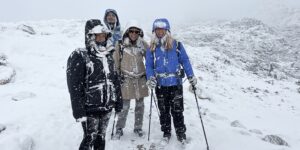
If you choose the trek, good preparation makes all the difference. First-timers should start with our guide to the Everest Base Camp Trek for beginners and our explanation of the Everest Base Camp Trek distance. Pack with our Everest Base Camp Trek packing list and check our trekking equipment page, remembering that both the Lukla flight and the helicopter have strict weight limits. Our wider trekking in Nepal guide covers everything from money to mountain etiquette.
The most important preparation is physical. Start training at least two to three months before your trip with long hikes, stair climbing, cardio, leg-strength work and practise walking with a loaded daypack. The helicopter will spare your knees the descent, but your legs and lungs will carry you all the way up.
Sherpa Spirituality Along the Trail
One of the trek’s quiet gifts is the chance to experience the Buddhist culture of the Khumbu up close. In Sherpa tradition, the valley is a sacred, hidden land blessed by Guru Padmasambhava, and its monasteries, mani walls, and prayer flags carry teachings rooted across the Himalaya, as we trace in our overview of Buddhism in Tibet. Walking clockwise around a chorten, spinning a prayer wheel or sitting quietly during prayers at Tengboche are moments no helicopter can offer.
Climbers and Runners: When a Helicopter Return Helps
The trek-up, fly-back approach is also popular with climbers and runners. After summiting a trekking peak such as Mera Peak Climbing or Island Peak Climbing, many climbers choose to fly out rather than walk for days on tired legs; check the latest NMA peak permit updates when you plan. Run the Everest Marathon, which starts near base camp, and follow the valley on foot. At the same time, expedition cclclimbers as ers, as in our Ama Dablam expedition guide and our article on Nepal’s eight-thousand-metre peaks, often finish their journeys with a flight back to Kathmandu.
Photography in Each Option
The helicopter tour is superb for aerial photography: glaciers, ridges, villages and the Khumbu Icefall from above, plus the classic view of Everest from Kala Patthar in crisp morning light. The limitation is time, with only around ten minutes on the ground.
The trek gives you time, light and variety: sunrise from Kala Patthar, portraits of Sherpa elders, yak caravans on suspension bridges, monastery details, starry skies and the changing moods of the mountains over many days. The helicopter return then adds aerial images on your final morning, so photographers get the best of both.
Impact on the Khumbu
Both options use a helicopter, but their footprints differ. A helicopter tour brings visitors into the upper Khumbu for a few hours, with little spending in the villages. A trek with helicopter return supports guides, porters, lodges and shops for more than a week before the single flight home. Whichever you choose, book with a licensed operator that follows the agreed rules, keeps landings short and quiet, and spends time and money locally where you can. Learn more on our responsible tourism page.
Which Should You Choose?
Here is a simple way to decide between a helicopter tour and a trek with helicopter return:
- Choose the helicopter tour if you have only a day, can’t trek at high altitude, are travelling with young children or older relatives, or mainly want views of Everest.
- Choose the trek with helicopter return if you have around ten days, are fit and healthy, want to stand at Everest Base Camp, and want the culture and achievement of the trek without the long walk down.
- Choose the classic trek if you have two weeks and want to walk every step, enjoying the villages again on the way down.
Traveller Profiles
- The executive with a free morning: Fly the sharing tour and be back for an afternoon meeting.
- The couple on a ten-day holiday: Trek up together and celebrate with the helicopter flight home.
- The family reunion: Grandparents take the helicopter tour while the younger generation treks, and everyone swaps stories over dinner in Kathmandu.
- The bucket-list trekker: Walk the classic trek and add a helicopter tour on a future visit.
- The photographer: Trek up for sunrise light and portraits, then fly back for aerial shots.
Luxury Versions of Both
Both options can be upgraded to be more luxurious. For the tour, a private charter, such as the Everest Helicopter Tour, gives you your own aircraft and schedule. For the trek, the Luxury Everest Base Camp Trek with Helicopter Return and the Everest Elite Luxury Heli Trek combine the finest Khumbu lodges with helicopter time-savers. Ask our team about private departures, tailored to your dates and pace.
Other Ways to Combine Trekking and Flying
- A short trek plus a tour: Walk the Everest View Trek to Namche, Khumjung and Tengboche, then take a helicopter tour to Kala Patthar on another day.
- A different base camp: Trek to the foot of Ama Dablam on the Ama Dablam Base Camp Trekking, described in our Ama Dablam Base Camp Trek
- Mindful trekking: Join the Everest Base Camp Yoga Trek, explained in our guide to mindful trekking in the Himalayas.
- Lakes from the air: Add the Gokyo Lakes Helicopter Tour to see the turquoise lakes of the neighbouring valley, which you can also reach on foot on the Gokyo Lakes Trek.
- Big adventures: Experienced trekkers can take on the Everest 3 Pass Trek via the Cho La Pass, or climb Island Peak and Lobuche Peak.
- The long way in: Walk in on the historic Jiri to Everest Trek, described in our Jiri to Everest Base Camp trek guide, or start by jeep on the Everest Base Camp Trek by Road.
Beyond Everest
If flying through the Himalaya appeals to you, Nepal offers more. The Annapurna Helicopter Tour lands in the Annapurna Sanctuary, also reached on foot on the Annapurna Base Camp Trek. The Langtang Helicopter Tour visits the Langtang Valley, and the Muktinath Yatra by Helicopter carries pilgrims to the sacred temple of Muktinath.
You can also see Everest from Tibet on the Lhasa to Everest Base Camp Overland Tour, as described in our Lhasa to Everest Base Camp guide, or combine Nepal with Bhutan on the Luxury Nepal Bhutan Tour, which includes a visit to the cliffside Tiger’s Nest Monastery. With spare days in Kathmandu, explore the city on our Kathmandu Day Tour or with our Kathmandu sightseeing guide; watch the sunrise on Nagarkot Hiking; walk the forest trails of Nagarjun Hiking; or spend two days on the Chisapani Nagarkot Trek.
Pokhara, described in our Pokhara sightseeing guide, is perfect for relaxing after the mountains, with Paragliding in Pokhara and short treks such as the Ghorepani Poon Hill Trek and the Mardi Himal Trek. Wildlife lovers can head to a Chitwan Jungle Safari, and the Classic Nepal Tour brings together the country’s heritage highlights. For more inspiration, browse our list of the top 50 treks in Nepal.
Many travellers also combine Everest with neighbouring countries: the 7 Day Bhutan Tour, the Luxury Bhutan Tour, the Nepal Tibet Bhutan Tour, the Kathmandu to Lhasa Tour and the Mount Kailash Tour all fit well with a short Everest adventure.
Common Mistakes When Choosing
These are the misunderstandings we see most often when travellers weigh a helicopter tour vs trek with helicopter return:
- Assuming the helicopter tour visits base camp: It flies over the camp; only trekkers stand there.
- Thinking the helicopter return makes the trek easy: The ascent is just as demanding as on the classic trek.
- Skipping acclimatisation days to save time: Save time on the descent, never on the ascent.
- Underestimating altitude on the tour: Even a short stay above 5,500 m can affect your body.
- No spare day: Both options depend on clear mornings.
- Overpacking: Helicopters have strict weight limits on both options.
- Ignoring medical advice: Consult a doctor if you have heart, lung or blood-pressure conditions.
Frequently Asked Questions About the Helicopter Tour and Trek With Helicopter Return
What is the difference between an Everest helicopter tour and a trek with helicopter return?
The helicopter tour is a four-to-five-hour sightseeing flight from Kathmandu with a short landing at Kala Patthar when conditions allow. The trek with helicopter return is about ten days, walking to Everest Base Camp and Kala Patthar, then flying back by helicopter.
Which option lets me stand at Everest Base Camp?
Only the trek. Sightseeing helicopter tours fly over base camp but do not land there.
Can I land at Kala Patthar on both options?
Yes. On the tour, you land for about ten minutes when weather, weight, and regulations allow. On the trek, you climb Kala Patthar on foot, usually for sunrise.
Which option is better for altitude?
Neither removes altitude risk. The tour involves a rapid rise for a short stay; the trek involves gradual acclimatisation over several days at altitude. Both are manageable for healthy travellers who follow advice.
How fit do I need to be for each option?
The tour needs very little fitness. The trek with helicopter return needs the same fitness as the classic trek, because the ascent is identical.
Where does the helicopter pick up trekkers on the return?
Usually at Gorakshep after the Kala Patthar sunrise, or lower in the valley, such as at Pheriche, depending on current rules, passenger numbers and conditions.
How many days does the trek with helicopter return take?
About ten days from Kathmandu on a plan like our Everest Base Camp Helicopter Trek, including two acclimatisation days and a spare day for weather.
Can families do the helicopter tour together?
Yes. Most healthy travellers of all ages can enjoy it, though anyone with health conditions should consult a doctor because of the rapid rise in altitude.
What happens if the weather is bad?
On the tour, the flight moves to the next clear morning. On the trek, you wait in the lodge until the helicopter can fly, which is why we include a spare day.
Can I combine both options?
Yes. You can trek up and fly back, then join a helicopter tour on another visit, or combine a short trek with a tour. Our team can design the right combination for you.
Final Thoughts: Two Helicopters, Two Different Adventures
Comparing a helicopter tour vs a trek with helicopter return really comes down to what you want Everest to mean to you. The tour gives you a breathtaking morning among the highest mountains on Earth, with a few precious minutes on Kala Patthar. The trek with helicopter return gives you the villages, the monasteries, the acclimatised climb, your own steps at Everest Base Camp and a sunrise on Kala Patthar, crowned by a flight home over everything you walked.
If you have a morning, book a seat on our Sharing Everest Helicopter Tour with Kala Patthar Landing. If you have ten days, walk to base camp and fly home on the Everest Base Camp Helicopter Trek. Meet our guides on our team page, learn more about our company, then plan your trip or contact us today, and our team will help you choose the Everest adventure that suits you best.
Quick Inquiry
Explore More


