
Everest Base Camp Trek Over 50: Trekking in Your Later Years
Everest Base Camp Trek Over 50: Trekking in Your Later Years
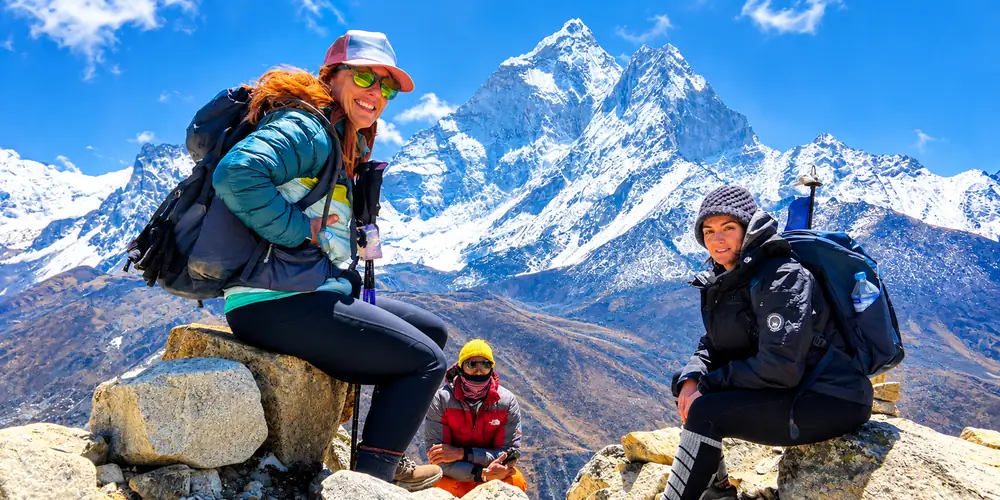
Imagine standing on the rocky top of Kala Patthar as the first sun touches Everest’s summit. Your breath comes slowly in the thin air, your legs remember every step of the climb, and your Sherpa guide grins and repeats the words you have heard all week: bistari, bistari, slowly, slowly. You made it. Around you are trekkers of every age, and surprisingly many of them, like you, are well past fifty.
An Everest Base Camp Trek over 50 is not only possible; for many people, it is the right time to do it. Experience, patience and a steady pace are real advantages at altitude. With the right preparation, comfortable lodges and a helicopter flight back, the journey can be as rewarding at sixty or seventy as at thirty. We designed our 11-day Everest Base Camp Luxury Lodge Trek with that balance of adventure and comfort in mind.
In this guide, our team covers everything older trekkers ask about: age limits; what research says about age and altitude sickness; the pre-trek medical check; training, pace, and acclimatisation; the most comfortable itinerary; insurance; medical support on the trail; the best seasons; and gentler alternatives.
The Short Answer: Can You Trek to Everest Base Camp Over 50?
Yes. There is no upper age limit for the Everest Base Camp Trek, and trekkers in their fifties, sixties and seventies reach base camp every season. Research shows that older age does not increase the risk of altitude sickness; what matters is your health, your fitness and a slow ascent. Get a medical check, train for three to six months, choose an itinerary with acclimatisation days and consider comfortable lodges and a helicopter return.
In brief, the keys to success are:
- Medical clearance: A check-up with your doctor before you book.
- Preparation: Steady training for endurance, strong legs and balance.
- Pace: Walking slowly and acclimatising properly.
- Comfort: Good lodges, a porter to carry your luggage and a helicopter to spare your knees on the way down.
- Support: An experienced guide and travel insurance that covers high-altitude trekking and helicopter evacuation.
Everest Base Camp Trek Over 50 at a Glance
- Age limit: No age limit for trekking in Nepal; your health, not your birthday, sets the limit.
- Highest point: Kala Patthar, about 5,545 m; Everest Base Camp is about 5,364 m.
- Duration: 11 days on our Luxury Lodge Trek with a helicopter return, or about 14 to 16 days on foot with extra rest days.
- Daily walking: Usually four to six hours, with one long day of seven to nine hours to base camp.
- Key preparation: A medical check, three to six months of training and a slow, steady pace.
- Comfort options: En-suite lodges in the lower valley, a night at the Hotel Everest View and a helicopter flight back.
- Best seasons: Spring and autumn.
- Essential: Travel insurance covering trekking to about 5,600 m and helicopter evacuation.
- Our trek: The 11-day Everest Base Camp Luxury Lodge Trek.
Is There an Age Limit for the Everest Base Camp Trek?
Nepal has no upper age limit for trekking, and Everest region permits apply to all ages. Trekkers in their seventies and even eighties have reached base camp, and climbers in their seventies and eighties have stood on Everest’s summit.
The real limits are practical. Some travel insurers restrict cover for older travellers or for high-altitude trekking, and some medical conditions make high altitude unwise. That is why the right question is not “How old am I?” but “How healthy am I, how well have I prepared and how carefully will I ascend?” Our honest look at the difficulty of the Everest Base Camp Trek explains what the trail asks of every trekker.
Why Trekking After 50 Can Be the Best Time
Many of our happiest trekkers are in their fifties, sixties and seventies, and they bring strengths that younger trekkers often lack:
- Patience: Older trekkers are usually happy to walk slowly, which is exactly what good acclimatisation requires.
- Experience: A lifetime of travel and work brings good judgement about when to push on and when to rest.
- Time: Retirement or flexible work makes it easier to add rest days or choose the best season.
- Curiosity: Many older trekkers enjoy the culture as much as the mountains: the monasteries, the Sherpa villages and the stories of the people who live here.
In Sherpa culture, elders are deeply respected, and lodges and monasteries such as Tengboche and Pangboche will often welcome you warmly. Our guide to Sherpa culture and traditions explains the beliefs and customs you will encounter along the way.
What Changes After 50 at High Altitude?
Planning an Everest Base Camp Trek over 50 starts with understanding how the body responds to altitude, and how ageing changes that response. The good news is that preparation and a steady pace can offset most of the changes.
Altitude Sickness and Age
Many older trekkers worry that age increases the risk of altitude sickness. The research says otherwise. A systematic review of 25 studies on age and altitude illness found that 12 reported less acute mountain sickness among older travellers and 11 found no link with age; the authors concluded that old age does not seem to be a contraindication to travelling at high altitude. A study of nearly 500 people who ascended rapidly to 3,810 m found that older age predicted neither the incidence nor the severity of altitude sickness; the strongest predictor was a previous history of altitude illness.
In other words, a fit, healthy trekker in their sixties is not, on the evidence, at higher risk of altitude sickness simply because of age, and older trekkers often do well because they walk slowly and listen to their bodies. The rules are the same for everyone: climb gradually, take acclimatisation days, and descend if symptoms worsen. Read our Acute Mountain Sickness page and our guide to altitude sickness on the Everest Base Camp Trek.
Heart, Blood Pressure and Lungs
Altitude makes the heart and lungs work harder. In thin air, blood pressure, heart rate, and breathing all rise, especially during the first days, and European heart experts note that people with high blood pressure may be more sensitive to altitude. Well-controlled blood pressure usually isn’t a barrier to trekking. Still, people with heart disease, heart failure, a previous stroke, chronic lung disease, or high blood pressure in the lungs should seek specialist advice before planning a high-altitude trek.
Joints, Muscles and Balance
Muscle strength, balance and joint health change with age, and the Everest trail tests all three, with countless stone steps and long descents. Going down is harder on the knees than going up. Studies on downhill walking show that trekking poles can reduce knee load by up to a quarter, and strong thigh and hip muscles further protect the joints.
Hydration, Cold and Sleep. Thirst weakens with age, and the dry mountain air removes water with every breath, so drink regularly rather than waiting to feel thirsty; three to four litres a day is a good guide. Older bodies also regulate temperature less efficiently, so a warm sleeping bag and dry layers matter. Sleep at altitude is lighter and more broken for everyone, so rest days, a comfortable bed, and a quiet room make a big difference.
See Your Doctor First: The Pre-Trek Medical Check
Before booking, see your doctor, ideally one with travel or mountain medicine experience, and tell them exactly where you are going: a trek of up to two weeks to more than 5,000 m, in a remote area several days’ walk from a hospital. Topics to discuss include:
- Heart and blood pressure: A check-up, an ECG and, if your doctor advises it, an exercise test.
- Lungs: Asthma, chronic lung disease or any breathing problems.
- Long-term conditions: How to manage diabetes or other conditions with long walking days, cold and altitude.
- Medications: Whether any need adjusting at altitude, and whether altitude medicines such as acetazolamide (Diamox) are suitable for you, as they can interact with some prescriptions.
- Joints: Knee, hip or back problems, and whether a physiotherapist can help you prepare.
- Travel health: Routine vaccinations and health advice for Nepal.
Carry enough of every medicine for the whole trip plus spares, split between your daypack and your duffel, in the original packaging with a copy of your prescriptions or a letter from your doctor. This guide offers general information, not medical advice; your doctor’s advice always comes first.
Training for Everest Base Camp Over 50
Training for an Everest Base Camp Trek over 50 is less about speed and more about endurance, strong legs and confident footing. Start three to six months before departure and build up gradually:
- Endurance: Brisk walking, cycling, swimming or rowing four or five times a week, building towards longer sessions.
- Hills and stairs: Walk uphill and downhill with a light pack of 5 to 8 kg; stairs or a step machine work well if you live somewhere flat.
- Strength: Squats, step-ups, controlled step-downs, lunges, and calf raises twice a week to protect your knees on descents.
- Balance: Single-leg stands and walks on uneven ground.
- Back-to-back days: In the final weeks, hike on consecutive days to learn how your body recovers.
- Trekking poles: Practise with them so that they feel natural on the trail.
- Recovery: Build rest into your plan; recovery takes a little longer after fifty, and that is fine.
Our 12-week training plan gives a week-by-week programme, and our guide to the Everest Base Camp Trek for beginners explains what to expect each day.
Mindset: Enjoy the Journey and Know When to Turn Back
The most successful older trekkers share a simple mindset: the journey matters as much as the destination. The Everest Base Camp Trek over 50 is not a race, and nobody at base camp asks how long it took you to get there. Some days you will feel strong; on others, the altitude will make every step feel heavy. Both are normal.
Decide before you leave that you will listen to your body and to your guide. Turning back, resting an extra day, or taking a helicopter down isn’t failure; it’s good judgement that keeps mountain journeys safe. Many trekkers find the views from Namche, the Hotel Everest View, or the hill above Dingboche as memorable as base camp itself. If you enjoy a calmer rhythm, our guide to mindful trekking in the Himalayas shows how breathing practice and gentle stretching can help at altitude.
Why the Luxury Lodge Trek Suits Trekkers Over 50
For many travellers, the most comfortable way to make an Everest Base Camp Trek over 50 is our 11-day Everest Base Camp Luxury Lodge Trek. It keeps the full adventure, including Everest Base Camp and sunrise from Kala Patthar, while removing many of the hardships that wear older trekkers down.
- Helicopter to Lukla: You fly from Kathmandu to Lukla by helicopter, weather permitting, avoiding the long night drive to Manthali that many spring and autumn flights require; our Ramechhap airport transportation page explains that route.
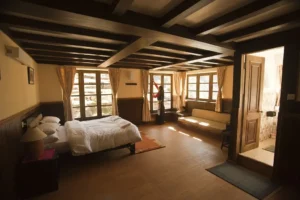
- The best lodges: Yeti Mountain Home lodges in Phakding and Namche offer private rooms with en-suite bathrooms and hot showers, and you spend a night at the Hotel Everest View and another at Rivendell Lodge in Deboche.
- Porters: One porter for every two trekkers carries your main luggage, so you walk with only a light daypack.
- Experienced guides: Our trek leaders and Sherpa guides watch your health, pace and comfort every day.
- Safety equipment: A first aid kit with oxygen cylinders and communication equipment for emergencies.
- Helicopter return: After sunrise at Kala Patthar, you fly back from Gorakshep, sparing your knees several days of steep descent.
- Comfort in Kathmandu: A five-star hotel at the start and end of the trip, with welcome and farewell dinners.
Above Dingboche, lodges are simpler everywhere on the trail, including at Lobuche and Gorakshep, with shared bathrooms and basic rooms. By then, however, the hardest part of the journey is almost behind you.
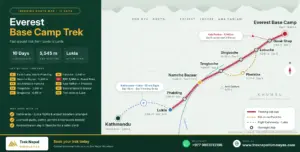
Our 11-Day Everest Base Camp Luxury Lodge Trek, Day by Day
Here is how the trek unfolds, with notes for trekkers over 50.
Day 1: Arrival in Kathmandu (about 1,400 m)
Rest at your five-star hotel after the long flight, drink plenty of water and join the welcome dinner. Explore the city’s heritage before or after the trek with our Kathmandu Day Tour or our Kathmandu sightseeing guide.
Day 2: Helicopter to Lukla and Walk to Phakding (about 2,610 m)
A scenic helicopter flight takes you to Lukla, followed by a gentle, mostly downhill walk along the Dudh Koshi to Phakding. It is an ideal first day for finding your rhythm.
Day 3: Phakding to Namche Bazaar (about 3,440 m)
Cross the high Hillary Suspension Bridge and climb the long hill to Namche Bazaar, entering Sagarmatha National Park at Monjo. Take the final climb very slowly; there is no prize for arriving first.
Day 4: Khumjung and the Hotel Everest View (about 3,880 m)
A gentle acclimatisation day takes you to the Sherpa village of Khumjung, with its monastery and the school founded by Sir Edmund Hillary, before you stay at Hotel Everest View, with Everest framed in the windows.
Day 5: Tengboche and Deboche (about 3,820 m)
Walk to Tengboche Monastery, the spiritual heart of the Khumbu, described in our guide to Tengboche Monastery and the Mani Rimdu festival, then descend through the forest to the comfortable Rivendell Lodge in Deboche.
Day 6: Deboche to Dingboche (about 4,410 m)
Pass the ancient village of Pangboche and climb steadily to Dingboche, a village of stone-walled fields beneath Ama Dablam and Island Peak. Walk slowly: you gain almost 600 m of sleeping altitude today.
Day 7: Acclimatisation in Dingboche
Climb part of the way, or all the way, up the hill above Dingboche, known locally as Nagarjun or Nangkartshang, to around 5,050 m for views of Makalu and Lhotse, then return to sleep low. Turn around when you feel ready; the altitude gain still helps.
Day 8: Dingboche to Lobuche (about 4,910 m)
Walk up the broad valley past the climbers’ memorials at Thukla Pass to Lobuche. Rest in the afternoon to prepare for the big day ahead.
Day 9: Everest Base Camp and Gorakshep (about 5,364 m)
The longest day, of seven to nine hours: walk to Gorakshep, drop your bags and continue to Everest Base Camp beneath the Khumbu Icefall. Start early, carry plenty of water and snacks and take breaks often.
Day 10: Kala Patthar and Helicopter to Kathmandu
Climb Kala Patthar, about 5,545 m, at sunrise for the classic view of Everest, or enjoy the sunrise from lower down if you prefer, then fly back by helicopter to Lukla and on to Kathmandu, weather permitting.
Day 11: Departure
Transfer to the airport, or stay on to explore more of Nepal.
Need more time? Our team can tailor the itinerary, for example by adding an extra acclimatisation night in Namche or Dingboche, which many older trekkers find worthwhile. If you prefer to walk the whole way, our classic 14-day Everest Base Camp Trek, along with guides on how many days the EBC trek takes, explains the options, and our Everest Base Camp Trek itinerary and distance guides provide the details.
Pace, Acclimatisation and the Golden Rules
Bistari, bistari, slowly, slowly, is the most important phrase on the trail, and older trekkers often follow it better than anyone.
- Walk at a conversational pace: If you cannot talk while walking, slow down.
- Ascend gradually: Above about 3,000 m, raise your sleeping altitude gradually, roughly 300 to 500 m a day, with acclimatisation days every few days.
- Climb high, sleep low: Acclimatisation hikes take you higher during the day before you return to sleep lower.
- Drink, eat and rest: Keep sipping water, eat well even when your appetite fades and rest in the afternoons.
- Avoid alcohol and sleeping pills: Both can affect breathing and sleep at altitude.
- Daily health checks: Our guides check your health every day, including oxygen levels and pulse, and look at trends rather than single numbers.
- Know the warning signs: A headache that doesn’t ease with rest and fluids, vomiting, loss of balance, confusion, or breathlessness at rest all mean stop and descend. Never go higher with symptoms.
A Typical Day on the Trail
Every day of an Everest Base Camp Trek over 50 follows a gentle, predictable rhythm, which many older trekkers find reassuring. You wake around six, warm up with a hot drink in the dining room, pack your duffel for the porter, and enjoy breakfast of porridge, eggs, or Tibetan bread. By seven or eight, you are on the trail, walking at an easy pace with regular stops for water, photographs and rest.
Lunch is taken at a lodge along the way, often on a sunny terrace with mountain views. Most days end by early afternoon, leaving time for a shower (where available), a rest, a short acclimatisation walk,k or a visit to a monastery. Dinner is served around six or seven in a warm dining room, your guide checks how you are feeling, and you are usually in bed by nine. Early nights suit the early starts, and the clearest views almost always come in the morning.
Comfort at Altitude: Sleep, Food and Bathrooms
Small comforts make a big difference after fifty. These tips help you rest well and keep your energy up:
- Night-time trips: Higher lodges usually have shared bathrooms along a cold corridor, so keep a head torch, warm slippers, and a down jacket by the bed; some trekkers carry a wide-mouthed bottle for night use.
- A warm bed: Fill an insulated bottle with boiling water in the evening and put it in your sleeping bag.
- Better sleep: Earplugs and an eye mask help in busy lodges with thin walls.
- Good food: Dal bhat, soups, potatoes and hot drinks are easy to digest and give steady energy; we recommend vegetarian meals higher up.
- Afternoon rest: Lie down after lunch on long days, and save sightseeing for the cooler, clearer mornings.
The Helicopter Advantage for Older Trekkers
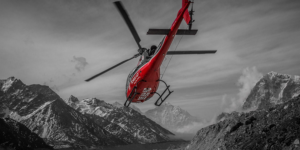
The walk back from Gorakshep to Lukla usually takes three days and descends more than 2,300 m, much of it on steep stone steps that are far harder on the knees than the climb. Flying back by helicopter avoids it, and many trekkers over 50 find it the single best comfort upgrade.
- Everest Base Camp Luxury Lodge Trek: Helicopter flights in and out, with the best lodges along the way.
- Luxury Everest Base Camp Trek with Helicopter Return: Walk up in comfort and fly back.
- Everest Base Camp Helicopter Trek: A shorter itinerary with a helicopter finale.
- Everest Elite Luxury Heli Trek: Our most exclusive helicopter-supported trek.
Helicopters depend on the weather, and rules on helicopter landings in the Khumbu can change, so we always keep a backup plan. Read our guides to the short Everest Base Camp Trek, the helicopter tour vs trek with helicopter return, whether a helicopter can land at Everest Base Camp and Everest helicopter tour restrictions.
Travel Insurance for Trekkers Over 50 and 60
Insurance is one of the most important parts of planning an Everest Base Camp Trek over 50. Check that your policy:
- Covers the altitude: Trekking to at least about 5,600 m, since Kala Patthar is about 5,545 m.
- Includes rescue: Helicopter rescue and medical evacuation.
- Covers your health: Pre-existing conditions, declared honestly.
- Fits your age: Some policies set upper age limits or apply stricter conditions for older travellers.
- Covers delays: Useful if Lukla flights are cancelled.
Compare specialist adventure policies early, and share your policy number and emergency contacts with your guide before the trek begins.
Medical Support on the Trail
The Khumbu is remote, but help is available. In Khunde, a short walk from Khumjung at about 3,840 m, the Khunde Hospital, built by Sir Edmund Hillary at the request of the Sherpa community and run today by Himalayan Trust Nepal, treats local people and trekkers alike. Namche Bazaar has basic clinics and pharmacies, and volunteer doctors staff the Himalayan Rescue Association aid post at Pheriche in spring and autumn.
Beyond these, helicopter evacuation, weather permitting, is the main route to hospital care in Kathmandu, which is why insurance matters so much. Our guides are trained to recognise altitude sickness, and the Luxury Lodge Trek first aid kit includes oxygen.
Best Time for an Everest Base Camp Trek Over 50
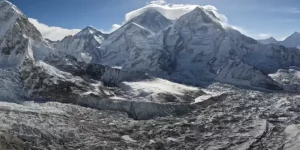
For an Everest Base Camp Trek over 50, spring and autumn are the best seasons, with stable weather, milder temperatures and the most reliable flights. Our guide to the best time for the Everest Base Camp Trek compares every month.
- Spring (March to May): Warmer nights, rhododendrons in bloom and the expedition camp at base camp; read our guide to the Everest Base Camp Trek in April.
- Autumn (late September to November): The clearest views of the year, with colder nights later in the season; read our guide to the Everest Base Camp Trek in October.
- The edges of the seasons: Late September and late November are quieter, which suits a slower pace, although late November nights are colder.
- Winter: Very cold nights at altitude make it the least comfortable season for older trekkers.
- Monsoon: Rain, mud and frequent flight delays; read our guide to the Everest Base Camp Trek in the monsoon.
What to Pack: Extra Items for Trekkers Over 50
Start with our Everest Base Camp Trek packing list and our trekking equipment page, then add these:
- Medicines: Pack your full supply plus spares, split between two bags, and include prescriptions or a doctor’s letter.
- Spare glasses: And contact lenses or hearing aid batteries if you use them.
- Knee supports: If your doctor or physiotherapist recommends them, plus adjustable trekking poles.
- A warm sleeping bag: Rated to around minus 15°C in spring and autumn, with a liner for extra warmth.
- An insulated bottle: For hot water at night, and electrolyte sachets for long days.
- Foot care: A blister kit, spare socks and comfortable camp shoes.
- Sun protection: Glacier-grade sunglasses, a wide-brimmed hat and high-factor sunscreen.
Remember the Lukla baggage limit, usually around 10 kg checked and around 5 kg hand luggage, although helicopter flights may have their own limits, which our team will confirm.
Gentler Ways to See Everest
If a full trek to base camp feels like too much, there are wonderful alternatives:
- Everest View Trek: A shorter trek through Namche, Khumjung and Tengboche that stays below about 4,000 m, with classic views of Everest and Ama Dablam.
- Ama Dablam Base Camp Trekking: A quieter, lower alternative beneath one of the world’s most beautiful peaks, described in our Ama Dablam Base Camp Trek
- Everest Base Camp Yoga Trek: A slower rhythm with daily stretching and breathing practice, explained in our guide to mindful trekking in the Himalayas.
- Helicopter tours: When operating, the Everest Helicopter Tour, the Mt Everest by Helicopter Tour, the Everest Heli Sherpa Village Walk, the Gokyo Lakes Helicopter Tour, and the Sharing Everest Helicopter Tour with Kala Patthar Landing bring you face-to-face with Everest in a single morning.
Our guides to the Everest Base Camp helicopter tour, the best seasons for an Everest helicopter tour, the EBC trek or helicopter tour and the Kala Patthar landing reopening help you choose. Because helicopter tours climb very quickly to high altitude, ask your doctor whether a brief visit is suitable if you have heart or lung co.
Other Treks in Nepal That Suit Trekkers Over 50
Nepal has wonderful lower-altitude treks that combine mountain views, culture and comfortable lodges. Browse our list of the top 50 treks in Nepal and our trekking in Nepal guide, or consider these favourites:
- Annapurna foothills: The Ghorepani Poon Hill Trek, the Australian Camp Trek, the Dhampus Sarangkot Trek and the Muldai View Trek offer big views at modest altitudes.
- A little higher: The Mardi Himal Trek, the Khopra Ridge Trek, the Annapurna Base Camp Trek and the Poon Hill and Mardi Himal Trek, described in our ultimate guide to the Annapurna Base Camp Trek, suit fit, well-prepared trekkers.
- Langtang: The Langtang Valley Trek, described in our Langtang Valley Trek details, and Tamang Heritage Trekking are close to Kathmandu and rich in culture.
- Near Kathmandu: The Chisapani Nagarkot Trek, Nagarkot Hiking and Nagarjun Hiking fit into a few days, with Himalayan views on clear mornings.
- Village life: The Chainpur Village Homestay Tour offers a gentle glimpse of rural Nepali life.
- Desert kingdoms: The Jomsom Muktinath Trek follows the Kali Gandaki to the sacred temple of Muktinath, and the Upper Mustang Trek explores the walled villages of the former kingdom of Lo, described in our guide to trekking in Upper Mustang; both climb to around 3,800 m or more, so the same acclimatisation rules apply.
- By helicopter: The Annapurna Helicopter Tour, the Langtang Helicopter Tour and the Muktinath Yatra by Helicopter bring the high Himalaya within reach without long walking days.
Guide rules vary by area and can change, so check before you travel; we strongly recommend a licensed guide. Read our article on Nepal’s mandatory guide rules and check entry requirements in our Nepal visa guide.
Culture, Wildlife and Comfort Beyond the Trek
Many older travellers combine a trek with gentler experiences. See more of the country on the Classic Nepal Tour, watch rhinos and elephants on a Chitwan Jungle Safari or the Bardia National Park Tour, and relax by the lake, as described in our Pokhara sightseeing guide. For those in good health, a tandem flight with Paragliding in Pokhara or a day of Trishuli River Rafting adds a little excitement.
Beyond Nepal, the Luxury Bhutan Tour, the 7 Day Bhutan Tour, and the Luxury Nepal Bhutan Tour combine comfort with culture, including a hike to the Tiger’s Nest Monastery and colourful Bhutan festivals. The Lhasa Tibet Tour and the Luxury Nepal Tibet Tour reach the Tibetan plateau, where Lhasa sits at about 3,650 m, so the same altitude advice applies.
To understand the spiritual world of the Himalaya, read our articles on chortens in Tibetan Buddhism, Guru Padmasambhava, Buddhism in Tibet, and the poet-saint Milarepa, whose songs are still sung in Himalayan monasteries.
Trekking With Younger Family or Friends
Many trekkers over 50 travel with grown-up children, grandchildren or younger friends. Agree before you go that the group will move at the pace of its slowest member, especially above Namche. With the right guiding arrangement, faster walkers can go ahead with a guide or porter and regroup at the lodge, while acclimatisation days stay the same for everyone. Agree in advance what happens if one person needs to descend, including the option of a helicopter for one while the others continue with a guide.
After the Trek: Recovering at Home
Expect to feel tired for a week or two after you return; recovery from a high-altitude trek takes longer in real life, and appetite and sleep can take time to settle. Ease back into exercise gradually, and if your medication was adjusted for the trek, see your doctor to review it and check your blood pressure. Above all, take time to enjoy the memories, the photographs and the quiet pride of having walked to the foot of the world’s highest mountain.
Practical Tips for Trekkers Over 50
- Book with an experienced, registered company: You can view our company registration and legal documents
- Tell us about your health: Share your medical conditions and medications with our team so that your guide can support you.
- Choose the right itinerary: Comfortable lodges, extra acclimatisation and a helicopter return make a real difference.
- Train consistently: Three to six months of steady preparation beats a last-minute push.
- Walk slowly from day one: Pace yourself as if every day were the summit day.
- Keep one or two buffer days: Weather can delay flights and helicopters.
- Stay warm and dry: Change into dry layers as soon as you reach the lodge.
- Listen to your body: Tell your guide about any symptoms, however small.
Common Mistakes to Avoid
- Skipping the medical check: Know your health before you go.
- Training too little, or too hard too late: Build up steadily and avoid injury.
- Rushing the ascent: A short itinerary without acclimatisation days is a false economy.
- Carrying too much: Let the porter carry the load and keep your daypack light.
- Ignoring knee care: Use poles and take the descents slowly, or fly back.
- Forgetting the insurance details: Check the altitude, evacuation cover and any age limits.
Frequently Asked Questions About the Everest Base Camp Trek Over 50
Is there an age limit for the Everest Base Camp Trek?
No. Nepal sets no upper age limit for trekking. Your health, fitness and preparation matter far more than your age, although some insurers set their own age limits.
Can a 60-year-old trek to Everest Base Camp?
Yes. Many trekkers in their sixties reach base camp every season. A medical check, 3 to 6 months of training, and an itinerary with proper acclimatisation are key.
Can a 70-year-old trek to Everest Base Camp?
Yes, trekkers in their seventies do reach base camp. Get specialist medical advice, allow extra acclimatisation time and consider comfortable lodges and a helicopter return.
Are older trekkers more likely to get altitude sickness?
Research suggests not. Most studies find either no link between age and altitude sickness or slightly lower rates in older travellers. A previous history of altitude illness is a stronger warning sign than age.
Can I trek to Everest Base Camp with high blood pressure?
Often yes, if it is well controlled and your doctor agrees. Blood pressure tends to rise at altitude, so keep taking your medication and ask your doctor about monitoring and any adjustments.
How fit do I need to be to trek to Everest Base Camp over 50?
You should be able to walk five to six hours on hilly terrain with a light pack, on several consecutive days. Three to six months of steady training is ideal.
How many days should trekkers over 50 allow?
Our Luxury Lodge Trek takes 11 days with a helicopter return. If you walk both ways, allow around 14 to 16 days, plus one or two buffer days for flights.
Which Everest trek is best for older trekkers?
For a comfortable, full base camp experience, choose the Everest Base Camp Luxury Lodge Trek. For a shorter, lower-altitude journey, choose the Everest View Trek. For no trekking, choose an Everest helicopter tour.
Do I need special travel insurance?
Yes. Choose a policy that covers trekking to about 5,600 m, helicopter evacuation and your pre-existing conditions, and check for any age limits.
Is a helicopter return worth it for older trekkers?
For many, yes. It saves several days of steep descent that can be hard on the knees, though it always depends on the weather.
Final Thoughts: Your Later Years, Your Greatest Adventure
An Everest Base Camp Trek over 50 is a journey of patience, preparation, and quiet determination, qualities that come with age. With a medical check, steady training, a slow ascent, comfortable lodges and a helicopter flight home, standing beneath Everest is well within reach, whether you are fifty, sixty or seventy.
Join our 11-day Everest Base Camp Luxury Lodge Trek, walk up in comfort on the Luxury Everest Base Camp Trek with Helicopter Return, or take the classic route on our Everest Base Camp Trek. Meet our guides on our team page, learn more about our company, read about our responsible tourism commitments and our flexible payment options, then plan your trip or contact us today. The mountains do not mind how old you are.
Quick Inquiry
Explore More


