Everest Base Camp Trek vs Snowman Trek: Which Himalayan Challenge?
Everest Base Camp Trek vs Snowman Trek: Which Himalayan Challenge?
Two of the most famous treks in the Himalaya could hardly be more different. One follows a busy, lodge-lined trail to the foot of the world’s highest mountain, through Sherpa villages and monasteries, in around two weeks. The other crosses some of the most remote and beautiful high country on Earth, for nearly a month, camping beneath unclimbed peaks in a kingdom that welcomes only a small number of visitors each year.
The Everest Base Camp Trek vs Snowman Trek comparison really pits two kinds of adventure against each other: the iconic and the extreme. The Everest Base Camp Trek in Nepal is a dream for countless trekkers worldwide. Bhutan’s Snowman Trek is widely regarded as one of the hardest treks anywhere, completed by relatively few people.
In this guide, our team compares the Everest Base Camp Trek vs the Snowman Trek in detail: route, altitude, difficulty, duration, accommodation, culture, seasons, logistics and who each trek suits. Whether you are planning our Everest Base Camp Trek or dreaming of our Bhutan Snowman Trekking expedition, this guide will help you choose.
The Short Answer
- Choose the Everest Base Camp Trek if you want an iconic, achievable high-altitude trek of about two weeks, with comfortable lodges, rich Sherpa culture and the chance to stand at the foot of Everest.
- Choose the Snowman Trek if you are a very experienced, extremely fit trekker seeking one of the most remote, demanding and exclusive treks in the world, and you have around a month to spare.
- Do both, in order: Many trekkers complete the Everest Base Camp Trek first and then take on the Snowman Trek as the ultimate Himalayan challenge.
Everest Base Camp Trek vs Snowman Trek at a Glance
Location
- Everest Base Camp Trek: The Khumbu region of north-eastern Nepal, inside Sagarmatha National Park.
- Snowman Trek: Northern Bhutan, crossing the Jomolhari, Laya and Lunana regions near the Tibetan border.
Duration
- Everest Base Camp Trek: About 12 to 14 days from Lukla and back, with arrival and departure days in Kathmandu.
- Snowman Trek: Typically around 25 to 30 days including travel in Bhutan, with well over three weeks of trekking.
Distance
- Everest Base Camp Trek: Roughly 130 km round trip from Lukla.
- Snowman Trek: Roughly 300 km or more, depending on the start and exit points.
Highest Point
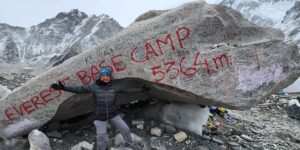
- Everest Base Camp Trek: Kala Patthar, about 5,545 m, with Everest Base Camp at 5,364 m.
- Snowman Trek: Rinchen Zoe La, around 5,320 m, with numerous other passes close to or above 5,000 m.
High Passes
- Everest Base Camp Trek: No major passes on the standard route.
- Snowman Trek: Around ten or more high passes, many above 4,500 m.
Accommodation
- Everest Base Camp Trek: Teahouses and lodges every few hours.
- Snowman Trek: Fully supported camping almost throughout, with villages few and far between.
Difficulty
- Everest Base Camp Trek: Moderate to challenging.
- Snowman Trek: Extremely strenuous, among the most demanding treks in the world.
Crowds
- Everest Base Camp Trek: Busy in peak seasons, with trekkers from around the world.
- Snowman Trek: Very few trekkers; you may not see another group for days.
The Everest Base Camp Trek: An Overview
The Everest Base Camp Trek is Nepal’s most famous trek and one of the world’s most popular high-altitude treks. After a dramatic flight to Lukla, the trail follows the Dudh Koshi valley through Phakding and Monjo to Namche Bazaar, the Sherpa capital. From there, it climbs through Tengboche, Pangboche and Dingboche to Lobuche, Gorakshep and Everest Base Camp, with a sunrise climb of Kala Patthar for a classic view of Everest.
Highlights of the Everest Base Camp Trek
- Everest up close: Standing at the foot of the Khumbu Icefall and viewing Everest from Kala Patthar.
- Sherpa culture: Villages, monasteries and traditions throughout. Read our guide to Sherpa culture and traditions.
- Tengboche Monastery: The spiritual heart of the Khumbu. See our guide to Tengboche Monastery and the Mani Rimdu festival.
- Sagarmatha National Park: A UNESCO World Heritage Site with forests, glaciers and wildlife. See our Sagarmatha National Park
- Comfortable logistics: Lodges, hot meals and established infrastructure make the trek accessible to well-prepared first-timers.
For a full breakdown of the route, read our Everest Base Camp Trek itinerary.
The Snowman Trek: An Overview
The Snowman Trek is Bhutan’s legendary long-distance trek, crossing northern Bhutan’s remote high mountains from the Paro Valley to the hidden region of Lunana, then toward central Bhutan. Many describe it as one of the world’s toughest treks, not because of any single climb, but because of its length, many high passes, remoteness, and unpredictable weather.
The Route
Most Snowman itineraries begin near Paro and follow the Jomolhari trek route to Jangothang, the base camp beneath the sacred peak of Jomolhari. From there, the trail crosses a series of high passes to Lingshi and Laya, a village famous for its distinctive Layap people and their conical bamboo hats. Beyond Laya, the route enters Lunana, one of the most isolated regions in the Himalaya, cut off by high passes for much of the year. After the villages of Woche, Lhedi, and Thanza, the trail climbs to the trek’s highest passes, including Rinchen Zoe La, then descends past glacial lakes toward the exit in central Bhutan.
Highlights of the Snowman Trek
- Jomolhari: The sacred mountain on the border with Tibet, towering above Jangothang.
- Laya: A remote highland village with a unique culture and traditional dress.
- Lunana: A hidden region of scattered villages, yak herders and huge glaciers.
- Gangkar Puensum: Bhutan’s highest mountain, widely regarded as theworld’s highest unclimbed peak. Climbing high peaks is not permitted in Bhutan out of respect for local beliefs.
- Wildlife: Blue sheep, takin (Bhutan’s national animal), and, for the very lucky, snow leopard.
- Glacial lakes: Turquoise lakes beneath ice-covered peaks in the upper Lunana region.
- Solitude: Days without seeing another group of trekkers.
Our Bhutan Snowman Trekking itinerary includes acclimatisation in Jangothang, rest days in Laya and Thanza, and cultural visits to Paro, Thimphu, and the Phobjikha Valley.
Difficulty: Everest Base Camp Trek vs Snowman Trek
This is the biggest difference between the two treks.
Everest Base Camp Trek Difficulty
The Everest Base Camp Trek is challenging mainly because of altitude and consecutive days of walking. Days typically last five to seven hours; the trail is well maintained, and lodges provide rest and recovery each night. With good preparation and a well-paced itinerary, many first-time trekkers complete it successfully. Read our guide to Everest Base Camp Trek difficulty for details.
Snowman Trek Difficulty
The Snowman Trek is in a league of its own. Its difficulty comes from a combination of factors:
- Length: Well over three weeks of continuous trekking, often with long days of six to nine hours.
- Repeated high passes: Crossing many passes, several close to or above 5,000 m, means constant climbing and descending at altitude.
- Remoteness: Large sections are far from roads, villages and medical help. Evacuation depends on weather and whether a helicopter is available.
- Weather: Snow can block passes at any time of year, forcing many groups to change plans or turn back.
- Camping: Nights in tents at high altitude, often in cold and wet conditions, make recovery harder.
- River crossings and rough trails: Some sections cross streams and boggy ground, especially after rain.
For these reasons, the Snowman Trek suits only experienced trekkers with previous high-altitude, multi-week trekking experience and excellent fitness.
Altitude and Acclimatisation
Both treks reach high altitudes, but in different ways.
On the Everest Base Camp Trek
The Everest trek climbs steadily from Lukla to Gorakshep over about a week, with acclimatisation days at Namche and Dingboche. The highest sleeping point is Gorakshep at about 5,164 m. Altitude sickness is the main risk, but it is well understood and largely preventable. Read our guide to altitude sickness on the Everest Base Camp Trek.
On the Snowman Trek
The Snowman Trek involves long periods at altitude, with many nights camped above 4,000 m and repeated crossings of passes above 4,500 to 5,000 m. Although the highest point is slightly lower than Kala Patthar, the cumulative time at altitude is much greater. Acclimatisation. Good itineraries build in acclimatisation days, typically at Jangothang, Laya, and Thanza, but the remoteness makes emergency descents difficult.
In both cases, the golden rule applies: never ascend with symptoms, and descend if they worsen. Our Acute Mountain Sickness guide explains the warning signs.
Accommodation and Daily Life on the Trail
Teahouses on the Everest Trail
On the Everest Base Camp Trek, you sleep in teahouses and lodges every night. Lower villages offer comfortable rooms, hot showers, bakeries and Wi-Fi; higher lodges are simpler but still warm in the dining room. You can carry less, and you meet trekkers from around the world each evening. For extra comfort, the Everest Base Camp Luxury Lodge Trek uses the best lodges available.
Camping on the Snowman Trek
The Snowman Trek is a fully supported camping expedition. A crew of guides, cooks and horsemen, with pack horses or yaks, carries tents, food and equipment. Each evening, the crew sets up sleeping tents, a dining tent and a kitchen tent, and prepares hot meals. It is a wonderful way to experience true wilderness, but nights can be cold and wet, and there are few opportunities to dry gear or wash.
Culture: Sherpa Nepal vs Highland Bhutan
Both treks offer rich Himalayan Buddhist cultures, but with different characters.
Culture on the Everest Trail
The Everest Trail passes through Sherpa villages with monasteries, mani walls and prayer flags. The Sherpa people are famous for their mountaineering skill and warm hospitality. Highlights include Tengboche Monastery, the ancient monastery at Pangboche and the Hillary School in Khumjung and Khunde.
Culture on the Snowman Trek
The Snowman Trek passes through some of Bhutan’s most traditional communities. The Layap people of Laya wear distinctive dress, including conical bamboo hats, and live by herding yaks and trading. The villages of Lunana are among the most isolated in the Himalaya and are reached only on foot. Bhutan follows the same Vajrayana tradition described in our guides to Buddhism in Tibet, and the kingdom reveres Guru Padmasambhava throughout. Before and after the trek, you’ll visit Bhutan’s great dzongs and monasteries, including Paro Dzong and the cliffside Tiger’s Nest Monastery. Our guide to the National Museum of Bhutan explains the kingdom’s history and culture.
Scenery and Mountains
Everest Region
The Everest trek is defined by giant peaks: Everest, Lhotse, Nuptse, Ama Dablam, Pumori and Cho Oyu. The scenery grows increasingly dramatic as you climb, culminating in the glaciers and icefall at Everest’s foot. Read our comparison of Gokyo Ri vs Kala Patthar for the region’s best viewpoints.
Snowman Trek
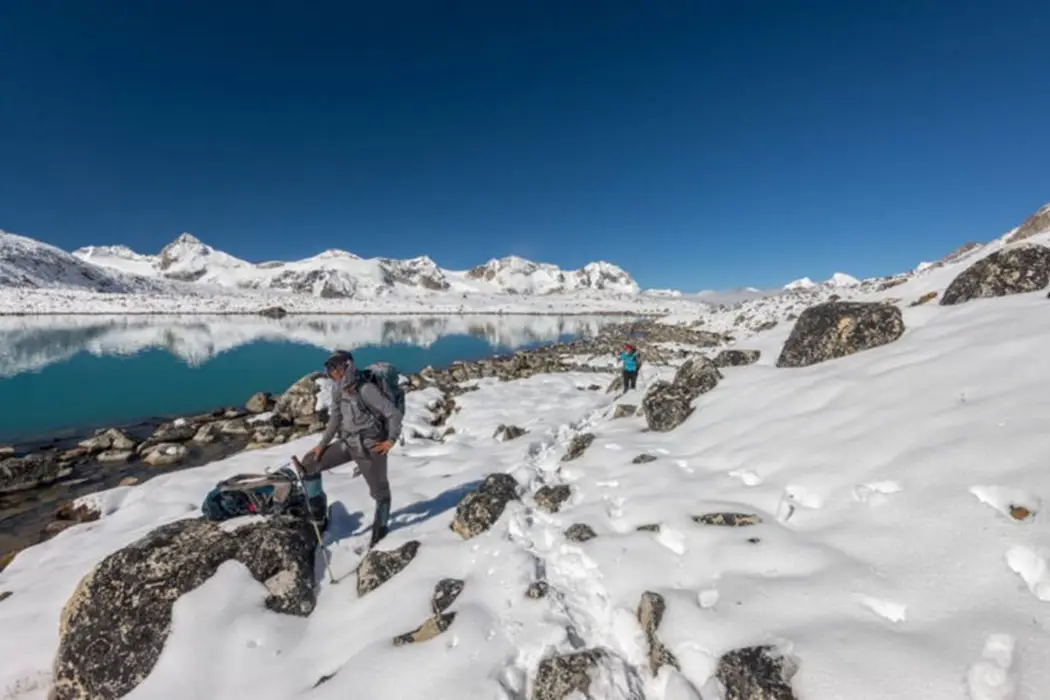
The Snowman Trek offers a broader variety of landscapes: forests and river valleys near Paro, the vast meadows beneath Jomolhari, high yak pastures, glacial valleys, turquoise lakes and remote passes with views of Jomolhari, Jichu Drake, Masang Gang, Tsenda Gang and Gangkar Puensum. Rather than a single destination, it is a continuous journey through wilderness.
Best Time for Each Trek
Everest Base Camp Trek
The best seasons are autumn (late September to November) and spring (March to May). October and April are the most popular months. Read our month-by-month guide to the best time for the Everest Base Camp Trek and our guide to the Everest Base Camp Trek in October.
Snowman Trek
The Snowman Trek has a narrower window. Autumn, from late September to mid-October or slightly later, is generally best, after the monsoon and before heavy winter snows close the high passes. Spring is a secondary option. Even in the best season, snow can block passes and force route changes, so flexibility is essential. We don’t attempt the trek in mid-winter or during peak monsoon.
Logistics, Permits and Travel Rules
Everest Base Camp Trek
Most nationalities can obtain a Nepal visa on arrival in Kathmandu; see our Nepal visa guide. Trekkers need the Sagarmatha National Park entry permit and the Khumbu Pasang Lhamu Rural Municipality permit, which our team arranges. During peak seasons, flights to Lukla usually depart from Manthali Airport in Ramechhap, and our Ramechhap airport transportation service handles the transfer.
Snowman Trek
Travel to Bhutan works differently. Under the country’s “High Value, Low Volume” tourism policy, visitors need a visa arranged in advance, and all trekking, as well as visits to dzongs, monasteries, and districts beyond Thimphu and Paro, requires a licensed Bhutanese guide. Visitors fly into Paro, the country’s international airport. The Snowman Trek requires a licensed guide, a full camping crew, pack animals and careful planning, and departures depend on weather and trail conditions. Our team arranges everything with our Bhutanese partners, from the visa to the crew. Rules can change, so always check the latest requirements before you travel.
A Typical Day on Each Trek
A Day on the Everest Base Camp Trek
You wake in a teahouse around six, pack your duffel for your porter and eat breakfast in a warm dining room. By eight you are walking, often with other groups on the trail, passing mani walls, prayer flags and yak trains. Lunch is at a teahouse along the way, and by mid-afternoon you reach your next lodge, where you rest, take a short acclimatisation walk and spend the evening chatting with trekkers from around the world beside the stove. Most days involve five to seven hours of walking.
A Day on the Snowman Trek
You wake in your tent to the sound of the crew preparing tea, often with frost or snow on the canvas. After breakfast in the dining tent, the horse riders load the pack animals, and you set off, sometimes climbing to a pass above 4,500 m before descending into a new valley. Lunch may be a packed meal eaten on a windswept ridge. In the afternoon, you reach a camp beside a river or lake, where the crew has already pitched the tents. You may not see another trekking group all day. Many days involve six to nine hours of walking, with longer pass days.
Sample Itineraries Compared
Everest Base Camp Trek (about 14 days)
- Days 1 to 3: Kathmandu, flight to Lukla, trek to Phakding and Namche Bazaar.
- Day 4: Acclimatisation in Namche with a hike to Hotel Everest View.
- Days 5 to 6: Trek to Tengboche and Dingboche.
- Day 7: Acclimatisation in Dingboche.
- Days 8 to 10: Lobuche, Gorakshep, Everest Base Camp and Kala Patthar, descending to Pheriche.
- Days 11 to 14: Return via Namche to Lukla and fly to Kathmandu, with a buffer day.
Snowman Trek (about 30 days)
- Days 1 to 3: Arrive in Paro, explore the valley, and hike to Tiger’s Nest Monastery to acclimatise.
- Days 4 to 7: Trek from the Paro Valley to Jangothang beneath Jomolhari, with an acclimatisation day.
- Days 8 to 12: Cross high passes via Lingshi and Chebisa to the village of Laya.
- Days 13 to 14: Rest and cultural day in Laya.
- Days 15 to 21: Enter Lunana via remote passes, visiting Woche, Lhedi and Thanza, with a rest day in Thanza.
- Days 22 to 26: Cross the highest passes, including Rinchen Zoe La, past glacial lakes, and descend towards central Bhutan.
- Days 27 to 30: Exit the trek, visit the Phobjikha valley, Thimphu and Paro, and depart.
Itineraries vary depending on the exit route, weather and trail conditions. Our Bhutan Snowman Trekking page shows our detailed plan.
Wildlife Compared
Both treks pass through important protected areas rich in Himalayan wildlife.
- Everest region: Himalayan tahr, musk deer, Himalayan monal (Nepal’s national bird), blood pheasant, lammergeier, and the elusive snow leopard live in Sagarmatha National Park. You can commonly see tahr and monals around Namche and Tengboche.
- Snowman Trek: The route crosses Jigme Dorji National Park and other protected areas, home to blue sheep, takin, Himalayan marmots, musk deer and snow leopard. Blue sheep are often seen on the high slopes, and takin, Bhutan’s national animal, may appear in the alpine meadows.
The Snowman Trek’s remoteness often means more wildlife encounters, while the Everest trail’s popularity means animals are accustomed to people and easier to observe near villages.
Food on the Trail
Food is a big part of any long trek.
- Everest Base Camp Trek: Lodge menus offer dal bhat, Sherpa stew, noodles, pasta, momos, potatoes, soups, eggs and pancakes, with bakeries and cafés in Namche. You order from a menu each meal.
- Snowman Trek: A dedicated camp cook prepares all meals, often a mix of Bhutanese, Indian, Nepali and Western dishes. Expect rice, vegetable curries, soups, noodles and Bhutan’s famous ema datshi, chillies cooked with cheese. Pack animals carry supplies, so menus become simpler as the trek progresses.
Safety, Evacuation and Insurance
Safety considerations differ greatly between the two treks.
- Everest Base Camp Trek: Medical facilities exist in Lukla, Namche, Khunde and Pheriche, where the Himalayan Rescue Association runs an aid post in the main seasons. Helicopter evacuation is relatively quick in good weather. Read our guide to Pheriche and the HRA aid post.
- Snowman Trek: Much of the route is far from medical help, and evacuation depends on weather, communication and helicopter availability. Guides carry satellite communication and first aid equipment, and itineraries include emergency exit points.
For both treks, travel insurance covering high-altitude trekking and helicopter evacuation is essential. For the Snowman Trek, confirm that your policy covers remote expeditions in Bhutan above 5,000 m.
Who Should Choose Which Trek?
The Everest Base Camp Trek Is Ideal For
- First-time high-altitude trekkers with good fitness and preparation.
- Travellers with around two weeks available.
- Trekkers who prefer lodges to camping.
- Those who dream of seeing Everest up close.
- Families with teenagers and older trekkers on well-paced itineraries.
- Anyone who enjoys meeting fellow trekkers and lively mountain villages.
If you are new to Himalayan trekking, start with our Everest Base Camp Trek for beginners.
The Snowman Trek Is Ideal For
- Very experienced trekkers with previous multi-week, high-altitude experience.
- Trekkers with exceptional fitness and resilience.
- Travellers with around a month available.
- Those who love camping and true wilderness.
- Adventurers seeking an exclusive, rarely completed challenge.
- Flexible travellers who accept that weather may change the plan.
Preparing for Each Trek
Preparing for the Everest Base Camp Trek
Two to three months of training, including long hikes, stair climbs, and strength work, is usually enough for well-prepared trekkers. A good layering system, broken-in boots and a warm sleeping bag are essential. Our Everest Base Camp Trek packing list covers everything you need.
Preparing for the Snowman Trek
Start preparing for the Snowman Trek at least six months in advance. You will need excellent cardiovascular fitness, strong legs for repeated climbs and descents, and the mental resilience to cope with weeks of camping, cold and uncertainty. Previous experience on long treks at altitude, such as the Everest Base Camp Trek, the Everest 3 Pass Trek or the Manaslu Circuit Trek, is strongly recommended. Gear must be suitable for camping in snow and rain, including a sleeping bag rated well below freezing, waterproof boots and gaiters.
A Natural Progression: From Everest to the Snowman
Many trekkers view these two treks as stages in a Himalayan journey. A common progression looks like this:
- Start with a classic: The Everest Base Camp Trek or the Annapurna Base Camp Trek introduces you to high altitude and teahouse trekking. Our ultimate guide to the Annapurna Base Camp Trek explains the Annapurna option.
- Add a pass: The Cho La Pass, the Gokyo Lakes Trek, or the Annapurna Circuit Trek over Thorong La build experience with high passes.
- Go remote: Treks such as the Kanchenjunga Base Camp Trek, Lower Dolpo Trekking or the Nar Phu Trek introduce camping, remoteness and restricted-area trekking.
- Take on the ultimate challenge: The Snowman Trek in Bhutan.
Combining Nepal and Bhutan
You do not have to choose only one country. Many travellers combine a trek in Nepal with cultural touring in Bhutan, or vice versa. Options include:
- Luxury Nepal Bhutan Tour: The highlights of both kingdoms in comfort.
- Nepal Tibet Bhutan Tour: A grand journey through three Himalayan cultures.
- Luxury Bhutan Tour: Bhutan’s dzongs, monasteries and valleys, ideal before or after a Nepal trek.
- 8 Days Bhutan Tour: A shorter introduction to the kingdom.
Time your visit with one of Bhutan’s colourful festivals, described in our guide to Bhutan festivals.
Luxury and Helicopter Options
Luxury and helicopter options are much more developed on the Everest side:
- Luxury Everest Base Camp Trek with Helicopter Return: Trek up, fly back.
- Everest Elite Luxury Heli Trek: Premium lodges and helicopter transfers.
- Everest Helicopter Tour: See Everest in a single day.
The Snowman Trek, by contrast, is a pure expedition. Helicopters are used mainly for emergencies, and comfort comes from a skilled crew, good equipment and well-chosen campsites.
Responsible Travel in Nepal and Bhutan
Both treks pass through fragile mountain environments and traditional communities, and both countries take conservation seriously.
- In Nepal: Sagarmatha National Park and local communities manage waste, restrict single-use plastic and protect forests. Trekkers can help by carrying out rubbish, using refillable water bottles and supporting local lodges and businesses.
- In Bhutan: The country follows a “High Value, Low Volume” tourism policy, guided by its focus on Gross National Happiness. Visitor numbers are managed, at least half of Bhutan is protected land, and climbing the highest peaks is prohibited out of respect for local beliefs.
On both treks, respect religious sites by walking clockwise around stupas and chortens, dress modestly and ask before photographing people. Our responsible tourism page explains how we work with local communities, porters and crews.
Photography on Each Trek
Both treks are a photographer’s dream, but they offer different subjects.
- Everest Base Camp Trek: Classic mountain shots of Everest from Kala Patthar, Ama Dablam behind Tengboche Monastery, prayer flags on suspension bridges and lively Sherpa villages. October and November bring the clearest light.
- Snowman Trek: Vast, empty landscapes, Jomolhari at sunrise from Jangothang, Layap villagers in traditional dress, colourful prayer flags and chortens, turquoise glacial lakes and yak herds on high pastures. The light can change dramatically with passing weather.
On the Snowman Trek, charging opportunities are extremely limited, so bring plenty of spare batteries and a solar charger or large power bank.
Common Mistakes When Choosing Between the Two
- Underestimating the Snowman Trek: Its fame can make it sound like a longer Everest trek. It is a serious expedition that requires experience and resilience.
- Assuming higher means harder: Kala Patthar is higher, but the Snowman Trek is far more demanding overall.
- Ignoring time constraints: The Snowman Trek needs about a month, plus flexibility for weather. Do not try to squeeze it into a shorter holiday.
- Skipping experience: Attempting the Snowman Trek without previous long, high-altitude treks is risky.
- Forgetting flexibility: On both treks, especially the Snowman, weather can force changes. Keep buffer days.
- Overlooking alternatives: If you love Bhutan but aren’t ready for the Snowman, consider a cultural tour or a shorter trek; if you want a tougher Nepal trek, consider the Three Passes or Kanchenjunga.
More Ways to Explore the Everest Region
If the Everest region is calling but you want a different experience from the classic route, our team offers many alternatives. The shorter Everest View Trek stays below about 3,900 m and suits families and travellers with limited time, while the Ama Dablam Base Camp Trekking route explores the meadows beneath one of the world’s most beautiful peaks. For a mindful journey, the Everest Base Camp Yoga Trek adds daily yoga and breathing practice, and runners can test themselves on the Everest Marathon. Motorcycle lovers can even ride to Everest Base Camp on our Everest Base Camp motorcycle adventure
If you prefer to avoid the flight to Lukla, the Everest Base Camp Trek by Road begins with a jeep drive into the Solukhumbu, and the historic Jiri to Everest Trek follows the route of the early expeditions, described in our Jiri to Everest Base Camp trek guide. The first days on any of these routes take you through Phakding and Monjo, and every itinerary includes acclimatisation above Namche, with a visit to Khumjung and Khunde.
For travellers who would rather fly than walk, the Khumbu has excellent helicopter options. The Everest Base Camp Helicopter Trek combines short walks with helicopter transfers; the Mt Everest by Helicopter Tour includes breakfast with a view of Everest; the Sharing Everest Helicopter Tour with Kala Patthar Landing is a popular group option; and the Gokyo Lakes Helicopter Tour flies over the turquoise lakes. Our Everest Heli Sherpa Village Walk adds a guided walk through a traditional village. Before booking, read our guides to the Everest Base Camp helicopter tour, the best seasons for an Everest helicopter tour and Everest helicopter tour restrictions.
Climbers looking for their first summit can combine the Everest trek with Island Peak Climbing, Lobuche Peak Climbing or Mera Peak Climbing. Experienced mountaineers can review our Ama Dablam expedition guide and Ama Dablam Q&A, and check our article on NMA peak royalty updates when planning. To learn about the giants you will see, read our article on Nepal’s new eight-thousanders.
Other Classic Treks in Nepal
Nepal offers far more than the Everest region, and many trekkers who complete one classic route return for another. In the Annapurna region, the short Ghorepani Poon Hill Trek offers sunrise views over Dhaulagiri and Annapurna, the Mardi Himal Trek follows a dramatic ridge beneath Machhapuchhre, and the Annapurna Panorama Trek combines Poon Hill, Mardi Himal and Annapurna Base Camp in one journey. Quieter Annapurna options include the Khopra Ridge Trek, the Tilicho Lake Trek and the remote North Annapurna Base Camp Trek, described in our North Annapurna Base Camp trek details. The Jomsom Muktinath Trek visits the sacred temple of Muktinath in the Kali Gandaki valley.
Closer to Kathmandu, the Langtang region offers wonderful variety. The Langtang Valley Trek leads to Kyanjin Gompa beneath glaciers, as explained in our Langtang Valley trek details; the Langtang Gosaikunda Trek visits a sacred lake; the Langtang Helambu Trek adds Hyolmo village; and the Tamang Heritage Trekking route explores Tamang culture. Our article on why a Langtang trek guide is mandatory explains the region’s rules.
For trekkers drawn to remote, Tibetan-influenced valleys, Nepal’s restricted areas are often the best preparation for the Snowman Trek. The Upper Mustang Trek explores the ancient kingdom of Lo, described in our guide to trekking in Upper Mustang, where the colourful Tiji Festival is held each spring. The Tsum Valley and Ganesh Himal Trek visits a sacred hidden valley, and the Manaslu Circuit crosses the Larke Pass, one of Nepal’s great high passes. For more inspiration, browse our list of the top 50 trekking routes in Nepal and our complete trekking in Nepal guide.
Tibet and Kailash: The Third Himalayan Kingdom
Between Nepal and Bhutan lies the Tibetan plateau, the third great Himalayan Buddhist culture. Many travellers who love both the Everest region and Bhutan add Tibet to their journey. The Luxury Nepal Tibet Tour and the Lhasa Tibet Tour explore Lhasa’s palaces and monasteries, while the Kathmandu to Lhasa Tour crosses the Himalaya overland. You can even see Everest from its northern side on the Lhasa to Everest Base Camp Overland Tour, described in our Lhasa to Everest Base Camp guide. The Tibet Bhutan Tour links Tibet with the kingdom of the Snowman Trek.
For pilgrims and adventurers, the sacred Mount Kailash Tour and the Kailash Overland Tour lead to one of Asia’s most sacred mountains. Read our guides to the Kailash Kora, Mansarovar Lake and the Dolma La Pass to understand this remarkable pilgrimage.
Before and After Your Trek: Culture and Adventure in Nepal
Whichever trek you choose, Nepal itself deserves time. In Kathmandu, our Kathmandu Day Tour visits Boudhanath, Swayambhunath and the historic Durbar Squares, and our Kathmandu sightseeing guide covers the highlights. Short hikes such as Nagarkot Hiking and the Chisapani Nagarkot Trek make perfect warm-up walks, and the Chainpur Village Homestay Tour offers a glimpse of rural life and the chance to visit a local school.
For adventure after your trek, fly over the lakeside city with Paragliding in Pokhara, explore the city with our Pokhara sightseeing guide, raft the Trishuli River or the Kali Gandaki, or spot rhinos and tigers on a Chitwan Jungle Safari or a Bardia National Park Tour. The Classic Nepal Tour brings many of these highlights together in one journey.
Planning and Booking With Our Team
Whether you choose the Everest Base Camp Trek, the Snowman Trek or a journey through several Himalayan countries, our team handles permits, visas, flights, guides, crews and logistics. You can learn more about our company, review our legal documents and see the accepted payment options before you book. Our guides will also check your gear against our trekking equipment list during your pre-trek briefing.
Common Questions Trekkers Ask When Comparing
Is the Snowman Trek Harder Than Everest Base Camp?
Yes, by a wide margin. The Everest Base Camp Trek reaches a slightly higher point, but the Snowman Trek is far longer, more remote, crosses many high passes and involves weeks of camping.
Is the Snowman Trek Higher?
No. Kala Patthar, at about 5,545 m, is higher than the Snowman Trek’s highest pass, Rinchen Zoe La, at around 5,320 m. However, the Snowman Trek spends much more total time at high altitude.
Can Beginners Do the Snowman Trek?
No. The Snowman Trek is only suitable for highly experienced trekkers. Beginners should start with the Everest Base Camp Trek or a shorter trek.
Frequently Asked Questions About the Everest Base Camp Trek vs Snowman Trek
Which is harder, the Everest Base Camp Trek or the Snowman Trek?
The Snowman Trek is much harder because of its length, remoteness, many high passes, and weeks of camping. The Everest Base Camp Trek is challenging but achievable for well-prepared first-timers.
How long is the Snowman Trek?
Typically around 25 to 30 days, including travel in Bhutan and over three weeks of trekking and roughly 300 km or more.
How long is the Everest Base Camp Trek?
About 12 to 14 days from Lukla and back, covering roughly 130 km, plus arrival and departure days in Kathmandu.
Which trek reaches a higher altitude?
The Everest Base Camp Trek, with Kala Patthar at about 5,545 m. The Snowman Trek’s highest pass, Rinchen Zoe La, is around 5,320 m.
Do I stay in lodges on the Snowman Trek?
No. The Snowman Trek is a fully supported camping trek. The Everest Base Camp Trek uses teahouses and lodges.
When is the best time for the Snowman Trek?
Autumn, from late September to mid-October or a little later, is generally best. Snow can close passes at any time, so flexibility is important.
Can I do the Snowman Trek independently?
No. Trekking in Bhutan requires a licensed Bhutanese guide, and the Snowman Trek needs a full support crew of guides, cooks, and horse riders, usually arranged through a licensed operator.
Do I need previous experience for the Snowman Trek?
Yes. Previous multi-week, high-altitude trekking experience is strongly recommended.
Can I see Everest on the Snowman Trek?
No. The Snowman Trek is in Bhutan and offers views of Jomolhari, Gangkar Puensum and other Bhutanese peaks, not Everest.
Can I combine a Nepal trek with a Bhutan tour?
Yes. Many travellers combine the Everest Base Camp Trek with a cultural tour of Bhutan, or join a multi-country journey through Nepal, Tibet and Bhutan.
Final Thoughts: Iconic or Extreme?
The Everest Base Camp Trek vs Snowman Trek question comes down to what kind of adventure you want. The Everest Base Camp Trek is iconic, achievable and full of life: Sherpa villages, monasteries, lodges and the thrill of standing at the foot of the world’s highest mountain. The Snowman Trek is extreme, remote and rare: a month-long expedition through hidden valleys and over high passes, far from roads and crowds.
Whichever you choose, our team will help you prepare and travel safely. Join our classic Everest Base Camp Trek, take on our Bhutan Snowman Trekking expedition, or combine the best of both kingdoms on our Luxury Nepal Bhutan Tour. Plan your trip or contact us today, and choose your Himalayan challenge.
Quick Inquiry
Explore More


