Everest Base Camp Yoga Trek: Mindful Trekking in the Himalayas

Best Everest Base Camp Yoga Trek: Mindful Trekking in the Himalayas
First light touches the summit of Ama Dablam as the valley below remains blue with shadow. On a frosty lawn beside a teahouse in Tengboche, a small circle of trekkers raises their arms in a slow salutation to the sun. Behind them, the monastery’s long horns sound for morning prayers. Breath by breath, the cold softens, the mind settles, and the day’s walk towards the highest mountain on Earth begins not with a rush, but with stillness.
That is the spirit of the Everest Base Camp Yoga Trek. It follows the same legendary trail as the classic Everest Base Camp Trek, through Sherpa villages, rhododendron forests and glacial valleys to the foot of Everest. Still, it weaves daily yoga, breathwork and meditation into the journey. The result is a trek that cares for your body, calms your mind and lets you truly notice the mountains rather than pass through them.
In this guide, our team shares everything you need to know about our Everest Base Camp Yoga Trek: what a typical day looks like, the yoga and meditation practices on the trail, how to practise safely at altitude, the monasteries and spiritual traditions of the Khumbu, the best seasons, food, packing and much more. Whether you are an experienced yogi or have never rolled out a mat, you will discover how to make this the most mindful adventure of your life.
Everest Base Camp Yoga Trek at a Glance
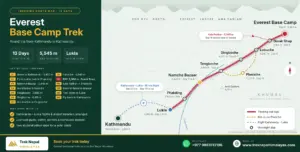
- Route: Lukla, Phakding, Namche Bazaar, Tengboche, Dingboche, Lobuche, Gorakshep, Everest Base Camp and Kala Patthar, returning via Pheriche and Namche.
- Duration: 13 days on our standard itinerary, starting and ending in Kathmandu.
- Highest points: Everest Base Camp at 5,364 m and the Kala Patthar viewpoint at about 5,545 m.
- Yoga style: Gentle, Hatha-based stretching, restorative poses, pranayama (breathing practices), meditation and Yoga Nidra, adapted to altitude and to the group.
- Instructor: A certified yoga instructor travels with the group, alongside our licensed trekking guides.
- Experience needed: Beginners are welcome, and experienced practitioners can deepen their practice.
- Group size: Small groups of up to 10 people, with private departures available on request.
- Best seasons: Spring (March to May) and autumn (late September to November).
- Accommodation: Teahouses on a twin-sharing basis, with simpler facilities higher up.
- Meals: Full board on the trek, with plenty of vegetarian choices.
- Difficulty: Moderate to challenging. The walking is the same as on the classic trek; the yoga is gentle and always optional.
What Is an Everest Base Camp Yoga Trek?
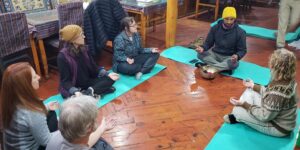
An Everest Base Camp Yoga Trek is a guided trek to the foot of Everest with a daily programme of yoga, breathwork and meditation built into the itinerary. It is not a resort retreat with a heated studio. Instead, the Himalaya becomes the studio: a lawn in Phakding, a sunny terrace in Namche, a warm teahouse dining room in Dingboche, a quiet rock above the Khumbu Glacier.
The walking is the same as on the classic route: the same suspension bridges, the same climb to Namche Bazaar, the same acclimatisation days and the same thin air above 5,000 m. What changes is the rhythm. Each day begins or ends with practice designed to prepare your body for the trail, help your muscles recover, deepen your breathing and quiet your mind. Instead of treating the trek as a race to base camp, you learn to treat every step as part of the practice. For the full route, distances and walking times, see our Everest Base Camp Trek itinerary and our guide to the Everest Base Camp Trek distance.
Who Is the Yoga Trek For?
- Yoga lovers who want to take their practice to one of the most inspiring places on Earth.
- First-time trekkers who would like extra support for body and mind on a big journey. Our guide to the Everest Base Camp Trek for beginners is a great place to start.
- Mindful travellers looking for calm, reflection and a break from screens and schedules.
- Friends, couples and wellness groups who want to share a meaningful adventure.
- Anyone curious about meditation who would like to try it in an extraordinary setting.
Why Combine Yoga and Trekking in the Himalayas?
Trekking and yoga fit together naturally. Long days on the trail tighten hips, hamstrings and calves, while yoga lengthens and releases them. The trail demands steady breathing in thin air, and pranayama teaches you to breathe deeply and calmly. And the mountains, with their scale and silence, invite exactly the kind of present-moment awareness that meditation cultivates.
Better Recovery for Tired Legs
Gentle stretching after a day’s walk can ease stiffness and help you feel fresher the next morning. Our evening sessions focus on the areas trekkers work hardest: calves, hamstrings, quadriceps, hips and lower back, plus the shoulders that carry your daypack. Many trekkers find they also sleep better after a slow, restorative practice, which matters at altitude, where sleep is often lighter than at home.
Breath and Altitude: What the Research Suggests
Breathing practice is one of the most useful tools you can carry to altitude. In a study of healthy lowlanders at high altitude, including a group that had spent about two weeks at 5,400 m, 15 minutes of slow, deep breathing at roughly six breaths per minute noticeably raised blood oxygen saturation and lowered blood pressure in the lungs and body during practice. Another small study of novice trekkers in the Annapurna region who practised yoga and pranayama daily concluded that the practices were safe at altitude and helped keep blood pressure steadier.
These effects are real but modest, and they last mainly while you are breathing slowly. Breathing practice supports acclimatisation; it does not replace it. Gradual ascent, rest days, good hydration and listening to your body remain the foundations of safety, as our guide to altitude sickness on the Everest Base Camp Trek explains.
A Calmer Mind on a Big Journey
High-altitude trekking can be mentally demanding: early starts, cold nights, unfamiliar food, uncertain mountain flights, and the strangeness of breathing thin air. Meditation helps you meet these challenges with patience rather than frustration. Trekkers often tell us that the clarity they found on the trail stayed with them long after they returned home.
Connection With People and Place
Moving slowly and mindfully makes you more aware of your surroundings: the flutter of prayer flags in the wind, the smell of juniper smoke from a teahouse stove, the smile of a Sherpa grandmother turning a prayer wheel. Yoga deepens your connection to your group and the culture you are travelling through.
The Spiritual Roots of the Khumbu
Few places on Earth are better suited to a mindful journey than the Khumbu. In Sherpa tradition, the region is regarded as a beyul, a sacred hidden valley blessed by Guru Rinpoche, the great teacher who helped bring Buddhism to the Himalaya. Learn more about him in our article on Guru Padmasambhava and the meditation caves associated with him in Nepal.
Most Sherpa people follow the Nyingma school of Tibetan Buddhism. Theirr faith is visible at every step: mani stones carved with Om Mani Padme Hum, the mantra of Chenrezig, the bodhisattva of compassion, of whom the Dalai Lama is regarded as an emanation; whitewashed chortens; prayer wheels turned by streams; and long strings of prayer flags in five colours representing the elements. Our guide to Sherpa culture and traditions explores this living heritage in depth; our article on the chorten in Tibetan Buddhism explains the meaning of the stupas you pass; and our overview of Buddhism in Tibet traces the roots of these traditions.
The Himalaya also has a long yogic tradition. The great Tibetan poet and yogi Milarepa meditated for years in mountain caves, and his songs still inspire practitioners today; read our story of Milarepa, the cotton-clad yogi. In Hindu tradition, Lord Shiva, revered as the first yogi, is said to dwell in the high Himalaya, and sacred sites such as the Pashupatinath temple in Kathmandu and the holy lakes of Gosaikunda draw pilgrims and wandering sadhus from across South Asia. Practising yoga in the Khumbu connects you with a long lineage of seekers who came to the mountains to find stillness.
A Typical Day on the Everest Base Camp Yoga Trek
Every day is different, shaped by the altitude, the weather and how the group feels, but most follow a gentle rhythm:
- Wake up and have a warm drink: Mornings in the mountains are cold, so the day starts with hot tea or ginger, lemon, and honey in the dining room.
- Morning practice: On many days, a short session of gentle mobility, sun salutations adapted for altitude and calming breathwork wakes up the body. On long trekking days, this may be just a few minutes of stretching and breathing.
- Breakfast: Porridge, eggs, Tibetan bread or pancakes to fuel the walk.
- Mindful trekking: Usually four to seven hours of walking, a little more on the big days to base camp, at a slow, steady pace, with breaks for tea, photos, and lunch. Your guide may invite the group to walk short sections in silence.
- Arrival and rest: Hot drinks, a wash and time to rest, read or journal.
- Evening practice: Restorative yoga, deep stretching, breathwork or guided meditation before dinner, on a sunny lawn at lower altitudes or in a warm dining room higher up.
- Dinner and relaxation: A hearty meal, a daily health check with your guide and, on some nights, a short guided relaxation to help you sleep.
The yoga is always optional. If you are tired, you can rest, join only the breathing, or sit quietly in meditation. Listening to your body is part of the practice.
The Route and the Practice, Day by Day
Here is how yoga and meditation fit into the trail on the standard itinerary of our Everest Base Camp Yoga Trek. Sessions adapt to the weather, the altitude and the group’s energy, so treat this as a guide rather than a fixed timetable.
Day 1: Fly to Lukla and Trek to Phakding (about 2,610 m)
The adventure begins with a spectacular mountain flight to Lukla, which, during busy seasons, usually departs from Manthali in Ramechhap after an early drive arranged by our Ramechhap airport transportation team. From Lukla, a short, mostly downhill walk along the Dudh Koshi River brings you to Phakding. A gentle evening session releases travel tension and focuses on the neck, shoulders, and hips.
Day 2: Trek to Namche Bazaar (about 3,440 m)
You cross a series of suspension bridges, enter Sagarmatha National Park at Monjo and cross the high Hillary Suspension Bridge before the long climb to Namche Bazaar, the bustling Sherpa capital. This is the first real lesson in mindful pacing: “bistarai, bistarai”, as the Sherpas say, meaning slowly, slowly. In the evening, a restorative session soothes legs after hours of climbing.
Day 3: Acclimatisation Day in Namche
A morning flow with chest-opening poses and pranayama, practised with views of Thamserku and Kongde, prepares you for an acclimatisation hike to the Hotel Everest View at about 3,880 m, where you may see Everest, Lhotse and Ama Dablam for the first time. Many groups return via the peaceful villages of Khumjung and Khunde. The day ends with a guided meditation in Namche.
Day 4: Trek to Tengboche (about 3,860 m)
The trail contours high above the river before dropping to Phunki Thenga and climbing through rhododendron and juniper forest to Tengboche. Its famous monastery, described in our guide to Tengboche Monastery and the Mani Rimdu festival, is the largest in the Khumbu. When timing allows, you can sit quietly during the monks’ afternoon prayers. A grounding session near the monastery, facing the elegant summit of Ama Dablam, is a highlight of the whole trek.
Day 5: Trek to Dingboche (about 4,410 m)
The trail passes through Pangboche, home to one of the region’s oldest monasteries, before entering the wide Imja valley and the stone-walled fields of Dingboche. At this altitude, the evening practice moves indoors and focuses on warmth, gentle stretching and calm breathing.
Day 6: Acclimatisation Day in Dingboche
A morning hike up the ridge of Nangkartshang, to around 5,000 m, reveals Makalu, Lhots, and the snowy pyramid of Island Peak, the summit we climbed on our Island Peak Climbing expedition. You return to Dingboche to sleep lower, following the climb-high, sleep-low principle. In the afternoon, a guided meditation or Yoga Nidra session lets your body rest deeply while it adapts to the altitude.
Day 7: Trek to Lobuche (about 4,910 m)
After a gentle walk across the high pastures, the trail climbs steeply to Thukla Pass, where stone memorials honour climbers who lost their lives on Everest. Many trekkers pause here in silence and gratitude. The trail then continues to Lobuche. At this altitude, rest comes first, so practice is limited to a brief, gentle breathing session.
Day 8: Gorakshep and Everest Base Camp (5,364 m)
Following the edge of the Khumbu Glacier, you reach Gorakshep at about 5,164 m and continue to Everest Base Camp, beside the tumbling seracs of the Khumbu Icefall. Here, instead of a full class, the group shares a short standing meditation: a few minutes of stillness, breath and gratitude at the foot of the world’s highest mountain. For many, it is the most powerful moment of the journey.
Day 9: Kala Patthar Sunrise and Descent to Pheriche
Before dawn, you climb Kala Patthar to about 5,545 m for the classic close-up view of Everest as the first light spreads across the Himalaya. You then descend to Pheriche, where the thicker air feels wonderful, and celebrate with a gratitude flow in the afternoon.
Days 10 to 12: Down Through Namche and Phakding to Lukla
The descent to Namche is long, so the evening session focuses on hip openers and hamstring stretches for legs that have worked hard downhill. Over the next two days, you walk gently down to Phakding and Lukla, where a final yoga circle and a celebration with your guides and porters close the journey.
Day 13: Fly Back to Kathmandu
An early flight returns you to Kathmandu, or to Manthali, followed by a drive during busy seasons. We recommend keeping one or two buffer days in Kathmandu in case weather delays the flight.
Yoga Styles and Practices on the Trail
The yoga on an Everest Base Camp Yoga Trek is designed for trekkers, not acrobats. It is gentle, practical, and adapted to the altitude, cold, and space available. Here are the main elements you can expect.
Gentle Hatha Flow
Slow, mindful movement linked with the breath forms the foundation of most morning sessions. Simple standing poses, modified sun salutations, and gentle twists wake up the spine, warm the muscles, and improve balance on uneven trails.
Restorative and Deep Stretching
Evening sessions use long, supported holds to release the hips, hamstrings and calves. Folded jackets and sleeping bags make excellent props in a teahouse dining room.
Pranayama: Breathing Practices for the Mountains
Breathing practices are adapted carefully for altitude. Common techniques include slow diaphragmatic breathing, breathing with a long, gentle exhale, alternate-nostril breathing (Nadi Shodhana) practised without long breath-holds, and humming-bee breath (Bhramari), which many trekkers find calming before sleep.
Meditation and Yoga Nidra
Meditation may include breath awareness, a body scan, loving-kindness practice or silently repeating a mantra in rhythm with your steps. Yoga Nidra, a guided relaxation practised lying down, is especially welcome on rest days and after long walks.
Helpful Poses for Trekkers
- Cat-cow: Mobilises the spine after a night in a sleeping bag.
- Downward-facing dog with bent knees: Lengthens the calves and hamstrings gently.
- Low lunge: Opens the hip flexors that work hard on every uphill.
- Reclined figure-four: Releases the outer hips and glutes.
- Seated forward fold: Calms the mind and stretches the back of the legs.
- Supine twist: Relieves the lower back after a day with a daypack.
- Calf and ankle stretches: Against a wall or rock, perfect before a long descent.
- Child’s pose: A restful pause that quiets the breath.
Practising Yoga Safely at High Altitude
Altitude changes everything, including yoga. Our instructors adapt the practice as you climb, and our guides check every trekker’s health daily, including oxygen saturation with a pulse oximeter. These are the principles we follow:
- Gentle effort only: Above about 3,500 m, practice becomes softer and slower, with no vigorous flows or strength challenges.
- Keep breath-holds short, or skip them: Long breath retention lowers oxygen levels further in thin air. Higher up, we favour slow, smooth breathing with a long exhale.
- Treat forceful breathing with care: Rapid techniques such as Kapalabhati can cause dizziness or tingling at altitude. Practise them only when your instructor suggests it, and stop if you feel light-headed.
- No headstands or shoulder stands: We leave out full inversions at altitude, and anyone with a headache should avoid poses that bring the head below the heart.
- Stay warm: Cold muscles strain more easily, so practise in layers and warm up gradually.
- Mind your meals: Wait an hour or so after a big meal before practising, but do not practise hungry.
- Hydrate: Drink regularly throughout the day.
- Never use yoga to mask symptoms: If you have a worsening headache, nausea, dizziness, unusual fatigue or breathlessness at rest, tell your guide straight away. The only reliable cure for worsening altitude sickness is descent.
Read our Acute Mountain Sickness page to learn the warning signs. Talk to your doctor before the trip if you have heart, lung or blood-pressure conditions, are pregnant or have recent injuries, and ask about acclimatisation medication such as acetazolamide if you are considering it. Make sure your travel insurance covers trekking at altitude and helicopter evacuation.
Mindful Trekking: Bringing Yoga Onto the Trail
The deepest practice happens between the sessions, on the trail itself. Here are some simple ways to turn every hour of walking into meditation:
- Walk at the pace of your breath: On steep sections, match your steps to your breathing, for example, two steps as you breathe in and two as you breathe out. Slow is safe, and slow is beautiful.
- Try walking meditation: Feel each foot touch the ground, notice the weight shift and let thoughts pass like clouds.
- Walk in silence: Short silent stretches, perhaps through the forests below Tengboche, reveal sounds you would otherwise miss: birdsong, rushing water, distant yak bells.
- Use all your senses: Notice the scent of juniper, the warmth of the sun on your face and the crunch of frost underfoot.
- Pause for gratitude: At each viewpoint, take three slow breaths before reaching for your camera.
- Take a digital break: Many teahouses have Wi-Fi, but switching off for a few days is a gift to yourself.
- Keep a journal: Write a few lines each evening about what you noticed and felt.
- Circle clockwise: Walk to the left of mani walls and chortens and turn prayer wheels clockwise, as Sherpas do. This simple custom becomes a moving meditation.
Monasteries and Meditation in the Everest Region
The monasteries of the Khumbu are the spiritual heart of the Everest Base Camp Yoga Trek. Visiting them quietly, with an open heart, adds a depth that no studio can offer.
Tengboche Monastery
Set on a forested ridge with Everest, Lhotse and Ama Dablam on the horizon, Tengboche is the largest monastery in the Khumbu and the setting of the colourful Mani Rimdu festival, usually held in October or November. Sitting quietly at the back of the prayer hall as the monks chant is one of the trek’s most memorable experiences.
Pangboche Monastery
Above the village of Pangboche stands one of the Everest region’s oldest monasteries, a quiet place of juniper trees and ancient prayer halls. Our guide tells the story of Pangboche Monastery and village.
Namche, Khumjung and the Village Gompas
Smaller gompas in Namche, Khumjung and other villages welcome respectful visitors. The Khumjung monastery is known for its curious relic said to be a yeti scalp, and every village has its own chortens, mani walls and prayer wheels.
Monastery Etiquette
- Remove your hat and your shoes where asked before entering a prayer hall.
- Walk clockwise around monasteries, chortens and mani walls, inside and out.
- Sit quietly and avoid pointing your feet towards the altar or the monks.
- Ask before taking photos; many monasteries do not allow photography inside, especially during prayers.
- Dress modestly, covering your shoulders and knees.
- Make an offering in the donation box if you wish; it helps maintain the monastery.
- Never sit on mani walls or touch religious objects.
Where You Practise: Lawns, Terraces and Teahouse Dining Rooms
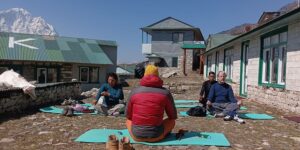
Part of the magic of a yoga trek is the variety of places you practise. In lower villages such as Phakding and Namche, sessions often take place on teahouse lawns, gardens, or sunny terraces with mountain views. Higher up, in Dingboche, Lobuche and Gorakshep, it is usually too cold for evening outdoor practice, so the teahouse dining room is cleared before dinner and becomes a warm, cosy studio around the stove.
On clear, sunny mornings, your instructor may lead a short practice outdoors, perhaps beside a chorten or on a quiet ridge. Be prepared for frost on the grass, uneven ground and the occasional curious yak. Lodge owners are generous hosts, so we always practise in ways that respect their space, other guests, and mealtimes.
Food, Hydration and Nourishment
Good food is part of good practice. Teahouse menus are surprisingly varied, and vegetarian food is the healthiest and safest choice at altitude. Here is what to expect:
- Dal bhat: Lentil soup, rice, vegetable curry and pickles, usually with free refills. It is the trekker’s best fuel.
- Garlic soup: A teahouse favourite that many trekkers enjoy at altitude.
- Porridge, muesli and Tibetan bread: Warming breakfasts for cold mornings.
- Ginger, lemon and honey tea: Soothing for throats dried by cold, thin air.
- Fresh vegetables and fruit: More available lower down; fruit becomes a treat higher up.
We recommend avoiding meat above Namche, as it is carried up without refrigeration, and avoiding alcohol at altitude. Vegan options exist but become more limited higher up, so let us know about any dietary needs in advance. Drink plenty of water throughout the day, using purification tablets, filters or boiled water rather than buying plastic bottles.
Best Time for an Everest Base Camp Yoga Trek
The best time for an Everest Base Camp Yoga Trek is during the two main trekking seasons, when skies are clearest and conditions are most stable. Our guide to the best time for Everest Base Camp Trek covers every month in detail.
Spring (March to May)
Spring is often the favourite season for yoga treks because the days are slightly warmer, making outdoor practice more comfortable. Rhododendron forests bloom in red, pink, and white, and Everest climbers’ expedition tents fill base camp. Afternoons can be cloudier than in autumn.
Autumn (Late September to November)
Autumn brings crystal-clear skies, stable weather and superb mountain views, along with the Mani Rimdu festival at Tengboche. Mornings and evenings are cold, so expect more indoor practice higher up. October is the busiest month; read our guide to the Everest Base Camp Trek in October.
Winter and the Monsoon
Winter (December to February) is quiet and often clear but bitterly cold, making practice at the higher villages challenging. The monsoon (June to August) brings rain, cloud, and frequent flight delays, so we don’t recommend it for a yoga trek.
Fitness and Preparation
You don’t need yoga experience for the Everest Base Camp Yoga Trek, but you do need good trekking fitness. The walking days are the same as on the classic trek, and yoga doesn’t make the trail easier on its own; it helps you recover and stay balanced. Read our honest look at Everest Base Camp Trek difficulty and follow our 12-week training plan to prepare with hiking, stair climbing, strength work and cardio.
If you are new to yoga, try a few beginner classes before you travel, and practise simple poses like cat-cow, low lunge, and forward folds at home. Learn a basic slow-breathing technique and practise it for a few minutes each day. Experienced yogis should be ready to soften their practice; at altitude, less is more. Check entry requirements in our Nepal visa guide, and read our trekking in Nepal guide for wider planning advice.
What to Pack for a Yoga Trek
Packing for a yoga trek is mostly the same as for any Everest trek, with a few extras for your practice. Remember that Lukla flights have strict baggage limits, usually around 10 kg checked and around 5 kg hand luggage, as explained in our Lukla Airport guide.
- Lightweight travel yoga mat: A thin, foldable mat is ideal. Mats are not included, so please bring your own.
- Yoga strap: Light, useful for stretches, and handy for strapping gear to your pack.
- Warm practice layers: Thermal leggings, a fleece, wool socks and a beanie for cold dining rooms.
- Down jacket: Essential for meditation, when the body cools quickly.
- Light scarf or shawl: Comfortable for meditation and useful on cold flights.
- Headlamp: For pre-dawn starts and dark teahouse corridors.
- Insulated water bottle: Fill it with hot water; it doubles as a hand warmer.
- Journal and pen: To capture reflections each evening.
- Eye mask and earplugs: For better sleep in thin-walled lodges.
For the complete list, see our Everest Base Camp Trek packing list and our trekking equipment page.
Getting There: Lukla Flights and Buffer Days
Almost every Everest Base Camp Yoga Trek begins with the short, thrilling flight to Lukla. During the busy spring and autumn seasons, flights usually depart from Manthali Airport in Ramechhap, a several-hour drive from Kathmandu that often starts in the middle of the night. Flights operate only in clear weather, so delays are common. We always recommend one or two buffer days at the end of your trip to protect your international flight home.
If you would rather avoid the flight at the start, the Everest Base Camp Trek by Road begins with a jeep drive into the Solukhumbu, and the historic Jiri to Everest Trek follows the slow, beautiful walk-in route described in our Jiri to Everest Base Camp trek guide. Both offer even more time for gradual, mindful acclimatisation.
Luxury, Private and Helicopter Options
A yoga trek can be as comfortable as you wish. Private departures let you choose your dates, pace, and focus, ideal for couples, families, and wellness groups. For added comfort, our Everest Base Camp Luxury Lodge Trek uses the best available lodges, with warm rooms and en-suite bathrooms in the lower villages.
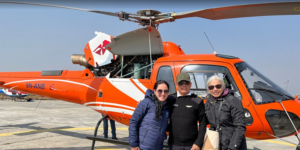
Helicopters can also shorten the journey. The Luxury Everest Base Camp Trek with Helicopter Return lets you walk to base camp and fly back to Kathmandu. At the same time,t he Everest Base Camp Helicopter Trek and the Everest Elite Luxury Heli Trek combine walking with helicopter transfers. Friends or family who cannot trek can still share the view on the Everest Helicopter Tour, the Mt Everest by Helicopter Tour, the Sharing Everest Helicopter Tour with Kala Patthar Landing or the Everest Heli Sherpa Village Walk. Our guide to the Everest Base Camp helicopter tour explains how these flights work.
Other Everest Treks for Mindful Travellers
If you love the idea of mindful trekking but want a different route or length, the Everest region offers several beautiful alternatives:
- Everest View Trek: A shorter, lower trek to Namche, Khumjung and Tengboche, perfect for a gentle yoga journey with less altitude.
- Gokyo Lakes Trek: A quieter valley of turquoise lakes, ideal for reflection. Compare its famous viewpoint in our guide to Gokyo Ri vs Kala Patthar.
- Everest 3 Pass Trek: A challenging circuit for experienced trekkers, crossing passes such as the Cho La Pass.
- Ama Dablam Base Camp Trekking: A quieter route to the foot of one of the world’s most beautiful peaks.
- Everest Base Camp Trek: The classic route, which you can enjoy on your own if you prefer to travel without an instructor.
Extend Your Journey: Sacred Places for Yoga and Meditation
Nepal and its Himalayan neighbours are full of places that nourish a mindful traveller. Consider adding one of these to your Everest Base Camp Yoga Trek, or browse our list of the top 50 treks in Nepal for more inspiration.
Kathmandu Valley
Before or after the trek, walk around the great stupa of Boudhanath with pilgrims at dusk, climb the steps to Swayambhunath, and watch evening rituals by the river at Pashupatinath. Our Kathmandu Day Tour and Kathmandu sightseeing guide cover the highlights, and the Classic Nepal Tour adds more heritage sites. For sunrise meditation over the Himalaya, try Nagarkot Hiking, the Chisapani Nagarkot Trek or Nagarjun Hiking in the forested hills above the city.
Pokhara and the Annapurna Foothills
Lakeside Pokhara is one of Nepal’s favourite places for yoga and relaxation; read our Pokhara sightseeing guide. Nearby, the Dhampus Sarangkot Trek and the Australian Camp Trek offer gentle walks with sunrise views, while the Ghorepani Poon Hill Trek, the Mardi Himal Trek, the Muldai View Trek, the Khopra Ridge Trek and the Annapurna Base Camp Trek take you deeper into the mountains. Our ultimate guide to the Annapurna Base Camp Trek is a good place to start, and a Chitwan Jungle Safari makes a relaxing contrast to the mountains.
Langtang and Gosaikunda
Close to Kathmandu, the Langtang Valley Trek leads to the monastery of Kyanjin Gompa, while the Langtang Gosaikunda Trek visits the sacred lakes revered by Hindu and Buddhist pilgrims. The Tamang Heritage Trekking and Langtang Helambu Trek routes add village culture. Read our Langtang Valley Trek details and our article on Langtang trek guide rules.
Sacred Valleys of the Far Himalaya
The Tsum Valley and Ganesh Himal Trek explores a hidden Buddhist valley with a cave where Milarepa is said to have meditated. The Manaslu Circuit Trek passes peaceful monasteries, including Pungyen Gompa. The Upper Mustang Trek reveals ancient cave monasteries and the Tiji Festival, as described in our guide to trekking in Upper Mustang, and the Jomsom Muktinath Trek, the Annapurna Circuit Trek or the Muktinath Yatra by Helicopter reach a temple sacred to both Hindus and Buddhists.
Tibet, Kailash and Bhutan
For a true pilgrimage, the Mount Kailash Tour and the Kailash Overland Tour circle a mountain sacred to Hindus, Buddhists, Jains, and followers of Bon, as described in our guides to the Kailash Kora, the high Dolma La Pass, and Mansarovar Lake. The Lhasa Tibet Tour explores Tibet’s great monasteries. In Bhutan, the 7 Day Bhutan Tour, the Luxury Nepal Bhutan Tour and the Luxury Bhutan Tour take you to Paro, home of the cliffside Tiger’s Nest Monastery, where Guru Rinpoche is said to have meditated. Time your visit with one of the colourful Bhutan festivals for an unforgettable experience.
Responsible and Mindful Travel in the Khumbu
Yoga’s first ethical principle, ahimsa, means non-harm, and it applies to how we travel as much as to how we practise. The Khumbu is a fragile mountain environment and a living homeland, so we ask every trekker to tread lightly:
- Refill, don’t buy: Use purification tablets, a filter or boiled water instead of plastic bottles.
- Carry out what you carry in: Take batteries and non-burnable waste back to Kathmandu.
- Respect wildlife: Watch Himalayan tahr, musk deer and the colourful Himalayan monal, Nepal’s national bird, from a distance.
- Support local people: Buy snacks, crafts and services from local businesses.
- Care for your crew: Pack light so that porter loads stay safe, and thank the people who make your trek possible.
Read how we care for our guides, porters, and the environment on our responsible tourism page, and learn about the protected landscapes of the Everest region in our Sagarmatha National Park guide.
Common Mistakes on a Yoga Trek
- Treating yoga as a cure for altitude sickness: It helps you relax and breathe well, but it is no substitute for acclimatisation or descent.
- Stretching cold muscles: Always warm up first, especially on frosty mornings.
- Overdoing the breathwork: Gentle, slow breathing is best at altitude.
- Pushing for flexibility: Long trekking days leave muscles tired; ease into every stretch.
- Comparing yourself with others: Every body adapts differently to altitude.
- Forgetting warm practice clothes: Dining rooms can be cold until the stove is lit.
- Practising straight after a big meal: Give your body time to digest.
- Rushing the trail: A slow, mindful pace is safer and more rewarding.
- Skipping buffer days: Flight delays are common, so leave time before your flight home.
Frequently Asked Questions About the Everest Base Camp Yoga Trek
Do I need yoga experience to join the Everest Base Camp Yoga Trek?
No. The sessions are gentle and adapted to all levels, so beginners are welcome. Experienced practitioners can deepen their breath and meditation practice.
Is the yoga trek harder than the regular Everest Base Camp Trek?
No. The trail, altitude and walking days are the same as on the classic trek. The yoga sessions are gentle and optional, and many trekkers find that daily stretching and breathwork help them feel better on the trail.
How often is yoga practised on the trek?
Some practice happens every day, usually in the morning or evening at lower altitudes. Higher up, sessions become shorter and gentler, sometimes just breathing or meditation.
Can yoga prevent altitude sickness?
Yoga and slow breathing can help you relax, sleep better and breathe more efficiently, but they cannot prevent altitude sickness. Gradual ascent, rest days, hydration and descent if symptoms worsen remain essential.
Where do you practise yoga at high altitude?
In the lower villages, sessions usually take place on teahouse lawns and terraces. Higher up, we clear the dining room before dinner and turn it into a warm indoor studio.
Do I need to bring my own yoga mat?
Yes. Mats aren’t included, so please bring a lightweight, foldable travel mat that fits in your duffel or daypack.
What is the best season for the yoga trek?
Spring and autumn. Spring is slightly warmer for practice, while autumn offers clearer skies and the Mani Rimdu festival at Tengboche.
Is vegetarian or vegan food available?
Vegetarian food is widely available and recommended at altitude. Vegan options exist but are more limited at higher elevations, so let us know your dietary needs in advance.
Can I join as a solo traveller or book a private yoga trek?
Yes. Solo travellers can join a small group on our Everest Base Camp Yoga Trek, and we also offer private departures for individuals, couples, families, and wellness groups.
Will we visit monasteries on the yoga trek?
Yes. The highlight is Tengboche Monastery, where you may be able to sit quietly during the monks’ prayers; you’ll also pass the ancient monastery at Pangboche and many village gompas.
Final Thoughts: Find Your Stillness at the Foot of Everest
The Everest Base Camp Yoga Trek is more than a trek with stretching. It is a journey inward as well as upward: a chance to breathe deeply in the thin, clear air, to move with awareness through one of the most sacred landscapes on Earth, and to stand at the foot of Everest with a quiet mind and a grateful heart. You come home with photographs, of course, but also with a calmer way of moving through the world.
Join our Everest Base Camp Yoga Trek, and let our certified yoga instructors and experienced Sherpa guides handle every detail. For extra comfort, pair your practice with the Everest Base Camp Luxury Lodge Trek. Meet the people behind our journeys on our team page, learn more about our company, and then plan your trip or contact us today. The mountains are waiting, and so is the stillness within.
Quick Inquiry
Explore More


