Everest Three Passes Trek: Complete Route Guide
Everest Three Passes Trek: Complete Route Guide
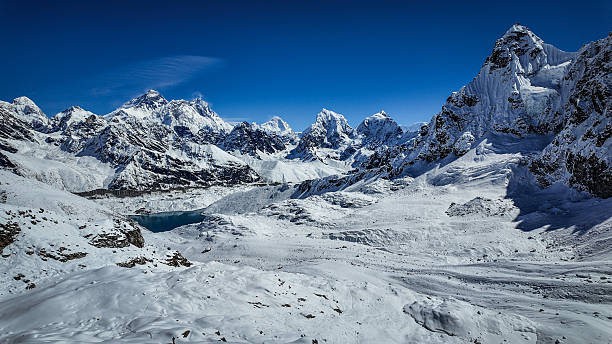
At the top of the first pass, you lean on your trekking poles and look back. Far below lies the Imja Valley you left before dawn, with Island Peak rising from its glacier and Makalu glowing on the horizon. Ahead, the trail drops towards the Khumbu Glacier, Everest Base Camp and the next great challenge. Two more passes, a sacred lake valley and a hidden Sherpa homeland still wait. This is the start of the Everest region’s greatest trek.
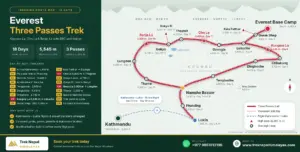
The Everest Three Passes Trek is a high-altitude Khumbu circuit that crosses three spectacular passes above 5,300 m: Kongma La, Cho La, and Renjo La. Along the way, it visits Everest Base Camp, the sunrise viewpoint of Kala Patthar, the turquoise Gokyo Lakes, the summit of Gokyo Ri and the quiet Thame Valley. It is the most complete way to experience the Everest region, and one of the finest treks on Earth for fit, experienced trekkers.
In this route guide, our team explains everything you need to know about our 21-day Everest 3 Pass Trek: the three passes in detail, which direction to walk, the itinerary day by day, difficulty, acclimatisation, the best seasons, gear, lodges, safety, permits and how to prepare for the adventure of a lifetime.
Everest Three Passes Trek at a Glance
- Region: Khumbu (Everest region), inside Sagarmatha National Park.
- Duration: 21 days from Kathmandu on our standard itinerary.
- The three passes: Kongma La (about 5,535 m), Cho La (about 5,420 m) and Renjo La (about 5,360 m).
- Highest points: Kala Patthar at about 5,545 m and Chhukung Ri at about 5,550 m.
- Also visits: Everest Base Camp (5,364 m), Gokyo Ri (about 5,357 m), the Gokyo Lakes, Chhukung and Thame.
- Start and finish: Lukla, reached by a short mountain flight.
- Difficulty: Strenuous; the most demanding teahouse trek in the Everest region.
- Walking time: Usually four to six hours a day, and seven to nine hours or more on pass days.
- Best seasons: Autumn (late September to November) and spring (March to May).
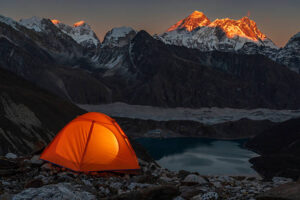
- Accommodation: Teahouses, simple at the highest settlements.
- Permits: Sagarmatha National Park entry permit and Khumbu Pasang Lhamu Rural Municipality permit.
The Three Passes Explained
Each of the three passes has its own character, challenges and rewards. Together they link the four great valleys of the Khumbu: the Imja, the Khumbu, the Gokyo and the Bhote Koshi.
Kongma La (About 5,535 m): The Highest and Hardest
Kongma La is the highest and easternmost of the three passes, linking Chhukung in the Imja valley with Lobuche on the Khumbu Glacier. The climb from Chhukung is long and steep, with loose rock and a final scramble to the prayer flags on the summit, beside a string of small frozen lakes. The views are magnificent: Makalu, Island Peak, Lhotse and the Imja valley behind you, and the Khumbu Glacier and Pumori ahead. The descent is steep and rocky, followed by a tiring crossing of the rubble-covered Khumbu Glacier to reach Lobuche. Many trekkers consider it the most strenuous day of the trek, usually taking eight to nine hours or more, with no teahouses or water sources along the way.
Cho La (About 5,420 m): The Most Technical
Cho La is the middle pass and the most frequently crossed, linking Dzongla on the Everest Base Camp side with Thangnak near Gokyo. Its eastern approach climbs a rocky chute to a small glacier draped across the summit, often icy and requiring microspikes. The western descent is steep and rocky before easing toward Thangnak, then crossing the Ngozumpa Glacier to Gokyo. Our detailed Cho La Pass guide explains every section of the crossing.
Renjo La (About 5,360 m): The Most Scenic
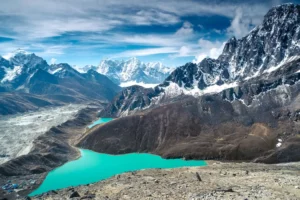
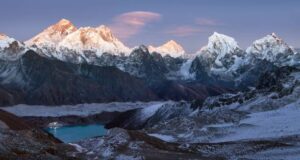
Renjo La is the westernmost pass, linking Gokyo with the remote Thame valley. From Gokyo, a long, steady climb on a well-built stone staircase leads to one of the finest views in the Himalaya: the Gokyo Lakes, the Ngozumpa Glacier, Cho Oyu and Everest in a single breathtaking panorama. The descent on the far side to Lungden can be icy and slippery, so take care. Many trekkers say Renjo La is the most beautiful of the three, and the perfect finale to the circuit.
Which Direction Should You Walk?
You can walk theEverest Three Passes Trek in either direction, but the order of the passes matters for acclimatisation.
- Kongma La first (our route): You climb gradually up the classic trail to Namche, Tengboche, Dingboche and Chhukung, acclimatising on the way, then cross Kongma La, visit Everest Base Camp and Kala Patthar, cross Cho La to Gokyo and finish over Renjo La to Thame. By the time you reach each pass, you are well adapted to the altitude, and the most scenic pass comes last.
- Renjo La first: Going from Namche to Thame and over Renjo La first means tackling a high pass early, with a big altitude gain before your body has fully adapted. It is possible with extra acclimatisation days, but it is less forgiving.
Our itinerary follows the Kongma La first approach, which we believe offers the best balance of safety, acclimatisation, and scenery.
Our 21-Day Everest 3 Pass Trek Itinerary
Here is how the journey unfolds on our Everest 3 Pass Trek. Walking times are approximate and depend on your pace, the weather and conditions on the passes.
Days 1 and 2: Arrive in Kathmandu and Prepare
Our team meets you at the airport and transfers you to your hotel. The next day includesday includes a briefing with your guide, a final gear check, and sightseeing in the capital. Explore the great stupas and temples on our Kathmandu Day Tour, or read our Kathmandu sightseeing guide.
Day 3: Fly to Lukla and Trek to Phakding (about 2,610 m)
Fly to Lukla, usually from Manthali in Ramechhap during busy seasons, after an overnight drive arranged by our Ramechhap airport transportation team, then take an easy walk to Phakding.
Day 4: Trek to Namche Bazaar (about 3,440 m)
Cross the Dudh Koshi suspension bridges, enter Sagarmatha National Park at Monjo, and climb steadily to Namche Bazaar, the Sherpa capital.
Day 5: Acclimatisation Day in Namche
Hike up to Hotel Everest View for your first view of Everest, perhaps visit Khumjung, then return to Namche to sleep.
Day 6: Trek to Tengboche (about 3,860 m)
Enjoy a beautiful walk with Ama Dablam ahead, down to the river, and up through rhododendron forest to Tengboche and its famous monastery, as described in our guide to Tengboche Monastery and the Mani Rimdu festival.
Day 7: Trek to Dingboche (about 4,410 m)
Pass through Pangboche, home to one of the Khumbu’s oldest monasteries, and climb into the Imja Valley to Dingboche.
Day 8: Acclimatisation Day in Dingboche
Climb the ridge of Nangkartshang above the village for views of Makalu, Lhotse and Island Peak, then return to Dingboche to sleep.
Day 9: Trek to Chhukung (about 4,730 m)
A short, beautiful walk up the Imja valley to Chhukung, a small settlement surrounded by glaciers beneath the south face of Lhotse and the summit of Island Peak.
Day 10: Chhukung Ri and Rest
An early climb of Chhukung Ri, at about 5,550 m, rewards you with one of the finest panoramas in the Khumbu and is perfect preparation for the first pass. Spend the afternoon resting and preparing your gear.
Day 11: Cross Kongma La to Lobuche (Kongma La about 5,535 m; Lobuche about 4,910 m)
The first and hardest pass. A pre-dawn start, a long climb to the summit, a steep descent and a crossing of the Khumbu Glacier bring you to Lobuche after seven to nine hours or more.
Day 12: Gorakshep and Everest Base Camp (5,364 m)
Follow the Khumbu Glacier to Gorakshep (about 5,164 m), then continue to Everest Base Camp beside the Khumbu Icefall, and return to Gorakshep for the night.
Day 13: Kala Patthar and Trek to Dzongla (about 4,830 m)
Climb Kala Patthar at sunrise for the classic view of Everest, then descend and walk past the lake of Chola Tsho to the quiet pastures of Dzongla, the base for the second pass.
Day 14: Cross Cho La to Gokyo (Cho La about 5,420 m; Gokyo about 4,790 m)
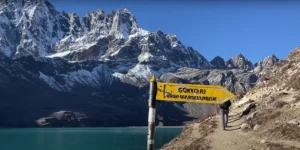
The second pass: a pre-dawn start, a rocky climb, a short glacier crossing at the top and a steep descent to Thangnak, followed by a crossing of the Ngozumpa Glacier to Gokyo, on the shore of the third lake. A long but unforgettable day.
Day 15: Gokyo Ri and the Lakes
Climb Gokyo Ri, at about 5,357 m, for a panorama of Everest, Lhotse, Makalu and Cho Oyu above the turquoise lakes, and explore the lakeshore. Our comparison of Gokyo Ri vs Kala Patthar and our Gokyo Lakes Trek guide describe the valley in detail.
Day 16: Cross Renjo La to Lungden (Renjo La about 5,360 m; Lungden about 4,380 m)
The third and most scenic pass. Climb the stone staircase above the lakes to the summit of Renjo La for a final, magnificent view back over Gokyo and Everest, then descend carefully to Lungden in the remote Bhote Koshi valley.
Day 17: Trek to Thame (about 3,800 m)
Walk down the valley through yak pastures and the settlement of Marlung to Thame, a historic Sherpa village and the childhood home of Tenzing Norgay.
Day 18: Trek to Namche Bazaar. Enjoy a
pleasant walk through forests and villages back to Namche, completing the great Khumbu circuit.
Day 19: Trek to Lukla
Your final day on the trail: head down the Dudh Koshi Valley to Lukla, where you celebrate with your guides and porters.
Days 20 and 21: Fly to Kathmandu and Depart
An early flight returns you to Kathmandu, or to Manthali followed by a drive, and the next day our team transfers you to the airport. We recommend adding one or two buffer days in case weather delays the flight from Lukla.
Pass Day Strategy: How to Cross Safely
The three pass days are the heart of the Everest Three Passes Trek, and they require careful planning.
- Start before dawn: Snow and ice are firmer in the cold early morning, rockfall is less likely, and you will have plenty of daylight to reach the next village.
- Carry everything you need: There are no teahouses or reliable water sources on the passes. Take at least two litres of water in insulated bottles, a packed lunch and energy-rich snacks.
- Dress in layers: It is freezing before sunrise and can be warm in the afternoon sun, while the summit is often windy.
- Use microspikes where needed: Especially on the Cho La glacier and the icy descent from Renjo La.
- Respect the turnaround time: If weather closes in or someone feels unwell, your guide may decide to turn back or wait a day. The pass will still be there tomorrow.
- Move steadily, not quickly: A slow, constant pace with short rests is far better than bursts of speed at this altitude.
How Difficult Is the Everest Three Passes Trek?
The Everest Three Passes Trek is graded strenuous and is widely considered the most demanding teahouse trek in the Everest region. It combines long days at high altitude, three passes above 5,300 m, steep, loose terrain, glacier crossings, and around three weeks of sustained effort. Pass days often last eight to nine hours, and the side climbs to Chhukung Ri, Kala Patthar and Gokyo Ri add further challenges.
You don’t need technical climbing skills, but you do need excellent fitness, good balance on rough ground, mental resilience, and, ideally, previous experience on multi-day high-altitude treks. Many trekkers complete the classic Everest Base Camp Trek or the Gokyo Lakes Trek first before returning for the three passes. Our honest look at Everest Base Camp Trek difficulty explains the challenges of high-altitude trekking in the Khumbu.
Altitude and Acclimatisation
You spend much of the trek above 4,500 m and cross three passes above 5,300 m, so careful acclimatisation is essential. Our itinerary builds it in with rest days in Namche and Dingboche, a night in Chhukung with a climb of Chhukung Ri before the first pass, and the gradual high-altitude climb/low-altitude sleep pattern that shapes the whole route. By the time you reach Kongma La, your body has had more than a week to adapt.
- Know the symptoms: Headache, nausea, dizziness, loss of appetite, unusual fatigue and poor sleep.
- Tell your guide early: Our guides check every trekker’s health daily, including oxygen levels.
- Descend if symptoms worsen: It is the most effective treatment.
- Stay hydrated and avoid alcohol: Both help your body adapt.
- Consult a doctor before the trip: Ask about acclimatisation medication if you are considering it.
Read our Acute Mountain Sickness page and our guide to altitude sickness on the Everest Base Camp Trek. Medical help is available at the aid post in Pheriche, and helicopter evacuation is possible in emergencies, so make sure your insurance covers trekking up to about 5,600 m and helicopter rescue.
Fitness and Training
Because of its length and difficulty, we recommend starting your preparation several months before the trek, ideally four to six months for most people. Build endurance with long hikes, ideally on hilly terrain with a loaded pack; stair climbing; cardio such as running, cycling, or swimming; and strength training for your legs and core. Practise walking on rough, uneven ground and, if possible, spend a few days at altitude before your trip.
Our 12-week training plan is a good foundation; for the three passes, extend it and add more long, back-to-back hiking days. First-time visitors to the Himalaya should also read our guide to the Everest Base Camp Trek for beginners and our wider trekking in Nepal guide.
Best Time for the Three Passes Trek
Season matters more on the Three Passes Trek than on almost any other trek in the region, because snow and ice can make the passes dangerous or impassable.
Autumn (Late September to November)
The best season, with clear skies, stable weather and the best chance of dry, snow-free passes. October is the busiest month; read our guide to the Everest Base Camp Trek in October.
Spring (March to May)
Also excellent, with warmer days and rhododendrons in the lower forests. Early spring can bring lingering snow on the passes, so late March to May is usually best.
Winter (December to February)
Heavy snow and extreme cold often close the passes, and many lodges at Dzongla, Thangnak and Lungden close for the season. We do not recommend the three passes in mid-winter.
Monsoon (June to August)
Cloud, rain and slippery trails, with views often hidden and flights to Lukla less reliable. Not recommended for the passes.
Our guide to the best time for Everest Base Camp Trek covers each month in detail.
Gear for the High Passes
Your gear must handle freezing pre-dawn starts, strong winds and icy ground. Key items include:
- Microspikes or crampons: Essential on the Cho La glacier and often useful on Renjo La and Kongma La. You can usually buy or rent them in Namche.
- Sturdy waterproof boots: Broken in, with good ankle support and stiff soles.
- Trekking poles: For balance on loose descents and glacier crossings.
- Warm layers: Thermal base layers, a fleece, a warm down jacket and a windproof, waterproof shell.
- Sleeping bag: Rated to around 15 °C or lower for the coldest nights.
- Headlamp: With spare batteries for pre-dawn starts.
- Sun protection: Glacier sunglasses, sunscreen and lip balm.
- Insulated bottles and water purification: Water can freeze on the passes.
See our complete Everest Base Camp Trek packing list and our trekking equipment page. Remember the Lukla baggage limit, usually around 10 kg checked and around 5 kg hand luggage.
Lodges, Food and Water on the Route
Teahouses line the route, but standards vary. Lodges in Phakding, Namche, Tengboche, Dingboche and Gokyo are comfortable, with warm dining rooms and varied menus. At Chhukung, Lobuche, Gorakshep, Dzongla, Thangnak and Lungden, facilities are simpler, with basic rooms, shared bathrooms and limited menus, and rooms can fill up quickly during the busiest weeks. Our team books ahead where possible.
Meals are hearty and filling: dal bhat, noodle soups, fried rice, potatoes, pasta, porridge and Tibetan bread. We recommend vegetarian food at altitude, plenty of hot drinks and soups, and no alcohol until you’re past the passes. Refill your water with purified or boiled water instead of buying plastic bottles, and carry enough cash, as ATMs are scarce beyond Namche.
Highlights Along the Circuit
- Everest Base Camp and the Khumbu Icefall: The foot of the world’s highest mountain.
- Kala Patthar: The classic sunrise view of Everest.
- The Chhukung Valley: Glaciers, the south face of Lhotse and Island Peak at close range.
- The Gokyo Lakes: A chain of sacred turquoise lakes beside the Ngozumpa Glacier, the longest in Nepal.
- Gokyo Ri and Renjo La: Two of the finest panoramas in the Himalaya.
- The Thame valley: A quiet Sherpa homeland on the old trade route to Tibet over the Nangpa La.
- Monasteries: Tengboche, Pangboche and Thame, centres of Sherpa Buddhist life.
- Ama Dablam: The beautiful mountain that watches over the eastern half of the trek, introduced in our article on Ama Dablam.
Thame: A Quiet Finale With a Big Story
Thame, at about 3,800 m in the Bhote Koshi valley, is one of the most historic villages in the Khumbu. It was the childhood home of Tenzing Norgay, who reached the summit of Everest with Sir Edmund Hillary, and many famous Sherpa climbers have come from here. Hillary later helped build a school and a clinic in the village, and Thame’s monastery, on the hillside above the village, holds its own Mani Rimdu festival, traditionally in spring. The valley was also part of the old trade route over the Nangpa La to Tibet, along which yak caravans once carried salt and wool.
In recent seasons, a flood from a glacial lake above the valley swept through Thame, damaging homes, lodges, the school and the clinic. Thankfully, no one was killed, and the community is rebuilding with support from organisations such as the Himalayan Trust. Lodge capacity may be more limited than before, so our team plans overnight stops carefully. Spending time and money in Thame directly supports its recovery, and the warm welcome you receive here is a fitting end to the circuit.
Permits and Guide Rules
Two permits are needed for the trek, and our team arranges both:
- Sagarmatha National Park entry permit: Checked at the park entrance in Monjo.
- Khumbu Pasang Lhamu Rural Municipality permit: For entry into the local municipality area.
Trekking rules in Nepal have changed in recent years, and many areas now require a licensed guide; rules vary by area and can change, so check before you travel. Our article on Nepal’s mandatory guide rules explains how they work. Whatever the rules, we strongly recommend a licensed guide on the three passes: route-finding on snow and glaciers, judging weather, and recognising altitude sickness are all far safer with an experienced professional. Meet our guides on our team page and check entry requirements in our Nepal visa guide.
Safety and Backup Plans on the Passes
Mountains don’t follow itineraries, so every good three-pass trek has backup plans.
- If Kongma La is not possible: Walk around via Dingboche and Dughla to Lobuche on the classic trail.
- If Cho La is closed: Descend towards Pheriche and Pangboche and reach Gokyo via Phortse and the Gokyo valley, which adds days but avoids the glacier.
- If Renjo La is closed: Return from Gokyo down the Gokyo valley to Namche.
- Extra days: Spare days in Dzongla or Gokyo give flexibility for weather and fatigue.
- Rockfall and glaciers: Follow your guide closely on glacier crossings, especially the Ngozumpa, where the route changes every season.
- Evacuation: In an emergency, helicopters can reach most points on the route in good weather.
Always book with a registered, experienced company; you can view our company registration and legal documents online.
Shorter Alternatives and Combinations
If three weeks and three passes feel like too much, the Everest region offers wonderful alternatives:
- Everest Base Camp Trek: The classic route to base camp and Kala Patthar, in 14 days.
- Gokyo Lakes Trek: The turquoise lakes and Gokyo Ri, in 12 days.
- Gokyo and Everest Base Camp via Cho La: One pass instead of three, combining both valleys, as explained in our Cho La Pass
- Ama Dablam Base Camp Trekking: The quiet side of the Khumbu, described in our Ama Dablam Base Camp Trek
- Everest View Trek: Everest views and Sherpa culture at lower altitude.
- Everest Base Camp Helicopter Trek: Trek up and fly back, as explained in our guide to the short Everest Base Camp Trek.
For a full comparison of trek lengths, see our guide on how many days the EBC trek takes, and for the walking distances on the classic route, our Everest Base Camp Trek distance guide.
Helicopter Options for Three Passes Trekkers
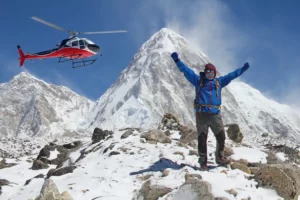
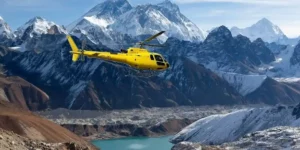
The Everest Three Passes Trek is a walking journey at heart, but helicopters can help. In an emergency, rescue helicopters can reach most of the route in good weather. If time becomes tight because of weather or illness, a helicopter flight from the upper Khumbu can sometimes replace the final days of walking, depending on current rules, conditions and passenger numbers. Our guides to the Everest Base Camp helicopter tour, whether a helicopter can land at Everest Base Camp, Everest helicopter tour restrictions and the best seasons for an Everest helicopter tour explain how flights in the region work.
For travellers who want a shorter adventure with a helicopter finale, the Luxury Everest Base Camp Trek with Helicopter Return and the Everest Elite Luxury Heli Trek combine walking and flying. Friends and family who cannot trek can share the view on the Everest Helicopter Tour, the Mt Everest by Helicopter Tour, the Sharing Everest Helicopter Tour with Kala Patthar Landing, the Everest Heli Sherpa Village Walk or the Gokyo Lakes Helicopter Tour. Our comparisons of the EBC trek or helicopter tour, the helicopter tour vs trek with helicopter return and the Kala Patthar landing reopening explain the options.
Sherpa Faith and Monasteries on the Circuit
The three passes take you through the Sherpa people’s spiritual heartland. Mani walls, prayer wheels, and whitewashed chortens line the trails, as our article on chortens in Tibetan Buddhism explains. In Sherpa tradition, the Khumbu is a sacred hidden valley blessed by Guru Padmasambhava, and the region’s monasteries at Tengboche, Pangboche and Thame keep alive teachings traced in our overview of Buddhism in Tibet. The songs of the great yogi Milarepa, who meditated in Himalayan caves, are still loved across the region.
If this spiritual side of the Khumbu appeals to you, consider the Everest Base Camp Yoga Trek, described in our guide to mindful trekking in the Himalayas, or the comfortable Everest Base Camp Luxury Lodge Trek, which follows the classic route shown in our Everest Base Camp Trek itinerary.
Adding a Peak to the Three Passes
The three passes are superb preparation for Nepal’s trekking peaks. From Chhukung, climbers can attempt Island Peak;d from Lobuche, Lobuche Peak. Further south, Mera Peak Climbing offers Nepal’s highest trekking peak. Check the latest NMA peak permit updates when you plan, and read about bigger summits in our Ama Dablam expedition guide and our article on Nepal’s eight-thousand-metre peaks.
Other Great High-Pass Treks in Nepal
If you love crossing high passes, Nepal has many more to discover. The Manaslu Circuit Trek crosses the Larke Pass around the world’s eighth-highest mountain, and the Annapurna Circuit Trek crosses the Thorong La, with a possible side trip on the Tilicho Lake Trek. Remote adventurers can explore the Nar Phu Trek, the Upper Mustang Trek, the Lower Dolpo Trek, and the Kanchenjunga Base Camp Trek. At the same time, the Langtang Gosaikunda Trek climbs to the sacred Gosaikunda lakes high above the Langtang Valley. Beyond Nepal, Bhutan’s legendary Snowman Trek crosses many high passes, as our guide compares the Everest Base Camp Trek vs the Snowman Trek. Browse our list of the top 50 treks in Nepal for more inspiration.
Before and After the Trek
After three weeks in the mountains, you’ve earned some rest. In and around Kathmandu, watch the sunrise over the Himalaya on the Nagarkot Hiking trek, walk the forest trails of the Nagarjun Hiking trek, or spend two easy days on the Chisapani Nagarkot Trek. Relax by the lake in Pokhara, described in our Pokhara sightseeing guide, with Paragliding in Pokhara, or head south for a Chitwan Jungle Safari or the Bardia National Park Tour. Adventure lovers can try Trishuli River Rafting, and the Classic Nepal Tour brings together the country’s heritage highlights.
Further afield, the Luxury Bhutan Tour takes you to the cliffside Tiger’s Nest Monastery, the Lhasa to Everest Base Camp Overland Tour shows you the north face of Everest from Tibet (as explained in our Lhasa to Everest Base Camp guide), and the Mount Kailash Tour circles the most sacred mountain in Asia.
Photography on the Three Passes
- Summit panoramas: Each pass offers a different panorama; a wide-angle lens captures the scale.
- Sunrise at Kala Patthar and Gokyo Ri: The classic Everest shots, best in clear autumn mornings.
- Lakes and glaciers: The Gokyo Lakes, Chola Tsho and the frozen tarns of Kongma La are stunning in morning light.
- People and culture: Monasteries, yak caravans and village life in Thame and the Gokyo Valley.
- Keep batteries warm: Cold drains them quickly on pre-dawn starts.
- Do not stop in dangerous places: Never pause for photos on loose slopes or glacier sections.
Responsible Trekking on the Circuit
The three passes cross some of the Himalaya’s most fragile landscapes, from glacial lakes to high pastures. Carry out non-burnable waste, refill water instead of buying plastic bottles, stay on the trails and respect wildlife and yaks. Pack light so porter loads stay safe, buy local where you can and respect the monasteries, mani walls and sacred lakes you pass. Learn more on our responsible tourism page and in our guide to Sherpa culture and traditions.
Common Mistakes on the Three Passes Trek
- Underestimating the challenge: This is a serious, three-week, high-altitude trek.
- Starting the passes late: Afternoon cloud, wind and soft snow make the crossings harder and riskier.
- Skipping acclimatisation: Rushing to Kongma La without Chhukung Ri and rest days invites altitude sickness.
- Forgetting microspikes: The Cho La glacier is often icy.
- Carrying too little water: There are no water sources on the passes.
- No spare days: Weather can close a pass for a day or more.
- Ignoring the guide’s turnaround decision: Safety always comes first.
Frequently Asked Questions About the Everest Three Passes Trek
What are the three passes on the Everest Three Passes Trek?
Kongma La (about 5,535 m), Cho La (about 5,420 m), and Renjo La (about 5,360 m), crossed in that order on our itinerary.
How long is the Everest Three Passes Trek?
Our Everest 3 Pass Trek takes 21 days from Kathmandu and includes acclimatisation days and side trips to Everest Base Camp, Kala Patthar, and Gokyo Ri.
Which pass is the hardest?
Most trekkers find Kongma La the longest and most strenuous, while Cho La is the most technical because of its glacier. Renjo La is usually the most enjoyable, with the best views.
Do I need technical climbing skills?
No, but you need excellent fitness, good balance and microspikes for icy sections. Previous high-altitude trekking experience is strongly recommended.
Which direction is best?
We cross Kongma La first, then Cho La and Renjo La, which allows better acclimatisation before the highest pass and saves the most scenic pass for last.
What is the best time for the three passes?
Autumn is best, followed by late spring. Winter snow often closes the passes, and the monsoon brings cloud and rain.
Do I visit Everest Base Camp on the Three Passes Trek?
Yes. The route visits Everest Base Camp and Kala Patthar between Kongma La and Cho La.
Are there teahouses on the passes?
No. There are lodges in the villages before and after each pass, but none on the passes themselves, so carry water, food and warm layers.
Can beginners do the Everest Three Passes Trek?
We don’t recommend it for complete beginners. We suggest starting with the Everest Base Camp Trek or the Gokyo Lakes Trek and returning for the three passes.
Do I need a guide?
Rules vary by area and can change, but we strongly recommend a licensed guide for route-finding on snow and glaciers, weather decisions and altitude safety.
Final Thoughts: The Ultimate Khumbu Adventure
The Everest Three Passes Trek is the Everest region in its entirety: three high passes, Everest Base Camp, Kala Patthar, the Gokyo Lakes, Gokyo Ri and the quiet Thame valley, linked in one great circle. It demands fitness, patience, and respect for the mountains, and rewards you with views, experiences, and a sense of achievement few treks on Earth can match.
Join our 21-day Everest 3 Pass Trek and let our experienced Sherpa guides lead you safely over Kongma La, Cho La and Renjo La. Prefer a gentler adventure? Choose the Gokyo Lakes Trek or the classic Everest Base Camp Trek. Learn more about our company, then plan your trip or contact us today: three passes, one unforgettable journey.
Quick Inquiry
Explore More


