Gokyo Lakes Trek: Complete Guide to the Turquoise Lakes of Everest

Gokyo Lakes Trek: Complete Guide to the Turquoise Lakes of Everest
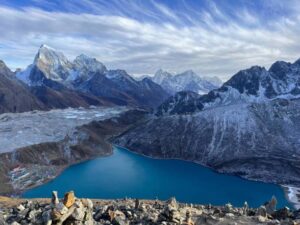
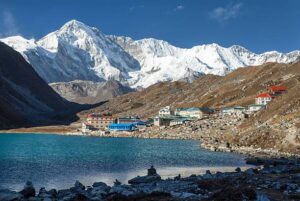
The trail crests a low moraine rise, and suddenly the colour stops you in your tracks. Below lies a lake of impossible turquoise, so bright it looks painted, framed by snow peaks and the grey rubble of a giant glacier. A few stone lodges stand on its shore, prayer flags snap in the wind, and, above it all, the summit of Cho Oyu, the sixth-highest mountain on Earth, gleams against a deep blue sky. Welcome to Gokyo.
The Gokyo Lakes Trek is the Everest region’s most beautiful alternative to the classic base camp route. It follows the same trail from Lukla to Namche Bazaar, then turns north into the quiet Gokyo Valley, through yak pastures and juniper forests, to a chain of sacred glacial lakes beside the Ngozumpa Glacier, Nepal’s longest glacier. From Gokyo Ri, the summit above the lakes, you see four of the world’s 8,000 m peaks, including Everest, in one breathtaking sweep.
In this complete guide, our team covers everything you need to plan the journey: our 12-day Gokyo Lakes Trek itinerary, the lakes one by one, Gokyo Ri, the glacier, difficulty and acclimatisation, the best seasons, permits, lodges and food, wildlife, culture and the many ways to extend the adventure.
Gokyo Lakes Trek at a Glance
- Region: Khumbu (Everest region), inside Sagarmatha National Park.
- Duration: 12 days from Kathmandu on our standard itinerary.
- Start and finish: Lukla, reached by a short mountain flight.
- Highest point: Gokyo Ri at about 5,357 m.
- Highest night: Gokyo village at about 4,790 m, on the shore of the third lake.
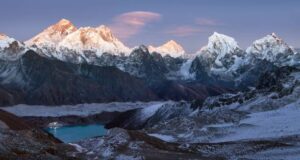
- The lakes: Six main lakes and many smaller ones, between roughly 4,700 and 5,000 m, protected as a Ramsar wetland of international importance.
- Glacier: The Ngozumpa Glacier, the longest in Nepal.
- Difficulty: Moderate, with steady high-altitude climbs and no technical sections.
- Best seasons: Spring (March to May) and autumn (late September to November).
- Permits: Sagarmatha National Park entry permit and Khumbu Pasang Lhamu Rural Municipality permit.
- Accommodation: Teahouses on a twin-sharing basis.
Why Choose the Gokyo Lakes Trek?
Many trekkers who have walked both routes say the Gokyo Valley is the most beautiful part of the Khumbu. Here is why so many choose it:
- The lakes: A chain of turquoise glacial lakes, unlike anything on the classic route.
- The view from Gokyo Ri: Everest, Lhotse, Makalu and Cho Oyu in one panorama, with the lakes and glacier below. Our comparison of Gokyo Ri vs Kala Patthar explains why many consider it the Everest region’s finest viewpoint.
- Fewer crowds: The Gokyo Valley sees far fewer trekkers than the route to base camp.
- A gentler altitude profile: The highest night is at about 4,790 m, lower than Lobuche and Gorakshep on the classic route.
- The Ngozumpa Glacier: A vast river of ice and rock, best seen from the moraine above Gokyo.
- Cho Oyu up close: The world’s sixth-highest mountain rises at the head of the valley.
- Wildlife and quiet villages: Yak pastures, juniper forests, Himalayan tahr and the colourful Himalayan monal.
If you want to stand at Everest Base Camp, the classic Everest Base Camp Trek is your route. But if you want the most beautiful scenery in the Khumbu, the Gokyo Lakes Trek is hard to beat, and you can always combine the two.
The Gokyo Lakes: A Sacred Chain of Turquoise Water
The Gokyo Lakes are a system of high-altitude glacial lakes on the western side of the Ngozumpa Glacier, fed by glacier seepage and streams from the surrounding peaks. Trekker routes usually count six main lakes, part of a wider system of around nineteen. Together with their surrounding wetlands, they are protected as a Ramsar site, a wetland of international importance, covering several thousand hectares within Sagarmatha National Park.
The Lakes One by One
- The first and second lakes: Smaller lakes you pass on the final approach from Machhermo, the first glimpse of the turquoise colour that makes the valley famous.
- The third lake, Gokyo Cho (Dudh Pokhari): The most famous lake, with Gokyo village on its eastern shore and Gokyo Ri rising above it.
- The fourth lake, Thonak Cho: The largest and deepest lake in the system, a short walk north of Gokyo, with superb views of Cho Oyu.
- The fifth lake, Ngojumba Cho: A longer walk further north, close to a viewpoint above the glacier that looks across to Everest, Lhotse and Makalu.
- The sixth lake and beyond: The most remote of the main lakes, towards the head of the valley and the approaches to Cho Oyu, for strong, well-acclimatised trekkers with a full day to spare.
Other named lakes in the system include Gyazumpa Cho and Tanjung Cho, along with many smaller ponds and tarns. Their colours change with the light and the season, from deep blue to brilliant turquoise and, in winter, to frozen white.
Why the Lakes Are So Colourful
Fine rock particles, often called glacial flour, carried by meltwater from the surrounding glaciers create the extraordinary colour. These particles stay suspended and scatter sunlight, giving the lakes their milky turquoise glow. The effect is strongest on sunny days, especially in the morning.
A Sacred Place
The lakes are sacred to Hindus and Buddhists alike. During the Janai Purnima festival, usually in late summer, Hindu pilgrims come to bathe in the holy water. At the same time, Sherpa Buddhists honour the lakes as homes of protective deities. Please respect their sanctity: do not wash, swim or throw anything into the lakes.
The Ngozumpa Glacier
Beside the lakes lies the Ngozumpa Glacier, Nepal’s longest glacier, flowing south from the slopes of Cho Oyu. Its surface is covered with rock and gravel, dotted with turquoise meltwater ponds and cut by ice cliffs that crack and rumble in the afternoon sun. From the lateral moraine above Gokyo, you can look across its full width, an unforgettable sight.
The glacier also shapes the trek. On the way to Cho La Pass, trekkers cross it on a rough path between Gokyo and Thangnak, a crossing that changes with the season. Like many Himalayan glaciers, the Ngozumpa is thinning, and people closely monitor the lakes beside it, a reminder of how fragile this high-altitude landscape is.
Gokyo Ri: The Summit Above the Lakes
At about 5,357 m, Gokyo Ri rises steeply above Gokyo village and the third lake. It is the crowning viewpoint of the Gokyo Lakes Trek and, for many, the finest panorama in the Everest region.
The Climb
The trail leaves Gokyo, crosses the stream at the lake’s edge, and zigzags up the grassy, rocky slopes of Gokyo Ri, gaining around 550 to 600 m. It is a steady, sustained effort rather than a scramble, and most trekkers take two to three hours to reach the top and around one to one and a half hours to come down.
The View
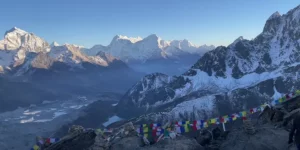
From the summit, the panorama sweeps from Cho Oyu and Gyachung Kang in the north to Everest, Lhotse and Makalu in the east, with Cholatse, Taboche and countless other peaks around you. Below lie the third lake, the village of Gokyo and the vast Ngozumpa Glacier. It is one of the few places where you can see four of the world’s fourteen 8,000 m peaks at once. Read more about these giants in our article on Nepal’s eight-thousand-metre peaks.
Sunrise or Sunset?
Many trekkers climb before dawn to catch sunrise, when the first light touches Everest, and Cho Oyu and the lakes turn from dark blue to turquoise. Others climb in the afternoon for sunset, when the peaks glow gold and pink. Your guide will choose the best time based on the weather and how the group feels.
Our 12-Day Gokyo Lakes Trek Itinerary
Here is how the days unfold on our Gokyo Lakes Trek. Walking times are approximate and depend on your pace and the weather.
Day 1: Arrive in Kathmandu (about 1,400 m)
Our team meets you at the airport and transfers you to your hotel. You meet your guide for a briefing and a final equipment check.
Day 2: Fly to Lukla and Trek to Phakding (about 2,610 m)
A spectacular mountain flight takes you to Lukla, usually from Manthali in Ramechhap in the busy seasons, after an early drive arranged by our Ramechhap airport transportation team. An easy walk along the Dudh Koshi brings you to Phakding.
Day 3: Trek to Namche Bazaar (about 3,440 m). Walk four to six hours over suspension bridges and through pine forest, past the Monjoo park entrance, and up the long climb to Namche Bazaar, the Sherpa capital.
Day 4: Acclimatisation Day in Namche
A short hike to the Hotel Everest View or the village of Khumjung and its monastery helps your body adapt, with your first views of Everest, Lhotse and Ama Dablam.
Day 5: Trek to Dole (about 4,100 m)
Leaving the main route to base camp, the trail climbs to the Mong La ridge, with superb views of Ama Dablam, then drops to the Phortse Thenga River before climbing through rhododendron and birch forest to the small settlement of Dole.
Day 6: Trek to Machhermo (about 4,470 m)
A shorter day climbs gradually through open yak pastures and summer settlements to Machhermo, a sheltered village beneath the peaks. The short walking day helps acclimatisation, and in the trekking seasons a small rescue post here offers talks on altitude awareness.
Day 7: Trek to Gokyo and Climb Gokyo Ri (Gokyo about 4,790 m; Gokyo Ri about 5,357 m)
The trail climbs past the first and second lakes, then along the edge of the moraine to Gokyo on the shore of the third lake. After settling in and resting, you climb Gokyo Ri for a great panorama, either in the afternoon or, if your guide prefers, early the next morning.
Day 8: The Fourth Lake and Descent to Machhermo
A morning walk north takes you to Thonak Cho, the fourth and largest lake, with Cho Oyu rising beyond the glacier. You then return through Gokyo and descend to Machhermo for the night.
Day 9: Trek to Namche Bazaar
The trail retraces your steps down the valley through Dole and Phortse Thenga and back over Mong La to Namche.
Day 10: Trek to Lukla
Your final and longest day on the trail, descending through Monjo and Phakding and climbing gently back to Lukla, where you celebrate with your guides and porters.
Day 11: Fly Back to Kathmandu
An early flight returns you to Kathmandu, or to Manthali followed by a drive, depending on the season.
Day 12: Departure
Our team transfers you to the airport for your flight home, or you continue your travels in Nepal.
We recommend 1 or 2 buffer days after the trek in case weather delays your flight from Lukla. Our guide on how many days the EBC trek takes explains how to plan the total length of a trip in the Everest region.
Extra Days in Gokyo: The Fifth Lake and Beyond
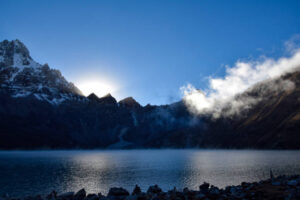
If you can add a day or two, Gokyo rewards you generously. The walk to the fifth lake, Ngojumba Cho, takes you deeper into the valley, close to the Ngozumpa Glacier, and a short climb above it leads to a viewpoint often called Scoundrel’s Viewpoint, with a remarkable perspective on Everest, Lhotse and Makalu across the ice. Strong trekkers can continue towards the sixth lake and the approaches to Cho Oyu.
An extra day also means more chances for clear weather on Gokyo Ri, a second sunrise or sunset, and time to sit by the lake and watch the light change on the peaks. Ask our team to tailor the itinerary to your time and fitness.
Getting There: Lukla Flights and Alternatives
Like the classic route, the Gokyo Lakes Trek begins with the short, thrilling flight to Lukla. In the busy spring and autumn seasons, flights usually depart from Manthali Airport in Ramechhap, several hours’ drive from Kathmandu, and they operate only in clear weather, so delays are common. Our Lukla Airport guide explains how the flights work and why buffer days matter.
If you’d rather avoid the flight at the start, you can begin the Everest Base Camp Trek by Road, which starts with a jeep drive into the Solukhumbu, or follow the historic walk-in on the Jiri to Everest Trek, described in our Jiri to Everest Base Camp trek guide. You can also adapt it to turn up the Gokyo Valley from Namche, adding gentle acclimatisation days along the way.
How Difficult Is the Gokyo Lakes Trek?
The Gokyo Lakes Trek is graded moderate. It involves no technical climbing, but it is a high-altitude trek with steady climbs and long days on rough mountain trails. Most days involve four to six hours of walking, and the climb to Gokyo Ri gains around 550 to 600 m at over 4,800 m.
Compared with the classic route, many trekkers find Gokyo slightly easier overall: the highest night is lower, the lodges are comfortable, and the valley is quieter. However, the trek still demands good fitness and careful acclimatisation. Prepare with our 12-week training plan, read our honest look at Everest Base Camp Trek difficulty (which applies equally to the Gokyo Valley), and first-timers should see our guide to the Everest Base Camp Trek for beginners.
Altitude and Acclimatisation
The trek climbs from about 2,860 m at Lukla to about 4,790 m at Gokyo and 5,357 m on Gokyo Ri, so acclimatisation is essential. Our itinerary includes a rest day in Namche and gradual stages through Dole and Machhermo, increasing sleeping altitude slowly in line with medical guidelines.
- Walk slowly: “Bistarai, bistarai”, slowly, slowly, as the Sherpas say.
- Drink plenty of water: Three to four litres a day.
- Avoid alcohol: It worsens dehydration and masks symptoms.
- Know the symptoms: Headache, nausea, dizziness, loss of appetite and poor sleep.
- Tell your guide: Our guides check every trekker’s health daily.
- Descend if symptoms worsen: Descent is the most effective treatment.
Learn more on our Acute Mountain Sickness page and in our guide to altitude sickness on the Everest Base Camp Trek. Make sure your travel insurance covers trekking up to about 5,500 m and helicopter evacuation.
Best Time for the Gokyo Lakes Trek
The best seasons are the same as for the rest of the Everest region, but the lakes add their own magic to each one. Our guide to the best time for Everest Base Camp Trek covers every month in detail.
Autumn (Late September to November)
Clearer skies, more stable weather, and brighter turquoise lakes. October and November are the classic months; read our guide to the Everest Base Camp Trek in October to get a feel for the season.
Spring (March to May)
Warmer days, rhododendrons blooming in the lower forests, and good morning visibility, with more cloud in the afternoons. The lakes may still be partly frozen in early spring.
Winter (December to February)
Crisp, clear and very quiet, with frozen lakes and bitterly cold nights. Some lodges in Gokyo and Machhermo may close in the coldest weeks, so plan carefully with our team.
Monsoon (June to August)
Green, flowery and quiet, but clouds and rain often hide the mountains, and flights to Lukla are less reliable. We recommend the other seasons for most trekkers.
Accommodation and Food
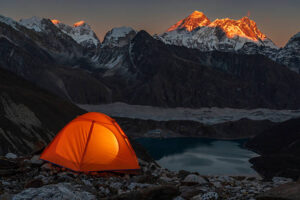
You stay in teahouses throughout the trek, sharing a twin bed. Lodges in Phakding and Namche are comfortable, and some offer rooms with attached bathrooms. Higher up, in Dole and Machhermo, rooms are simpler, with shared bathrooms. Gokyo’s lodges are among the most pleasant at this altitude, with sunny dining rooms overlooking the lake and a stove to warm you in the evening. For more comfort, ask about lodge upgrades, or consider the Everest Base Camp Luxury Lodge Trek on the classic route.
Menus offer dal bhat, noodle soups, fried rice, pasta, potatoes, Tibetan bread, porridge and pancakes. We recommend vegetarian meals at altitude, plenty of hot drinks and garlic or vegetable soups. Refill your bottle with boiled or purified water rather than buying plastic bottles, and carry enough cash, as ATMs are scarce beyond Namche.
Permits and Guide Rules
Two permits are needed for the Gokyo Lakes Trek, and our team arranges both:
- Sagarmatha National Park entry permit: Checked at the Monjo park entrance.
- Khumbu Pasang Lhamu Rural Municipality permit: For entry into the local municipality area.
Trekking rules in Nepal have changed in recent years, and many trekking areas now require a licensed guide. Rules vary by area and can change, so check the latest before you travel; our article on Nepal’s mandatory guide rules explains how they work. Regardless of the rules, we strongly recommend a licensed guide in the Gokyo Valley, where trails are quieter, and the weather can change quickly. Meet our guides on our team page, check entry requirements in our Nepal visa guide and read our wider trekking in Nepal guide for practical advice. Always book with a registered company; you can view our company registration and legal documents online.
Wildlife and Nature in the Gokyo Valley
The quieter Gokyo Valley is one of the best places in the Khumbu to see wildlife. Look out for:
- Himalayan tahr: Shaggy wild goats grazing on steep slopes above the trail.
- Musk deer: Shy, small deer in the birch and rhododendron forests below Dole.
- Himalayan monal: Nepal’s iridescent national bird, known locally as the danphe.
- Ruddy shelduck: Orange ducks often seen on the lakes in the warmer seasons.
- Birds of prey: Lammergeiers and Himalayan griffons soaring on the thermals.
- Snow leopard: The elusive ghost of the mountains lives in the high valleys, though sightings are very rare.
The lower forests glow with rhododendrons in spring, and alpine flowers carpet the pastures after the monsoon.
Sherpa Culture and Legends of the Gokyo Valley
The Gokyo Valley is home to yak herders. Many of its settlements, such as Dole, Machhermo and Gokyo itself, began as summer grazing grounds, where families brought their herds to the high pastures. Today, lodges have joined the stone yak shelters, but the rhythm of herding continues. Machhermo is also known for a local legend of a yeti that once attacked a yak herder’s animals, a story still told around the lodge stoves.
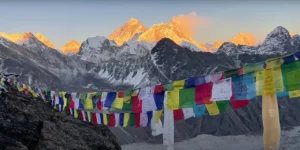
Along the trail, you pass mani walls, chortens and prayer flags, signs of the Buddhist faith that shapes Sherpa life. Our guide to Sherpa culture and traditions explains this heritage, and our article on the chorten in Tibetan Buddhism describes the stupas you will see. In Sherpa tradition, the Khumbu is a sacred hidden valley blessed by Guru Padmasambhava, whose teachings are traced in our overview of Buddhism in Tibet.
Photography Tips for the Gokyo Lakes
- Shoot the lakes in the morning: The colour is brightest when the sun is high, and the wind is calm.
- Climb Gokyo Ri with a wide lens: The panorama is enormous; capture the lakes, glacier and peaks together.
- Look for reflections: On still mornings, the third and fourth lakes mirror the surrounding peaks.
- Photograph the glacier at golden hour: Low light brings out the texture of the ice and rubble.
- Keep batteries warm: Cold drains them quickly; sleep with them in your sleeping bag.
- Respect people and sacred sites: Ask before photographing people, and never step into the lakes.
What to Pack
Packing for Gokyo is similar to packing for any trek in the Everest region. Bring warm layers, including a down jacket for cold evenings and the summit of Gokyo Ri, broken-in waterproof boots, a sleeping bag rated well below freezing, trekking poles for steep descents, sunglasses, sunscreen,n and a reliable headlamp for pre-dawn climbs. Remember the Lukla baggage limit, usually around 10 kg checked and around 5 kg hand luggage. Our complete Everest Base Camp Trek packing list and our trekking equipment page cover everything in detail.
Combining Gokyo With Everest Base Camp
For many trekkers, the ultimate Everest adventure combines the Gokyo Lakes with Everest Base Camp. The two valleys are linked by the Cho La, a glaciated pass at around 5,420 m between Thangnak, near Gokyo, and Dzongla, on the base camp side. A combined itinerary might climb Gokyo Ri, cross Cho La, and continue to Lobuche, Gorakshep, Everest Base Camp, and Kala Patthar. Our Cho La Pass guide explains the crossing in detail.
The best way to explore the region is the 21-day Everest 3 Pass Trek, which crosses Kongma La, Cho La, and Renjo La, a pass west of Gokyo at about 5,360 m with superb views back over the lakes and Everest. It is for experienced, fit trekkers comfortable with long days at high altitude.
Other Ways to Experience the Gokyo Valley
- By helicopter: The Gokyo Lakes Helicopter Tour flies over the lakes and the Ngozumpa Glacier in a single day.
- With a helicopter return: Time-short trekkers can fly back from the upper Khumbu, as on the Luxury Everest Base Camp Trek with Helicopter Return and the Everest Base Camp Helicopter Trek on the classic route.
- In luxury: The Everest Elite Luxury Heli Trek combines premium lodges with helicopter time-savers.
- With a shorter trek: The Everest View Trek offers Everest views and Sherpa culture in less time and at lower altitude.
- Everest by air: The private Everest Helicopter Tour, the Mt Everest by Helicopter Tour, the Sharing Everest Helicopter Tour with Kala Patthar Landing and the Everest Heli Sherpa Village Walk show you Everest in a single morning.
To understand the helicopter options in the region, read our guides to the Everest Base Camp helicopter tour, the Kala Patthar landing reopening, whether a helicopter can land at Everest Base Camp, the EBC trek or helicopter tour question, the Everest helicopter tour vs trek with helicopter return, the best seasons for an Everest helicopter tour and Everest helicopter tour restrictions.
Gokyo Lakes Trek vs Everest Base Camp Trek
Both treks start in Lukla, share the trail to Namche and take about the same time, but they offer very different experiences:
- Highlights: Gokyo offers lakes, a glacier and the Gokyo Ri panorama; the base camp route offers Everest Base Camp, the Khumbu Icefall and Kala Patthar.
- Crowds: Gokyo is much quieter.
- Altitude: Gokyo’s highest night is lower, at about 4,790 m, compared with about 5,164 m at Gorakshep.
- Culture: The base camp route passes the famous monasteries of Tengboche (described in our guide to Tengboche Monastery and the Mani Rimdu festival) and Pangboche, then continues through Dingboche and past the aid post at Pheriche; the Gokyo Valley offers yak-herding life and a wilder feel.
- Duration: Our Gokyo trek takes 12 days, and our classic base camp trek takes 14 days.
Our comparison of Gokyo Ri vs Kala Patthar explores the difference between the two viewpoints in depth, and our Everest Base Camp Trek itinerary shows the classic route day by day. Our guides to the Everest Base Camp Trek distance and the short Everest Base Camp Trek help if you are short on time, and our guide to mindful trekking in the Himalayas explains the Everest Base Camp Yoga Trek, a gentler, more reflective way to walk the classic route.
Climbing Peaks Near Gokyo
The Gokyo Valley and the wider Khumbu also serve as a gateway to Nepal’s trekking peaks. Many climbers combine a Gokyo trek with an ascent of Island Peak or Lobuche Peak, using the lakes for ideal acclimatisation. Further south, Mera Peak Climbing offers Nepal’s highest trekking peak. Check the latest NMA peak permit updates when you plan. For those who dream of higher summits, our Ama Dablam expedition guide introduces one of the world’s most beautiful mountains, also described in our article on Ama Dablam.
Responsible Trekking at the Lakes
The Gokyo Lakes are a fragile, sacred wetland, and every visitor plays a part in protecting them. Never wash, swim or throw anything into the lakes. Carry out batteries and non-burnable waste, refill your water instead of buying plastic bottles, stay on the trails to protect the fragile meadows and keep a respectful distance from wildlife and yaks. Pack light so that porter loads stay safe. Learn more on our responsible tourism page.
Other Treks if You Love Lakes and Quiet Valleys
If the Gokyo Lakes inspire you, Nepal has more beautiful lakes and quiet valleys to explore. Browse our list of the top 50 treks in Nepal, or consider these:
- Langtang Gosaikunda Trek: The sacred lakes of Gosaikunda, revered by Hindu and Buddhist pilgrims.
- Tilicho Lake Trek: One of the world’s highest lakes of its size, in the Annapurna region.
- Khopra Ridge Trek: A quiet ridge trek with the sacred Khayer Lake as a side trip.
- Ama Dablam Base Camp Trekking: The quiet side of the Khumbu, described in our Ama Dablam Base Camp Trek
- Nar Phu Trek and Upper Mustang Trek: Remote valleys of Tibetan Buddhist culture.
- Manaslu Circuit Trek: A wild circuit around the world’s eighth-highest mountain, crossing the Larke Pass.
- Beyond Nepal: Bhutan’s legendary Snowman Trek, compared with the Everest route in our guide to the Everest Base Camp Trek vs Snowman Trek, and the sacred lake of Mansarovar on the Mount Kailash Tour, described in our guide to Mansarovar Lake.
Before and After the Trek: Kathmandu and Beyond
Most trekkers spend a day or two in Kathmandu before or after the trek, and the buffer days we recommend are easy to fill. Explore the city’s temples and stupas on our Kathmandu Day Tour or with our Kathmandu sightseeing guide, watch the sunrise over the Himalaya on Nagarkot Hiking, walk the forest trails of Nagarjun Hiking or spend two days on the Chisapani Nagarkot Trek.
With more time, travel to lakeside Pokhara, described in our Pokhara sightseeing guide, for paragliding, or head south for a Chitwan Jungle Safari or the Bardia National Park Tour. Adventure lovers can try Trishuli River Rafting, and the Classic Nepal Tour brings together the country’s heritage highlights. Further afield, the Luxury Bhutan Tour takes you to the cliffside Tiger’s Nest Monastery, and the Lhasa to Everest Base Camp Overland Tour shows you Everest from Tibet, with our Lhasa to Everest Base Camp guides explaining the route.
Common Mistakes on the Gokyo Lakes Trek
- Rushing from Namche to Gokyo: Gaining too much altitude too quickly is the main cause of altitude sickness.
- Climbing Gokyo Ri when unwell: Turn back if symptoms appear; the view is not worth the risk.
- Skipping the fourth lake: It’s a short walk from Gokyo and one of the most beautiful places on the trek.
- Planning no spare days: Weather can delay both the Gokyo Ri climb and the Lukla flight.
- Underestimating the cold: Nights in Gokyo are well below freezing for much of the year.
- Crossing the Cho La without preparation: It is a serious glaciated pass that needs experience, a guide and the right gear.
- Disrespecting the sacred lakes: Never wash in, swim in or pollute the water.
Frequently Asked Questions About the Gokyo Lakes Trek
How long is the Gokyo Lakes Trek?
Our standard Gokyo Lakes Trek takes 12 days from Kathmandu, including a rest day in Namche, the climb of Gokyo Ri and a visit to the fourth lake.
How high is Gokyo Ri?
Gokyo Ri rises to about 5,357 m, while Gokyo village sits at about 4,790 m on the shore of the third lake.
How many Gokyo Lakes are there?
Trekker guides usually count six main lakes along the route, part of a wider system of around nineteen lakes protected as a Ramsar wetland.
Which is the largest Gokyo lake?
Thonak Cho, the fourth lake, is the largest and deepest lake in the system.
Is the Gokyo Lakes Trek harder than the Everest Base Camp Trek?
Most trekkers find it slightly easier overall, because the highest night is lower and the valley is quieter, but it still requires good fitness and careful acclimatisation.
Can I see Everest on the Gokyo Lakes Trek?
Yes. You can see Everest from Gokyo Ri, from the viewpoint near the fifth lake, and from several points along the trail, along with Lhotse, Makalu, and Cho Oyu.
What is the best time for the Gokyo Lakes Trek?
Autumn and spring offer the best weather and views, with autumn giving the clearest skies and the brightest lake colours.
Can I combine Gokyo with Everest Base Camp?
Yes, you can cross the Cho La Pass between the two valleys, joining the Everest 3 Pass Trek, which crosses three high passes and visits both.
Do I need a guide for the Gokyo Lakes Trek?
Rules vary by area and can change, but we strongly recommend a licensed guide for safety, navigation and acclimatisation, especially in the quieter Gokyo Valley.
Are the Gokyo Lakes sacred?
Yes. They are sacred to both Hindus and Buddhists, and pilgrims bathe in them during the Janai Purnima festival. Visitors should never wash or swim in the lakes.
Final Thoughts: The Most Beautiful Valley in the Khumbu
The Gokyo Lakes Trek is the Everest region at its most magical: turquoise lakes beneath Cho Oyu, the vast Ngozumpa Glacier, the sweeping panorama from Gokyo Ri and quiet trails through yak pastures and juniper forests. It offers the drama of the Himalaya with a little more peace, and for many trekkers it becomes the most treasured memory of their time in Nepal.
Join our 12-day Gokyo Lakes Trek, take on the ultimate challenge of the Everest 3 Pass Trek, or see the lakes from the air on the Gokyo Lakes Helicopter Tour. Learn more about our company, then plan your trip or contact us today. The turquoise lakes of Everest are waiting.
Quick Inquiry
Explore More


