Everest Base Camp Trek Permits Explained
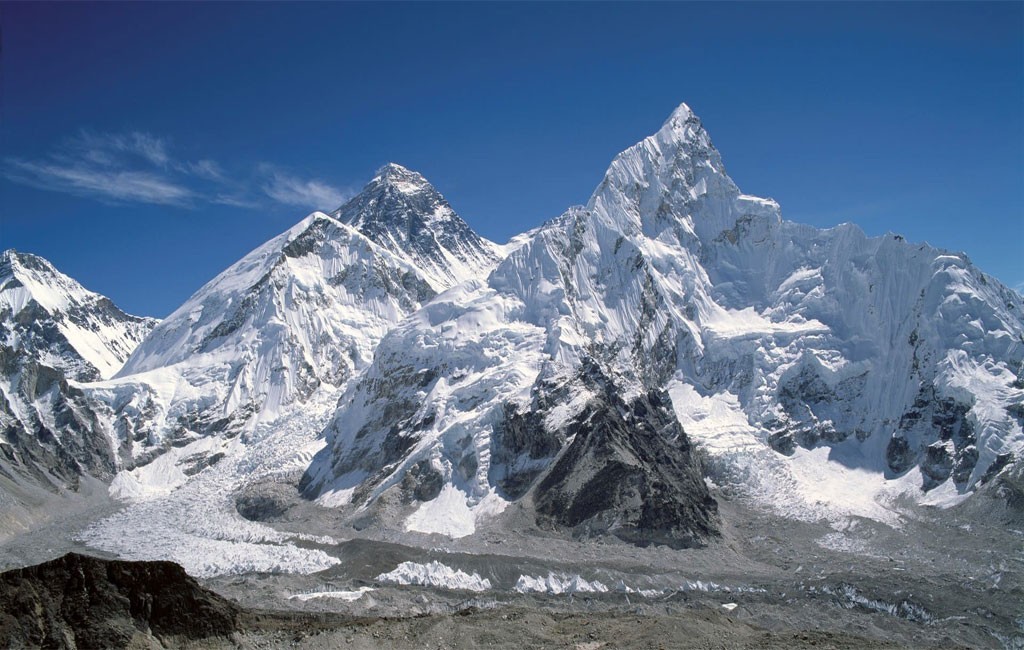
Just beyond the village of Monjo, the trail to Everest passes through a stone gateway decorated with prayer wheels and a carved arch. Inside a small office, a park ranger checks your permit, writes your name in a ledger and waves you through into Sagarmatha National Park, the protected home of the world’s highest mountain. It takes only a minute, but without the right paperwork, your journey to Everest would end right there.
Understanding the Everest Base Camp Trek Permits is simple once you know the system. The classic route needs just two permits, issued by two different authorities in two different places, and a few rules about guides and documents complete the picture. On our Everest Base Camp Trek, our team arranges every permit for you, but it still helps to know what they are, why they exist and where they are checked.
In this guide, we explain each permit in plain language: what it is, who issues it, where and how to get it, the TIMS card question, the rules on guides, permits for other routes, side trips, climbing peaks and helicopter tours, the checkpoints, the documents to carry and the most common mistakes. Permit fees are set by the authorities and change over time, so we focus here on the rules and the process.
The Short Answer: Which Permits Do You Need for Everest Base Camp?
You need two permits for the classic Everest Base Camp Trek: the Sagarmatha National Park entry permit and the Khumbu Pasang Lhamu Rural Municipality entry permit. You can get the park permit in Kathmandu or at the Monjo park entrance, and the municipality permit is issued in Lukla. A TIMS card isn’t required in the Khumbu, and trekkers coming from Jiri also need a Gaurishankar Conservation Area permit.
In brief:
- Permit one: Sagarmatha National Park entry permit, for the protected area that contains Everest.
- Permit two: Khumbu Pasang Lhamu Rural Municipality permit, the local government’s entry permit for the Khumbu.
- Not needed in the Khumbu: The TIMS card used in many other trekking regions.
- Extra for the Jiri route: A Gaurishankar Conservation Area permit.
- Extra for climbers: A climbing permit for peaks such as Island Peak and Lobuche East.
Everest Base Camp Trek Permits at a Glance
- Sagarmatha National Park permit: From the Nepal Tourism Board office in Kathmandu or at the Monjo park entrance.
- Khumbu Pasang Lhamu Rural Municipality permit: From the municipality counter in Lukla, and in some cases at Monjo; not sold in Kathmandu.
- TIMS card: Not required for the Everest Base Camp, Gokyo or Three Passes routes.
- Gaurishankar Conservation Area permit: Only if you walk in from Jiri or Shivalaya.
- Documents: Your original passport, plus passport photos, just in case.
- Payment at counters: Usually in cash, in local currency.
- Checkpoints: Lukla, the park entrance at Monjo and occasionally other points on the trail.
- Guide rules: National and local rules differ; check before you travel, and we strongly recommend a licensed guide.
- With our team: We arrange all permits as part of your trek.
Who Issues Your Permits?
Part of the confusion around Everest Base Camp Trek Permits comes from the number of authorities involved. Each has a different role:
- The national park: Sagarmatha National Park is managed under Nepal’s Department of National Parks and Wildlife Conservation, which sets the park entry rules.
- The Nepal Tourism Board: Runs the tourist service centre in Kathmandu where park permits can be obtained, and administers the TIMS system used in other regions.
- The local municipality: The Khumbu Pasang Lhamu Rural Municipality, the elected local government of the Khumbu, issues its own entry permit.
- The Department of Immigration: Issues visas and the special permits for restricted areas elsewhere in Nepal.
- Climbing authorities: Climbing permits for trekking peaks have traditionally been issued through the Nepal Mountaineering Association, while the government’s tourism department issues expedition permits for the highest mountains.
For trekkers on the classic route, only the first and third matter, and our team handles all of them on your behalf.
A Short History of Permits in the Khumbu
Sagarmatha National Park was created about half a century ago to protect the forests and wildlife of the Khumbu, which were under pressure from growing numbers of visitors and expeditions, and it was soon recognised as a UNESCO World Heritage Site. The park entry permit has been required for every Everest trek since then.
For many years, trekkers also carried a TIMS card. When Nepal reorganised its local government into a federal system, it formed the Khumbu Pasang Lhamu Rural Municipality. It introduced its own entry permit, which replaced the TIMS card in the Khumbu. More recently, debates over national guide rules have added another layer, which is why the Everest Base Camp Trek Permits are sometimes described inconsistently online.
Why Permits Exist
Everest Base Camp Trek Permits aren’t just bureaucracy. Each one supports the place you are walking through:
- Conservation: Sagarmatha National Park, a UNESCO World Heritage Site, protects fragile forests, glaciers and wildlife, from the Himalayan monal to the snow leopard, and manages waste along the trails.
- Local development: The municipality permit helps fund trails, bridges, waste management and services in the Sherpa villages of the Khumbu.
- Safety: Checkpoint records show who is on the trail and when, which can help in emergencies or searches.
Our Sagarmatha National Park guide explains the park’s history and wildlife, and our responsible tourism page describes how we help protect it.
Permit One: Sagarmatha National Park Entry Permit
What It Is
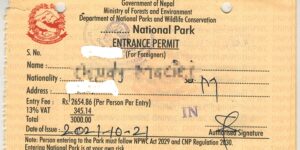
The Sagarmatha National Park entry permit allows you to enter and trek within the national park surrounding Everest, Lhotse, Cho Oyu, and Ama Dablam. It covers the whole park, so the same permit is valid for the Everest Base Camp route, the Gokyo Valley, the Three Passes, the Chhukung Valley, and the trail to Ama Dablam Base Camp. It is issued for a single entry into the park and is not transferable.
Where to Get It
You can obtain the park permit in two places:
- In Kathmandu: At the Nepal Tourism Board’s tourist service centre, before you fly to Lukla.
- At Monjo: At the national park entrance office, on the trail between Phakding and Namche Bazaar.
Many independent trekkers buy it at Monjo on the way in, while agencies usually arrange it in advance. Either way, keep it safe: they check it at the park entrance and may check it again inside the park.
What You Need
Bring your original passport. Some counters also ask for a passport photo, so carry a couple in your daypack. At the trail office, you usually pay in cash in local currency.
Permit Two: Khumbu Pasang Lhamu Rural Municipality Permit
What It Is
The Khumbu Pasang Lhamu Rural Municipality is the local government of the Khumbu, the Sherpa homeland around Everest. Its name honours Pasang Lhamu Sherpa, the first Nepali woman to reach the summit of Everest, who lost her life on the descent and is honoured by Nepal as a national luminary. The municipality issues its own entry permit to trekkers visiting the area, and in the Khumbu, it has replaced the TIMS card used elsewhere in Nepal.
Where to Get It
The municipality issues the permit in Lukla, at the counter near the start of the trail, and in some cases at Monjo. It is not sold in Kathmandu, so independent trekkers obtain it after landing. If you walk in from the lower hills, our team will confirm where to get it on your route.
What You Need
Your passport and, ideally, a passport photo. You usually pay in cash in local currency.
What About the TIMS Card?
The Trekkers’ Information Management System card, known as the TIMS card, is used in many of Nepal’s trekking regions to record trekkers’ details. In the Khumbu, however, the local municipality permit replaced it a few years ago, and the TIMS card is not required for the Everest Base Camp, Gokyo, or Three Passes routes.
Because rules elsewhere in Nepal differ, many online guides still list the TIMS card for Everest, which can be confusing. If you plan to combine your Everest trek with another region, such as Annapurna or Langtang, check which permits apply there. Our wider trekking in Nepal guide explains the regional differences.
Do You Need a Guide? The Rules Explained
This is the most debated part of the Everest Base Camp Trek Permits picture. A few years ago, the Nepal Tourism Board introduced a national rule requiring foreign trekkers in the country’s national parks and conservation areas to trek with a licensed guide arranged through a registered agency. The Khumbu Pasang Lhamu Rural Municipality, however, announced that a guide was not mandatory within its area, and enforcement in the Khumbu has varied since.
Rules vary by area and can change, so check before you travel. Whatever the current position, we strongly recommend trekking in the Everest region with a licensed guide. A good guide manages permits and checkpoints, books lodges in the busy seasons, rearranges plans when flights are delayed, watches for altitude sickness and shares the culture and stories of the Khumbu. Read our article on Nepal’s mandatory guide rules and meet the people who lead our treks on our team page.
Permits for Other Routes Into the Everest Region
Most trekkers fly to Lukla, but some walk or drive in from the lower hills. These routes may need an extra permit:
- Jiri and Shivalaya route: The classic approach used by the early Everest expeditions passes through the Gaurishankar Conservation Area, so you also need a Gaurishankar Conservation Area permit. See the Jiri to Everest Trek and our Jiri to Everest Base Camp guide.
- Road route via the Solu hills: The Everest Base Camp Trek by Road joins the main trail below Lukla; the two standard permits apply once you enter the Khumbu, and our team confirms any local requirements on the way.
- Flights via Manthali: In the busy seasons, Lukla flights usually leave from Manthali in Ramechhap; no extra permit is needed, and our Ramechhap airport transportation team handles the transfer.
Permits for Gokyo, the Three Passes and Side Trips
The good news is that the two standard permits cover the entire Khumbu’s main trekking area. No extra permit is normally needed for:
- The Gokyo Valley: Including the Gokyo Lakes Trek and the hikes described in our guide to Gokyo Ri and Fifth Lake.
- The Three Passes: The Everest 3 Pass Trek, described in our Everest Three Passes Trek guide, including the Cho La Pass.
- The Chhukung Valley: Including Chhukung Ri and the Chhukung Valley.
- Ama Dablam Base Camp: Ama Dablam Base Camp Trekking, described in our Ama Dablam Base Camp Trek
- Viewpoints: Kala Patthar, Gokyo Ri, Nangkartshang and the hike to the Hotel Everest View.
Rules can change, and a few remote areas near the Tibetan border have their own restrictions, so always tell our team about any side trips you plan.
Climbing Permits: Island Peak, Lobuche and Mera
If you plan to climb a trekking peak, you need a climbing permit in addition to the trekking permits:
- Island Peak and Lobuche East: These peaks require a climbing permit from the Nepal Mountaineering Association, along with the park and municipality permits. See Island Peak Climbing, our Island Peak climbing guide and Lobuche Peak Climbing.
- Mera Peak: In the neighbouring Hinku valley, Mera Peak Climbing requires a climbing permit and the Makalu Barun National Park permit, among others.
- Everest and other expedition peaks: The government issues expedition climbing permits to climbing teams; trekkers don’t need them, but they also cannot enter the Khumbu Icefall or stay overnight at the expedition camp at base camp. Our article on Nepal’s eight-thousand-metre peaks introduces the great expedition mountains.
Climbing permit rules have changed recently, so read our NMA peak permit updates, and see our Ama Dablam expedition guide and our answers to questions about climbing Ama Dablam for an introduction to expedition climbing.
Helicopter Tours and Permits
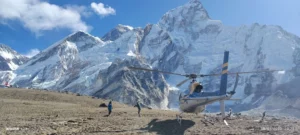
If you visit the Everest region by helicopter and land inside the national park, for example at Syangboche for breakfast at the Hotel Everest View or at Kala Patthar, the park’s entry rules apply, and the helicopter operator normally arranges what is needed as part of the tour. Helicopter landing rules in the Khumbu have changed in recent seasons, so always book with an established company.
See the Everest Helicopter Tour, the Mt Everest by Helicopter Tour, the Everest Heli Sherpa Village Walk, the Gokyo Lakes Helicopter Tour and the Sharing Everest Helicopter Tour with Kala Patthar Landing, when operating, and read our guides to the Everest Base Camp helicopter tour, the best seasons for an Everest helicopter tour, Everest helicopter tour restrictions, whether a helicopter can land at Everest Base Camp, the Kala Patthar landing reopening, the EBC trek or helicopter tour and the helicopter tour vs trek with helicopter return.
Permit Words Explained
Online guides use many overlapping terms, which adds to the confusion. Here is what they mean:
- Entry permit: Permission to enter a national park, conservation area or municipality, such as the Sagarmatha National Park permit.
- Trekking permit: A general term often used for any permit needed to trek; in the Everest region, it usually means the park and municipality permits together.
- TIMS card: A trekker registration card used in many regions of Nepal, but not required in the Khumbu.
- Restricted area permit: A special permit for sensitive border regions, such as Upper Mustang or Manaslu, issued only through registered agencies; it is not needed for the Everest Base Camp route.
- Climbing permit: Permission to climb a specific peak, such as Island Peak or Everest itself.
- Visa: Your permission to enter Nepal, issued by immigration on arrival or in advance, and separate from all trekking permits.
Sample Permit Timeline for a 14-Day Trek
Here is how the Everest Base Camp Trek Permits fit into the classic 14-day itinerary of our Everest Base Camp Trek:
- Before you travel: Send us a clear copy of your passport so that we can prepare your paperwork.
- Day 1, Kathmandu: Your guide briefs you on the permits and checks your documents.
- Day 2, Lukla: The municipality issues and checks your permit as you start walking.
- Day 3, Monjo: You enter Sagarmatha National Park, and rangers record your details.
- Days 4 to 11: Your permits stay with your guide or in your daypack, ready for occasional checks.
- Day 12, Monjo to Lukla: You leave the park through the same gate on your way back.
- Days 13 and 14: You fly back to Kathmandu and home, with your permits as a souvenir of the journey.
Our complete guide to the Everest Base Camp Trek 14-day itinerary describes every stage in detail.
Permits, Safety and Emergencies
Permit checkpoints are part of a wider safety net. The records kept at Lukla and Monjo show who is on the trail, your guide’s company is registered with the authorities, and your insurance details allow rescue operators to act quickly if needed. For extra peace of mind, share your itinerary with family at home, keep your insurance emergency number in your phone and on paper, and check whether your embassy offers a traveller registration service. In the rare event of a serious problem, your guide, trekking company, and insurer coordinate helicopter evacuation, weather permitting.
Where Your Permits Are Checked
On the classic route, your permits are checked at two main points:
- Lukla: The municipality issues and checks the permit near the start of the trail.
- Monjo: The national park entrance, where rangers check your park permit and record your details.
Permits may also be checked at other points along the trail, so keep them in an easy-to-reach, waterproof pocket of your daypack rather than at the bottom of your duffel, which porters may be carrying ahead of you. Our guides carry the permits for group treks and handle the checkpoints for you, a small but welcome convenience after a long day.
Documents to Carry
- Passport: Your original passport with a valid Nepal visa; read our Nepal visa guide.
- Passport photos: Two or three spare photos, in case a counter asks for them.
- Photocopies: Copies of your passport and visa, kept separately from the originals.
- Insurance details: Your policy number and emergency phone number, covering trekking to about 5,600 m and helicopter evacuation.
- Cash: Local currency for permit counters, as card payments are not always possible on the trail.
- Your permits: Once issued, keep them dry and accessible until the end of the trek.
Step by Step: How to Get Your Permits
If You Trek With Us
We arrange everything on our Everest Base Camp Trek and every other Everest trip. Our team obtains your Sagarmatha National Park permit in Kathmandu before departure, and your guide handles the municipality permit in Lukla and all the checkpoints on the trail. All you need to do is send us a copy of your passport when you book and carry your passport on the trek.
If You Arrange Permits Yourself
- Step one: Arrive in Kathmandu with your Nepal visa.
- Step two: Visit the Nepal Tourism Board office in Kathmandu during office hours for the Sagarmatha National Park permit, or plan to buy it at Monjo.
- Step three: Fly to Lukla and obtain the municipality permit at the counter near the start of the trail.
- Step four: Show your permits at Monjo, where the park entrance is.
- Step five: Keep both permits safe until you leave the Khumbu.
Remember that government offices close on public holidays, and that guide rules may affect independent trekking, so allow some flexibility in your plans.
Permits for Children and Different Nationalities
Every trekker needs the Everest Base Camp Trek Permits, including children, although permit categories and fees differ by age and nationality. Foreign nationals, citizens of other South Asian countries, and Nepali citizens are treated differently, and rules on guides and permits for Nepali trekkers differ from those for international visitors. Children need their own passports and permits, and families should plan the itinerary carefully for altitude. Tell our team everyone’s nationality and age, and we will confirm exactly what applies.
What If You Lose a Permit?
Lost permits are rare but not unknown, especially on windy passes or in the rush of a busy checkpoint. If it happens, tell your guide straight away. You can usually arrange a replacement through the issuing office with your passport, although it may take time and paperwork. To make life easier, photograph your permits and passport as soon as they are issued, keep paper copies separate, and store the originals in a zip bag in your daypack.
Rules Inside Sagarmatha National Park
Your permits come with responsibilities. Inside the park:
- Stay on the trails: Avoid shortcuts that cause erosion.
- Carry out your rubbish: Use the bins provided and take batteries and plastics back to Kathmandu.
- Respect wildlife: Never feed, chase or disturb animals.
- Leave plants and stones: Do not collect plants, flowers, seeds or mani stones.
- Drones need permission: Flying a drone requires special approval.
- Respect restricted zones: The Khumbu Icefall and the expedition camps at base camp are for climbing teams with permits.
- Respect culture: Walk clockwise around chortens and mani walls, and ask before photographing people or monasteries.
The Khumbu has also taken steps to reduce single-use plastic, so bring a refillable water bottle and treat your water rather than buying plastic bottles. Our guide to Sherpa culture and traditions and our article on the chorten in Tibetan Buddhism explain the customs behind the shrines you pass.
Permits and Your Itinerary: Planning Tips
Permits rarely cause problems, but a little planning helps:
- Allow time in Kathmandu: If you arrange permits yourself, the tourist service centre keeps office hours and closes on public holidays.
- Fly early: Lukla flights leave early in the morning; the municipality counter is right on your route after landing.
- Keep buffer days: Weather delays at Lukla are far more likely than permit problems; our guide on how many days the EBC trek takes explains how to plan.
- Plan your whole route: If you add Gokyo, the Three Passes, or a climbing peak, tell us early so we can secure all permits.
For the full day-by-day plan, see our guides to the Everest Base Camp Trek 14-day itinerary, the Everest Base Camp Trek itinerary and the Everest Base Camp Trek distance.
The Checkpoints Along the Trail
Permit checks become part of the trek’s rhythm. On Day 2 of our classic itinerary, after landing in Lukla, you pass the municipality counter and walk down to Phakding. On Day 3, the gate at Monjo marks your entry into the national park, where rangers record your details before you cross the high suspension bridges and climb to Namche Bazaar.
In Namche, the acclimatisation day takes you to the Sherpa villages of Khumjung and Khunde, with no further checks. From there, the trail continues through Tengboche, home of the monastery described in our guide to Tengboche Monastery and the Mani Rimdu festival, Pangboche and Dingboche to Lobuche, Gorakshep and base camp. On the way back, you leave the park through the same gate at Monjo. Keeping your permits handy until you reach Lukla saves time and fuss.
Permits for Every Everest Trek We Offer
The same two permits apply to almost every trek we run in the Khumbu. That includes our Everest Base Camp Luxury Lodge Trek, the Luxury Everest Base Camp Trek with Helicopter Return, the Everest Base Camp Helicopter Trek, the Everest Elite Luxury Heli Trek, the Everest View Trek and the Everest Base Camp Yoga Trek. Our guides to the short Everest Base Camp Trek, the luxury Everest Base Camp Trek, and the luxury Everest View Trek explain the differences.
Permits in Other Regions of Nepal
If you plan to trek elsewhere, the permit system changes from region to region:
- Annapurna: The Annapurna Base Camp Trek, the Annapurna Circuit Trek and the Ghorepani Poon Hill Trek need the Annapurna Conservation Area permit, and the TIMS card is still used there; read our ultimate guide to the Annapurna Base Camp Trek.
- More Annapurna treks: The Mardi Himal Trek and the Tilicho Lake Trek also lie within the Annapurna Conservation Area.
- Langtang: The Langtang Valley Trek, the Langtang Gosaikunda Trek and Tamang Heritage Trekking need the Langtang National Park permit; see our Langtang Valley Trek details.
- Wildlife parks: Safaris such as the Chitwan Jungle Safari and the Bardia National Park Tour include national park entry arranged by the operator.
- Restricted areas: The Manaslu Circuit Trek, the Upper Mustang Trek, the Nar Phu Trek, the Tsum Valley and Ganesh Himal Trek, Lower Dolpo Trekking and the Kanchenjunga Base Camp Trek need special restricted area permits, issued only through registered agencies with a licensed guide; read our guide to trekking in Upper Mustang.
- Tibet: Special travel permits are arranged by licensed operators as part of tours such as the Lhasa Tibet Tour, the Kathmandu to Lhasa Tour, the Mount Kailash Tour, described in our guide to the Kailash kora, and the Lhasa to Everest Base Camp Overland Tour, described in our Lhasa to Everest Base Camp guide.
- Bhutan: Visits are arranged through licensed operators on tours such as the Luxury Bhutan Tour and the 7 Day Bhutan Tour, which include the hike to the Tiger’s Nest Monastery.
Browse our list of the top 50 treks in Nepal for more ideas, and ask our team about the permits for any route.
Beyond Permits: Preparing for the Trek
Permits are only one part of your preparation. Fitness, acclimatisation, and timing matter far more to your trek’s success. Our guide to the Everest Base Camp Trek for beginners explains what first-timers should expect, our honest look at Everest Base Camp Trek difficulty describes the challenges, and our guide to altitude sickness on the Everest Base Camp Trek covers the most important safety topic of all. To choose your season, read our guides to the Everest Base Camp Trek in April, the Everest Base Camp Trek in October and the Everest Base Camp Trek in the monsoon.
Practical Tips for Everest Permits
- Let us handle it: Booking with a registered company means your permits are arranged correctly; you can view our company registration and legal documents.s
- Carry your passport on the trail: Not just a copy.
- Pack spare passport photos: They weigh nothing and can save time.
- Carry cash in local currency: Trail counters may not accept cards.
- Keep permits dry and accessible: A zip bag in your daypack is perfect.
- Check the rules before you go: Especially on guides and any side trips.
Common Mistakes With Everest Permits
- Buying a TIMS card for the Khumbu: It is not required for the Everest Base Camp route.
- Expecting to buy the municipality permit in Kathmandu: You get it in the Khumbu.
- Packing the passport in the duffel: You need it at the checkpoints, and your duffel may be ahead with the porters.
- Forgetting the Jiri permit: Walking in from Jiri requires a Gaurishankar Conservation Area permit.
- Planning a peak climb without a permit: Island Peak, Lobuche East, and Mera need climbing permits.
- Relying on outdated online advice: Rules change; check with a registered company before you travel.
Frequently Asked Questions About Everest Base Camp Trek Permits
What permits do I need for the Everest Base Camp Trek?
Two: the Sagarmatha National Park entry permit and the Khumbu Pasang Lhamu Rural Municipality entry permit. Trekkers walking in from Jiri also need a Gaurishankar Conservation Area permit.
Do I need a TIMS card for Everest Base Camp?
No. In the Khumbu, the local municipality permit has replaced the TIMS card, which is not required for the Everest Base Camp, Gokyo or Three Passes routes.
Where do I get the Sagarmatha National Park permit?
At the Nepal Tourism Board office in Kathmandu before you fly, or at the national park entrance at Monjo on the trail.
Where do I get the Khumbu Pasang Lhamu permit?
In Lukla, at the counter near the start of the trail, and in some cases at Monjo. It is not sold in Kathmandu.
Do I need a guide to trek to Everest Base Camp?
A national rule requires licensed guides in many protected areas, while the Khumbu municipality says guides aren’t mandatory in its area. Rules can change, so check before you travel; we strongly recommend a licensed guide.
What documents do I need for the permits?
Your original passport with a valid visa, plus a couple of passport photos in case they are requested.
Where are permits checked on the trail?
Mainly in Lukla and at the national park entrance at Monjo, with occasional checks elsewhere. Keep them in your daypack.
Do I need extra permits for Gokyo, the Three Passes or Chhukung Ri?
No. The two standard permits cover these routes and viewpoints. Climbing peaks such as Island Peak need an additional climbing permit.
Do helicopter tours need permits?
Tours that land inside the national park follow the park’s entry rules, and the operator normally arranges what is needed as part of the tour.
Can I get my permits in advance?
You can get the national park permit in Kathmandu before you fly. If you book with us, we arrange all permits in advance,ce or your guide handles them on the trail.
Final Thoughts: Permits Made Simple
Everest Base Camp Trek Permits May sound complicated, but the system is simple: one permit for the national park, one for the local municipality, no TIMS card in the Khumbu, and a few extra permits only for special routes, climbing peaks, or helicopter landings. Arranged correctly, they take minutes and help protect the trails, villages, and mountains that make the journey so special.
Join our Everest Base Camp Trek, with every permit arranged for you, and prepare with our Everest Base Camp Trek packing list, our 12-week training plan and our guide to the best time for Everest Base Camp Trek. Learn more about our company, our flexible payment options and our approach to safety on our Acute Mountain Sickness page, then plan your trip or contact us today. Your path to Everest starts at the gate in Monjo.
Quick Inquiry
Explore More


