
Everest Base Camp Trek 14 Days: Complete Day-by-Day Itinerary
Everest Base Camp Trek 14 Days: Complete Day-by-Day Itinerary
A small plane banks over a forested ridge; its engines roar. The runway at Lukla rushes up the mountainside to meet you. Fourteen days later, you will fly out of the same tiny airport a different person, with the summit of Everest, the chants of Tengboche Monastery and the crunch of the Khumbu Glacier under your boots stored forever in your memory. In between lies one of the greatest walks on Earth.
The 14-day Everest Base Camp Trek itinerary is the classic way to make that journey. It gives your body time to adapt to altitude, includes two acclimatisation days, reaches base camp on Day 9 and Kala Patthar on Day 10, and still fits into a two-week holiday with a little room to spare. It is exactly the plan we follow on our classic Everest Base Camp Trek.
In this guide, our team walks you through every day: distances, walking hours, height gained and lost, the terrain, where you sleep, what you see and how to make each stage easier. We also explain why 14 days works so well, which days are hardest and what your options are if you want a shorter trek.
The Short Answer: Is 14 Days Enough for Everest Base Camp?
Yes. Fourteen days is the classic and recommended length for the Everest Base Camp Trek. It includes 11 days of walking from Lukla, two acclimatisation days in Namche and Dingboche, about 130 km on the trail and four to eight hours of walking a day. You reach base camp on Day 9 and climb Kala Patthar for sunrise on Day 10. Add one or two buffer days for Lukla flights.
In brief:
- Day 1: Arrive in Kathmandu.
- Days 2 to 9: Fly to Lukla and trek up the valley to Everest Base Camp, with rest days in Namche and Dingboche.
- Day 10: Sunrise on Kala Patthar, then descend to Pheriche.
- Days 11 to 13: Walk down to Lukla and fly to Kathmandu.
- Day 14:
Everest Base Camp Trek 14 Days at a Glance
- Total length: 14 days from arrival to departure in Kathmandu.
- Trekking days: 11, including two acclimatisation days, from Lukla and back.
- Distance: About 130 km round trip on the trail.
- Daily walking: Usually four to six hours, with three longer days of seven to eight hours.
- Highest point: Kala Patthar, about 5,545 m; Everest Base Camp is about 5,364 m.
- Base camp day: Day 9.
- Acclimatisation days: Day 4 in Namche and Day 7 in Dingboche.
- Accommodation: A hotel in Kathmandu and teahouse lodges on the trek
- Flights: Kathmandu to Lukla and back, usually via Manthali in Ramechhap during peak season.
- Best seasons: Spring and autumn.
- Buffer days: One or two extra days recommended for flight delays.
- Our Trek: The classic 14-day Everest Base Camp Trek, led by experienced local guides.
Why 14 Days: The Logic Behind the Classic Itinerary
The 14-day Everest Base Camp Trek plan isn’t arbitrary; it is built around how the body adapts to thin air. At Everest Base Camp, each breath holds only about half the oxygen it would at sea level, and the body needs days, not hours, to adjust. Mountain medicine experts recommend that above about 3,000 m, trekkers raise their sleeping altitude gradually, by roughly 300 to 500 m a day, with a rest day every few days.
The classic Itinerary follows that pattern closely. You climb for eight days, with full acclimatisation days at Namche and Dingboche, the two places where the trail makes its biggest jumps in altitude. Then, once you have stood at base camp and on Kala Patthar, you descend quickly in three days because coming down is easy for the body, even if it is hard on the knees.
Fourteen days also leaves room for the realities of the Himalaya: a day to recover from long international flights, a flight day at each end, and the occasional delay. Our guide on how many days the EBC trek takes compares longer and shorter options, and our Acute Mountain Sickness page explains the science of acclimatisation.
The Route at a Glance: Altitude Profile
These are the key points on the route and their approximate altitudes, in the order you reach them:
- Kathmandu: About 1,400 m.
- Lukla: About 2,860 m, where the trek begins.
- PhakTrek: AboTrek,610 m, slightly lower than Lukla.
- Namche Bazaar: About 3,440 m, the Sherpa capital.
- Hotel Everest View: About 3,880 m, on the Day 4 acclimatisation hike.
- Tengboche: About 3,860 m, home of the great monastery; Deboche lies just beyond at about 3,820 m.
- Dingboche: About 4,410 m, the second acclimatisation stop.
- Nangkartshang viewpoint: Around 5,000 m, on the Day 7 hike.
- Thukla Pass: About 4,830 m, with its memorials to climbers.
- Lobuche: About 4,910 m.
- Gorakshep: About 5,164 m, the last settlement.
- Everest Base Camp: About 5,364 m.
- Kala Patthar: About 5,545 m, the highest point of the trek
- Pheriche: ATrek 4,24Trek on the way down.
For more detail on the route itself, read our guides to the Everest Base Camp Trek distance and the Everest Base Camp Trek itinerary.
The 14-Day Itinerary, Day by Day
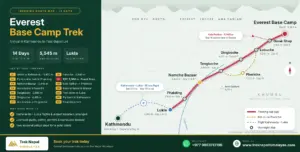
Here is our classic 14-day Everest Base Camp Trek itinerary. Distances and walking times are approximate and vary with pace, weather and the exact route, and our guides adjust each day to the group.
Day 1: Arrive in Kathmandu (about 1,400 m)
Our team meets you at the airport and takes you to your hotel. After the long journey, a gentle afternoon is best: a walk through the lanes of Thamel, an early dinner, and a good night’s sleep. In the evening, your guide gives a short briefing and checks your equipment so you can buy or rent anything missing in Kathmandu before you fly.
If you arrive a day early, explore the city’s temples and squares on our Kathmandu Day Tour or with our Kathmandu sightseeing guide.
Day 2: Fly to Lukla and Walk to Phakding (about 2,610 m)
- Distance and time: About 8 km of walking, three to four hours, after a short flight of around 20 to 35 minutes, depending on the departure airport.
- Height: Mostly downhill, losing about 250 m.
In the busy spring and autumn seasons, the day starts in the small hours with a four-to-five-hour drive to Manthali Airport in Ramechhap, organised by our Ramechhap airport transportation team; outside peak seasons, flights usually depart from Kathmandu. The flight to Lukla is one of the world’s most spectacular, ending on a short, sloping runway on the mountainside.
After tea in Lukla while the porters organise the loads, you set off down the Dudh Koshi valley, the “milk river”, past mani walls, prayer wheels, and small farms to Phakding. It is deliberately an easy first day, so that your body can begin adjusting.
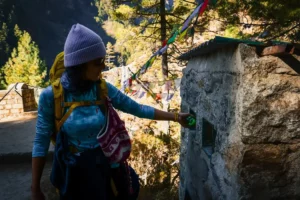
Tip: Pass mani walls and chortens on your right-hand side, as the Sherpas do. Our article on the chorten in Tibetan Buddhism explains their meaning.
Day 3: Phakding to Namche Bazaar (about 3,440 m)
- Distance and time: About 12 km; five to six hours.
- Height: A gain of about 830 m, most of it on the final climb.
The trail follows the river north, crossing it several times on swaying suspension bridges draped in prayer flags. At Monjo, you enter Sagarmatha National Park, where they check your permits. Beyond Jorsalle, the path reaches the confluence of the Dudh Koshi and Bhote Koshi, crosses the high Hillary Suspension Bridge and begins the long zigzag climb to Namche.
Halfway up, on a clear day, you may catch your first glimpse of Everest above the ridge. Namche Bazaar, built in a natural amphitheatre, is the Khumbu’s trading hub, with bakeries, gear shops, and comfortable lodges.
Tip: This is the first big climb of the trek. Walk slowly, drink often and resist the urge to keep up with faster groups.
Day 4Trekclimatisation Day in Namche
- Distance and time: About 5 to 7 km round trip; three to five hours.
- Height: Up to about 3,880 m, then back down to sleep at 3,440 m.
Acclimatisation days are active, not idle. The classic hike climbs above Namche to the Syangboche plateau and the Hotel Everest View, where you can sip tea with a panorama of Everest, Lhotse and Ama Dablam, then continues to the twin villages of Khumjung and Khunde, home of the Hillary School and a monastery that keeps a famous relic said to be a yeti scalp.
In the afternoon, visit the Sherpa culture museum on the ridge above Namche or rest. Climbing high and sleeping low is the foundation of a safe trek.
Day 5: Namche to Tengboche and Deboche (about 3,860 m)
- Distance and time: About 10-11 km; five to six hours.
- Height: Down to the river at Phunki Thenga, about 3,250 m, then a climb of about 600 m.
One of the most beautiful days of the trek: a level hillside walk high above the river, with Ama Dablam ahead and Everest and Lhotse rising above the Nuptse wall. Look out for Himalayan monal pheasants and Himalayan tahr. After dropping to the river at Phunki Thenga, the trail climbs through rhododendron and fir forest to Tengboche.
Tengboche Monastery is the spiritual heart of the Khumbu. If you arrive in time, you may join the monks’ afternoon prayers; our guide to Tengboche Monastery and the Mani Rimdu festival tells its story. Spend the night in Tengboche or the quieter forest settlement of Deboche, a short walk further on.
Day 6: Tengboche to Dingboche (about 4,410 m)
- Distance and time: About 11 km; five to six hours.
- Height: Gain about 550 to 600 m.
The trail passes the ancient village of Pangboche, whose monastery is among the region’s oldest, then leaves the last trees behind. Beyond the junction for Pheriche, the trail climbs into the Imja valley, which opens into a wide, windswept landscape of stone-walled fields and yak pastures. Dingboche sits beneath Ama Dablam, with Island Peak and the Lhotse wall at the head of the valley.
Tip: you are now above 4,000 m A mild headache on arrival is common; tell your guide, rest, drink and do not climb higher until it clears Read our guide to altitude sickness on the Everest Base Camp Trek.
Day 7: Acclimatisation Day in Dingboche
- Distance and time: About 4 to 5 km round trip; three to four hours.
- Height: Up to around 5,000 m on Nangkartshang, then back to 4,410 m.
The second acclimatisation day takes you up the Nangkartshang ridge behind Dingboche. The higher you climb, the bigger the view: Makalu, the world’s fifth-highest mountain, appears to the east, with Lhotse, Ama Dablam and Island Peak all around. Our article on Nepal’s eight-thousand-metre peaks introduces the giants you can see.
Alternatively, take a gentle walk up the valley toward Chhukung, the base for Island Peak Climbing, as described in our Island Peak climbing guide.
Day 8: Dingboche to Lobuche (about 4,910 m)
- Distance and time: About 8 to 9 km; four to five hours.
- Height: A gain of about 500 m.
The trail climbs gently across the high pastures above Pheriche to Thukla, at the snout of the Khumbu Glacier, then makes a steep climb to Thukla Pass. Here, dozens of stone memorials remember climbers and Sherpas who died on Everest, a sobering and moving place. Beyond, the path follows the glacier’s lateral moraine to Lobuche, a small cluster of lodges facing the great wall of Nuptse.
Tip: afternoons at Lobuche are cold. Change into warm, dry layers as soon as you arrive and rest for the big day ahead.
Day 9: Lobuche to Gorakshep and Everest Base Camp (about 5,364 m)
- Distance and time: About 12 km; seven to eight hours.
- Height: Up to about 5,164 m at Gorakshep and about 5,364 m at base camp, then back to sleep at Gorakshep.
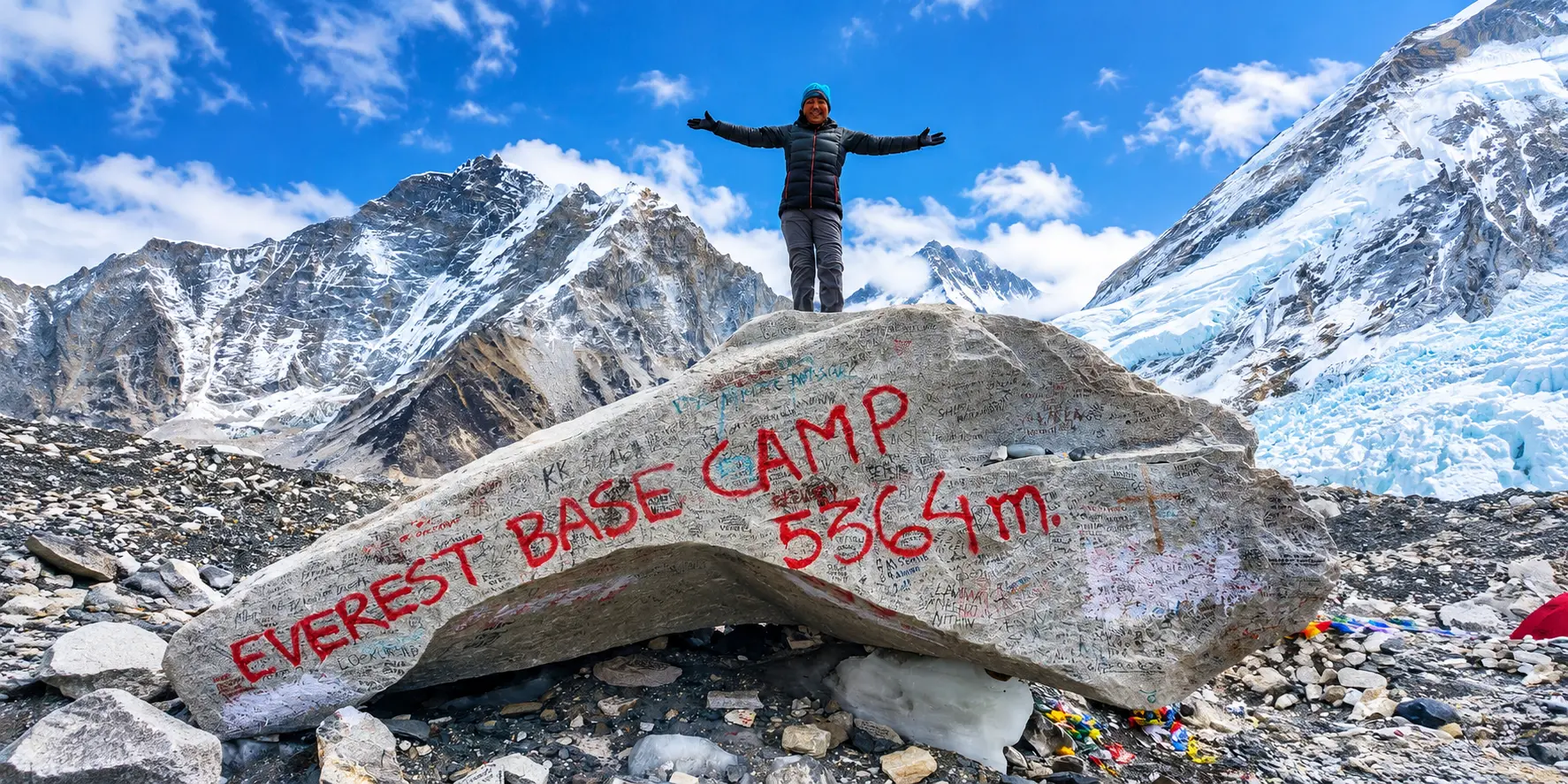
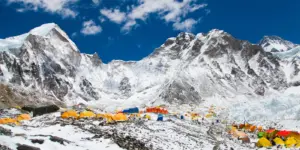
The big day: The trail follows the moraine to Gorakshep, a few lodges beside a sandy, often frozen lake bed at the foot of Kala Patthar, where you stop for lunch and drop your bags. In the afternoon, you continue along the rocky edge of the Khumbu Glacier to Everest Base Camp, marked by prayer flags and painted rocks beneath the tumbling ice of the Khumbu Icefall. In spring, you may see expedition teams setting up camp, and base camp also serves as the starting line for the Everest Marathon, held each year in late spring.
Tip: start early, carry a warm jacket, snacks and at least two litres of water, and take plenty of short breaks. The return to Gorakshep feels long, so save some energy.
Day 10: Kala Patthar at Sunrise and Down to Pheriche (about 4,240 m)
- Distance and time: About 15 to 17 km; seven to eight hours in total.
- Height: A climb of about 380 m to Kala Patthar at about 5,545 m, then a descent of about 1,300 m to Pheriche.
Before dawn, you climb up the dark slopes of Kala Patthar by headtorch. As the sun rises, it lights the summit of Everest, Nuptse, Pumori and Changtse, and the whole Khumbu Glacier spreads out below you. It is the finest view of Everest on the trek. Many trekkers remember this moment most. Our comparison of Gokyo Ri vs Kala Patthar explains why this viewpoint is so special.
After breaking camp in Gorakshep, you begin the long walk down through Lobuche and Thukla to Pheriche, where the Himalayan Rescue Association runs its aid post in the main seasons. With every step down, the air feels thicker, and sleep comes more easily.
Day 11: Pheriche to Namche Bazaar (about 3,440 m)
- Distance and time: About 18 to 20 km; six to seven hours.
- Height: A descent of about 800 m overall, with a climb of about 300 m from the river at Phunki Thenga towards Namche.
The trail retraces your steps through Pangboche and past Tengboche, then drops to the river before the final climb around the hillside to Namche. After days in the high mountains, the trees, birdsong and bustle of Namche feel wonderful, and many trekkers celebrate with a hot shower and a slice of cake from one of the bakeries.
Day 12: Namche Bazaar to Lukla (about 2,860 m)
- Distance and time: About 18 to 20 km; six to seven hours.
- Height: A long descent to the river, then a final climb of about 200 to 250 m to Lukla.
Your last day on the trail. The steep hill below Namche is hard on the knees, so use your poles and take your time. After crossing the suspension bridges and passing through Monjo and Phakding, the final uphill section to Lukla always feels longer than it should. In the evening, you can celebrate with your guides and porters. These people made the journey possible.
Day 13: Fly Back to Kathmandu
Flights from Lukla leave early in the morning, when the weather is usually clearest. In peak season, many land at Manthali, then drive back to Kathmandu; at other times, you fly straight to the capital. The afternoon is free for a hot bath, souvenir shopping or a farewell dinner.
Day 14: Departure
Our team transfers you to the airport for your flight home, or you continue your travels in Nepal. If you can, keep one or two spare days in Kathmandu after the trek in case Lukla flights are delayed.
Daily Distances and Walking Times in Summary
For quick reference, here is how the Everest Base Camp Trek 14 Days itinerary adds up on Trekrail:
- Day 2, Lukla to Phakding: About 8 km; three to four hours.
- Day 3, Phakding to Namche: About 12 km; five to six hours.
- Day 4, Namche acclimatisation: About 5 to 7 km; three to five hours.
- Day 5, Namche to Tengboche: About 10 to 11 km; five to six hours.
- Day 6, Tengboche to Dingboche: About 11 km; five to six hours.
- Day 7, Dingboche acclimatisation: About 4 to 5 km; three to four hours.
- Day 8, Dingboche to Lobuche: About 8 to 9 km; four to five hours.
- Day 9, Lobuche to base camp and Gorakshep: About 12 km; seven to eight hours.
- Day 10, Kala Patthar and Pheriche: About 15 to 17 km; seven to eight hours.
- Day 11, Pheriche to Namche: About 18 to 20 km; six to seven hours.
- Day 12, Namche to Lukla: About 18 to 20 km; six to seven hours.
Altogether, that is roughly 130 km on the trail. The distance isn’t what makes the trek challenging; it’s the altitude: above 4,000 m, even a short climb can leave you breathless.
The Four Stages of the Trek
The 14 days fall naturally into four stages, each with its own character.
Stage One: Forests and Villages (Days 2 to 4)
The lower valley is green and lively, with pine and rhododendron forest, waterfalls, farms and busy Sherpa villages. The walking is easy except for the climb to Namche, and the culture is everywhere: prayer wheels, mani stones carved with the mantra Om Mani Padme Hum, and the welcome of lodge families. Many shrines honour Guru Padmasambhava, the teacher revered for bringing Buddhism to the Himalaya. Our guide to Sherpa culture and traditions brings it to life.
Stage Two: Monasteries and Alpine Valleys (Days 5 to 7)
Above Namche, the views open up, and the great peaks come into full sight. This is the land of monasteries and yak pastures, of Tengboche and Pangboche, with Ama Dablam dominating the skyline; our Ama Dablam expedition guide explains why climbers consider it one of the world’s most beautiful peaks. The trees thin out above Pangboche, and the air grows noticeably thinner.
Stage Three: The High Glacier World (Days 8 to 10)
Above Dingboche, you enter a stark, magnificent landscape of moraine, ice and rock, surrounded by some of the highest mountains on Earth. Lodges are simpler, nights are colder, and every step takes effort, but the trek peaks at base camp and Kala Patthar.
Stage Four: The Descent (Days 11 to 13)
Coming down is fast and joyful. Appetite and sleep return; the forests and villages welcome you, and you have time to enjoy the places you rushed through on the way up.
The Hardest Days and How to Handle Them
Every trekker finds different days hard on the Everest Base Camp Trek 14 Days itinerary, but these are the ones most people remember:
- Day 3, the Namche Hill: The first real climb. Go slowly and stop to look back at the views.
- Day 9, base camp day: Long, high and rocky. Start early, eat well at Gorakshep and pace yourself.
- Day 10, Kala Patthar and the descent: An early, cold start followed by a long walk down. Dress warmly for the climb and use poles on the descent.
- Days 11 and 12: The long walk out. Big distances and steep descents. Protect your knees and keep a steady rhythm.
Our honest look at Everest Base Camp Trek difficulty explains how to prepare for each challenge.
Is 14 Days Too Long? Short Trek Options
If you cannot take two weeks for the full 14-day Everest Base Camp Trek, there are safe ways to shorten the trip without cutting acclimatisation. The secret is the helicopter: flying back from Gorakshep saves three days of walking while keeping the ascent’s acclimatisation days.
- Everest Base Camp Helicopter Trek: Nine days, walking up and flying back.
- Everest Elite Luxury Heli Trek: Ten days in comfort, with a helicopter finale.
- Everest Base Camp Luxury Lodge Trek: Eleven days, with the best lodges and helicopter flights.
- Luxury Everest Base Camp Trek with Helicopter Return: Twelve days, walking up in comfort and flying back.
We never recommend cutting the acclimatisation days to save time: they make the trek safe. Our guide to the short Everest Base Camp Trek explains the options in detail, and our guides to the helicopter tour vs TTrek with helicopter return, whether a helicopter can land at Everest Base Camp, and EveTrek helicopter tour restrictions cover the latest rules.
If you have only a day, the Everest Helicopter Tour, the Mt Everest by HTrekopter Tour, the Everest Heli Sherpa Village Walk, the Gokyo Lakes Helicopter Tour and the Sharing Everest Helicopter Tour with Kala Patthar Landing, when operating, show you Everest in a single morning, as described in our guides to the Everest Base Camp helicopter tour, the EBC trek or helicopter tour and the Kala Patthar landing reopening.
12, 14 or 16 Days: Which Is Right for You?
- 12 days: Possible for fit, experienced trekkers with good altitude history, but with less margin for illness or weather.
- 14 days: The classic balance of safety, time and enjoyment, and the right choice for most first-time trekkers.
- 16 days or more: Ideal for older trekkers, slower walkers or anyone who wants an extra acclimatisation night, a quieter overnight in Pangboche or a side trip to Chhukung.
If you have more time, the Gokyo Lakes Trek (described in our Gokyo Lakes Trek guide) and the Everest 3 Pass Trek (described in our Everest Three Passes Trek and Cho La Pass guides) take you deeper into the Khumbu. For trekkers over fifty, our Everest Base Camp Trek over 50 guide explains how to adapt the itinerary.
Variations on the 14-Day Route
Within the classic 14 days, small changes can make a big difference to your experience. Your guide may suggest some of these, depending on the season, the group and itineraries:
- Tengboche or Deboche: Sleeping at Tengboche lets you attend the monks’ prayers; Deboche, a short walk on, is quieter and slightly lower.
- Pheriche or Dingboche on the way down: Some itineraries descend to Pheriche, others to Dingboche; both are good places to recover.
- Kala Patthar at sunrise or sunset: Sunrise is classic, but some groups climb in the late afternoon of Day 9 for sunset light on Everest, which frees up the morning of Day 10.
- Khumjung or the Everest View on Day 4: Both are excellent acclimatisation walks; many groups combine them.
- Pangboche’s upper village: A short detour leads to the old monastery above the main trail.
- Side valleys: The quiet route to Ama Dablam Base Camp Trekking, described in our Ama Dablam Base Camp Trek guide, can be added with an extra day or two.
Lodges and Food on the 14-Day Trek
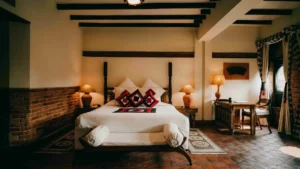
Every night on the trek you stay in a Trekeahouse lodge run by a local family. Rooms are simple twin rooms with beds, blankets and pillows; lower down, many lodges have attached bathrooms and hot showers, while higher up, from Lobuche onwards, bedrooms are shared and facilities are basic. The heart of every lodge is the dining room, warmed in the evening by a stove, where trekkers gather to eat, play cards and share stories.
Menus are surprisingly varied, but the trekker’s favourite is dal bhat, rice with lentil soup and vegetable curry, often with free refills. We recommend vegetarian meals higher up, where meat has been carried in for days, and plenty of soup and hot drinks. For more comfort, our Everest Base Camp Luxury Lodge Trek uses the best lodges in the region, including a night at the Hotel Everest View.
Lukla Flights and Buffer Days
The one thing nobody can control on the 14-day Everest Base Camp Trek itinerary is the weather at Lukla. Flights operate only in good visibility, and clouds or wind can delay them by hours or, occasionally, days In peak season, most flights use Manthali Airport in Ramechhap, a four- to five-hour drive from Kathmandu.
We strongly recommend keeping one or two buffer days after the trek before your international flight. If you do not need them, they are perfect for sightseeing in Kathmandu. Prefer to avoid flying. The Everest Base Camp Trek by Road and the classic Jiri altogether to Everest Trek, explained. Trekour Jiri to Everest Base Camp guide lets you walk or drive from the lower hills.
Best Time for the 14-Day Trek
The 14-day itinerary works in every season, but spring and autumn are best. Our month-by-month guide to the best time for the Everest Base Camp Trek covers all seasons.
- Spring (March to May): Warmer days, rhododendrons, and the expedition camp at base camp; read our April guide to the Everest Base Camp Trek.
- Autumn (late September to November): The clearest views and most stable weather; read our guide to the Everest Base Camp Trek in October.
- Winter (December to February): Quiet and clear, but very cold at night.
- Monsoon (June to August): Wet, cloudy and green, with frequent flight delays; read our guide to the Everest Base Camp Trek in the monsoon.
Preparing for 14 Days on the Trail
The trek requires no technical skills, but good preparation makes every day more enjoyable.
- Training: Start 2 to 3 months ahead with walking, hiking, stairs, and leg strength; our 12-week training plan shows you how, and our TTrek to the Everest Base Camp Trek for beginners explains what first-timers should expect.
- Packing: Pack layers for temperatures from warm days to nights well below freezing, a good sleeping bag and broken-in boots; see our Everest Base Camp Trek packing list and our trekking equipment
- Permits: You need the Sagarmatha National Park entry permit and the Khumbu Pasang Lhamu Rural Municipality permit, both arranged by our team.
- Guides: Rules vary by area and can change, so check before you travel; we strongly recommend a licensed guide. Read our article on Nepal’s mandatory guide rules and our wider trekking in Nepal guide.
- Visa and insurance: Check entry requirements in our Nepal visa guide, and choose travel insurance that covers trekking to about 5,600 m and helicopter evacuation.
Staying Safe at Altitude Over 14 Days
The itinerary is designed for safe acclimatisation, but everyone reacts differently. Our guides check your health every day, including oxygen levels, and know the warning signs.
- Mild symptoms: Headaches, poor sleep, and loss of appetite are common; rest, drink, and tell your guide.
- Serious symptoms: A headache that doesn’t ease, vomiting, loss of balance, confusion, or breathlessness at rest mean you must stop and descend.
- The golden rule: Never go higher with symptoms. If they worsen, go down.
Medical help is available at the Himalayan Rescue Association aid post in Pheriche during the main seasons, and helicopter evacuation is possible in emergencies, weather permitting.
Extending Your Trip
Many trekkers add a few days to their two weeks. In the Everest region, climbers can extend the adventure with Island Peak or Lobuche Peak Climbing, or plan a separate expedition to Mera Peak Climbing in the neighbouring Hinku valley. Others prefer a slower, mindful journey on the Everest Base Camp Yoga Trek, described in our guide to mindful trekking in the Himalayas; climbers should check the latest NMA peak permit updates. For a shorter, lower alternative, the Everest View Trek visits Namche and Tengboche.
After the trek, relax with Trekitwan Jungle Safari or the Bardia National Park Tour; enjoy the lakeside town described in our Pokhara sightseeing guide; try Paragliding in Pokhara or Trishuli River rafting; or see more of the country: Trek the Classic Nepal Tour.
Beyond Nepal, the Luxury Bhutan Tour and the 7 Day Bhutan Tour include a hike to the Tiger’s Nest Monastery. The Lhasa to Everest Base Camp Overland Tour, described in our Lhasa to Everest Base Camp guide, shows you the mountain’s northern side. ur comparison of Everest Base Camp vs the Snowman Trek looks at Bhutan’s toughest trek
Other GreatTrekks in Nepal
If you love the two-week format, Nepal has many other treks of a similar length, as well as shorter ones for a few spare days. Browse our list of the top 50 treks in Nepal, or consider:
- Annapurna Base Camp Trek: A spectacular amphitheatre of peaks, described in our ultimate guide to the Annapurna Base Camp Trek.
- Manaslu Circuit Trek: A remote circuit around the world’s eighth-highest mountain, crossing the Larke Pass.
- Langtang Valley Trek: A shorter trek close to Kathmandu, rich in Tamang culture.
- Ghorepani Poon Hill Trek: A short, easy classic for a few spare days.
Practical Tips for the 14-Day Trek
- Book early for spring and autumn, when flights and lodges fill up.
- Walk slowly from day one, especially on the climb to Namche.
- Use the acclimatisation days well: Hike high, then rest.
- Drink three to four litres a day, and Drink Water even when your appetite fades.
- Start early each morning for the clearest views and calmer weather.
- Keep warm layers handy: Temperatures drop quickly when the sun disappears.
- Carry some cash for snacks, hot showers and charging, as there are few ATMs above Namche.
- Keep one or two buffer days for Lukla flights.
Common Mistakes on the 14-Day Itinerary
- Racing to Namche: The first big climb sets the tone; go slowly.
- Treating rest days as idle days: Short hikes to higher ground help you acclimatise.
- Ignoring symptoms: Altitude sickness is easiest to treat.
- Skipping Kala Patthar: It offers the best view of Everest on the whole trek.
- Booking an international flight: Leave a buffer for weather delays.
- Overpacking: Porters carry limited loads; pack only what you need.
Frequently Asked Questions About the Everest Base Camp Trek 14 Days
Is 14 days enough for the Everest Base Camp Trek?
Yes. Fourteen days is the classic, recommended length, with two acclimatisation days and enough time to reach base camp and Kala Patthar safely. Add one or two buffer days for flights.
On which day do you reach Everest Base Camp?
On Day 9 of the 14-day itinerary, after acclimatisation days in Namche and Dingboch, you sleep at Gorakshep, not at base camp itself.
How far do you walk each day?
Usually about 8-12 km on the way up, and up to about 20 km on the loitering days, for a total of roughly 130 km.
How many hours do you walk a day?
Most days involve four to six hours of walking, with three longer days of seven to eight hours: base camp day, Kala Patthar day and the walk back to Namche.
Why are there two acclimatisation days?
Namche and Dingboche come after the two biggest altitude jumps. Pending an extra night at each, with a hike to higher ground, helps your body adapt and reduces the risk of altitude sickness.
What is the hardest day of the trek?
Most trekkers find Day 9, to base camp and back to Gorakshep, the hardest, followed by the early climb of Kala Patthar on Day 10.
Can the 14-day Trek be shortened?
Yes, safely, by flying back from Gorakshep by helicopter, as on our 99-12-day trek helicopter treks. Cutting acclimatisation days is not recommended.
Do you sleep at Everest Base Camp?
No. Trekkers visit base camp during the day. Trekkers sleep at Gorakshep, about a two- to three-hour walk away. Base camp is reserved for climbing expeditions.
What happens if my Lukla flight is delayed?
Your guide rebooks you on the next available flight, and your buffer days absorb the delay. In long delays, a helicopter is often the practical alternative.
Is the 14-day trek suitable for trekkers?
Yes. No technical skills are needed, and the 14-day itinerary gives first-timers time to acclimatise—good fitness and a steady pace matter most.
Final Thoughts: Two Weeks That Last a Lifetime
The 14-day Everest Base Camp Trek itinerary has become a classic for good reason. The itinerary’s altitude gives you time to enjoy the monasteries, villages, and mountains along the way, while still fitting into a two-week holiday. From the roar of the Lukla runway to the first light on Everest from Kala Patthar, every day brings something unforgettable.
Join our classic 14-day Everest Base Camp Trek, or choose a shorter helicopter option such as the Everest Base Camp Helicopter Trek. Meet our guides on our team page, learn more about our company, read about our responsible tourism commitments, our payment options and our company registration and legal documents, then plan your trip or contact us today. Your fourteen days in the Khumbu are waiting.
Quick Inquiry
Explore More


