
Helicopter Rescue in the Everest Region: How Evacuation Works
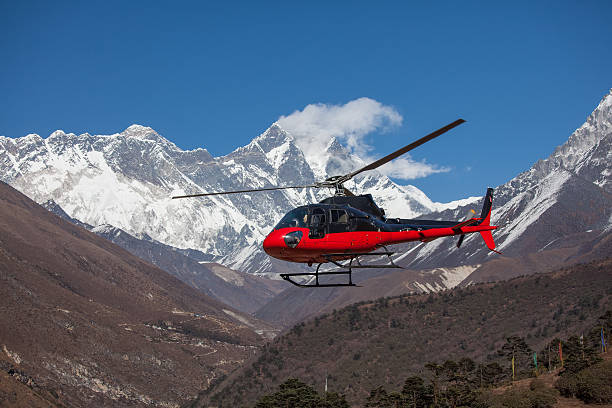
Helicopter Rescue in the Everest Region: How Evacuation Works
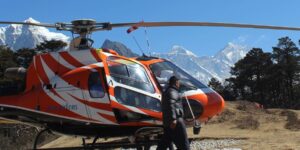
It is just after dawn in Lobuche. A trekker who went to bed with a cough woke in the night breathless and exhausted, and the guide has been at their side for hours, keeping them warm and helping them sit upright. By first light, the decision has been made, the insurer has confirmed cover, and a helicopter is on its way up the Khumbu valley. Within an hour, the patient is breathing thicker air in Lukla, and by mid-morning they are in a hospital in Kathmandu.
Helicopter rescue in the Everest region is one of the most important safety nets in the Himalaya, and knowing how it works is part of preparing for any trek in the Khumbu. On our Everest Base Camp Trek, careful acclimatization, experienced Sherpa guides, and daily health checks mean that most trekkers never need a helicopter. Still, every trekker should understand when one is needed and what happens if it is.
In this guide, our team explains when evacuation is genuinely necessary, why descent always comes first, how a rescue works step by step, who decides, the current rules for rescue flights, how to protect yourself from rescue scams, the medical facilities on the trail, the role of travel insurance, and how our team handles emergencies.
The Short Answer: How Does Helicopter Rescue Work in the Everest Region?
Helicopter rescue in the Everest region works in stages: your guide recognizes a serious problem, starts descent and first aid, and contacts the trekking company, which confirms medical need and insurance with your insurer and books a licensed operator. In daylight and safe weather, the helicopter collects you and flies you to Lukla or Kathmandu for treatment.
A helicopter is for genuine emergencies, such as severe altitude sickness, serious injury or acute illness, not for tiredness or minor complaints. In most cases of altitude sickness, descending on foot is the first and most important treatment.
Helicopter Rescue at a Glance
- When it is used: Severe altitude sickness, serious injuries, acute illness, or when descent on foot is impossible or unsafe.
- First response: Stop climbing, give first aid, and descend; a helicopter supports, but does not replace, this.
- Who is involved: You, your guide, a medical professional where available, the trekking company, your insurer, and a licensed helicopter operator.
- Where it flies: Usually to Lukla or directly to Kathmandu, depending on the patient’s condition and the rules in force.
- When it flies: In daylight and in safe weather; night flights in the mountains are not normally possible.
- Insurance: Essential, covering high-altitude trekking to at least 6,000 m and helicopter evacuation.
- Current rules: Rescue flights must be medically justified, with local medical assessment in non-critical cases.
- Medical help on the trail: Hospitals in Lukla, Phakding, and Khunde; a health post in Namche; the aid post at Pheriche; and a spring clinic at Everest Base Camp.
- Our trek: Acclimatization days, daily health checks,s and emergency support on our Everest Base Camp Trek.
Why Helicopter Rescue Matters in the Khumbu
No roads reach the high Khumbu. From Gorakshep, the last settlement below Everest Base Camp, it takes about three days to walk down to Lukla, and a further flight or a long journey by road to reach Kathmandu.
For someone seriously ill at altitude, that is far too long. A helicopter can cover the same distance in around twenty minutes to Lukla and an hour or so to Kathmandu.
The Everest region also has more people at high altitude than almost anywhere else in the Himalaya, and altitude illness can affect anyone, no matter how fit. That is why helicopters, local clinics, and well-trained guides together form a rescue system that saves lives every season.
Our guide to altitude sickness on the Everest Base Camp Trek explains why the body struggles at altitude, and our Acute Mountain Sickness page covers the basics.
When Is a Helicopter Rescue Needed?
Evacuation is considered when a trekker’s life or long-term health is at risk, and a safe descent on foot isn’t possible quickly enough. The main situations are:
Severe Altitude Sickness
Mild acute mountain sickness, with a headache, tiredness, and loss of appetite, usually improves with rest and doesn’t require a helicopter. Two severe forms are emergencies:
- High-altitude pulmonary edema (HAPE): Fluid in the lungs, with breathlessness even at rest, a persistent cough, chest tightness, crackling breathing, and extreme fatigue.
- High-altitude cerebral edema (HACE): Brain swelling, with a severe headache, confusion, unusual behavior, drowsiness, ss and loss of balance or coordination.
Both can become life-threatening within hours. They require immediate descent, oxygen, and medical care, and often a helicopter.
Serious Injuries
Fractures, head injuries, deep wounds or a badly twisted knee on steep, rocky trails can make walking impossible. Where a patient cannot be carried down safely, or needs urgent hospital care, a helicopter is the answer.
Acute Illness
Severe infections, chest pain, serious dehydration from gastrointestinal illness that does not respond to treatment, or the worsening of an existing medical condition can all require evacuation.
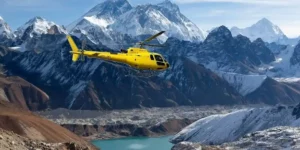
When a Helicopter Is Not the Answer
A helicopter is not a cure for tiredness, a mild headache, an upset stomach that responds to rest and fluids, sore legs, or homesickness. In those cases, rest, a slower pace, an extra acclimatization day, or a gentle descent is usually far better, and an unnecessary flight from high altitude carries its own risks.
Descend First: The Golden Rule
For altitude sickness, the single most effective treatment is to go down. Descending even a few hundred meters often brings dramatic improvement, and serious cases may need to go down much further. Because helicopters cannot fly at night or in bad weather, descent on foot often begins long before a helicopter arrives.
- Walk down with support: A guide and porter help the patient descend and carry their bag.
- Use a horse or a porter carry: In the Khumbu, a patient who cannot walk can be carried down on horseback or by porters.
- Give oxygen if available: Oxygen buys valuable time on the way down.
- Follow medical advice: Give medication for altitude illness only as advised by a doctor or trained medic.
- Use a portable pressure chamber where available: Clinics and some expeditions carry portable hyperbaric bags that simulate a lower altitude.
The Himalayan Rescue Association aid post at Pheriche, staffed by volunteer doctors during the main seasons, is often where patients are assessed during descent.
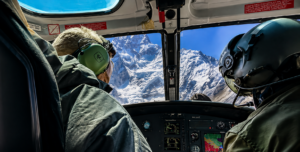
Where Emergencies Happen on the Everest Base Camp Trail
Risk rises with altitude, so it helps to know where problems most often appear on the classic route and where help is closest:
- Lukla and Phakding (about 2,860 m and 2,610 m): Altitude illness is rare this low; most problems are stomach upsets, colds and sprains, with hospitals in both villages.
- Namche Bazaar (about 3,440 m): The first big altitude gain, where some trekkers feel mild symptoms; the acclimatization hike to the Hotel Everest View helps, and the Khunde Hospital is close by.
- Tengboche and Pangboche (about 3,860 m and 3,985 m): Symptoms become more common above 3,500 m.
- Dingboche and Pheriche (about 4,410 m and 4,240 m): A key acclimatization stop, with the Pheriche aid post a short walk away.
- Lobuche (about 4,910 m): One of the most common evacuation starting points, especially after nights of poor sleep.
- Gorakshep, Everest Base Camp and Kala Patthar (about 5,164 to 5,545 m): The highest and most demanding days, where the body is under the most strain.
This pattern is why helicopter rescue in the Everest region most often begins in the upper valley, and why every good itinerary builds in rest days. Our guides to the Everest Base Camp Trek in 14 days and the Everest Base Camp Trek distance show how the route is paced.
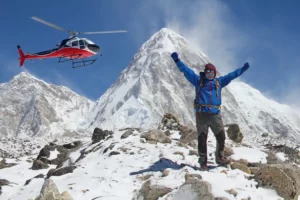
How a Helicopter Rescue Works, Step by Step
Every emergency is different, but a genuine helicopter rescue in the Everest region usually follows these steps.
Step 1: Recognizing the Problem
Your guide checks every trekker’s health each morning and evening, asking about headaches, appetite, sleep, and energy, and many guides also carry a pulse oximeter. When symptoms become serious, the guide acts immediately.
Step 2: Stabilizing and Descending
The guide stops the ascent, gives first aid, keeps the patient warm and, wherever possible, begins descending. A patient with serious symptoms is never left alone.
Step 3: Medical Assessment
Where possible, the patient is assessed by a doctor or health worker, for example at the Pheriche aid post, the Khunde Hospital, al or a local health post, or by telephone with a medical professional.
Step 4: Calling for Help
The guide contacts our Kathmandu office by mobile phone, satellite phone, or radio with the patient’s condition, location, and details.
Step 5: Insurance Confirmation
Our office contacts the patient’s insurer or its 24-hour assistance company with the policy details and medical information. In non-critical cases, the insurer confirms cover before dispatching the helicopter; in life-threatening emergencies, the priority is to fly as soon as it is safe.
Step 6: Dispatch and Flight
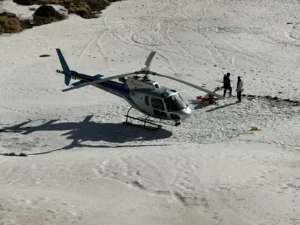
A licensed helicopter operator is booked, and the pilot plans the flight based on the weather, altitude, and the safest landing site, which may be lower than where the patient is. The helicopter lands, the patient boards with their guide’s help, and is flown to Lukla or Kathmandu.
Step 7: Hospital Care
In Kathmandu, patients are taken to an international-standard hospital or travel clinic for assessment and treatment. Many recover quickly once they reach lower altitude.
Step 8: Paperwork and Recovery
Medical reports, flight records and other documents are prepared for the insurance claim, and our team helps with hotel arrangements, onward travel and contact with family.
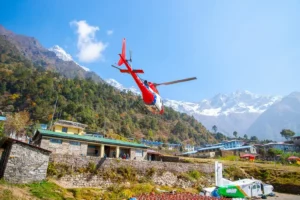
Who Decides on an Evacuation?
Deciding on a helicopter rescue is a shared responsibility. The patient, the guide, a medical professional where available, the trekking company and the insurer all play a part, while the pilot has the final say on whether, when and where it is safe to fly.
You have the right to understand why an evacuation is recommended and to ask questions, and a good guide will explain clearly what is happening. In a life-threatening emergency, however, delay can be dangerous, so trust experienced advice.
The Rules for Rescue Flights Today
Rescue flights in the Everest region now follow stricter procedures than in the past. After local communities and authorities raised concerns about the number of helicopter flights, and after cases of unnecessary rescues, stakeholders agreed on new rules. Under these procedures, direct rescue flights to Kathmandu should be medically justified.
In non-critical cases, local health workers at a health post or the hospital in Lukla usually assess patients first and decide whether a transfer to Kathmandu is needed; in critical cases, patients can be flown directly, sometimes after signing a declaration that the transfer is essential.
These procedures continue to develop, and our team follows the current guidance for every emergency. For the background on helicopter flights in the region, read our guide to Everest helicopter tour restrictions.
Rescue Fraud: What Happened and How to Protect Yourself
Sadly, helicopter rescue in Nepal has also been abused. Investigations have found cases in which trekkers were pressured into unnecessary evacuations for minor illnesses and insurers received false or duplicated claims.
In recent seasons, police charged several people, and the government announced a zero-tolerance policy, a task force, and regular audits to clean up the system. Genuine rescues save lives every season, but it helps to know the warning signs:
- Pressure without serious symptoms: Being urged to fly for mild tiredness, a slight headache, or a minor stomach upset.
- Rushed or vague diagnosis: No clear explanation of what is wrong or why a helicopter is needed.
- No contact with your insurer: Being told that “insurance will cover everything” without anyone speaking to your insurer.
- Unexplained documents: Being asked to sign forms you do not understand.
- Unexplained destinations: Being taken to a clinic you did not choose without a medical reason.
To protect yourself, book with a registered, licensed company; trek with a licensed guide; learn the basics of altitude sickness; keep your insurer’s assistance number with you; ask questions and, where possible, get a second opinion from the doctors at Pheriche. You can view our company registration and legal documents online and read our article on Nepal’s mandatory guide rules.
Medical Facilities on the Everest Trail
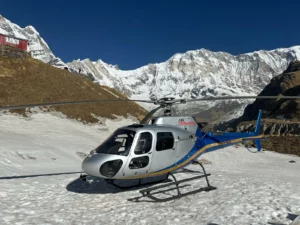
The Everest region has better medical support than most remote trekking areas. Facilities include:
- Lukla (about 2,860 m): The Pasang Lhamu Nicole Niquille Hospital, a lifeline for local people and trekkers near the airstrip, described in our guide to Lukla airport and flights.
- Phakding (about 2,610 m): The Himalayan Sherpa Hospital, a small modern hospital with emergency care, X-ray, and ultrasound, on the main trail through Phakding.
- Namche Bazaar (about 3,440 m): A health post and pharmacies.
- Khunde (about 3,840 m): The Khunde Hospital, founded by Sir Edmund Hillary’s Himalayan Trust, with outreach clinics in nearby villages, described in our guide to Khumjung and Khunde.
- Pheriche (about 4,240 m): The Himalayan Rescue Association aid post, with volunteer doctors and daily altitude talks in the main trekking seasons.
- Everest Base Camp (about 5,364 m): A volunteer clinic run by the Himalayan Rescue Association during the spring climbing season, as described in our guide to what you see at Everest Base Camp.
- Kathmandu: International-standard hospitals and travel clinics for full treatment.
Weather, Daylight and Altitude Limits
Helicopters are powerful tools, but they have limits. Understanding them explains why descent and first aid are always the first response.
- Daylight only: Rescue helicopters in the mountains fly in daylight, so an evening emergency usually means a night of care and, where possible, descent before a morning flight.
- Weather: Cloud, snow, and strong winds can ground helicopters, sometimes for days.
- Thin air: At high landing sites, helicopters can carry only a few people, so a companion may not be able to fly with the patient.
- Landing sites: The pilot chooses the safest site, which may be lower than where the patient is.
- Expedition areas: Rescues on the mountain above base camp are specialist operations, described below.
Our guides to the best seasons for an Everest helicopter tour and the best time for Everest Base Camp Trek explain how weather changes through the year.
Seasons and Emergencies
Emergencies can happen in any season, but the risks change through the year. Spring and autumn are the busiest seasons, with the most trekkers at altitude and the most reliable flying weather; read our guides to the Everest Base Camp Trek in April and the Everest Base Camp Trek in October. In winter, cold and snow add to the risks, and some lodges and clinics close.
In the monsoon, clouds often ground helicopters for long periods so that a rescue may take much longer; our guide to the Everest Base Camp Trek in the monsoon explains the season. The aid post at Pheriche is usually staffed only in the main trekking seasons.
Comfort Does Not Prevent Altitude Sickness
Staying in the best lodges makes a trek far more comfortable, but it does not change how your body reacts to thin air. Trekkers on luxury itineraries need the same acclimatization days and the same attention to symptoms as everyone else.
Our guides to the luxury Everest Base Camp Trek and the luxury lodges in the Everest region explain what comfort can and cannot do at altitude. The gentler Everest View Trek, described in our guide to the luxury Everest View Trek, stays at lower altitudes for those who want less risk.
Slower itineraries help too: the Everest Base Camp Yoga Trek, described in our guide to mindful trekking in the Himalayas, and the walk-in route of the Everest Base Camp Trek by Road give your body more time to adapt. Whatever your trip style, helicopter rescue in the Everest region remains a safety net, never a substitute for acclimatization.
How Long Does a Rescue Take?
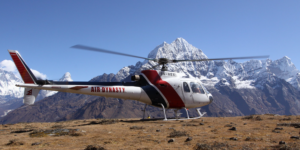
There is no single answer. In clear weather, with good phone coverage and quick insurance confirmation, a helicopter can often reach a patient within a few hours of the call, and the flight from the upper Khumbu to Lukla takes only around twenty minutes, with Kathmandu about an hour further.
If the call comes late in the day, or cloud covers the valley, the flight may not be possible until the next morning or later. That is why the first hours of care, descent and oxygen matter so much.
Travel Insurance for Helicopter Rescue
Travel insurance is not optional for the Everest region. Without it, arranging a quick evacuation can be very difficult. Before you travel, check that your policy:
- Covers high-altitude trekking: To at least 6,000 m, which includes Kala Patthar at about 5,545 m.
- Includes helicopter evacuation: Search and rescue and emergency medical evacuation by helicopter.
- Includes medical treatment: Hospital care in Nepal and, if needed, repatriation home.
- Has a 24-hour assistance number: Keep it on your phone and on paper.
- States its conditions clearly: Some policies have conditions, such as trekking with a licensed guide or declaring pre-existing medical conditions.
Share your policy number, the assistance number, and an emergency contact with your guide before the trek. Remember that a planned helicopter return or sightseeing flight is part of your trip, not an emergency, and is treated differently from a rescue. Our guides to Everest Base Camp Trek permits and the Nepal visa information cover the other paperwork you need.
Information to Give Your Guide Before the Trek
- Your insurance details: Policy number, insurer’s name, and the 24-hour assistance number.
- An emergency contact: Someone at home you can reach quickly.
- Medical conditions: Any existing conditions, recent surgery, or previous altitude illness.
- Medications and allergies: Anything you take regularly or must avoid.
- Your passport details: Needed for flights and hospital admission.
This information is kept confidential and used only to help you if something goes wrong.
Preventing the Need for Rescue
The best rescue is the one that never happens. Most altitude emergencies can be prevented by following a few simple principles:
- Acclimatize properly: Take the rest days in Namche and Dingboche, and never skip them to save time.
- Climb high, sleep low: Day hikes to higher ground, with nights lower down, help your body adapt.
- Go slowly: A steady pace is safer than a fast one.
- Drink well and avoid alcohol: Both help your body adapt.
- Report symptoms early: Tell your guide about headaches, nausea, or unusual tiredness.
- Look after your feet and knees: Good boots and trekking poles reduce the risk of falls on steep descents.
- Prepare physically: Our 12-week training plan builds the fitness you need.
Our guides to Everest Base Camp Trek difficulty, the Everest Base Camp Trek for beginners, and the Everest Base Camp Trek packing list help you prepare, and our trekking equipment page lists the gear you need.
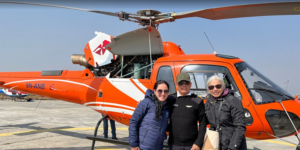
How Our Team Handles Emergencies
Safety is at the heart of every trek we run. On the Everest Base Camp Trek and all our Khumbu itineraries, our approach includes:
- Well-paced itineraries: Acclimatization days in Namche and Dingboche, with extra days available for slower acclimatizers, as shown in our Everest Base Camp Trek itinerary.
- Experienced guides: Sherpa guides trained in first aid and altitude awareness, with years of experience recognizing the early signs of illness.
- Daily health checks: Morning and evening checks on every trekker, with many guides carrying pulse oximeters.
- Clear descent plans: Guides know where to descend, how quickly, and how to get help.
- 24-hour support: Our Kathmandu office coordinates helicopter evacuation with insurers and licensed operators when needed.
- Honest advice: We never push trekkers to fly when descent or rest is the better answer.
Meet our guides on our team page and learn more about our company.
Rescue on the Mountain: Everest and the Trekking Peaks
Above Everest Base Camp, rescues become specialist operations. Helicopters have landed in the Western Cwm at around 6,400 m to collect sick or injured climbers, and long-line rescues, in which a climber is clipped to a line beneath the helicopter, have taken place even higher.
These are among the most demanding flights in aviation and are only attempted by highly experienced pilots in good conditions. Our guide to whether a helicopter can land at Everest Base Camp explains how base camp flights work.
Trekking peaks carry their own risks. Climbers on Island Peak Climbing, described in our Island Peak climbing guide, Lobuche Peak Climbing and Mera Peak Climbing should check that their insurance covers climbing to the summit altitude, and read our Ama Dablam expedition guide and the latest NMA peak permit updates before bigger objectives.
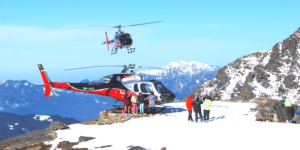
Rescue on Other Routes in the Khumbu
The same system covers the whole region, but remoteness and terrain vary. On the Gokyo Lakes Trek, described in our Gokyo Lakes Trek guide, helicopters can reach the lakes in good weather, but the nearest doctors are further away.
On the Everest 3 Pass Trek, the high passes of the Cho La Pass and the Renjo La Pass, and the climb of Chhukung Ri, are remote, so carrying water, warm layers, and a plan for turning back matters even more. Quieter routes, such as Ama Dablam Base Camp Trekking and the historic Jiri to Everest Trek, are also covered by the regional rescue network.
Planned Helicopter Flights Are Not Rescues
It is important to distinguish rescues from planned flights. A helicopter return after reaching base camp, or a sightseeing flight to Kala Patthar, is a planned part of your holiday and follows the commercial rules in force. At the same time,e a rescue is a medical emergency.
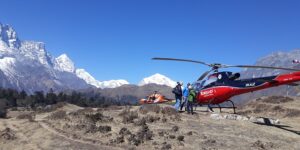
Our guides to the Everest Base Camp Trek with helicopter return, the Everest helicopter tour with breakfast, the Kala Patthar landing and the Gokyo helicopter tour explain how planned flights work.
If you want a helicopter as part of your trip, choose a trek that includes one, such as the Luxury Everest Base Camp Trek with Helicopter Return, the Everest Base Camp Helicopter Trek, the Everest Base Camp Luxury Lodge Trek, or the Everest Elite Luxury Heli Trek. Never use a rescue to cut a trek short.
After an Evacuation
Evacuation can be frightening, and many patients feel disappointed after a dream trek ends. Most recover quickly once they reach lower altitude, but follow your doctor’s advice before traveling or flying home. Our team stays in touch throughout, helps with hotel arrangements in Kathmandu, and supports you with documents for your insurance claim.
If you are well enough, gentle days in and around Kathmandu, such as our Kathmandu Day Tour guided by our Kathmandu sightseeing tips, a gentle sunrise walk on Nagarkot Hiking, a relaxing stay by the lake described in our Pokhara sightseeing guide, or a lowland Chitwan Jungle Safari can still make the rest of your holiday memorable. Many trekkers return to finish what they started, often on the Everest View Trek or another attempt at base camp.
Older Trekkers, Families and Medical Conditions
Altitude illness does not depend on age or fitness, but some travelers need extra planning. If you have heart or lung conditions, high blood pressure, diabetes, or any other medical condition, see your doctor before booking and tell us about it. Older trekkers will find useful advice in our guide
the Everest Base Camp Trek over 50, and families should read our guide to the Everest Base Camp Trek with kids, because children may not report symptoms clearly. Our guide to how many days the EBC trek takes explains how extra days add safety.
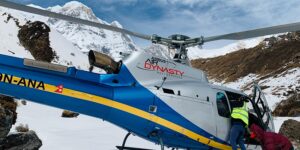
Beyond the Khumbu: Rescue in Other Regions
The principles of helicopter rescue in the Everest region apply across Nepal, but every region is different. On the Annapurna Circuit Trek, the Himalayan Rescue Association runs a seasonal aid post in Manang before the Thorong La, and the Tilicho Lake Trek reaches similar heights.
The Annapurna Base Camp Trek, described in our ultimate guide to Annapurna Base Camp, is lower but still high enough for altitude illness, and the Langtang Valley Trek and the Langtang Gosaikunda Trek climb above 4,000 m within a few days of Kathmandu.
More remote routes, such as the Manaslu Circuit Trek over the Larke Pass, the Upper Mustang Trek, Lower Dolpo Trekking, and the Kanchenjunga Base Camp Trek, are farther from hospitals, so guides, insurance, and careful planning matter even more. Our Nepal trekking guide and our list of the top 50 treks in Nepal help you compare routes.
Seeing Everest Without the Altitude Risk
If a medical condition makes high-altitude trekking unwise, you can still see Everest. The one-hour Everest mountain flight cruises along the Himalaya from Kathmandu without landing, while short helicopter tours, such as the Everest Helicopter Tour,
Mt Everest by Helicopter Tour, the Sharing Everest Helicopter Tour with Kala Patthar Landing, the Everest Heli Sherpa Village Walk, and the Gokyo Lakes Helicopter Tour, keep time at altitude short. Talk to your doctor first if you have heart or lung conditions, and read our comparison of the EBC trek or helicopter tour.
Your Pre-Trek Safety Checklist
Good preparation is the best way to make sure that helicopter rescue in the Everest region remains something you only read about:
- See your doctor: Discuss altitude, existing conditions, and any medication well before you travel.
- Arrange the right insurance: Make sure it covers high-altitude trekking and helicopter evacuation.
- Book a registered company and licensed guide: Check credentials before you book.
- Plan acclimatization days: Add a spare day for weather.
- Pack a personal first aid kit: With blister care, rehydration salts and your own medicines.
- Share your details: Share your insurance, emergency contact, and medical information with your guide.
- Learn the warning signs: Know the symptoms of AMS, HAPE and HACE before you set off.
Respecting the Rescue System
Helicopter rescue in the Khumbu depends on pilots’ skill, volunteer doctors’ dedication, and the goodwill of local communities, whose way of life we describe in our guide to Sherpa culture and traditions. Use it wisely: only for genuine emergencies, with honest information and respect for the rules.
Consider supporting the Himalayan Rescue Association’s work at Pheriche, and remember that a well-planned trek with a good guide is the best protection. Learn more on our responsible tourism page and in our Sagarmatha National Park guide.
Common Mistakes
- Ignoring early symptoms: Small problems become emergencies when you hide them.
- Climbing higher with symptoms: Never ascend with worsening altitude sickness.
- Waiting for a helicopter instead of descending: Descent should begin as soon as it is safe.
- Travelling without proper insurance: Check altitude limits and helicopter cover before you go.
- Not sharing insurance details: Your guide needs them before an emergency, not during one.
- Accepting an evacuation without explanation: Ask why it is needed and who has been contacted.
- Trekking alone: A partner or guide can get help when you cannot.
Frequently Asked Questions About Helicopter Rescue in the Everest Region
When is a helicopter rescue needed?
For severe altitude sickness, such as HAPE or HACE; serious injuries; acute illness; or when descent on foot is not possible or safe. Mild symptoms are usually treated with rest or descent.
Who decides on an evacuation?
The patient, the guide, a medical professional (where available), the trekking company, and the insurer decide, while the pilot decides whether it is safe to fly.
How long does a rescue take?
In good weather, a helicopter can often arrive within a few hours. In bad weather or late in the day, it may have to wait until the next morning.
Can helicopters fly at night in the Everest region?
Not normally. Rescue helicopters in the mountains fly in daylight, which is why first aid and descent are so important.
Where does the helicopter take you?
Usually to Lukla or directly to Kathmandu, depending on the patient’s condition and current rescue-flight rules.
What altitude should my insurance cover?
At least 6,000 m for the Everest Base Camp Trek, with helicopter evacuation and medical treatment clearly included.
Do I need to contact my insurer myself?
Our office usually contacts your insurer’s assistance team, but keep the number with you and share it with your guide before the trek.
How can I avoid a fake rescue?
Book with a registered company, learn the basics of altitude sickness, ask why an evacuation is needed, and make sure your insurer has been contacted.
Are there doctors on the Everest Base Camp trek?
Yes. There are hospitals in Lukla, Phakding, and Khumbu; a health post in Namche; the Himalayan Rescue Association aid post in Pheriche; and a spring clinic at Everest Base Camp.
How does your team keep trekkers safe?
Our Everest Base Camp Trek includes acclimatization days, daily health checks by experienced guides, and 24-hour support from our Kathmandu office.
Final Thoughts: A Safety Net, Not a Shortcut
Helicopter rescue in the Everest region is a remarkable system that saves lives every season. Still, it works best when trekkers understand it: descend first, act early, carry the right insurance, share your details, and trust experienced, honest advice. With a sensible itinerary and a good guide, most trekkers never need it, and those who do are in safe hands.
Trek with confidence on our 14-day Everest Base Camp Trek, led by experienced Sherpa guides and supported around the clock by our Kathmandu team. Learn more about our payment options and our people, then plan your trip or contact us today.
Quick Inquiry
Explore More


