
What You See at Everest Base Camp
What You See at Everest Base Camp
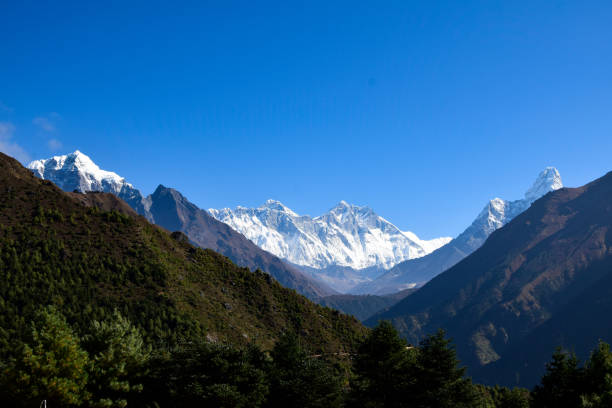
You step off the last boulder of the moraine, and the sound of your own breathing seems very loud. In front of you, a big grey rock wrapped in prayer flags carries the words every trekker has dreamed of reading: Everest Base Camp. Above it, the Khumbu Icefall pours down from the mountains in a chaos of blue-white towers, the fluted ice walls of Nuptse rise like a fortress and, somewhere out of sight beyond the West Shoulder, stands the summit of the highest mountain on Earth.
Knowing what you see at Everest Base Camp before you go makes the moment even better. Many first-time trekkers are surprised to learn that Everest’s summit is hidden from base camp itself. Yet, the scene at 5,364 m is one of the most dramatic on the planet: a moving glacier, the most famous icefall in mountaineering, a ring of great peaks and, in spring, a colourful village of expedition tents. Base camp is the goal of our Everest Base Camp Trek, and it never fails to move the people who reach it.
In this guide, our Sherpa team takes you on a tour of base camp: the view in every direction, the Khumbu Icefall, the famous rock, how the camp changes with the seasons, life in the expedition camps, what you will not see, where to find the summit view and how to make the most of your time at the foot of the world’s highest mountain.
The Short Answer: What Do You See at Everest Base Camp?
What you see at Everest Base Camp (5,364 m) is the Khumbu Icefall tumbling down from the Western Cwm, the ice walls of Nuptse, the pyramid of Pumori, Lingtren, Khumbutse and the Lho La and, in spring, a tent city of expeditions. You do not see Everest’s summit, which hides behind its West Shoulder; for that, climb Kala Patthar.
Base camp is about the atmosphere, the scale and the feeling of standing where Everest climbs begin. The classic summit view waits on Kala Patthar, a short climb above Gorakshep, which our itinerary includes the next morning.
Everest Base Camp at a Glance
- Altitude: About 5,364 m (17,598 ft) at the famous marker rock; the expedition camps spread a little higher up the glacier.
- Location: On the Khumbu Glacier at the foot of the Khumbu Icefall, inside Sagarmatha National Park.
- Nearest lodges: Gorakshep, about 5,164 m, a two- to three-hour walk away.
- Main sights: The Khumbu Icefall, Nuptse, Pumori, Lingtren, Khumbutse, the Lho La and the Khumbu Glacier itself.
- Everest’s summit: Hidden from most of base camp by the mountain’s West Shoulder.
- Best summit view nearby: Kala Patthar, at about 5,545 m, above Gorakshep.
- Expedition tents: Mainly in spring, from around early April to late May.
- Time at base camp: Usually thirty minutes to an hour.
- Facilities: No lodges or teahouses; trekkers sleep at Gorakshep.
- On our trek: We reached it on Day 9 of our 14-day Everest Base Camp Trek.
Where Exactly Is Everest Base Camp?
Everest Base Camp is not a village or a permanent building. It is a seasonal camp on the rubble-covered surface of the Khumbu Glacier, where the glacier levels out below the Khumbu Icefall. For trekkers, base camp means the marker rock and prayer flags at about 5,364 m, near the lower edge of the expedition area. For climbers, it is a temporary home that, in a busy spring, stretches far up the glacier toward the Icefall.
Because the camp sits on moving ice, its layout changes every season. The glacier flows, melts and shifts beneath it, so paths, tent platforms and even the trekkers’ photo spot move a little from year to year. This is the southern, Nepali base camp; a second, northern base camp lies on the Tibetan side of the mountain, which we compare later in this guide.
The View From Everest Base Camp, Direction by Direction
Stand by the rock, turn slowly in a circle, and here is what you see at Everest Base Camp.
Up the Glacier: The Khumbu Icefall
The star of the show is the Khumbu Icefall, a frozen cascade where the glacier spills out of the Western Cwm and tumbles roughly 600 m towards base camp. It looks like a river of shattered blue-white ice, with towers the size of houses, called seracs, and deep crevasses between them. Climbers must pass through it on the standard route to the summit, usually before dawn, when the ice is coldest and most stable.
To the Right: The Ice Walls of Nuptse
To the south-east, the great fluted walls of Nuptse (7,861 m) rise steeply above the camp, streaked with snow and hanging ice. Nuptse means “west peak” in Tibetan, because it is the western summit of the Everest and Lhotse massif, and from base camp it completely hides Lhotse, the world’s fourth-highest mountain, behind it.
To the Left: Everest’s West Shoulder
Left of the Icefall, the steep rock and snow of Everest’s West Shoulder rise into the sky. This long ridge is the reason you cannot see the summit: it stands directly between base camp and the top of the mountain, so you are looking at Everest’s lower slopes without seeing its crown.
Behind You: Pumori, Lingtren, Khumbutse and the Lho La
Turn around, and the elegant snow pyramid of Pumori (7,161 m) fills the sky above the glacier, with the dark ridge of Kala Patthar at its foot. Its name is usually translated as “daughter peak” or “unmarried daughter”, and George Mallory is said to have named it after his own young daughter. To the north rise Lingtren and Khumbutse, both well over 6,500 m, and between Khumbutse and Everest’s West Shoulder lies the snowy saddle of the Lho La, at about 6,000 m, on the border with Tibet. Beyond it lie the glaciers of the Rongbuk valley and the northern side of Everest.
Under Your Feet: The Khumbu Glacier
Look down, and you will realise that you are standing on ice. The Khumbu Glacier is covered with rocks and gravel, but between the boulders you will spot grey ice, ice pinnacles, meltwater pools and the occasional crevasse. In the quiet, you may hear it creak and trickle. Few visitors think of the glacier as one of the sights at base camp, yet it’s why the camp looks different every year.
Can You See Mount Everest From Everest Base Camp?
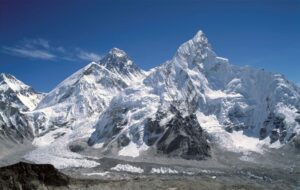
From most of base camp, no. It is the question we hear most often, and the honest answer surprises many trekkers. Everest’s summit is hidden behind the mountain’s West Shoulder, and Lhotse is hidden behind Nuptse. You stand at the very foot of Everest, among the ice of its lower slopes, but the top of the mountain stays out of sight. A few expedition camps in unusual positions have reported a glimpse of the summit, but from the trekkers’ rock, it remains hidden.
That is why our itinerary includes Kala Patthar. From this rocky viewpoint above Gorakshep, Everest’s summit pyramid rises clearly above the West Shoulder, with base camp visible far below. Our comparison of Gokyo Ri vs Kala Patthar explains how the two most famous Everest viewpoints of the Khumbu compare.
The Khumbu Icefall Up Close
For many visitors, the Khumbu Icefall is the most unforgettable sight at base camp. It is the steepest, most broken section of the Khumbu Glacier, where the ice pours over a rock step below the Western Cwm. Because the glacier is always moving, seracs can collapse, and crevasses can open without warning, making it one of the most dangerous parts of the climb.
Each spring, a team of experienced Sherpa climbers known as the Icefall Doctors fixes a route through the maze with ropes and aluminium ladders and maintains it throughout the season. In recent seasons, drones have also carried ropes and ladders higher up. From base camp in spring, you may see headlamps moving through the Icefall before dawn or tiny figures crossing ladders in the morning sun. Trekkers must never enter the Icefall; it is for expedition members with climbing permits only.
The Western Cwm above it has its own story. During the first British reconnaissance of Everest from Tibet, George Mallory looked over the border ridge west of Everest into the hidden valley above the Icefall. He named it with the Welsh word for a valley. Climbers still use his name today.
The Famous Base Camp Rock and Prayer Flags
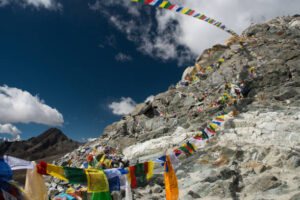
The moment most trekkers remember is reaching the big boulder painted with the words Everest Base Camp and the altitude, buried under prayer flags, white khata scarves and messages left by visitors. This is the classic photo spot, and on a busy autumn afternoon you may wait a few minutes for your turn. Our guides always make sure you get your picture.
In recent seasons, the local municipality has also placed a large welcome signboard near the rock. It divided climbers’ and trekkers’ opinions and had to be taken down at one point when the melting ice beneath it shifted. Whatever signs you find, the rock and the prayer flags remain the heart of the trekkers’ base camp. Please do not add graffiti to the rock or take stones away as souvenirs; leave it as you found it for the next trekker.
What Base Camp Looks Like in Each Season
The season changes what you see at Everest Base Camp more than anything else.
Spring (March to May): The Tent City
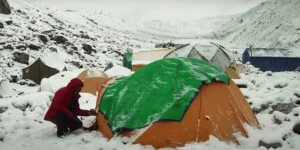
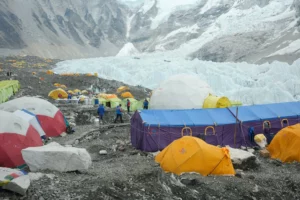
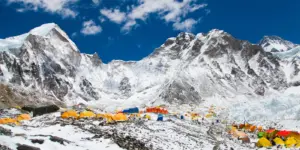
From around early April, expeditions arrive and build a temporary village of yellow, orange and blue tents across the glacier, with dining tents, kitchen tents, storage tents and stone platforms. Prayer flags radiate from the altars of each camp, solar panels glint in the sun, helicopters ferry supplies and the air is full of radios and many languages. By late May, after the summit pushes, the camps are dismantled, and by early summer the glacier is almost empty again. Our guide to the Everest Base Camp Trek in April describes this busy, colourful season.
Autumn (September to November): Clear Skies, Quiet Ice
Autumn brings the clearest skies and the busiest trails, but the expedition tents are usually gone. You find the rock, the prayer flags, the bare grey glacier and the Icefall glittering in crisp light, with a wonderful sense of space. For many trekkers, this is the most beautiful time to stand at base camp. See our guide to the Everest Base Camp Trek in October.
Winter (December to February): Frozen Silence
Winter is cold, quiet and often very clear. Snow may cover the moraine, the meltwater pools freeze solid, and you may have base camp almost to yourself. Days can be bright and calm, but nights at Gorakshep are bitterly cold, so you need a warm sleeping bag and good layers.
Monsoon (June to August): Cloud and Meltwater
In summer, clouds often hide the peaks, the glacier is wet with meltwater, and the trail can be muddy and slippery. Base camp is empty and atmospheric, but the views are unpredictable. Our guide to the Everest Base Camp Trek in the monsoon explains what to expect.
For a month-by-month picture of the region, read our guide to the best time forthe Everest Base Camp Trek.
Life in the Expedition Camps
If you visit in spring, you will see base camp as a working village. Each team has its own camp, with sleeping tents, a large dining tent, a kitchen tent where Sherpa cooks produce remarkable meals, storage tents and communications equipment. At the centre of many camps stands a stone altar, where a lama from a nearby village leads a puja ceremony before the climb, asking the mountain for permission and protection. Strings of prayer flags spread out from these altars across the camp.
During the climbing season, the Himalayan Rescue Association runs a volunteer clinic at base camp, known as Everest ER, and helicopters bring in supplies and evacuate sick or injured climbers when needed. Trekkers are welcome on the main trail, but the camps themselves are private homes and workplaces. Do not enter a camp or a puja area without an invitation; keep your distance from busy kitchens and remember that climbers are guarding their health before the climb of their lives.
What You Hear and Feel at Base Camp
Base camp is not only a sight. It engages every sense:
- The roar of avalanches: Ice and snow regularly break from the West Shoulder and Nuptse, and the thunder echoes around the basin.
- The voice of the glacier: Ice cracking, stones shifting, and water trickling beneath the rocks.
- The thin air: At about 5,364 m, each breath carries roughly half the oxygen of sea level, and every step feels heavy.
- The cold: Even on sunny days, the wind off the Icefall can be bitter, and temperatures drop sharply when the sun slips behind the peaks.
- The glare: Sunlight reflects off snow and ice, so glacier sunglasses are essential.
- The dry air: Many trekkers develop the dry “Khumbu cough”; a buff over your mouth and nose helps.
- The emotion: Many trekkers are surprised by their own tears. Reaching base camp is a deeply personal moment.
What You Don’t See at Everest Base Camp
Knowing what is missing is just as useful as knowing what you see at Everest Base Camp:
- Everest’s summit: Hidden behind the West Shoulder.
- Lhotse and the South Col: Hidden behind Nuptse and the walls of the Western Cwm.
- The Western Cwm: Concealed above the Icefall.
- The upper mountain: The Lhotse Face and the summit ridge, where climbers make their final push, are out of sight.
- Lodges, teahouses or shops: There is no accommodation for trekkers; the nearest lodges are in Gorakshep.
- A permanent village: Outside spring, base camp is often almost empty.
None of this makes base camp disappointing. The experience is about standing in the heart of the Khumbu, where Everest climbs begin, surrounded by ice and giants. The summit view comes the next morning.
The Walk From Gorakshep: What You See on the Way
Base camp day starts at Lobuche, at about 4,910 m. The trail follows the moraine. It crosses the rubble of a side glacier to reach Gorakshep, a handful of lodges beside a sandy, often frozen lake bed at the foot of Kala Patthar and Pumori. After lunch and a rest, you continue to base camp with a light daypack.
From Gorakshep, the path runs along the moraine with the glacier on your right: a chaos of grey rubble, ice cliffs, blue-green meltwater pools and white ice pinnacles. Nuptse grows ever larger ahead, the Icefall comes into view, and in spring you see the tents of base camp scattered across the glacier long before you reach them. The final section drops off the moraine onto the glacier itself. Allow two to three hours to reach base camp and around two hours to return, depending on your pace and the altitude.
Kala Patthar: Where You Finally See Everest’s Summit
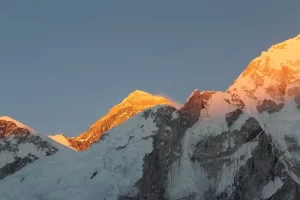
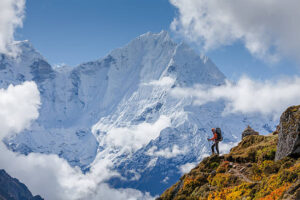
The next morning, the view you missed at base camp is waiting. You climb the dark slopes of Kala Patthar, at about 5,545 m, above Gorakshep, and the summit pyramid of Everest appears above the West Shoulder, with Nuptse beside it, Changtse, the “north peak”, rising in Tibet to the left, and Pumori towering behind you. Far below, the Khumbu Glacier curves towards base camp, and in spring you can pick out the tents at the foot of the Icefall.
Most trekkers climb for sunrise, when first light touches the surrounding peaks; some prefer the late afternoon, when the setting sun warms Everest’s south-west face. It is the classic Everest view of the trek and the perfect complement to what you see at Everest Base Camp. If you cannot trek, the Sharing Everest Helicopter Tour with Kala Patthar Landing lands on the same viewpoint when operating, as explained in our guide to the Kala Patthar landing.
What You See on the Trek to Base Camp
The views at base camp are the climax of a journey full of great sights. On our itinerary, highlights include:
- Lukla and the Dudh Koshi Valley: A dramatic flight to Lukla, then forests, suspension bridges and the first snow peaks above Phakding.
- Namche Bazaar: The Sherpa capital, with Thamserku and Kongde Ri rising above Namche Bazaar and its busy markets.
- Your first view of Everest: From the ridge above Namche and the Hotel Everest View, Everest appears above the long wall of Nuptse and Lhotse, with Ama Dablam to the right.
- Tengboche: The great monastery of Tengboche, described in our guide to Tengboche Monastery and the Mani Rimdu festival, with one of the finest views of Ama Dablam.
- Pangboche and Dingboche: The old monastery village of Pangboche and the stone-walled fields of Dingboche, with Island Peak, Lhotse and Makalu visible from the ridge of Nangkartshang.
- The Thukla Pass memorials: Stone memorials to climbers and Sherpas who died on Everest, a moving stop on the way to Lobuche.
- Lobuche and Gorakshep: The Khumbu Glacier, Pumori and the final approach to base camp.
Our Everest Base Camp Trek itinerary and distance guide explain every stage in detail.
Everest Base Camp on Our Everest Base Camp Trek
On our 14-day Everest Base Camp Trek, we reach base camp on Day 9, after acclimatisation days in Namche and Dingboche. Here is how the key days unfold:
- Day 8: Dingboche to Lobuche: Past Thukla and its memorials to the edge of the Khumbu Glacier.
- Day 9: Lobuche to Gorakshep and Everest Base Camp: Walk to Gorakshep for lunch, then visit Everest Base Camp and return to Gorakshep for the night.
- Day 10: Kala Patthar and down to Pheriche: Climb Kala Patthar for the summit view, then descend to Pheriche.
- Days 11 to 14: Back to Namche and Lukla, then fly to Kathmandu and depart.
Your guide may adjust the order, for example climbing Kala Patthar in the afternoon and visiting base camp the next morning, depending on the weather and how the group feels. Our guides explain how many days the EBC trek takes, and the 14-day Everest Base Camp trek itinerary and acclimatisation.
A Short History of Everest Base Camp
For centuries, the upper Khumbu Glacier was the realm of yak herders and the occasional trader. Everest was first approached from Tibet, and the early British expeditions could only gaze into the Khumbu from the high border ridges. Only after Nepal opened its borders to foreign climbers in the mid-twentieth century did expeditions begin to approach the mountain from the south, finding a way through the Khumbu Icefall.
The expedition that made the first ascent of Everest set up its base camp on the glacier below the Icefall, and from there Tenzing Norgay and Edmund Hillary set out on their historic climb to the summit. Since then, base camp has grown from a handful of canvas tents into today’s seasonal tent city, while the trek to it has become one of the most famous walks on Earth. Learn more about the people who made this history possible in our guide to Sherpa culture and traditions.
Is Everest Base Camp Moving?
The Khumbu Glacier is thinning as the climate warms, and the ice beneath base camp is changing. Researchers have measured the glacier surface near base camp dropping by around a metre a year, and climbers report new crevasses, meltwater streams and unstable ground in the camp. Waste and the sheer number of people add to the pressure on this fragile environment.
Nepal’s tourism authorities have discussed moving base camp a few hundred metres lower, off the glacier. Still, Sherpa leaders and the local community strongly oppose the proposal, arguing that no suitable alternative site exists. For now, base camp remains on the glacier. For trekkers, it means the scene you see keeps changing: the camp you visit is a snapshot of a landscape in motion.
North vs South: The Two Everest Base Camps
Everest has two main base camps. The southern base camp in Nepal, described in this guide, can only be reached on foot, and its summit view is hidden. The northern base camp in Tibet, near the snout of the Rongbuk Glacier at a slightly lower altitude, is reachable by road, and from there you see the whole north face of Everest rising at the head of the valley.
If you would like to see both sides of the mountain, our Lhasa to Everest Base Camp Overland Tour and our Lhasa to Everest Base Camp guide explain the journey across the Tibetan plateau. At the same time, the Luxury Nepal Tibet Tour and the Nepal Tibet Bhutan Tour combine the great cultures of the Himalaya.
The Best Time of Day and Year for Base Camp Views
Mornings are usually the clearest time in the high Khumbu, while clouds often build from late morning or early afternoon, especially in spring. On our itinerary, you reach base camp in the afternoon after the walk from Lobuche. If clouds roll in, the Icefall and Nuptse still look dramatic, and the next morning’s climb of Kala Patthar gives you the best chance of a clear summit view.
Across the year, autumn, especially October and November, offers the most reliably clear skies, while spring adds the colour and life of the tent city. Winter can be beautifully clear but very cold, and the monsoon months bring cloud and rain.
How Long Do You Spend at Base Camp?
Most trekkers spend thirty minutes to an hour at base camp. That is enough time to take in what you see at Everest Base Camp, take photos, walk along the edge of the camp and share the moment with your group, but not so long that you become cold or tired at this altitude. Remember that you still have a walk of around two hours back to Gorakshep at the end of a long day. Trekkers do not normally sleep at base camp; the tents there belong to expeditions with climbing permits.
Photography at Everest Base Camp
The best photographs capture far more of what you see at Everest Base Camp than the famous rock alone:
- The rock and the flags: The classic shot; frame yourself with the Icefall behind you.
- The Icefall with a zoom: A telephoto lens or your phone’s zoom reveals seracs, ladders and, in spring, climbers.
- Wide shots of the camp: In spring, colourful tents against grey ice and white peaks.
- Light and cloud: Shoot quickly if clouds are building, as the scene can disappear in minutes.
- Keep batteries warm: Carry spares in an inside pocket.
- Ask before photographing people: Especially during puja ceremonies.
- Drones need permission: Never fly a drone without the required official permission.
- Stay on safe ground: Never step onto bare ice or near crevasses for a better angle.
Altitude and Safety at Base Camp
At about 5,364 m, base camp is one of the trek’s highest points. Walk slowly, drink regularly and tell your guide immediately about headaches, nausea, dizziness or unusual tiredness. Our guides check every trekker’s health daily, including oxygen levels, and will turn back if needed, because descending is the most effective treatment for altitude sickness. Read our Acute Mountain Sickness page and our guide to altitude sickness on the Everest Base Camp Trek before you go.
On the glacier, stay on the main trail, keep away from ice cliffs, crevasses and the foot of the Icefall, and watch for stones falling from the moraine walls. The Himalayan Rescue Association aid post at Pheriche is the main medical post on the route, and helicopters can evacuate in emergencies in good weather, so make sure your insurance covers high-altitude trekking and helicopter rescue. Our honest look at Everest Base Camp Trek difficulty explains what these high days demand.
What to Bring on Base Camp Day
- Warm layers: A fleece, a down jacket and a windproof shell, even if it is sunny in Gorakshep.
- Hat, gloves and buff: The wind off the Icefall is bitterly cold, and a buff protects you from the dry air.
- Glacier sunglasses and sunscreen: The glare from snow and ice is intense.
- Water and snacks: At least one to two litres in an insulated bottle, plus energy snacks.
- Headlamp: In case you return late.
- Camera and spare batteries: Kept warm in an inside pocket.
- A personal flag or sign: For your photo, but take it home with you afterwards.
Our Everest Base Camp Trek packing list and our trekking equipment page cover the full kit for the trek.
Respecting Base Camp
Base camp is a workplace, a sacred place and a fragile environment. Carry out all your rubbish, use the toilets in Gorakshep before you leave, do not add graffiti to the rock or take stones, and if you would like to hang prayer flags, ask your guide where it is appropriate. Respect the puja altars and the privacy of the expedition camps, and give way to porters and yaks on the trail. Learn more on our responsible tourism page and in our Sagarmatha National Park guide.
Permits and Guides for the Base Camp Trek
Two permits are needed to reach base camp, and our team arranges both: the Sagarmatha National Park entry permit and the Khumbu Pasang Lhamu Rural Municipality permit. Our guide to Everest Base Camp Trek permits explains how they work. Trekking rules in Nepal have changed in recent years, and many areas now require a licensed guide; rules vary by area and can change, so check before you travel, as explained in our article on Nepal’s mandatory guide rules. Whatever the rules, we strongly recommend a licensed guide, and you can meet ours on our team page. Check entry requirements for Nepal in our Nepal visa guide.
Other Ways to See Everest
If you cannot trek to base camp, or want even more Everest views, the region offers wonderful options. The Everest View Trek visits the Hotel Everest View and the villages of Khumjung and Khunde for a classic view of Everest above the Nuptse wall, as described in our guide to the luxury Everest View Trek. The Gokyo Lakes Trek leads to Gokyo Ri and its panorama of four eight-thousanders, introduced in our Gokyo Lakes Trek guide and our guide to Gokyo Ri and the Fifth Lake. The Everest 3 Pass Trek, described in our Everest Three Passes Trek guide, adds views from Renjo La Pass, Cho La Pass, and Chhukung Ri, where Lhotse’s south face fills the sky.
From the air, the Everest Helicopter Tour, the Mt Everest by Helicopter Tour, the Gokyo Lakes Helicopter Tour and the Everest Heli Sherpa Village Walk show you the high Khumbu in a single morning, when operating. Our answer to whether a helicopter can land at Everest Base Camp, our guides to the Everest Base Camp helicopter tour, Everest helicopter tour restrictions and the best seasons for an Everest helicopter tour, and our comparisons of the EBC trek or helicopter tour and the helicopter tour vs trek with helicopter return explain the options. The quickest view of all is the one-hour Everest mountain flight from Kathmandu.
To combine the trek with comfort, the Everest Base Camp Luxury Lodge Trek, the Luxury Everest Base Camp Trek with Helicopter Return, the Everest Base Camp Helicopter Trek and the Everest Elite Luxury Heli Trek let you walk to base camp in style or fly out at the end, as explained in our guides to the luxury Everest Base Camp Trek and the short Everest Base Camp Trek.
More Ways to Explore the Khumbu
Base camp is only the beginning. Walk the historic approach on the Jiri to Everest Trek, explained in our Jiri to Everest Base Camp guide, or begin by road on the Everest Base Camp Trek by Road. Discover a quieter side valley on the Ama Dablam Base Camp Trek, introduced in our Ama Dablam Base Camp Trek guide; slow down on the Everest Base Camp Yoga Trek, described in our guide to mindful trekking in the Himalayas; or run the Everest Marathon, which starts at base camp itself.
For climbers, Island Peak Climbing, described in our Island Peak climbing guide, Lobuche Peak Climbing and Mera Peak Climbing are natural next steps; check the latest NMA peak permit updates, read our Ama Dablam expedition guide and learn about the giants of the range in our article on Nepal’s eight-thousand-metre peaks. Families, older trekkers and first-timers will find helpful advice in our guides to the Everest Base Camp Trek with kids, the Everest Base Camp Trek over 50 and the Everest Base Camp Trek for beginners, and our 12-week training plan helps you prepare.
Beyond the Everest Region
Nepal has many more great walks. Consider the Annapurna Base Camp Trek, described in our ultimate guide to Annapurna Base Camp; the Annapurna Circuit Trek; the Ghorepani Poon Hill Trek; the Mardi Himal Trek; the Manaslu Circuit Trek over the Larke Pass; the Langtang Valley Trek; the Upper Mustang Trek; and the Kanchenjunga Base Camp Trek. Browse our list of the top 50 treks in Nepal and our trekking in Nepal guide for more ideas.
Before or after your trek, explore the capital on our Kathmandu Day Tour with our Kathmandu sightseeing tips, watch the sun rise over the Himalaya on Nagarkot Hiking, relax in Pokhara with our Pokhara sightseeing guide and Paragliding in Pokhara, or head south for a Chitwan Jungle Safari. Further afield, the Luxury Bhutan Tour leads to the cliffside Tiger’s Nest Monastery, and the Mount Kailash Tour circles the most sacred mountain in Asia.
Frequently Asked Questions About What You See at Everest Base Camp
Can you see Mount Everest from Everest Base Camp?
Not from most of the base camp. The summit is hidden behind Everest’s West Shoulder. For the classic summit view, climb Kala Patthar above Gorakshep.
What mountains can you see from Everest Base Camp?
Nuptse, Pumori, Lingtren, Khumbutse and Everest’s West Shoulder, with the Lho La on the Tibetan border and the Khumbu Icefall directly above the camp.
Is there anything at Everest Base Camp outside the climbing season?
Yes. The marker rock, the prayer flags, the Khumbu Glacier, and the Icefall are there year-round. Expedition tents appear mainly in spring.
How high is Everest Base Camp?
About 5,364 m (17,598 ft) at the famous rock. The expedition camps extend a little higher up the glacier.
How long do trekkers stay at Everest Base Camp?
Usually thirty minutes to an hour, before walking back to Gorakshep for the night.
Can you sleep at Everest Base Camp?
Trekkers normally sleep in the lodges at Gorakshep. The tents at base camp belong to expeditions with climbing permits.
Is Everest Base Camp on a glacier?
Yes. It sits on the rubble-covered Khumbu Glacier, which moves and melts, so the camp’s layout changes every year.
When can you see the expedition tents?
In spring, especially from April to late May, when Everest expeditions prepare for their summit attempts.
Where is the best view of Everest on the trek?
Kala Patthar, at about 5,545 m, offers the classic summit view. The Hotel Everest View and Tengboche offer earlier views on the way.
How long does it take to walk from Gorakshep to Everest Base Camp?
About two to three hours one way and around two hours back, depending on your pace and the conditions. Our Everest Base Camp Trek includes the visit on Day 9.
Final Thoughts: Standing at the Foot of the World
Standing at Everest Base Camp is not about the summit view. It is about scale, sound, and emotion: the Khumbu Icefall above you, Nuptse’s ice walls overhead, Pumori glowing behind, and the glacier creaking beneath your feet, at the very place where Everest climbs begin. Knowing what you see at Everest Base Camp, and what you do not, lets you enjoy every minute, and the summit view from Kala Patthar the next morning completes the story.
Join our 14-day Everest Base Camp Trek and let our Sherpa guides take you to the foot of the world’s highest mountain. Prefer more comfort? Choose the Everest Base Camp Luxury Lodge Trek or a trek with a helicopter return. Learn more about our company, view our company registration and legal documents, then plan your trip or contact us today.


