
Everest Base Camp Luxury Lodge Trek: The Complete Guide to Trekking in Comfort
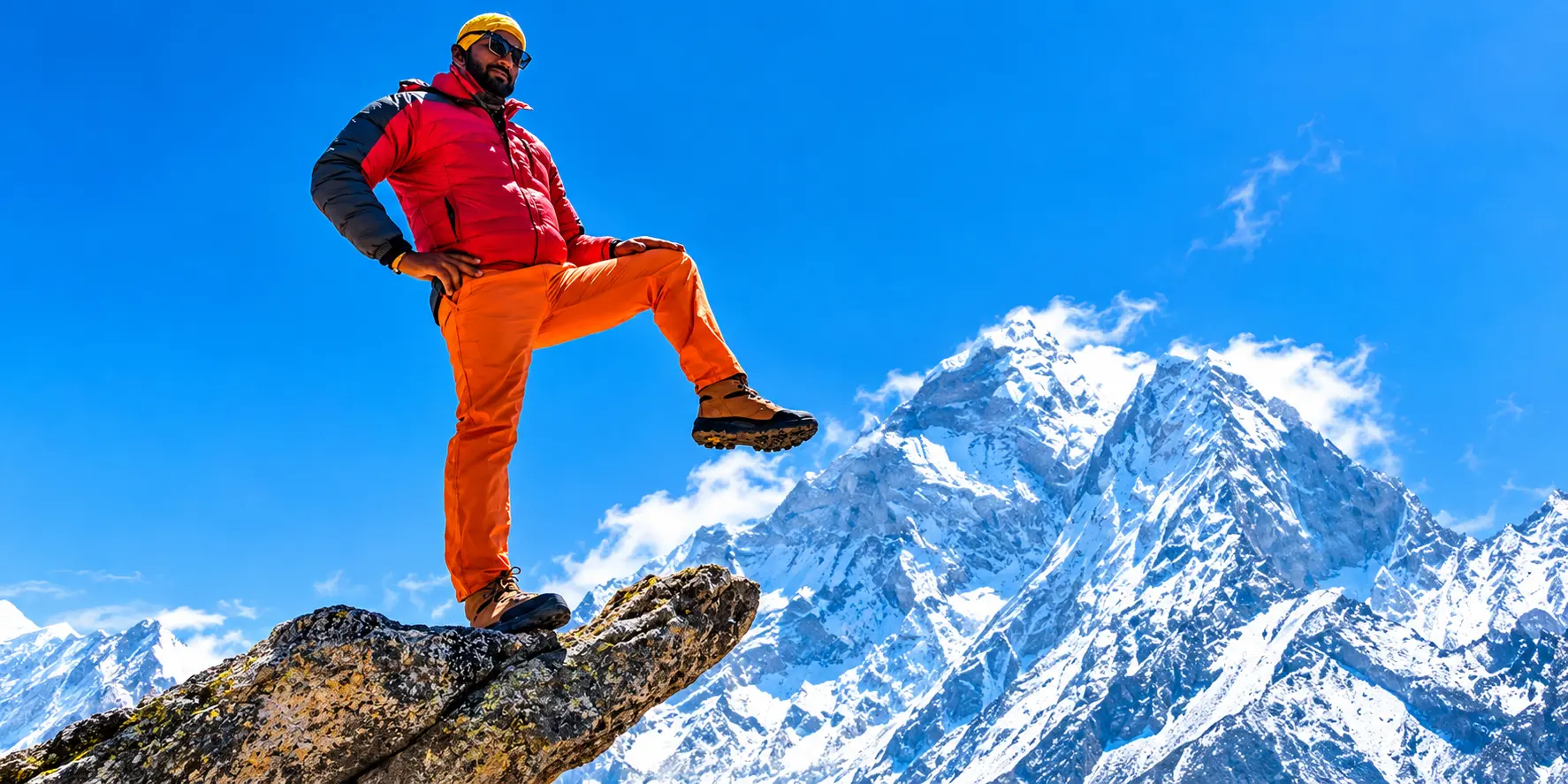
Everest Base Camp Lodge Trek: The Complete Guide to Trekking in Comfort
Picture the end of your third day on the trail. You have climbed the long hill to Namche Bazaar, your legs are tired, and the air is cold. Instead of a plywood room and a queue for a shared toilet, you step into a warm stone lodge, take a hot shower in your own bathroom and slip into a bed already warmed by an electric blanket. The next night, you wake to see Everest glowing in the window of one of the world’s most famous mountain hotels.
That is the idea behind a Luxury Everest Base Camp Trek: the same legendary route, the same views, and the same sense of achievement, but with the best lodges in the Khumbu, helicopter flights that save time, and a team that handles the details. Our 11-day Everest Base Camp Luxury Lodge Trek brings it all together.
In this guide, our team explains what luxury really means in the high Himalaya, exactly where the comfortable lodges end, the lodges we use, the full itinerary, helicopter flights, food, safety, how the luxury trek compares with the standard trek and who it suits best.
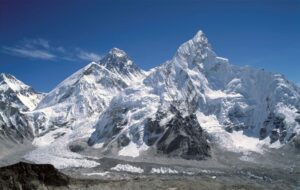
The Short Answer: What Is a Luxury Everest Base Camp Trek?
A luxury Everest Base Camp trek follows the classic route to base camp and Kala Patthar. Still, it replaces basic teahouses with the best lodges in the Khumbu, offering en-suite rooms, hot showers and warmed beds in the lower valley, and uses helicopters to save days. Our 11-day trek flies in and out by helicopter and stays at Yeti Mountain Home lodges, the Hotel Everest View and Rivendell Lodge.
In brief, a luxury trek gives you:
- Better sleep: Private rooms with en-suite bathrooms and electric blankets up to Deboche.
- More time: Helicopter flights in and out, which turn a two-week trek into 11 days.
- Better food: Lodges with wider menus and fresh produce from their own gardens.
- More support: Experienced trek leaders, Sherpa guides and one porter for every two trekkers.
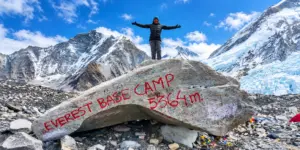
- The same adventure: Everest Base Camp at about 5,364 m and Kala Patthar at about 5,545 m.
Luxury Everest Base Camp Trek at a Glance
- Duration: 11 days, round-trip from Kathmandu.
- Highest point: Kala Patthar, about 5,545 m.
- Difficulty: Moderate; the walking and altitude are the same as on the standard trek.
- Flights: Helicopter from Kathmandu to Lukla, and helicopter back from Gorakshep after Kala Patthar, weather permitting.
- Lodges: Yeti Mountain Home in Phakding and Namche; Hotel Everest View, Rivendell Lodge in Deboche, the best available lodges higher up; and a five-star hotel in Kathmandu.
- Acclimatisation: A night at the Hotel Everest View after a day hike, and a full acclimatisation day in Dingboche.
- Support: Trek leaders, Sherpa guides, porters, a first-aid kit with oxygen, and communication equipment for emergencies.
- Best seasons: Spring and autumn.
- Our trek: The 11-day Everest Base Camp Luxury Lodge Trek.
What “Luxury” Really Means in the Khumbu
It helps to be honest about what luxury means at altitude, because the Everest region is not the Alps. No roads reach above the lower valleys; porters or yaks carry every bag of cement and every mattress in, and electricity comes from small hydropower plants and solar panels. Even the finest lodges are built for the mountains, not for a city.
What a Luxury Everest Base Camp Trek gives you is the very best of what exists: rooms with private bathrooms and hot running water, beds with electric blankets or heated pads, thick duvets, warm dining rooms, good coffee, carefully prepared food and attentive service. Bedrooms are rarely heated, and at altitude, cold nights are part of the experience for everyone, but the difference after a long day on the trail is enormous.
Luxury can’t change the altitude. The air at base camp has about half the oxygen of sea level; the walking days are the same length, and acclimatisation rules apply just as strictly. Comfort helps you sleep, eat and recover, and that, in turn, makes the trek more enjoyable and often more successful. Our honest look at Everest Base Camp Trek difficulty explains what the trail asks of every trekker.
Where Luxury Ends: Comfort Zone by Zone
Every luxury itinerary on the Everest trail follows the same pattern, because high-end lodges exist only in the lower half of the route. Knowing this in advance helps you set the right expectations.
- Lukla to Namche (about 2,600 to 3,440 m): The heart of luxury in the Khumbu, with boutique lodges offering en-suite rooms, hot showers, electric blankets and gardens.
- Syangboche (about 3,880 m): The Hotel Everest View, a landmark hotel with Everest views from its terrace and rooms.
- Deboche (about 3,820 m): Rivendell Lodge, with en-suite rooms and heated bed pads, is the last true comfort stop on the main route.
- Dingboche (about 4,410 m): The best lodges offer good rooms, some with attached bathrooms, but facilities are simpler.
- Lobuche and Gorakshep (about 4,910 to 5,164 m): Simple lodges with shared bathrooms for everyone, no matter your budget. Our team books the best rooms available.
The helicopter return on our trek means you spend only two nights in the basic upper lodges, at Lobuche and Gorakshep, before flying straight back to comfort.
The Lodges on Our Luxury Lodge Trek
Yeti Mountain Home, Phakding and Namche
Yeti Mountain Home is a small collection of Sherpa-staffed lodges in the Khumbu, with properties in Lukla, Phakding, Monjo, Namche, Thame and Kongde. Built in traditional stone and natural wood, they offer en-suite bathrooms with hot and cold running water, electric blankets, warm duvets, and a cosy stove-heated dining room. Many dishes are made with vegetables from the lodges’ own greenhouses. On our trek, you stay at the lodges in Phakding and Namche Bazaar.
The Hotel Everest View, Syangboche
Perched on a ridge above Namche at about 3,880 m, the Japanese entrepreneur Takashi Miyahara built the Hotel Everest View with the help of Sherpa porters who carried in the materials, and Guinness World Records once listed it as the world’s highest hotel. Its terrace and many of its rooms face Everest, Lhotse, and Ama Dablam, and a night here after the acclimatisation hike to Khumjung is one of the trek’s highlights.
Rivendell Lodge, Deboche
Rivendell Lodge, owned and run by a local Sherpa family, sits in Deboche’s peaceful forest, a short walk beyond Tengboche Monastery. Rooms have private en-suite bathrooms with solar-heated showers and heated bed pads, and the birch and rhododendron setting is magical, especially at dawn.
Dingboche, Lobuche and Gorakshep
In Dingboche, we use one of the village’s best lodges, such as Dingboche Resort or Countryside Lodge, where rooms are warm and comfortable by local standards. In Lobuche and Gorakshep, lodges are simple, with basic rooms and shared bathrooms, so our team reserves the best available rooms and makes sure you have plenty of hot drinks and warm food.
A Five-Star Start and Finish in Kathmandu
The trek begins and ends at a five-star hotel in Kathmandu, with a welcome dinner on arrival and a farewell dinner after the trek. If you have extra time, explore the city on our Kathmandu Day Tour or with our Kathmandu sightseeing guide.
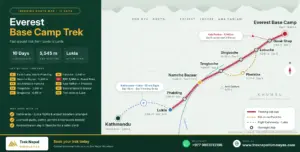
The 11-Day Itinerary, Day by Day
Here is how the Luxury Everest Base Camp Trek unfolds, with the comfort highlights of each day.
Day 1: Arrive in Kathmandu (about 1,400 m)
Private airport transfer to your five-star hotel, a briefing with your trek leader and a welcome dinner.
Day 2: Helicopter to Lukla and Walk to Phakding (about 2,610 m)
Instead of a pre-dawn drive to Manthali, you fly by helicopter from Kathmandu to Lukla, weather permitting, with the Himalaya unfolding outside the window. A gentle walk along the Dudh Koshi brings you to Yeti Mountain Home in Phakding, where lunch or afternoon tea awaits in the garden.
Day 3: Phakding to Namche Bazaar (about 3,440 m)
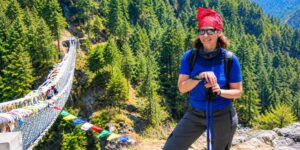
Walk upstream past Monjo into Sagarmatha National Park, cross the high Hillary Suspension Bridge and climb to Namche. A hot shower and a warm bed at Yeti Mountain Home make recovery from the hardest climb of the early trek much easier.
Day 4: Khumjung and the Hotel Everest View (about 3,880 m)
An acclimatisation hike takes you to the Sherpa village of Khumjung, home to Khumjung Monastery and the Hillary School, before you settle in for the night at Hotel Everest View, with Everest framed in the window at sunset and sunrise.
Day 5: Tengboche and Deboche (about 3,820 m)
A beautiful walk with Ama Dablam ahead leads you to Tengboche, home to a monastery described in our guide to Tengboche Monastery and the Mani Rimdu festival. A few minutes beyond lies Rivendell Lodge, your peaceful home for the night.
Day 6: Deboche to Dingboche (about 4,410 m)
Pass the ancient village of Pangboche and climb above the tree line to Dingboche, a village of stone-walled fields beneath Ama Dablam. Walk slowly; you gain almost 600 m of sleeping altitude today.
Day 7: Acclimatization Day in Dingboche
Climb the hill above the village, known as Nagarjun or Nangkartshang, to around 5,000 m for views of Makalu, Lhotse and Island Peak, then return to rest. Our article on Nepal’s eight-thousand-metre peaks introduces the giants on the horizon.
Day 8: Dingboche to Lobuche (about 4,910 m)
Walk up the broad valley to Thukla and its memorials to climbers, then follow the Khumbu Glacier to Lobuche. From here on, lodges are simple for everyone.
Day 9: Everest Base Camp and Gorakshep (about 5,364 m)
The big day: walk to Gorakshep, then on to Everest Base Camp beneath the Khumbu Icefall, before returning to Gorakshep for the night. It is a long day of seven to nine hours, so start early and pace yourself.
Day 10: Kala Patthar and Helicopter to Kathmandu
Climb Kala Patthar, about 5,545 m, for sunrise on Everest, then board your helicopter back to Lukla and on to Kathmandu, weather permitting. By afternoon, you can relax at your five-star hotel, with three days of steep descent saved.
Day 11: Departure
Take a private transfer to the airport, or extend your stay in Nepal.
For a longer, fully walking alternative, see our classic 14-day Everest Base Camp Trek and our complete guide to the 14-day Everest Base Camp Trek itinerary.
For a fuller description of each stage of the route, see our guides to the Everest Base Camp Trek itinerary and the Everest Base Camp Trek distance. If the view of Island Peak from Dingboche inspires you, our Island Peak climbing guide and Island Peak Climbing trip explain how to climb it.
A Day in the Life on a Luxury Trek
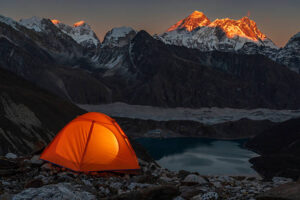
A typical day on the Luxury Everest Base Camp Trek begins with a hot drink, perhaps coffee in a sunny dining room while the peaks turn gold. After a cooked breakfast, you leave your duffel with the porters and set off with a light daypack, walking at an easy pace with your guide and stopping for photos, monasteries, and tea. You have lunch at a lodge along the way, often on a terrace with mountain views. By early afternoon, you reach the next lodge, where a hot shower, a rest in a warm bed, or a short acclimatisation walk fills the hours before dinner. Evenings are spent in the dining room by the stove, sharing stories with your group and your guides, before an early night under a thick duvet. It is the rhythm of every Everest trek, but with the rough edges smoothed away.
Luxury Trekking for Couples, Families and Celebrations
Many of our luxury trekkers are marking something special: a honeymoon, a wedding anniversary, a significant birthday or a retirement. The Everest Base Camp Luxury Lodge Trek’s private rooms, quieter lodges, and attentive service make it ideal for couples, and a night at Hotel Everest View, with Everest outside the window, is a memorable way to celebrate.
Families with fit teenagers also enjoy the luxury trek, as comfortable rooms and better food help younger trekkers recover each day, and private departures can be paced to suit the group. Tell our team what you are celebrating, and we will do our best to make the occasion special, from a cake at Namche to prayer flags at base camp.
Helicopter Flights: In and Out of the Khumbu
Helicopters are what make the Luxury Everest Base Camp Trek so efficient. Flying in from Kathmandu avoids the long night drive to Manthali Airport in Ramechhap that many spring and autumn flights now require, a journey our Ramechhap airport transportation team handles on standard treks. Flying out from Gorakshep after Kala Patthar saves around three days of walking and more than 2,300 m of knee-jarring descent.
Like planes, helicopters depend on the weather, and flights in the Khumbu operate mainly in the clear morning hours. If clouds delay the return flight, your guide may start walking down and arrange a pickup from a lower village once the weather clears. Rules on helicopter landings in the region can also change, so our team always follows the latest guidance. Read our guides to Everest helicopter tour restrictions, whether a helicopter can land at Everest Base Camp and the Kala Patthar landing reopening.
Food and Dining on a Luxury Trek
Good food is one of the great pleasures of a luxury trek. In the lower valley, the luxury lodges serve Nepali, Tibetan and international dishes, often made with fresh vegetables from their own greenhouses, with freshly baked bread, good coffee and desserts. At the Hotel Everest View, you dine with a view of the highest mountain on Earth.
Higher up, menus are simpler everywhere, but dal bhat, soups, noodles, potatoes, and eggs are always available, and our guides ensure your meals are freshly cooked and hygienic. We recommend vegetarian meals above Namche, plenty of hot drinks, and 3 to 4 litres of water a day. Special diets can usually be arranged with notice.
Guides, Porters and Safety
Luxury is not only about lodges; it is also about the people looking after you. Our trek leaders and Sherpa guides are experienced in the high mountains and trained recognizeise the signs of altitude sickness. One porter carries the main luggage for every two trekkers, so you walk with only a light daypack.
- Daily health checks: Your guide monitors how you feel each day, including oxygen levels and pulse.
- Oxygen and first aid: The first aid kit includes oxygen cylinders for emergencies.
- Communication: Your team carries communication equipment to call for help if needed.
- Evacuation: Helicopter evacuation can be arranged in emergencies, weather permitting, so travel insurance covering trekking to about 5,600 m and helicopter rescue is essential.
Read our Acute Mountain Sickness page and our guide to altitude sickness on the Everest Base Camp Trek before you go. The Himalayan Rescue Association aid post at Pheriche also provides medical care in the main season. Acclimatisation on an 11-Day Itinerary
The luxury itinerary saves time mainly on the way down with the helicopter, while keeping the ascent careful. The night at Hotel Everest View, after a day hike from Namche, serves as the first acclimatisation step, and Dingboche offers a full acclimatisation day with a climb to around 5,000 m.
Even so, everyone adapts at a different pace, and the walk from Deboche to Dingboche is a big step up. If you have had altitude problems before, are over 60, or want more margin, our team can add an extra acclimatisation night in Namche or Dingboche. Our guides explain how many days the EBC trek takes and the Everest Base Camp Trek over 50.
Luxury vs Standard Everest Base Camp Trek
Both treks follow the same trail to the same places. The differences are in comfort, time and support:
- Lodges: Luxury uses boutique lodges and the Hotel Everest View; standard uses local teahouses, with shared bathrooms in many places.
- Flights: Luxury flies by helicopter in and out; standard flies by plane to Lukla and walks back down.
- Duration: Luxury takes 11 days; standard takes 14 days.
- Kathmandu: Luxury includes a five-star hotel; standard uses a comfortable three-star hotel.
- Food: Luxury lodges offer wider menus in the lower valley; higher up, the food is similar.
- Difficulty: The same. The walking days and altitude acclimatisation needs remain the same.
Our standard 14-day Everest Base Camp Trek remains a wonderful choice for trekkers who enjoy the simple teahouse life.
Is a Luxury Everest Base Camp Trek Worth It?
For many travellers, yes. A luxury trek is especially worthwhile if you:
- Value sleep and recovery: Better rest means more energy and enjoyment on the trail.
- Are short on time: Helicopters save three days by skipping acclimatisation on the ascent.
- Are celebrating: A honeymoon, an anniversary or a milestone birthday deserves something special.
- Are a first-time trekker: Comfort makes your first Himalaya experience less daunting; read our guide to the Everest Base Camp Trek for beginners.
- Want to spare your knees: The helicopter return avoids the long, steep descent.
A standard trek may suit you better if you love the simplicity of teahouse life, want to walk every step back to Lukla, or prefer spending more days in the mountains.
Other Luxury and Helicopter Options in the Everest Region
- Luxury Everest Base Camp Trek with Helicopter Return: 12 days, walk up in comfort and fly back.
- Everest Elite Luxury Heli Trek: Ten days of our most exclusive helicopter-supported trekking.
- Everest Base Camp Helicopter Trek: Nine days, with a helicopter finale.
- Everest View Trek: A shorter, lower trek to Namche, Khumjung and Tengboche, ideal for combining with comfortable lodges.
- Everest Base Camp Yoga Trek: A slower, mindful journey, described in our guide to mindful trekking in the Himalayas.
If you prefer not to trek at all, the Everest Helicopter Tour, the Mt Everest by Helicopter Tour, the Everest Heli Sherpa Village Walk, the Gokyo Lakes Helicopter Tour, and the Sharing Everest Helicopter Tour with Kala Patthar Landing (when operating) show you Everest in a single morning. Our guides to the Everest Base Camp helicopter tour, the best seasons for an Everest helicopter tour, the EBC trek or helicopter tour, the helicopter tour vs trek with helicopter return and the short Everest Base Camp Trek compare the options.
Best Time for a Luxury Everest Base Camp Trek
Spring and autumn are the best seasons, with the most reliable helicopter weather, clear mountain views and comfortable temperatures. Some lodges close or reduce their services in the quieter months, so our team always confirms availability. Our month-by-month guide to the best time for Everest Base Camp Trek covers every season.
- Spring (March to May): Warm days, blooming rhododendrons, and the expedition camp at base camp; read our April guide to the Everest Base Camp Trek.
- Autumn (late September to November): The clearest skies and most stable flying weather; read our guide to the Everest Base Camp Trek in October.
- Winter and monsoon: Possible, but colder or wetter, with more weather delays for helicopters; read our guide to the Everest Base Camp Trek in the monsoon.
What to Pack for a Luxury Trek
A luxury trek still needs a full trekking kit, because the upper lodges are simple and nights above 4,000 m are cold. Pack warm layers, a down jacket, a good sleeping bag for Lobuche and Gorakshep, broken-in boots, trekking poles and sun protection. Lighter extras, such as a book, slippers and a smart-casual outfit for Kathmandu, are easier to bring when porters carry your duffel.
Helicopter flights may have their own baggage limits, which our team will confirm before you travel. For the full list, see our Everest Base Camp Trek packing list and our trekking equipment page.
Preparing for Your Luxury Trek
- Training: Comfort does not replace fitness. Our 12-week training plan prepares you to walk five to seven hours a day.
- Permits: You need the Sagarmatha National Park entry permit and the Khumbu Pasang Lhamu Rural Municipality permit; our team arranges both.
- Guide rules: Rules vary by area and can change, so check before you travel; we strongly recommend a licensed guide. Read our article on Nepal’s mandatory guide rules and our broader Nepal trekking guide.
- Visa: Check entry requirements in our Nepal visa guide.
- Insurance: Choose a policy that covers trekking to about 5,600 m and helicopter rescue.
Responsible Luxury in the Everest Region
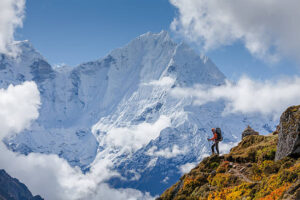
Travelling in comfort and travelling responsibly go hand in hand. Many of the best lodges in the Khumbu are run by Sherpa families or employ local staff, so a Luxury Everest Base Camp Trek puts money directly into mountain communities. Our porters carry fair loads, are properly equipped and are treated as valued members of the team.
You can help too: refill your water bottle with treated water instead of buying plastic bottles, carry your rubbish back down, respect monasteries and village customs and ask before photographing people. Our responsible tourism page explains our commitments, and our Sagarmatha National Park guide describes the protected landscapes you walk through.
The Culture Along the Way
Comfort gives you more energy to enjoy the Khumbu’s culture. Along the trail, you’ll pass prayer wheels, mani walls, and chortens, as explained in our article on chortens in Tibetan Buddhism, and visit monasteries at Khumjung, Tengboche, and Pangboche. Our guide to Sherpa culture and traditions explains the beliefs that make the Everest region so welcoming, and our stories of Guru Padmasambhava and Milarepa introduce two great teachers of Himalayan Buddhism.
Luxury Beyond Everest
If you love travelling in comfort, Nepal and its neighbours offer much more:
- Bhutan: The Luxury Bhutan Tour, the Luxury Nepal Bhutan Tour, and the 7 Day Bhutan Tour include a hike to the Tiger’s Nest Monastery, the great fortress of Paro Dzong, the National Museum of Bhutan, and, in season, colourful Bhutan festivals. The Nepal Tibet Bhutan Tour and the Tibet Bhutan Tour combine several Himalayan kingdoms in one journey.
- Tibet: The Luxury Nepal Tibet Tour, the Lhasa Tibet Tour and the Lhasa to Everest Base Camp Overland Tour, described in our Lhasa to Everest Base Camp guide, show you the north side of Everest; our overview of Buddhism in Tibet explains the region’s heritage.
- Helicopter journeys: The Annapurna Helicopter Tour, the Langtang Helicopter Tour, and the Muktinath Yatra by Helicopter take you to the high Himalaya in a day.
- Wildlife and lakes: Relax on a Chitwan Jungle Safari or the Bardia National Park Tour, enjoy the lakeside town described in our Pokhara sightseeing guide or soar on a tandem flight with Paragliding in Pokhara.
- Heritage: See the best of the country on the Classic Nepal Tour.
- Short, comfortable hikes: Near Pokhara, the Australian Camp Trek, the Dhampus Sarangkot Trek and the Ghorepani Poon Hill Trek offer big views at lower altitudes, while Nagarkot Hiking and the Chisapani Nagarkot Trek end at the resort village of Nagarkot, just outside Kathmandu.
Want to go further on foot? The Gokyo Lakes Trek, described in our Gokyo Lakes Trek guide and our comparison of Gokyo Ri vs Kala Patthar, and Ama Dablam Base Camp Trekking, described in our Ama Dablam Base Camp Trek guide, can also be arranged with the best available lodges, and experienced trekkers can tackle the Everest 3 Pass Trek, described in our Everest Three Passes Trek guide. Browse our list of the top 50 treks in Nepal for more ideas.
Photography from the Lodges
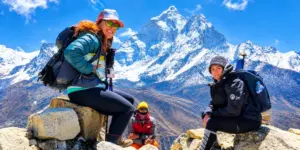
You can take some of the best trek photos without leaving your lodge. The terrace at Hotel Everest View is famous for sunrise and sunset light on Everest, Lhotse, and Ama Dablam; the forest around Rivendell Lodge is beautiful in the early-morning mist; and Tengboche Monastery, framed by Ama Dablam, is just a short walk away. Higher up, the classic shots come from Kala Patthar at sunrise and from the moraine above Gorakshep.
Luxury lodges in the lower valley make it easy to charge batteries and back up your images. Above Dingboche, keep batteries warm inside your sleeping bag at night, as the cold drains them quickly. If you hope to fly a drone, check the rules first, as drones need special permission in the national park and around the monasteries.
Booking and Customising Your Luxury Trek
Because luxury lodges have only a handful of rooms, the Luxury Everest Base Camp Trek works best when booked well in advance, especially for spring and autumn. Our team can tailor almost every part of the journey: an extra acclimatisation night in Namche or Dingboche, a private departure for your family or friends, extra nights at the Hotel Everest View, a few days in Kathmandu or Pokhara before or after the trek, or a combined journey with Bhutan or Tibet.
When you enquire, let us know your dates, interests, and any medical or dietary needs, and we will design the itinerary around you. If you are not sure which option is right, our team is happy to compare the luxury, standard and helicopter treks with you in detail.
Practical Tips for a Luxury Everest Trek
- Book early: Luxury lodges have few rooms and fill quickly in spring and autumn.
- Keep a buffer day: Helicopters and planes depend on the weather, so allow one or two spare days before your flight home.
- Walk slowly: Comfort does not speed acclimatisation.
- Please tell us your preferences: Dietary needs, celebrations or special requests are easier to arrange in advance.
- Bring cash: For drinks, snacks and small extras on the trail, as there are few ATMs above Namche.
- Enjoy the simple nights too: Lobuche and Gorakshep are basic, but they are part of the adventure.
Common Mistakes on a Luxury Trek
- Expecting a five-star resort at 5,000 m: Luxury ends below Dingboche; plan for simple upper lodges.
- Skipping training: The walking is the same as on the standard trek.
- Packing too little warm gear: Bedrooms are rarely heated, and the upper lodges are cold.
- Ignoring altitude symptoms: Comfort can mask how tired you are; listen to your body and your guide.
- Leaving no spare time: Weather can delay helicopters, so avoid tight connections.
Frequently Asked Questions About the Luxury Everest Base Camp Trek
What is a luxury Everest Base Camp trek?
It follows the same route to Everest Base Camp and Kala Patthar as the classic trek but uses the best lodges in the Khumbu, with en-suite rooms and electric blankets in the lower valley, and helicopters to save time.
Are there luxury lodges at Everest Base Camp?
No. High-end lodges exist only in the lower half of the route, up to about Deboche. Above Dingboche, including Lobuche and Gorakshep, all lodges are simple.
Which lodges does the Luxury Lodge Trek use?
Yeti Mountain Home in Phakding and Namche, Hotel Everest View in Syangboche, Rivendell Lodge in Deboche, the best lodges in Dingboche, the best available rooms in Lobuche and Gorakshep, plus a five-star hotel in Kathmandu.
Is the luxury trek easier than the standard trek?
The walking and altitude are the same, so the physical challenge is similar. Better sleep, food, and the helicopter return make it more comfortable and less tiring overall.
Do luxury lodges have heating? Stoves warm dining rooms, and beds have electric blankets or heated pads in the luxury lodges, but bedrooms themselves are rarely heated.
Can I stay at the Hotel Everest View?
Yes. Our Luxury Lodge Trek includes a night at the Hotel Everest View after the acclimatisation hike on Day 4.
What happens if the helicopter cannot fly?
Your guide waits for a weather window or starts walking down and arranges a pickup from a lower village. Keep one or two buffer days before your international flight.
How long is the Luxury Lodge Trek?
Eleven days from Kathmandu to Kathmandu, including helicopter flights in and out of the Khumbu.
Is a luxury EBC trek worth it?
For trekkers who value comfort, sleep, time and a helicopter return, yes. Those who love simple teahouse life may prefer the standard trek.
When is the best time for a luxury Everest trek?
Spring and autumn, when the weather is most stable for helicopters, and the mountain views are clearest.
Final Thoughts: The Everest Adventure, Elevated
A Luxury Everest Base Camp Trek does not make the Himalaya smaller. You still climb to the foot of the world’s highest mountain, stand at base camp beneath the Khumbu Icefall and watch the sun rise over Everest from Kala Patthar. What changes is how you feel along the way: rested, warm and well looked after, with more energy to enjoy every monastery, village and view.
Join our 11-day Everest Base Camp Luxury Lodge Trek, or explore the Luxury Everest Base Camp Trek with Helicopter Return. Meet our guides on our team page, learn more about our company, read about our responsible tourism commitments, our payment options and our company registration and legal documents, then plan your trip or contact us today. Everest is waiting, in comfort.


