
Gokyo Lake Trek: Gokyo Ri and Fifth Lake
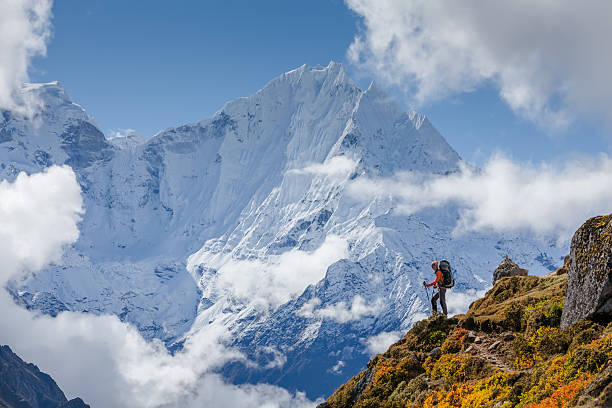
It is half past four in the morning, and the only sounds are your breathing and the crunch of frost under your boots. Head torches bob on the slope above like a string of fireflies. Then the sky turns from black to indigo to gold, and from the prayer flags on the summit of Gokyo Ri, you watch the sun rise behind Everest, Lhotse and Makalu, while far below, the turquoise lake at your feet catches the first light. A day later, you stand alone on a moraine ridge above a remote fifth lake, with Cho Oyu filling the sky and the vast Ngozumpa Glacier stretching away beneath you.
The Gokyo Ri and Fifth Lake hikes are the Gokyo Valley’s two great adventures, and together they make the Gokyo Lake Trek one of the most rewarding journeys in the Everest region. Gokyo Ri is the famous summit viewpoint above Gokyo village; the fifth lake, Ngozumpa Tsho, lies at the quiet head of the valley, close to the slopes of Cho Oyu. You can include both on our Gokyo Lakes Trek.
In this guide, our team explains everything you need to know: the routes, altitudes and hiking times, what you see, sunrise or sunset on Gokyo Ri, Scoundrel’s Viewpoint, the six Gokyo lakes, how to fit both hikes into your itinerary, safety at altitude and the best time to go.
The Short Answer: How Do You Hike Gokyo Ri and the Fifth Lake?
Gokyo Ri, about 5,357 m, is a two- to three-hour climb from Gokyo village, gaining roughly 570 m, for views of four 8,000-metre peaks: Everest, Lhotse, Makalu and Cho Oyu. The fifth lake, Ngozumpa Tsho (about 4,980 m), is a gentler walk of around three hours each way up the valley, with Scoundrel’s Viewpoint above it. Allow one extra day in Gokyo to enjoy both.
In brief:
- Gokyo Ri: A steep but non-technical climb; best at sunrise or in the late afternoon.
- Fifth lake: A long, gradual valley walk past the fourth lake, with fewer people and huge views of Cho Oyu.
- Scoundrel’s Viewpoint: A prayer-flagged ridge above the fifth lake, looking across the glacier to Everest.
- Time needed: One day for each hike, after you have acclimatised in Gokyo.
Gokyo Ri and Fifth Lake at a Glance
- Gokyo village: About 4,790 m, on the shore of the third lake.
- Gokyo Ri summit: About 5,357 m; a gain of about 570 m; two to three hours up and one to one and a half hours down.
- Fourth lake, Thonak Tsho: About 4,840 m; about 1.5 to 2 hours from Gokyo.
- Fifth lake, Ngozumpa Tsho: About 4,980 m; around three hours from Gokyo.
- Scoundrel’s Viewpoint: Around 5,000 m, on the moraine ridge beside the fifth lake.
- Difficulty: Moderate to strenuous because of the altitude; no technical skills needed.
- Best seasons: Spring and autumn, with clear, frozen winter days for hardy trekkers.
- Extra time: One additional day in Gokyo to include the fifth lake.
- Our trek: The 12-day Gokyo Lakes Trek, which can be extended for the fifth lake.
Where Are Gokyo Ri and the Fifth Lake?
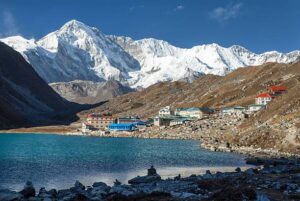
The Gokyo valley, carved by the upper Dudh Koshi, runs north toward Cho Oyu, the sixth-highest mountain on Earth, east of the main valley that leads to Everest Base Camp. On its eastern side lies the Ngozumpa Glacier; on its western side, tucked between the glacier’s moraine and the mountain slopes, sits a chain of turquoise lakes. Gokyo village sits on the shore of the third lake, and Gokyo Ri rises directly above its northern end. The fourth, fifth and sixth lakes lie further up the valley, each higher and more remote than the last.
The whole valley lies within Sagarmatha National Park, a UNESCO World Heritage Site, and the Gokyo lakes and their wetlands are protected as a Ramsar site, a wetland of international importance. Our complete guide to the Gokyo Lakes Trek covers the whole route from Lukla.
The Trail to Gokyo
Every Gokyo Ri and Fifth Lake adventure begins with a walk up the valley, one of the most beautiful approaches in the Khumbu. From Namche Bazaar, the trail climbs to the Mong La ridge, with a superb view of Ama Dablam, then drops to the river at Phortse Thenga and climbs through rhododendron and birch forest to Dole. Beyond, it rises gently through yak pastures and stone huts to Machhermo, then passes the first and second lakes to Gokyo itself. This gradual approach, with nights at about 4,100 m and 4,470 m, prepares your body for hikes above 5,000 m.
The Six Gokyo Lakes, From First to Sixth
Trekker routes usually count six main lakes, part of a wider system of around nineteen lakes and ponds. Names and altitudes vary slightly between sources, but the most commonly used are:
- First lake, Longponga Tsho (about 4,690 m): The smallest of the main lakes, passed on the approach from Machhermo.
- Second lake, Taujung Tsho (about 4,710 m): Deep blue and slightly larger, with the trail running along its shore.
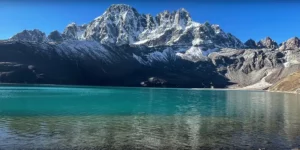
- Third lake, Dudh Pokhari or Gokyo Tsho (about 4,750 m): The famous turquoise lake, with Gokyo village on its eastern shore and Gokyo Ri above.
- Fourth lake, Thonak Tsho (about 4,840 m): The largest lake in the system, quiet and beautiful, with Cho Oyu beyond.
- Fifth lake, Ngozumpa Tsho (about 4,980 m): Close to the Ngozumpa Glacier, beneath Scoundrel’s Viewpoint.
- Sixth lake, Gyazumpa Tsho (around 5,000 m): The most remote, towards the head of the valley and the approaches to Cho Oyu.
Both Buddhists and Hindus consider the lakes sacred. During the Janai Purnima festival, usually in August, Hindu pilgrims bathe in the icy waters, and prayer flags flutter along the shores. Out of respect, and because the water is near freezing, trekkers should never swim or wash in the lakes. Look out for ruddy shelducks, the bright orange ducks often seen on the water.
The Ngozumpa Glacier
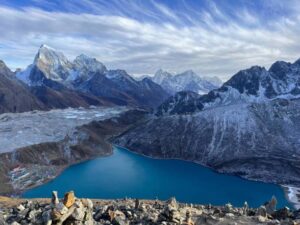
Beside the lakes lies the Ngozumpa Glacier, about 36 km long and Nepal’s longest glacier. Flowing down from the Cho Oyu massif, it is covered for much of its length by a thick layer of rock and gravel, beneath which the ice is hundreds of metres thick in places. Meltwater has formed turquoise lakes on its surface, and ice cliffs crack and rumble in the afternoon sun.
From Gokyo Ri and from the moraine ridges near the fourth and fifth lakes, you look down across its full width, a grey, chaotic sea of rubble and ice. The glacier is also crossed on the route between Gokyo and Thangnak on the way to the Cho La Pass, described in our Cho La Pass guide. Never walk onto the glacier without a guide: the surface is unstable, and the ice cliffs and lakes can be dangerous.
Climbing Gokyo Ri: The Complete Guide
Climbing Gokyo Ri is the highlight of any Gokyo trek, and for many trekkers, the finest viewpoint in the whole Everest region.
The Route
From Gokyo village, the path follows the shore to the northern end of the third lake, crosses the stream that feeds it, and then begins the long climb up the hill’s grassy, rocky flank. There are no flat sections: the trail zigzags steadily upwards on loose earth and stones, with the turquoise lake shrinking below and the view widening with every turn. Near the top, the path becomes rockier and passes through a forest of prayer flags to the summit cairns.
How Long and How Hard Is It?
Most trekkers take two to three hours to reach the summit and one to one and a half hours to descend. The climb gains about 570 m, from about 4,790 m to about 5,357 m, and although it is not technical, the thin air makes it a serious effort: at the summit, each breath holds only about half the oxygen it would at sea level. Walk slowly, take short, regular breaks and do not try to keep up with faster climbers.
The View from the Top
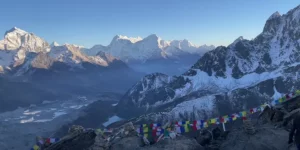
The panorama from Gokyo Ri is one of the greatest mountain views on Earth. Fourteen of the world’s 8,000-metre peaks are visible at once:
- Everest (about 8,849 m): To the east, across the Ngozumpa Glacier, its dark summit pyramid rising above the ridge.
- Lhotse (about 8,516 m): The world’s fourth-highest mountain, beside Everest.
- Makalu (about 8,485 m): The fifth-highest, a distinctive granite pyramid further to the east.
- Cho Oyu (about 8,188 m): The sixth-highest, filling the head of the valley to the north.
Between Everest and Cho Oyu rises Gyachung Kang (about 7,952 m), the highest mountain below 8,000 m, and closer at hand stand Cholatse, Taboche, Thamserku, and Kangtega. Below you, the third, fourth and fifth lakes sparkle beside the glacier. Our article on Nepal’s eight-thousand-metre peaks introduces the giants on the horizon.
Sunrise or Sunset?
Because Everest lies to the east, the sun rises behind it, so at dawn the great peaks appear as dramatic silhouettes against a golden sky. Mornings are usually the clearest, which is why most trekkers climb for sunrise, starting around four or half past four with headtorches.
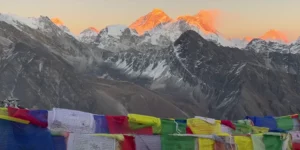
In the late afternoon, the light falls directly on Everest and its neighbours, turning them gold and pink at sunset, and photographers often prefer it. The trade-offs are the higher chance of afternoon cloud, especially in spring, and a cold descent in the dark. Our guides choose the timing each season based on the weather, and if one attempt is cloudy, climbers can often try the next day again with an extra night in Gokyo. Our comparison of Gokyo Ri vs Kala Patthar details both viewpoints.
Tips for the Climb
- Dress for the summit: It is often well below freezing at dawn, with wind; wear your down jacket, hat and warm gloves.
- Carry a hot drink: A flask of tea makes the wait for the sun far more pleasant.
- Use trekking poles: They help on the steep ascent and the loose descent.
- Bring microspikes in snow: After fresh snowfall, the path can be icy.
- Turn back if unwell: A worsening headache, nausea, or dizziness means descend.
Hiking to the Fifth Lake and Scoundrel’s Viewpoint
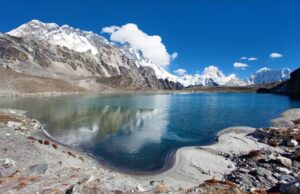
If Gokyo Ri is the famous summit, the walk to the fifth lake is the valley’s best-kept secret. Fewer trekkers make the journey; the scenery grows wilder with every step, and Cho Oyu feels close enough to touch.
The Route
From Gokyo, the trail heads north along the valley’s edge, between the mountainside and the glacier’s moraine, to the fourth lake, Thonak Tsho, in about 1.5 to 2 hours. You can follow the main path along the valley floor or take the more spectacular but rougher route along the moraine crest, with views straight down onto the glacier. Beyond the fourth lake, the path continues gently upwards for around another hour to the fifth lake, Ngozumpa Tsho, at about 4,980 m. Allow around three hours each way, plus time at the lake and viewpoint, for a full day of six to seven hours.
Scoundrel’s Viewpoint
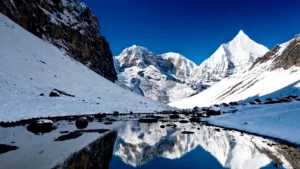
Above the fifth lake, a short scramble up the moraine ridge to the east leads to a point around 5,000 m marked with prayer flags and known as Scoundrel’s Viewpoint. To the north, Cho Oyu and Gyachung Kang tower above the glacier’s head. To the east, across the vast sweep of the Ngozumpa, Everest, Lhotse, Nuptse and Makalu line the horizon, seen from a different angle than at Gokyo Ri. Many trekkers find it the most peaceful and awe-inspiring place on the whole trek.
Beyond the Fifth Lake
Strong, well-acclimatised trekkers with a guide can continue towards the sixth lake, Gyazumpa Tsho, and the viewpoints facing the huge southern walls of Cho Oyu. This is remote, high and largely trackless country, so it needs settled weather, an early start and a full day.
Tips for the Fifth Lake
- Start early: Clouds often build by late morning; aim to be at the viewpoint before noon.
- Carry food and water: There are no lodges beyond Gokyo, so pack a lunch and bring at least two litres of water.
- Watch the weather: Snow can make the upper valley slow and difficult; turn back if conditions worsen.
- Stay off the glacier: Keep to the paths along the moraine and valley floor.
A Day at Gokyo: How Your Time Unfolds
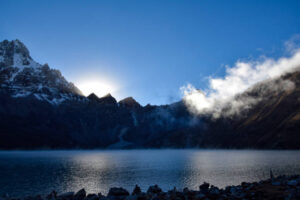
A typical day of the Gokyo Ri and Fifth Lake programme starts in the dark. On a Gokyo Ri morning, you wake around four, drink a hot cup of tea and set off by headtorch, reaching the summit as the sky lightens. After an hour of watching the light spread across the peaks, you descend for a late breakfast by the lake, then spend a lazy afternoon resting, reading in the sunny dining room or wandering along the shore.
On a fifth lake day, you leave after an early breakfast with a packed lunch, walk north along the valley as the sun reaches the lakes and arrive at Scoundrel’s Viewpoint before the late-morning clouds. You return to Gokyo by mid-afternoon, tired and happy, for a hot drink and a well-earned dinner. On our Gokyo Lakes Trek, your guide adjusts the timing each day to the weather and to how you feel.
Wildlife and Nature in the Gokyo Valley
The Gokyo Ri and Fifth Lake hikes also take you through a remarkable high-altitude ecosystem. Below Dole, birch and rhododendron forests shelter musk deer and the colourful Himalayan monal, Nepal’s national bird. Higher up, Himalayan tahr graze the steep slopes, Tibetan snowcocks call from the hillsides and lammergeiers glide above the ridges. On the lakes, look for ruddy shelducks and other waterbirds, and around the lodges, the tame yellow-billed choughs. In summer, alpine flowers dot the pastures around the lakes, while in winter the lakes freeze into sheets of white ice. Our Sagarmatha National Park guide describes the region’s wildlife in more detail.
Gokyo Ri or the Fifth Lake: Which Should You Choose?
If you only have time for one, choose Gokyo Ri: it gives the famous view of four 8,000-metre peaks and the lakes in a single morning. If you can add a day, do both. The two hikes complement each other perfectly: Gokyo Ri for the grand panorama and sunrise, and the fifth lake for solitude, the closest views of Cho Oyu, and the sense of reaching the wild head of the valley.
- Gokyo Ri: Steeper and higher, shorter in time, busier and the classic view.
- Fifth Lake: Gentler and longer, quieter, wilder and closer to Cho Oyu.
How Many Days in Gokyo? Fitting Both Into Your Itinerary
The Gokyo Ri and Fifth Lake hikes need careful timing, because both start from Gokyo at about 4,790 m and both take you close to or above 5,000 m.
- Our standard 12-day trek: You reach Gokyo on Day 7 and, if you feel strong, climb Gokyo Ri the same afternoon for evening light. On Day 8, a morning walk takes you to the fourth lake before you descend to Machhermo.
- With one extra day (13 days): Reach Gokyo and climb Gokyo Ri on Day 7 as above, spend Day 8 walking to the fourth and fifth lakes and Scoundrel’s Viewpoint, then on Day 9, climb Gokyo Ri again at sunrise if you wish before descending.
- With two extra days: Rest on arrival, climb Gokyo Ri at sunrise the next morning, walk to the fifth lake the day after and descend at an easy pace. This is the best plan for slower walkers, older trekkers and photographers.
Our guides explain how many days the EBC trek takes and how extra days on the Everest Base Camp Trek over 50 improve acclimatisation and enjoyment.
Our 12-Day Gokyo Lakes Trek in Brief
- Day 1: Arrive in Kathmandu (about 1,400 m).
- Day 2: Fly to Lukla and walk to Phakding (about 2,610 m).
- Day 3: Trek to Namche Bazaar (about 3,440 m).
- Day 4: Acclimatisation day in Namche, with a hike to the Hotel Everest View and Khumjung.
- Day 5: Trek over the Mong La ridge to Dole (about 4,100 m).
- Day 6: Trek to Machhermo (about 4,470 m).
- Day 7: Trek to Gokyo (about 4,790 m) and climb Gokyo Ri (about 5,357 m).
- Day 8: Morning walk to the fourth lake, then descend to Machhermo.
- Day 9: Trek back to Namche Bazaar.
- Day 10: Trek to Lukla.
- Day 11: Fly to Kathmandu.
- Day 12:
During busy seasons, Lukla flights usually depart from Manthali in Ramechhap; our Ramechhap airport transportation team handles the transfer. Keep one or two buffer days for weather delays. If you prefer not to fly, the Everest Base Camp Trek by Road and the classic Jiri to Everest Trek, described in our Jiri to Everest Base Camp guide, approach the Khumbu from the lower hills, and you can add Gokyo to either.
Altitude and Safety at Gokyo
Gokyo sits at about 4,790 m, higher than any village in the Alps, and both hikes take you to around 5,000 m or more. Acclimatisation is essential.
- Ascend gradually: Our itinerary includes a rest day in Namche and gradual stages through Dole and Machhermo.
- Know the warning signs: Headache, nausea, dizziness, unusual tiredness or breathlessness at rest; tell your guide immediately.
- Never go higher with symptoms: If they worsen, descend; even a few hundred metres can make a big difference.
- Medical help is limited: There is no hospital in the Gokyo valley, so serious cases are evacuated by helicopter, weather permitting. Travel insurance covering trekking to about 5,500 m and helicopter rescue is essential.
- Respect the cold and wind: Early mornings on Gokyo Ri and afternoons in the upper valley can be bitterly cold.
Read our Acute Mountain Sickness page and our guide to altitude sickness on the Everest Base Camp Trek, which apply equally to the Gokyo Valley.
Best Time to Climb Gokyo Ri and Visit the Fifth Lake
Spring and autumn are the best seasons for both hikes. Our month-by-month guide to the best time for the Everest Base Camp Trek also applies to the Gokyo Valley.
- Autumn (late September to November): The clearest skies and sharpest views, ideal for Gokyo Ri; read our guide to the Everest Base Camp Trek in October.
- Spring (March to May): Warmer, with clear mornings and more afternoon cloud, so sunrise climbs are usually best; read our guide to the Everest Base Camp Trek in April.
- Winter (December to February): Frozen white lakes, crystal-clear air and very cold nights; snow can block the path to the fifth lake.
- Monsoon (June to August): Cloudy and wet, with limited views, although the valley is green; read our guide to the Everest Base Camp Trek in the monsoon.
Photography at Gokyo
- Reflections at dawn: On still mornings, the third and fourth lakes mirror the surrounding peaks.
- The summit panorama: A wide-angle lens captures the lakes, the glacier and the peaks in one frame.
- Everest close-up: A moderate telephoto lens brings Everest’s summit and snow plume closer from Gokyo Ri and Scoundrel’s Viewpoint.
- Glacier textures: The rubble, ice cliffs and meltwater pools of the Ngozumpa make striking abstract images.
- Night skies: Gokyo’s high, dark skies make for superb star photography on clear nights.
- Protect your batteries: Keep them warm in an inside pocket; the cold drains them quickly.
What to Carry on the Day Hikes
- Warm layers: A down jacket, hat, gloves and a windproof shell.
- Headtorch: Essential for sunrise or sunset on Gokyo Ri.
- Water and snacks: At least two litres of water, plus a packed lunch for the fifth lake.
- Sun protection: Glacier-grade sunglasses, sunscreen and lip balm.
- Trekking poles and microspikes: For steep, loose or icy ground.
- Camera and spare batteries: You will want them.
For the complete kit list, see our Everest Base Camp Trek packing list and our trekking equipment page.
Lodges and Food in Gokyo
Gokyo has some of the most pleasant lodges at this altitude, with warm dining rooms, big windows facing the lake and, in some, rooms with attached bathrooms. Menus include dal bhat, noodles, potatoes, soups, pancakes and, in some lodges, freshly baked treats. Rooms are simple and cold at night, so a good sleeping bag is essential. In the coldest weeks of winter, some lodges close, so our team always confirms what is open before you set off.
Combining Gokyo With Everest Base Camp
For many trekkers, Gokyo is the first half of a bigger adventure. From Gokyo, the trail crosses the Ngozumpa Glacier to Thangnak, climbs over Cho La (about 5,420 m) to Dzongla, and continues on the main route to Lobuche, Gorakshep, Everest Base Camp, and Kala Patthar. The Everest 3 Pass Trek, described in our Everest Three Passes Trek guide, also crosses Renjo La, whose summit at about 5,360 m offers another superb view over the Gokyo lakes to Everest.
Combining the Gokyo Ri and Fifth Lake hikes with base camp takes longer and requires strong legs, but it gives you the very best of the Khumbu. If base camp is your main goal, our classic Everest Base Camp Trek, described in our guides to the Everest Base Camp Trek 14 days itinerary, the Everest Base Camp Trek itinerary and the Everest Base Camp Trek distance, and our Everest Base Camp Luxury Lodge Trek, follows the main valley. Shorter options include the Everest Base Camp Helicopter Trek, the Everest Elite Luxury Heli Trek and the Luxury Everest Base Camp Trek with Helicopter Return, explained in our guide to the short Everest Base Camp Trek.
Seeing Gokyo by Helicopter
If you cannot trek, the Gokyo Lakes Helicopter Tour visits the turquoise lakes in a single morning, weather permitting, and the Everest Helicopter Tour, the Mt Everest by Helicopter Tour, the Everest Heli Sherpa Village Walk and the Sharing Everest Helicopter Tour with Kala Patthar Landing, when operating, show you Everest from the air. Because helicopters reach high altitude very quickly, anyone with heart or lung conditions should check with a doctor first. Our guides to the Everest Base Camp helicopter tour, the best seasons for an Everest helicopter tour, Everest helicopter tour restrictions and the EBC trek or helicopter tour explain the options.
Culture and the Sacred Lakes
The Gokyo Valley was traditionally a summer grazing land, where Sherpa families brought their yaks to the high pastures, and many of today’s lodges grew from simple herders’ huts. The lakes themselves are revered as sacred, and you will see prayer flags, mani stones and small shrines along their shores. Walk clockwise around chortens and mani walls, never throw anything into the lakes and ask before photographing people.
Our guide to Sherpa culture and traditions explains the beliefs of the Khumbu people, our article on chortens in Tibetan Buddhism describes the shrines you pass, and our stories of Guru Padmasambhava and Milarepa introduce two great teachers of Himalayan Buddhism. On the way back down, a visit to Tengboche and its monastery, described in our guide to Tengboche Monastery and the Mani Rimdu festival, adds a cultural highlight to the journey.
Preparing for Gokyo Ri and the Fifth Lake
- Training: Build endurance and leg strength for long, steep climbs at altitude; our 12-week training plan is ideal preparation, and our guides to the Everest Base Camp Trek for beginners and Everest Base Camp Trek difficulty explain what to expect.
- Permits: You need the Sagarmatha National Park entry permit and the Khumbu Pasang Lhamu Rural Municipality permit, both arranged by our team.
- Guide rules: Rules vary by area and can change, so check before you travel; we strongly recommend a licensed guide, especially for the remote upper valley. Read our article on Nepal’s mandatory guide rules and our wider trekking in Nepal guide.
- Visa and insurance: Check entry requirements in our Nepal visa guide, and choose insurance that covers high-altitude trekking and helicopter rescue.
More Himalayan Lakes and Viewpoints
If the Gokyo lakes capture your heart, Nepal has other unforgettable high lakes and viewpoints. The Tilicho Lake Trek visits one of the world’s highest lakes of its size, near the Annapurna Circuit Trek, and the Langtang Gosaikunda Trek reaches the sacred Gosaikunda lakes, another great Janai Purnima pilgrimage site, beyond the Langtang Valley Trek.
In far western Nepal, Lower Dolpo Trekking leads to the startling blue Phoksundo Lake, and in Tibet, the Mount Kailash Tour visits sacred Lake Mansarovar and the pilgrim circuit described in our guide to the Kailash kora. In the Everest region, Ama Dablam Base Camp Trekking, described in our Ama Dablam Base Camp Trek guide, and the shorter Everest View Trek, described in our guide to the luxury Everest View Trek, offer more ways to see the giants of the Khumbu, while the Everest Base Camp Yoga Trek, described in our guide to mindful trekking in the Himalayas, brings a slower, reflective rhythm to the trail.
Climbers can continue to Island Peak Climbing, described in our Island Peak climbing guide, or Lobuche Peak Climbing, or plan a separate expedition to Mera Peak Climbing; our Ama Dablam expedition guide looks at the region’s most famous technical climb. Check the latest NMA peak permit updates. Browse our list of the top 50 treks in Nepal for more ideas, including the Annapurna Base Camp Trek, the Manaslu Circuit Trek over the Larke Pass and the remote Kanchenjunga Base Camp Trek.
After the trek, explore Kathmandu on our Kathmandu Day Tour or with our Kathmandu sightseeing guide; relax on a Chitwan Jungle Safari or the Bardia National Park Tour; enjoy the lakeside town described in our Pokhara sightseeing guide; or see more of the country on the Classic Nepal Tour. Beyond Nepal, the Luxury Bhutan Tour includes the hike to the Tiger’s Nest Monastery, and the Lhasa to Everest Base Camp Overland Tour, described in our Lhasa to Everest Base Camp guide, shows you Everest and Cho Oyu from the Tibetan side; our overview of Buddhism in Tibet explains the shared heritage.
Practical Tips for Gokyo Ri and the Fifth Lake
- Acclimatise first: Do not rush to Gokyo; the gradual approach through Dole and Machhermo is what makes both hikes safe.
- Add a day in Gokyo: It gives you a second chance at clear weather and time for the fifth lake.
- Go early: Mornings are usually clearest on both hikes.
- Pace yourself on Gokyo Ri: Steady, slow steps beat fast bursts at 5,000 m.
- Carry everything you need: There are no lodges beyond Gokyo.
- Respect the lakes: Do not swim, wash or throw anything into the sacred water.
Common Mistakes to Avoid
- Climbing Gokyo Ri while feeling unwell: Symptoms at Gokyo mean rest or descend, not climb higher.
- Underdressing for sunrise: The summit is often far colder than the village.
- Starting the fifth lake walk too late: Afternoon cloud can hide the views.
- Walking on the glacier: Stay on the established paths.
- Skipping the fourth lake: Even if you cannot reach the fifth, the fourth lake is a short, beautiful walk.
Frequently Asked Questions About Gokyo Ri and the Fifth Lake
How high is Gokyo Ri?
Gokyo Ri is about 5,357 m high, around 570 m above Gokyo village.
How long does it take to climb Gokyo Ri?
Most trekkers take two to three hours to climb from Gokyo and one to one and a half hours to descend.
Is Gokyo Ri difficult?
It is not technical, but it is steep and high, so it is a strenuous climb for most people. Good acclimatisation and a slow pace make it achievable for fit trekkers.
Is sunrise or sunset better on Gokyo Ri?
Sunrise usually brings clearer skies and dramatic silhouettes of Everest, while sunset lights the peaks directly but is more likely to bring clouds. Most trekkers climb for sunrise.
How far is the fifth lake from Gokyo?
About a three-hour walk each way, past the fourth lake. Allow a full day of six to seven hours, including time at Scoundrel’s Viewpoint.
What is Scoundrel’s Viewpoint?
A prayer-flagged point at around 5,000 m on the moraine ridge beside the fifth lake, with views of Cho Oyu, Gyachung Kang, Everest, Lhotse and Makalu across the Ngozumpa Glacier.
Can I see Everest from the fifth lake?
Yes, from Scoundrel’s Viewpoint above the lake, you can see Everest across the glacier on a clear day.
Can I do Gokyo Ri and the fifth lake in one day?
It is possible for very strong, well-acclimatised trekkers, but it makes a long, exhausting day at high altitude. We recommend a separate day for each.
Do I need an extra day in Gokyo?
Our 12-day trek includes Gokyo Ri and the fourth lake. To add the fifth lake, plan at least one extra day in Gokyo.
Can I swim in the Gokyo lakes?
No. The lakes are sacred to Buddhists and Hindus, and the water is close to freezing. Enjoy them from the shore.
Final Thoughts: The Summit and the Secret Lake
The Gokyo Ri and Fifth Lake hikes show you two sides of the Gokyo valley: the grand, sweeping panorama of four 8,000-metre peaks from the summit, and the quiet, wild beauty of the upper lakes beneath Cho Oyu. Give yourself the time to enjoy both, and the Gokyo Lake Trek becomes one of the finest mountain journeys in the world.
Join our 12-day Gokyo Lakes Trek and ask us to add a day for the fifth lake, or combine Gokyo with base camp on the Everest 3 Pass Trek. Meet our guides on our team page, learn more about our company, read about our responsible tourism commitments, our payment options and our company registration and legal documents, then plan your trip or contact us today. The turquoise lakes are waiting.
Quick Inquiry
Explore More


