
Best Everest Mountain Flight Tour: The Complete Guide

Best Everest Mountain Flight Tour: The Complete Guide
The plane levels off above a sea of white cloud, and the cabin falls quiet. One by one, the giants of the Himalaya rise out of the haze on the left side of the aircraft: Langtang, Dorje Lakpa, the twin summits of Gauri Shankar, the vast bulk of Cho Oyu. Then the flight attendant points, and there it is: a dark pyramid of rock streaming a plume of snow, standing higher than everything around it. You are looking at Mount Everest, and it is not yet eight o’clock in the morning.
The Everest Mountain Flight is the quickest, easiest and most accessible way to see the world’s highest mountain. In about an hour, without trekking a single step or facing any altitude risk, you fly along the Himalayan range from Kathmandu to the Everest massif and back, with a window seat, a visit to the cockpit and a certificate to take home. For travellers who want to go even closer, our Mt Everest by Helicopter Tour flies up the Khumbu Valley and lands beneath the peaks.
In this guide, our team explains everything you need to know: how the mountain flight works, which airlines fly it, the route and the peaks you see, the best seats, what to expect on the day, weather and delays, the best season, safety, and how the flight compares with a helicopter tour, so you can choose the best way to see Everest.
The Short Answer: What Is the Best Everest Mountain Flight Tour?
The Everest mountain flight is a one-hour sightseeing flight from Kathmandu that cruises along the Himalaya to within roughly 20 to 30 km of Everest and returns without landing. Every passenger gets a window seat, and flights leave early in the morning. For the closest views and a landing in the Everest region, choose a helicopter tour instead; for the easiest, most comfortable view, the mountain flight is ideal.
In brief:
- Duration: About 50 minutes to an hour in the air.
- Departure: Early morning from Kathmandu’s Tribhuvan International Airport.
- Airlines: Mountain flights are currently operated by Nepali domestic airlines such as Buddha Air, Yeti Airlines and Shree Airlines.
- Views: Around 20 Himalayan peaks, including Everest, Lhotse, Makalu and Cho Oyu.
- Comfort: Pressurised aircraft, no landing and no altitude sickness.
- Best for: Families, older travellers, anyone short on time and anyone who cannot trek.
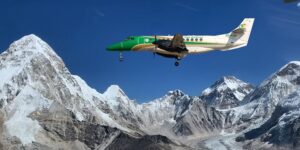
Everest Mountain Flight at a Glance
- What it is: A scenic flight from Kathmandu to the Everest region and back, without landing.
- Flight time: About 50-60 minutes.
- Total time: Around three to four hours from hotel pickup to return.
- Altitude: Pressurised aircraft cruising at up to about 25,000 ft, or roughly 7,600 m.
- Closest point to Everest: Typically around 20 to 30 km, depending on the route and conditions.
- Seats: A guaranteed window seat for every passenger.
- Extras: A brief cockpit visit at the pilot’s discretion and a flight certificate.
- Best season: Autumn and spring, with clear winter mornings also excellent.
- Permits: None needed, because you do not land in the national park.
- For closer views: The Mt Everest by Helicopter Tour and the Everest Helicopter Tour.
What Is the Everest Mountain Flight?
The mountain flight is one of Nepal’s most famous experiences and one of the few scheduled flights in the world that take off and land at the same airport. The idea of flying to Everest is almost as old as aviation in the Himalaya: nearly a century ago, a British expedition flew two open-cockpit biplanes over the summit, the first aircraft ever to do so. Decades later, Nepal’s national airline began regular sightseeing flights along the range, and today several private airlines fly them every morning, weather permitting.
Modern Everest Mountain flights use pressurised turboprop aircraft with large windows. Seats are arranged so that every passenger has a window, and the aircraft flies east along the main Himalayan range, turns near the Everest massif and returns to Kathmandu along the same line, so the mountains appear on one side of the plane on the way out and on the other on the way back. Cabin crew point out each peak, and passengers are usually invited to the cockpit for a few moments to see the view through the pilots’ windows.
A Brief History of Flying Over Everest
Long before anyone stood on the summit, people had seen Everest from the air. Nearly a century ago, a British expedition flew two specially modified Westland biplanes over the mountain from India. The crews sat in open cockpits, breathed bottled oxygen in temperatures far below freezing and took the first aerial photographs of the summit and its glaciers. These images helped climbers plan their routes.
Decades later, as Nepal opened to visitors, the national airline began offering regular sightseeing flights along the range with propeller aircraft, and the idea of seeing Everest before breakfast was born. Today, modern pressurised turboprops fly the route several times each clear morning, making the Everest Mountain Flight one of the country’s most popular experiences.
Which Airlines Fly the Everest Mountain Flight?
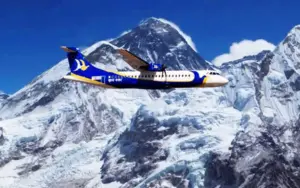
Nepal’s main domestic airlines operate mountain flights from the domestic terminal at Tribhuvan International Airport in Kathmandu. At present, the best-known operators are:
- Buddha Air: One of Nepal’s largest domestic airlines, flying its mountain flights with pressurised turboprops such as the ATR 72, and well known for its cockpit visits.
- Yeti Airlines: Flies the mountain route with ATR 72 aircraft, often with an illustrated peak map and in-cabin commentary.
- Shree Airlines: Also offers early-morning mountain flights from Kathmandu.
All three follow a similar route and offer every passenger a window seat and a flight certificate. Fleets, schedules and policies change from season to season, so the best airline on any given morning is often simply the one with the best weather window and seat availability. Our team can help you book a mountain flight during your stay in Kathmandu.
The Route: From Kathmandu to Everest and Back
After taking off from Kathmandu, the aircraft climbs out of the valley and turns east, following the Himalaya at a safe distance. On a clear morning, the panorama unfolds like a line of giants, from west to east:
- Langtang Lirung (about 7,227 m): The highest peak of the Langtang range, close to Kathmandu.
- Shishapangma, or Gosainthan (about 8,027 m): The only 8,000-metre peak entirely in Tibet, seen across the border.
- Dorje Lakpa (about 6,966 m): A beautiful, symmetrical snow peak.
- Gauri Shankar (about 7,134 m) and Melungtse (about 7,181 m): Gauri Shankar is sacred to Bon and Buddhists alike, with Melungtse just beyond.
- Cho Oyu (about 8,188 m): The world’s sixth-highest mountain.
- Gyachung Kang (about 7,952 m): The highest mountain below 8,000 m.
- Pumori (about 7,161 m) and Nuptse (about 7,861 m): Guarding Everest’s southern approaches.
- Everest (about 8,849 m): Earth’s highest point, its dark summit pyramid often trailing a plume of snow.
- Lhotse (about 8,516 m) and Makalu (about 8,485 m): The world’s fourth- and fifth-highest mountains.
On exceptionally clear days, Kanchenjunga, the world’s third-highest mountain, may be visible far to the east, and the brown, rolling Tibetan Plateau stretches away beyond the range. After turning near the Everest massif, the aircraft retraces its route to Kathmandu. Our article on Nepal’s eight-thousand-metre peaks introduces the giants you see, and our guide to Ama Dablam tells the story of one of the most beautiful mountains in the Khumbu.
The World Beneath the Wings: The Everest Region From Above
From the window of the Everest Mountain Flight, the great trekking region of the Khumbu lies hidden in the deep valleys below the peaks. Somewhere beneath the wing, trekkers walk from Phakding to Namche Bazaar, visit the Sherpa villages of Khumjung and Khunde, listen to the monks of Tengboche and Pangboche, and climb slowly through Dingboche, Pheriche, Lobuche, and Gorakshep towards base camp.
Further west lie the high passes of the Everest 3 Pass Trek, described in our Everest Three Passes Trek and Cho La Pass guides, and to the east, the Chhukung valley beneath the Lhotse wall, described in our guide to Chhukung Ri and the Chhukung Valley. The quiet trail to Ama Dablam Base Camp Trekking, explained in our Ama Dablam Base Camp Trek guide, climbs towards one of the peaks you see from the plane.
The snowy summits below the giants are climbing objectives too: Island Peak Climbing, described in our Island Peak climbing guide; Lobuche Peak Climbing; and, to the south, Mera Peak Climbing. Check the latest NMA peak permit updates. Our Ama Dablam expedition guide and our answers to questions about climbing Ama Dablam tell the story of the Khumbu’s most admired climb.
How to Recognise Everest From the Plane
Many first-time passengers are surprised that Everest does not always look like the tallest peak, because closer mountains can appear larger. These tips help you find it:
- Look for the dark pyramid: Everest’s summit is a dark, rocky pyramid, often with a plume of snow blowing from its top on windy days.
- Find the great wall: Everest rises behind the long ridge joining Nuptse and Lhotse, which hides its lower slopes.
- Use its neighbours: Lhotse stands just to the right of Everest, and Makalu, a sharp granite pyramid, rises farther east.
- Compare with Cho Oyu: Before Everest, you pass the broad, massive bulk of Cho Oyu, the sixth-highest mountain.
- Ask the crew: Cabin crew usually point out Everest as it comes into view, and many airlines hand out a printed peak chart.
The Cockpit Visit
One highlight of the Everest Mountain Flight is a brief visit to the cockpit, usually offered to each passenger in turn, at the pilot’s discretion. Through the wide front windows, you see the peaks ahead as the pilots do, and the crew are often happy to point out Everest and its neighbours. Have your camera ready and keep your visit short, so that everyone gets a turn.
Best Seats and Photography Tips
Because every passenger has a window, there are no bad seats, but a few tips help you get the best photographs:
- Both sides get the view: The mountains usually appear on the left side heading east and on the right on the way back, although this can vary with the route and airline.
- Shoot through clean glass: Choose the clearest part of the window and hold your lens close to it to reduce reflections.
- Avoid polarising filters: They can create rainbow patterns through aircraft windows.
- Use a fast shutter speed: Fast shutter speeds reduce vibration and movement; phones work well too.
- Zoom in on Everest: A moderate telephoto lens brings the summit pyramid and snow plume closer.
- Dress in dark clothing: Light-coloured clothes reflect in the window.
- Enjoy the moment: Put the camera down for a minute and look.
Camera Settings for Keen Photographers
If you want to come home with sharp, vivid images from the Everest Mountain Flight, a few settings make a big difference:
- Shutter speed: Use around 1/1000 second or faster to cancel out vibration.
- Focus: Set focus on the distant peaks, or to infinity, so the camera doesn’t focus on scratches in the window.
- Exposure: Snow and bright sky can fool the meter; reduce exposure slightly to keep detail in the summits.
- A rubber lens hood: Press it gently against the window to block reflections from inside the cabin.
- RAW files: Shooting in RAW gives you more room to cut through haze when editing.
- A mid-range zoom: Wide enough for the panorama, long enough to frame Everest on its own.
What to Expect on the Day
Mountain flights leave early, when the air is clearest. A typical morning looks like this:
- Early pickup: A transfer collects you from your hotel, usually between a and 6 a.m., depending on your flight time.
- Check-in: At the domestic terminal of Tribhuvan International Airport, complete security screening and check in for boarding; bring your passport.
- Boarding: Flights usually depart from around 6 a.m. onwards, with several departures each morning in season.
- The flight: About 50 to 60 minutes, with commentary, peak cards or maps, the cockpit visit and plenty of photographs.
- Certificate: Many airlines present a certificate to commemorate your flight.
- Back by breakfast: You are usually back at your hotel by mid-morning, with the rest of the day free.
Spend the afternoon exploring the city on our Kathmandu Day Tour or with our Kathmandu sightseeing guide.
Comfort Tips for the Flight
- Eat a light breakfast: A snack before an early flight helps if you are prone to motion sickness.
- Keep your seatbelt fastened: Except when invited to the cockpit, follow the crew’s instructions.
- Take turns: Everyone wants the perfect photograph; share the cockpit view and keep your visit brief.
- Protect your ears: Swallow or chew during descent if your ears feel the pressure change, especially if you have a cold.
- Bring a light layer: Cabins can feel cool at first light.
Weather, Delays and Cancellations
Like every flight in the Himalaya, the Everest Mountain Flight depends on the weather. Airlines fly only when the mountains are visible, and they may delay departures or cancel flights when clouds cover the range. In winter, morning fog in the Kathmandu Valley sometimes delays departures until it lifts.
If a flight is cancelled for weather, airlines usually rebook you on the next available flight or refund the ticket, depending on their policies. The best protection is to book your flight early in your stay, so you have spare mornings to try again if needed.
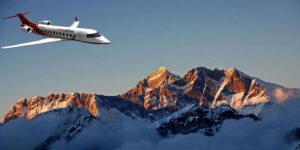
Best Time for the Everest Mountain Flight
Mountain flights operate throughout the year, but the views vary with the seasons:
- Autumn (October and November): The clearest skies and sharpest views of the year, and the most reliable flying weather.
- Winter (December to February): Crisp, clear mornings with superb visibility, although valley fog can delay departures.
- Spring (March to May): Good morning views, with haze and cloud becoming more common later in the season.
- Monsoon (June to September): Frequent cloud and more cancellations, although clear breaks above the clouds can be spectacular.
Our guides to the best time for Everest Base Camp Trek and the best seasons for an Everest helicopter tour explain the Himalayan seasons in more detail.
Is the Mountain Flight Safe? Altitude and Comfort
The mountain flight is one of the gentlest ways to see Everest. The aircraft are pressurised, and you never leave the cabin or land at altitude, so there is no risk of altitude sickness, unlike treks or helicopter landings in the high Khumbu. The flight suits most ages and fitness levels, including older travellers and families with children. However, anyone with a medical condition should check with their doctor and the airline before booking.
Mountain flying always depends on weather and careful operations, which is why airlines fly only in suitable conditions and keep the aircraft at a safe distance from the peaks. Air turbulence is usually light in the calm morning air.
Mountain Flight vs Helicopter Tour: Which Is Better?
Both are wonderful ways to see Everest, but they offer very different experiences:
- Distance: The mountain flight views Everest from roughly 20 to 30 km away; helicopter tours fly up the Khumbu Valley, much closer to the peaks.
- Landing: The mountain flight does not land; helicopter tours land at points such as Lukla, the Hotel Everest View and, when permitted, Kala Patthar.
- Duration: About an hour for the flight, compared with around four to six hours for most helicopter tours.
- Altitude: No altitude exposure on the flight; helicopter landings at high altitude need care and are brief.
- Group size: Larger aircraft with many passengers, compared with small helicopter groups.
- Experience: The flight shows the whole Himalayan panorama; the helicopter puts you in the heart of the Everest region.
If you want the easiest, most accessible view, choose the Everest Mountain Flight. If you want to stand in the Khumbu and feel the mountains’ scale, choose a helicopter tour. Our guides to the Everest Base Camp helicopter tour, the EBC trek or helicopter tour and the helicopter tour vs trek with helicopter return help you choose.
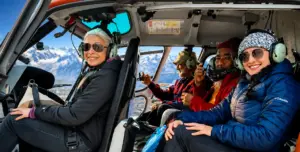
Helicopter Tours for Closer Views of Everest
For travellers who want more than a distant view, our helicopter tours bring Everest much closer:
- Mt Everest by Helicopter Tour: Flies via Lukla to the Everest region, with a landing at Kala Patthar when permitted or an overflight of base camp, and breakfast at the Hotel Everest View.
- Everest Helicopter Tour: A private morning flight over the Khumbu with spectacular views of Everest, Lhotse and Ama Dablam.
- Sharing Everest Helicopter Tour with Kala Patthar Landing: Share the flight with other travellers, when operating.
- Everest Heli Sherpa Village Walk: Combine the flight with time in a Sherpa village.
- Gokyo Lakes Helicopter Tour: Visit the turquoise Gokyo lakes beneath Cho Oyu.
Helicopter landings at high altitude are kept short, and Khumbu landing rules have changed in recent seasons. Read our guides to Everest helicopter tour restrictions, whether a helicopter can land at Everest Base Camp, the Kala Patthar landing reopening, and the Hotel Everest View, where many tours stop for breakfast.
Who Should Take the Everest Mountain Flight?
- Travellers short on time: See Everest in a single morning.
- Families with young children: No trekking and no altitude exposure; check the airline’s rules for infants and young children.
- Older travellers: A comfortable, pressurised flight with no physical effort; our guide to the Everest Base Camp Trek over 50 covers trekking options for those who want to walk too.
- Travellers who cannot trek: For health, mobility or time reasons.
- Trekkers: Before a trek to see the mountains you are about to walk among, or afterwards to see them from a new angle.
- Photographers: The whole Himalayan panorama in one frame.
Families planning a trek should also read our guide to the Everest Base Camp Trek with kids.
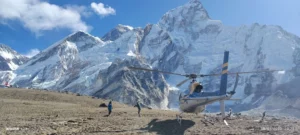
Other Ways to See Everest
The mountain flight is a superb introduction, but nothing compares to walking among the giants. If the flight inspires you, these are the next steps:
- A short trek: The Everest View Trek, described in our guide to the luxury Everest View Trek, reaches the Hotel Everest View and Tengboche in about a week.
- The classic trek: The Everest Base Camp Trek, described in our guide to the Everest Base Camp Trek 14-day itinerary, with sunrise from Kala Patthar.
- In comfort: The Everest Base Camp Luxury Lodge Trek and the Luxury Everest Base Camp Trek with Helicopter Return, described in our guide to the luxury Everest Base Camp trek.
- Shorter heli treks: The Everest Base Camp Helicopter Trek and the Everest Elite Luxury Heli Trek, explained in our guide to the short Everest Base Camp Trek.
- Different viewpoints: The Gokyo Lakes Trek, our guide to Gokyo Ri and Fifth Lake and our comparison of Gokyo Ri vs Kala Patthar.
- From Tibet: The Lhasa to Everest Base Camp Overland Tour, described in our Lhasa to Everest Base Camp guide, shows the north face of Everest.
If the Flight Inspires You to Trek
Many travellers step off the Everest Mountain Flight determined to return on foot. If that is you, these guides help you prepare:
- Understand the challenge: Our honest look at Everest Base Camp Trek difficulty and our guide to the Everest Base Camp Trek for beginners.
- Plan your days: Our guides on how many days the EBC trek takes, the Everest Base Camp Trek itinerary and the Everest Base Camp Trek distance.
- Get fit: Our 12-week training plan.
- Stay safe at altitude: Our Acute Mountain Sickness page and our guide to altitude sickness on the Everest Base Camp Trek.
- Pack well: Our Everest Base Camp Trek packing list and our trekking equipment.
- Choose your season: Our guides to the Everest Base Camp Trek in April, the Everest Base Camp Trek in October and the Everest Base Camp Trek in the monsoon.
- Walk in like the pioneers: The Jiri to Everest Trek, described in our Jiri to Everest Base Camp guide, or the Everest Base Camp Trek by Road.
- Trek mindfully: The Everest Base Camp Yoga Trek, described in our guide to mindful trekking in the Himalayas.
Guide rules vary by area and can change, so check before you travel; we strongly recommend a licensed guide. Read our article on Nepal’s mandatory guide rules.
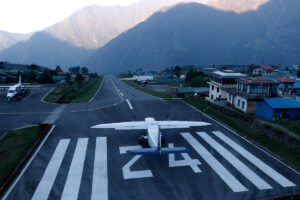
Flying Into the Khumbu: The Lukla Flight
If you trek in the Everest region, your journey begins with another famous flight: the short hop to Lukla, which lands on a steep runway on the mountainside. It is not a sightseeing flight, but on a clear morning, it offers wonderful views of the Himalaya as you approach the Khumbu. Our Lukla Airport guide explains how these flights work, and in the busy seasons, our Ramechhap airport transportation team handles the drive to Manthali, where many Lukla flights now depart.
Scenic Flights Beyond Everest
Nepal offers other unforgettable ways to see the Himalaya from the air:
- The Annapurnas: The Annapurna Helicopter Tour flies to the heart of the Annapurna Sanctuary.
- Langtang: The Langtang Helicopter Tour visits the valley just north of Kathmandu.
- Muktinath: The Muktinath Yatra by Helicopter combines a pilgrimage with mountain views.
- Pokhara: Paragliding in Pokhara offers a bird’s-eye view of the lake and the Annapurna range; read our Pokhara sightseeing
- Across the Himalaya: Flights to Bhutan and Tibet cross the range, with views of the great peaks on clear days; see the Luxury Bhutan Tour, the 7 Day Bhutan Tour, the Luxury Nepal Bhutan Tour, the Nepal Tibet Bhutan Tour, the Lhasa Tibet Tour and the Kathmandu to Lhasa Tour. In Bhutan, the hike to the Tiger’s Nest Monastery and the colourful Bhutan festivals await, and in Tibet, the Mount Kailash Tour leads to the sacred mountain described in our guide to the Kailash kora.
The Great Himalayan Regions Beyond Everest
The mountain flight shows only one stretch of the Himalaya, which runs the full length of Nepal. If you would like to explore more of it on foot, browse our list of the top 50 treks in Nepal and our trekking in Nepal guide, or consider these:
- Annapurna: The Annapurna Base Camp Trek, described in our ultimate guide to the Annapurna Base Camp Trek, the Annapurna Circuit Trek and the short Ghorepani Poon Hill Trek.
- Langtang: The Langtang Valley Trek, described in our Langtang Valley Trek details, beneath the first peaks you see from the plane.
- Manaslu: The Manaslu Circuit Trek, crossing the Larke Pass.
- The far east: The Kanchenjunga Base Camp Trek, beneath the third-highest mountain on Earth, sometimes visible on the flight.
- The rain shadow: The Upper Mustang Trek, described in our guide to trekking in Upper Mustang.
Combining the Flight With Your Nepal Trip
Because it takes only a morning, the mountain flight fits easily into any itinerary. Many travellers take it on their first or last full day in Kathmandu, then spend the rest of the day sightseeing. It pairs beautifully with the Classic Nepal Tour, a Chitwan Jungle Safari, a few days in Pokhara or a short hike such as Nagarkot Hiking or the Chisapani Nagarkot Trek, where, on very clear days, the distant Himalaya fills the horizon. Trekkers often schedule the flight as a spare-day activity after their trek, when weather delays at Lukla have not used up their buffer days.
Permits and Paperwork
No trekking permits are needed for the mountain flight, because you do not land in the national park; you need your passport for check-in at the airport and a valid visa for Nepal, explained in our Nepal visa guide. If you later trek or take a helicopter tour that lands in the Everest region, different rules apply, as explained in our guide to Everest Base Camp Trek permits.
The Culture Beneath the Wings
As you fly over the foothills, look down at the terraced fields, villages and forests of the middle hills, home to many of Nepal’s ethnic communities, and, further east, the valleys of the Sherpas, whose culture is inseparable from Everest. Our guide to Sherpa culture and traditions introduces the people of the Khumbu, and our guides to Tengboche Monastery, the Mani Rimdu festival, and Sagarmatha National Park describe the places hidden in the valleys below the peaks. To understand the faith that shapes life in these mountains, read our articles on the chorten in Tibetan Buddhism, Guru Padmasambhava, the poet-saint Milarepa and Buddhism in Tibet.
Practical Tips for the Everest Mountain Flight
- Book early in your stay: This leaves spare mornings if weather delays the flight.
- Choose an early departure: The first flights often enjoy the clearest views.
- Bring your passport: You need it for check-in at the domestic terminal.
- Charge your camera: And clear space on your memory card or phone.
- Wear dark clothing: It reduces reflections in the window.
- Stay flexible: Delays are normal in the mountains; enjoy a cup of tea and wait for the weather.
- Book with a registered company: You can view our company registration and legal documents
Common Mistakes to Avoid
- Booking on your last morning: A weather delay could mean missing the flight altogether.
- Expecting a landing: The mountain flight does not land; choose a helicopter tour if you want to stand in the Himalaya.
- Using a polarising filter: It can create strange patterns through aircraft windows.
- Missing the view while filming: Take time to look with your own eyes.
- Ignoring the season: Monsoon clouds reduce the chances of clear views.
Frequently Asked Questions About the Everest Mountain Flight
What is the Everest mountain flight?
A one-hour sightseeing flight from Kathmandu along the Himalaya to the Everest region and back, without landing, with a window seat for every passenger.
How long is the Everest mountain flight?
About 50 to 60 minutes in the air, or around three to four hours including hotel transfers and check-in.
How close do you get to Everest?
Typically around 20 to 30 km, depending on the route and conditions, which is close enough to see the summit pyramid clearly on a clear day.
Which airline is best for the Everest mountain flight?
Buddha Air, Yeti Airlines and Shree Airlines all follow a similar route with window seats for everyone. The best choice is often the airline with the best weather window and seat availability on your date.
Which side of the plane is best?
Every passenger has a window. The mountains usually appear on one side on the way out and on the other on the way back, so everyone gets a view.
Will I get altitude sickness on the mountain flight?
No. The aircraft is pressurised, and you don’t land at high altitudes so that you won’t experience altitude exposure.
What happens if the flight is cancelled due to weather?
Airlines usually rebook you on the next available flight or refund the ticket according to their policies. Plan the flight early in your stay to allow spare mornings.
What is the best time of year for the mountain flight?
Autumn, especially October and November, offers the clearest views, with winter mornings also excellent. Spring is good early in the season; the monsoon brings more cloud.
Can children and older travellers take the flight?
Yes. It suits most ages and fitness levels. Anyone with a medical condition should check with their doctor, and families should check the airline’s rules for infants.
Is a helicopter tour better than the mountain flight?
It depends on what you want. A helicopter tour brings you much closer and lands in the Everest region, while the mountain flight is shorter, easier and shows the whole Himalayan panorama without altitude exposure.
Final Thoughts: Everest Before Breakfast
The Everest Mountain Flight is one of the great travel experiences on Earth: in a single morning, you fly along the roof of the world and look across at the highest mountain on the planet, then return to Kathmandu in time for breakfast. It is easy, comfortable and open to almost everyone, and for many travellers, it is the moment the Himalaya becomes real.
If you want to go closer, join our Mt Everest by Helicopter Tour or the Everest Helicopter Tour, or walk among the giants on the Everest View Trek. Meet our team on our team page, learn more about our company, read about our responsible tourism commitments and our flexible payment options, then plan your trip or contact us today. Everest is only an hour away.
Quick Inquiry
Explore More


