
Lukla Flight Delays and Cancellations: What Trekkers Should Know
Lukla Flight Delays and Cancellations: What Trekkers Should Know
It is just after dawn at Manthali Airport in Ramechhap. The departure hall is full of trekkers in brand-new down jackets, duffel bags stacked against the walls, and porters chatting by the door. Every few minutes, someone glances at the counter, waiting for the words everyone wants to hear: the weather in Lukla is clear. Sometimes the first planes roar off within minutes. Sometimes the morning drifts by, the cloud never lifts, and the day’s flights are called off.
Lukla flight delays are part of every Everest adventure. The tiny mountain airstrip at the gateway to the Khumbu depends entirely on the weather, and even in the best seasons, flights can be held for hours or canceled for a day or more. Understanding why it happens and having a plan turns a frustrating morning into a minor detour.
This guide from our Sherpa team explains why delays happen, when they are most likely, what happens on the day, how long they can last, and every backup option, from helicopters and Phaplu flights to road and walk-in routes. It is written for anyone preparing for our Everest Base Camp Trek, and it goes deeper on delays than our general Lukla Airport guide, which covers the airport, airlines, and flight experience.
The Short Answer: How Common Are Lukla Flight Delays, and What Should You Do?
Delays are common because Lukla flights need clear weather at both ends and along the route. Most last a few hours or a day, and longer disruptions happen occasionally. Plan for them: keep one or two buffer days at the end of your trip, stay flexible, and know your backups: helicopters, Phaplu flights, and road routes.
In short, expect delays, plan for them, and let an experienced team handle the logistics while you stay patient.
Lukla Flight Delays at a Glance
- Why they happen: Visual flight rules, clouds, wind, and weather at the departure airport, along the route, and at Lukla.
- When flights operate: Early morning, in a weather window that often closes by around midday.
- Most reliable seasons: Autumn and spring, though delays happen in every season.
- Least reliable: The monsoon, from June to August.
- Where flights leave from: Mostly Manthali Airport in Ramechhap in the busy seasons, and Kathmandu at other times.
- Typical delay: A few hours, or a day if the flight is canceled.
- Long disruptions: Occasionally several days, creating backlogs of hundreds of trekkers.
- Backups: Waiting, helicopters, flights diverted to Phaplu, road heads at Jiri or Salleri, and walking in.
- Golden rule: At least one or two buffer days between your return from Lukla and your flight home.
- Our trek: The 14-day Everest Base Camp Trek, with flexible planning built in.
Getting to Lukla: flights from Ramechhap and Kathmandu, flights diverted to Phaplu, androad-heads and walk-in routes that avoid the flight.
Why Lukla Flights Are So Weather-Dependent
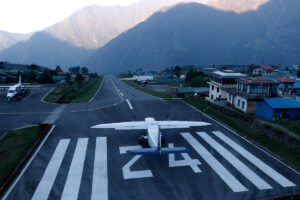
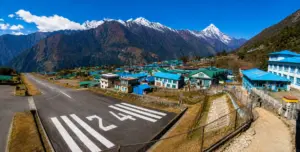
Tenzing-Hillary Airport in Lukla sits at 2,860 m on a ledge above the Dudh Koshi valley, with a short runway of roughly 527 m that climbs steeply uphill towards a rock wall. There is no instrument landing system, so pilots must see the runway, the valley and the surrounding terrain clearly at every stage of the flight.
- Weather at both ends: Flights need clear conditions at Ramechhap or Kathmandu, along the route, and at Lukla. Clear skies where you are say little about the Khumbu.
- Cloud in the valley: Low cloud often fills the Dudh Koshi valley, especially on unsettled days and in the monsoon.
- Wind: Winds build in the valleys by late morning, which is why flights are scheduled early, and operations often wind down by around midday.
- Morning fog: In winter, fog in the Kathmandu Valley can delay departures from the capital.
- Backlogs: After a day without flights, the next day’s planes are already full, so it can take time to clear everyone waiting.
- Aircraft and crew rotations: Planes sometimes need to return to Kathmandu for maintenance, which affects schedules.
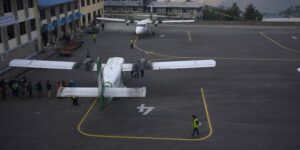
The small aircraft used on the route, usually Twin Otters, Dornier 228s and Let L-410s, carry around 14 to 19 passengers each, so every canceled morning leaves many people waiting. Our Lukla Airport flights guide describes the airport and aircraft in more detail.
A Short History of Flying to Lukla
The airstrip at Lukla was built about a decade after Sir Edmund Hillary and local Sherpas first summited Everest, to bring in supplies for the schools and hospital of the Himalayan Trust, including the hospital at Khunde described in our guide to Khumjung and Khunde. For years, it was a rough grass-and-gravel strip; it was later paved and renamed Tenzing-Hillary Airport in honor of the two men who first stood on the summit.
The airport transformed life in the Khumbu, opening the region to trekkers and bringing new opportunities to the Sherpa people, whose story is told in our guide to Sherpa culture and traditions. It also created the bottleneck behind most Lukla flight delays: one short runway, in a narrow valley, serving almost everyone who visits Sagarmatha National Park.
When Delays Happen: Seasons and Time of Day
By Season
- Autumn (late September to November): Generally the most reliable, with clear, stable mornings. Even so, an early autumn storm can ground flights for days. Read about the Everest Base Camp Trek in October and the Everest Base Camp Trek in November.
- Spring (March to May): Usually good, with clear mornings and more afternoon cloud; late May brings pre-monsoon cloud. See the Everest Base Camp Trek in April.
- Winter (December to February): Often clear and calm, but storms and morning fog cause occasional disruptions.
- Monsoon (June to August): The least reliable period, with frequent cloud, rain,n and cancellations. Our guide to the Everest Base Camp Trek in monsoon explains how to plan for summer.
Compare every month in our guide to the best time for the Everest Base Camp trek.
By Time of Day
The first flights usually leave soon after dawn, when the air is calmest and the sky clearest. As the morning goes on, cloud and wind tend to build in the mountains, and by late morning or around midday, airlines often stop operations for the day. That is why the earliest flights are the most reliable, and when morning delays happen, they so often become cancellations by lunchtime.
What a Delay Day Looks Like
Understanding the rhythm of a flight morning makes delays much easier to handle. In the busy seasons, a typical day runs like this:
- Small hours: Most trekkers leave Kathmandu between one and three in the morning for the four-to-five-hour drive to Manthali Airport in Ramechhap.
- Dawn: Check-in at the airport, where baggage is weighed. The allowance is usually around 10 kg checked and around 5 kg hand luggage.
- The wait: Airlines check the weather at Lukla and along the route. Flights leave in waves once conditions are clear, which can take minutes or several hours.
- The decision: If the weather does not improve by late morning, airlines usually cancel the remaining flights for the day.
- After a cancellation: You are rebooked for the next available flight and either stay near the airport or return to Kathmandu, depending on the forecast.
The same pattern applies to flights from Kathmandu outside the busy seasons, without the long drive. Our Ramechhap airport transportation service takes you to Manthali.
Who Decides Whether Flights Go?
Airlines and their pilots decide whether to fly, based on conditions reported from Lukla, along the route, and at the departure airport. No trekking company, guide, or passenger can change it, and that is exactly as it should be. Pilots on this route are highly experienced in mountain flying, and when they wait, it is because waiting is the safe choice. A canceled morning can feel frustrating, but it is the system working as intended.
Delayed or Canceled: What the Difference Means
A delay means your flight is held while airlines wait for the weather to improve; you stay at the airport and may fly later that morning. A cancellation means the airline has stopped flying for the day, and you need a seat on a later flight. Most disruptions start as delays, and many end with planes flying later in the morning. The longer the wait, the more likely a cancellation becomes, so it helps to have a plan ready before you reach the airport.
What Happens When Your Flight Is Canceled
When flights are canceled, here is what usually happens when you travel with our team:
- Rebooking: Our team rebooks you on the next available flight. Airlines generally try to clear passengers from canceled flights first, but because the following day’s flights are already full, a backlog can take a day or more to clear.
- Where you stay: If flights from Ramechhap are canceled, you may stay in a simple hotel near Manthali Airport or return to Kathmandu, depending on the forecast. If flights from Kathmandu are canceled, you return to your hotel.
- Your guide stays with you: Your guide keeps in touch with the airline and our office and updates you on the plan.
- Considering alternatives: If the forecast is poor or time is short, our team discusses helicopter seats, flights diverted to Phaplu, or road options with you.
- Adjusting the trek: If you lose a day at the start, your guide can sometimes use a buffer day or combine short sections, without ever cutting acclimatization days.
How Long Can Lukla Flight Delays Last?
Most Lukla flight delays last a few hours, and most cancellations clear within a day or two. Occasionally, a run of bad weather grounds flights for much longer. In one autumn not long ago, flights to and from Lukla were disrupted for five days in a row; more than 200 flights from Manthali were canceled, and at one point well over a thousand trekkers were waiting at Ramechhap. Many waited it out; others took jeeps towards Phaplu and walked, or arranged helicopters; a few with tight schedules changed their plans altogether.
Such long disruptions are rare, but they are exactly why buffer days and a flexible mindset matter. The return journey is just as exposed: after several days of bad weather, hundreds of trekkers can be waiting in Lukla for seats out.
Your Options When Flights Are Grounded
When Lukla flight delays stretch on, you have several options. The right choice depends on the forecast, your schedule, and how many spare days you have.
Wait It Out
If you have buffer days, waiting is usually the simplest and calmest option. Most disruptions clear within a day or two, and the first good morning brings a steady stream of flights. Use the time to rest, explore Kathmandu, or enjoy a quiet day in Manthali.
Take a Helicopter
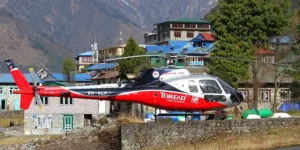
Helicopters can sometimes fly when planes cannot, because they don’t need a runway approach and can follow lower routes through the valleys. They still need reasonable visibility, and demand rises quickly during disruptions; r rescue flights always take priority, as our guide to helicopter rescue in the Everest region explains. Seats on shared helicopters are sometimes available from Kathmandu, Ramechhap, or Phaplu, and private charters suit groups or travelers with fixed schedules. Our team can check availability through our helicopter partners. Learn more in our guides to the Everest Base Camp helicopter tour and the best seasons for an Everest helicopter tour.
Fly to Phaplu Instead
Phaplu, a small airstrip in the Solu region south of Lukla, sits lower and sometimes has flyable weather when Lukla does not. During long disruptions, airlines divert flights to Phaplu, and trekkers continue by jeep to the road head and on foot, or by helicopter, to join the main trail below Lukla. It adds time, but it keeps you moving. The trail from the Solu hills is described in our Jiri to Everest Base Camp trek guide.
Drive and Walk In
Two road options avoid the flight altogether. The historic route starts at Jiri, the road head used by the early Everest expeditions, and walks east through Sherpa villages and over the Lamjura La to join the main trail. Our Jiri to Everest Trek follows this route. The second option drives further, via Salleri and Phaplu, to road heads in the lower Solu-Khumbu, as on our Everest Base Camp Trek by Road. Both join the classic route at Chheplung, below Lukla, and both add days, but they remove flight uncertainty at the start. Road conditions change with the seasons, so our team checks the current situation before you set off.
Change Your Trek
If disruption lasts too long for your schedule, there is no shame in switching to a trek that starts by road. The Langtang Valley Trek begins a day’s drive from Kathmandu, as our Langtang Valley trek details explain, and the Langtang Gosaikunda Trek adds sacred lakes. In the Annapurna region, reached by road or a short flight to Pokhara, the Ghorepani Poon Hill Trek, the Mardi Himal Trek and the Annapurna Base Camp Trek are excellent alternatives; see our ultimate guide to the Annapurna Base Camp trek. Longer options that start by road include the Annapurna Circuit Trek and the Manaslu Circuit Trek, while the Langtang Helambu Trek and Tamang Heritage Trek suit shorter windows. For more ideas, browse our list of the 50 best treks in Nepal.
Ramechhap and Manthali Airport: What Trekkers Should Know
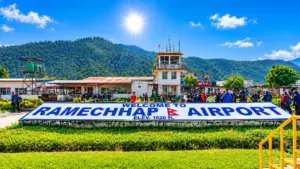
During the busy spring and autumn seasons, most scheduled Lukla flights depart from Manthali Airport in Ramechhap rather than Kathmandu, to ease congestion at the capital’s airport. The airport is roughly 130 to 145 km from Kathmandu, about a four- to five-hour drive. The shorter flight from Manthali, about 15 to 20 minutes, lets aircraft make more trips in the morning weather window, which helps clear passengers faster. From Kathmandu, the flight takes about 30 to 35 minutes.
- Facilities are basic: Bring snacks, water, a warm layer, and something to read.
- Consider staying overnight: Driving to Ramechhap the afternoon before and staying in a simple hotel near the airport avoids the middle-of-the-night drive.
- Rooms fill during disruptions: When flights are canceled for days, local hotels fill quickly, so our team arranges rooms early or brings you back to Kathmandu.
Our Lukla Airport flights guide explains how the Ramechhap system works, and our Ramechhap airport transportation service gets you there.
Stuck in Lukla at the End of Your Trek
The flight out of Lukla is just as weather-dependent as the flight in, and it matters more, because international connections are waiting. If the weather closes in at the end of your trek:
- Stay calm and stay close: Your guide confirms each morning’s flight times and keeps you informed.
- Enjoy Lukla: The town has comfortable lodges, cafes and bakeries, and its morning airport views are spectacular. A short walk on the trail towards Phakding makes a pleasant outing, and buying your snacks and coffee locally supports the community, in the spirit of responsible tourism. Lukla also has a hospital, described in our guide to Everest Base Camp Trek medical clinics, if anyone needs care while waiting.
- Consider a helicopter: If your international flight is at risk, helicopter seats out of Lukla are sometimes available when planes cannot fly.
- Walking out is possible: For the adventurous with time, the old route south through the Solu hills to the Phaplu and Salleri area is a last-resort option.
This is where buffer days prove their worth. With one or two spare days between Lukla and your flight home, an extra night in the mountains becomes a bonus, not a crisis.
Buffer Days: How Many You Really Need
The single most important way to protect yourself from Lukla flight delays is to build buffer days into your plan.
- Autumn and spring: At least one, and ideally two, spare days between your return flight from Lukla and your international departure.
- Winter and monsoon: Two to three spare days, as disruptions are more frequent.
- At the start: A spare day at the start is less critical, because your trek itinerary can sometimes absorb a short delay, but a spare day in Kathmandu after arrival also helps you recover from jet lag.
If you do not need them, buffer days are easy to enjoy. Explore the capital with our Kathmandu sightseeing guide or on our Kathmandu Day Tour, take a short walk on Nagarkot Hiking, Nagarjun Hiking, or the Chisapani Nagarkot Trek, or experience village life on the Chainpur Village Homestay Tour. With more time, continue to Pokhara with our Pokhara sightseeing guide and paragliding in Pokhara, head to the lowlands on a Chitwan jungle safari, or see more of the country on our Classic Nepal Tour.
Protecting Your International Flight
- Never book your flight home for the same day you fly out of Lukla.
- Choose flexible tickets that allow date changes, if you can.
- Keep your airline’s contact details handy, and know how to change your booking quickly.
- Tell our team your international flight details so that we can plan the return journey around them.
- Consider a helicopter if a long disruption threatens a non-changeable flight.
Before You Fly: A Lukla Checklist
A little preparation makes Lukla flight delays far easier to absorb.
- Documents: Passport, visa and insurance details (as explained on our Nepal visa information page), plus the Everest Base Camp trek permits our team arranges.
- Contact details: Our office number, your guide’s number, and your airline’s details, saved on your phone and written down.
- Daypack essentials: A warm layer, snacks, water, medicines, a power bank, and a book.
- A light duffel: Within the allowance, with a little room to spare.
- Your plan B: Agreed in advance with our team, so you know whether you’ll wait, fly by helicopter, or take the road.
Our complete trekking in Nepal guide covers the wider practicalities of traveling to Nepal.
Travel Insurance and Flight Delays
Insurance for the Everest trek is essential for medical evacuation, with cover for trekking to at least 6,000 m and helicopter rescue. Some policies also include trip delay or missed connection cover, which can help with extra nights and changes to your international flight. Check what your policy includes before you travel, and keep written confirmation from the airline or our team of any delays or cancellations, because insurers usually ask for documents. Helicopter flights taken to avoid waiting are usually not treated as medical evacuations, so check the terms carefully.
Baggage, Porters and Delays
- Pack light: The allowance on Lukla flights is usually around 10 kg checked and around 5 kg hand luggage.
- Keep essentials with you: Bags occasionally follow on a later flight, so carry medicines, a warm layer, a toothbrush and phone charger in your daypack.
- Leave extra luggage in Kathmandu: Hotels and our office can store items you do not need on the trek.
- Crew logistics: Your guide and porters adjust their plans with you during delays; porters often meet you in Lukla.
Our Everest Base Camp trek packing list and trekking equipment page help you pack within the limits.
Practical Tips for Delay Days
- Dress warmly: Early mornings at the airport are cold.
- Charge everything: Bring a power bank for long waits.
- Bring snacks and water: Airport facilities are basic, especially at Ramechhap.
- Stay near your guide: Flights can be called at short notice when the weather clears.
- Bring a book or offline entertainment for slow mornings.
- Keep perspective: Delays happen to everyone, and pilots fly only when it is safe.
- Remember acclimatization: Waiting in Kathmandu or Ramechhap does not affect your acclimatization schedule, which starts once you are on the trail.
How Delays Affect Your Trek Itinerary
A delay at the start usually shifts the trek by a day, and a delay at the end eats into your buffer. What should never change is acclimatization. Our 14-day Everest Base Camp Trek includes rest days in Namche and Dingboche, and our guides will not skip them to make up time.
If you lose days, the best options are to use a buffer day, turn around earlier, or shorten side trips. Our guides to the Everest Base Camp trek itinerary, the Everest Base Camp trek in 14 days, how many days the EBC trek takes, and the short Everest Base Camp trek in 10 days show where you can be flexible. Our altitude sickness guide for Everest Base Camp and our advice on what to do if you feel sick above 4,000 m explain why rushing is never worth it.
Once you land in Lukla, the trek begins with an easy walk to Phakding, then the climb to Namche Bazaar, as described in our Everest Base Camp trek route and Everest Base Camp trek distance guides.
What Delays Mean for Different Trekkers
Lukla flight delays affect everyone, but some travelers need to plan more carefully.
- First-time trekkers: A delay can be unsettling, but it is completely normal; our Everest Base Camp trek for beginners guide and our Everest Base Camp trek difficulty guide will help you prepare.
- Families with children: Long airport waits are hard on young trekkers, so bring games and snacks, and consider staying near Ramechhap the night before; see our guide to the Everest Base Camp trek with kids.
- Older trekkers: Early starts and the long drive to Ramechhap can be tiring, so an overnight stay near the airport makes sense; our guide to the Everest Base Camp trek over 50 has more tips.
- Solo travelers: A guide or agency handling your rebooking saves a lot of stress; read our guide to the Everest Base Camp Trek solo.
- Independent trekkers: Without an agency, you rebook and rearrange everything yourself, as oin ur guide to the Everest Base Camp Trek without a guide
- Climbers: Expedition and trekking peak schedules have little slack, so build extra buffer time into climbing itineraries.
How Our Team Handles Lukla Flight Delays
We are a Kathmandu-based, Sherpa-led company, and handling Lukla delays is part of our everyday work. Our team books your flights, arranges the Ramechhap transfer, monitors the weather, and rebooks you if flights are canceled. Your guide stays with you at the airport, keeps you informed, and, when time is short, discusses alternatives such as helicopter seats, Phaplu flights, or road options. We also build sensible buffer time into every itinerary. Read why travelers choose us as their trekking company in Nepal, meet our team, and view our legal documents.
Avoiding the Flight Entirely
Some travelers prefer to skip the Lukla flight altogether, at least on the way in.
- Jiri to Everest Trek: The classic walk-in, with gradual acclimatization and quiet villages, explained in our Jiri to Everest Base Camp trek guide.
- Everest Base Camp Trek by Road: A long drive into the Solu-Khumbu, joining the trail below Lukla.
- Everest Base Camp on Motorcycle: A completely different adventure for riders.
- The Tibet side: The Lhasa to Everest Base Camp overland tour reaches the north side of Everest by road, as with our Lhasa to Everest Base Camp guide.
Many trekkers drive in and fly out from Lukla, combining a flight-free start with a quick return.
Helicopter and Luxury Options That Reduce Lukla Risk
If certainty matters most, helicopter-based trips remove much of the uncertainty, especially at the end of the trek when connections are tight.
- Everest Base Camp Luxury Lodge Trek: 11 days with a helicopter in and out and the finest lodges on the trail.
- Luxury Everest Base Camp Trek with Helicopter Return: 12 days, trekking up and flying back by helicopter after base camp.
- Everest Base Camp Helicopter Trek: Walk up the classic route and fly back by helicopter, in about ten days.
- Everest Elite Luxury Heli Trek: Our most exclusive combination of fine lodges and helicopter flights.
- Helicopter tours: The Everest Helicopter Tour, the Mt Everest by helicopter tour, the sharing Everest helicopter tour with a Kala Patthar landing, the full-day Everest helicopter tour with a village walk,k and the Gokyo Lakes helicopter tour show you the Khumbu in a day.
Compare the options in our guides to choosing an EBC trek or a helicopter tour; the EBC helicopter tour vs heli trek and the Everest Base Camp helicopter return, and our guide to the Kala Patthar landing sharing tour explains how shared helicopter seats work. Our luxury Everest Base Camp trek guide and luxury lodges in the Everest region guide describe the comfort along the way; our guide to Everest helicopter tour explains the rules, and the Everest mountain flight offers peak views without landing.
Lukla Flights for Other Everest Treks and Climbs
Every trek and climb that starts in Lukla faces the same weather, so the same planning applies. The Everest View Trek, the Everest Gokyo Lakes Trek, the Everest 3 Pass Trek, Ama Dablam Base Camp Trekking and the Everest Base Camp Yoga Trek all begin with the Lukla flight, as do Island Peak Climbing, Lobuche Peak Climbing and Mera Peak Climbing. Longer routes, such as the passes, depend on fixed acclimatization stops, so buffer days matter even more; see our Everest Three Passes trek guide, our Gokyo Lakes trek guide, and our guides to Island Peak, Lobuche East, and Mera Peak.
Other Weather-Dependent Mountain Flights in Nepal: The most famous airstrip,n aairstrip but it is not the only one where weather rules. Flights to Jomsom, the gateway to the Jomsom Muktinath Trek and the Upper Mustang Trek, often stop by late morning because of strong valley winds. Flights to remote airstrips for Lower Dolpo Trekking and the Kanchenjunga Base Camp Trek follow the same rhythm, and flights into Lhasa for a Lhasa Tibet tour cross the main Himalayan range. The lessons of Lukla flight delays apply everywhere in the Himalaya: fly early, keep buffer days, and always have a plan B.
Common Mistakes Trekkers Make With Lukla Flights
- No buffer days: Booking the flight home for the day after the trek ends.
- Overpacking: Bags over the limit may be left for a later flight.
- Expecting a fixed time: Flight times are a guide, not a promise.
- Panicking after one cancellation: Most disruptions clear within a day or two.
- Cutting acclimatization days to make up for lost time.
- Ignoring insurance details: Know what your policy covers before you need it.
- Booking unlicensed operators: Use a registered company that handles rebooking for you.
- Leaving no plan B: Know your helicopter, Phapl,u and road options in advance.
Frequently Asked Questions About Lukla Flight Delays
How often are Lukla flights delayed or canceled?
Delays are common in every season, especially on cloudy mornings and in the monsoon. Most last a few hours, cancellations usually clear within a day or two, and longer disruptions happen occasionally.
What happens if my Lukla flight is canceled?
We rebook you on the next available flight. Depending on where you are, you’ll stay near Ramechhap or return to your hotel in Kathmandu, and your guide will keep you informed.
How long can delays last?
Usually hours or a day. In rare spells of bad weather, flights have been disrupted for five days or more, with hundreds of trekkers waiting.
Do passengers from canceled flights get priority?
Airlines generally try to clear them first, but the next day’s flights are already full, so backlogs can take time to clear.
Can a helicopter fly when planes cannot?
Sometimes. Helicopters can follow lower routes and don’t need a runway approach, but they still need reasonable visibility, carry few passengers, ,and ive priority to rescues.
How many buffer days do I need?
At least one, ideally two, in autumn and spring, and two to three in winter and the monsoon, between your Lukla flight and your flight home.
When are flights most reliable?
In the early morning, and in autumn and spring. The monsoon is the least reliable season.
What if I am stuck in Lukla at the end of my trek?
Your guide confirms flights each morning, and our team rebooks you. Helicopter seats are sometimes available, which is why buffer days are so valuable.
Are there alternatives to flying to Lukla?
Yes. You can walk in from Jiri, drive to roadheads via Salleri and Phaplu, fly to Phaplu when Lukla is closed, or take a helicopter.
Does travel insurance cover Lukla flight delays?
Some policies include trip delay or missed connection cover. Check your policy, keep written confirmation of delays, and make sure it also covers trekking to 6,000 m with helicopter rescue. Our 14-day Everest Base Camp Trek builds flexibility into every plan.
Final Thoughts: Expect the Unexpected, Enjoy the Adventure
Lukla flight delays are not a sign that something has gone wrong; they are simply part of traveling to one of the most dramatic airstrips on Earth. With buffer days, a little patience, and a team that knows every backup route, a canceled morning becomes a story to tell rather than a crisis, and the moment the wheels touch down on that steep little runway feels all the sweeter.
Ready to go? Join our Everest Base Camp Trek with licensed Sherpa guides, or reduce the uncertainty with the Luxury Everest Base Camp Trek with Helicopter Return. Learn more about Trek Nepal Himalayas, start shaping your journey on our Plan Your Trip page, or contact us, and our team will help you plan an Everest trek with every contingency covered.
Quick Inquiry
Explore More


