
Everest Base Camp Trek Solo: Safety, Costs, and Planning
Everest Base Camp Trek Solo: Safety, Costs, and Planning
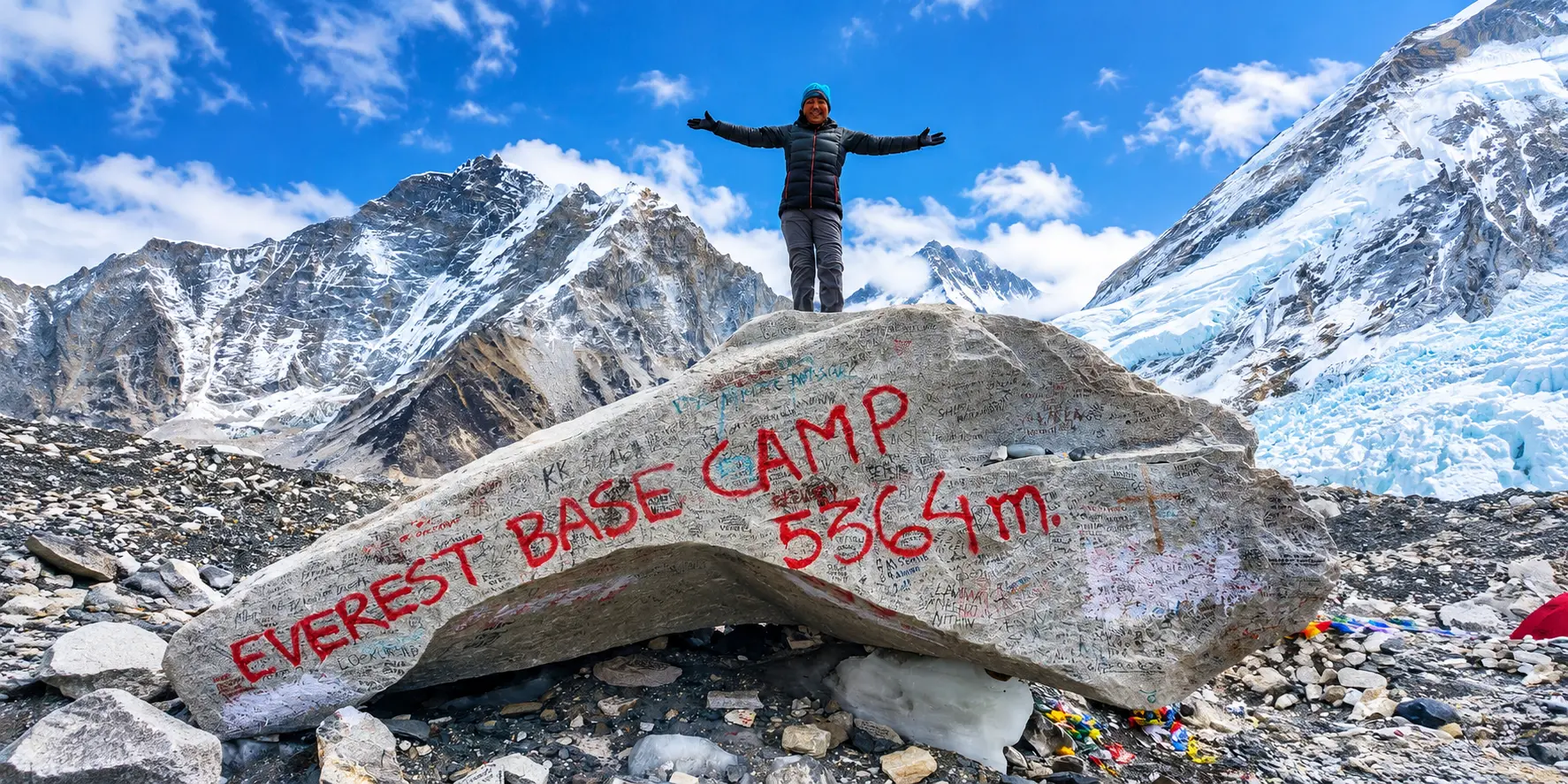
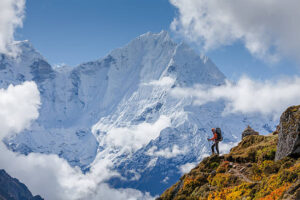
A special kind of silence hangs on the trail above Pangboche. The yak bells fade behind you, the prayer flags snap in the wind, and Ama Dablam fills the sky on your right. When you walk alone, moments like this feel entirely your own: no one to keep up with, no one to wait for, only your breath, your footsteps and one of the greatest mountain landscapes on Earth.
Every season, many travellers choose to do the Everest Base Camp Trek Solo. Some walk with a private guide, some join a small group of strangers who soon become friends, and a few go fully independently. It is one of the most rewarding ways to experience the Khumbu, but it raises real questions. Is it allowed? Is it safe? What shapes the cost? How do you plan it well?
In this guide, our Sherpa team answers each question honestly, from the guide rules and the real risks of walking alone to medical help on the trail, advice for solo women, what drives the cost of a solo trek, rooms, permits and a solo-friendly itinerary. It is written for anyone travelling alone who is considering our Everest Base Camp Trek, or wants to plan a safe solo journey to the foot of the world’s highest mountain.
The Short Answer: Can You Do the Everest Base Camp Trek Solo?
Yes. You can trek to Everest Base Camp solo with a private licensed guide, join a small group, or go independently, because the Khumbu’s local government still issues permits to independent trekkers. The safest choice is a licensed guide or porter-guide, insurance with helicopter rescue and an itinerary with two acclimatisation days.
Travelling solo changes three things: who notices if you fall ill, how quickly help reaches you, and how you share the costs of a guide, porter, and room. Plan for those three, and a solo trek can be both safe and unforgettable.
Everest Base Camp Trek Solo at a Glance
- Can you go solo? Yes, as a solo traveller with a private guide, as part of a small group, or independently on the main route.
- Guide rules: A national rule requires foreign trekkers in Nepal’s national parks to hire a licensed guide, while the Khumbu municipality says a guide is recommended but not mandatory and still issues permits to independent trekkers.
- Permits: The Sagarmatha National Park entry permit and the Khumbu Pasang Lhamu Rural Municipality permit. No TIMS card is needed on the Lukla route.
- Biggest risks: Altitude sickness, falls, stomach illness and getting lost in bad weather, with no companion to notice.
- Medical help: Hospitals in Lukla and Khunde, a health post in Namche, the Himalayan Rescue Association aid post at Pheriche in season and a clinic at base camp in spring.
- Costs: Shaped by your guide and porter, rooms, flights, meals and insurance. Solo travellers share less, so joining a group or choosing a porter-guide helps.
- Highest points: Everest Base Camp (5,364 m) and Kala Patthar (5,545 m).
- Best seasons: Spring and autumn, when the trail is lively, and help is never far away.
- Our recommended trip: The 14-day Everest Base Camp Trek, with a licensed Sherpa guide and two acclimatisation days.
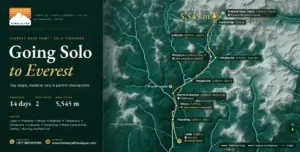
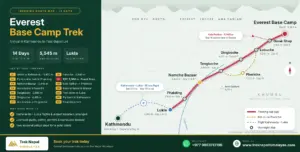
Our 14-day Everest Base Camp Trek route for solo travellers, with day stops, medical help points and permit checkpoints from Lukla to base camp and Kala Patthar.
What “Solo” Really Means on the Everest Trail
People use the word solo in different ways, and the difference matters for safety, rules and planning. There are three main ways to trek to base camp on your own.
Solo With a Private Guide
You travel alone, but a licensed guide walks with you every day, often with a porter or as a porter-guide. You choose the dates and the pace; the guide handles permits, lodges and safety, and you still have plenty of quiet time on the trail. This is the most popular choice for solo travellers, and it meets the national guide rule.
Solo Traveller Joining a Small Group
You book alone and join a small group of trekkers on fixed dates. You share the guide, porters and transfers, gain instant trail companions and still have your own room in most lodges outside the busiest weeks. It suits sociable travellers and anyone who would like company without arranging it themselves.
Fully Independent
You walk without a guide, organise your own permits, lodges and flights, and rely on yourself for navigation and decisions. It is still possible on the main route from Lukla, but it carries the most risk. Our guide to the Everest Base Camp Trek without a guide explains the rules, risks and middle paths in detail.
The Rules for Solo Trekkers in the Everest Region
A few years ago, the Nepal Tourism Board announced that foreign trekkers could no longer trek alone in Nepal’s protected areas and must hire a licensed guide through a registered trekking agency. In regions such as Annapurna and Langtang, that rule is now part of everyday trekking, as our article on Nepal’s mandatory guide rule explains.
The Everest region is different. The Khumbu Pasang Lhamu Rural Municipality governs it locally and issues its own entry permit in place of the TIMS card. When the national rule was announced, the municipality said a guide was recommended but not mandatory in its area, and it has continued to issue permits to independent trekkers. National officials, however, have not withdrawn their rule, so independent trekking in the Khumbu sits in a grey zone that could change at short notice.
For a solo traveller, the practical advice is simple. Trekking solo with a licensed guide is allowed everywhere in Nepal. If you plan to go independently, check the latest guidance from your government’s travel advice, the Nepal Tourism Board, or a registered agency shortly before you fly, and always carry your passport and permits.
Why Trek to Everest Base Camp Solo?
Many of our guests travel alone, and they tell us the same things again and again.
- Your pace, your day: Walk slowly when you want to soak up a view, rest when your body asks for it and linger in a village that steals your heart.
- Deeper connections: Without a travel partner, you talk more with your guide, lodge families, and trekkers from around the world.
- Room to reflect: Long hours on the trail give you time to think, and many people come home with a clearer head than they have had for years.
- Flexible dates: You do not need to match anyone else’s holiday, which makes it easier to choose the best weeks of the season.
- A personal achievement: Standing at base camp or on Kala Patthar after reaching it on your own terms is a feeling few journeys can match.
Is the Everest Base Camp Trek Safe for Solo Trekkers?
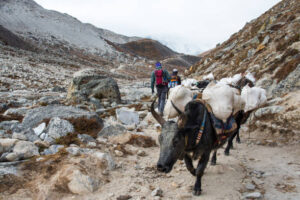
For most people, the Everest Base Camp Trek Solo is a safe journey. The Khumbu is home to the Sherpa people, whose hospitality is famous, and serious crime against trekkers is rare. The trail is busy in the main seasons; lodges stand every hour or two below Lobuche, and someone usually passes within minutes if you need help.
The real dangers come from the mountains themselves: thin air, steep trails, cold and changeable weather. These risks exist for everyone, but they are harder to manage when no one is watching out for you. A companion may notice your slurred words or wobbly steps before you do, help you down a steep section or go for help. When you travel solo, you need to build that safety net deliberately, with a guide, a plan and good habits.
The Biggest Risks When You Trek Alone
Altitude Sickness That No One Notices
Altitude sickness is the most serious risk on the trail, and it affects judgement. Solo trekkers are more likely to dismiss a headache, push on to stay on schedule, and miss early warning signs. A guide checks you every evening and decides whether to rest or descend.
Getting Lost or Separated
The main trail is clear in good weather, but cloud and snow can hide it within minutes. Junctions above Namche towards Khumjung, the split between Pheriche and Dingboche, and the side trails on the moraine above Lobuche confuse trekkers every season. Our Everest Base Camp trek route guide explains every junction on the way.
Slips, Falls and Yak Traffic
Steep stone steps, icy sections, high suspension bridges and long yak trains all demand attention. A twisted ankle is an inconvenience in company and a serious problem alone, far from the next lodge. Always step to the mountain side of the trail when yaks pass.
Stomach Bugs and Illness
Stomach infections and colds are common on any long trek. On your own, a day of fever or dehydration can leave you weak and isolated in a lodge room, so carry a small medical kit and tell your lodge or guide when you feel unwell.
Sudden Weather Changes
Even in the best seasons, clouds can roll up the valley in the afternoon,n and storms occasionally bring snow. Solo trekkers who start late or leave the trail are the most exposed.
Being Out of Reach
Phone signal is patchy higher up, and an accident on a quiet section may go unnoticed for hours. That is why a daily plan, regular check-ins and a way to call for help matter so much when you trek alone.
Altitude Sickness and the Solo Trekker
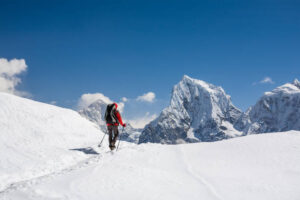
Above about 3,000 m, the body needs time to adapt to thinner air. Climbing too fast can cause acute mountain sickness, with headache, nausea, loss of appetite, dizziness,s and poor sleep. Left untreated, it can progress to high-altitude pulmonary or cerebral oedema, both of which can be fatal.
- Follow a proven itinerary: Our plan includes rest days in Namche and Dingboche and moderate daily gains above 3,000 m.
- Never climb with worsening symptoms: Rest where you are, and if symptoms get worse, go down.
- Check yourself honestly every evening: Note your headache, appetite and sleep, and share them with your guide.
- Drink well: Drink three to four litres a day of water, tea, and soup, and avoid alcohol at altitude.
- Talk to your doctor before you travel: Ask about altitude medication and any personal health issues.
Our guides carry a first-aid kit, are experienced in recognising altitude sickness, and often use a pulse oximeter as one of several checks. Read our altitude sickness guide for Everest Base Camp and our page on acute mountain sickness before you go.
Ten Safety Rules for Solo Trekkers
- Share your plan: Send your daily itinerary to someone at home, and tell your lodge where you are heading next.
- Check in every evening: Agree on a time to message home, and what should happen if you miss it.
- Start early and finish early: Aim to reach your lodge by early afternoon, before the cloud and wind build.
- Stay on the main trail: Never take shortcuts across the moraine or walk off-trail alone in cloud.
- Respect the rest days: Acclimatisation is your best protection, especially when no one else is watching your symptoms.
- Carry a way to call for help: A local SIM, Wi-Fi cards, and ideally a satellite messenger.
- Keep emergency details on paper: Your insurer’s emergency line, policy number and embassy contacts, in case your phone dies.
- Walk in daylight: Avoid walking alone at dusk, when temperatures fall and the trail is hard to see.
- Trust your instincts: If a person, a lodge or a section of trail feels wrong, change your plan.
- Hire through a registered company: Licensed, insured guides are your strongest safety net.
Medical Help Along the Trail
One of the most reassuring facts for anyone planning an Everest Base Camp Trek Solo is that medical help exists along the route. Our route map marks the main points:
- Lukla: The Pasang Lhamu Nicole Niquille Hospital, founded by Swiss mountain guide Nicole Niquille, treats locals and trekkers near the airstrip.
- Namche Bazaar: A health post and shops selling basic medicines in the Sherpa capital. Read our guide to Namche Bazaar.
- Khunde: The Khunde Hospital, built by Sir Edmund Hillary’s Himalayan Trust, was the first hospital in the Khumbu and sits a short walk from the acclimatisation trails above Namche. Our guide to Khumjung and Khunde tells its story.
- Pheriche: The Himalayan Rescue Association aid post is staffed by volunteer doctors in the spring and autumn seasons, and its afternoon altitude talks are well worth attending.
- Everest Base Camp: In the spring climbing season, a clinic known as Everest ER operates at base camp.
For anything serious, patients are flown by helicopter to Kathmandu, so good insurance is essential. Keep any notes from a health post, because insurers check evacuation claims carefully.
Staying Connected: Phones, Wi-Fi and Daily Check-Ins
Mobile coverage reaches many villages on the trail, but it is patchy higher up and can fail in bad weather. Many lodges sell Wi-Fi cards that work along much of the route, though speeds vary and the connection is slower the higher you go. Buy a local SIM card in Kathmandu, download offline maps before you leave, and carry a power bank, because charging points are limited above Namche and cold weather drains batteries quickly.
For a solo trekker, a satellite messenger or personal locator beacon is the best insurance against being out of reach, especially if you walk without a guide. Agree on a simple check-in routine with someone at home: where you plan to sleep each night, when you will message, and who they should contact if they do not hear from you. Our guides carry phones and keep in touch with our office in Kathmandu throughout the trek.
If Something Goes Wrong: Emergencies and Helicopter Rescue
Knowing what to do before you need it is the best preparation. If you or someone near you falls ill or is injured:
- Stop and assess: Sit down, keep warm and drink. Do not keep climbing.
- Descend if you can: For altitude illness, going down 300 to 500 m is the most effective treatment.
- Get help from your lodge: Lodge owners know the nearest health post, rescue contacts, and helicopter companies.
- Call your insurer’s emergency line: Most insurers need to approve a helicopter evacuation before it flies.
- Use the medical posts: Pheriche in season, Khunde, Namche and Lukla.
Helicopters fly only in daylight and reasonable visibility, and above about 4,500 m they can lift only two or three passengers at a time, so pick-ups higher up are often shuttled to Pheriche before the flight to Kathmandu. Our guide to helicopter rescue in the Everest region explains the process, and another explains whether a helicopter can land at Everest Base Camp.
Travel Insurance for Solo Trekkers
Insurance is not optional in the Khumbu, and it matters even more when you travel alone. Your policy should cover trekking to at least 6,000 m, helicopter evacuation, medical treatment and repatriation, plus trip delays caused by weather. If you plan to trek independently, check that the policy covers trekking without a guide, because some insurers require you to follow local rules and official advice.
Carry your policy number and the insurer’s emergency line on paper, give a copy to your guide or lodge, and add an emergency contact at home who knows your itinerary. As a solo traveller, there is no companion to make those calls for you.
Solo Female Trekkers: Practical Advice
Many women trek to Everest Base Camp alone, and the Khumbu is generally safe and welcoming, with a strong tradition of hospitality in Sherpa lodges. The main risks are the same as for anyone: altitude, weather and isolation. A few practical habits make the journey easier:
- Choose busy seasons and lodges: Spring and autumn bring plenty of fellow trekkers, and popular lodges are lively in the evenings.
- Share your plans: Tell your lodge and someone at home where you are going each day.
- Lock your room: Many rooms have a hasp for a padlock, so bring a small one, and keep valuables with you.
- Dress modestly in villages: Comfortable trekking clothes are fine, and covering shoulders and knees is appreciated near monasteries.
- Pack personal supplies: Bring sanitary products from home, as choice is limited above Namche, along with wet wipes and a small bag to carry rubbish out.
- Ask about your guide: Many solo women choose a licensed guide or porter-guide for company and peace of mind, and some prefer a female guide. Ask us what is possible for your dates.
- Trust your instincts: If anything feels uncomfortable, speak to your guide or lodge owner, or move on.
Everest Base Camp Trek Solo Costs: What Shapes Them
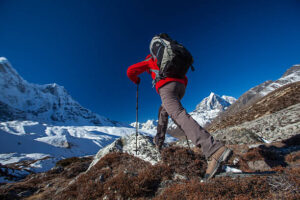
Costs are one of the first questions solo travellers ask us. They depend on the season, your comfort level, and the services you choose, so we don’t give figures here. Instead, here is what shapes the overall cost of an Everest Base Camp Trek Solo, so that you can plan with confidence and compare offers fairly.
What Adds Up on a Solo Trek
- Permits: The national park and municipality permits are charged per person, so going solo makes no difference.
- Flights: Lukla flights are charged per seat, plus the road transfer to Ramechhap when flights leave from there, and possibly an extra night if weather delays them.
- Your guide: On a private trek, one traveller covers the guide’s services, meals, room, flights and insurance, which a group would share.
- Porter or porter-guide: One porter usually carries for two trekkers, so a solo traveller either has a porter alone or chooses a porter-guide.
- Rooms: Teahouse rooms are usually charged per room rather than per person, and lodges keep room rates low on the understanding that you eat where you sleep. Upgraded rooms with attached bathrooms cost more.
- Meals and drinks: The biggest daily item on the trail. Porters and yaks carry everything up, so meals cost more the higher you go.
- Small extras: Hot showers, battery charging, Wi-Fi cards, snacks and bottled drinks are usually charged separately higher up.
- Insurance and gear: A policy covering trekking to 6,000 m with helicopter rescue, plus any gear you buy or rent in Kathmandu.
- Spare days: Add an extra day or two in case Lukla flights are delayed.
- Thanks for your crew: Tipping your guide and porter at the end of the trek is customary in Nepal.
Solo Versus Group: Where the Difference Comes From
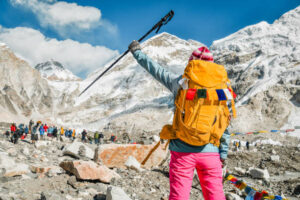
The trail is the same for everyone, and so is most of what you need each day. The real difference is sharing. In a group, the guide, porters and transfers are shared between several people. On a private solo trek, they are yours alone, along with the freedom to choose your dates, pace and lodges. Many solo travellers find that freedom worth it, while others prefer the company and efficiency of a small group.
Ways to Keep a Solo Trek Good Value
- Join a small group: Sharing a guide and porters is the simplest way to reduce what you cover alone.
- Choose a porter-guide: One person who guides and carries part of your luggage replaces two crew members.
- Pack light: A lighter bag makes a porter-guide realistic and keeps you more independent.
- Travel just outside the busiest weeks: Late November, early December and early March bring quieter trails, easier room choice and more flexible flights.
- Book through a registered company: A clear list of what is included avoids surprises on the trail.
- Keep spare days: Planning one or two buffer days is far better than last-minute changes.
- Rent bulky gear: You can rent down jackets and sleeping bags in Kathmandu.
Ask Us for a Clear Plan
Every solo trek is a little different, so the best way to understand yours is to tell us your dates, preferred style, and comfort level. We will send a clear plan that lists exactly what is included. Start on our Plan Your Trip page, and for the wider picture, read our overview of what goes into an Everest Base Camp trek.
Private Guide or Small Group? Choosing How to Go, Solo
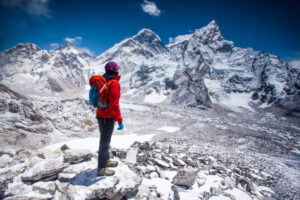
Choosing how to do the Everest Base Camp Trek Solo comes down to what you value most: freedom, company or simplicity.
A Private Guide
- Best for: Travellers who want to set their own dates and pace, photographers, slower walkers and anyone with special interests or health needs.
- Strengths: Full flexibility, one-to-one attention, easy plan changes, and a personal connection with your guide.
- Trade-offs: You cover the guide and porter alone, and evenings depend on the people you meet in the lodges.
A Small Group
- Best for: Sociable travellers, first-timers and anyone who likes the idea of instant trail companions.
- Strengths: A shared guide and porters, a ready-made social life, and the support of fellow trekkers on hard days.
- Trade-offs: Fixed dates and a shared pace, and you may need to compromise on rest stops and photo breaks.
Independent With a Porter-Guide
- Best for: Experienced trekkers who value independence but want a safety net.
- Strengths: You keep most decisions in your own hands, while a licensed local walks beside you and carries part of your load.
- Trade-offs: Less structure than a fully guided trek, so you share planning responsibility.
Hiring a Guide or Porter-Guide as a Solo Trekker
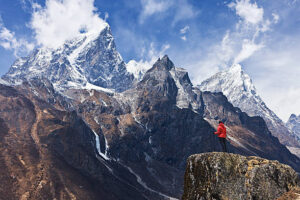
Your guide is your most important safety decision as a solo traveller, so choose carefully.
- Book through a registered agency: Licensed guides at registered companies are insured, accountable, and meet national rules.
- Check the licence: Ask to see the guide’s trekking licence and the company’s registration.
- Ask about safety: Does the guide carry a first-aid kit and a phone, know the signs of altitude sickness and have a plan for evacuations?
- Talk before you go: A short call or meeting in Kathmandu helps you agree on pace, style and expectations.
- Avoid street offers: Freelance helpers met in Lukla may not be licensed or insured.
- Look after your porter: Choose a company that equips its porters properly and respects sensible load limits.
Meet the people who lead our treks on our team page, and review our company documents on our legal documents page.
Planning Your Solo Trek, Step by Step
Good planning turns a solo trek from a gamble into a well-run adventure. Here is the timeline we recommend.
- Four to six months before: Choose your season, decide between a private guide, a small group or independent trekking, and book early for the busy autumn and spring weeks. Start training.
- Two to three months before: Buy insurance, check your passport, plan your visa, gather gear and see your doctor about vaccinations and altitude medication.
- One month before: Confirm your itinerary and flights, set up your check-in plan with someone at home, and arrange a satellite messenger if you will walk without a guide.
- In Kathmandu: Meet your guide for a briefing, buy a local SIM card, rent any missing gear and repack so that your trekking bag is light.
- On the trail: Follow the plan, enjoy the rest days and keep your check-in routine.
Our complete trekking in Nepal guide covers the wider practicalities, and our Nepal visa information page explains entry requirements.
Permits and Paperwork for Solo Trekkers
Solo trekkers need the same two permits as everyone else on the classic route: the Sagarmatha National Park entry permit, available in Kathmandu or at the Monjo park entrance, and the Khumbu Pasang Lhamu Rural Municipality permit, issued in Lukla. You don’t need the TIMS card used in many other regions in the Khumbu. On our treks, the team arranges permits for you.
The municipality permit is checked as you leave Lukla, and both permits are checked at Monjo, where officials record your details. That record can help rescuers if anyone ever needs to trace your route. Our guide to Everest Base Camp Trek permits explains each permit, and our guide to Sagarmatha National Park describes the protected landscape you walk through.
Best Time to Trek to Everest Base Camp Solo
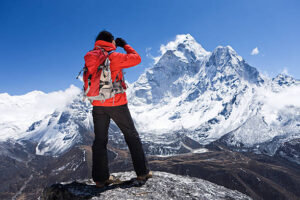
For solo travellers, the busy seasons have an extra advantage: company. In spring and autumn, the trail is full of trekkers and the lodges are lively, so you are rarely far from help.
- Autumn (late September to November): Clear skies and stable weather. October is the busiest month, while our guide to the Everest Base Camp Trek in November explains why the second half of autumn is quieter but colder. See also the Everest Base Camp Trek in October.
- Spring (March to May): Warmer days, rhododendrons in bloom and the expedition season at base camp. Read about the Everest Base Camp Trek in April.
- Winter (December to February): Clear but very cold, with quiet trails. Best for experienced trekkers with a guide.
- Monsoon (June to August): Cloud, rain and frequent flight delays make it a poor choice for a first solo trek; our guide to the Everest Base Camp Trek in monsoon explains when it can still work.
Compare every month in our guide to the best time for the Everest Base Camp trek.
A Solo-Friendly 14-Day Itinerary
Our standard Everest Base Camp Trek takes 14 days from arrival in Kathmandu to departure, with two acclimatisation days. Here is how an Everest Base Camp Trek Solo typically unfolds on that plan, with notes for travelling alone. Always check the trip page for the latest itinerary.
- Day 1: Arrive in Kathmandu (about 1,400 m). Meet your guide, check your gear and set up your check-in plan.
- Day 2: Fly to Lukla (2,860 m) and walk to Phakding (2,610 m). In the busy seasons, an early drive to Ramechhap comes first. The walk is about 8 km and gentle, and you’ll check the municipality permit as you leave Lukla.
- Day 3: Phakding to Namche Bazaar (3,440 m). About 12 km, passing the park checkpoint at Monjo, crossing high suspension bridges and climbing to Namche, with its health post, shops and Wi-Fi.
- Day 4: Acclimatisation day in Namche. Hike up towards the Hotel Everest View and the villages of Khumjung and Khunde, home to the Khunde Hospital.
- Day 5: Namche to Tengboche or Deboche (about 3,860 m). About 10 to 11 km, with evening prayers at Tengboche Monastery, a peaceful moment for any solo traveller.
- Day 6: Tengboche to Dingboche (4,410 m). About 11 km past Pangboche, the oldest monastery village in the Khumbu, into the open Imja Valley.
- Day 7: Acclimatisation day in Dingboche. Climb the ridge behind the village or walk towards the Chhukung Valley, then rest.
- Day 8: Dingboche to Lobuche (4,910 m). About 8 to 9 km, past the climbers’ memorials above Thukla. Do not walk this section alone in the clouds.
- Day 9: Lobuche to Gorakshep (5,164 m) and Everest Base Camp (5,364 m). About 12 km on the moraine of the Khumbu Glacier, the highest and most demanding day. See what you can at Everest Base Camp.
- Day 10: Kala Patthar (5,545 m) at sunrise, then down to Pheriche (4,240 m). The great viewpoint, followed by a long descent of 15 to 17 km to the aid post at Pheriche.
- Day 11: Pheriche to Namche Bazaar. About 18 to 20 km, mostly downhill.
- Day 12: Namche to Lukla. About 18-20 km to the end of the trail.
- Day 13: Fly back to Kathmandu, or to Ramechhap and drive. Keep this day flexible in case of weather.
- Day 14: Departure, or extend your stay in Nepal.
For more detail, our Everest Base Camp trek itinerary and Everest Base Camp trek in 14 days guides describe each day, and our Everest Base Camp trek distance guide breaks down the walking. If you are short on time, find out how many days the EBC trek takes or read about the short Everest Base Camp trek in 10 days.
Lukla Flights and Getting There Alone
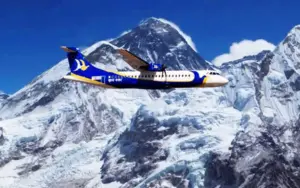
The flight to Tenzing-Hillary Airport in Lukla is one of the most exciting in the world, and one of the most weather-dependent. In busy seasons, most scheduled flights now depart from Manthali Airport in Ramechhap rather than Kathmandu, which usually means a four- to five-hour drive, leaving between about one and three in the morning. Our Ramechhap airport transportation service handles the drive, and our Lukla Airport flights guide explains the details.
Solo travellers should always keep a spare day at the end of the trek, because cloud or wind can delay flights. If you would rather avoid the flight on the way in, walk traditionally on our Jiri to Everest Trek, described in our Jiri to Everest Base Camp trek guide, or take the Everest Base Camp Trek by Road. The first stage from Lukla is described in our guide to Phakding and Monjo.
Teahouses, Rooms and Meals for Solo Trekkers
Teahouses line the route all the way to Gorakshep, and they are part of the joy of an Everest Base Camp Trek Solo. The warm dining room, with its stove and long tables, is where trekkers swap stories, play cards and make friends.
- Rooms: Most rooms are simple twin rooms. Outside the busiest weeks, a solo trekker usually has a room alone. Still, in peak season, the upper lodges at Lobuche and Gorakshep can be so full that booking ahead through your guide becomes essential.
- Eat where you sleep: Lodges expect you to eat where you stay, and it is the polite and practical thing to do.
- Security: Lock your room with a padlock when you go out and keep your passport, phone and valuables with you.
- Charging and Wi-Fi: Usually available in the dining room, more limited the higher you go.
- Food: Dal bhat, noodle soups, fried potatoes, porridge and Sherpa stew. Many trekkers choose vegetarian meals above Namche.
If you want more comfort, upgraded lodges in Namche, Deboche, and Dingboche offer rooms with attached bathrooms and electric blankets. Our guide to luxury lodges in the Everest region explains the options, and the guides to Tengboche and Dingboche describe the villages where you sleep.
Staying Healthy on Your Own
When there is no companion to look after you, prevention matters even more.
- Treat your water: Use boiled water from lodges, safe drinking water stations or purification tablets, and refill a bottle instead of buying plastic.
- Wash your hands: Carry hand sanitiser and use it before every meal.
- Eat: Freshly cooked, hot food is safest, especially higher up.
- Sleep and rest: Go to bed early, and use the acclimatisation days to rest genuinely.
- Keep warm: Change out of sweaty layers as soon as you arrive at your lodge.
- Protect yourself from the sun: High-altitude sun burns quickly, even on cold days, so use sunscreen, lip balm and good sunglasses.
Fitness and Training for a Solo Trek
You do not need to be an athlete, but you do need stamina for six to eight hours of walking on some days, often uphill and at altitude. Start training about three months before your trek with long hikes carrying a daypack, stair climbing, steady cardio and leg and core strength work. A few long hikes on consecutive days teach your body to recover overnight.
Our Everest Base Camp trek training plan gives a week-by-week program, our guide to Everest Base Camp trek difficulty explains the challenge, and our advice on the Everest Base Camp trek for beginners and the Everest Base Camp trek over 50 helps first-timers and older trekkers prepare.
What to Pack for a Solo Trek
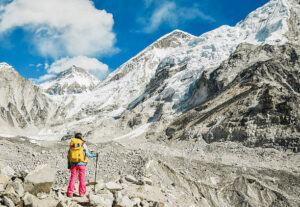
Pack as you would for any trek to base camp, with a few extras that matter when you are on your own. Our full Everest Base Camp trek packing list and our trekking equipment page cover the basics.
- Personal first-aid kit: Plasters, blister care, painkillers, rehydration salts, your own medicines and any altitude medication your doctor recommends.
- Communication: Phone, local SIM, power bank, and ideally a satellite messenger or personal locator beacon.
- Navigation: An offline map app with the trail marked, plus a paper map.
- Safety basics: Headlamp with spare batteries, whistle, emergency foil blanket and a small padlock.
- Documents: Passport, permits, insurance details and emergency contacts, with paper copies kept separately.
- Warm layers: Down jacket, fleece, windproof shell, warm hat and gloves, and a sleeping bag rated for the season.
- Comfort items: A book, cards or downloaded films for the long, cold evenings.
Keep your trekking bag light. If you carry your own pack, aim for no more than about 8 to 10 kg; if you have a porter-guide, keep the shared load modest so that they can walk comfortably.
Loneliness, Mindset and Meeting People
Some people planning an Everest Base Camp Trek Solo worry about feeling lonely, but the trail to base camp is one of the most sociable places in the mountains. You meet the same faces day after day, share tables in the dining room and cheer each other on at Gorakshep. Your guide quickly becomes a companion, and many guests stay in touch with their guides for years.
There will still be quiet moments, and altitude can make anyone feel low or tired. Be kind to yourself, keep a journal, call home when you can and celebrate small victories, such as reaching Namche or your first night above 4,000 m. Learning about the people around you helps too: our guide to Sherpa culture and traditions is a good place to start.
Etiquette and Responsible Solo Trekking
- Walk clockwise: Pass mani walls and chortens on your right as a sign of respect in Himalayan Buddhism.
- Ask before photographing: People, monks and prayer halls deserve a smile and a question first.
- Refuse single-use plastic: The Everest region has banned many single-use plastic items, so carry a refillable bottle.
- Carry out your rubbish: Take batteries and wrappers back with you.
- Support local businesses: Eat in your lodge, buy snacks in villages and hire licensed local crew.
- Give way to porters and yaks: Step to the mountain side of the trail.
Read more about our commitment to responsible tourism.
Luxury and Helicopter Options for Solo Travellers
Travelling alone does not mean giving up comfort. Several of our trips work beautifully for one person.
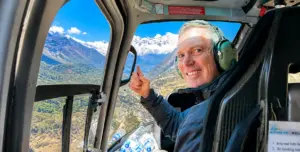
- Everest Base Camp Luxury Lodge Trek: 11 days with a helicopter in and out, staying in the finest lodges on the trail.
- Luxury Everest Base Camp Trek with Helicopter Return: 12 days, trekking up in comfort and flying back by helicopter after base camp.
- Everest Base Camp Helicopter Trek: Walk up the classic route to base camp and fly back by helicopter, in about ten days.
- Everest Elite Luxury Heli Trek: Our most exclusive combination of fine lodges and helicopter flights.
- Sharing Everest helicopter tour with a Kala Patthar landing: A great option for solo travellers, who share the flight with others.
- Everest Helicopter Tour: A private morning flight into the high Khumbu, or a full-day Everest helicopter tour with a village walk.
Our guides to choosing an EBC trek or a helicopter tour and the Everest Base Camp helicopter return compare the options, and our luxury Everest Base Camp trek guide shows how comfortable the trail can be. Our guides to the Kala Patthar landing sharing tour and the best seasons for an Everest helicopter tour help solo travellers choose a flight, while the Mt Everest by helicopter tour and our Everest mountain flight guide suit anyone with only a day to spare.
Other Treks That Suit Solo Travellers
In the Everest Region
- Everest View Trek: A short trek to Namche and the Hotel Everest View, ideal if you have limited time. For more comfort, see our luxury Everest View trek.
- Everest Gokyo Lakes Trek: Quieter trails, turquoise lakes and the view from Gokyo Ri. Read our Gokyo Lakes trek guide, compare Gokyo Ri vs Kala Patthar and see our guide to Gokyo Ri and the Fifth Lake.
- Everest 3 Pass Trek: A demanding route over three high passes, including the Cho La and the Renjo La, that solo trekkers should only attempt with a guide. See our Everest Three Passes trek guide.
- Ama Dablam Base Camp Trekking: A shorter trek to the foot of Ama Dablam, explained in our Ama Dablam base camp trek guide.
- Everest Base Camp Yoga Trek: A mindful, slower version of the classic trek, described in our EBC yoga trek guide.
- Trekking peaks: Island Peak Climbing, Lobuche Peak Climbing and Mera Peak Climbing always need a climbing permit and a licensed guide. Our guides to Island Peak, Lobuche East and Mera Peak are good first reads.
Elsewhere in Nepal
- Annapurna: The Annapurna Base Camp Trek, the Annapurna Circuit Trek, the Ghorepani Poon Hill Trek and the Mardi Himal Trek are popular with solo travellers, with a licensed guide under the national rule. Our ultimate guide to the Annapurna Base Camp trek has the details.
- Langtang: The Langtang Valley Trek is close to Kathmandu and ideal for a first trek, as our Langtang Valley trek details
- Restricted areas: The Manaslu Circuit Trek, with its crossing of the Larke Pass, the Upper Mustang Trek, the Nar Phu Trek, the Tsum Valley and Ganesh Himal Trek and the Kanchenjunga Base Camp Trek need special permits that are normally issued only to groups of at least two trekkers with a licensed guide, so solo travellers usually join a group. Learn more about trekking in Upper Mustang.
For more ideas, browse our list of the 50 best treks in Nepal.
Before and After Your Solo Trek
Nepal is a wonderful country to explore on your own. Before you fly to Lukla, spend a day among the temples and stupas of the capital with our Kathmandu sightseeing guide or on a guided Kathmandu day tour, and stretch your legs on a Nagarkot hike or the short Chisapani Nagarkot Trek.
After the trek, soar above Phewa Lake with paragliding in Pokhara, explore with our Pokhara sightseeing guide or warm up in the lowlands on a Chitwan jungle safari. Our classic Nepal tour links the highlights. Further afield, a luxury Bhutan tour leads to the cliffside Tiger’s Nest Monastery, and the Lhasa to Everest Base Camp overland tour shows you the north face of Everest, as our Lhasa to Everest Base Camp guide explains.
Common Mistakes Solo Trekkers Make
- Skipping rest days: Feeling strong in Namche is not a reason to rush.
- Telling no one the plan: Someone should always know where you are.
- Hiring on the street: Unlicensed helpers may not be insured or trained.
- Starting late: Afternoon cloud, wind and cold catch out late starters.
- Ignoring symptoms: A worsening headache is a signal to stop, not push on.
- Trekking without insurance: A single helicopter flight can change everything.
- Overpacking: A heavy bag drains your energy and limits your options.
- Relying on ATMs: Machines in Lukla and Namche can fail, so carry enough cash for the trek.
- Leaving no spare day: Lukla flights depend on the weather.
How Our Team Supports Solo Trekkers
We are a Kathmandu-based, Sherpa-led company, and solo travellers are some of our favourite guests. For a solo trek, our team can arrange a licensed private guide or porter-guide, book your flights, Ramechhap transfer, lodges and permits, help you set up a check-in plan and keep in touch with your guide throughout the trek. Our Sherpa guides carry a first-aid kit, recognise altitude sickness, and know every junction on the trail. Read why travellers choose us as their trekking company in Nepal, and if you have questions about the rules, routes or what suits you best, contact us.
Frequently Asked Questions About the Everest Base Camp Trek Solo
Can you trek to Everest Base Camp solo?
Yes. You can go as a solo traveller with a private guide, join a small group or trek independently on the main route, because the Khumbu municipality still issues permits to independent trekkers. A national rule requires licensed guides in national parks, so check the latest position before you travel.
Is it safe to trek to Everest Base Camp alone?
For most people, yes, especially with a licensed guide. Crime is rare; the main risks are altitude sickness, falls, illness and bad weather, which are harder to manage alone.
Do solo trekkers need a guide for Everest Base Camp?
A guide is recommended but not currently required by the Khumbu municipality, while national rules require one. A licensed guide or porter-guide is the safest choice and is required everywhere in Nepal.
Is the Everest Base Camp trek safe for solo female trekkers?
Generally, yes. Many women trek alone each season. Choose busy seasons and lodges, share your plans, lock your room and consider a licensed guide or porter-guide.
What shapes the cost of a solo Everest Base Camp trek?
Mainly your guide and porter, flights, rooms, meals, insurance and spare days. Solo travellers share less, so joining a group or choosing a porter-guide makes the biggest difference. Contact our team for a clear plan.
Can a solo traveller join a group?
Yes. Joining a small group lets you share the guide and porters and gives you instant trail companions, though you follow fixed dates and a shared pace.
Will I get my own room as a solo trekker?
Usually, yes, outside the busiest weeks. In peak season, rooms in Lobuche and Gorakshep fill quickly, so booking ahead through your guide is essential.
How do solo trekkers stay in touch on the trail?
With a local SIM card, Wi-Fi cards sold in lodges and, ideally, a satellite messenger. Share your daily plan with someone at home and check in each evening.
What is the best season to trek solo?
Spring and autumn, when the weather is most reliable and the trail is lively. Late November and early March are quieter options with good weather.
How far ahead should I plan a solo trek?
Four to six months is ideal for the busy seasons, so you can secure flights and lodges and have time to train. We can arrange our 14-day Everest Base Camp Trek privately or as part of a group.
Final Thoughts: Your Trek, Your Way
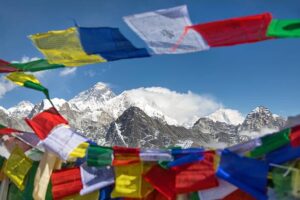
The Everest Base Camp Trek Solo is one of the great journeys a person can make alone: days of mountain silence, evenings of shared stories and the quiet pride of standing beneath Everest on your own terms. Choose your style, respect the altitude, build your safety net and plan with care, and walking solo becomes not a risk but a gift.
Ready to go? Join our Everest Base Camp Trek with a licensed Sherpa guide, or travel in comfort on the Luxury Everest Base Camp Trek with Helicopter Return. Learn more about Trek Nepal Himalayas, start shaping your journey on our Plan Your Trip page, or contact us, and our team will help you plan the perfect solo trek.
Quick Inquiry
Explore More


