
Everest Base Camp Trek in November: Is It a Good Month?
Everest Base Camp Trek in November: Is It a Good Month?
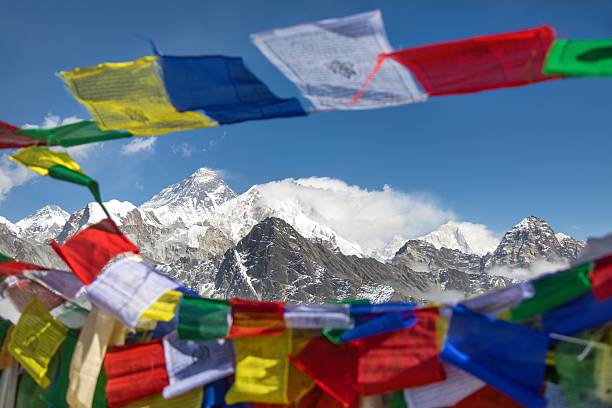
The sun has just slipped behind the ridge at Tengboche, and the cold arrives within minutes. Prayer flags hang still above the monastery courtyard, novice monks hurry across the frosty grass, and the last light of the day climbs slowly up Ama Dablam and Everest, turning them gold, then pink, against a cloudless sky. Inside the lodge, the stove already glows, and someone pours ginger tea. Welcome to the Everest Base Camp Trek in November.
November is the second half of Nepal’s great autumn trekking season. The monsoon is long gone, the air is at its driest and clearest, and the trails are firm and dusty rather than muddy. It is also the month when winter starts to knock on the door. Nights grow sharply colder, the days shorten, and by the last week the upper valleys feel like the first days of winter.
So is November a good month for Everest Base Camp? In this guide, our Sherpa team gives you an honest answer, with village-by-village temperatures, sunrise and sunset times, crowd patterns, flights, festivals, a day-by-day plan and a packing list built for the cold. It draws on what our guides see on the trail every autumn, and it is written for anyone considering our Everest Base Camp Trek at this time of year.
The Short Answer: Is November a Good Month for the Everest Base Camp Trek?
Yes. November is one of the two best months for the Everest Base Camp trek, with some of the clearest, driest skies of the year, dry trails and every lodge open. The trade-offs are cold nights, from about minus 3°C at Namche to minus 15°C or lower at Gorakshep, shorter days and busy trails early in the month.
In short, November suits trekkers who value views and settled weather above warmth. If you can handle cold evenings with the right gear, it may be the best month of all. If the cold is your biggest worry, early November or October is the gentler choice.
Everest Base Camp Trek in November at a Glance
- Season: Late autumn, the second half of the main post-monsoon trekking season.
- Weather: Dry and settled, with some of the clearest mountain views of the year.
- Daytime temperatures: Around 8 to 12°C in Namche in the sun, falling to around minus 5 to 0°C at Everest Base Camp.
- Night temperatures: Around minus 2 to minus 5°C in Namche, and minus 12 to minus 18°C at Gorakshep by late November.
- Daylight: About 11 hours at the start of the month and about 10.5 hours at the end, with sunrise moving from about 6:10 to 6:30 am and sunset from about 5:15 to 5:00 pm.
- Crowds: Busy in the first half of the month, much quieter after mid-November.
- Flights: Lukla flights usually run well in the calm November mornings. In recent autumn seasons, most have departed from Manthali Airport in Ramechhap.
- Festivals: Often Mani Rimdu at Tengboche Monastery, and sometimes Tihar in Kathmandu.
- Best for: Views, photography, first-time trekkers who prepare for the cold, and anyone who prefers quiet trails late in the month.
- Our recommended trip: The 14-day Everest Base Camp Trek, with acclimatisation in Namche and Dingboche.
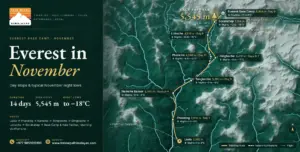
Our 14-day Everest Base Camp Trek route, from Lukla to base camp and Kala Patthar, with day stops and typical November night temperatures.
Why November Is One of the Best Months for Everest Base Camp
Ask our guides which month they love most on the trail to base camp, and many will say November. The reasons are simple.
The Clearest Air of the Year
The summer monsoon washes the dust and haze out of the sky, and by November the air over the Khumbu is cold, dry and astonishingly clear. From the ridge above Namche Bazaar, Everest, Lhotse and Ama Dablam look close enough to touch, and the views often stay sharp all day instead of clouding over by late morning, as they can in spring.
Settled, Predictable Weather
November usually brings long runs of stable days. Mornings are calm and bright, afternoons may bring a little cloud or a cold breeze in the upper valleys, and nights are clear and starry. Days lost to bad weather are rare, which makes planning easier and helps flights to Lukla run smoothly.
Dry, Firm Trails and Open Lodges
With the rain long gone, the trail is dry and firm, the streams are low, and every teahouse along the route is open and well stocked. There are no leeches in the lower forests and almost no mud, so the walking is simply a pleasure.
Quieter Than October, Especially Late in the Month
October is the busiest month in the Everest region. Early November is still lively, but numbers begin to fall around the middle of the month, and by the last week the trail, the lodges and the viewpoints feel noticeably calmer.
Festivals, Climbers and Mountain Life
November often brings the Mani Rimdu festival to Tengboche, and it is the heart of the autumn climbing season on Ama Dablam and the region’s trekking peaks. The lodges hum with stories from climbers on their way up and down, which adds a wonderful energy to the evenings.
The Downsides of Trekking to Everest Base Camp in November
November isn’t perfect, and it is best to know the trade-offs before you book.
- Cold nights: Above Dingboche, bedrooms are unheated and nights fall well below freezing. You need a warm down jacket and a proper sleeping bag.
- Shorter days: With about 11 hours of daylight, and less in the deep valleys, you start early and arrive at your lodge by mid-afternoon.
- Busy early weeks: The first half of the month can still be crowded, and lodges at Lobuche and Gorakshep fill quickly.
- Wind higher up: Afternoon winds near Lobuche and Gorakshep make the cold feel much sharper.
- Early-morning drives: In recent autumn seasons, most Lukla flights have left from Ramechhap, which means a very early start from Kathmandu.
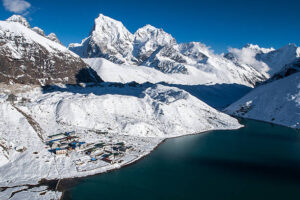
- Occasional early-winter storms: A late-season storm can bring snow, especially towards the end of the month.
None of these is a reason to avoid November. They are simply reasons to plan well, pack properly and trek with an experienced team.
Everest Base Camp Weather in November
The Everest Base Camp Trek in November takes place under some of the year’s most settled skies. The summer monsoon usually ends in late September or early October, and by November the Khumbu sits under the cold, dry air of the post-monsoon season. Humidity is low, rain is rare, and visibility is usually superb.
What a Typical November Day Feels Like
A typical day starts cold, bright and windless, with frost on the ground and ice on the water troughs. The sun warms the trail quickly, so by mid-morning you are walking in a light fleece, at least below Dingboche. Small clouds sometimes drift up the valleys around midday, and in the upper Khumbu a cold wind often picks up in the afternoon. As soon as the sun disappears behind the ridges, temperatures fall fast, and after dinner the sky fills with stars.
Rain and Snow in November
Rain is uncommon in November, and many trekkers finish the month without a single wet day. Higher up, snow is more likely than rain. A light dusting can fall at any time, especially in the second half of the month, and turns the trail above Pheriche white for a morning or two. Heavy snowfall is unusual, but a late-season storm from the Bay of Bengal or an early winter weather system can occasionally bring a day or two of real snow. When that happens, our guides wait for the trail to settle rather than pushing on.
Wind and the Everest Plume
As winter approaches, the high-altitude jet stream moves south over the Himalaya. You can see its effect on Everest itself: on many November days, a long white plume of snow streams from the summit. Lower down, the wind is far gentler, but afternoon gusts at Lobuche, Gorakshep and on Kala Patthar can make the air feel many degrees colder, so keep a windproof shell and warm gloves in your daypack.
Everest Base Camp Temperature in November, Village by Village
Temperatures on the Everest Base Camp Trek in November depend far more on altitude, sun and wind than on the date. As a rule of thumb, the air gets about 6°C colder for every 1,000 m you climb, and the difference between sun and shade is dramatic. These are typical November figures. Early in the month is a little milder, and the last week a little colder.
- Kathmandu (about 1,400 m): Pleasant days around 20 to 23°C and cool nights around 7 to 10°C.
- Lukla (2,860 m) and Phakding (2,610 m): Sunny days around 10 to 15°C and nights around 0 to 3°C, with frost on clear mornings later in the month. Our guide to Phakding and Monjo describes this first stage.
- Namche Bazaar (3,440 m): Days around 8 to 12°C and nights around minus 2 to minus 5°C.
- Tengboche and Deboche (about 3,860 m): Days around 5 to 10°C and nights around -5 to-8°C.
- Dingboche (4,410 m) and Pheriche (4,240 m): Days around 3 to 8°C in sunshine and nights around minus 8 to minus 12°C. See our guide to Dingboche.
- Lobuche (4,910 m): Days around 0 to 5°C and nights around minus 10 to minus 15°C.
- Gorakshep (5,164 m) and Everest Base Camp (5,364 m): Daytime around minus 5 to 0°C in the shade, and nights around minus 12°C early in the month, reaching minus 18°C or lower by late November.
- Kala Patthar (5,545 m) at dawn: Often around minus 15 to minus 20°C, and colder still in the wind.
Sun, Shade and the Feels-Like Temperature
Numbers only tell part of the story. On a calm, sunny morning at Dingboche, you can sit outside in a fleece and feel almost warm, yet when the sun drops behind the ridge in the afternoon, the temperature can fall by ten degrees or more within minutes. Shaded sections of trail may stay frozen all day, while sunny slopes feel pleasant. Dress in layers, and add or remove them before you get too cold or too hot.
Daylight in November: Sunrise, Sunset and Shadows
Nepal does not change its clocks, and the Khumbu lies at about 28 degrees north, so November days are shorter than in spring but never extremely short. In Namche, the sun rises around 6:10 am at the start of the month and around 6:30 am at the end, and it sets around 5:15 pm and 5:00 pm, respectively. That gives about 11 hours of daylight in early November and about 10.5 hours by the last week.
In the deep Himalayan valleys, the usable day is shorter still. High ridges block the low autumn sun, so lodges in places such as Dingboche, Lobuche and Gorakshep can lose direct sunlight in the afternoon, long before the official sunset. As soon as the sun goes down, the cold arrives.
This shapes every trekking day in November:
- Start early: Breakfast around 7 am and on the trail by about 8 am makes the most of the warm, calm hours.
- Arrive early: Aim to reach your lodge by about 2 or 3 pm, while the sun is still out and you have time to change into dry, warm layers.
- Carry a headlamp: You will need it for the pre-dawn climb of Kala Patthar and for night-time trips to the toilet.
- Use the afternoons well: Rest, read, play cards with other trekkers, or take a short acclimatisation hike to the lodge.
Early, Mid and Late November: How the Month Changes
November is not one single season. It begins as peak autumn and ends on the edge of winter, and the difference matters when you choose your dates.
Early November
The first ten days feel like late October: busy trails, lively lodges, mild days in the lower valleys and cold but manageable nights. This suits trekkers who want peak-season weather with slightly fewer people than October. It is also when Tihar sometimes lights up Kathmandu, and in some years when Mani Rimdu is held at Tengboche. Book flights and lodges well in advance.
Mid-November
Around the middle of the month, the weather is typically most stable and the air clearest, while trekker numbers start to fall. For many of our guides, this is the sweet spot of the whole year: superb views, settled skies, fewer people and nights that are cold but not yet wintry.
Late November
In the last week of November, the trail becomes peaceful. Lodges have rooms to spare, the viewpoints are quieter, and the light is wonderful. The trade-off is colder nights, especially at Gorakshep, more frequent afternoon wind and a slightly higher chance of light snow. If you are comfortable in the cold and well equipped, late November is a hidden gem. Our guide to the best time for the Everest Base Camp trek compares it with early December and the other seasons.
Crowds on the Trail in November
The Everest Base Camp Trek in November is busy but rarely overwhelming. October is the peak month, and the first half of November is nearly as popular, especially on the busiest sections around Lukla, Namche and Tengboche. After mid-November, numbers fall quickly.
A few simple habits make the crowds easy to manage:
- Book early: Flights and the best rooms at Lobuche and Gorakshep fill weeks or even months ahead for early November.
- Walk at quieter times: Leaving a little earlier or later than the big groups often gives you long stretches of trail to yourself.
- Use alternative stops: Sleeping in Deboche instead of Tengboche, or in Pheriche instead of Dingboche, can mean a calmer night. Our Everest Base Camp trek route guide explains every junction and alternative village.
- Enjoy a quiet base camp: Unlike spring, there is usually no expedition tent city at base camp in November, so the glacier, the prayer flags and the Khumbu Icefall feel wild and empty. See what you can expect at Everest Base Camp in each season.
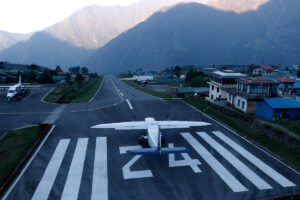
Lukla Flights in November
November is one of the most reliable months for flights to Tenzing-Hillary Airport in Lukla. Calm, clear mornings mean fewer weather holds than in spring, winter or the monsoon. Delays still happen, especially when cloud or wind builds at Lukla or Ramechhap, so build at least one spare day into your plans.
In recent autumn seasons, Nepal’s aviation authority has moved most scheduled Lukla flights from Kathmandu to Manthali Airport in Ramechhap, to ease congestion at the capital’s airport. That usually means a drive of about four to five hours from Kathmandu, leaving between about one and three in the morning. Our Ramechhap airport transportation service handles the drive, and our Lukla Airport flight guide explains the details. Arrangements can change from season to season, so our team confirms your departure location when you book.
If you would rather avoid flying on the way in, you can walk the Jiri to Everest Trek, which follows the footsteps of the first expeditions, or take the Everest Base Camp Trek by Road. Our Jiri to Everest Base Camp trek guide explains the longer approach, which is best in dry autumn weather.
Festivals and Culture in November
Mani Rimdu at Tengboche
Mani Rimdu is the great festival of the Sherpa monasteries. At Tengboche Monastery, it is held each autumn on dates set by the Tibetan lunar calendar, usually in late October or November. After days of private prayers and the creation of a sand mandala, the monastery opens its courtyard to the public for the blessing ceremony, the masked dances and the closing fire ceremony. Monks in brilliant robes and painted masks act out the triumph of Buddhist teaching over the forces of chaos, while Sherpa families from across the Khumbu crowd the balconies.
The dates move every year, and not every November trek coincides with the festival. If seeing Mani Rimdu matters to you, ask our team for the dates before you choose your departure, and we can build your itinerary around the public days. Lodges at Tengboche and Deboche fill quickly during the festival, so book early.
Tihar in Kathmandu
Tihar, the Hindu festival of lights, often falls in late October or the first half of November. For five days, homes in Kathmandu and the lower hills glow with oil lamps and strings of marigolds; crows, dogs and cows are honoured with garlands and tika, and children sing from house to house in the evenings. If you arrive during Tihar, take an evening walk through the old city. Our Kathmandu sightseeing guide suggests the best places to see it.
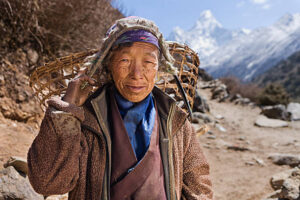
Late Autumn in Sherpa Villages
November is also a busy month in Sherpa homes. The potato harvest is in, yak dung is stacked and dried for winter fuel, and herders bring their animals down from the high summer pastures. The monasteries of Pangboche and Khumjung are peaceful places to visit, and circling a mani wall with your guide at the end of the day is a lovely ritual. The whitewashed stupas you pass have deep meaning, explained in our guide to the chorten in Tibetan Buddhism, and our guide to Sherpa culture and traditions introduces the people who make the Khumbu so special.
A Typical 14-Day Everest Base Camp Trek in November
Our standard Everest Base Camp Trek takes 14 days from arrival in Kathmandu to departure, with two acclimatisation days. Always check the trip page for the latest itinerary.
- Day 1: Arrive in Kathmandu (about 1,400 m)—mild, sunny weather and a trek briefing with our team.
- Day 2: Fly to Lukla (2,860 m) and walk to Phakding (2,610 m). In most autumn seasons, an early drive to Ramechhap comes first, then a short flight and a gentle walk of about 8 km beside the Dudh Koshi.
- Day 3: Phakding to Namche Bazaar (3,440 m). About 12 km, crossing the high suspension bridges and climbing to Namche, with your first view of Everest on a clear November day.
- Day 4: Acclimatisation to Namche. Hike up to the Hotel Everest View for sharp morning views, then return for a warm afternoon in town.
- Day 5: Namche to Tengboche or Deboche (about 3,860 m). About 10 to 11 km through pine, fir and rhododendron forest, with Ama Dablam ahead. Expect frost at Tengboche in the morning.
- Day 6: Tengboche to Dingboche (4,410 m). About 11 km past Pangboche and into the high, open Imja Valley. Nights here fall to around minus 10°C.
- Day 7: AcclimatisAcclimatizationngboche. Climb the Nangkartshang ridge behind the village to above 5,000 m, or wander towards the Chhukung Valley.
- Day 8: Dingboche to Lobuche (4,910 m). About 8 to 9 km, past the climbers’ memorials above Thukla. Expect a cold wind in the afternoon.
- Day 9: Lobuche to Gorakshep (5,164 m) and Everest Base Camp (5,364 m). About 12 km on the Khumbu Glacier moraine, visiting base camp during the warmest hours of the day.
- Day 10: Kala Patthar (5,545 m) at sunrise, then down to Pheriche (4,240 m). The coldest morning of the trek, followed by a long descent of 15 to 17 km into thicker, warmer air.
- Day 11: Pheriche to Namche Bazaar. About 18 to 20 km, mostly downhill, with a hot shower waiting.
- Day 12: Namche to Lukla. About 18 to 20 km to the end of the trail, and a farewell evening with your crew.
- Day 13: Fly back to Kathmandu, or to Ramechhap and drive—a morning flight while the skies are calm.
- Day 14: Departure, or extend your stay in Nepal.
For more detail, our Everest Base Camp trek itinerary and Everest Base Camp trek in 14 days guides describe each day, and our Everest Base Camp trek distance guide breaks down the walking. If you are short of time, read about the short Everest Base Camp trek in 10 days, or find out how many days the EBC trek takes.
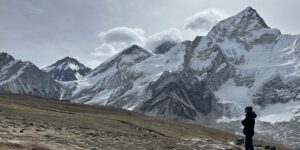
The Coldest Morning: Kala Patthar in November
For most trekkers, the climb of Kala Patthar from Gorakshep is the highlight of the trek and the coldest hour of the whole journey. In November, you leave the lodge in the dark, around 4:30 to 5 am, and climb for one and a half to two hours on a steep, sandy trail to reach the summit cairn and prayer flags around sunrise.
At sunrise in November, the sun comes up behind Everest and Nuptse, so Everest appears as a dark pyramid against a glowing sky, while Pumori, directly above you, catches the first pink light. It is a moment you will never forget, and it is bitterly cold. Wear everything: thermal layers, fleece, down jacket, shell, warm hat, buff and your thickest mittens, with hand warmers if you have them.
November’s settled afternoons also make a sunset climb a real option. At sunset, the last golden light falls directly on Everest’s south-west face, and the summit often glows long after the valley is in shadow. The descent in the dark needs a good headlamp and a steady guide. Ask our team whether a sunset ascent suits your group, and compare the two great viewpoints in our guide to Gokyo Ri vs Kala Patthar.
Altitude and AcclimatizAcclimatizationld
Altitude sickness does not care what month it is, but cold weather adds a few twists. Cold, dry air makes you lose more water through breathing, and many trekkers drink less when it is freezing, which increases the risk of headaches and fatigue. The body also works harder to stay warm, so you may feel more tired than you expected.
- Follow the plan: Our itinerary includes rest days in Namche and Dingboche, and we never rush the climb above 3,000 m.
- Drink warm: Aim for three to four litres a day. Hot water, ginger tea, garlic soup and hot lemon are much easier to drink than icy water. Fill an insulated bottle at the lodge each morning.
- Know the symptoms: Headache, nausea, dizziness, loss of appetite and poor sleep are early warning signs. Tell your guide straight away. Read our altitude sickness guide for Everest Base Camp and our page on acute mountain sickness.
- Protect your throat: The famous Khumbu cough is common in the cold, dusty November air. Wear a buff over your mouth and nose, suck lozenges and keep drinking.
- Stay warm at night: Sleep in a dry base layer and a warm hat, and keep a bottle of hot water in your sleeping bag.
Our guides carry a first-aid kit and are experienced in recognising sickness. In the autumn season, the Himalayan Rescue Association aid post at Pheriche is usually staffed by volunteer doctors, and its afternoon altitude talks are well worth attending on the way up.
Teahouses, Food and Comfort in November
Every lodge on the main trail is open in November, from simple family teahouses to the upgraded lodges of Namche, Deboche and Dingboche. What changes is the temperature inside them.
- Dining rooms are warm: In the evening, the stove in the dining room is lit, usually fuelled by dried yak dung higher up, and it becomes the heart of lodge life.
- Bedrooms are cold: Rooms are unheated, and above Dingboche the temperature inside can fall below freezing overnight. Your sleeping bag matters far more than the lodge blanket.
- Water freezes: Water bottles, toilet buckets and even pipes can freeze overnight in the upper villages. Keep your water bottle inside your sleeping bag.
- Showers are limited: Hot showers are easy to find up to Namche and usually available as far as Dingboche, but most trekkers skip washing their hair higher up, where it can take hours to dry.
- Food is hearty: Dal bhat, noodle soups, fried potatoes, Sherpa stew and porridge are perfect fuel in the cold.
- Batteries drain fast: Cold empties batteries quickly. Keep your phone and power bank in an inside pocket by day and in your sleeping bag at night. Charging points are usually in the dining room.
For more warmth and comfort, several villages offer upgraded rooms, some with attached bathrooms and electric blankets. Our guide to luxury lodges in the Everest region explains the options.
How Hard Is the Everest Base Camp Trek in November?
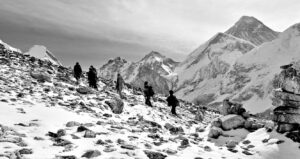
The route itself is no harder in November than in October or April, but the cold adds an extra layer of challenge. You walk around 130 km over the whole trek, climb from 2,860 m at Lukla to 5,545 m on Kala Patthar and spend several nights above 4,400 m. With good preparation, a positive attitude and steady pacing, most healthy trekkers manage it well.
The hardest moments in November are usually the cold ones: getting out of a warm sleeping bag at Gorakshep, the pre-dawn climb of Kala Patthar and the bitter afternoon wind on the moraine. Warm layers, warm drinks and good sleep make all the difference. Our guide to Everest Base Camp trek difficulty covers the challenge in detail, and our Everest Base Camp trek for beginners guide explains how first-timers can prepare.
Who Should Trek to Everest Base Camp in November?
The Everest Base Camp Trek in November suits a wide range of people:
- First-time trekkers who want the most reliable weather and are happy to prepare for the cold.
- Photographers chasing the year’s sharpest light and clearest skies.
- Trekkers who dislike crowds, especially those who can travel after mid-November.
- Climbers combining the trek with Island Peak or Lobuche East during the main autumn climbing season.
- Older trekkers, ideally in early November, when nights are a little milder. Read our guide to the Everest Base Camp trek over 50.
- Families with older children who are used to cold weather. Our guide to the Everest Base Camp trek with kids has practical advice.
November may be less ideal for:
- Trekkers who really struggle in the cold, for whom October or May is milder.
- Anyone hoping to see the rhododendron forests in bloom, which is a spring treat.
- Trekkers who want to experience the expedition tent city at base camp, which normally appears only in spring.
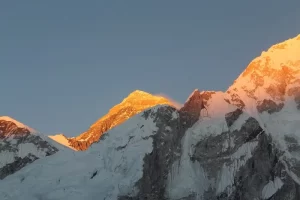
What to Pack for the Everest Base Camp Trek in November
Packing for the Everest Base Camp Trek in November means the standard Everest kit with extra warmth. The key is layering: thin layers you can add and remove as the sun comes and goes. Our full Everest Base Camp trek packing list covers everything, and our trekking equipment page lists the gear we recommend.
Clothing Layers
- Base layers: Two sets of merino or synthetic thermal tops and leggings, and no cotton.
- Mid layers: A fleece jacket and a lighter fleece or insulated vest.
- Down jacket: A properly warm, hooded down jacket for evenings and early mornings above Namche.
- Shell: A windproof, waterproof jacket and trousers for wind and occasional snow.
- Trekking trousers: Plus insulated or fleece-lined trousers for the coldest days.
- Head and hands: A warm hat, a sun hat, a buff, thin liner gloves, and insulated gloves or mittens for Kala Patthar.
- Feet: Broken-in waterproof boots, warm wool socks and down booties or thick socks for lodge evenings.
Sleeping Bag and Night Gear
- Sleeping bag: A down bag rated to around minus 20°C comfort, especially for late-month departures.
- Liner: A fleece or silk liner adds a few extra degrees of warmth.
- Hot-water bottle: A tough, leak-proof bottle filled with hot water at night doubles as a heater.
- Headlamp: With spare lithium batteries, which cope better with the cold.
Small Items That Matter in the Cold
- Sun protection: Category 3 or 4 sunglasses, SPF 50 sunscreen and lip balm. The November sun is fierce at altitude, even when the air is freezing.
- Insulated bottle or thermos: To keep drinks warm on the trail.
- Hand warmers: Small chemical warmers are a joy on the Kala Patthar morning.
- Microspikes: Light traction devices are useful late in the month, when shaded sections of trail can be icy.
- Moisturiser: For dry skin and the Khumbu cough.
If you don’t want to buy a down jacket or sleeping bag for a single trek, you can rent good-quality ones in Kathmandu, and our team can help arrange them.
Training for a November Trek
The best training for a November trek begins about three months before you leave. Focus on long uphill walks with a loaded daypack, stair climbing, steady cardio such as cycling, swimming or running, and leg and core strength. Fit in a few long hikes of five to seven hours, ideally on consecutive days, so your body learns to recover overnight. Our Everest Base Camp trek training plan gives a week-by-week program.
Get used to the cold, too. Take some training walks early in the morning or in poor weather, test your layers, and practise handling gloves, zips and water bottles with cold fingers. Small habits learned at home become second nature on the trail.
Permits and Paperwork
November does not change the paperwork. You need two permits for the classic route: the Sagarmatha National Park entry permit and the Khumbu Pasang Lhamu Rural Municipality permit, which is issued in Lukla. You don’t need the TIMS card used in many other regions in the Khumbu. Our team can arrange your permits, and our Everest Base Camp trek guide explains each one. Rules on trekking with a licensed guide have also changed in recent seasons; our Everest Base Camp trek without a guide sets out the current position.
Make sure your passport, visa and insurance documents are in order before you travel. Our Nepal visa information page covers entry requirements, and you can view our company’s legal documents on our website.
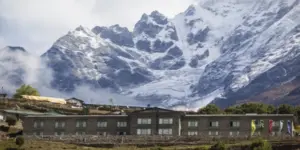
Safety, Rescue and Insurance in November
November’s clear weather is good news for safety. Helicopters fly only in daylight and good visibility, and calm November mornings mean rescues and evacuations can usually happen quickly. Cold, dense air also helps helicopter performance, although above about 4,500 m only two or three passengers can take off at once, so helicopters often shuttle people down to Pheriche first and refuel at Lukla.
Make sure your travel insurance covers trekking to at least 6,000 m and includes helicopter rescue. Our guide to helicopter rescue in the Everest region explains how evacuations work, and another explains whether a helicopter can land at Everest Base Camp.
- Cold injuries: Frostbite is rare on the trek but possible on the Kala Patthar morning. Keep fingers and toes warm and dry, and change damp socks.
- Hypothermia: Wet clothing and wind are the real dangers. Change out of sweaty layers as soon as you arrive.
- Ice: Take care on frozen sections of trail in the morning, especially in the shade and near streams.
- Storms: If a storm arrives, wait it out in a lodge. Our guides watch the forecasts and never take risks with fresh snow on the high trail.
- Yaks: Always stand on the mountain side of the trail when a yak train passes.
Photography in November
November is a photographer’s month. The air is so clear that peaks 30 km away look razor-sharp, and the low autumn sun throws long shadows and warm light across the valleys for much of the day.
- Ama Dablam: The classic views from Pangboche and Dingboche are best in the morning, before any cloud forms.
- Everest’s summit plume: A long snow plume streaming from the summit makes a dramatic shot from Tengboche, Kala Patthar or the ridge near the Hotel Everest View.
- Golden evenings: At Tengboche and Dingboche, the last light turns the peaks gold and pink for a few magical minutes after sunset.
- Night skies: Clear, dry nights are ideal for stars. Bring a small tripod and shoot from the lodge doorstep, wrapped in your down jacket.
- Keep batteries warm: Carry spare batteries in an inner pocket, and put your camera in a sealed bag before entering a warm dining room to avoid condensation.
For the bigger picture, our guide to Sagarmatha National Park explains the protected landscape you are photographing.
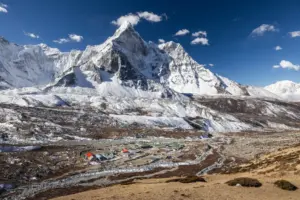
Wildlife and Autumn Colours
The Everest region lies within Sagarmatha National Park, a UNESCO World Heritage Site, and November is a rewarding month for wildlife. Late autumn is the rutting season of the Himalayan tahr, a wild mountain goat, and males with thick, shaggy manes are often seen on the steep slopes around Namche and Tengboche. In the forests between Phunki Tenga and Tengboche, look for the shimmering Himalayan monal, Nepal’s national bird, and the shy musk deer. Higher up, flocks of snow pigeons wheel over the fields, choughs gather around the lodges at Gorakshep, and lammergeiers glide along the ridges.
The colours are lovely too, especially early in the month. Birch leaves turn gold in the forests below Tengboche, barberry bushes glow red on the hillsides, and the brown and amber of the high pastures set off the white peaks beautifully.
Luxury and Helicopter Options in November
November’s clear skies make it a superb month to add comfort or a helicopter flight to your journey.
- Everest Base Camp Luxury Lodge Trek: 11 days with a helicopter in and out, staying in the finest lodges on the trail.
- Luxury Everest Base Camp Trek with Helicopter Return: 12 days, trekking up in comfort and flying back by helicopter after base camp.
- Everest Base Camp Helicopter Trek: Walk up the classic route to base camp and fly back by helicopter, in about ten days.
- Everest Elite Luxury Heli Trek: Our most exclusive way to see the Khumbu, with luxury lodges and helicopter flights.
- Everest Helicopter Tour: A morning flight into the high Khumbu, ideal if you do not have time to trek. You can also join a shared Everest helicopter tour with a Kala Patthar landing or a full-day Everest helicopter tour with a village walk.
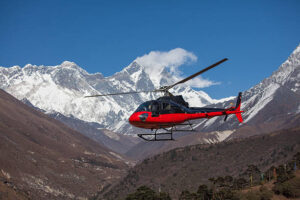
Still deciding? Our guides to choosing an EBC trek or a helicopter tour, the EBC helicopter tour vs heli trek, and the Everest Base Camp helicopter return compare the options. Our luxury Everest Base Camp trek guide shows how comfortable the trail can be, the Everest helicopter tour with breakfast is a wonderful morning out, and our guide to the best seasons for an Everest helicopter tour explains why autumn flying is so good.
November vs October, December and Spring
- November vs October: October is slightly warmer and busier, with Dashain and sometimes Tihar. Early October can still carry some monsoon cloud. November is drier, clearer and quieter later in the month, but colder. Read our guide to the Everest Base Camp trek in October.
- November vs December: December is colder, quieter and shorter on daylight. Early December often feels like late November, but by the end of the month the high villages are deep in winter.
- November vs spring: April and May are warmer, with rhododendrons in bloom and the expedition season at base camp, but haze and afternoon cloud are more common. See our guide to the Everest Base Camp trek in April.
- November vs the monsoon: The summer months bring rain, cloud and leeches in the lower forests, but almost empty trails. Our guide to the Everest Base Camp trek in monsoon explains when it can still work.
For most trekkers, the choice comes down to warmth against clarity and calm. The Everest Base Camp Trek in November wins on clarity and calm, while October and spring win on warmth.
Other Everest Treks That Shine in November
- Everest Gokyo Lakes Trek: Turquoise lakes, Gokyo Ri and quieter trails, with the lake edges beginning to freeze late in the month. Read our Gokyo Lakes trek guide and our guide to Gokyo Ri and the Fifth Lake.
- Everest 3 Pass Trek: Best from mid-October to mid-November, before winter snow makes the Cho La, the Renjo La and the Kongma La harder. See our Everest Three Passes trek guide.
- Ama Dablam Base Camp Trekking: A short side valley to the lively autumn base camp of the region’s most beautiful peak. Our Ama Dablam base camp trek guide has the details, and our Ama Dablam expedition guide explains the climb.
- Everest View Trek: A short trek to Namche and the Hotel Everest View for those with less time. For more comfort, see our luxury Everest View trek.
- Everest Base Camp Yoga Trek: A slower, mindful version of the classic trek, explained in our EBC yoga trek guide.
- Trekking peaks: November is a fine month for Island Peak Climbing, Lobuche Peak Climbing and Mera Peak Climbing, though summit mornings are very cold. Read our Mera Peak guide before you choose.
Other Nepal Treks at Their Best in November
November is excellent across Nepal, so if you are flexible, these treks are also in fine form:
- Annapurna: The Annapurna Base Camp Trek and the Annapurna Circuit Trek enjoy clear skies, while the shorter Ghorepani Poon Hill Trek and Mardi Himal Trek are perfect for a week. See our ultimate guide to the Annapurna Base Camp trek.
- Langtang: The Langtang Valley Trek and the Langtang Gosaikunda Trek are close to Kathmandu. Read our Langtang Valley trek details.
- Manaslu: The Manaslu Circuit Trek crosses the Larke Pass in fine autumn weather, and the nearby Tsum Valley and Ganesh Himal Trek is a cultural gem.
- Remote regions: The Upper Mustang Trek, the Nar Phu Trek and the Kanchenjunga Base Camp Trek reward experienced trekkers, though nights are cold. Learn more about trekking in Upper Mustang.
For more ideas, browse our list of the 50 best treks in Nepal and our complete trekking in Nepal guide.
Common Mistakes on a November Everest Trek
- Packing for October: Late November nights are much colder, so bring a warmer sleeping bag and thicker gloves.
- Booking too late: Early November flights and lodges fill fast.
- No spare day: Always allow at least one extra day for Lukla flights.
- Rushing the ascent: Clear weather tempts people to skip rest days. Do not.
- Drinking too little: Cold dulls thirst, so keep sipping warm drinks all day.
- Starting late: Afternoons get windy and cold, so walk in the morning.
- Sweating, then freezing: Remove a layer before a steep climb, and put it back on as soon as you stop.
- Washing hair at altitude: It invites a chill, so wait until Namche on the way down.
- Leaving batteries out: Phones and cameras die quickly in freezing rooms.
Responsible Trekking in Late Autumn
November is one of the busiest times of year for the Khumbu communities, and small choices help protect them.
- Refill your bottle: Use the safe drinking water stations and boiled water from lodges instead of plastic bottles.
- Save fuel: Porters and yaks carry fuel up. Order meals at the same time as your group, keep hot showers short and dress warmly rather than asking for extra heating.
- Carry out batteries and waste: There is no recycling in the high Khumbu, so take used batteries home.
- Respect the festivals: At Mani Rimdu, follow the monks’ guidance on photography, keep a respectful distance from the dancers and never use flash inside the monastery.
- Look after the crew: Choose a company that equips its porters properly for the cold.
Read more about our commitment to responsible tourism.
Before and After the Trek
November is a wonderful month in the rest of Nepal too. In Kathmandu, explore the great temples and stupas on our Kathmandu day tour, or watch the sun rise over the Himalaya on a Nagarkot hike. Head to Pokhara for paragliding and Pokhara sightseeing, or relax after the trek on a Chitwan jungle safari, when the lowlands are pleasantly warm. For a longer journey, our classic Nepal tour links the highlights.
You can also continue to Bhutan to visit the Tiger’s Nest Monastery on a luxury Bhutan tour, or travel to Tibet, where the Lhasa to Everest Base Camp overland tour shows you the north face of Everest. Our Lhasa to Everest Base Camp guide explains that journey.
How Our Team Supports November Trekkers
We are a Kathmandu-based, Sherpa-led company, and the Everest region is our home ground. For a November trek, our team can book your flights and lodges early, arrange your Ramechhap transfer, plan your days around the short daylight and the cold, and closely monitor the weather. Our Sherpa guides carry a first-aid kit, recognise recognizesickness, and know the trail in every season. Meet them on our team page, and read why travellers choose us as their trekking company in Nepal.
Frequently Asked Questions About the Everest Base Camp Trek in November
Is November a good month for the Everest Base Camp trek?
Yes. November is one of the two best months, with clear skies, stable weather and dry trails. The main trade-offs are cold nights and shorter days.
How cold is Everest Base Camp in November?
Daytime temperatures at base camp are around minus 5 to 0°C, warmer in direct sun on a calm day. Nights at Gorakshep are around minus 12°C early in the month and can reach minus 18°C or lower by late November.
Does it snow at Everest Base Camp in November?
Light snow is possible, especially late in the month, but heavy snowfall is unusual. Most November days are dry and clear.
Is the trail crowded in November?
The first half of November is busy, though a little quieter than October. After mid-November, the trail and lodges become much calmer.
Is October or November better for Everest Base Camp?
Both are excellent. October is slightly warmer and busier, while November is drier, often clearer and quieter later in the month, but colder at night.
Are Lukla flights reliable in November?
November is one of the most reliable months, thanks to calm, clear mornings. Delays still happen, so allow at least one spare day. In recent autumn seasons, most flights have departed from Ramechhap.
Are teahouses open in November?
Yes. All lodges on the main route are open throughout November. Book early for the first half of the month, especially at Lobuche and Gorakshep.
What sleeping bag do I need in November?
A down sleeping bag rated to around minus 20°C comfort, plus a liner, will keep you warm at Gorakshep, especially late in the month.
Is late November too cold for the trek?
Not if you are well equipped. Late November is colder and windier, but it is also quiet and beautifully clear. A warm sleeping bag, a down jacket and good gloves make it very manageable.
Can beginners trek to Everest Base Camp in November?
Yes. With good fitness, proper acclimatisation, and the right gear, first-time trekkers do very well in November. Our 14-day Everest Base Camp Trek includes two rest days for exactly that reason.
Final Thoughts: Is November Right for You?
If you dream of standing beneath Everest under a perfect blue sky, the Everest Base Camp Trek in November is hard to beat. You trade a little warmth for the clearest air of the year, settled weather, quieter trails as the month goes on and, with luck, the masked dances of Mani Rimdu. Pack for the cold, plan for the short days, and give yourself time to acclimatise; December may well give you the trek of a lifetime.
Ready to go? Join our Everest Base Camp Trek, or travel in comfort on the Luxury Everest Base Camp Trek with Helicopter Return. Learn more about Trek Nepal Himalayas, start shaping your journey on our Plan Your Trip page, or contact us, and our team will help you choose the perfect November dates.
Quick Inquiry
Explore More


