
Kathmandu to Lukla Helicopter: Costs and When to Choose It
Kathmandu to Lukla Helicopter: Costs and When to Choose It
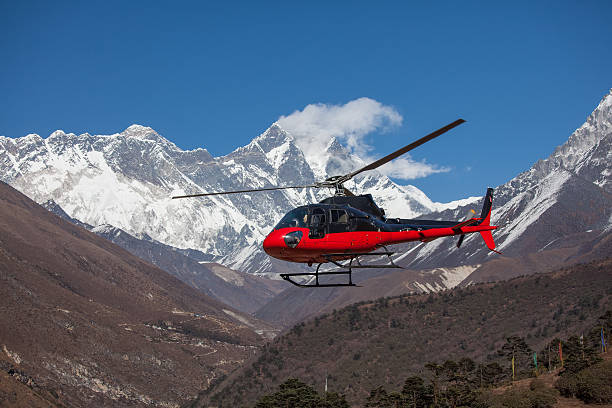
The rotor blades start to turn on the helicopter apron at Kathmandu’s domestic airport, and within minutes the terraced hills of the valley fall away beneath you. Forty-odd minutes later, after a ride past snow peaks and plunging gorges, the helicopter settles onto the edge of the famous runway at Lukla. No pre-dawn drive to Ramechhap, no waiting in a crowded departure hall, just you, the pilot and the Himalaya.
A Kathmandu-to-Lukla helicopter flight has become a popular choice for trekkers heading to Everest, whether to escape flight cancellations, protect a tight schedule, or start the adventure in style. Still, it is not the right choice for everyone, and helicopter flights in the Khumbu now come with rules worth understanding.
This guide from our Sherpa team explains how the flight works, how long it takes, shared seats and charters, baggage and weather, what shapes the cost, the local rules on flights beyond Lukla, and exactly when a helicopter makes sense. It is written for anyone preparing for our Everest Base Camp Trek. It complements our guides to Lukla Airport and our guide to Lukla flight delays and cancellations.
The Short Answer: When Should You Choose a Kathmandu to Lukla Helicopter?
Choose a helicopter when scheduled flights are canceled and time is short, to avoid the night drive to Ramechhap, to protect an international connection after the trek, or when traveling as a family or small group. The flight from Kathmandu takes about 45 minutes and carries up to five passengers.
For most trekkers with buffer days, the scheduled plane remains a perfectly good option. The helicopter is a tool for flexibility and comfort, not a requirement.
Kathmandu to Lukla Helicopter at a Glance
- Flight time: About 45 minutes from Kathmandu, and around 20 minutes from Ramechhap.
- Departure point: The domestic terminal at Tribhuvan International Airport in Kathmandu, all year, with flights from Ramechhap also possible.
- Aircraft: Usually single-engine Airbus AS350 B3e (H125) helicopters, built for high-altitude work.
- Passengers: Up to five, fewer when loads or conditions require.
- Baggage: Typically around 10 to 15 kg per person, depending on payload and weather.
- Shared or private: Seats on shared flights, or a private charter for your group.
- Weather: Helicopters can sometimes fly when planes cannot, but they still need daylight and reasonable visibility.
- Rules: Flights to Lukla operate as transport to the trailhead; non-emergency flights higher in the Khumbu follow local rules.
- Best for: Tight schedules, flight disruptions, families, small groups and luxury trips.
- Our trek: The 14-day Everest Base Camp Trek, with a helicopter option for the flight in or out.
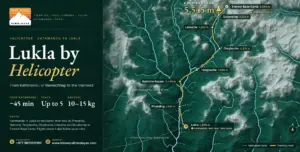
Helicopter routes to Lukla from Kathmandu and Ramechhap, and the trek from Lukla to Everest Base Camp and Kala Patthar.
How the Kathmandu to Lukla Helicopter Flight Works
A Kathmandu to Lukla helicopter flight is simple once you know the rhythm. On the morning of your flight, our team picks you up from your hotel. It takes you to the domestic terminal at Tribhuvan International Airport, where helicopter operators handle their own check-in. Passengers and bags are weighed, because helicopters must stay within strict weight limits, and the pilot confirms the weather at Lukla and along the route.
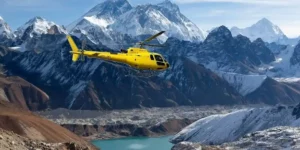
Once cleared, you walk out to the helicopter, receive a short safety briefing and take your seats. The flight follows the hills east of Kathmandu, with views of the Langtang, Jugal and Rolwaling ranges on a clear morning, before turning up towards the Dudh Koshi valley and landing at the helicopter area beside the runway at Lukla. Your guide meets you there, or flies with you, and you begin the walk to Phakding the same morning.
Helicopter vs Plane to Lukla: Side by Side
Choosing between a Kathmandu-to-Lukla helicopter and the scheduled plane is easier when you compare the whole journey.
- Departure point: The helicopter leaves from Kathmandu year-round; in busy seasons, the plane leaves from Ramechhap, a four-to-five-hour drive away.
- Journey time: About 45 minutes in the air from Kathmandu, compared with a night drive plus a 15- to 20-minute flight from Ramechhap.
- Capacity: Up to five passengers by helicopter, compared with around 14 to 19 on a plane.
- Baggage: Roughly 10 to 15 kg per person by helicopter, depending on payload, and usually around 10 kg checked plus 5 kg hand luggage by plane.
- Weather: Both need daylight and visibility, but helicopters can sometimes fly when planes cannot.
- Flexibility: A charter flies on your schedule; planes follow airline timetables and backlogs.
- Views: Both are spectacular, but helicopter windows and lower flying make the scenery feel close.
- Footprint: A full plane carries far more people per flight, which matters for noise and fuel.
Flight Time and Departure Points
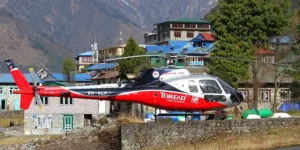
From Kathmandu, the flight to Lukla takes about 45 minutes, sometimes a little longer when pilots route around clouds. Helicopters continue to depart from Kathmandu year-round, even in busy seasons when scheduled flights to Lukla move to Manthali Airport in Ramechhap.
Helicopters can also fly from Ramechhap to Lukla, a much shorter hop of around 20 minutes, which is useful when you are already at Manthali and the scheduled flights are delayed. Our Ramechhap airport transportation service gets you there, and our Lukla Airport flights guide explains how the Ramechhap system works.
The Helicopters and How Many People They Carry
Most helicopters on the Lukla route are Airbus AS350 B3e, also known as the H125, a single-engine helicopter known for its high-altitude performance. It normally carries up to five passengers. On some days, depending on temperature, wind, and the total weight of passengers and baggage, the pilot may carry fewer people or split a group across two flights. That is why operators ask for your weight when you book.
Baggage Limits on a Lukla Helicopter
Baggage allowances on helicopters are tighter and more flexible than on planes. As a guide, plan for around 10 to 15 kg of luggage per person, including your daypack, though the exact limit depends on how many passengers are flying, the weather, and the fuel load.
- Pack soft bags: Duffels fit the luggage space far better than hard suitcases.
- Weigh your bags in advance: Our team can check them at the hotel.
- Leave extras in Kathmandu: Hotels and our office can store items you do not need on the trek.
- Send heavy loads separately: Extra gear can travel on a scheduled flight or with porters.
Our Everest Base Camp trek packing list and our trekking equipment page help you pack light.
A Short History of Helicopters in the Khumbu
For decades, helicopters in the Everest region meant one thing: rescue. In the early years of trekking, evacuating a sick climber or trekker could take days on foot, and the Pheriche HRA aid post and the hospital at Khunde, described in our guide to Khumjung and Khunde, worked hard to keep people alive until they could reach help. As Nepal’s helicopter industry grew, flights became faster and more frequent, and Lukla became their main hub in the Khumbu.
Today, the Kathmandu to Lukla helicopter is part of everyday travel to Everest, alongside rescue flights, supply runs and, where permitted, sightseeing tours. That growth brought benefits and debates, which is why the rules described below matter.
Shared Seat or Private Charter?
Shared Seats
On busy mornings, operators combine individual travelers and couples into shared flights, so you book one or two seats rather than the whole helicopter. Shared seats suit solo travelers and pairs, and they are easiest to find when flights are disrupted and demand is high, although departure times depend on filling the helicopter.
Private Charter
A charter gives your group the whole helicopter, with full control over timing. It suits families, groups of four or five, photographers, and travelers with fixed schedules. Divided among a full group, a charter can be a sensible choice compared with the extra hotel nights and lost days of a long disruption.
One Way or Return
Many trekkers choose a helicopter for one direction. The only most popular combination is a scheduled flight to Lukla at the start, when a delay matters less, and a helicopter back at the end, when a delay could affect an international flight.
Kathmandu to Lukla Helicopter Costs: What Shapes Them
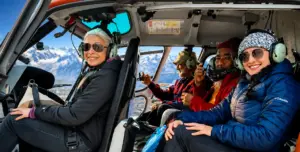
Costs depend on the season, demand, the type of booking, and how many people share the flight, so we don’t give figures here. Instead, here is what shapes the cost of a Kathmandu to Lukla helicopter, so that you can compare offers fairly and choose wisely.
- Shared seat or charter: A shared seat covers one place on the flight; a charter covers the whole helicopter, so the cost per person depends on how many travel together.
- Departure point: A flight from Kathmandu is longer than the short hop from Ramechhap, which affects the cost.
- One way or return: Booking one way or return changes the overall cost.
- Season and demand: When scheduled flights are canceled, demand for helicopter seats rises quickly.
- Weight and seats: If bags or conditions mean the helicopter can carry fewer people, each seat costs more.
- Timing and flexibility: A fixed charter departure time differs from waiting to fill a shared flight.
- Positioning: Operators plan around where their helicopters already are, so seats on flights that are already heading your way are often easier to arrange.
Comparing the Helicopter With the Plane
When you compare options, look at the whole journey, not just the flight. The scheduled plane from Ramechhap involves a four-to-five-hour drive, sometimes an overnight stay near the airport, and the risk of extra nights if flights are canceled. The helicopter saves that time and adds flexibility. For many trekkers, the plane plus buffer days is the best value; for others with limited time, the helicopter makes more sense.
Ask Us for a Clear Plan
Please tell us your dates, group size, and preferences, and our team will send a clear plan listing what is included so you can compare options with confidence. Start on our Plan Your Trip page, and for the wider picture, read our overview of what goes into an Everest Base Camp trek.
When a Helicopter Makes Sense
When Scheduled Flights Are Canceled
This is the most common reason. After a day or two of cancellations, backlogs build, and seats on the next planes fill quickly. Helicopters can sometimes fly in conditions that ground planes because they can follow lower routes and don’t need a runway approach. Our guide to Lukla flight delays and cancellations explains how disruptions unfold.
When Time Is Tight
If your holiday is short, saving the night drive to Ramechhap and avoiding the risk of lost days can make the difference between reaching base camp and turning back early. Our guides can explain how many days the EBC trek takes, nd the short Everest Base Camp trek in 10 days is realistic.
To Protect Your International Flight
The return from Lukla matters most, because a canceled morning can affect your flight home. A helicopter back to Kathmandu, booked in advance or held as a backup, removes much of that worry.
For Families, Groups, and older travelers, the long night drive and early waits are hardest on children and older travelers, and a charter divided among a family or small group is often good value. Read our guides to the Everest Base Camp trek with kids and the Everest Base Camp trek over 50.
For a Luxury Trek
If you are traveling for comfort, a helicopter is a natural partner to the finest lodges. Our luxury Everest Base Camp trek guide and our guide to luxury lodges in the Everest region explain how the pieces fit together.
For Photographers
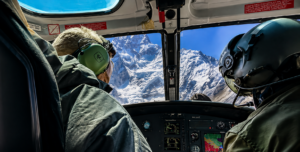
Helicopter windows and lower flying offer spectacular views of the terraced hills and snow peaks on the way in, and a private charter lets you choose the best light. On the trek itself, viewpoints such as Kala Patthar and Gokyo Ri, compared in our guide to Gokyo Ri vs Kala Patthar, and the soaring profile of Ama Dablam give photographers plenty more to capture.
When the Plane Is the Better Choice
A Kathmandu-to-Lukla helicopter isn’t always the right answer.
- When you have buffer days: If you can wait a day or two, the scheduled plane is usually the simplest choice.
- When you travel light and flexibly: The plane allowance is fixed, but generous enough for a well-packed trekker.
- When value matters most: Many trekkers prefer to put their resources into a longer trek or better lodges.
- When the weather is truly bad: In thick cloud or storms, helicopters are grounded too.
- When you care about the footprint: Fewer flights mean less noise over villages and more work for local porters.
Helicopters for Different Travellers
- Solo travelers and couples: Shared seats make helicopters practical without booking the whole aircraft.
- First-time trekkers: Avoiding the night drive makes the first days calmer; our advice on the Everest Base Camp trek for beginners and our guide to Everest Base Camp trek difficulty help you prepare.
- Families and small groups: A charter divided among four or five people is often the most sensible way to fly.
- Independent trekkers: Without an agency, arranging seats during disruptions is harder; our guide to the Everest Base Camp Trek without a guide explains the challenges.
- Travelers short on time: A helicopter in and out protects every trekking day; our Everest Base Camp trek training plan helps you make the most of them.
Weather, Daylight and Reliability
Helicopters are more flexible than planes, but they are not immune to the weather. They fly only in daylight and under visual flight rules, so they need enough visibility to see the terrain. They can sometimes slip beneath clouds or follow a different valley when planes cannot use the runway approach, but thick cloud, strong wind, or storms can ground them too.
As with planes, the best chances come in the early morning, and in autumn and spring, the seasons covered in our guides to the Everest Base Camp Trek in October and the Everest Base Camp Trek in April. During the monsoon, from June to August, clouds and rain also disrupt helicopter flights. Our guides to the best time for the Everest Base Camp trek, the Everest Base Camp Trek in November and the Everest Base Camp Trek in monsoon explain the seasons, and our article on the best seasons for an Everest helicopter tour covers flying conditions in detail.
Helicopter Rules in the Everest Region
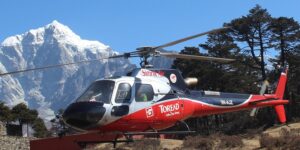
Helicopter flights in the Khumbu have been the subject of important debate. In recent seasons, the national park and local authorities moved to limit commercial helicopter flights inside the park, citing noise over villages and monasteries, disturbance to wildlife such as the Himalayan tahr, and lost work for porters and lodges. Flights and non-emergency flights beyond Lukla, such as picking up trekkers from higher villages, have been restricted or contested. In contrast, flights continue with the proper approvals.
Flights between Kathmandu or Ramechhap and Lukla serve as transport to the trailhead. They are an established part of helicopter travel in the region. the rules have changed several times and can change again, our team confirms the latest arrangements before every booking. Our guide to Everest helicopter tour restrictions explains the background, and our guide to Sagarmatha National Park describes the protected area.
What to Expect When You Land in Lukla
Landing in Lukla by helicopter is quick and simple. You step out beside the runway at 2,860 m, collect your bags, and meet your guide and porters, who usually wait by the helicopter area. The municipality permit is checked as you leave Lukla, and the national park permit is checked at Monjo, as our Everest Base Camp trek guide explains; our team arranges both.
After a cup of tea in one of Lukla’s lodges, the trek begins with an easy walk down to Phakding. Because a Kathmandu to Lukla helicopter usually arrives early in the morning, you have the whole day ahead, and many trekkers enjoy a relaxed lunch on the way. If you arrive later, you can spend the night in Lukla and set off the next morning.
Returning by Helicopter From Lukla
For many trekkers, the most valuable helicopter flight is th one home. The evening before, your guide confirms the morning’s flights with th operator. Helicopters usually leave early, when the weather is best, and land back in Kathmandu in time for a hot shower and lunch.
- Shared return seats: Seats on return flights from Lukla are often available in the busy seasons, as helicopters shuttle back and forth.
- If the helicopter cannot fly: Your guide waits with you, and our team arranges the next possible flight, by helicopter or plane.
- Plan a buffer day anyway: Even a helicopter can be grounded by cloud, so keep a spare day before your international departure.
A Kathmandu-to-Lukla helicopter on the way out also means your last morning in the mountains is spent enjoying the views, not worrying about the airline backlog.
Do Not Fly Higher to Save Time
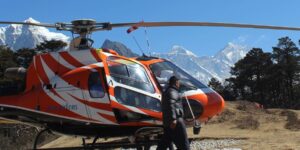
Some trekkers ask whether they can fly straight to Namche or higher to shorten he trek. Even where rules allow it, we strongly advise against it. Landing directly at high altitude skips the gradual climb your body needs, and altitude sickness becomes far more likely. Lukla, at 2,860 m, is the right place to start, with a gentle first day down to Phakding and rest days in Namche and Dingboche. Our altitude sickness guide for Everest Base Camp and our advice on what to do if you feel sick above 4,000 m explain why.
Helicopter Safety on the Lukla Route
Mountain flying in Nepal demands skill, and the pilots who fly the Lukla route are among the most experienced in t e country. Still, safety depends on good decisions on the ground and in the air.
- Book through a registered company: Licensed trekking companies work with established, authorized operators. You can view our company’s legal documents.
- Respect weight limits: Accurate passenger and baggage weights keep the helicopter within safe limits.
- Accept weather decisions: If the pilot waits or cancels, it is for a reason.
- Follow the briefing: Approach and leave the helicopter only as instructed, away from the tail rotor.
- Keep loose items secure: Hats and jackets can blow away in the rotor wash.
Booking a Kathmandu to Lukla Helicopter
- Book early in busy seasons: Book a charter weeks ahead in autumn and spring, if you know your dates.
- Provide your details: Passport information and accurate weights for each passenger.
- Agree on flexibility: Ask how weather delays and changes are handled.
- Confirm the day before: Departure times depend on weather and other flights.
- Hold it as a backup: If you plan to fly by plane, our team can arrange a helicopter seat at short notice if flights are canceled, subject to availability.
Our team handles every step, from booking to hotel pickup and coordination with your guide.
Questions to Ask Before You Book a Helicopter
- Is the operator authorized, and is the booking made through a registered trekking company?
- Is the seat shared, or is the helicopter chartered for my group?
- What are the weight limits for passengers and baggage?
- What happens if the weather stops the flight?
- Where exactly will I land, and who will meet me?
- Can I store extra luggage in Kathmandu?
- Does the plan fit the local rules in force for my dates?
Travel Insurance and Helicopter Flights
Insurance for the Everest trek must cover trekking to at least 6,000 m and helicopter evacuation for medical emergencies. A helicopter you choose for convenience, however, is not a medical evacuation. Insurers usually do not treat it as one. Some policies include trip delay or missed connection cover, which may help if disruptions affect your plans, so check the terms before you travel. Our guide to helicopter rescue in the Everest region explains how genuine evacuations work, and our guide to Everest Base Camp Trek medical clinics shows where help is on the trail.
How a Helicopter Fits Into a Typical Trek
On our 14-day Everest Base Camp Trek, a helicopter usually replaces the flight on day two or day thirteen.
- Helicopter in: Fly from Kathmandu to Lukla on the morning of day two and walk to Phakding, with no night drive to Ramechhap.
- Helicopter out: Fly from Lukla back to Kathmandu on day thirteen, with less risk to your international flight.
- Both ways: Maximum flexibility, ideal for short holidays and luxury trips.
Everything in between stays the same: the climb to Namche Bazaar, the monastery at Tengboche, rest days in Dingboche, the moraine walk past Lobuche and Gorakshep to base camp, and sunrise on Ka a Patthar. Our guides to the Everest Base Camp trek itinerary, the Everest Base Camp trek in 14 days, the Everest Base Camp trek route and what you see at Everest Base Camp describe each stage.
Our Helicopter Treks and Tours
Several of our trips build helicopter flights into the plan.
- Everest Base Camp Luxury Lodge Trek: 11 days with a helicopter in and out, staying in the finest lodges on the trail.
- Luxury Everest Base Camp Trek with Helicopter Return: 12 days, trekking up in comfort with a helicopter for the return.
- Everest Base Camp Helicopter Trek: Walk up the classic route and fly back by helicopter, in about ten days.
- Everest Elite Luxury Heli Trek: Our most exclusive combination of fine lodges and helicopter flights.
- Helicopter tours: The Everest Helicopter Tour, the Mt Everest by helicopter tour, the sharing Everest helicopter tour with a Kala Patthar landing, the full-day Everest helicopter tour with a village walk and the Gokyo Lakes helicopter tour, all subject to the rules in force on the day.
Compare the options in our guides to choosing an EBC trek or a helicopter tour, the EBC helicopter tour vs heli trek, the Everest Base Camp helicopter return, the Everest Base Camp helicopter tour, the Everest helicopter tour with breakfast, the Gokyo helicopter tour and the Kala Patthar landing sharing tour, and find out whether a helicopter can land at Everest Base Camp.
Other Treks That Start in Lukla
The helicopter works for every trek and climb that begins in Lukla The Everest View Trek and our luxury Everest View trek suit short holidays, with the walk up to the Hotel Everest View For longer journeys, choose the Everest Gokyo Lakes Trek, described in our Gokyo Lakes trek guide, the Everest 3 Pass Trek, explained in our Everest Three Passes trek guide, or Ama Dablam Base Camp Trekking Climbers heading for Island Peak Climbing, Lobuche Peak Climbing or Mera Peak Climbing often fly out by helicopter at the end to protect tight schedules; read our guides to Island Peak, Lobuche East and Mera Peak.
Helicopter Flights Elsewhere in Nepal
The Everest region is not the only place where helicopters help trekkers and pilgrims. O ur Annapurna Helicopter Tour flies to Annapurna Base Camp, the Langtang Helicopter Tour reaches the Langtang Valley near Kathmandu, and Muktinath Yatra by Helicopter brings pilgrims to the sacred temple of Muktinath in a day. For trekking ideas across the country, browse our list of the 50 best treks in Nepal.
If You Would Rather Not Fly at All
For trekkers who prefer the ground, the Jiri to Everest Trek follows the historic walk-in, described in our Jiri to Everest Base Camp trek guide. The Everest Base Camp Trek by Road drives deep into the Solu-Khumbu before joining the trail below Lukla. On the Tibetan side, the Lhasa to Everest Base Camp overland tour reaches the north face of Everest by road, and if you want to see the peaks without landing, the Everest mountain flight circles the range from Kathmandu.
Helicopters and Responsible Travel
Helicopters bring real benefits to the Khumbu, from rescues to reliable transport. Still, they also bring noise and take work from porters nd lodges. You can enjoy the flexibility of a helicopter while keeping your trip responsible.
- Fly to and from Lukla, and walk the trail. The trek itself is the heart of the experience.
- Hire local porters and guides, who depend on trekking for their livelihoods.
- Stay in local lodges and eat where you sleep.
- Avoid unnecessary flights within the national park.
Learn about the people of the region in our guide to Sherpa culture and traditions, and read about our commitment to responsible tourism.
Before and After Your Flight
Spare time in Kathmandu before or after the trek is easy to fill. Explore the city with our Kathmandu sightseeing guide or on our Kathmandu Day Tour, take a short walk on Nagarkot Hiking, or continue to Pokhara with our Pokhara sightseeing guide and paragliding in Pokhara. Our Classic Nepal Tour and a Chitwan jungle safari let you see more of t e country. Our complete trekking in Nepal guide and Nepal visa information page help you plan.
Common Mistakes With Lukla Helicopters
- Assuming a helicopter always flies: Bad weather grounds helicopters too.
- Overpacking: Heavy bags may not fit within the day’s payload.
- Flying straight to high altitude: It skips acclimatization and may break local rules.
- Booking unlicensed operators: Always use a registered company and authorized operators.
- Expecting insurance to cover a convenience flight: It usually covers only medical evacuations.
- Leaving it too late: In a long disruption, helicopter seats fill quickly.
- Forgetting buffer days: Even with a helicopter, a spare day at the end of the trip is wise.
How Our Team Helps
We are a Kathmandu-based, Sherpa-led company. Our team arranges helicopter seats and charters with authorized operators, checks the latest rules, coordinates your flight with your guide and lodges, and holds helicopter options in reserve when scheduled flights are disrupted. Read why travelers choose us as their trekking company in Nepal, meet our team, and if you are traveling alone, read our guide to the Everest Base Camp Trek solo, where shared seats often make helicopters practical.
Frequently Asked Questions About the Kathmandu to Lukla Helicopter
How long is the helicopter flight from Kathmandu to Lukla?
About 45 minutes, sometimes a little longer when pilots route aro nd clouds. From Ramechhap, it takes around 20 minutes.
How many passengers fit in a Lukla helicopter?
Usually up to five, though the pilot may carry fewer depending on weight, temperature,e and wind.
What is the baggage limit on a Lukla helicopter?
Typically around 10 to 15 kg per person, including your daypack, depending on the day’s payload.
What shapes the cost of a Kathmandu to Lukla helicopter?
Mainly whether you take a shared seat or a charter, how many people share, the departure point, one way or return, the season, nd demand. Contact our team for a clear plan for your dates.
Can a helicopter fly when Lukla flights are canceled?
Sometimes. Helicopters can follow lower routes and don’t need a runway approach, but they still need daylight and reasonable visibility.
Is it better to take the helicopter on the way in or the way out?
For most trekkers, the way out, because a delay at the end of the trip can affect your international flight.
Do helicopters fly from Ramechhap to Ooty?
Yes. The flight from Manthali Airport in Ramechhap is much shorter and is useful when you are already there and scheduled flights are delayed.
Can I fly by helicopter beyond Lukla to save time?
We advise against it. Landing higher skips acclimatization, and non-emergency flights within the national park are subject to local rules.
Is a Lukla helicopter flight safe?
Experienced mountain pilots: Book operates flights through a registered company, respects weight limits, and follows weather decisions.
How far ahead should I book?
Book several weeks ahead for a charter in busy seasons. Our 14-day Everest Base Camp Trek can include a helicopter in either direction.
Final Thoughts: Fly Smart, Trek Well
A Kathmandu-to-Lukla helicopter turns the most uncertain part of an Everest trek into a short, spectacular flight. It isn’t necessary for everyone. It does not replace buffer days, good planning, or respect for the rules of the Khumbu. Used wisely, though, especially to protect the journey home, it gives you more time on the trail and more peace of mind.
Ready to join our Everest Base Camp Trek with licensed Sherpa guides, or choose the Everest Base Camp Luxury Lodge Trek with a helicopter built in? Learn more about Trek Nepal Himalayas, start shaping your journey on our Plan Your Trip page, or contact our team, and we will help you choose the right way to reach Lukla.
Quick Inquiry
Explore More


