
Everest Base Camp Trek Without a Guide: Rules and Risks
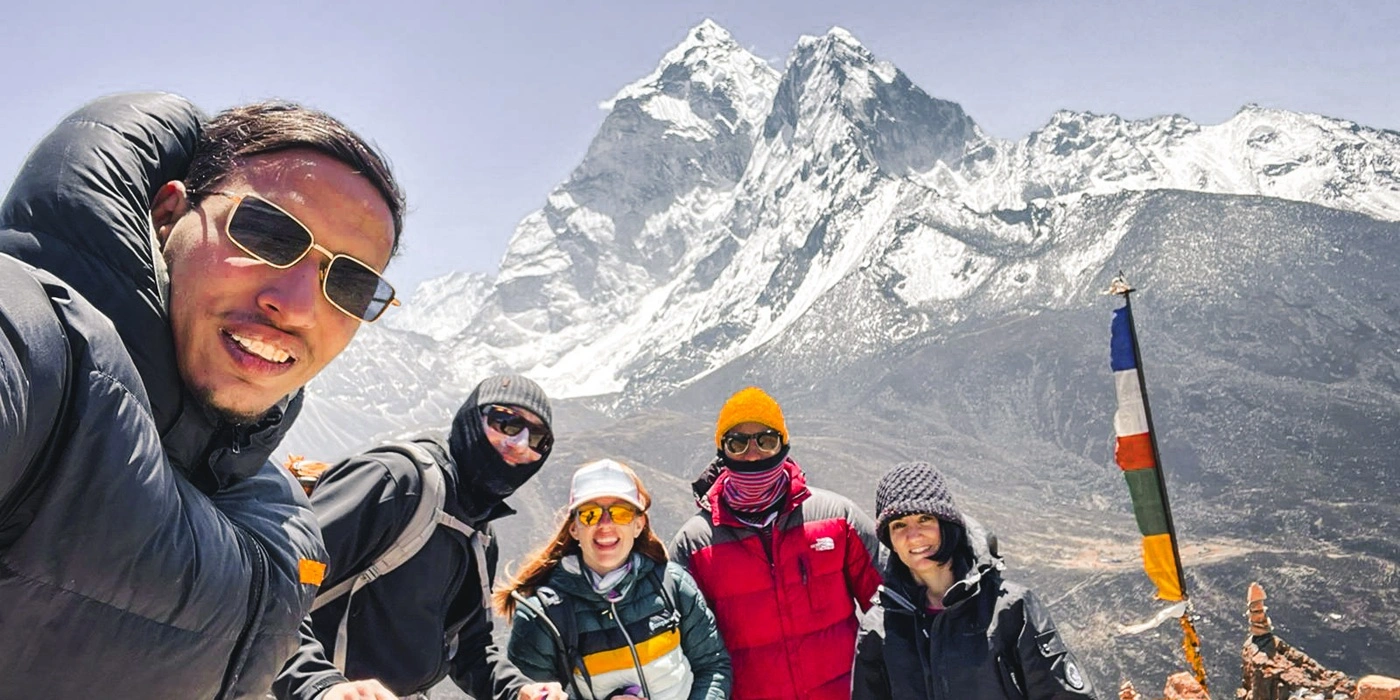
Everest Base Camp Trek Without a Guide: Rules and Risks
The clouds roll up the Khumbu Valley without warning. One moment you can see the stone memorials at Thukla and the trail climbing towards Lobuche; the next, the world shrinks to a few metres of grey moraine, the cairns fade into the mist and the only sounds are the wind and your own breathing at almost 4,700 m. For most trekkers, it is a passing moment on a famous trail. For someone walking alone, unsure of the way and starting to feel the headache of altitude, it is the moment an adventure turns into a risk.
Thousands of people walk to Everest Base Camp every year, and many of them wonder whether they need a guide at all. An Everest Base Camp Trek Without a Guide is still possible on the main trail, but rules have changed in recent years, online advice is often contradictory, and the risks are real. As a Sherpa-led company that guides trekkers on this trail every season, we want to give you an honest picture, whether you decide to go independently or join our Everest Base Camp Trek with a licensed guide.
In this guide, we explain the national licensed-guide rule and the Khumbu’s own position, the permits and checkpoints, what counts as a guide or porter, the real risks and the places where trekkers get into trouble, a safe itinerary, navigation, communication, emergencies, insurance, advice for solo women and the middle paths between going alone and joining a group. For the wider picture, see our guides to Everest Base Camp Trek difficulty and our complete guide to trekking in Nepal.
The Short Answer: Can You Trek to Everest Base Camp Without a Guide?
An Everest Base Camp Trek Without a Guide is still possible on the main route, because the Khumbu’s local government issues permits to independent trekkers, even though a national rule requires licensed guides in Nepal’s national parks. You need two permits and helicopter-rescue insurance, and the biggest risks are altitude sickness, getting lost, and slow rescue.
Because national and local rules disagree, the situation can change at short notice. Check the latest rules shortly before you travel, plan a slow itinerary with acclimatisation days, and consider at least a licensed porter-guide. Every season, rescuers on this trail deal with trekkers who were alone when something went wrong.
Everest Base Camp Trek Without a Guide at a Glance
- Is a guide required? A national rule says yes for foreign trekkers in national parks; the Khumbu municipality says a guide is recommended but not mandatory, and still issues permits to independent trekkers.
- Permits: The Sagarmatha National Park entry permit and the Khumbu Pasang Lhamu Rural Municipality permit. You don’t need a TIMS card on the Lukla route.
- Where to get them: Get the park permit in Kathmandu or at Monjo; get the municipality permit in Lukla.
- Checkpoints: As you leave Lukla, at the park entrance at Monjo and at further points along the trail.
- Biggest risks: Altitude sickness, getting lost in clouds or snow, falls, storms and slow rescue.
- Highest points: Everest Base Camp (5,364 m) and Kala Patthar (5,545 m).
- Typical length: 12 to 14 days from Lukla and back, including two acclimatisation days.
- Insurance: Essential, covering trekking to at least 6,000 m and helicopter rescue.
- Best seasons: Spring (March to May) and autumn (late September to November).
- Safer middle path: A licensed porter-guide or a small guided group.
- Our trek: The Everest Base Camp Trek with licensed Sherpa guides.
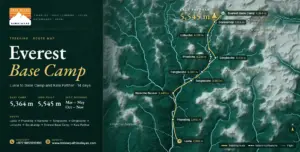
Everest Base Camp Trek route map: Lukla, Namche Bazaar, Tengboche, Dingboche, Lobuche, Gorakshep, base camp and Kala Patthar, returning via Pheriche.
The Rules Explained: The National Rule and the Khumbu
To answer the Everest Base Camp Trek Without a Guide question properly, you need to know that two levels of government set rules in the Everest region, and they haven’t always agreed.
The National Licensed-Guide Rule
A few years ago, the Nepal Tourism Board, working with the country’s trekking associations, announced that foreign trekkers could no longer trek alone in Nepal’s protected areas. Under the rule, independent trekkers must hire a licensed guide through a government-registered trekking agency, and agencies issue the TIMS trekker card used in most regions. The board cited safety: its officials have said that dozens of trekkers go missing or out of contact every year, and that some solo trekkers have died after falls or altitude illness on remote trails. In regions such as Annapurna and Langtang, the rule is now part of everyday trekking, as our article on Nepal’s mandatory guide rule explains.
The Khumbu’s Local Position
The Everest region is governed locally by the Khumbu Pasang Lhamu Rural Municipality, named after Pasang Lhamu Sherpa, the first Nepali woman to climb Everest. The municipality issues its own entry permit, which replaced the TIMS card in the Khumbu, and it monitors trekkers through checkpoints along the trail. When the national rule was announced, the municipality said that a guide was recommended but not mandatory in its area, and it has continued to issue permits to independent trekkers since. Our guide to Sherpa culture and traditions introduces the community behind this local government.
What This Means on the Trail
In practice, independent trekkers still walk the main route from Lukla to Everest Base Camp in large numbers, and local officials issue them permits in Lukla. National officials, however, describe unguided trekking in the park as a breach of the national rule, which has not been withdrawn. That leaves independent trekkers in a grey zone: allowed by the local government, discouraged by the national one, and dependent on rules that could be enforced differently from one season to the next.
Check Before You Go
Because the situation can change at short notice, check the latest rules with your government’s travel advice, the Nepal Tourism Board or a registered agency shortly before you fly, and carry your passport and permits at all times. Our team follows the rules closely every season and is happy to answer questions, even if you plan to trek independently; contact us.
Permits You Need for an Independent Trek
Whether you join a group or plan an Everest Base Camp Trek Without a Guide, you need the same two permits for the classic route from Lukla:
- Sagarmatha National Park entry permit: Covers entry to the national park that protects Everest. Independent trekkers can get it in Kathmandu or at the Monjo park entrance; our Sagarmatha National Park guide describes the park.
- Khumbu Pasang Lhamu Rural Municipality permit: The local entry permit, issued in Lukla and sometimes at Monjo, but not in Kathmandu.
- No TIMS card: It is not required on the Lukla route to Everest Base Camp, Gokyo or the high passes.
- Walking in from Jiri: The lower trail crosses the Gaurishankar Conservation Area, which needs its own permit, and the national guide rule is more likely to apply there; see our Jiri to Everest Base Camp guide.
Our complete guide to Everest Base Camp Trek permits explains each permit, what to carry and what to do if one is lost. You also need a valid tourist visa, which we cover on our Nepal visa information page.
Where Your Permits Are Checked
Officials check the municipality permit as you leave Lukla, and they check both permits at the park entrance in Monjo, where they record your details. Further checks can take place higher up, and lodge owners sometimes ask to see your permits. Without them, they can turn you back, so keep both permits in a waterproof pocket with your passport. Our guide to Phakding and Monjo describes the section from Lukla to Monjo.
Other Rules Inside Sagarmatha National Park
Some rules apply to every trekker in the park, guided or not:
- Single-use plastic: The Everest region has banned many single-use plastic items, including plastic drink bottles, so carry a refillable bottle and treat your water.
- Drones: Need special permission, so it is simplest to leave them at home.
- Rubbish: Carry out batteries, wrappers and anything else you bring in.
- Wildlife and plants: Do not disturb animals or pick plants; the park is home to musk deer, Himalayan tahr and the danphe pheasant.
- Monasteries: Walk clockwise around mani walls and chortens, and ask before photographing monks, people or prayer halls.
- Yaks and porters: Give way on the mountain side of the trail, never the drop side.
These rules keep the Khumbu special. Our responsible tourism page explains how we follow them, and our guide to Tengboche Monastery and the Mani Rimdu festival explains the faith behind the mani stones and prayer flags, rooted in Himalayan Buddhism.
Guide, Porter or Porter-Guide: What Counts?
The words are often mixed up, so it helps to be clear:
- Licensed trekking guide: Holds a government trekking guide licence, works through a registered agency and manages permits, lodges, pace and safety. Guides on our treks carry a first-aid kit and are experienced in recognising altitude sickness.
- Porter-guide: A licensed guide who also carries part of your luggage, a popular middle path for independent-minded trekkers.
- Porter: Carries your main bag but is not a guide, so a porter alone does not meet the national rule.
- Freelance helpers met in Lukla: May not be licensed or insured, so always check licences and hire through a registered company.
If you value freedom but want a safety net, a licensed porter-guide is often the best compromise: you choose the pace and the stops, and someone experienced walks beside you. Meet the people who lead our treks on our team page, and read more about our trekking company in Nepal.
The Real Risks of Trekking Without a Guide
Most independent trekkers reach base camp safely, and the main trail is easy to follow in good weather. The risks below are why the national rule exists and why we recommend a guide. None of them is unique to an Everest Base Camp Trek Without a Guide, but each is harder to manage alone.
Altitude Sickness
Altitude sickness is the biggest danger on the trail. Above about 3,000 m, the body needs time to adapt, and climbing too fast causes acute mountain sickness, which can progress to life-threatening high-altitude pulmonary or cerebral oedema (HAPE and HACE). Independent trekkers are more likely to rush, keep walking with a headache to stay on schedule, and miss early signs in themselves because altitude affects judgement. A guide checks every trekker each evening, often with a pulse oximeter, and decides when to rest or descend before it becomes an emergency. Our guide to altitude sickness on the Everest Base Camp trek and our acute mountain sickness page explain the warning signs.
Getting Lost or Separated
In the busy seasons, the main trail is easy to follow, but cloud, snow, and darkness can hide it quickly above Pheriche and Lobuche, where the path crosses wide moraines and side trails lead off toward the Chhukung valley, the high passes, and old yak pastures. Trekkers regularly lose the way on the moraine between Lobuche and Gorakshep, on the final stretch to base camp, and while climbing Kala Patthar in the dark before sunrise. Out of season, you may be the only one on the trail to ask.
Falls, Yaks and Trail Hazards
Falls on steep, icy, or loose sections; rockfall below cliffs; and collisions with yak and zopkio caravans on narrow trails and suspension bridges cause many injuries. Stand on the mountainside when animals pass, take care on the long, steep climb to Namche Bazaar and the descent back down, and watch for ice on the trails above Dingboche in the cold months.
Storms and Seasons
Mountain weather can change within hours. Late storms can bring heavy snow to the upper valley, clouds can hide the trail for days, and in the monsoon, landslides and slippery trails affect the lower valley. Our guides to the best time for the Everest Base Camp trek and the Everest Base Camp Trek in monsoon explain the seasons month by month.
Lukla Flight Delays
Flights to and from Lukla are often delayed or cancelled by clouds, and in the busy seasons many leave from Ramechhap rather than Kathmandu, several hours away by road. Independent trekkers must rebook flights and rearrange lodges themselves, which is hard when hundreds of people are waiting. Build spare days into your plans, and let our team arrange your Ramechhap airport transfer.
Slow Help in an Emergency
If you are injured or seriously ill, help comes from your lodge, other trekkers and, in serious cases, a helicopter, which can only fly in daylight and good weather. Alone, you must explain your condition, contact your insurer, arrange the evacuation and keep yourself safe until it arrives, often with a weak phone signal. A guide does all of this for you, in the local language, with contacts in every village.
Illness, Cold and Exhaustion
Stomach upsets, the dry Khumbu cough, dehydration, sunburn and cold injuries are common. They are rarely dangerous on their own, but at altitude they can quickly become serious, and nobody is there to carry your bag or walk you down.
Full Lodges in the Busy Season
In October, November, April and May, the most popular lodges fill early, and owners often give priority to groups who have booked ahead. Independent trekkers may end up sleeping in a dining room or walking on to the next village late in the day, which is exactly when accidents happen. Our guides to the Everest Base Camp Trek in October and the Everest Base Camp Trek in April describe the busy seasons.
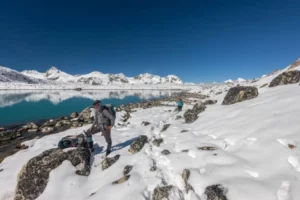
Where Trekkers Most Often Get Into Trouble
- The climb to Namche Bazaar: A long, steep climb of several hundred metres from the river, where trekkers who rush often feel the first effects of altitude.
- Thukla and the climb to Lobuche: A cold, windy stretch above 4,600 m, often in cloud, beside the memorials to climbers who never came home.
- The moraine to Gorakshep and base camp: Rocky, confusing ground where the path splits and shifts after rockfall.
- Kala Patthar before dawn: Steep, cold and dark, and often climbed alone to catch the sunrise.
- The high passes: The Cho La, the Renjo La and the Kongma La, where snow, ice and route-finding make independent crossings far more serious; our Everest Three Passes Trek guide has the details.
- The Gokyo side trips: The Ngozumpa Glacier crossing and the climb of Gokyo Ri in poor weather, covered in our Gokyo Lakes Trek guide.
Who Can Trek Without a Guide?
An Everest Base Camp Trek Without a Guide suits experienced trekkers who:
- Have trekked at high altitude before: Ideally above 4,000 m, in Nepal or elsewhere.
- Know the signs of altitude sickness and will turn back without arguing.
- Can navigate: With offline maps and a compass in poor visibility.
- Travel in the busy seasons: When other trekkers and open lodges are close by.
- Have flexible plans: With spare days for weather and flights.
- Carry full insurance: Including helicopter rescue to at least 6,000 m.
- Trek with at least one companion: Never completely alone.
Our guide to how many days the EBC trek takes shows why a slower itinerary is safer for everyone.
Who Should Always Trek With a Guide?
- First-time trekkers: Our guide to the Everest Base Camp Trek for beginners explains what to expect.
- Solo travellers: Especially in the quieter months, when trails and lodges are empty.
- Older trekkers or anyone with a medical condition: Our guide to the Everest Base Camp Trek over 50 has advice on altitude and recovery.
- Families with children: See our guide to the Everest Base Camp Trek with kids.
- Anyone crossing the high passes: Or trekking in winter or the monsoon.
- Trekkers short on time: Who may be tempted to skip acclimatisation days.
A Safe Itinerary for Everest Base Camp
Whether you trek alone or with us, your itinerary is your most important safety tool. A sound 14-day plan, like our Everest Base Camp Trek, looks like this:
- Day 1, arrive in Kathmandu (about 1,400 m): Collect your park permit and final supplies, with time for Kathmandu sightseeing.
- Day 2: Fly to Lukla (2,860 m) and trek to Phakding (2,610 m): An easy first day beside the Dudh Koshi.
- Day 3: Trek to Namche Bazaar (3,440 m), the big climb into the Sherpa capital.
- Day 4, acclimatisation in Namche: Hike to Hotel Everest View or the villages of Khumjung and Khunde.
- Day 5, trek to Tengboche (3,860 m): To the great Tengboche monastery.
- Day 6, trek to Dingboche (4,410 m): Past Pangboche into the Imja valley.
- Day 7, acclimatisation in Dingboche: A hike up Nangkartshang for views of Makalu.
- Day 8, trek to Lobuche (4,910 m): Past the memorials at Thukla to Lobuche.
- Day 9, Gorakshep (5,164 m) and Everest Base Camp (5,364 m): The big day, described in our guide to what you see at Everest Base Camp.
- Day 10, Kala Patthar (5,545 m) and down to Pheriche (4,240 m): Sunrise over Everest, then a long descent.
- Day 11, trek to Namche Bazaar: Back down through the rhododendron forests.
- Day 12, trek to Lukla: A last evening with your fellow trekkers.
- Day 13, fly to Kathmandu: Keep this day flexible for flight delays.
- Day 14, departure: Ideally with a spare day in hand.
Our guides to the Everest Base Camp Trek itinerary, the Everest Base Camp Trek distance and the 14-day Everest Base Camp Trek give stage-by-stage details. If you are short on time, our short Everest Base Camp Trek in 10 days explains what you can safely cut and what you can’t.
Acclimatisation Rules to Live By
- Climb high, sleep low: On rest days, walk higher than you sleep, then come back down.
- Go slowly above 3,000 m: Aim to raise your sleeping altitude by roughly 300 to 500 m a day, with a rest day about every 1,000 m.
- Never go higher with symptoms: Rest until they pass, and go down if they get worse.
- Descend at the first danger signs: Breathlessness at rest, a wet cough, confusion or loss of balance.
- Drink, eat, and rest well: Drink three to four litres of water a day, and avoid alcohol.
- Talk to your doctor about acetazolamide before you travel.
- Walk with others: And tell someone how you feel each evening.
Our Everest Base Camp Trek training plan helps you arrive fit, but fitness does not protect you from altitude sickness; only time does.
Navigation: Maps, Apps and Trail Markers
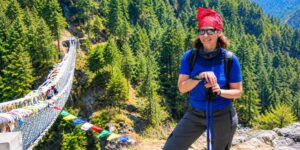
The main trail is well trodden, with lodges every hour or two below Lobuche, but signposts are few and junctions are not always obvious. Download an offline map app with the trail marked before you leave Kathmandu, carry a paper map and a compass as a backup, and know the key junctions: the trails towards Khumjung above Namche, the split between Pheriche and Dingboche below the two villages, and the side trails onto the moraine above Lobuche. Ask lodge owners about the next section every evening, start early and aim to reach your lodge by early afternoon, before the cloud builds.
Staying in Touch: Phones, Wi-Fi and Satellite Messengers
Mobile coverage reaches many villages on the trail, but it is patchy higher up and fails in bad weather. Many lodges sell Wi-Fi cards that work along much of the route, though speeds vary. If you trek independently, carry a satellite messenger or personal locator beacon, share your daily plan with someone at home and with your lodge, and write down your insurer’s emergency number and your embassy’s contacts on paper, in addition to saving them on your phone.
What to Do in an Emergency Without a Guide
On an Everest Base Camp Trek Without a Guide, you are your own rescue coordinator, so learn these steps before you set off:
- Stop and assess: Don’t keep climbing; sit down, keep warm, and drink.
- Go down if you can: For altitude illness, descending 300 to 500 m is the most effective treatment.
- Get help from your lodge: Lodge owners know the local health posts, rescue contacts and helicopter companies.
- Call your insurer’s emergency line: Most insurers must approve a helicopter evacuation before it flies.
- Use the aid posts: The Pheriche aid post of the Himalayan Rescue Association in season, the hospital at Khunde and the hospital in Lukla.
- Accept only necessary flights: Agree to a helicopter evacuation only when it is medically needed, and keep the medical notes for your insurer.
Our guide to helicopter rescue in the Everest region explains how evacuations work, and our article on whether a helicopter can land at Everest Base Camp covers the limits of flying at altitude.
Insurance for an Independent Trek
Travel insurance is not optional in the Khumbu. For an Everest Base Camp Trek Without a Guide, your policy must cover trekking to at least 6,000 m, helicopter evacuation, medical treatment and repatriation, and it should clearly cover independent trekking. Some policies require you to follow local laws and official advice, so read the wording carefully in light of the national guide rule. Carry your policy number and the insurer’s emergency line on paper, tell your lodge owners which insurer you use, and keep notes from any health post you visit, because insurers check evacuation claims closely.
Advice for Solo Women
Many women trek to Everest Base Camp, including alone, and the Khumbu is generally safe and welcoming, with a strong tradition of hospitality in Sherpa lodges. The main risks are the same as for anyone: altitude, weather and isolation. Trek in the busy seasons, share your plans, choose busy lodges, avoid walking alone late in the day and trust your instincts. Many solo women choose a licensed guide or porter-guide for company and peace of mind; ask us if you would prefer a female guide.
Lodges, Food and Water on an Independent Trek
Teahouses line the route all the way to Gorakshep, and independent trekkers can usually find a bed by walking in, except in the busiest weeks, when phoning ahead from the previous lodge helps. Rooms are simple twin rooms, and the higher you go, the more basic they get; the food is hearty, from dal bhat to noodle soup. Treat all water as unsafe; carry a refillable bottle and choose vegetarian meals above Namche. For more comfort, our guide to the luxury lodges in the Everest region describes the best options lower down the valley.
Packing for an Unguided Trek
- Navigation: Offline maps, a paper map, a compass and a headlamp with spare batteries.
- Communication: A charged phone, a power bank and a satellite messenger.
- First aid: Blister care, painkillers, rehydration salts, your personal medicines and altitude medicine agreed with your doctor.
- A pulse oximeter: To check your oxygen saturation each evening.
- Water treatment: Tablets, drops or a filter, plus a refillable bottle.
- Warm layers: A down jacket, hat, gloves and a sleeping bag rated well below freezing.
- Emergency kit: A whistle, a foil blanket and energy snacks.
Our Everest Base Camp Trek packing list and our trekking equipment page cover everything else.
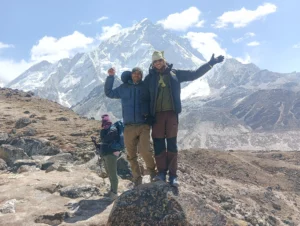
When Is Independent Trekking Safest?
Spring and autumn are the safest seasons for independent trekkers: trails are busy, lodges are open, and the weather is most settled, although early October and late April bring crowds. Winter brings bitter cold, snow on the upper trail and fewer open lodges above Pheriche, and the monsoon brings cloud, rain, leeches in the lower forests and frequent flight delays. Outside spring and autumn, we strongly recommend trekking with a guide.
What a Licensed Guide Adds
- Safety: Daily health checks, a steady pace and early decisions to rest or descend.
- Navigation: No wrong turns in cloud, snow or darkness.
- Logistics: Permits, lodges, flights and rebooking handled for you.
- Emergency support: Contacts, translation, insurer calls and evacuations.
- Culture: Stories, monasteries, festivals and everyday Sherpa life.
- Local jobs: Your trek supports families in the Khumbu.
A good guide does not take the adventure away; they give you the freedom to enjoy it. Sherpa guides who grew up beneath peaks such as Ama Dablam know every turn of the trail.
Middle Paths Between Going Alone and Joining a Group
Trekking with a guide does not have to mean a large group or a fixed plan:
- A licensed porter-guide: Freedom with a safety net, at your own pace.
- A private guided trek: Your dates, your pace and your own small party, with a licensed guide and porters.
- A luxury lodge trek: The Everest Base Camp Luxury Lodge Trek, described in our Luxury Everest Base Camp Trek guide.
- A helicopter return: The Luxury Everest Base Camp Trek with Helicopter Return, explained in our guide to the Everest Base Camp Trek with helicopter return.
- A heli-trek: The Everest Base Camp Helicopter Trek or the Everest Elite Luxury Heli Trek, compared in our article on the EBC helicopter tour vs heli trek.
- A wellness trek: The Everest Base Camp Yoga Trek, described in our Everest Base Camp yoga trek guide.
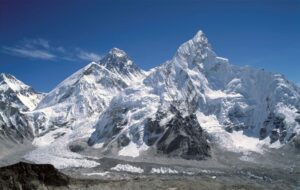
Shorter and Easier Alternatives
If the full trek feels like too much to manage alone, there are gentler ways to see Everest. The Everest View Trek and our guide to the Luxury Everest View Trek stay below 4,000 m. A helicopter can take you to the foot of the mountain in a morning: see the Everest Helicopter Tour, the Mt Everest by Helicopter Tour, described in our guide to the Everest helicopter tour with breakfast, and the Sharing Everest Helicopter Tour with Kala Patthar Landing, covered in our Kala Patthar landing guide.
Our articles on the Everest Base Camp helicopter tour, the best seasons for an Everest helicopter tour and Everest helicopter tour restrictions help you plan, and our comparison of the EBC trek and a helicopter tour weighs the two. For the simplest option, our Everest mountain flight guide describes a sightseeing flight from Kathmandu.
Beyond Base Camp
Once you know the Khumbu, there is much more to explore. The Gokyo Lakes Trek and the Everest 3 Pass Trek explore wilder valleys; our guide compares Gokyo Ri vs Kala Patthar, and our Ama Dablam Base Camp Trek guide describes a quieter side trip. Climbers can try Island Peak Climbing, explained in our Island Peak climbing guide; Lobuche Peak Climbing, described in our guide to Lobuche East Peak Climbing; or Mera Peak Climbing, covered in our Mera Peak guide. Walkers with time can follow the pioneers on the Jiri to Everest Trek or the Everest Base Camp Trek by Road.
Trekking Without a Guide Elsewhere in Nepal
Outside the Khumbu, the national rule applies more strictly. In the Annapurna and Langtang regions, foreign trekkers now need a licensed guide on routes such as the Annapurna Base Camp Trek, the Annapurna Circuit Trek, the Ghorepani Poon Hill Trek, and the Langtang Valley Trek. Restricted areas such as the Manaslu Circuit Trek, the Upper Mustang Trek, and the Kanchenjunga Base Camp Trek have always required a registered agency, a licensed guide, and a special permit. Our list of the 50 best treks in Nepal helps you choose your next one.
Responsible Independent Trekking
If you trek independently, your choices matter even more. Stay in locally owned lodges and eat there, buy supplies in villages, refill rather than buy bottled water, carry out what you carry in, and hire licensed local staff if you take a porter or guide. Respect the prayer flags and mani walls, and remember that you are a guest in one of the most sacred landscapes on Earth.
Common Mistakes Independent Trekkers Make
- Skipping acclimatisation days: The most common cause of altitude problems.
- Trekking completely alone: With nobody knowing your plans.
- Walking late in the day: When clouds build, and lodges are full.
- Ignoring a headache: And climbing on to keep to a schedule.
- No spare days: Lukla flights are often delayed by weather.
- Wrong insurance: Not covering 6,000 m or helicopter rescue.
- Buying a TIMS card: You don’t need it on the Lukla route; buy the two Khumbu permits instead.
- Hiring unlicensed helpers: Always hire licensed staff through a registered company.
- Crossing the high passes alone: The Cho La and Kongma La are not places to trek alone.
Frequently Asked Questions About an Everest Base Camp Trek Without a Guide
Can you trek to Everest Base Camp without a guide?
On the main route from Lukla, yes, in practice: the Khumbu municipality still issues permits to independent trekkers, although national rules require licensed guides in protected areas. Check the latest position before you travel.
Is solo trekking banned in Nepal?
Nepal’s national rule requires foreign trekkers to hire a licensed guide in protected areas, and it is enforced in regions such as Annapurna and Langtang. The Khumbu is the main exception in practice, but rules can change.
Which permits do I need without a guide?
You need the Sagarmatha National Park entry permit and the Khumbu Pasang Lhamu Rural Municipality permit. If you enter from Jiri, you also need a Gaurishankar Conservation Area permit.
Do I need a TIMS card for Everest Base Camp?
No. On the Lukla route, the municipality permit has replaced the TIMS card.
Is it safe to trek to Everest Base Camp alone?
Many people do it safely in the busy seasons, but altitude sickness, getting lost, falls, and slow rescue are real risks—and much harder to manage alone—Trek with a companion, a porter-guide, or a guide.
Can you get lost on the Everest Base Camp trek?
In good weather, the main trail is easy to follow, but trekkers can lose their way in cloud, snow, or darkness, especially on the moraines above Lobuche and on Kala Patthar.
What happens if I get altitude sickness without a guide?
Stop climbing, rest and tell your lodge. If symptoms get worse, or you feel breathless at rest or confused, descend at once and seek help from the health posts or the Pheriche aid post.
Do I need insurance to trek without a guide?
Yes. Your policy should cover trekking to at least 6,000 m, helicopter rescue and independent trekking.
Is a porter enough, or do I need a guide?
A porter carries your bag but is not a guide. A licensed porter-guide provides both and meets the national rules.
Which trek should I book if I want a guide?
Our Everest Base Camp Trek follows a safe 14-day plan with licensed Sherpa guides, and we can arrange a private trek or a porter-guide on request.
Final Thoughts: Freedom With a Safety Net
An Everest Base Camp Trek Without a Guide is possible, and for experienced, well-prepared trekkers in the busy seasons it can be a wonderful adventure. But the rules sit in a grey zone, the mountains do not forgive mistakes, and the moments that matter most- a headache at Lobuche, a wrong turn in the clouds, a fall above Dingboche- are the moments when having someone experienced beside you makes all the difference.
If you would like the freedom of the trail with a safety net, join our Everest Base Camp Trek or ask about a private trek with a licensed porter-guide. For extra comfort, the Everest Base Camp Luxury Lodge Trek is a fine choice. Learn more about our company, see our legal documents, and plan your trip or contact us today.
Quick Inquiry
Explore More


