
Everest Base Camp Trek Medical Clinics and Health Posts
Everest Base Camp Trek Medical Clinics and Health Posts
It is three o’clock in the afternoon in Pheriche, and the wind is blowing down the valley from Lobuche. Inside a simple stone building, a volunteer doctor holds up a pulse oximeter and asks a room full of trekkers how they slept last night. Some laugh, some look worried, and everyone listens closely as she explains the difference between a normal altitude headache and the warning signs that mean it is time to go down. For many trekkers, this talk is the moment altitude stops being an abstract worry and becomes something they understand.
Medical help on the trail to Everest is limited but real, and knowing where it is gives you confidence. This guide to Everest Base Camp Trek Medical Clinics takes you stop by stop, from the hospitals in Lukla, Phakding and Khunde to the health posts of Namche and Pangboche, the aid post at Pheriche and the seasonal clinics high in the valley at Gorakshep and base camp.
Our Sherpa team explains what each facility can and cannot do, when it is open, how evacuations work, what to carry in your own first-aid kit and how to avoid needing any of them. It is written for anyone preparing for our Everest Base Camp Trek, and for every trekker who wants to walk to the foot of Everest with peace of mind.
The Short Answer: What Medical Help Is There on the Everest Base Camp Trek?
The route has three small hospitals in Lukla, Phakding and Khunde; a health post and dental clinic in Namche; a health post in Pangboche; seasonal clinics in Dingboche and Gorakshep; the Himalayan Rescue Association aid post at Pheriche in spring and autumn; and the Everest ER clinic at base camp in spring.
These facilities can diagnose altitude sickness, provide oxygen, and stabilise patients, but none is a full hospital. Serious cases are flown by helicopter to Kathmandu, so helicopter-rescue insurance is essential.
Everest Base Camp Trek Medical Clinics at a Glance
- Lukla (2,860 m): The Pasang Lhamu Nicole Niquille Hospital, treating local families and trekkers near the airstrip.
- Phakding (2,610 m): The Himalayan Sherpa Hospital, with beds, X-ray, ultrasound, an emergency service and a pharmacy.
- Namche Bazaar (3,440 m): A community health post, private clinics, pharmacies and the Namche Dental Clinic.
- Khunde (3,840 m): Khunde Hospital, founded by Sir Edmund Hillary, the oldest hospital in the Khumbu.
- Pangboche (3,985 m): A government health post.
- Dingboche (4,410 m): A small clinic in the trekking seasons.
- Pheriche (4,240 m): The Himalayan Rescue Association aid post, staffed by volunteer doctors in spring and autumn, with daily altitude talks.
- Gorakshep (5,164 m): A high-altitude clinic run by the local government in the busy seasons.
- Everest Base Camp (5,364 m): The Everest ER clinic, available only during the spring climbing season.
- Serious cases: Helicopter evacuation to hospitals in Kathmandu, weather permitting.
- Our trek: The 14-day Everest Base Camp Trek, with Sherpa guides who carry a first-aid kit and check your health every day.
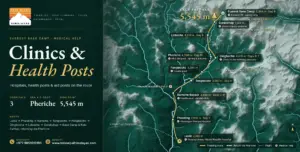
Medical help on our 14-day Everest Base Camp Trek route: hospitals, health posts, clinics and the Pheriche aid post from Lukla to base camp.
Why Medical Help on the Trail Matters
The trek to base camp climbs from 2,860 m at Lukla to 5,545 m on Kala Patthar, far from roads and big hospitals. The most common health problems are altitude sickness, stomach upsets, coughs and colds, blisters and minor injuries. Most are mild and treatable, but at altitude, small problems can become serious quickly, and a sprained ankle two days’ walk from the nearest airstrip is a very different matter from one at home.
That is why it helps to know where the Everest Base Camp Trek Medical Clinics are, what they can offer and when they are open. The best medicine, though, is prevention: a sensible itinerary, steady pacing, good hygiene and a guide who watches your health every day. Our guide to Everest Base Camp Trek difficulty explains the physical challenge, and our Everest Base Camp trek route guide describes every stage of the trail.
Medical Facilities From Lukla to Base Camp, Stop by Stop
Here are the Everest Base Camp Trek Medical Clinics, hospitals and health posts in the order you reach them on the way up, with what each offers and when it is usually open.
Lukla (2,860 m): Pasang Lhamu Nicole Niquille Hospital
Lukla, the gateway to the Khumbu, is home to the Pasang Lhamu Nicole Niquille Hospital, founded by the Swiss mountain guide Nicole Niquille and named in part after Pasang Lhamu Sherpa, the first Nepali woman to climb Everest.
The hospital treats local families from across the region and trekkers, and its services include maternity care and regular health camps. For trekkers, it is the main medical facility close to the airstrip at the start and end of the trek. During busy seasons, most flights to Lukla depart from Ramechhap, and our Ramechhap airport transportation service handles the drive. Our Lukla Airport flights guide explains the town and its famous runway.
Phakding (2,610 m): Himalayan Sherpa Hospital
The newest hospital on the trail stands in Phakding, where most trekkers spend their first night. Built and run by the Himalayan Sherpa Foundation and opened in recent years, the Himalayan Sherpa Hospital has around 15 beds, X-ray and ultrasound, maternity and mountain medicine services, outpatient and emergency care and its own pharmacy. It treats both local people and visiting trekkers. Our guide to Phakding and Monjo describes this first stage of the trek.
Namche Bazaar (3,440 m): Health Post, Clinics, Dentist and Pharmacies
The Sherpa capital has the widest choice of medical help in the upper Khumbu. The community-run Namche Area Health Post treats local people and trekkers, including altitude sickness, and refers serious cases onward. Private clinics and several pharmacies also serve trekkers in the main seasons, and the pharmacies stock common medicines.
Namche is also home to the Namche Dental Clinic, supported by the American Himalayan Foundation and often described as the world’s highest dental clinic. It is the only dental care facility in the Khumbu, and it welcomes foreign visitors with toothaches as well as local families. Read our guide to Namche Bazaar for more about the town.
Khunde (3,840 m): Khunde Hospital
Above Namche, in the village of Khunde, stands Khunde Hospital, founded by Sir Edmund Hillary and the Himalayan Trust and now supported by the Sir Edmund Hillary Foundation. It was the first hospital in the Khumbu, and for decades it has served the region. Today, local staff run it entirely, with about 12 beds and an emergency department, though it has no helipad of its own. Many trekkers pass close by on the acclimatisation hike from Namche. Our guide to Khumjung and Khunde tells the story of the Hillary legacy, and our guide to the Hotel Everest View hike describes the acclimatisation walk.
Tengboche and Deboche (about 3,860 m): No Clinic
The monastery village of Tengboche and nearby Deboche have no clinic. If you feel unwell here, your nearest help is the health post at Pangboche, an hour or two up the trail, or the facilities in Namche and Khunde below. Our guide to Tengboche Monastery and the Mani Rimdu festival describes the village.
Pangboche (3,985 m): Health Post
Pangboche, the oldest monastery village in the Khumbu, has a government health post that provides basic care to surrounding villages and supports the clinic higher up at Gorakshep. It is a useful stop for minor problems on the way to Dingboche.
Dingboche (4,410 m): Seasonal Clinic
Dingboche, where most trekkers spend two nights to acclimatise, usually has a small clinic open during the trekking season for altitude problems, coughs, and minor illnesses. The local government has been working to bring the valley’s high-altitude clinics under its own management so that arrangements can change from season to season. Your guide will know what is open.
Pheriche (4,240 m): The Himalayan Rescue Association Aid Post
The most famous medical post on the trail is the Himalayan Rescue Association aid post in Pheriche, a short walk below Dingboche. For decades, volunteer doctors, many of them specialists in mountain medicine, have staffed it during the main trekking seasons, roughly from March to May and again in the autumn. They treat trekkers, porters, guides and local people for altitude sickness, injuries and everyday illnesses, and they give an altitude awareness talk most afternoons that is well worth attending on the way up. Read our full guide to the Pheriche HRA aid post.
Lobuche (4,910 m): No Clinic
Lobuche has lodges but no permanent clinic. If you feel unwell here, the advice is simple: do not go higher. Tell your guide, rest, and if symptoms worsen, descend towards Pheriche, where the aid post is open in season.
Gorakshep (5,164 m): Municipal High-Altitude Clinic
At Gorakshep, the last lodges before base camp, the Khumbu Pasang Lhamu Rural Municipality runs a small high-altitude clinic during the busy seasons. It has a few inpatient beds and is staffed by a doctor and a health assistant, works with the Himalayan Rescue Association on emergencies and receives supplies from the Pangboche health post. The local government set it up to replace a private seasonal clinic, partly in response to concerns about unnecessary helicopter rescues, and it describes it as one of the highest permanent health facilities run by any government.
Everest Base Camp (5,364 m): Everest ER in Spring
During the spring climbing season, from early April to the end of May, the Himalayan Rescue Association runs a clinic known as Everest ER at base camp. Its doctors have high-altitude experience and treat climbers, expedition staff and trekkers who visit base camp. Outside the spring season, there is no clinic at base camp, which is quiet and empty for most of the year. Learn what you can expect to see at Everest Base Camp in each season.
What These Facilities Can and Cannot Do
It helps to have realistic expectations of Everest Base Camp Trek Medical Clinics. They are small, remote facilities doing remarkable work in difficult conditions.
- What they can do: Assess and diagnose altitude sickness, give oxygen, treat infections, coughs, and stomach problems, clean and dress wounds, splint simple injuries, provide common medicines, and advise whether you should rest, descend, or be evacuated.
- What some can do: Hospitals in Phakding, Lukla, and Khunde can admit patients for a short stay, and Phakding has X-ray and ultrasound.
- What they cannot do: Provide intensive care, complex surgery or specialist treatment. Patients who need these are flown to Kathmandu.
- What they depend on: Staff, supplies, and helicopters depend on the season and weather, which is why prevention and good insurance matter so much.
Seasons and Opening Times
The season you trek in makes a big difference to which Everest Base Camp Trek Medical Clinics are open.
- Spring (March to May): The best-supported season, with the Pheriche aid post, the seasonal clinics in Dingboche and Gorakshep, and Everest ER at base camp all usually open. Read our guide to the Everest Base Camp Trek in April.
- Autumn (late September to November): The Pheriche aid post and the seasonal clinics are usually open, but there is no clinic at base camp. See our guides to the Everest Base Camp Trek in October and the Everest Base Camp Trek in November.
- Monsoon and winter: The Pheriche aid post and Everest ER are closed, and seasonal clinics may be too. The hospitals and health posts lower down remain the main sources of care, and bad weather can delay helicopters. Our guide to the Everest Base Camp Trek in monsoon explains the summer conditions.
Exact dates change every year, so our team checks which facilities are open before you set off. Compare the seasons in our guide to the best time for the Everest Base Camp trek.
The Himalayan Rescue Association and Its Altitude Talks
The Himalayan Rescue Association is a Nepali non-profit organisation founded to reduce deaths from altitude sickness in the mountains. Its first aid post was at Pheriche, chosen because so many trekkers and climbers pass through on their way to base camp.
Today, it runs aid posts at Pheriche and at Manang on the Annapurna Circuit Trek, the Everest ER clinic in spring, and a temporary health camp at the sacred lake of Gosaikunda during its pilgrimage festival, on the route of our Langtang Gosaikunda Trek.
Its altitude talks are its most valuable work. In a single autumn season, hundreds of people attend the Pheriche talks, and the aid post treats Nepali porters and guides as well as foreign trekkers. Attending the talk on the way up is one of the best things you can do for your safety, and our guides plan the day at Pheriche or Dingboche to make it possible.
Altitude Sickness: When to Seek Medical Help
Altitude sickness is the main reason trekkers visit clinics on the trail. Above about 3,000 m, the body needs time to adapt, and climbing too fast can cause acute mountain sickness, with headache, nausea, loss of appetite, dizziness and poor sleep.
- Mild symptoms: Rest at the same altitude, drink plenty of fluids, and tell your guide. Do not go higher until you feel better.
- Worsening symptoms: If your headache worsens despite rest, or you start vomiting, descend and visit the nearest clinic or aid post.
- Danger signs: Breathlessness at rest, a wet cough, confusion, clumsiness or extreme tiredness can mean high-altitude pulmonary or cerebral oedema. Descend immediately with help, give oxygen if available and seek medical care.
Clinics and aid posts keep bottled oxygen, and some keep a portable altitude chamber, often called a Gamow bag, which simulates a descent while a patient waits for evacuation. Read our altitude sickness guide for Everest Base Camp and our page on acute mountain sickness before you go.
Other Common Health Problems on the Trail
- Stomach upsets: The most common illness after altitude sickness. Treat your water, wash your hands and eat freshly cooked food.
- The Khumbu cough: A dry, persistent cough caused by cold, dry, dusty air. A buff over-the-mouth and throat lozenge helps.
- Colds and chest infections: Shared dining rooms spread germs. Rest, drink warm fluids and see a clinic if you develop a fever or feel breathless.
- Blisters and sore feet: Treat hot spots early with blister plasters.
- Sunburn and snow blindness: Strong sun at altitude burns quickly, so wear sunscreen and good sunglasses, even on cloudy days.
- Minor injuries: Twisted ankles and knee strain on steep descents. Trekking poles help.
- Toothache: Have a dental check-up before you travel; the Namche Dental Clinic is the only dentist on the trail.
Medicines and Pharmacies on the Trail
Pharmacies in Lukla and Namche stock common medicines, and clinics carry essential supplies, but choice becomes very limited above Namche. Bring your own regular medicines, enough for the whole trip and a few extra days, in their original packaging, with a copy of your prescriptions.
Talk to your doctor before you travel about altitude medication such as acetazolamide, also known as Diamox, and about any personal health conditions. Never take prescription medicines on the trail without proper advice, and tell your guide about anything you are taking.
Your Personal First-Aid Kit
Even with clinics on the trail, a small personal kit lets you deal with minor problems straight away. Our guides carry a group first-aid kit, but we recommend packing:
- Your regular medicines and any altitude medication your doctor recommends.
- Pain relief such as paracetamol or ibuprofen.
- Stomach remedies: Oral rehydration salts and medicine for diarrhoea.
- Cold and cough remedies: Lozenges and decongestant.
- Blister care: Blister plasters, tape and small scissors.
- Wound care: Antiseptic wipes, plasters and a small bandage.
- Water purification: Tablets or a filter.
- Sun protection: High-factor sunscreen and lip balm.
- Hand sanitiser and any personal hygiene items.
Our full Everest Base Camp trek packing list and our trekking equipment page cover the rest of your kit.
How Our Guides Look After Your Health
Your guide is the first line of medical care on any trek. Our Sherpa guides carry a first-aid kit and are experienced in recognising altitude sickness. They check every trekker each evening, often using a pulse oximeter as one of several signs, keep the pace steady and make the call to rest, descend or seek help before a problem becomes an emergency.
They also know where all the Everest Base Camp Trek Medical Clinics are, which ones are open, and how to reach our office in Kathmandu to arrange help. Meet them on our team page. Nepal’s national rule requires foreign trekkers in national parks to hire a licensed guide, as our article on Nepal’s mandatory guide rule explains.
If you plan to walk independently in the Khumbu, read our guide to the Everest Base Camp Trek without a guide, and if you are travelling alone, our guide to the Everest Base Camp Trek solo explains how to build your own safety net.
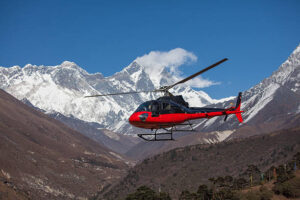
Helicopter Evacuation and Hospitals in Kathmandu
When a patient needs more than the Everest Base Camp Trek Medical Clinics can offer, the answer is a helicopter. Evacuations follow a familiar pattern: your guide or a doctor assesses you, the trekking company contacts your insurer, the insurer approves the flight, and the helicopter collects you at the nearest suitable landing site.
- Daylight only: Helicopters fly only in daylight and reasonable visibility, so a night-time problem may mean waiting until morning, ideally after descending.
- Limited lift at high altitude: Above about 4,500 m, a helicopter can lift only two or three passengers, so patients higher up are often shuttled to Pheriche first, and the helicopter refuels at Lukla.
- Where you go: Most patients are flown to Kathmandu, which has private hospitals and travel medicine centres experienced in treating trekkers, such as CIWEC Hospital.
Our guide to helicopter rescue in the Everest region explains the process in detail, and our article on whether a helicopter can land at Everest Base Camp covers the limits of flying at altitude.
Avoiding Unnecessary Rescues
Over the years, concerns have been raised in Nepal about unnecessary helicopter evacuations, where trekkers with mild symptoms were flown out when rest or a short descent would have been enough. Such flights strain insurance systems and can make it harder for genuine patients. The local government’s decision to run its own clinic at Gorakshep partly responded to these concerns.
- Get a proper assessment: Ask a doctor or experienced guide to examine you before agreeing to a flight.
- Descend first when possible: For most altitude problems, descending 300 to 500 m is the most effective treatment.
- Keep records: Keep any notes from clinics or aid posts, because insurers check evacuation claims carefully.
- Trek with a trusted company: Choose a registered company that puts your health first. You can view our company’s legal documents.
Travel Insurance for Medical Care
Insurance is essential on any trek in the Khumbu. Your policy should cover trekking to at least 6,000 m, helicopter evacuation, medical treatment, hospital care and repatriation, and it should clearly cover any pre-existing conditions you declare. Carry your policy number and the insurer’s 24-hour emergency line on paper and on your phone, and give a copy to your guide. Without suitable cover, an evacuation can be delayed while arrangements are made.
Before You Go: Health Preparation
- See your doctor: Discuss the trek, your fitness, any existing conditions and altitude medication.
- Visit a travel health clinic: Ask about recommended vaccinations for Nepal well before you travel.
- Have a dental check-up: Dental help on the trail is very limited.
- Train well: Good fitness makes every day safer and more enjoyable; our Everest Base Camp trek training plan shows how.
- Plan a sensible itinerary: Two acclimatisation days are the best medicine of all. Our 14-day Everest Base Camp trek guide explains the classic plan, and our Everest Base Camp trek itinerary describes each day.
- Check your documents: Passport, visa and insurance, as explained on our Nepal visa information page, plus the Everest Base Camp trek permits our team arranges.
Trekking With Medical Conditions, Older Trekkers and Children
Many people with well-managed health conditions trek to base camp safely, but they need advice from their own doctor first. Conditions affecting the heart, lungs or blood pressure, diabetes, pregnancy and recent surgery all deserve a careful conversation before you book. Tell our team about any condition when you plan your trek, so that your guide is prepared.
Older trekkers and families with children face the same altitude rules as everyone else, with a little more caution. Our guides to the Everest Base Camp trek over 50, and the Everest Base Camp trek with kids explain what to consider, and first-timers will find practical advice in our Everest Base Camp trek for beginners guide.
Medical Help on Other Everest Routes
The main trail to base camp is the best-supported route in the region. Elsewhere, help is thinner, so plan accordingly.
- Gokyo Valley: The long-running volunteer rescue post at Machhermo closed a few years ago after the local authority withdrew permission, and facilities in the valley have changed since, so check the current situation with your guide. Our Gokyo Lakes trek guide and our guide to Gokyo Ri and the Fifth Lake describe the route of our Everest Gokyo Lakes Trek.
- The high passes: The Renjo La, Cho La and Kongma La are far from clinics, which is why the Everest 3 Pass Trek is best done with a guide; see our Everest Three Passes trek guide.
- Chhukung and Ama Dablam Base Camp: Side valleys with no clinics, close to the facilities at Dingboche and Pheriche. Read about the Chhukung Valley and our Ama Dablam Base Camp trek guide for the Ama Dablam Base Camp Trek.
- The lower approach: The Jiri to Everest Trek passes through villages with small health posts, as our Jiri to Everest Base Camp trek guide explains, and the Everest Base Camp Trek by Road joins the main trail below Lukla.
- Trekking peaks: Island Peak Climbing, Lobuche Peak Climbing, and Mera Peak Climbing take you well beyond the clinics, so insurance should cover at least 6,500 m, and every climb needs a permit through a registered agency, as our NMA peak permit updates explain. Our guides to Island Peak, Lobuche East and Mera Peak explain the climbs.
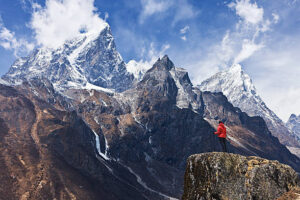
The Hillary Legacy and Health Care in the Khumbu
Modern health care in the Khumbu began with Sir Edmund Hillary. After his first ascent of Everest with Tenzing Norgay, Hillary returned again and again to build schools, bridges and hospitals with the Sherpa people through the Himalayan Trust. Khunde Hospital was one of the first fruits of that partnership, and it transformed health in the region, from vaccinations to maternity care.
Today, care in the Khumbu comes from a mix of community health posts, foundation hospitals, volunteer doctors and the local government. As a trekker, you support that system by trekking responsibly, choosing a company that insures and equips its porters, and treating the facilities with respect. Learn more about the people behind it in our guide to Sherpa culture and traditions, and about the protected landscape in our Sagarmatha National Park guide. Our responsible tourism page explains our own commitments.
Luxury and Helicopter Options That Reduce Altitude Strain
If you have health concerns, or want more comfort and less time at high altitude, several trips reduce the strain without missing the highlights.
- Everest Base Camp Luxury Lodge Trek: 11 days with a helicopter in and out, staying in the finest lodges on the trail.
- Luxury Everest Base Camp Trek with Helicopter Return: 12 days, trekking up in comfort and flying back after base camp, which removes the long descent.
- Everest Base Camp Helicopter Trek: Walk up the classic route and fly back by helicopter, in about ten days.
- Everest Elite Luxury Heli Trek: Our most exclusive combination of fine lodges and helicopter flights.
- Everest View Trek: A shorter trek that stays below 4,000 m, ideal if altitude is a concern. See also our luxury Everest View trek.
- Everest Base Camp Yoga Trek: A slower, mindful pace that gives your body extra time to adjust, described in our EBC yoga trek guide.
- Helicopter tours: The Everest Helicopter Tour, the Mt Everest by helicopter tour, the sharing Everest helicopter tour with a Kala Patthar landing, the full-day Everest helicopter tour with a village walk, and the Gokyo Lakes helicopter tour let you spend only a short time at altitude.
Our guides to choosing an EBC trek or a helicopter tour, the EBC helicopter tour vs heli trek, the Everest Base Camp helicopter return, and the Everest Base Camp helicopter tour compare the options. Short helicopter landings at altitude have their own rules, explained in our guides to Everest helicopter tour restrictions and the Kala Patthar landing sharing tour, and our luxury lodges in the Everest region guide describes the most comfortable places to stay. Our luxury Everest Base Camp trek guide shows how comfortable the trail can be; our guide to the best seasons for an Everest helicopter tour explains when flying is most reliable; and if altitude rules out a trek altogether, the Everest mountain flight shows you the peaks from the air.
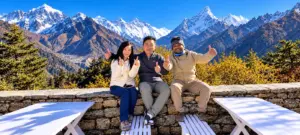
A Typical Day of Health Care on Our Trek
On our 14-day Everest Base Camp Trek, we weave health care into every day. Mornings start with a quick check of how you slept and how you feel. On the trail, your guide sets a steady pace, reminds you to drink and watches for signs of tiredness or breathlessness. Evenings bring a pulse oximeter reading, a chat about appetite and headaches, and a plan for the next day. The two acclimatisation days in Namche and Dingboche, and the afternoon talk at the Pheriche aid post in season, complete the picture.
For more detail on the route and its timing, read our guides to the Everest Base Camp trek distance, how many days the EBC trek takes, and the short Everest Base Camp trek in 10 days. The climb to Kala Patthar at sunrise is the trek’s highest point, so it is also the moment your guide watches most closely.
Recovering After the Trek
If you were unwell on the trail, give yourself a gentle day or two in Kathmandu before flying home. Easy outings suit recovering trekkers: wander the temples and courtyards with our Kathmandu sightseeing guide, join a relaxed Kathmandu day tour or enjoy mountain views on a Nagarkot hike.
With more time, Pokhara’s lower altitude and warmer air, along with the Terai, are ideal for recovery. Explore with our Pokhara sightseeing guide, relax on a Chitwan jungle safari or see more of the country on our classic Nepal tour. For your next adventure, browse our list of the 50 best treks in Nepal.
Common Mistakes Trekkers Make With Their Health
- Ignoring early symptoms: A worsening headache is a signal to stop, not push on.
- Relying on clinics instead of prevention: Clinics are small and seasonal; a good itinerary is your best protection.
- Skipping rest days: Feeling strong in Namche is not a reason to rush.
- Trekking without suitable insurance: It can delay an evacuation when every hour counts.
- Forgetting regular medicines: Pharmacies above Namche have very little choice.
- Walking on alone when unwell: Always tell your guide or lodge, and never go higher alone with symptoms.
- Accepting an unnecessary flight: Ask for a proper assessment and descend first where possible.
- Waiting until night: Helicopters cannot fly in the dark, so act early.
How Our Team Supports Your Health
We are a Kathmandu-based, Sherpa-led company, and your health matters to us more than any summit or viewpoint. Our team plans a safe itinerary with proper acclimatisation, checks which clinics and aid posts are open for your dates, briefs you on health and altitude before you set off, and stays in contact with your guide throughout the trek. Read why travellers choose us as their trekking company in Nepal, explore our complete trekking in Nepal guide, and contact us with any health questions before you book.
Frequently Asked Questions About Everest Base Camp Trek Medical Clinics
Are there hospitals on the Everest Base Camp trek?
Yes, three small ones: the Pasang Lhamu Nicole Niquille Hospital in Lukla, the Himalayan Sherpa Hospital in Phakding and Khunde Hospital above Namche. None is a full hospital, so they fly serious cases to Kathmandu.
Where is the nearest medical help to Everest Base Camp?
In busy season, the municipal clinic at Gorakshep; in spring, the Everest ER clinic at base camp itself. The Himalayan Rescue Association aid post at Pheriche is the main post lower down in spring and autumn.
Is there a doctor at Everest Base Camp?
Only in spring, when the Everest ER clinic operates from early April until the end of May. At other times, the nearest help is in season at Gorakshep or Pheriche.
When is the Pheriche aid post open?
During the main trekking seasons, roughly March to May and again in the autumn. It is closed in winter and during the monsoon.
Can I get altitude sickness medicine on the trail?
Pharmacies in Lukla and Namche stock common medicines, but choice is limited higher up. Discuss altitude medication with your doctor before you travel and bring what you need.
What happens if I get sick on the Everest Base Camp trek?
Tell your guide straight away. For mild problems, you can rest or descend and visit a clinic; for serious cases, your guide and our team will arrange help and, if needed, a helicopter evacuation through your insurer. On our 14-day Everest Base Camp Trek, your guide checks your health every day.
Are the clinics open in winter and the monsoon?
The hospitals and health posts lower down generally stay open, but the Pheriche aid post, Everest ER and some seasonal clinics close outside the main seasons.
Is there a dentist on the Everest trail?
Yes. The Namche Dental Clinic in Namche Bazaar is the only dental care facility in the Khumbu, and it welcomes trekkers with toothaches.
Do I need travel insurance for medical evacuation?
Yes. Your policy should cover trekking to at least 6,000 m, helicopter evacuation, medical treatment and repatriation.
What should be in my first-aid kit?
Your regular medicines, pain relief, rehydration salts, blister care, wound care, water purification, sun protection and hand sanitiser, plus any altitude medication your doctor recommends.
Final Thoughts: Trek With Knowledge and Confidence
Knowing the Everest Base Camp Trek Medical Clinics along your route is part of good preparation, but the best way to stay healthy is to avoid needing them: climb slowly, keep your rest days, drink well, treat your water and trek with people who watch over you. With a sensible plan and an experienced team, the clinics, aid posts and hospitals of the Khumbu become a reassuring safety net rather than a necessity.
Ready to go? Join our Everest Base Camp Trek with licensed Sherpa guides, or reduce your time at altitude on the Luxury Everest Base Camp Trek with Helicopter Return. Learn more about Trek Nepal Himalayas, start shaping your journey on our Plan Your Trip page, or contact us, and our team will help you plan a safe, healthy trek.
Quick Inquiry
Explore More


