Everest Base Camp Trek in Monsoon Season: Should You Go?
Everest Base Camp Trek in Monsoon Season: Should You Go?
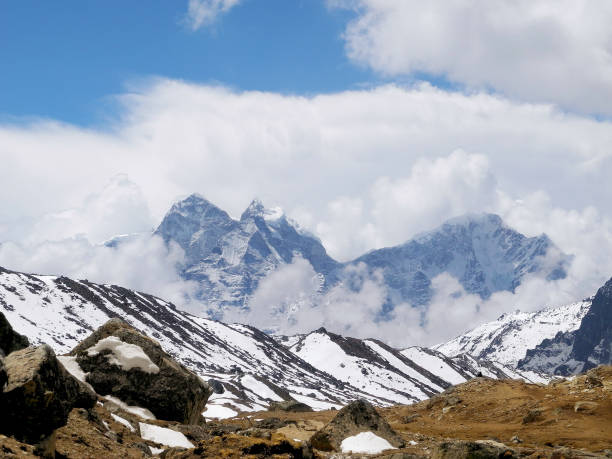
The cloud lifts for a moment above the Dudh Koshi. Through a gap in the mist, the fluted ice of Thamserku appears, impossibly high, then vanishes again. Waterfalls pour off every cliff, prayer flags drip above the suspension bridges and the forest smells of wet pine and moss. On the trail, there is almost no one: a porter under a plastic sheet, a few yaks grazing on emerald slopes and the roar of the river. This is the Everest region in the Monsoon, a world that few trekkers ever see.
An Everest Base Camp Trek in Monsoon season is not for everyone. From mid-June to September, the rains bring clouds, mud, leeches and unreliable flights, and the famous mountain views come and go. Yet the season also rewards flexible, well-prepared trekkers with green valleys, wildflowers, warm days, quiet lodges and a side of Sherpa life that the busy seasons never show. With realistic expectations and an experienced team, you can do our classic Everest Base Camp Trek safely and enjoyably in summer.
In this guide, our team explains exactly what to expect: when the Monsoon arrives, how much it really rains at different altitudes, temperatures, month-by-month conditions, Lukla flights, leeches, landslides, lodges, health, packing and the best alternatives, so you can decide whether a summer trek is right for you.
The Short Answer: Should You Trek to Everest Base Camp in Monsoon Season?
Go if you are flexible, can add two to three buffer days and value quiet trails and green valleys over guaranteed views. From mid-June to mid-September, expect rain and cloud on most days, especially below Namche, leeches in the lower forests and frequent Lukla flight delays. If clear views are your priority, choose spring or autumn.
In brief:
- Rain: Heaviest between Lukla and Namche; lighter higher up, where it often falls in the evening or at night.
- Views: Possible, especially at dawn, but never guaranteed.
- Flights: The biggest risk, with frequent delays and cancellations.
- Rewards: Empty trails, warm days, wildflowers, waterfalls and authentic Sherpa village life.
- Best monsoon windows: Early June and the second half of September.
- Drier upper valley: Rain usually eases above Tengboche, and mornings are often the clearest part of the day.
Everest Base Camp Trek in Monsoon at a Glance
- Season: The summer monsoon, usually from around mid-June to mid or late September in the Khumbu.
- Weather: Cloudy and humid lower down, with frequent showers; drier and cooler above Tengboche, with possible snow near base camp.
- Daytime temperatures: Roughly 18 to 21°C in Lukla and 3 to 8°C in Gorakshep and at base camp.
- Night temperatures: Around 10 to 13°C at Lukla and around -6 to-1°C at Gorakshep.
- Daylight: About 13 to 14 hours in June and July, falling to about 12 hours by late September.
- Crowds: One of the quietest times of year on the trail.
- Flights: Lukla flights usually depart from Kathmandu outside the peak seasons and are often delayed by clouds.
- Hazards: Mud, slippery stones, leeches below about 3,000 m, landslides on the lower approaches and flight cancellations.
- Our trek: The 14-day Everest Base Camp Trek, with two to three extra buffer days recommended in summer.
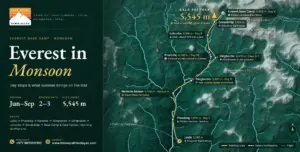
Our 14-day Everest Base Camp Trek route in the Monsoon, from Lukla to base camp and Kala Patthar, with day stops and what summer brings on each stage.
Should You Go? Five Questions to Help You Decide
Deciding on an Everest Base Camp Trek in Monsoon season depends more on you than on the weather. Ask yourself these five questions:
- Can you add two to three spare days? If your international flight leaves soon after the trek, summer flight delays at Lukla become a real worry. If you have time to wait out the cloud, most problems disappear.
- Is a clear view of Everest your main goal? In summer, views come and go, usually at dawn. If seeing the mountain is the whole point, autumn or spring is the safer choice.
- Are you happy walking in rain and mud? Expect wet stone steps, slippery descents and leeches on the lower trail. Higher up, it is drier, but cloud and drizzle are still common.
- Is summer your only window? For students, teachers and many working travellers, it is. Then the monsoon trek is very possible with good preparation, and early June or late September are the best windows.
- Will you trek with an experienced team? A guide who knows which lodges are open, when to wait for the rain to ease and how to rebook flights makes the biggest difference in this season.
If you can add spare days, don’t mind the rain, and have good support, the green season can be a wonderful time to go. If a guaranteed view or a tight schedule matters most, wait for autumn or spring, or choose a rain-shadow trek instead. Either way, our team can plan the Everest Base Camp Trek around your dates and advise you honestly on the weather.
When Is the Monsoon in the Everest Region?
Moist winds from the Bay of Bengal drive Nepal’s summer monsoon. It enters the country from the east, so the Khumbu, in Koshi Province in eastern Nepal, is among the first regions to feel it. According to Nepal’s Department of Hydrology and Meteorology, the Monsoon normally arrives in eastern Nepal around mid-June and withdraws in early October, lasting about 16 weeks. However, the exact timing varies year to year. In the Khumbu, the weather often begins to settle in the second half of September, even before the Monsoon officially withdraws.
In practice, trekkers can think of the season in three parts:
- Pre-monsoon (late May to mid-June): Warm and increasingly cloudy, with afternoon showers and the last expedition teams leaving base camp.
- Peak monsoon (late June to August): The wettest, cloudiest and quietest period.
- Late Monsoon (September): The rain gradually eases, especially in the second half of the month, as the autumn season begins.
Our month-by-month guide to the best time for the Everest Base Camp Trek shows how the Monsoon fits into the trekking year, and our guides to the Everest Base Camp Trek in April and the Everest Base Camp Trek in October compare the two peak months.
Two Climates on One Trek: Why the Upper Khumbu Is Drier
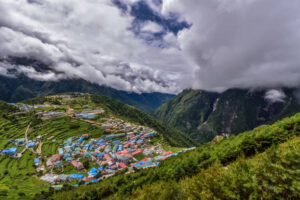
The most important thing to understand about the Everest Base Camp Trek in the monsoon is that rain isn’t spread evenly along the trail. Monsoon clouds push up the deep gorge of the Dudh Koshi from the south and drop most of their moisture on the lower, forested slopes. Scientific studies on the southern side of Everest show that precipitation increases with height up to about 2,500 m and then decreases steadily as you climb higher into the Khumbu.
The result is two climates on one trek. The section from Lukla through Phakding and Monjo to Namche Bazaar is the wettest, with humid air, frequent showers and the occasional long, heavy downpour. Above Namche, and especially beyond Tengboche, the valley lies partly in the lee of the surrounding ranges. At the Pyramid research station near Lobuche, at about 5,050 m, annual precipitation averages only around 450 mm, and close to 90 per cent of it falls between June and September. Higher up, rain often turns to drizzle, mist or light snow.
Timing changes with altitude too. Glaciological research in the upper Khumbu found that monsoon precipitation at valley sites tends to fall in the evening and at night, while on the high ridges it comes with daytime cloud build-up. That is why mornings in the upper valley are often the clearest part of the day, even in July. Learn more about the region’s landscapes and climate zones in our Sagarmatha National Park guide.
The Monsoon also feeds the mountains. Much of the snow that nourishes the great glaciers of the Khumbu falls during the summer months, so while it rains in Lukla, fresh snow often settles on Lhotse, Nuptse, and the icefalls above base camp.
Everest Base Camp Weather in Monsoon
Temperatures by Altitude
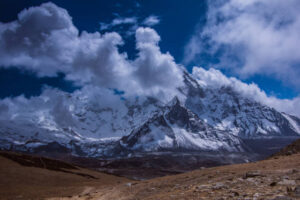
The Monsoon is the warmest time of year in the Khumbu, and the cloud cover keeps nights milder than in spring or autumn. These are approximate typical ranges for July and August; June and September are a little cooler at night, and conditions vary from day to day.
- Lukla (about 2,860 m): Days around 18 to 21°C; nights around 10 to 13°C.
- Namche Bazaar (about 3,440 m): Days around 14 to 17°C; nights around 6 to 9°C.
- Tengboche and Dingboche (about 3,860 to 4,410 m): Days around 10 to 14°C; nights around 1 to 5°C.
- Lobuche (about 4,910 m): Days around 6 to 9°C; nights around minus 3 to plus 1°C.
- Gorakshep and Everest Base Camp (about 5,164 to 5,364 m): Days around 3 to 8°C; nights around minus 6 to minus 1°C.
Damp cold feels colder than dry cold. A wet jacket in a cold wind at 5,000 m can chill you quickly, so dry warm layers matter as much in the Monsoon as in any other season.
A Typical Monsoon Day
Most monsoon days follow a pattern. Dawn is often the clearest moment, with peaks appearing between the clouds. By mid-morning, mist rises from the valleys, and by early afternoon, cloud usually fills the gorge. Showers come and go through the afternoon and evening, and the heaviest rain often falls at night. It rarely pours all day, but some days are grey and wet from start to finish, especially in July.
Will You See Everest?
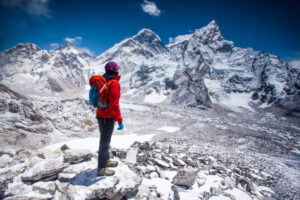
The Monsoon makes views the great unknown. Some trekkers enjoy clear dawns at Kala Patthar and dramatic glimpses of Everest through the clouds; others see little beyond the next ridge. Your best chances come at first light, after a night of rain has washed the air clean, and in the drier upper valley. Our guides watch the sky closely and, where the itinerary allows, time the climb of Kala Patthar for the clearest morning.
Mud, Humidity and Snow
Lower down, the air is warm and humid; stone steps are slippery and sections of trail turn to mud, especially where yaks and mules have passed. Higher up, the ground is firmer, but cold drizzle, fog and wet snow are possible near Gorakshep and base camp at any time. In summer, the moraines around base camp can look grey and wet rather than white.
Month by Month: June, July, August and September
June: The Start of the Monsoon
An Everest Base Camp trek in June begins in the tail end of spring. Days are warm, the trails are quiet after the climbing season, and the last expedition teams may still be walking down from base camp. Showers become more frequent as the month goes on, and by the second half of June, the Monsoon is usually established. The first half of June is one of the better monsoon windows.
July: The Heart of the Monsoon
An Everest Base Camp trek in July is one of the quietest of the year. Rain is frequent, particularly between Lukla and Namche, cloud is common at all altitudes and Lukla flights are at their least reliable. Base camp itself is an empty, silent glacier, with every expedition long gone; our guide to what you see at Everest Base Camp compares the seasons. July suits trekkers who truly want the mountains to themselves and have time to spare.
August: Green Valleys and Wildflowers
An Everest Base Camp trek in August is similar to July, with frequent rain and lush valleys, but the high alpine meadows reach their flowering peak. Towards the end of the month, the rain sometimes eases, bringing more clear mornings. August is also a festive month: during Janai Purnima, Hindu pilgrims visit sacred lakes such as Gokyo and Gosaikunda, and Kathmandu celebrates Gai Jatra with colourful processions.
September: The Monsoon Fades
An Everest Base Camp trek in September starts wet and ends bright. The first half often still feels like the Monsoon, with regular rain lower down and plenty of cloud. In the second half, the rains usually ease, skies clear more often,n and the autumn trekking season begins. Late September is the best compromise for trekkers who want green landscapes, flowing waterfalls and fewer crowds than October.
Lukla Flights in the Monsoon
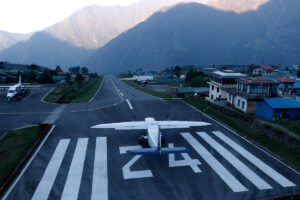
Flights are the biggest challenge of the Everest Base Camp Trek in the monsoon. Planes to Lukla’s Tenzing-Hillary Airport fly only in good visibility, and in summer, clouds can close the airport for hours or even several days in a row. Most flights operate in the early morning, when the weather is usually at its best, and later flights are often delayed or cancelled as cloud builds. Our Lukla Airport guide explains how the flights work.
Outside the busy spring and autumn seasons, Lukla flights usually depart from Kathmandu’s domestic airport rather than Manthali in Ramechhap, which saves a long night drive, although arrangements can change. As autumn begins in September, flights often move back to Manthali, and our Ramechhap airport transportation team handles the transfer.
Because delays are so common, we recommend adding two to three buffer days to the end of your trip in the Monsoon, compared with one or two in spring and autumn. If flights are grounded for a long time, a helicopter between Kathmandu and Lukla is often the practical alternative, as helicopters can sometimes fly in short weather windows when planes cannot, though they also depend on the weather. Our guide on how many days the EBC trek takes explains how to plan your total trip length.
Overland alternatives exist, but they are not always easier in summer. The Everest Base Camp Trek by Road relies on mountain roads that can be blocked by landslides in the Monsoon, and the classic Jiri to Everest Trek, described in our Jiri to Everest Base Camp guide, crosses the lower hills where rain and leeches are at their worst. For most summer trekkers, flying with plenty of buffer days remains the best plan.
Is It Safe? Trail Conditions, Leeches and Landslides
With a good guide, sensible pacing, and flexible plans, the trek is safe in the Monsoon, but it requires more care than in spring or autumn. These are the main hazards and how to manage them.
Mud and Slippery Stones
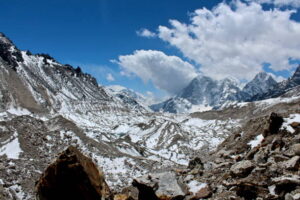
The stone steps and slabs between Lukla and Namche become slick in the rain, and the descents to the suspension bridges over the Dudh Koshi need care. Trekking poles, boots with a good grip and a steady pace make a big difference. Higher up, the trail is drier and firmer, but wet moraine and icy patches near Gorakshep can be slippery in the early morning.
Leeches on the Everest Base Camp Trek
Leeches are the most talked-about nuisance of a monsoon trek, but on the main trail they are limited to the lower, forested sections, roughly below 3,000 m, around Phakding, Monjo and the start of the climb to Namche. They are far more common on the lower Jiri and Salleri approach routes. Leeches are unpleasant rather than dangerous: they are not known to spread disease, though the bite can bleed for a while and should be kept clean to avoid infection.
- Prevention: Tuck your trousers into your socks, wear leech socks or gaiters and apply insect repellent to boots and socks.
- Removal: Slide a fingernail under the sucker to detach it, or use a pinch of salt or a little hand sanitiser; never pull a leech.
- Aftercare: Clean the bite and cover it with a plaster.
Landslides, Rivers and Glacial Lakes
Heavy rain can trigger landslides and rockfall, especially on the roads and lower trails below Lukla. On the main trail, our guides know the few exposed sections and will wait for the rain to ease or choose the safest moment to pass. Rivers run high and fast in summer, so always use the bridges and never try to cross a swollen stream.
The Monsoon is also the season when glacial lakes are fullest. In a recent monsoon, an outburst flood from a glacial lake above Thame, in the Bhote Koshi valley west of Namche, swept through the village, destroying homes, lodges, the school and the health post. The main Everest Base Camp trail follows a different valley, and Imja Tsho, the large glacial lake near Chhukung, has been partly drained to reduce flood risk, but these events remind trekkers to travel with a guide who follows local news and warnings.
What Makes the Monsoon Special
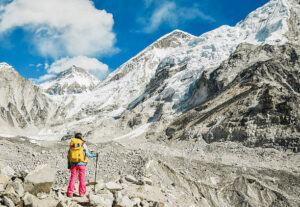
For all its challenges, the Everest Base Camp Trek in the Monsoon has its own beauty.
Green Valleys, Waterfalls and Wildflowers
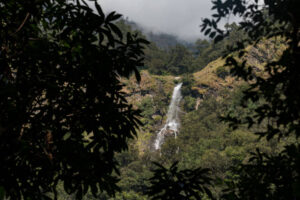
The brown hillsides of spring turn emerald green, and waterfalls pour from every cliff above the Dudh Koshi. Moss and ferns carpet the forest between Phakding and Namche, and the stone-walled fields of Khumjung and Dingboche fill with potatoes and barley.
Higher up, the alpine meadows burst into flower: primulas, gentians, edelweiss, potentillas, asters and, in favoured spots, blue poppies. The aromatic leaves of dwarf rhododendron and juniper scent the air above Tengboche, and the high pastures around Dingboche, Pheriche and Lobuche are at their most colourful in July and August, a delight for botanists and photographers.
Sherpa Summer Life
Summer is a busy season for the Sherpa families of the Khumbu. Yak herders move their animals to the high summer pastures, known as kharkas, around Dingboche, Chhukung and the Gokyo valley, while families tend their fields around the villages. With few trekkers on the trail, lodge owners have time to talk, and you may be invited to share tea by the stove and hear stories of mountain life. Our guide to Sherpa culture and traditions explains more.
Dumje, the Sherpa festival that celebrates the birth of Guru Rinpoche, is usually held in late spring or early summer, around May or June, with dates set by the lunar calendar, so an early June trek may coincide with it. Villages such as Namche, Thame, Khumjung and Pangboche host masked dances, prayers and feasts sponsored by local families. Our story of Guru Padmasambhava introduces the teacher at the heart of the festival, and our guides to Khumjung and Khunde and Pangboche Monastery describe the villages.
Solitude
In July, you may walk for hours without meeting another trekker. Lodges have rooms to spare, dining rooms are quiet, and the monasteries of Tengboche and Pangboche feel deeply peaceful. For trekkers who find the crowds of spring and autumn off-putting, this solitude is the Monsoon’s greatest gift.
Lodges and Food in the Monsoon
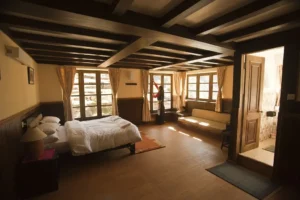
Most lodges on the main trail stay open through the summer, but some close for the season while their owners travel to Kathmandu or work in the fields, especially in smaller settlements and higher up. Menus can be a little shorter, but dal bhat, noodle soups, potatoes and hot tea are always available. A warm dining room with a stove is the best place to dry socks and gloves in the evening.
Our team checks which lodges are open before you set off and books ahead along the route. For extra comfort, our Everest Base Camp Luxury Lodge Trek uses the best available lodges, with en-suite rooms and electric blankets in the lower villages where available; our team confirms which ones are open in summer. Our guide to luxury lodges in the Everest region describes the options. Always book with a registered company; you can view our company registration and legal documents online.
Our 14-Day Everest Base Camp Trek in the Monsoon
Here is how our classic Everest Base Camp Trek unfolds in summer, with notes for each stage, following the plan in our Everest Base Camp trek in 14 days guide. In the Monsoon, we recommend adding two to three buffer days at the end.
Days 1 and 2: Kathmandu to Lukla and Phakding
After arriving in Kathmandu, you fly to Lukla (usually from Kathmandu itself in the Monsoon) and walk down to Phakding beside the swollen, roaring Dudh Koshi. This is the leech zone, so tuck in your trousers and check your socks at rest stops.
Days 3 and 4: Namche Bazaar and Acclimatisation
Climb through dripping forest and over the high suspension bridges to Namche Bazaar, entering Sagarmatha National Park at Monjo. On the rest day, hike at dawn to the Hotel Everest View for your best chance of an early view of Everest, then visit Khumjung or the Sherpa museum in Namche on a rainy afternoon.
Day 5: Tengboche and Deboche
Walk along the valley to Tengboche and its famous monastery, described in our guide to Tengboche Monastery and the Mani Rimdu festival. Higher up, the rain usually lightens.
Days 6 and 7: Dingboche and Acclimatization
Continue through Pangboche to Dingboche, surrounded by stone-walled fields and yak pastures. Climb Nangkartshang at first light on the acclimatisation day for acclimatisation to Makalu, Lhotse, and Ama Dablam.
Days 8 to 10: Lobuche, Everest Base Camp and Kala Patthar
Pass the climbers’ memorials at Thukla Pass to Lobuche, continue to Gorakshep and walk to a peaceful, empty base camp. Climb Kala Patthar at dawn, when the sky is most likely to be clear, then descend to Pheriche.
Days 11 to 14: Back to Namche, Lukla and Kathmandu
Walk back down through the green valleys to Namche and Lukla, fly to Kathmandu when the weather allows and use your buffer days as needed. For full details, see our Everest Base Camp Trek itinerary, our Everest Base Camp trek route guide and our guide to the Everest Base Camp Trek distance.
Altitude and Health in the Monsoon
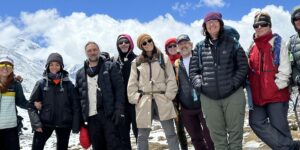
Altitude does not change with the seasons. Altitude sickness can affect anyone, and the same rules apply as in spring or autumn: ascend gradually, keep both acclimatisation days, drink acclimatisation water, avoid alcohol and tell your guide about any symptoms. Read our Acute Mountain Sickness page and our guide to altitude sickness on the Everest Base Camp Trek.
- Safe water: Monsoon rain can contaminate water sources, so always treat, filter or boil your drinking water.
- Food hygiene: Eat freshly cooked meals and wash or sanitise your hands often.
- Sanitation: Change into dry clothes as soon as you reach the lodge, and never stay wet and cold at altitude.
- Feet: Wet feet blister easily, so dry your feet each evening and carry spare socks.
- Mosquitoes in the city: Dengue fever has affected Kathmandu and the lowlands in recent monsoons, so use repellent there.
Medical support is thinner in summer. The Himalayan Rescue Association aid post in Pheriche usually operates only in spring and autumn, and rescue helicopters, like planes, depend on the weather. Make sure your travel insurance covers trekking to at least 6,000 m and helicopter evacuation, as explained in our guide to helicopter rescue in the Everest region, and trek with a guide who carries a first-aid kit, is experienced in recognising altitude sickness, and follows Guide Rules.
The permits for the Everest Base Camp Trek in Monsoon are the same as at any other time of year: the Sagarmatha National Park entry permit and the Khumbu Pasang Lhamu Rural Municipality entry permit, plus a Gaurishankar Conservation Area permit if you walk in from Jiri or Shivalaya. Our team arranges them all for you, and our Everest Base Camp Trek guide explains each one.
Guide rules vary by area and can change, so check before you travel. We strongly recommend a licensed guide, especially in the Monsoon, when local knowledge of the weather, trail conditions and open lodges matters most. Our guide to the Everest Base Camp Trek without a guide explains the Khumbu’s rules and the risks of walking alone. Read our article on Nepal’s mandatory guide rules and our wider trekking in Nepal guide, and check entry requirements in our Nepal visa guide.
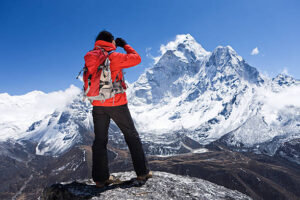
What to Pack for an EBC Trek in Monsoon
Your packing list for the Everest Base Camp Trek in Monsoon is built around one goal: keeping yourself and your gear dry. Add these essentials to the standard kit:
- Waterproof jacket and trousers: Breathable, with taped seams; a poncho or compact umbrella is useful on the warm, humid lower trail.
- Pack cover and liner: Line your backpack and duffel with a heavy-duty bag, and use dry bags for clothes, electronics and documents.
- Waterproof boots and gaiters: Wear broken-in boots with good grip; gaiters help keep out mud and leeches.
- Quick-drying clothing: Synthetic or merino layers; avoid cotton, which stays wet.
- Spare socks and camp shoes: Several pairs of socks and light sandals for the lodge.
- Warm layers: A fleece and a down jacket for cold, damp evenings higher up.
- Leech protection: Leech socks, salt or hand sanitiser, and insect repellent. Sleeping bag: Rated to around minus 10°C for the higher lodges and packed in a waterproof stuff sack.
- Trekking poles: Essential on slippery steps and descents.
- Sun protection: UV is strong at altitude, even through cloud.
For the complete list, see our Everest Base Camp Trek packing list and our trekking equipment page. Remember the Lukla baggage limit, usually around 10 kg checked and around 5 kg hand luggage, and remember that wet gear weighs more.
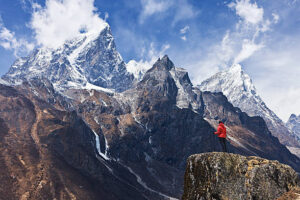
Photography in the Monsoon
The Monsoon is a season of moods, and photographers who embrace it come home with images few others have.
- Be ready at dawn: The clearest views usually come at first light, so keep your camera charged and close.
- Use the clouds: Peaks framed by drifting clouds and mist often make more striking images than a plain blue sky.
- Look closer: Waterfalls, moss-covered forests and alpine flowers reward a macro lens or a slow shutter speed.
- Protect your gear: Use a rain cover, keep cameras in dry bags with silica gel and wipe lenses often.
- Carry spare batteries: Cold and damp drain batteries quickly, and charging can be limited higher up.
Pros and Cons of the Monsoon Trek
Pros
- Quiet trails: Fewer trekkers than at other times of year, with plenty of room in the lodges.
- Warmth: The warmest temperatures of the year, with milder nights.
- Scenery: Green valleys, waterfalls and wildflowers.
- Culture: Authentic Sherpa summer life, and in early summer, the chance of a festival.
- Timing: Fits the summer holidays of students, teachers and many working travellers.
Cons
- Flights: Frequent Lukla delays and cancellations.
- Views: Clouds often hide the mountains, especially in July and August.
- Trails: Mud, slippery steps and leeches on the lower sections.
- Landslides: A risk on roads and lower trails.
- Services: Some lodges and the Pheriche aid post may be closed.
Monsoon vs Spring vs Autumn
- Weather: The Monsoon is warmest but wet; spring is warm and mostly dry; autumn is cool, dry and stable.
- Views: Autumn has the clearest views; spring has clear mornings; monsoon views are unpredictable.
- Crowds: The Monsoon is the quietest; spring and autumn are busy.
- Flights: Most reliable in autumn and spring; least reliable in the Monsoon.
- Scenery: The Monsoon brings green valleys and flowers; spring brings rhododendrons and expedition tents; autumn brings golden light and sharp, clear air.
If you can choose any time of year, autumn and spring remain the best seasons for most trekkers. If summer is your only option, the monsoon trek is very possible with the right preparation, and late September offers a welcome middle ground.
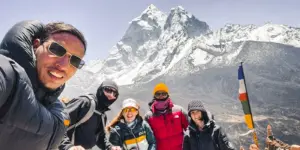
Who Should Go in the Monsoon, and Who Should Wait?
An Everest Base Camp trek in summer is not a second-best version of the classic trek; it is a different journey. The Everest Base Camp Trek in the monsoon suits:
- Flexible travellers with extra days to spare.
- Experienced trekkers who are comfortable with rain and mud.
- Photographers and nature lovers who enjoy clouds, flowers and green landscapes.
- Travellers who can only take time off in summer.
- Trekkers who value solitude over guaranteed views, including solo travellers, who will find tips in our guide to the Everest Base Camp Trek solo.
It is less suitable for first-time trekkers on a tight schedule, anyone with a fixed international flight soon after the trek, or those whose main goal is a clear view of Everest. First-timers should read our guide to the Everest Base Camp Trek for beginners, our honest look at Everest Base Camp Trek difficulty and our 12-week training plan.
Monsoon-Friendly Ways to See Everest
If your time is limited, several options make the most of the summer:
- Everest View Trek: A shorter, lower trek to Namche and Tengboche, with more flexibility for the weather.
- Luxury Everest Base Camp Trek with Helicopter Return: Walk up to base camp and fly back by helicopter, weather permitting, saving several days.
- Shorter heli treks: The Everest Base Camp Helicopter Trek and the Everest Elite Luxury Heli Trek use helicopters to save time, as explained in our guide to the short Everest Base Camp Trek.
- Helicopter tours: The Everest Helicopter Tour, the Mt Everest by Helicopter Tour, the Everest Heli Sherpa Village Walk, the Gokyo Lakes Helicopter Tour, and the Sharing Everest Helicopter Tour with Kala Patthar Landing fly in clear morning weather when possible, which is most common soon after dawn, even in summer.
Weather affects helicopters too, so we always build flexibility into helicopter plans in the Monsoon. Our guides to the Everest Base Camp helicopter tour, the best seasons for an Everest helicopter tour, Everest helicopter tour restrictions, the EBC trek or helicopter tour, whether a helicopter can land at Everest Base Camp, the Kala Patthar landing reopening, and the helicopter tour vs trek with helicopter return explain the options in detail.
Rain-Shadow Alternatives for Monsoon Trekking in Nepal
If you want drier trails in summer, look north of the main Himalayan range, where the mountains block much of the monsoon rain. These rain-shadow treks in Nepal are at their best when the Khumbu is wettest:
- Upper Mustang Trek: The classic monsoon trek, through the desert canyons and walled villages of the former kingdom of Lo; read our guide to trekking in Upper Mustang.
- Nar Phu Trek: Hidden valleys and medieval villages north of the Annapurnas.
- Lower Dolpo Trekking: The turquoise Phoksundo Lake and remote Buddhist and Bon villages.
- Upper Kali Gandaki: The Jomsom Muktinath Trek and the Muktinath Yatra by Helicopter visit the drier upper valley and the sacred temple of Muktinath.
- Manang side of the Annapurnas: The upper sections of the Annapurna Circuit Trek and the Tilicho Lake Trek lie partly in the rain shadow, although the lower approaches are wet.
Summer is also a popular travel season on the Tibetan plateau, which receives far less rain than the southern slopes of the Himalaya. See the north face of Everest on the Lhasa to Everest Base Camp Overland Tour, described in our Lhasa to Everest Base Camp guide, or walk the sacred circuit of Mount Kailash on the Mount Kailash Tour or the Kailash Overland Tour. The Lhasa Tibet Tour, the Kathmandu to Lhasa Tour, the Luxury Nepal Tibet Tour and the Nepal Tibet Bhutan Tour combine Tibet with Nepal. Tibet permit rules can change, so our team checks them for you. Explore the spiritual background of the region in our overviews of Buddhism in Tibet and Milarepa, the cotton-clad yogi.
If You Can Move Your Dates
If your dates are flexible, shifting your trip to late September or autumn opens up the full range of Himalayan adventures, and the Everest Base Camp Trek in November brings some of the year’s clearest skies. In the Everest region, consider the Gokyo Lakes Trek, described in our Gokyo Lakes Trek guide and our comparison of Gokyo Ri vs Kala Patthar; the Everest 3 Pass Trek, explained in our Everest Three Passes Trek and Cho La Pass guides; or Ama Dablam Base Camp Trekking, covered in our Ama Dablam Base Camp Trek guide. The Everest Base Camp Yoga Trek adds a mindful rhythm to the journey, as described in our guide to mindful trekking in the Himalayas.
For climbers, autumn is prime time for Island Peak Climbing, described in our Island Peak climbing guide, as well as Lobuche Peak Climbing and Mera Peak Climbing, covered in our guides to Lobuche East and Mera Peak; check the latest NMA peak permit updates.
Beyond the Khumbu, autumn is ideal for the Annapurna Base Camp Trek, described in our ultimate guide to the Annapurna Base Camp Trek, the Ghorepani Poon Hill Trek, the Mardi Himal Trek, the Manaslu Circuit Trek over the Larke Pass, the Tsum Valley and Ganesh Himal Trek, the Langtang Valley Trek and the remote Kanchenjunga Base Camp Trek. Browse our list of the top 50 treks in Nepal for more ideas.
Before or after any trek, explore the temples and squares of the capital on our Kathmandu Day Tour, with our Kathmandu sightseeing guide, or see more of the country on the Classic Nepal Tour.
Practical Tips for Monsoon Trekkers
- Add two to three buffer days to the end of your trip for Lukla flight delays.
- Start walking early to enjoy the clearest weather and arrive before the afternoon rain.
- Pack in layers of dry bags, so that a soaked backpack never means soaked clothes.
- Keep one set of dry clothes for the evening, and never wear it on the trail.
- Check for leeches at rest stops on the lower trail.
- Treat all drinking water and keep your hands clean.
- Stay flexible: Let your guide adjust the daily plan to the weather.
- Trek with a licensed guide who knows the trail conditions and which lodges are open.
- Buy the right insurance, covering trekking to at least 6,000 m and helicopter evacuation.
Common Mistakes in the Monsoon
- No buffer days: A fixed flight home two days after the trek is a recipe for stress.
- Relying on a thin poncho alone: You need proper waterproofs and dry bags.
- Wearing cotton: It stays wet and cold for days.
- Expecting guaranteed views: Enjoy the views when they come, and treat them as a bonus.
- Skipping acclimatisation: Warm weather acclimatisation can reduce the effects of altitude.
- Ignoring local advice: If your guide says to wait for the rain to ease, wait.
Frequently Asked Questions About the Everest Base Camp Trek in Monsoon
Can you trek to Everest Base Camp in the Monsoon?
Yes. The trail stays open, most lodges remain open, and trekkers complete it every summer. Expect rain, clouds, mud and flight delays, and add two to three buffer days.
Is it safe to trek to Everest Base Camp in the Monsoon?
Yes, with an experienced guide, good gear and flexible plans. The main risks are slippery trails, landslides on lower routes and roads, and weather-related delays. Altitude rules are the same as in any season.
Which monsoon month is best for the EBC trek?
Early June and the second half of September are the best monsoon windows. July is the wettest and quietest month, and August is similar but greener and more flowery.
How much does it rain on the Everest Base Camp Trek in July and August?
Rain is frequent, especially between Lukla and Namche. Higher up, the valley is much drier: at about 5,050 m near Lobuche, annual precipitation averages only around 450 mm, mostly in the monsoon months.
Will I see Mount Everest during the Monsoon?
Possibly. Dawn is often clear, especially in the upper valley, but clouds can hide the peaks for days. Treat views as a bonus rather than a certainty.
Do Lukla flights operate in the Monsoon?
Yes, usually from Kathmandu outside the peak seasons, but cloud often causes delays and cancellations. Keep two to three buffer days.
Are there leeches on the Everest Base Camp Trek?
Yes, in the lower forests below about 3,000 m, around Phakding and Monjo. They are a nuisance rather than a danger; leech socks, gaiters, repellent and salt help.
Are teahouses open during the Monsoon?
Most lodges on the main trail stay open, but some close for the season. Our team confirms open lodges and books ahead.
How cold is Everest Base Camp in the Monsoon?
It is the mildest time of year up high. Daytime temperatures at Gorakshep and base camp are roughly 3 to 8°C, and nights fall to around minus 6 to minus 1°C, with possible snow.
Can beginners trek to Everest Base Camp in the Monsoon?
Fit beginners can, but it is not the easiest introduction. If you have a choice, spring or autumn is better for a first Himalayan trek; if summer is your only option, choose a guided trek with plenty of buffer days.
Final Thoughts: The Green Season in the Khumbu
The Everest Base Camp Trek in Monsoon is a different journey from the classic spring or autumn trek. It asks for patience, flexibility and good rain gear, and it offers in return a Khumbu few people see: green valleys and waterfalls, flowering meadows, quiet lodges, Sherpa families at work in their fields and, when the clouds part at dawn, the giants of the Himalaya shining above the mist.
Join our 14-day Everest Base Camp Trek with extra buffer days, travel in comfort on the Everest Base Camp Luxury Lodge Trek, or save time on the Luxury Everest Base Camp Trek with Helicopter Return. Meet our guides on our team page, learn more about our company, read about our responsible tourism commitments, then plan your trip or contact us today. The green season in the Khumbu is waiting.
Quick Inquiry
Explore More


