
What to Do If You Feel Sick Above 4,000 m
What to Do If You Feel Sick Above 4000m
It is your second evening in Dingboche. The dining room is warm, the yak-dung stove is glowing, and everyone is talking about tomorrow’s walk to Lobuche. But your head is pounding, the dal bhat in front of you looks impossible to eat, and you feel strangely tired. Is it just a long day, the start of a cold, or the altitude? And what should you do about it right now?
Above 4,000 m, the air holds only about 60 per cent of the oxygen available at sea level, and by base camp it is closer to half. Almost everyone feels the altitude in some way, and many trekkers feel unwell at some point. Knowing exactly what to do if you feel sick above 4,000 m turns a frightening moment into a clear plan and, in rare cases, saves lives.
This practical guide from our Sherpa team walks you through the first steps: how to tell altitude sickness from other illnesses, when and how far to descend on the trail, where to find help, what to do at night, and when a helicopter is the right call. It is written for anyone preparing for our Everest Base Camp Trek, and it complements our detailed altitude sickness guide for Everest Base Camp, which explains prevention and symptoms in depth.
The Short Answer: What Should You Do If You Feel Sick Above 4,000 m?
Stop climbing, tell your guide and assume it is altitude sickness until proven otherwise. Rest, drink and check again in a few hours. If symptoms get worse, or you develop breathlessness at rest, confusion or clumsiness, go down at least 300 to 500 m straight away, never alone, and seek medical help.
Most cases are mild and settle with rest. The serious ones are rare, but they need fast action, so act early rather than waiting to see what happens.
Feeling Sick Above 4,000 m at a Glance
- First step: Stop, sit down, tell your guide or a companion, and do not go higher.
- The golden rule: If you feel unwell at altitude, assume it is altitude sickness until proven otherwise.
- Mild symptoms: Headache, nausea, tiredness or dizziness. Rest at the same altitude, drink and recheck.
- Danger signs: Breathlessness at rest, a wet cough, confusion, loss of balance or extreme drowsiness. Descend immediately with help.
- How far down: At least 300 to 500 m for worsening symptoms, and ideally 1,000 m or until symptoms clearly improve.
- Where help is: A clinic in Dingboche, the Himalayan Rescue Association aid post in Pheriche, a clinic in Gorakshep in the busy seasons, Everest ER at base camp in spring and a health post in Pangboche.
- At night: Do not wait for morning if danger signs appear and a safe descent is possible with helpers.
- Helicopters: Daylight only, arranged through your trekking company and insurer.
- Afterwards: You may continue once mild altitude sickness has fully cleared, but not after HAPE or HACE without a doctor’s advice.
- Our trek: The 14-day Everest Base Camp Trek, with Sherpa guides who check your health every day.
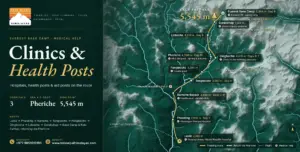
The upper Everest trail above 4,000 m, with the 4,000 m line, medical help points and how much lower each descent target lies.
Why 4,000 m Is a Turning Point on the Everest Trail
On our Everest Base Camp route, you cross 4,000 m just above Pangboche, and from then on you spend every night high: Dingboche at 4,410 m, Lobuche at 4,910 m, and Gorakshep at 5,164 m, with day trips to Everest Base Camp at 5,364 m and Kala Patthar at 5,545 m. This is where most cases of altitude sickness appear, because the body is working hardest and the gains in sleeping altitude add up. The whole area lies within Sagarmatha National Park, and our guide to what you see at Everest Base Camp shows what waits at the top.
It is also where help becomes thinner. Villages are farther apart, lodges are simpler, the weather is colder, and helicopters can carry fewer people. That is why knowing what to do before you need it matters so much. Our Everest Base Camp trek route guide describes every stage of this section.
Step 1: Stop, Sit Down and Tell Someone
The first few minutes matter most. If you feel sick above 4,000 m, whether on the trail or in your lodge:
- Stop walking uphill. Sit down somewhere sheltered and put on a warm layer.
- Tell your guide or a companion. Be honest about how you feel; hiding symptoms is the most dangerous thing you can do.
- Drink and eat a little. Warm water, tea, soup or a sweet snack helps if you are dehydrated or low on energy.
- Check the basics. Are you cold, thirsty, hungry or exhausted? Fixing these sometimes solves the problem.
- Do not go higher today. Whatever the cause, don’t gain more altitude until you feel better.
Step 2: Assume It Is Altitude Until Proven Otherwise
Mountain doctors teach a simple rule: treat any illness at altitude as altitude sickness until proven otherwise. Other conditions can look similar, but mistaking altitude sickness for a cold or a stomach bug is how trekkers get into trouble.
A Quick Self-Check
Doctors use a simple questionnaire called the Lake Louise score to assess acute mountain sickness. It asks about four symptoms, each scored from none to severe:
- Headache
- Stomach symptoms: Loss of appetite, nausea or vomiting
- Fatigue or weakness
- Dizziness or light-headedness
A headache plus other symptoms after a recent gain in altitude suggests acute mountain sickness, and the higher the total, the more serious it is. Your guide will ask about the same things each evening, often alongside a pulse oximeter reading, which is useful as one sign among several but never the whole story.
What Is Normal Above 4,000 m, and What Is Not
Some changes are simply your body adjusting, while others are warnings.
Usually Normal
- Breathlessness when walking uphill that settles quickly with rest.
- Waking several times at night, vivid dreams or pauses in breathing while asleep, known as periodic breathing.
- Needing to pass urine more often.
- Mild puffiness of the hands, face or ankles.
- A slightly reduced appetite.
- A light headache on arrival that goes away with rest, fluids and a simple painkiller.
Not Normal: Act Now
- A headache that gets worse despite rest and fluids.
- Vomiting, or being unable to eat or drink.
- Breathlessness at rest, or a cough that becomes wet or bubbly.
- Confusion, unusual behaviour, slurred speech or extreme drowsiness.
- Clumsiness or staggering, like being drunk.
- Chest tightness, a racing pulse at rest or blue lips.
Mild Symptoms: Rest, Drink and Recheck
Most trekkers who feel sick above 4,000 m have mild acute mountain sickness, and the treatment is straightforward.
- Stay at the same altitude. Don’t go up, but you don’t have to go down if you are steadily improving.
- Take an extra night where you are, or turn your planned walk into a short, gentle stroll.
- Drink well. Aim for clear, pale urine; avoid alcohol entirely.
- Treat the headache. A simple painkiller such as paracetamol or ibuprofen often helps; follow the packet and any advice from your doctor.
- Eat what you can. Soups, porridge and garlic soup are easy on a queasy stomach.
- Review your symptoms after a few hours and again in the morning with your guide.
If you feel clearly better the next morning, you can usually continue slowly. If you feel the same, take another rest day. If you feel worse at any point, go down. An extra night in Dingboche or Pheriche adds a day to the trek; pushing on with symptoms can end it altogether, which is why our itineraries include buffer time and our guides never hesitate to slow down.
Getting Worse: When to Go Down
Descent is the single most effective treatment for altitude sickness. Go down if any of these apply:
- Symptoms get worse despite a rest day.
- You develop vomiting or cannot keep fluids down.
- A headache does not respond to rest, fluids and a painkiller.
- Any danger sign appears: breathlessness at rest, a wet cough, confusion or clumsiness.
- You are not improving after a day or two at the same altitude.
Mountain medicine guidelines advise descending until symptoms clearly improve, typically 300 to 1,000 m, and at least 1,000 m for high-altitude pulmonary oedema where possible. Even a few hundred metres often brings remarkable relief. Never descend alone, and let someone carry your pack.
Danger Signs: HAPE and HACE
Two rare but serious conditions can follow or appear without much warning. Our altitude sickness guide covers them in detail, and our acute mountain sickness page summarises the basics.
High-Altitude Pulmonary Oedema (HAPE)
Fluid in the lungs. Warning signs include breathlessness at rest, a cough that turns wet or produces pink, frothy sputum, extreme tiredness, chest tightness and blue lips. What to do: descend immediately, ideally at least 1,000 m, with as little effort as possible. Give oxygen if available, keep the person warm and sitting up, and get medical help or a helicopter.
High-Altitude Cerebral Oedema (HACE)
Brain swelling, often after worsening mountain sickness. Warning signs include confusion, unusual behaviour, severe headache, vomiting, drowsiness and loss of coordination. A simple test is to walk heel to toe along a straight line; difficulty doing so is a red flag. What to do: descend immediately with helpers, give oxygen if available and seek medical care. Never leave the person alone.
How Far Down? Descent Options on the Everest Trail
Knowing how much lower the next village lies is one of the most useful things you can learn before the trek, and our route map shows it. The times below are rough guides for a healthy walker; a sick trekker will move more slowly.
- From Kala Patthar (5,545 m): Gorakshep is about 380 m lower and roughly an hour down. Keep going if symptoms do not improve.
- From Everest Base Camp (5,364 m): Gorakshep is about 200 m lower, roughly two hours back along the moraine. For anything beyond mild symptoms, continue down toward Lobuche and Pheriche.
- From Gorakshep (5,164 m): Lobuche is only about 250 m lower, two to three hours away, which is often not enough. Pheriche, about 920 m lower, is the real target and takes five to six hours on foot.
- From Lobuche (4,910 m): Thukla is about 290 m lower, and Pheriche, with its aid post, is about 670 m lower, roughly three hours away.
- From Dingboche (4,410 m): Pheriche is only about 170 m lower, so itis a place for a medical check rather than a real descent. For a meaningful drop, go down to Pangboche, about 425 m lower and roughly two hours away, or on to Tengboche and Deboche, below 4,000 m.
- From Chhukung (about 4,730 m): Dingboche is about 320 m lower, and Pangboche lies beyond.
In practice, the descent route from the high villages runs through Pheriche, which is why our itinerary returns that way after Kala Patthar. If you are too unwell to walk, you can sometimes arrange a horse, have porters help, or call a helicopter in daylight. Our guides to the Everest Base Camp trek distance and the Everest Base Camp trek itinerary give the full stage details.
Where to Find Help Above 4,000 m
If you feel sick above 4,000 m, remember that medical help this high is limited and partly seasonal, so it helps to know exactly where it is. Our full guide to Everest Base Camp Trek medical clinics covers every facility from Lukla up.
- Pangboche (3,985 m): A government health post, just below the 4,000 m line.
- Dingboche (4,410 m): A small clinic in the trekking season.
- Pheriche (4,240 m): The Himalayan Rescue Association aid post, staffed by volunteer doctors in spring and autumn, with altitude talks most afternoons.
- Gorakshep (5,164 m): A small clinic run by the local government in the busy seasons.
- Everest Base Camp (5,364 m): The Everest ER clinic, open only during the spring climbing season.
Lobuche and Thukla have no clinic, and outside the main seasons, several of these posts close. Lower down, the Khunde Hospital above Namche Bazaar, the hospital in Phakding and the hospital in Lukla, described in our guide to Phakding and Monjo, offer more care, and our Lukla Airport flights guide explains the gateway town.
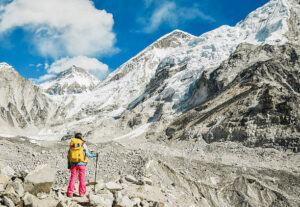
If You Feel Sick at Night
Symptoms often get worse at night, when breathing slows during sleep, temperatures fall, and helicopters cannot fly. A night-time plan makes all the difference.
- Wake your guide or a companion. Our guides sleep in the same lodges and expect to be woken if you feel unwell.
- Sit up and keep warm. Sitting upright eases breathing, and warmth reduces strain on the body.
- Do not take sleeping pills. They can slow your breathing at altitude.
- Use oxygen if it is available. Clinics, aid posts and some lodges keep bottled oxygen.
- Descend if danger signs appear. Do not wait for morning if a safe descent is possible with strong helpers and headlamps; your guide will judge the trail and the weather.
- Plan for first light. If descent is not possible, prepare to move at dawn and, if needed, ask the trekking company to arrange a helicopter for the morning.
It Might Not Be Altitude: Other Illnesses Above 4,000 m
Once altitude sickness is ruled out or treated, other common problems can make you feel sick above 4,000 m. They need their own care.
- Dehydration: Dark urine, headache and tiredness. Drink steadily and add rehydration salts.
- Exhaustion and low energy: Long, cold days burn a lot of energy. Eat regular meals and snacks.
- Stomach bugs: Diarrhoea, cramps and sometimes fever, often from contaminated water or food. Rest, rehydrate and see a clinic if you have a high fever, blood in your stool or cannot keep fluids down.
- Chest infections: Fever, a productive cough and aching. Unlike HAPE, breathlessness usually does not dominate at rest, but if you are unsure, treat it as HAPE and descend.
- The Khumbu cough: A dry, irritating cough from cold, dry air. Annoying but usually harmless; a buff over your mouth helps.
- Hypothermia: Shivering, clumsiness and confusion in the cold. Get out of the wind, change into dry layers and warm up with hot drinks.
- Snow blindness: Painful, gritty eyes after bright sun on snow. Rest your eyes in the dark and always wear good sunglasses.
- Alcohol: A hangover feels just like altitude sickness and makes it worse. Avoid alcohol above Namche.
Carbon Monoxide: A Hidden Risk in Cold Lodges
One look-alike deserves special mention. Carbon monoxide, produced by stoves and gas heaters burning without enough fresh air, causes headache, nausea and dizziness that are easily mistaken for altitude sickness. In one tragic case at a resort in Nepal’s hills, a group of tourists died after a gas heater was used in a closed room overnight.
- Never use a gas heater in a closed bedroom.
- Ventilate smoky dining rooms. Yak-dung and wood stoves can fill a room with smoke if the chimney draws poorly.
- Suspect carbon monoxide if several people feel ill at once, especially after a night in the same room.
- Get to fresh air immediately and seek help if symptoms are severe.
Oxygen, Gamow Bags and Medicines
Several tools can buy time while a sick trekker descends or waits for evacuation.
- Bottled oxygen: Available at clinics, aid posts and some lodges. It relieves symptoms quickly but is not a substitute for descent.
- Portable altitude chamber: Often called a Gamow bag, this inflatable bag raises the air pressure around a patient, simulating a descent of a thousand metres or more. Aid posts and some teams keep one.
- Painkillers: Paracetamol or ibuprofen can ease an altitude headache, but they do not treat the underlying problem.
- Prescription medicines: Acetazolamide, also known as Diamox, helps prevent and treat mountain sickness, and doctors use medicines such as dexamethasone and nifedipine for severe cases. These are prescription drugs: discuss them with your doctor before you travel, carry them only on medical advice and take them only as directed.
One rule matters above all: medicines and oxygen buy time to descend; they are never a reason to keep climbing. Mountain medicine guidelines advise against further ascent while being treated with dexamethasone.
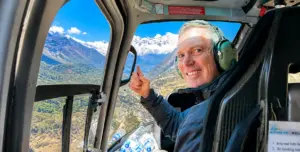
When a Helicopter Is the Right Call
Helicopter evacuation is the right choice when a trekker has HAPE or HACE, cannot walk down safely, does not improve after descending, or has a serious injury or illness that needs hospital care. It is not the right choice for mild symptoms that would settle with rest or a short descent.
- Daylight only: Helicopters fly only in daylight and reasonable visibility.
- Limited lift at high altitude: Above about 4,500 m, a helicopter can lift only two or three passengers, so patients higher up are often shuttled down to Pheriche first, and the helicopter refuels at Lukla.
- Where you go: Most patients are flown to hospitals in Kathmandu.
- Who arranges it: Your guide and our office, working with your insurer.
Weather decides everything for helicopters, as our guide to the best seasons for an Everest helicopter tour explains. Our guide to helicopter rescue in the Everest region explains the evacuation process, and our article on whether a helicopter can land at Everest Base Camp covers the limits of flying at altitude.
Calling Your Insurer: What to Have Ready
Most insurers must approve an evacuation before the helicopter flies, so having the right information ready saves precious time. Your policy should cover trekking to at least 6,000 m with helicopter rescue.
- Keep your policy number and the insurer’s 24-hour emergency line on paper and on your phone.
- Your exact location: The village or the nearest point on the trail.
- Your symptoms and when they started, plus any oxygen readings.
- Any medical assessment from a clinic, aid post or doctor.
- A contact number for your guide or our office.
- Your permit details: The trekking permits our team arranges, described in our guide to Everest Base Camp trek permits, record your route and help rescuers trace it.
Keep all medical notes afterwards. Insurers check evacuation claims carefully, partly because of past concerns in Nepal about unnecessary rescues.
If a Friend or Fellow Trekker Is Sick
If someone in your group seems sick above 4,000 m but insists they are fine, take it seriously: people with altitude sickness often say they are fine. Confusion and stubbornness can be symptoms in themselves, so watch your companions as closely as yourself.
- Look for changes: Unusual quietness, irritability, stumbling, lagging, or not eating.
- Ask direct questions: How is your head? Did you eat? Can you walk a straight line heel to toe?
- Never leave a sick person alone, and never let them descend alone.
- Carry their pack and walk at their pace on the way down.
- Tell a guide or lodge owner if you meet an independent trekker who seems unwell.
Feeling Sick While Trekking Solo or Without a Guide
Trekking alone makes everything above harder, because no one is watching for the changes you may miss in yourself. If you trek solo, share your daily plan, tell your lodge how you feel, carry a way to call for help and set a firm rule to turn back early. Our guides to the Everest Base Camp Trek solo and the Everest Base Camp Trek without a guide explain how to build your own safety net.
After You Feel Better: Can You Continue?
This is the question every sick trekker asks, and the answer depends on what you had.
- Mild acute mountain sickness: Once your symptoms have completely gone, you can usually continue slowly, with an extra rest day if possible. Never continue up while you still have symptoms.
- After HAPE or HACE: Most doctors advise ending the trek. Do not go higher again without a doctor’s assessment and clear advice.
- After dexamethasone: Do not continue up while taking it, and follow your doctor’s advice before any further ascent.
- After a stomach bug or cold: Rest until you are eating and drinking normally, then continue gently.
Turning back is not failure. Many of our guests who descended early returned later and reached base camp healthy and happy. If you need to shorten your trip, our team can suggest gentler options, such as staying a night at Tengboche for the monastery’s evening prayers, described in our guide to Tengboche Monastery and the Mani Rimdu festival, or the views from the Hotel Everest View.
How Our Guides Respond When Someone Feels Sick
On our 14-day Everest Base Camp Trek, we include health checks every day. Our Sherpa guides carry a first-aid kit and are experienced in recognising sickness. Many grew up in the high villages of the Khumbu, as our guide to Sherpa culture and traditions explains. They ask how you slept and how you feel each morning, set a steady pace, and check every trekker in the evening, often with a pulse oximeter as one of several signs.
When someone begins to feel sick above 4,000 m, the guide decides with the trekker whether to rest, descend or seek medical help, stays with them, and keeps in touch with our office in Kathmandu, which arranges extra help, porters or a helicopter if needed. Meet the people who lead our treks on our team page.
Preventing Illness above 4,000 m
The best way to avoid deciding what to do if you feel sick above 4,000 m is to prevent it. Our altitude sickness guide explains prevention in depth, but the essentials are simple.
- Choose a well-paced itinerary: Our plan includes rest days in Namche and Dingboche, as described in our 14-day Everest Base Camp trek. Find out how many days the EBC trek takes, and be cautious with the short 10-day Everest Base Camp trek.
- Climb high, sleep low: Acclimatise with short hikes to higher ground, such as the walk to the Chhukung Valley, then sleep lower.
- Walk slowly: You should always be able to talk while walking.
- Stay hydrated and warm: Drink steadily and change out of sweaty layers when you arrive.
- Prepare well at home: Our Everest Base Camp trek training plan builds fitness, and our Everest Base Camp trek packing list and trekking equipment page cover the gear.
- Choose your season: Our guide to the best time for the Everest Base Camp trek compares the months; the Everest Base Camp Trek in April and the Everest Base Camp Trek in October cover the two busiest months, and the Everest Base Camp Trek in November and the Everest Base Camp Trek in monsoon explain how cold and rain affect your health.
First-timers, older trekkers and families will find tailored advice in our guides to the Everest Base Camp trek for beginners, the Everest Base Camp trek over 50 and the Everest Base Camp trek with kids. In contrast, our guide to Everest Base Camp trek difficulty explains the physical challenge.
Ways to See Everest With Less Time at High Altitude
If you are worried about altitude, several trips reduce the time you spend above 4,000 m.
- Everest Base Camp Luxury Lodge Trek: 11 days with a helicopter in and out and the finest lodges on the trail.
- Luxury Everest Base Camp Trek with Helicopter Return: 12 days, trekking up in comfort and flying back after base camp.
- Everest Base Camp Helicopter Trek: Walk up the classic route and fly back by helicopter, in about ten days.
- Everest Elite Luxury Heli Trek: Our most exclusive combination of fine lodges and helicopter flights.
- Everest View Trek: A shorter trek that stays below 4,000 m, or the luxury Everest View trek for more comfort.
- Everest Base Camp Yoga Trek: A slower, mindful pace, described in our EBC yoga trek guide.
- Helicopter tours: The Everest Helicopter Tour and the sharing Everest helicopter tour with a Kala Patthar landing spend only minutes at altitude, with strict limits explained in our guides to Everest helicopter tour restrictions and the Kala Patthar landing sharing tour.
Our guides to choosing an EBC trek or a helicopter tour and the Everest Base Camp helicopter return compare the options, and our luxury Everest Base Camp trek guide and luxury lodges in the Everest region guide show how comfortable the trail can be. Our articles on the Everest Base Camp helicopter tour and the EBC helicopter tour vs heli trek explain the flying options. If altitude rules out a trek altogether, an Everest mountain flight lets you see the peaks from the air.
Other Treks Above 4,000 m Where This Advice Applies
In the Everest Region
- Gokyo Valley: The Everest Gokyo Lakes Trek sleeps at Gokyo at 4,790 m, with the climb to Gokyo Ri; see our Gokyo Lakes trek guide, our guide to Gokyo Ri and the Fifth Lake and our comparison of Gokyo Ri vs Kala Patthar.
- High passes: The Everest 3 Pass Trek crosses the Renjo La and Cho La, far from clinics; read our Everest Three Passes trek guide.
- Ama Dablam Base Camp: The Ama Dablam Base Camp Trekking route reaches the foot of Ama Dablam, as our Ama Dablam base camp trek guide
- Trekking peaks: Island Peak Climbing, Lobuche Peak Climbing and Mera Peak Climbing go above 6,000 m, so insurance should cover at least 6,500 m. Read our guides to Island Peak, Lobuche East and Mera Peak.
Elsewhere in Nepal and Tibet
- Annapurna: The Annapurna Circuit Trek crosses the Thorong La, with a Himalayan Rescue Association aid post at Manang, and the Tilicho Lake Trek climbs to one of the world’s highest lakes. The Annapurna Base Camp Trek ends just above 4,000 m, as our ultimate guide to the Annapurna Base Camp trek.
- Langtang and Manaslu: The viewpoints above Kyanjin Gompa on the Langtang Valley Trek top 4,000 m; the Langtang Gosaikunda Trek climbs to the sacred lakes, and the Manaslu Circuit Trek crosses the Larke Pass.
- Remote regions: The Kanchenjunga Base Camp Trek reaches remote high camps far from help, the Nar Phu Trek crosses the Kang La, and the Lower Dolpo Trek crosses passes above 5,000 m.
- Shorter high treks: The upper viewpoints of the Mardi Himal Trek also rise above 4,000 m, so the same rules apply.
- Tibet: The Lhasa to Everest Base Camp overland tour reaches the north side of Everest by road, which makes gradual acclimatisation important, as our Lhasa to Everest Base Camp guide Mount Kailash tour includes the Kailash kora over the Dolma La pass, after time beside Lake Mansarovar. For more ideas, browse our list of the 50 best treks in Nepal.
Common Mistakes When Feeling Sick at Altitude
- Hiding symptoms to keep up with the group or stay on schedule.
- Climbing higher with a headache, hoping it will pass.
- Treating altitude sickness as a cold or a stomach bug.
- Relying on painkillers to keep walking up.
- Waiting until night to act, when helicopters cannot fly.
- Descending alone or letting a sick friend go down alone.
- Taking sleeping pills or alcohol at altitude.
- Accepting an unnecessary helicopter flight when rest or a short descent would do, or refusing a necessary one.
- Trekking without suitable insurance.
How Our Team Supports You on the Trail
We are a Kathmandu-based, Sherpa-led company, and your health matters more to us than any viewpoint. Our team plans every itinerary with proper acclimatisation, checks which clinics and aid posts are open for your dates and stays in contact with your guide throughout the trek. Read why travellers choose us as their trekking company in Nepal, explore our complete trekking in Nepal guide, learn about our commitment to responsible tourism, view our legal documents, and contact us with any health questions before you book.
Frequently Asked Questions About Feeling Sick Above 4,000 m
What should I do first if I feel sick above 4,000 m?
Stop climbing, sit down, tell your guide or a companion and drink something warm. Assume it is altitude sickness until proven otherwise, and do not go higher until you feel better.
How do I know if it is altitude sickness or something else?
A headache with nausea, tiredness or dizziness after a recent gain in altitude points to altitude sickness. Other illnesses can look similar, so treat it as altitude sickness first and see a clinic if you are unsure.
How far should I descend?
For worsening symptoms, descend at least 300 to 500 m, and ideally until you clearly improve, often 1,000 m. For HAPE, aim for at least 1,000 m where possible.
Can I take painkillers for an altitude headache?
Yes, simple painkillers such as paracetamol or ibuprofen can help, but they do not treat altitude sickness. Never use them to keep climbing with symptoms.
When do I need a helicopter?
When someone has HAPE or HACE, cannot walk down safely, does not improve after descending, or has a serious injury or illness. Helicopters fly only in daylight.
What should I do if I feel sick at night?
Wake your guide, sit up, keep warm and use oxygen if available. If danger signs appear and a safe descent is possible with helpers, do not wait for morning.
Can I continue the trek after altitude sickness?
After mild altitude sickness, usually yes, once symptoms have completely gone, going slowly. After HAPE or HACE, most doctors advise ending the trek.
Is it normal to feel breathless and sleep badly above 4,000 m?
Yes. Breathlessness on exertion that settles with rest and broken sleep with periodic breathing are normal. Breathlessness at rest is not, and needs urgent action.
What if my friend says they are fine but seems unwell?
Trust what you see. Confusion and denial can be symptoms. Tell a guide, keep them with you and help them descend if they are getting worse.
Where is the nearest medical help above 4,000 m?
The clinic in Dingboche, the aid post in Pheriche in spring and autumn, the clinic in Gorakshep in the busy seasons and Everest ER at base camp in spring. Our 14-day Everest Base Camp Trek passes all of them.
Final Thoughts: Listen to Your Body, Act Early
Almost everyone feels the altitude on the way to Everest, and most trekkers who feel sick above 4,000 m recover with nothing more than rest, fluids and patience. The rare serious cases are where knowledge matters most: stop, tell someone, never climb with worsening symptoms, descend early, and never go alone. With a sensible itinerary and an experienced guide beside you, the high Khumbu becomes not a place of worry but the adventure of a lifetime.
Ready to go? Join our Everest Base Camp Trek with licensed Sherpa guides, or spend less time at altitude on the Luxury Everest Base Camp Trek with Helicopter Return. Learn more about Trek Nepal Himalayas, start shaping your journey on our Plan Your Trip page, or contact us, and our team will help you plan a safe, healthy trek.


