
Things to Do in Namche Bazaar on a Rest Day
Things to Do in Namche Bazaar on a Rest Day
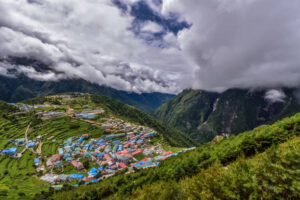
Morning comes to Namche Bazaar from above. First light catches the icy flutings of Kongde Ri across the valley, while Thamserku stands dark against a brightening sky behind the town. Then the sun spills over the ridge into the great horseshoe of stone lodges and blue-and-green roofs stacked up the hillside. Yak bells clink in the lanes, an older woman turns the prayer wheels by the stupa, and the smell of fresh bread drifts out of a bakery. After two days of walking up from Lukla, you wake up in the Sherpa capital of the Khumbu with a whole day to spend at 3,440 m.
That day matters. On almost every well-planned Everest itinerary, including our 14-day Everest Base Camp Trek, the second night in Namche is an acclimatization stop, and how you use it shapes how you feel at Tengboche, Dingboche and beyond. The good news is that Namche Bazaar offers plenty to do, from sunrise views of Everest and the classic hike to the Hotel Everest View to Sherpa museums, a centuries-old gompa, the weekly market, and the best bakeries on the trail.
In this guide, our Sherpa team shares how we plan the Namche rest day for our guests: the hikes worth doing, how high to go, what to see in town, how to look after your body at altitude, and how to tailor the day to your fitness, the weather, and your interests. For the bigger picture of the town itself, read our Namche Bazaar guide.
The Short Answer: What Are the Best Things to Do in Namche Bazaar on a Rest Day?
On a rest day in Namche Bazaar, take a morning acclimatization hike, either to the national park visitor center and Tenzing Norgay statue or up to the Hotel Everest View at 3,880 m and the villages of Khumjung and Khunde. Spend the afternoon resting, visiting the Sherpa Culture Museum, gompa and bakeries, and restocking supplies.
The golden rule is simple: climb a few hundred meters during the day, sleep back in Namche at night, and keep the effort gentle enough that you finish the day feeling better, not worse.
Namche Bazaar Rest Day at a Glance
- Altitude: Namche Bazaar sits at about 3,440 m in Sagarmatha National Park, the gateway to the upper Khumbu.
- Why a rest day: Your body needs time to adapt after the climb from Phakding and Monjo, a gain of more than 800 m.
- Best acclimatization hike: Syangboche and the Hotel Everest View at about 3,880 m, 1.5 to 2 hours above town.
- The full loop: Add the Sherpa villages of Khumjung and Khunde for a varied day of four to six hours.
- Short options: The national park visitor center, the Tenzing Norgay statue and the Sherpa Culture Museum, 20 to 30 minutes above the main lanes.
- For strong trekkers: A full-day hike to Thame, home to famous Everest climbers.
- In town: Namche Gompa, the water-powered prayer wheels, the Saturday market, bakeries, gear shops and pharmacies.
- Our trek: Day 4 of the 14-day Everest Base Camp Trek is the Namche acclimatization day.
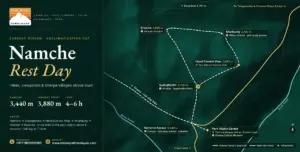
The classic rest-day hikes above Namche Bazaar: the park visitor center, Syangboche, the Hotel Everest View, Khumjung and Khunde, with the trail to Thame and the main trail on to Tengboche.
Why the Namche Rest Day Matters
Phakding sits at about 2,610 m. By the time you reach Namche the next afternoon, after passing the national park gate at Monjo where your Everest Base Camp trek permits are checked, you have gained more than 800 m, much of it on the long, steep climb above the Hillary Bridge. At 3,440 m, every breath has roughly a third less oxygen than at sea level, and your body needs time to respond: breathing more deeply, adjusting your blood chemistry and, over the following days and weeks, making more red blood cells.
Doctors and mountain guides agree on a simple principle for this stage of the trek: climb high and sleep low. A walk that takes you 300 to 450 m above Namche, followed by a night back at 3,440 m, gives your body a gentle push to adapt without asking it to sleep higher before it is ready. Once you are above 3,000 m, the usual advice is to raise your sleeping altitude by no more than about 500 m a day and to add a rest day every three to four days. That is exactly why our Everest Base Camp trek itinerary includes this day in Namche and a second one in Dingboche, and why our guide to how many days the EBC trek takes warns against cutting them.
The rest day also gives you time to recover from the journey. Many trekkers arrive tired after an early flight to Lukla, two days of new food, and a restless first night at altitude. A relaxed morning hike, a good lunch, and an afternoon of rest often transform how people feel. To understand the science and warning signs, read our altitude sickness guide for Everest Base Camp; for a realistic picture of the effort ahead, see our article on Everest Base Camp trek difficulty.
Rest, in other words, does not mean staying in bed. The trekkers who feel best at Tengboche and Dingboche are usually the ones who stretched their legs gently in Namche, ate and drank well, and went to bed early. Namche Bazaar offers plenty to do, and the art of the rest day is choosing the right mix for you.
How Our Guides Plan the Day: A Sample Rest-Day Schedule
Every group is different, but this is how a typical Namche acclimatization day unfolds on our 14-day Everest Base Camp Trek, as described day by day in our guide to the Everest Base Camp trek in 14 days.
- 6:00 am, optional sunrise: Walk 20 to 30 minutes to the visitor center viewpoint for first light on Everest, Lhotse, and Ama Dablam.
- 7:30 am, breakfast: Porridge, eggs, Tibetan bread or pancakes, and plenty of hot drinks.
- 8:30 am, acclimatization hike: Climb to Syangboche and the Hotel Everest View, then continue to Khumjung and Khunde if everyone feels well.
- 12:30 to 2:00 pm, back in Namche: Lunch in your lodge, or in Khumjung on the longer loop.
- Afternoon, your own time: Rest, the Sherpa Culture Museum, the gompa, shopping, laundry,y and a bakery visit.
- 5:30 pm, health check: Your guide asks how everyone is feeling and briefs you on the walk to Tengboche.
- 6:30 pm, dinner and an early night: A hearty meal, more fluids, ds and a long night’s sleep.
Our guides adapt this plan as needed. If the morning is clear, they may start earlier to catch the views before clouds build up the valley, which happens on many afternoons, especially in spring and the monsoon. If someone has a headache, they shorten the hike or swap it for a gentle stroll. The order of Things to do in Namche Bazaar matters too: views and hikes in the morning, museums and errands in the afternoon. The point is not to tick off every sight, but to arrive at the next stage of the Everest Base Camp trek route rested and well adjusted. Our guide to the Everest Base Camp trek distance shows how far you still have to go.
Watch Sunrise from the National Park Visitor Center
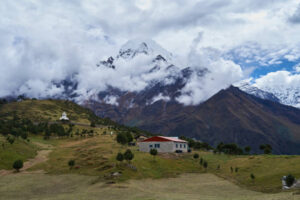
The easiest of all the Things to Do in Namche Bazaar is also one of the most rewarding. From the top of town, a path climbs for 20 to 30 minutes to the Chhorkung ridge, where the national park headquarters and visitor center stand beside the army post. The flat ground in front of them is one of the finest viewpoints in the Khumbu. On a clear morning, Everest’s dark summit pyramid rises above the long ridge of Nuptse and Lhotse, with Ama Dablam to the right and Thamserku and Kangtega towering almost overhead.
The Tenzing Norgay Statue
On the hilltop stands a statue of Tenzing Norgay Sherpa, who stood on the summit of Everest with Edmund Hillary on the first ascent. It looks up the valley towards the mountain that made him famous, and it is a moving place to pause before you head higher. Tenzing spent his childhood in the Thame Valley, a few hours west of where you stand, so this is very much his home ground. Our guide to Sherpa culture and traditions tells the story of the people who made Khumbu climbing history.
Inside the Visitor Center
The visitor center has displays on the park’s plants and wildlife and the culture of the Khumbu Sherpas. It is a good place to understand what you will see over the coming days, from the rhododendron and birch forests around Tengboche to the moraines and glaciers above Lobuche. Opening hours vary with the season, so ask your guide or lodge.
Our tip: go at dawn, when the air is clearest, and take a flask of tea. If clouds roll in, come back in the late afternoon, when the light on Thamserku and Kongde can be spectacular.
Explore the Sherpa Culture Museum
A few minutes from the visitor center, the Sherpa Culture Museum is a small private museum created by a local photographer and set in a traditional Sherpa house. It shows how Khumbu families lived before lodges, electricity and the internet arrived.
- Upstairs: The family living room with its hearth, copper and brass vessels and painted wooden cabinets, and a separate prayer room, the heart of every Sherpa home.
- Downstairs: The stable and stores for yak dung, firewood and hay, which kept the house warm and the animals safe through the winter.
- The summiteers’ gallery: Photographs of Sherpa climbers who have stood on top of Everest, from Tenzing Norgay onwards, together with pictures and documents from the history of Everest climbing.
A visit takes 30 to 60 minutes and combines perfectly with the sunrise viewpoint or a quiet afternoon. For many of our guests, it is the moment when the faces they meet on the trail- the lodge owners, guides, and porters- become part of a bigger story. To go deeper, our article on Buddhism in Tibet explains the faith that shapes Sherpa life, and our guide to chortens in Tibetan Buddhism explains the stupas you pass every day.
Hike to the Hotel Everest View via Syangboche
This is the classic Namche acclimatization hike, and for good reason. It climbs about 440 m to a terrace with one of Nepal’s most famous views, then returns you to Namche to sleep. Our guide to the Hotel Everest View and the Syangboche hike tells the hotel’s full story; here is what to expect on your rest day.
Namche to Syangboche
From the upper lanes of Namche, a steep stone staircase zigzags up the hillside. Take it slowly: this is the steepest part of the day, and the altitude makes itself felt. After about an hour, the gradient eases onto the broad Syangboche ridge at about 3,750 m and its small, dusty airstrip, used mostly by helicopters and cargo flights. Look back for a bird’s-eye view of Namche’s horseshoe of lodges.
Through the Juniper to the Hotel
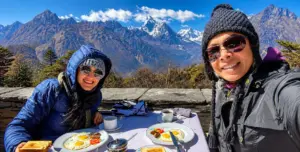
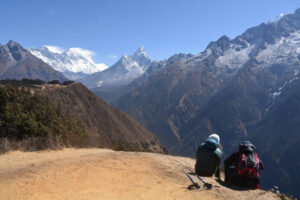
From Syangboche, a gentle path winds through juniper and dwarf rhododendron to the hotel at about 3,880 m. Built by a Japanese visionary in the early years of Himalayan tourism, and once recognized by Guinness World Records as the highest-placed hotel in the world, it sits on a ridge with an uninterrupted view up the valley. From the terrace, Everest, Lhotse and Nuptse line up behind the graceful spire of Ama Dablam, with Thamserku, Kangtega and Taboche around them.
Order a pot of tea or hot lemon, sit in the sun and give your body time at this height. An hour or so at the high point is part of the acclimatization benefit, so there is no rush. The walk up takes most people one and a half to two hours, and the return to Namche takes about an hour.
Who This Hike Suits
Almost everyone. It is steep but short, and you can turn back at Syangboche if you feel unwell. It suits first-time trekkers, families, and anyone who wants a big view for moderate effort, and our guide to the Everest Base Camp trek for beginners explains how to pace these early days. If you would love to sleep at the hotel itself, read our Luxury Everest View Trek guide.
Visit Sagarmatha Next at Syangboche
On the Syangboche plateau, at about 3,775 m, Sagarmatha Next is one of the newest Things to Do in Namche Bazaar and one of the most thought-provoking. It is a center dedicated to the Everest region’s waste problem and more sustainable tourism, created with support from the local pollution control committee.
- Interactive exhibition: Touch screens on climbing, Sherpa culture, and the environmental challenges facing the Khumbu.
- Virtual reality: Headsets that let you “walk” through the Khumbu Icefall above base camp.
- Films and the Waste Lab: Short films and a workshop where artists and designers turn mountain rubbish into useful objects and art.
- Shop and café: Products made from upcycled waste, and a warm place for a drink on the way to the Hotel Everest View.
Together with the Sagarmatha Pollution Control Committee, Sagarmatha Next also runs the Carry Me Back initiative, which invites trekkers to carry a small, pre-packed bag of waste (about a kilo) down to Lukla at the end of their trek. It is a simple way to give something back to the mountains. Opening times and programs change, so ask your guide whether the center and the scheme are running during your visit. Our page on responsible tourism explains how we travel lightly in the mountains.
Walk the Khumjung and Khunde Loop
If you feel good at the Hotel Everest View, carry on. A short descent through forest brings you into the wide, sheltered valley of Khumjung (about 3,790 m), one of the largest Sherpa villages in the Khumbu, with its stone houses, green roofs and potato fields at the foot of the sacred mountain Khumbila.
The Hillary School
The Khumjung School, known everywhere as the Hillary School, was the very first project of Sir Edmund Hillary’s Himalayan Trust. It began with two small classrooms and today educates hundreds of children from across the Khumbu. A statue of Hillary stands nearby. It is a working school, so admire it from the grounds; never enter classrooms uninvited, and ask before taking photos.
The Khumjung Monastery and the Yeti Scalp
At the upper edge of the village, the Khumjung monastery keeps the region’s most famous relic, a conical, reddish-brown “yeti scalp”. Scientists who examined it on an expedition led by Hillary concluded that it was made from the skin of a serow, a Himalayan goat-antelope. Still, it remains a treasured and much-photographed object. Visit respectfully and follow the monks’ guidance on photography.
Khunde and Its Hospital
A short walk west brings you to Khunde (3,840 m) and the Khunde Hospital, also founded by the Himalayan Trust and still the main hospital of the upper Khumbu. It is reassuring to know it is there, and our guide to Everest Base Camp trek medical clinics explains how it fits into the network of care along the trail. Strong walkers can add the climb to the Hillary Memorial viewpoint above Khunde, about 30 minutes up, with chortens in memory of Hillary and his family and a sweeping view of the peaks.
From Khunde, the trail climbs back over the ridge past Syangboche and drops steeply into Namche. The full loop covers about 7 to 8 km with 400 to 450 m of ascent and takes four to six hours with stops. A lunch of Sherpa potatoes or apple pie in Khumjung makes it an easy, happy day.
Hike to Thame, the Village of Everest Legends
For strong, well-acclimatized trekkers who want a longer and quieter day, the walk west to Thame (about 3,800 m) is one of the most beautiful outings from Namche. It is also the most demanding of the usual options, so you should decide with your guide in the morning, not the night before.
The Trail Through Thamo
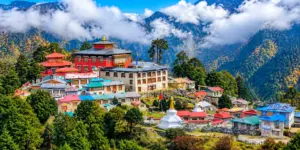
The path leaves Namche on its western side and contours into the Bhote Koshi valley, following the river’s northern bank through forests of pine, birch, juniper, and rhododendron. It passes the small villages of Phurte, Samshing and Thamo, crosses several bridges and climbs to Thame, where yaks graze in stone-walled fields beneath the peaks of the Nepal-Tibet border. Musk deer and Himalayan monal are sometimes seen in the forest. Allow about three and a half hours up and three hours back.
Thame Gompa and Its Legends
Above the village, Thame Gompa clings to a ledge with a superb view down the valley. Founded roughly three and a half centuries ago, it is one of the oldest monasteries in the Khumbu and a place where monks perform the masked dances of the Mani Rimdu festival. Thame is also a village of legends: Tenzing Norgay grew up here, and it is the home of record-breaking climbers including Apa Sherpa and Kami Rita Sherpa, who holds the record for the most ascents of Everest. The Buddhist teacher Lama Zopa Rinpoche was also born in Thame.
Is Thame Right for Your Rest Day?
Only if you feel completely well, the weather is settled, and your guide agrees. The hike takes six to seven hours and climbs more than 500 m if you visit the gompa, which is more than most trekkers need on their first acclimatization day. For most people, the Hotel Everest View loop is the better choice, and Thame makes a wonderful extra day or part of the route to the Renjo La pass on the Everest 3 Pass Trek. The valley also carried the old trade route over the Nangpa La into Tibet.
Browse the Saturday Market
If your rest day falls on a Saturday, get up early. Namche’s weekly market, the haat bazaar, is busy from shortly after sunrise until around midday, and it is one of the liveliest scenes in the Himalaya.
It is a working market, not a souvenir fair. Porters and traders from the lower hills, some after walking for many days, bring rice, lentils, flour, vegetables, eggs, meat, cooking oil and household goods. Traders from Tibet have traditionally brought blankets, shoes, clothes and other goods from across the border. Lodge owners from villages as high as Pheriche and Lobuche come down to stock up for the week, and the bargaining, in Nepali, Sherpa and sign language, is lively and good-humored.
The market keeps alive the trading tradition that made Namche what it is. For generations, Sherpas carried grain, butter and paper over the Nangpa La to Tibet and returned with salt and wool, and Namche grew prosperous as a meeting point. That trade dwindled in the mid-twentieth century after political changes in Tibet, and the weekly market, set up several decades ago, now brings most goods up from the south.
Our tips: go early for the busiest scenes, keep to the side of the narrow lanes for loaded porters and animals, and ask before photographing people. If your rest day isn’t Saturday, Namche’s shops and stalls are open every day.
Visit Namche Gompa and the Water-Powered Prayer Wheels
Namche’s small monastery, a Nyingma gompa said to be around three centuries old, sits near the top of town and is used for village ceremonies and festivals. Inside, painted murals, butter lamps and statues create a quiet, atmospheric space, and a visit is a calm way to spend half an hour.
The gompa comes alive during Dumje, the early-summer festival that honors Guru Rinpoche, the great teacher Guru Padmasambhava, when families take turns hosting the whole village for days of prayer, dance and feasting.
The Prayer Wheels and the Spring
In the heart of town, five large prayer wheels turn day and night, driven by the stream that flows through Namche. The community built them where, according to local tradition, the first settlers found water flowing from the forest, and one local explanation links Namche, the Sherpa name of the town, to that forest. Each turn is believed to send countless prayers out into the world. Walk around them clockwise, as you do with every stupa, mani wall and prayer wheel in the Khumbu.
Near the entrance to town, a large white stupa crowned with the painted eyes of the Buddha and strung with prayer flags welcomes trekkers arriving from Lukla, and the community has restored several of Namche’s stupas and chortens after earthquake damage. It is a lovely place to sit in the evening light. Learn more about the region’s monasteries in our guides to Tengboche Monastery and Mani Rimdu and to Pangboche monastery and village, often described as the oldest in the Khumbu.
Enjoy Namche’s Bakeries, Cafés and Mountain Films
For many trekkers, the bakeries alone are reason enough to love Namche. Apple pie, cinnamon rolls, chocolate cake and real coffee taste extraordinary at 3,440 m, and an afternoon in a sunny café with a book or a journal is part of the rest-day ritual.
Some cafés and lodges also show mountain documentaries and Everest films in the afternoon or evening, a cozy way to learn about the climbs above you. Namche even has an Irish-themed pub that claims to be one of the highest in the world, and a handful of bars with music.
Eat well, because rest days are when you build reserves. Dal bhat, with its endless second helpings, is the trekkers’ favorite fuel, and soups, especially garlic soup, Tibetan bread, potatoes, and momos are excellent choices. Go easy on alcohol, which can disturb sleep and mask the symptoms of altitude sickness; most guides suggest saving the celebration for the way down.
Run Your Errands: Gear, Pharmacies, Connectivity and Laundry
Not all Things to Do in Namche Bazaar are about sightseeing. Namche is the last place on the main trail with a real choice of shops and services, so use the rest day to sort out anything you need for the higher stages.
- Trekking gear: Dozens of shops sell or rent down jackets, sleeping bags, fleece, gloves, hats, socks, trekking poles and microspikes. Quality varies, so check zips and stitching. Our trekking equipment page and Everest Base Camp trek packing list list what you really need.
- Pharmacies and medical help: Several pharmacies, a community health post, private clinics in the busy seasons, and a dental clinic. Stock up on lip balm, sunscreen, throat lozenges,s and rehydration salts.
- Connectivity: Mobile coverage and Wi-Fi are far more reliable here than in the higher villages. Buy a Wi-Fi card that works along the trail, message home,e and download offline maps.
- ATMs and banks: Namche has a bank and ATMs, but the machines can run out of cash or go offline, so don’t rely on them.
- Laundry and showers: Lodges and small laundries wash clothes, and hot showers are easier to find here than higher up. Shower in the warm middle of the day so you do not get chilled.
- Charging and backups: Charge batteries and power banks, and back up your photos before the colder villages, where charging is slower.
Snacks, chocolate, toilet paper, and water purification tablets are also easy to find. Remember that porters or animals carry everything on the shelves, so think about packaging and carry your rubbish down where you can.
Take a Photography Walk
Namche is one of the most photogenic towns in the Himalaya, and the rest day gives you time to take in the views.
- Dawn at the viewpoint: Everest, Lhotse and Ama Dablam above the clouds, with the Tenzing Norgay statue in the foreground.
- The amphitheater from above: The horseshoe of lodges seen from the trail to Syangboche, best in the soft light of early morning or late afternoon.
- Thamserku at sunset: The great peak above Namche often glows pink and gold as the sun goes down.
- Lanes and people: Porters, yaks, prayer flags and the market, always asking before photographing people up close.
- Khumjung’s green roofs: The village seen from the forest trail below the Hotel Everest View, with Khumbila behind.
Batteries drain quickly in the cold, so keep a spare in an inside pocket and charge everything in the afternoon. For more ideas about the views ahead, read What You See at Everest Base Camp, our guide to Kala Patthar, and our comparison of Gokyo Ri vs Kala Patthar.
Rest, Recharge and Look After Your Body
Use the afternoon of your rest day to rest truly. Sit in the sun, read, stretch, write your journal, and nap if you need to, ideally before mid-afternoon so that you still sleep well at night.
- Drink well: Aim for about three to four liters a day, including soups and tea. Pale urine is a good sign.
- Eat well: Carbohydrates help at altitude. Finish your meals, even if your appetite is low.
- Keep warm: Temperatures fall fast when the sun leaves the valley. Put on a warm layer before you feel cold.
- Stretch: Gentle stretching or yoga eases tired legs, and our Everest Base Camp Yoga Trek builds a daily session into the journey, as our Everest yoga trek guide
- Sleep: Go to bed early, and avoid sleeping pills, which can depress breathing at altitude.
- Look after your feet: Air out your boots, check for hot spots, and treat blisters early.
Choosing the Right Rest-Day Plan for You
The right Things to do in Namche Bazaar depend on how you feel. Our guides decide with each group each morning, based on how everyone slept, the weather, and the next day’s walk. These are the plans we use most often.
- Feeling strong: The full loop to the Hotel Everest View, Khumjung and Khunde, or Thame if your guide agrees.
- Feeling average: The Hotel Everest View and back, with time at the top, then the museum in the afternoon.
- A slight headache or poor sleep: Take a gentle walk to the visitor center viewpoint, then rest, hydrate,s and recheck in the afternoon.
- Feeling unwell: Stay in Namche, rest, tell your guide, and visit the health post if symptoms do not improve.
- Families with children: Visit the visitor center, the museum, Sagarmatha Next, and take a short walk to Syangboche. Our guide to the Everest Base Camp trek with kids has more ideas.
- Trekkers over 50: A steady hike to the hotel with long breaks. See our advice on the Everest Base Camp trek over 50.
- Solo trekkers: Join your guide’s plan or walk with a companion, never alone off the main paths. Read our guide to the Everest Base Camp trek solo.
If you are trekking without a guide, plan conservatively and tell your lodge where you are going; our article on the Everest Base Camp trek without a guide explains the rules and trade-offs. Good preparation at home makes every rest day easier, and our Everest Base Camp trek training plan shows how to build the fitness for it.
Altitude and Acclimatization: What to Watch for on Your Rest Day
Namche is high enough for altitude sickness to appear, and rest days are often when it shows itself. Mild symptoms of acute mountain sickness include a headache, nausea, loss of appetite, dizziness, unusual tiredness, and poor sleep. Many trekkers notice some of these on the first night and improve with rest and fluids.
Warning Signs
- A worsening headache that does not respond to rest, fluids and simple painkillers.
- Breathlessness at rest or a persistent, wet cough.
- Confusion, clumsiness or loss of balance, or extreme drowsiness.
- Vomiting that does not stop. If you have any of these signs, do not go higher; if you have serious symptoms, descend straight away, with a companion, and get medical help. From Namche, a descent towards Monjo or Phakding is quick and effective. Our guides carry a first-aid kit, are experienced in recognizing altitude sickness, and will never push you to continue if you are unwell. Our step-by-step guide on what to do if you feel sick above 4,000 m and our page on acute mountain sickness explain more.
Medical Help in Namche
Namche has a community health post, pharmacies, and private clinics, and Khunde Hospital is about an hour-and-a-half’s walk away. If you ever need a helicopter evacuation, it can only fly in daylight and is arranged through your trekking company and insurer, so make sure your travel insurance covers trekking to at least 6,000 m and helicopter rescue. Our guide to helicopter rescue in the Everest region explains how it works, and the Pheriche HRA aid post higher up the valley runs daily altitude talks in the main seasons.
A note on medication: some trekkers take acetazolamide (Diamox) to help acclimatization. Discuss it with your doctor before you travel, and remember that it does not replace a sensible ascent rate or a proper rest day.
What If the Weather Is Bad? Clouds and rain are common on some afternoons, especially in spring and the monsoon, and occasionally a whole day is grey. You can still acclimatize and enjoy Namche.
- Hike anyway, gently: A walk to Syangboche in the mist still helps acclimatization, as long as the trail is safe and you stay warm and dry.
- Museums and exhibitions: The visitor center, the Sherpa Culture Museum and Sagarmatha Next are perfect for a cloudy day.
- Films and books: Watch a mountain documentary in a café or read about Everest history.
- The gompa and prayer wheels: Beautiful in any weather.
- Plan: Check the forecast with your guide for the days to come.
In winter, snow can make the steep paths around Namche icy, so wear good boots and carry microspikes if your guide recommends them. Our seasonal guides to the best time for the Everest Base Camp trek and the Everest Base Camp trek in monsoon explain what to expect; if clouds hide the peaks for your whole trek, an Everest mountain flight from Kathmandu is a wonderful way to see them.
Namche on the Way Down
Most itineraries bring you back to Namche on the way down. On our trek, Day 11 takes you from Pheriche back to Namche, and it is a completely different experience. After days above 4,000 m, the thicker air feels luxurious, the trees and birdsong are a joy, and the bakeries become a celebration.
This is the time for everything you skipped on the way up: a celebratory meal, a visit to the pub, souvenir shopping for prayer flags, singing bowls, yak-wool shawls and Sherpa handicrafts, and thank-you gifts for your team. It is also a good moment to visit the museum or gompa if your rest day was busy. In late spring, Namche is also the finish line of the Everest Marathon, which races down the valley from base camp.
The next morning, you walk down to Lukla for the flight back to Kathmandu, and our guide to Lukla flight delays and cancellations explains why a spare day at the end of your trip is wise. In the busy seasons, many flights use Ramechhap instead of Kathmandu, and our Ramechhap airport transfer takes care of the drive. Back in the capital, a Kathmandu day tour of the city’s temples and stupas rounds off the journey beautifully; see our Kathmandu sightseeing guide for ideas.
A Short History of Namche Bazaar
Long before trekkers arrived, Namche, known to Sherpas as Nauche, was a trading village above where the Bhote Koshi and Dudh Koshi rivers meet. According to Sherpa oral history, their ancestors came from Kham in eastern Tibet, crossed the Himalaya around five centuries ago, and settled in the high valleys of the Khumbu.
Namche’s fortune came from trade. Caravans of yaks and porters crossed the Nangpa La, the high pass at the head of the Thame valley, carrying grain, butter and paper north and bringing back Tibetan salt and wool, which were traded south for more grain. Namche’s families became prosperous middlemen, and the town became the Khumbu’s commercial capital.
In the mid-twentieth century, everything changed. Political changes in Tibet curtailed the old trade just as Nepal opened its mountains to foreign climbers. Early Everest expeditions walked for weeks from the Kathmandu Valley and passed through Namche; Tenzing Norgay and Edmund Hillary reached the summit, and Sherpas found new work as guides, porters, and lodge owners. Hillary’s Himalayan Trust built schools and hospitals, including those in Khumjung and Khunde, and the national park was created in the second half of the twentieth century and later listed as a UNESCO World Heritage Site.
Today, Namche is a busy town of lodges, shops and cafés, but it is still a Sherpa community at heart, with its gompa, festivals and families who have lived here for generations. Much of its electricity comes from a small hydropower plant near Thame, and the town has rebuilt after earthquake damage while adding Wi-Fi, recycling and conservation projects. The classic walk-in still exists: our Jiri to Everest Trek follows the old approach, described in our Jiri to Everest Base Camp trek guide, and our Everest Base Camp Trek by Road avoids the Lukla flight altogether.
Sherpa Culture and Etiquette in Namche
Respect goes a long way in a Sherpa town, and a few simple habits make your rest day smoother and more rewarding.
- Walk clockwise around stupas, chortens, mani walls, and prayer wheels, keeping them on your right.
- In monasteries, remove your hat and shoes where asked, do not touch statues or ritual objects, never point your feet at altars,s and follow the rules on photography.
- Ask before photographing people, especially older Sherpas, monks, ks, and children.
- Dress modestly in villages and gompas.
- Greet people with “Namaste” or the Sherpa “Tashi delek”.
- Give way to yaks and porters, always stepping to the mountain side of the trail, never the drop side.
You will notice portraits of the Dalai Lama in many homes and lodges, prayer flags renewed at Loa(r, the Sherpa New Year), and butter lamps lit as offerings. Ask your guide about the customs you see; most Sherpas are delighted to explain them.
Wildlife and Nature Around Namche
Look up from the aneslanes,anes and you are standing in one of the world’s great mountain landscapes, protected since the creation of the national park.
- Himalayan tahr: Wild mountain goats with shaggy coats, often seen grazing on the slopes near the visitor center and on the way to Syangboche.
- Musk deer: Shy, small deer that live in the birch and rhododendron forests towards Khumjung and Thame.
- Himalayan monal: Nepal’s national bird, the danphe, with iridescent plumage, often seen on forest trails.
- Birds of prey: Lammergeiers and Himalayan griffons riding the thermals above the valley.
- Forests and flowers: Blue pine, fir, juniper and birch, with rhododendrons flowering in spring.
If you trek in spring, our guide to the Everest Base Camp trek in April describes the rhododendron season, when the forests between Namche and Tengboche turn red, pink and white.
Namche in Every Season
- Spring (March to May): Warmer days, blooming rhododendrons and busy trails, with haze and cloud building on many afternoons. Dumje is celebrated in early summer.
- Autumn (late September to November): The clearest skies and sharpest views, with cold, crisp mornings. Read our guides to the Everest Base Camp trek in October and the Everest Base Camp trek in November.
- Winter (December to February): Cold nights, clear views and quiet trails. Some lodges close, and paths can be icy.
- Monsoon (June to September): Rain, cloud and lush green hills, with views mostly early in the morning and very few trekkers.
Whatever the season, start your rest-day hike early. Mornings are usually clearer, and you will be back in Namche before the afternoon cloud and wind.
Luxury and Helicopter Options
Namche has some of the most comfortable lodges in the Khumbu, with attached bathrooms, heated rooms, and excellent food, and a rest day is far more pleasant when you sleep well. Our guide to luxury lodges in the Everest region introduces them, and our luxury Everest Base Camp trek guide explains how a comfortable trek works.
- Everest Base Camp Luxury Lodge Trek: 11 days in the region’s best lodges, with a helicopter flight in and out.
- Luxury Everest Base Camp Trek with Helicopter Return: Trek up with proper acclimatization days, then fly back from the high valley.
- Everest Base Camp Helicopter Trek and Everest Elite Luxury Heli Trek: Combine trekking with helicopter flights.
- Everest View Trek: A short trek that includes Namche, the Hotel Everest View,w and Khumjung, ideal when time is limited.
- Everest Heli Sherpa Village Walk: A helicopter tour combined with a guided walk through the Sherpa villages near Khumjung.
- Everest Helicopter Tour and Mt Everest by Helicopter Tour: Scenic flights with a breakfast stop facing Everest, described in our guide to the Everest helicopter tour with breakfast.
Helicopter landings inside the Khumbu are subject to local rules, explained in our article on Everest helicopter tour restrictions. If you are short of time, our guides to the Kathmandu to Lukla helicopter and the Everest Base Camp helicopter return explain your options, and our comparisons of the EBC trek or helicopter tour and the EBC helicopter tour vs heli trek help you choose. Remember that a helicopter in or out never replaces the acclimatization days on the way up.
Other Rest-Day Stops on the Everest Trails
Namche is the first of several acclimatization stops in the Khumbu, and each has its own character.
- Dingboche (4,410 m): The second rest day on our trek, with a hike up the Nangkartshang ridge to around 5,000 m and views of Makalu, Lhotse and Island Peak.
- Chhukung: A day hike from Dingboche to Chhukung Ri and the Chhukung valley, beneath the great south face of Lhotse.
- Pangboche and Ama Dablam: A side trip to Ama Dablam Base Camp, also offered as our Ama Dablam Base Camp Trek.
- Gokyo: On the Everest Gokyo Lakes Trek, acclimatization stops on the way to Gokyo Ri and the fifth lake, as explained in our Gokyo Lakes trek guide.
- The three passes: On the route described in our Everest Three Passes trek guide, extra days before the Cho La crossing, Renjo La and Kongma La.
- The high villages: Rest well before the final push from Lobuche to Gorakshep and base camp.
Climbers heading for Island Peak, Lobuche East or Mera Peak follow the same principle, with more rest days before the summit push. Our guides to Island Peak climbing, Lobuche East Peak climbing, and Mera Peak, the highest trekking peak, explain how.
Beyond the Khumbu
If you love Namche, you will love Nepal’s other mountain towns and rest-day villages: Manang on the Annapurna Circuit Trek, Samagaon on the Manaslu Circuit Trek, Kyanjin Gompa on the Langtang Valley Trek and the walled city of Lo Manthang on the Upper Mustang Trek. For more ideas, browse our list of the 50 best treks in Nepal and our trekking in Nepal guide, or compare the classic Everest trek with Bhutan’s toughest route in Everest Base Camp vs the Snowman Trek.
Responsible Travel in Namche
Namche’s beauty depends on the people who live here and on the fragile environment around them. A few habits make a real difference.
- Refill, do not buy plastic: Use filtered or boiled water from lodges and refill points, and carry a bottle and purification tablets. Local authorities restrict single-use plastic bottles in the Khumbu.
- Carry Me Back: If the scheme is running, carry a small bag of waste down to Lukla.
- Take batteries home. You can’t recycle used batteries in the Khumbu.
- Support local: Eat local food, buy Sherpa crafts, ts and travel with local guides and porters.
- Respect porters: The rest day is their rest too. Never overload them, and make sure your team is properly equipped. Learn more about our team of guides and porters.
- Save energy: Turn off lights and heaters and keep showers short, because electricity and fuel are precious at altitude.
We are a government-registered trekking company, and you can view our legal documents online. Traveling with a registered company and licensed guides is the safest way to enjoy the Khumbu and ensure your trek supports the local community.
Common Rest-Day Mistakes to Avoid
- Staying in bed all day: Gentle activity helps acclimatization more than lying in your room.
- Overdoing it: Racing up to the Hotel Everest View or hiking for eight hours leaves you exhausted for the walk to Tengboche.
- Celebrating too early: Alcohol and late nights disturb sleep and mask symptoms.
- Forgetting to drink: Dry air and effort dehydrate you quickly.
- Ignoring symptoms: Tell your guide about a headache or poor sleep, even if it seems minor.
- Leaving gear to chance: Namche’s shops are good, but sizes and quality vary, so bring essentials like boots from home.
- Missing the morning view: Clouds often build by late morning, so head out early.
- Shortening the itinerary: Skipping the rest day to save time is the most common cause of altitude problems higher up. Our guide to the 10-day short Everest Base Camp trek explains when a shorter plan can work and when it cannot.
Frequently Asked Questions About Things to Do in Namche Bazaar
What are the best things to do in Namche Bazaar on a rest day?
The best Things to do in Namche Bazaar include an acclimatization hike to Hotel Everest View and the villages of Khumjung and Khunde; sunrise at the national park visitor center and the Tenzing Norgay statue; the Sherpa Culture Museum; Namche Gompa; the Saturday market; and an afternoon of rest at a bakery.
Should I hike on my acclimatization day?
Yes, if you feel well. A hike that gains 300 to 450 m before you sleep back in Namche helps you acclimatize. If you feel unwell, rest and tell your guide.
How long does the Hotel Everest View hike take?
About 1.5 to 2 hours up and 1 hour back. The full loop with Khumjung and Khunde takes four to six hours.
Can you see Mount Everest from Namche Bazaar?
Not from the town itself, but a 20 to 30 minute walk up to the visitor center viewpoint, or the hike to the Hotel Everest View, gives superb views of Everest, Lhotse and Ama Dablam on clear days.
When is the Namche Saturday market?
Every Saturday, from shortly after sunrise until around midday. It is busiest early in the morning.
Is the Sherpa Culture Museum worth visiting?
Yes. It is small but fascinating, with a traditional Sherpa house and photographs of Sherpa Everest summiteers, and it takes less than an hour.
Can I hike to Thame on the rest day?
Only if you are strong, feel completely well, and your guide agrees. It takes six to seven hours, so most trekkers choose the shorter Hotel Everest View loop.
Are there ATMs, Wi-Fi and pharmacies in Namche?
Yes. Namche has ATMs, Wi-Fi, mobile coverage, pharmacies, a health post,t and a dental clinic, but ATMs can be out of service, so don’t rely on them.
Can I drink alcohol in Namche?
It is best to wait until you are on the way down. Alcohol disturbs sleep, dehydrates you, and can mask the symptoms of altitude sickness.
How many nights do I spend in Namche on the Everest Base Camp Trek? We spend two nights on the way up and one on the way down on our 14-day Everest Base Camp Trek, with Day 4 as the acclimatization day.
Final Thoughts: Make the Most of Your Day in Namche
The rest day in Namche is one of the best days of any Everest trek. With a sunrise view of Everest, a classic hike to the Hotel Everest View, Sherpa villages, museums, a centuries-old gompa, and a slice of apple pie, there are more Things to do in Namche Bazaar than you can fit into one day. Choose the mix that matches how you feel, keep the effort gentle, and you will reach Tengboche strong, rested, and ready for the high mountains.
Ready to go? Join our Everest Base Camp Trek with licensed Sherpa guides and a proper acclimatization day in Namche, or choose the Everest Base Camp Luxury Lodge Trek for the region’s most comfortable lodges. Learn more about Trek Nepal Himalayas, check our Nepal visa information, start shaping your journey on our Plan Your Trip page, or contact our team, who will help you plan every day of your trek, including the perfect rest day in Namche.
Quick Inquiry
Explore More


