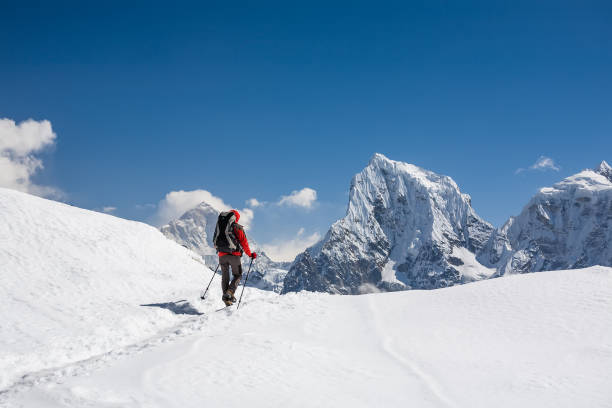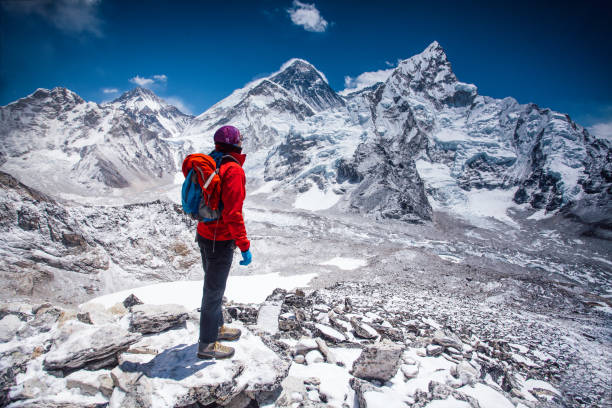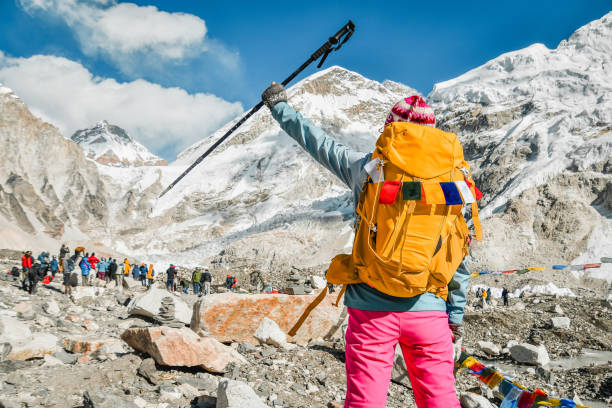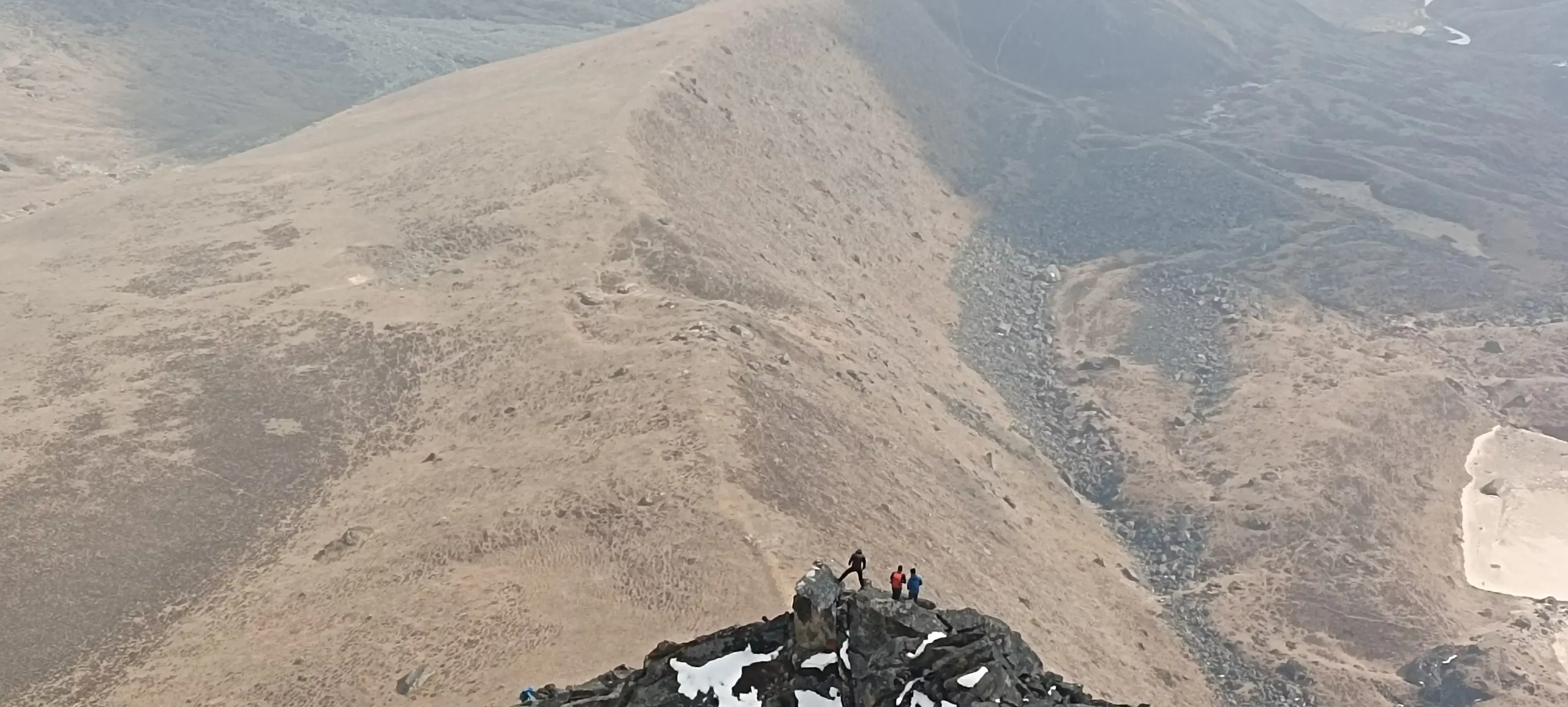
It is still dark when the lodge door creaks open in Lobuche. Frost crunches under your boots, headtorches bob along the path like a string of fireflies, and the great wall of Nuptse begins to glow pink above the black rubble of the Khumbu Glacier. You can hear your own breathing. Somewhere ahead, beyond a few hours of moraine and boulders, lie the last lodges below Everest, and beyond them, base camp itself.
The walk from Lobuche to Gorak Shep is the final approach of the Everest Base Camp Trek, and it is a stage every trekker remembers. On paper it looks short, about 4.5 m. In reality, it climbs to 5,164 m, where each breath holds roughly half the oxygen it would at sea level, and it is followed on the same day by the walk to Everest Base Camp. Knowing what to expect makes all the difference.
In this guide, our Sherpa team explains the trail step by step, the distance, time, and elevation profile, what Gorak Shep is really like, how to plan the afternoon at base camp and the dawn climb of Kala Patthar, and how to stay safe and comfortable at the highest point of the trek. For an overview of the two villages, see our Lobuche village guide and our Gorakshep guide.
The Short Answer: How Hard Is the Walk From Lobuche to Gorak Shep?
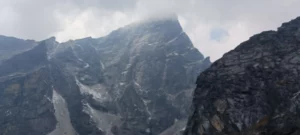
The walk from Lobuche (4,910 m) to Gorak Shep (5,164 m) covers about 4.5 km and takes two and a half to three and a half hours. It follows the Khumbu Glacier’s moraine, passes the Pyramid turn-off and crosses rocky ground below the Changri glaciers. The distance is short, but the altitude makes every step slow.
There are no technical sections, but this is the highest stage of the trek, so a slow, steady pace, plenty of water and a guide who watches for altitude sickness matter more than fitness alone.
Lobuche to Gorak Shep at a Glance
- Start: Lobuche, about 4,910 m, a cluster of lodges beside the Khumbu Glacier.
- Finish: Gorak Shep, about 5,164 m, the highest lodges on the trek, beside a sandy, often frozen lakebed.
- Distance: About 4.5 km one way.
- Walking time: 2.5 to 3.5 hours, depending on pace and acclimatization.
- Ascent: About 300 m of climbing and 90 m of descent, a net gain of about 250 m.
- Terrain: A sandy path along the glacier’s moraine, then rocky, uneven ground with short climbs and descents.
- Same day: Most trekkers continue to Everest Base Camp (5,364 m) in the afternoon and sleep at Gorak Shep.
- Next morning: Kala Patthar (5,545 m) at sunrise, then the long descent towards Pheriche.
- Our trek: Day 9 of the 14-day Everest Base Camp Trek.
The final stage of the Everest Base Camp Trek: from Lobuche past the Pyramid turn-off to Gorak Shep, with the side trips to Everest Base Camp and Kala Patthar.
Where This Stage Fits in Your Everest Base Camp Trek
The walk from Lobuche to Gorak Shep comes at the end of a carefully paced climb. On our 14-day Everest Base Camp Trek, you fly to Lukla, walk through Phakding and Monjo into Sagarmatha National Park, where your Everest Base Camp trek permits are checked, climb to Namche Bazaar, spend a day exploring the things to do in Namche Bazaar, continue via Tengboche and Pangboche to Dingboche for a second acclimatization day, and then climb past the climbers’ memorials at Thukla to Lobuche on Day 8.
- Day 8: Dingboche to Lobuche, about 8 to 9 km, four to five hours.
- Day 9: Lobuche to Gorak Shep in the morning, Everest Base Camp in the afternoon and back to Gorak Shep, about 12 km and seven to eight hours in total.
- Day 10: Kala Patthar at sunrise, then down to Pheriche, the longest descent of the trek.
Our guides to the Everest Base Camp trek in 14 days, the Everest Base Camp trek itinerary and the Everest Base Camp trek route describe every stage, and our article on the Everest Base Camp trek distance puts this short but demanding day in context. Because flights to Lukla can be delayed by weather, as our guide to Lukla flight delays and cancellations explains, and many depart from Ramechhap in the busy seasons with our Ramechhap airport transfer, a spare day at the end of your trip is always wise.
Lobuche: Your Starting Point
Lobuche sits at about 4,910 m in a grassy ablation valley between the hillside and the lateral moraine of the Khumbu Glacier, with the dark rock of Lobuche East rising behind and Nuptse filling the sky ahead. It is a small settlement of lodges, busy in the main seasons with trekkers heading up and down, climbers preparing for Lobuche East, and trekkers arriving over the Kongma La from Chhukung on the three-pass route.
The night before the walk from Lobuche to Gorak Shep is often the hardest so far. Many trekkers sleep lightly, wake with a mild headache or feel the cold for the first time. Use the evening well:
- Drink and eat: Finish your dinner, drink plenty of warm fluids and fill your bottles with boiled or treated water for the morning.
- Pack the night before: Lay out your layers, headtorch, gloves, snacks and sunglasses, so the early start is easy.
- Tell your guide how you feel: Be honest about any headache, nausea or breathlessness. This is the last good place to rest an extra day before going higher.
- Sleep warm: Wear a hat to bed, keep your water bottle in your sleeping bag so it does not freeze, and keep batteries warm.
The Lobuche to Gorak Shep Trail, Step by Step
Most groups leave Lobuche between 6 and 7 am, early enough to reach Gorak Shep before midday and to have time for base camp in the afternoon, before the wind and cloud build.
Leaving Lobuche: the Ablation Valley
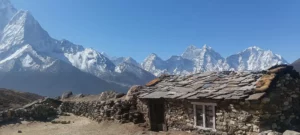
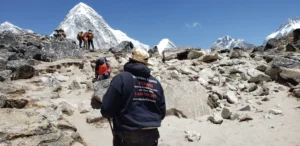
From the lodges, the trail heads north up the gentle, sandy valley between the hillside and the high grey wall of the glacier’s lateral moraine. The gradient is easy at first, but even here you will notice how slowly you have to move. Yaks, porters and trekkers share the path, and frozen streams can make the first stretch slippery in the early morning.
The Pyramid Turn-off
After about half an hour, a side path leads to the PyraPyramidglass-and-metal laboratory at about 5,050 m, built by Italian and Nepali scientists to study the high Himalaya, from Everest’s height to glaciers and climate. It has a small lodge at its base, but its research work has depended on uncertain funding, so ask your guide whether it is open. Most trekkers note the turn-off and keep going.
Climbing Onto the Moraine
Beyond the turn-off, the trail climbs gradually onto the lateral moraine and follows it north, with the rubble-strewn ice of the Khumbu Glacier on your right. Small cairns and prayer flags mark the way. This is where most trekkers find their rhythm: a few dozen steps, a pause to breathe, and on again. There is no prize for speed here.
Across the Changri Moraine
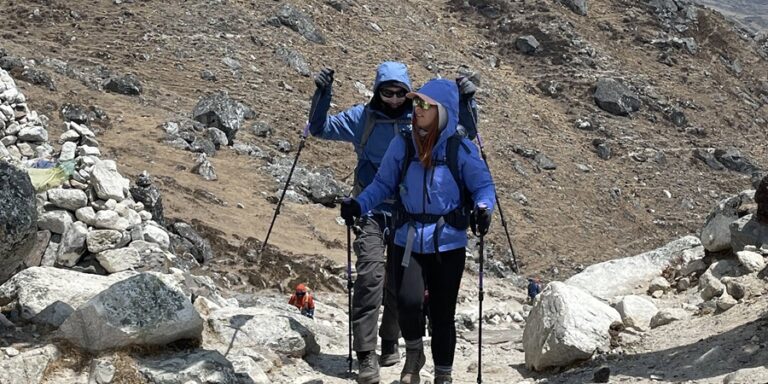
The hardest part comes next. Where the Changri glaciers flow in from the west to join the Khumbu Glacier, the trail crosses a jumble of rock, boulders and gravel, dropping into small hollows and climbing out again. The path is well worn but uneven, and loose stones roll underfoot. Use your trekking poles, watch your footing, and give way to yaks on the mountain side of the trail, never the glacier side.
The Last Rise and Gorak Shep
After a final climb, the trail tops a rise and you see Gorak Shep below: a handful of stone lodges with blue and green roofs beside a flat, sandy lakebed, with the dark cone of Kala Patthar rising behind and Pumori towering above everything. A short, gentle descent brings you to the lodges, where most groups stop for lunch, drop their bags and rest before the afternoon walk to base camp.
Distance, Time and Elevation Profile
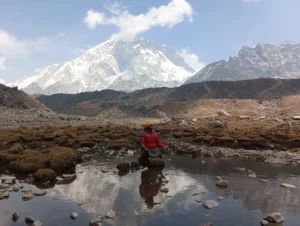
The numbers for the walk from Lobuche to Gorak Shep are modest, which is exactly why some trekkers underestimate it.
- Distance: About 4.5 km, though GPS readings vary slightly with the route taken across the moraine.
- Time: 2.5- 3.5 hours for most trekkers, including short breaks.
- Elevation: About 4,910 m to 5,164 m, with about 300 m of total ascent and 90 m of descent along the way.
- Highest point: Gorak Shep itself, the highest place you sleep on the trek.
- Oxygen: At Gorak Shep, the air holds roughly half the oxygen per breath that it does at sea level.
Add the round trip to base camp, about 7 km and four to five hours, and Day 9 becomes a full and demanding day. Our article on how many days the EBC trek takes explains why this pacing works, and our Everest Base Camp trek difficulty guide compares it with the other stages.
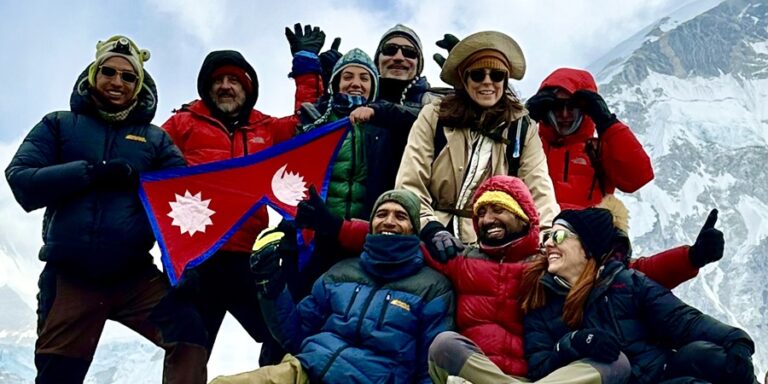 Related tripEverest Base Camp Trek14 Days · Moderate · from US$ 2450View trip
What You See on the Way
The scenery between Lobuche and Gorak Shep is stark and spectacular, a world of rock, ice, and giant peaks with hardly a blade of grass.
- Nuptse (7,861 m): Its huge, fluted wall towers across the glacier for the whole walk.
- Pumori (7,161 m): The elegant pyramid ahead of you, standing above Gorak Shep and Pyramidtthar.
- The Khumbu Glacier: A river of ice buried under grey rubble, with ice cliffs, meltwater pools and, higher up, white ice pinnacles near base camp.
- Lingtren, Khumbutse and Changtse: Lingtren and Khumbutse stand on the border with Tibet, and Changtse rises in Tibet above the Rongbuk side of Everest, the side you can visit on our Lhasa to Everest Base Camp Overland Tour.
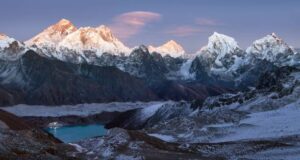
- Everest (8,849 m): Mostly hidden behind Nuptse and Everest’s own West Shoulder, with only glimpses of the summit along the way. For the full view, you need Kala Patthar.
- Looking back: Lobuche East and the peaks above Dingboche, and on clear mornings the distant summits of the lower Khumbu.
Our guide to what you see at Everest Base Camp describes the scene that awaits you in the afternoon.
How Hard Is It? Difficulty at 5,000 m
The walk from Lobuche to Gorak Shep has no ropes, ladders or exposed edges. At sea level, it would feel like an easy morning stroll with a few rocky sections. At 5,000 m, it feels completely different.
- The altitude is the challenge: Breathing is hard, your legs feel heavy and short climbs leave you gasping. Walk slowly enough to talk.
- The terrain is uneven: The moraine section involves stepping over rocks and boulders, which takes concentration when you are tired.
- The day is long: Combined with the walk to base camp, you may be on your feet for seven to eight hours.
- The cold and wind: Mornings are freezing and afternoons often windy, which adds to the fatigue.
Most reasonably fit trekkers manage it well with good acclimatization. If you are worried, read our guides to the Everest Base Camp trek for beginners and the Everest Base Camp trek training plan well before you go. Older trekkers and families manage it too with the right pace, as our guides to the Everest Base Camp trek over 50 and the Everest Base Camp trek with kids explain, and a warm-up walk in the hills around Kathmandu, such as our Chisapani Nagarkot Trek, is a good test of your boots and legs.
Altitude and Acclimatization on This Stage
The night at Gorak Shep is the highest you will sleep on the trek, and altitude sickness is the main risk of this stage. Many trekkers feel a headache, poor appetite, breathlessness on exertion and broken sleep, and these mild symptoms often settle with rest and fluids. What matters is noticing when they become something more.
Warning Signs to Take Seriously
- A worsening headache that does not improve with rest, fluids and simple painkillers.
- Breathlessness at rest, a persistent cough or gurgling breathing.
- Confusion, clumsiness or unusual drowsiness, or difficulty walking in a straight line.
- Vomiting that does not stop.
These signs mean you must not go higher, and serious symptoms mean descending immediately, with a companion, even at night if necessary. From Gorak Shep, go back down to Lobuche, then to Pheriche; this is the most effective treatment. Our guides carry a first-aid kit, are experienced in recognizing altitude sickness, and will turn around with you if needed. Our altitude sickness guide for Everest Base Camp, our step-by-step guide on what to do if you feel sick above 4,000 m, and our page on acute mountain sickness explain more.
Tips for a Better Night at 5,164 m
- Keep drinking: Aim for three to four liters a day, including soups and tea.
- Eat well: Carbohydrates such as rice, potatoes and pasta are easier to digest at altitude.
- Avoid alcohol and sleeping pills, which can depress breathing.
- Stay warm, and put on layers before you feel cold.
- Breathe deeply and slowly: Calm breathing helps you relax and sleep, and it is part of every day on our Everest Base Camp Yoga Trek, described in our Everest yoga trek guide.
- Discuss acetazolamide (Diamox) with your doctor before the trip if you are considering it.
Gorak Shep: What to Expect When You Arrive
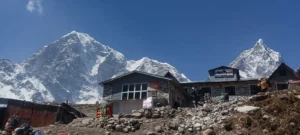
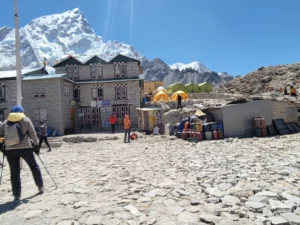
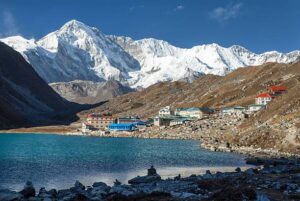
Gorak Shep is not a village in the usual sense. It is a small cluster of seasonal lodges at the end of the trail, with no permanent residents, on the edge of a frozen, sand-covered lakebed beneath Kala Patthar.
A Place of Dead Ravens and Early Expeditions
The name is usually translated as “dead ravens,” a nod to how barren this place is. Long before the lodges, Gorak Shep served as the base camp for the Swiss expedition that came close to Everest’s summit the year before the first ascent. Later expeditions moved their camp higher, onto the glacier at the foot of the Khumbu Icefall, where base camp stands today.
Lodges and Rooms
There are only a handful of lodges, around half a dozen, and they are the most basic on the trail. Rooms are small and unheated, with thin walls, simple beds and blankets, and windows that can freeze shut. In the busy weeks of spring and autumn, beds are in short supply, and late arrivals may end up sleeping in the dining room, which is one reason our team arranges rooms ahead and why arriving before midday helps. Many lodges close in the depths of winter.
Food and Water
The menus look much like those lower down, with dal bhat, noodle soup, potatoes, pasta, eggs, and hot drinks, and the dining room stove is the warmest place in Gorak Shep. Porters or animals carry everything up, so keep meals simple. Water is scarce at this height, so drink boiled water from the lodge or treat your own, and avoid untreated water from streams or the lake.
Power, Charging and Wi-Fi
Electricity comes mainly from solar panels, so charging is limited and slow, especially on cloudy days. Bring a power bank and keep your batteries warm. Wi-Fi is available through prepaid internet cards, but it can be slow and unreliable, and mobile coverage is patchy. It is a good place to switch off and enjoy where you are.
Toilets and Washing
Toilets are basic and shared, and they can freeze in the coldest weeks. Showers are rarely available, so carry wet wipes and hand sanitizer, and save the hot shower for your return to lower villages.
Cold Nights
Nights at Gorak Shep are bitterly cold, often between minus 10 and minus 20°C in the main seasons and colder in winter. A good sleeping bag rated to at least minus 15 to minus 20°C, a down jacket, warm hat and dry socks make the night far more comfortable.
The Afternoon: Everest Base Camp From Gorak Shep
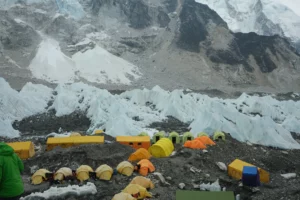
After lunch and a rest, most groups set off for Everest Base Camp. The trail continues northeast along the moraine, then onto the rocky edge of the Khumbu Glacier, with Nuptse towering on your right and the glacier’s ice pinnacles growing closer. It takes about two to three hours to reach base camp and a little less to return, about 3.5 km each way.
Base camp, at about 5,364 m, sits on the glacier at the foot of the Khumbu Icefall, the tumbling river of ice that climbers must cross to reach the Western Cwm. In spring, it fills with the tents of climbing expeditions; in autumn, it is much quieter, marked by prayer flags and painted rocks where trekkers take their photos. Everest’s summit is not visible from base camp itself.
Turn back in good time to reach Gorak Shep before dark, because temperatures drop quickly once the sun leaves the valley. Our guide to what you see at Everest Base Camp describes base camp in detail, and our article on whether a helicopter can land at Everest Base Camp explains the flight rule.s
Kala Patthar: Sunrise or Sunset?
Kala Patthar, at about 5,545 m, is the dark hill above Gorak Shep and the best place to see Everest on the whole trek. The climb gains about 400 m and takes 1.5 to 2 hours up and about an hour down.
- Sunrise (our usual plan): Leave Gorak Shep around 4:30 to 5 am by headtorch and reach the top as the sun lights Everest, Nuptse and Changtse. It is extremely cold, but the air is usually clear and calm.
- Sunset: Climb in the late afternoon on arrival day or after base camp, when Everest catches the last golden light. It is warmer, but clouds often build by afternoon, and the descent is in fading light.
On our trek, we usually visit base camp on the afternoon of Day 9 and climb Kala Patthar at sunrise on Day 10 before descending, though your guide may swap them if the weather suggests it. Our comparison of Gokyo Ri vs Kala Patthar explains why the view is so special, and if you would rather fly in for it, check out our Kala Patthar landing-sharing tour guide.
A Sample Timetable for Day 9
Every group moves at its own pace, but this is how the day usually unfolds on our treks:
- 5:30 am: Wake up, pack and drink something hot.
- 6:00 to 6:30 am: Breakfast in Lobuche.
- 6:30 to 7:00 am: Leave Lobuche in the cold morning light.
- About 7:15 am: Pass the Pyramid turn-off.
- 9:30 to 10:30 am: Arrive at Gorak Shep, check in and rest.
- 11:00 am: Early lunch.
- 12:00 noon: Set off for Everest Base Camp.
- 2:00 to 3:00 pm: Time at base camp for photos and quiet reflection.
- 4:30 to 5:30 pm: Back at Gorak Shep before dark.
- 6:00 pm: Dinner, health check, and an early night before Kala Patthar.
 Related tripEverest Helicopter Tour6 Hours · Easy · from US$ 1450View trip
Alternative Ways to Do This Stage
The classic plan suits most trekkers, but a good alternative exists.
- Base camp the next morning: Walk from Lobuche to Gorak Shep, rest, climb Kala Patthar for sunset, then visit base camp the next morning before descending. The morning light on the icefall can be beautiful.
- Skipping the night at Gorak Shep: Some trekkers visit base camp from Gorak Shep and return to Lobuche the same day to avoid sleeping at 5,164 m. It is a very long day, so it only suits strong, well-acclimatized trekkers.
- Flying out: On the Luxury Everest Base Camp Trek with Helicopter Return or the Everest Base Camp Helicopter Trek, you trek up with proper acclimatization and fly back down from the high valley, saving the long walk out. Our guide to the Everest Base Camp helicopter return explains how it works.
- The three passes: On the Everest 3 Pass Trek, trekkers reach Lobuche over Kongma La, visit Gorak Shep and base camp, then cross Cho La toward Gokyo, as described in our Everest Three Passes trek guide and Cho La crossing guide.
- Walking in from the road: The Jiri to Everest Trek and the Everest Base Camp Trek by Road add days in the middle hills, so you arrive at Lobuche even better acclimatized; our Jiri to Everest Base Camp trek guide describes the route.
- Shorter itineraries: Our guide to the 10-day short Everest Base Camp trek explains how faster plans handle this stage and why they need extra care.
Weather and Seasons on the Lobuche to Gorak Shep Trail
The weather shapes this stage more than any other, because you are so high and exposed.
- Spring (March to May): Milder days, busy trails and expedition tents at base camp, with cloud and snow showers common in the afternoons. Read our guide to the Everest Base Camp trek in April.
- Autumn (late September to November): Clear skies and sharp views, with very cold nights. See our guides to the Everest Base Camp trek in October and November.
- Winter (December to February): Severe cold, frozen toilets and water, snow on the moraine, and few open lodges, but crisp, clear views on good days.
- Monsoon (June to September): Clouds, rain, and snow at this height, with fewer trekkers and views mostly early in the morning. Our guide to the Everest Base Camp trek in monsoon explains what to expect.
Whatever the season, mornings are usually the clearest time of day, which is why the walk from Lobuche to Gorak Shep starts early. Our guide to the best time for the Everest Base Camp trek compares the seasons in detail.
What to Pack for Gorak Shep
Carry everything you need for a cold, high day in your daypack, as your porter may arrive after you.
- Warm layers: A base layer, fleece, insulated jacket and a windproof, waterproof shell.
- Down jacket, hat and gloves: Essential for the early start, base camp and the night at Gorak Shep.
- Sleeping bag: Rated to at least minus 15 to minus 20°C, with a liner for extra warmth.
- Water bottles: At least two liters, with insulated covers or a sock to stop them freezing.
- Sun protection: Category 3 or 4 sunglasses, sunscreen, lip balm and a sun hat, as the glare off snow and ice is intense.
- Headtorch: With spare batteries for the early start and C Cloudsrarainaa Patthar.
- Snacks: Chocowith fewer trekkers, and dried fruit for quick energy when your appetite is low.
- Trekking poles and microspikes: Poles help on the moraine; microspikes help on icy or snowy trails.
Our Everest Base Camp trek packing list and trekking equipment page cover everything in detail.
Safety on the Moraine
Beyond the altitude, a few practical hazards deserve respect on this stage.
- Loose rock: Stones can roll underfoot and occasionally fall from the moraine walls. Do not linger below steep, crumbling slopes.
- Ice: Frozen streams and patches of ice are common on cold mornings, especially in winter and early spring.
- Yaks and porters: Always step to the mountain side of the trail when animals pass, never to the edge of the moraine.
- The glacier itself: Stay on the trail. The glacier surface hides holes, unstable ice, and meltwater pools.
- Poor visibility: Cloud and snow can hide the trail markers. Stay with your group and your guide.
- Exhaustion: Fatigue makes stumbles more likely. Take regular breaks, eat,t and drink.
Walking with a licensed guide is the safest way to complete the walk from Lobuche to Gorak Shep. Our article on the Everest Base Camp trek without a guide explains the rules and risks, and our guide to the Everest Base Camp trek solo covers safety for solo travelers.
Helicopter Rescue and Medical Help at Gorak Shep
In the busy seasons, the local government runs a small high-altitude clinic at Gorak Shep, and in spring the Everest ER clinic operates at base camp. Lower down, the Himalayan Rescue Association aid post at Pheriche is staffed in spring and autumn. Our guides to Everest Base Camp trek medical clinics and the Pheriche HRA aid post list every facility on the trail.
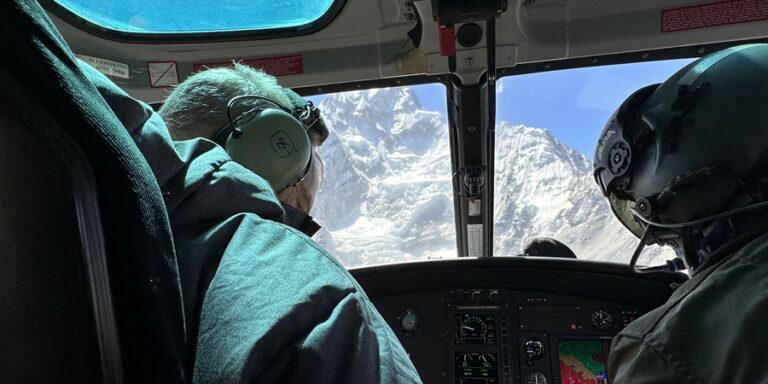
If evacuation is needed, helicopters can land at Gorak Shep. Still, they fly only in daylight and good weather, and at this altitude they can usually carry only two or three passengers. Your trekking company and insurer arrange rescue, so make sure your travel insurance covers trekking to at least 6,000 m and helicopter rescue. Our guide to helicopter rescue in the Everest region explains the process.
Photography Tips for This Stage
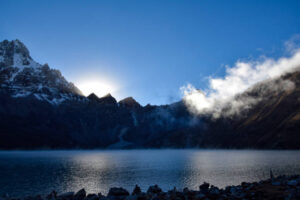
- Early light on Nuptse: The first sun turns the great wall gold above the dark moraine, so keep your camera handy as you leave Lobuche.
- The glacier: Ice cliffs and meltwater pools make striking foregrounds, especially in the soft morning light.
- Gorak Shep from above: The lodges and sandy lakebed, with Kala Patthar and Pumori behind, look best from the last rise before the village.
- Night skies: With almost no light pollution, the stars above Gorak Shep are extraordinary on clear nights.
- Batteries: Cold drains them quickly, so keep spares in an inside pocket and in your sleeping bag at night.
- A second chance: If cloud hides the peaks, an Everest mountain flight from Kathmandu offers another view of the whole range.
Remember to ask before photographing porters, guides and lodge staff, and to respect the memorials and prayer flags along the way.
 Related tripEverest Base Camp Helicopter Trek9 Days · Moderate · from US$ 11500View trip
Luxury and Helicopter Options
Gorak Shep’s lodges are basic for everyone, but the days around it can be far more comfortable. The Everest Base Camp Luxury Lodge Trek uses the region’s finest lodges lower down, and the Everest Elite Luxury Heli Trek combines trekking and helicopter flights. Our guides to luxury lodges in the Everest region and the luxury Everest Base Camp trek explain the options.
If you would like to see this landscape without the trek, the Everest Helicopter Tour, Mt Everest by Helicopter Tour and Sharing Everest Helicopter Tour with Kala Patthar Landing fly over the Khumbu Glacier. Our Everest base camp helicopter tour article and comparison of the EBC trek or helicopter tour help you choose, along with our comparison of the EBC helicopter tour vs heli trek and our advice on the best seasons for an Everest helicopter tour. Many tours stop for breakfast at the Hotel Everest View, as described in our guide to the Everest helicopter tour with breakfast, and the Everest Heli Sherpa Village Walk adds a walk through a Sherpa village. Landings in the Khumbu are subject to local rules, explained in our article on Everest helicopter tour restrictions. If Gorak Shep’s altitude isn’t for you, the Everest View Trek and our Luxury Everest View Trek guide show you how to see Everest from much lower down.
Responsible Trekking at the Top of the Khumbu
Gorak Shep sits in one of the most fragile environments on Earth, where nothing decomposes quickly and every item must be carried up and down by hand or on yak-back.
- Carry out your rubbish, including batteries, wrappers, and used gas canisters.
- Refill instead of buying plastic: Use boiled water from lodges, purification tablets, or a filter.
- Use toilets where they exist, and never leave waste near water sources.
- Respect the memorials at Thukla and the prayer flags and cairns along the trail.
- Look after your porters: Make sure they have warm clothing, sunglasses, and a proper place to sleep at this altitude.
Our responsible tourism page explains how we work, and our guide to Sherpa culture and traditions explains why these mountains are sacred to the people who live beneath them.
Common Mistakes on the Lobuche to Gorak Shep Stage
- Starting too late: Leaving Lobuche after 8 am squeezes your time at base camp and risks afternoon cloud and wind.
- Walking too fast: Rushing at 5,000 m drains energy and increases the risk of altitude sickness.
- Ignoring symptoms: A headache or breathlessness that gets worse is a reason to stop, not to push on.
- Under-dressing: Temperatures change fast with wind and cloud; carry warm layers in your daypack.
- Forgetting to drink: Cold, dry air dehydrates you quickly, even when you do not feel thirsty.
- Skipping lunch: Eat at Gorak Shep before base camp, even if your appetite is poor.
- Trying to do everything: Base camp, Kala Patthar sunset, and Kala Patthar sunrise in one go is too much for most people. Choose.
Beyond Gorak Shep: Your Next High-Altitude Goals
For many trekkers, standing at base camp sparks a new ambition. Trekking peaks such as Island Peak, Lobuche Peak, and Mera Peak are the natural next step, as described in our guides to Island Peak climbing and Mera Peak, the highest trekking peak. Closer to the trail, the side trip from Pangboche to Ama Dablam Base Camp, also offered as our Ama Dablam Base Camp Trek, brings you face-to-face with Ama Dablam, the most beautiful peak in the Khumbu.
Other high routes test you in similar ways: the Everest Gokyo Lakes Trek, described in our Gokyo Lakes trek guide, with the climb to Gokyo Ri and the fifth lake, the Renjo La pass, the Thorong La on the Annapurna Circuit Trek, the high lake of the Tilicho Lake Trek, the Larke Pass on the Manaslu Circuit Trek, and the Kanchenjunga Base Camp Trek. Beyond Nepal, the Dolma La Pass on the Kailash Kora is one of Tibet’s great high walks, reached on our Mount Kailash Tour, and our Lhasa to Everest Base Camp guide shows Everest from the north. For a far longer challenge, compare Everest Base Camp vs the Snowman Trek in Bhutan, and for more ideas, browse our 50 best treks in Nepal and our trekking in Nepal guide.
Frequently Asked Questions About Lobuche to Gorak Shep
How far is it from Lobuche to Gorak Shep?
The walk from Lobuche to Gorak Shep is about 4.5 km one way, with around 300 m of ascent and a net gain of about 250 m.
How long does it take to walk from Lobuche to Gorak Shep?
Most trekkers take 2.5 to 3.5 hours, depending on their pace and acclimatization.
What is the altitude of Gorak Shep?
About 5,164 m. It is the highest place you sleep on the Everest Base Camp Trek.
Is the trail from Lobuche to Gorak Shep difficult?
It is not technical, but the altitude, cold, and rocky moraine make it tiring. A slow, steady pace makes it manageable for most trekkers.
Can I go to Everest Base Camp on the same day?
Yes. Most trekkers reach Gorak Shep by late morning, have lunch and walk to base camp in the afternoon, about two to three hours each way, before sleeping at Gorak Shep.
Are there lodges at Gorak Shep?
Yes, around half a dozen lodges. They are cold and simple, and they fill up in the busy seasons, so it helps to arrive early or have your trekking company arrange rooms.
Is there Wi-Fi and charging at Gorak Shep?
Usually, but both are limite . Power comes mainly from solar panels, so bring a power bank, and expect slow Wi-Fi through prepaid internet cards.
How cold is Gorak Shep at night?
Often between minus 10 and minus 20°C in the main trekking seasons, and colder in winte . Bring a sleeping bag rated to at least minus 15 to minus 20°C.
Should I climb Kala Patthar at sunrise or sunset?
Sunrise usually offers clearer, calmer weather and is our usual plan, while sunset is warmer but more often cloudy. Your guide will advise based on the conditions.
Which day of the Everest Base Camp Trek is Lobuche to Gorak Shep?
On our 14-day Everest Base Camp Trek, it is Day 9, combined with the afternoon walk to base camp.
Final Thoughts: The Last Steps Below Everest
The walk from Lobuche to Gorak Shep is short on the map and long in the memory. It is the stage where the green valleys are far behind, the air is thin, and the great peaks of the Khumbu close in around you. Take it slowly, look after your body, and it will lead you to two of the greatest moments of any Himalayan journey: standing at Everest Base Camp and watching the sun rise over Everest from Kala Patthar.
Ready for the challeng ? Join our 14-day Everest Base Camp Trek with experienced Sherpa guides and a carefully paced itinerary, or choose the Everest Base Camp Luxury Lodge Trek for more comfor . Meet our team, learn more about Trek Nepal Himalayas and our legal documents as a registered company, check our Nepal visa information, start on our Plan Your Trip page, or contact us. We will help you plan every step of your trip to Gorak Shep and beyond.